Florida’s tourism image is usually associated with endless coastlines and tropical horizons, which makes encountering an underground landscape at 5390 NE 180th Ave in Williston a genuine geographical surprise.
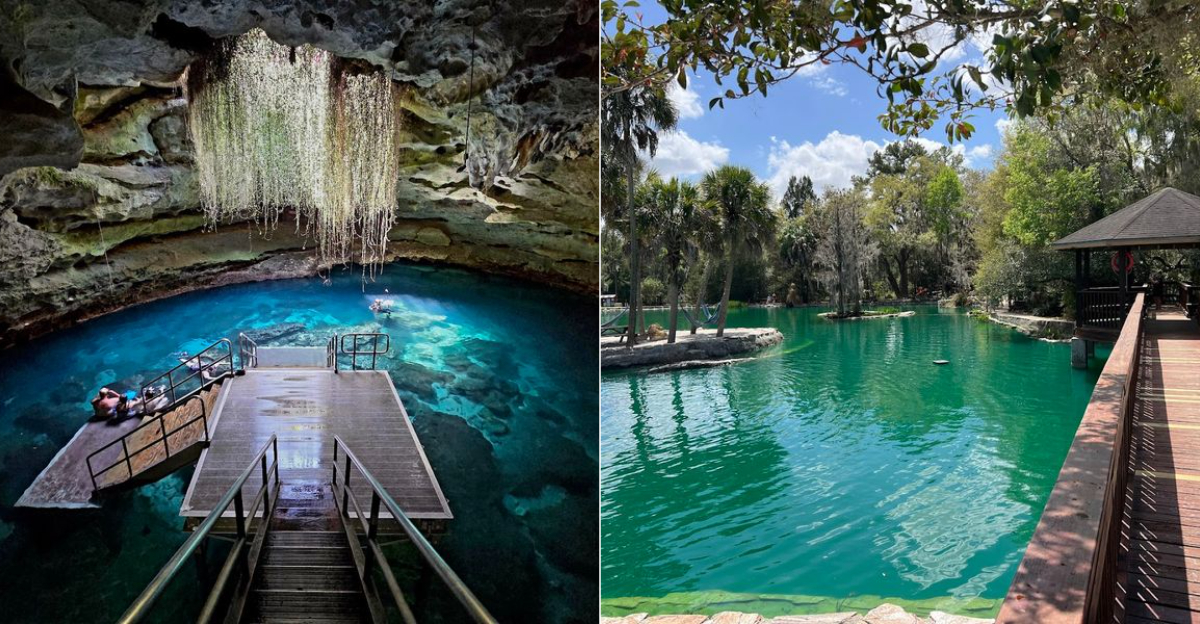
Located in Levy County, Devil’s Den Prehistoric Spring is a prehistoric warm-water spring enclosed within a massive karst sinkhole, where silence and filtered sunlight create an atmosphere that feels completely different from the familiar scenery of the Sunshine State.
This remarkable destination draws visitors with its distinctive rock formations and subterranean waters that have existed for thousands of years.
Here is a closer look inside this fascinating cavern, where ancient waters and stone ceilings reveal why this extraordinary spring is unlike anywhere else in Florida.
An Entrance To Florida That Feels Like Another World
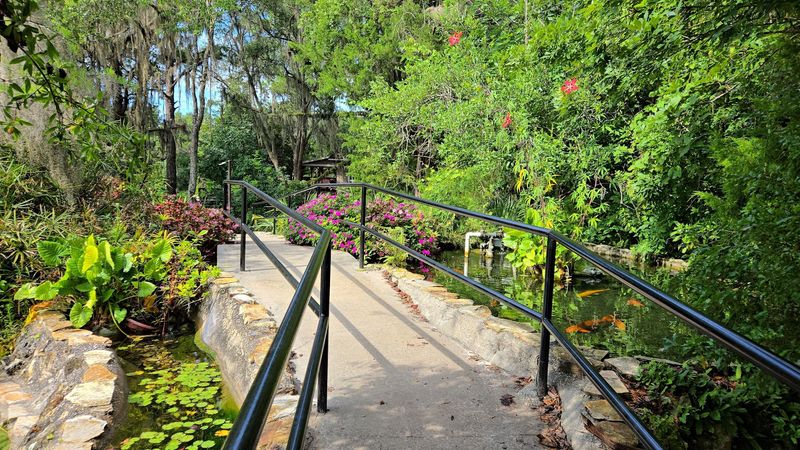
Above ground, the property feels like familiar inland Florida, with open light, warm air, and a quiet rural rhythm that gives little warning of what waits below.
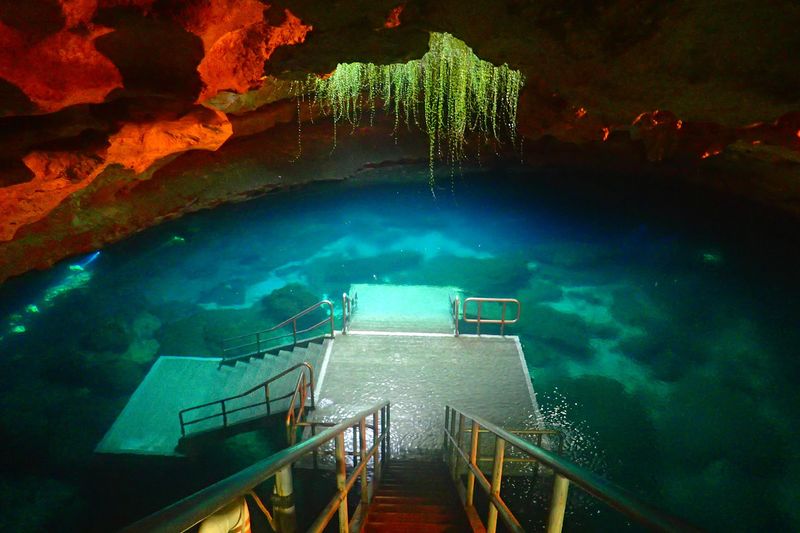
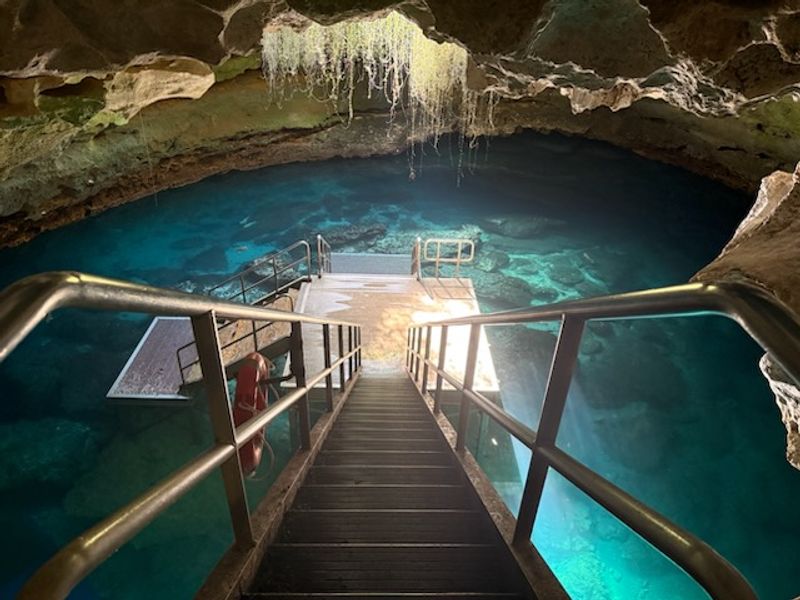
Then the opening appears, ringed by rough stone and framed by railings, and the mood changes immediately.
Instead of a broad riverbank or sandy shoreline, you face a vertical descent into a chamber that seems borrowed from another landscape entirely.
Wooden steps guide visitors downward, and each level subtly alters the senses.
Heat fades first, followed by the easy brightness of the afternoon, while cooler air gathers around the skin. Echoes begin to replace birdsong, and the smell shifts from dry ground and grass to damp mineral walls.
That first approach matters because it sets up the place so well.
You are not arriving at a typical swimming hole, and the design of the descent makes that clear before a mask ever touches your face.
By the time the pool comes fully into view, the Williston location already feels separated from the ordinary world above.
Ancient Water Under The Limestone
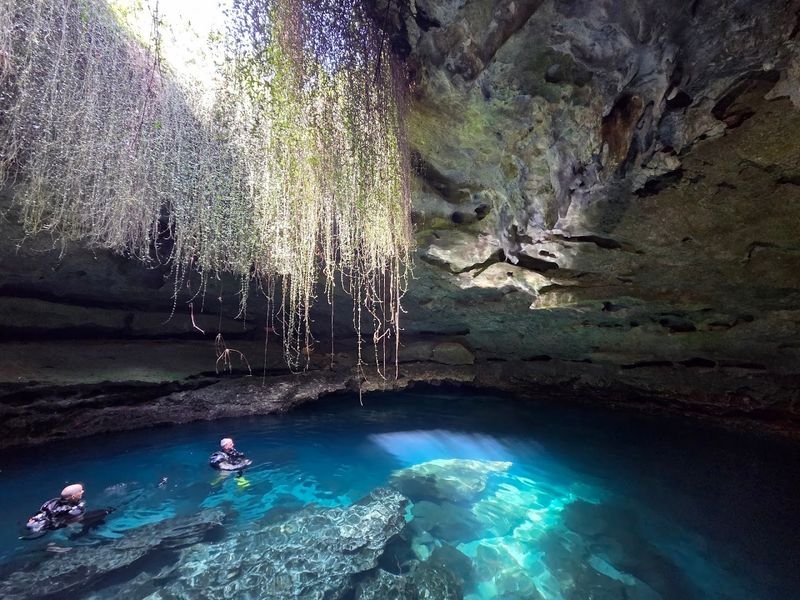
The pool itself is fed by groundwater moving through old rock formations, which helps explain why the basin feels so distinct from many open-air swimming spots in the state.
Beneath the surface, the source rises through a karst system shaped over immense stretches of time. Geology is not just background here, it is the reason the place exists at all.
Mineral-rich walls curve around the chamber with a worn, sculpted look that hints at dissolution, collapse, and slow transformation.
Because the basin sits inside a stone enclosure rather than a sandy run, the setting looks denser, darker, and more enclosed than most Florida freshwater sites.
Pleistocene fossils have been found here, adding real scientific depth to the visual drama visitors notice right away.
That context changes how you read the scene.
You are not simply looking at a recreational pool with dramatic lighting, but at a landform created by deep subterranean processes.
Every ledge and contour suggests pressure, seepage, erosion, and long spans of time that far exceed any single visit.
The Light Of The Chamber Changes Everything
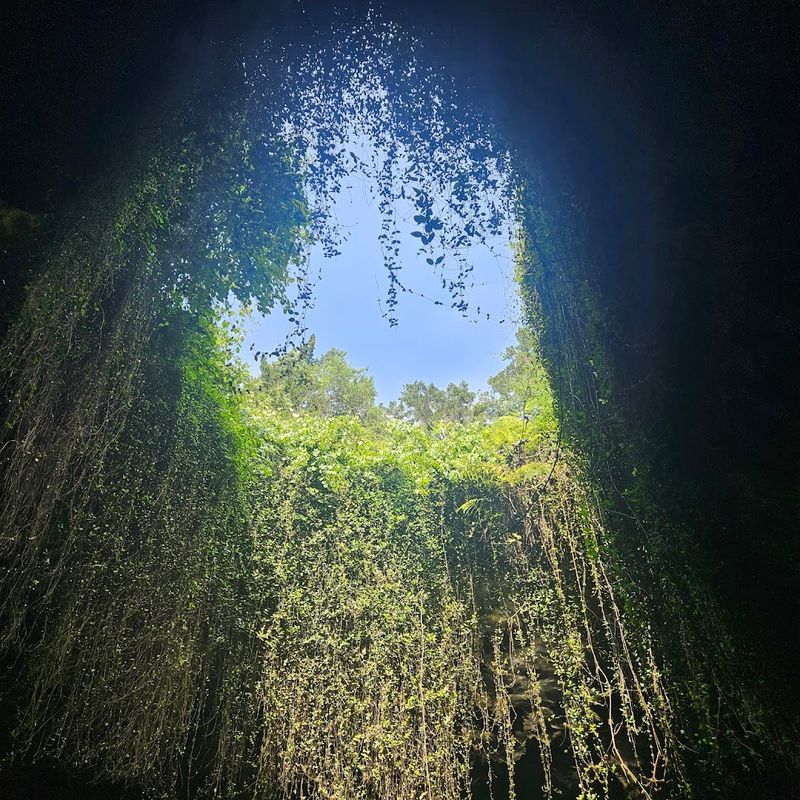
Light behaves differently here than it does at open springs, and that difference shapes the entire experience.
Instead of spreading evenly across a broad surface, sunlight drops through the opening overhead in concentrated beams, touching the pool and walls in shifting bands.
Depending on the hour, the chamber can feel dusky and mysterious or suddenly radiant in blue-green tones.
Late morning and midday often reveal the strongest visual effect, when the sun sits high enough to send brightness deep into the enclosure.
Reviews frequently mention how much the look changes once the angle improves, and that observation is accurate.
Earlier slots can feel darker and more muted, while later light brings out depth, texture, and color with striking clarity.
Photography benefits from that contrast, but the mood matters even more than the pictures.
Dark stone stays heavy at the edges while the center glows, creating a layered scene that feels almost theatrical without seeming artificial.
Few places in Florida make illumination feel so physical, so directional, and so closely tied to the hour of your arrival.
Why The Water Feels So Unusual
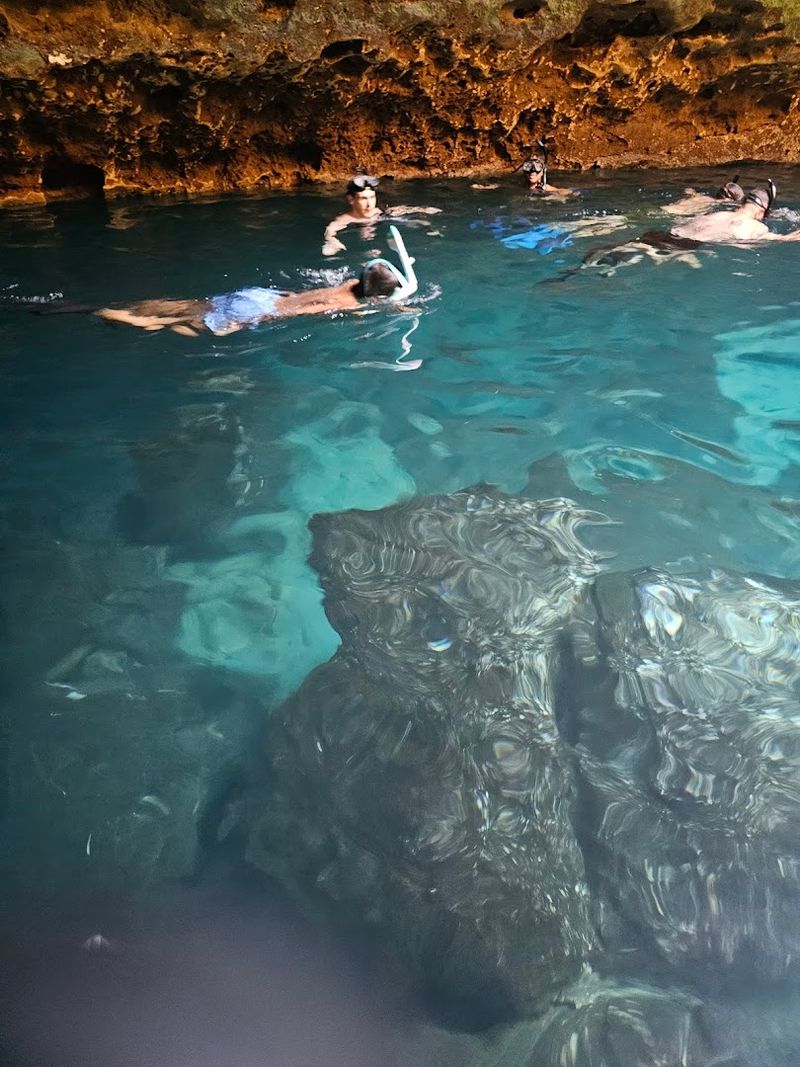
Temperature is one of the first surprises.
The basin stays around 22 degrees Celsius year-round, which feels brisk when you first enter, especially after standing in warm Florida sun.
That constant coolness is part of what gives the place its composed, almost insulated atmosphere.
Clarity also works differently here than many visitors expect.
Because the bottom is rocky rather than sandy, movement does not stir up the same clouds of sediment you often get in shallow swimming areas.
Visibility depends heavily on available sunlight, so the pool can appear darker at one hour and remarkably transparent at another, even when conditions below remain stable.
Then there is the sensation of buoyancy and depth inside an enclosed chamber.
Sound softens once you float away from the stairs, and each kick sends gentle ripples toward walls that seem much closer than they are.
You notice the cool against your face, the quiet around your ears, and the way the blue beneath you drops into deeper tones.
It feels controlled, still, and slightly surreal without losing its physical immediacy.
What Visitors Notice Before They Go Down
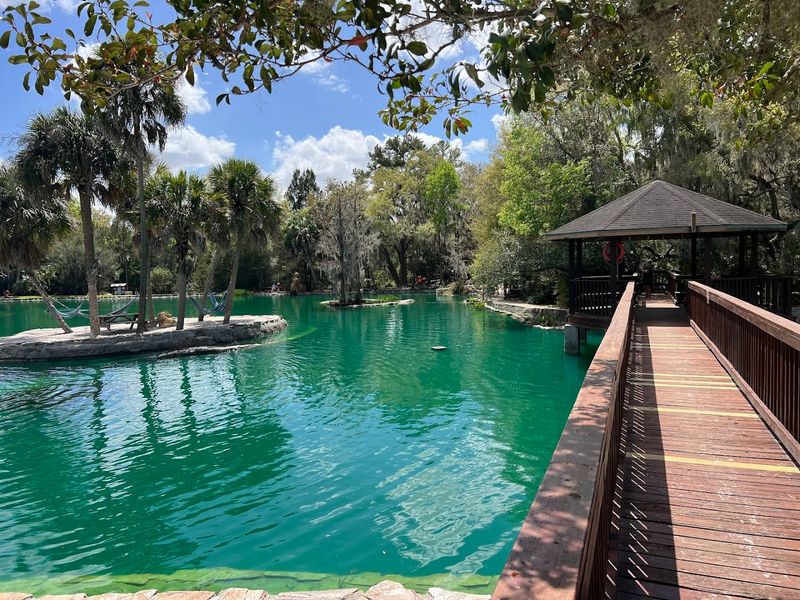
Before anyone reaches the underground pool, the practical side of the visit becomes clear.
Reservations are often recommended, especially for snorkeling slots, and many people arrive with masks, fins, towels, and wetsuits already packed.
That sense of preparation sets the tone, making the outing feel more structured than a casual roadside stop.
Around the property, you notice picnic tables, gear areas, and the steady movement of people checking times, adjusting straps, and talking through the cold.
Staff routines, waivers, and scheduled entry windows reflect the fact that this is a managed access site, not an open public riverbank.
Reviews suggest that some visitors are surprised by those limits, yet the controlled system also helps preserve order around a delicate environment.
Atmosphere matters here as much as logistics.
Standing near the opening, you hear conversation drop slightly as people look in for the first time.
Some pause for photos, others lean over the rail, and many seem briefly unsure whether they are about to swim, descend, or simply observe.
That hesitation is telling, because the visual impression above the pool is unlike standard Florida recreation areas.
Snorkeling In A Stone Chamber
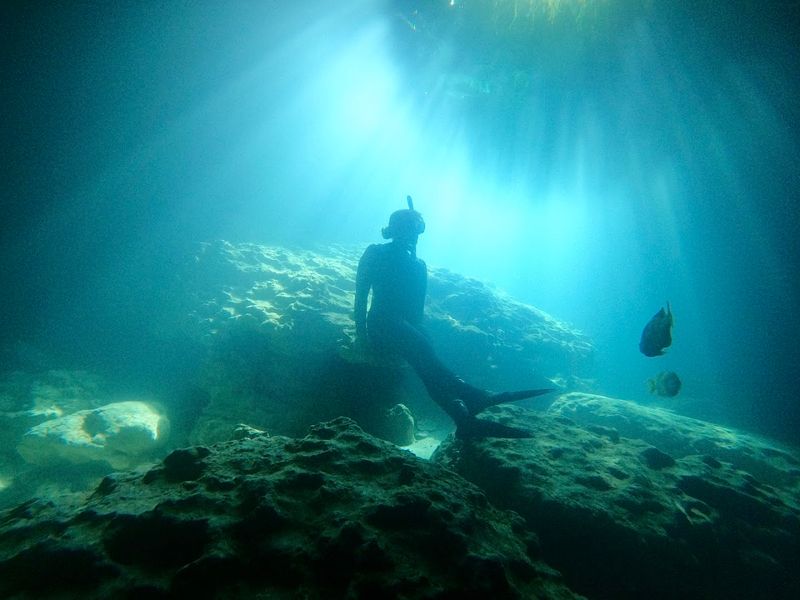
Most people come here for snorkeling or diving, and access to the main basin is mainly geared toward those activities.
That focus shapes the experience from the moment you descend the stairs, because the pool is not designed as a broad, casual play area.
Depth, enclosed walls, and cool temperature all encourage a little more respect than the average swim spot.
With a mask on, the chamber becomes far more legible.
Rock ledges, changing shades below the surface, and occasional fish come into view with surprising definition when the light cooperates.
Floating in place can be just as rewarding as swimming laps, since the appeal lies in observing textures, color gradients, and the geometry of the stone enclosure around you.
Divers often treat the site as a memorable training or recreational setting, while snorkelers get a shorter but still vivid encounter.
Reviews mention ninety-minute booking windows, rental equipment, and the benefit of bringing thermal layers if you get cold easily.
Nothing about the experience feels rushed once you are in the pool, yet it never loses the sense that you are moving through a carefully managed natural chamber.
Fossils, Rock, And The Sense Of Deep Time
One reason this place lingers in memory is that it carries evidence of ages far older than any visitor can intuit on sight alone.
Fossils from the Pleistocene have been discovered here, linking the chamber to periods when the surrounding environment looked very different from modern north-central Florida.
That fact grounds the atmosphere in something more substantial than mood.
Stone surfaces hold much of that impression.
Their textures are irregular, pitted, and softened by long interaction with moving groundwater, giving the walls a tactile sense of duration.
Looking closely, you do not just see scenic rock formations – you see the results of chemical change, collapse, mineral deposition, and the slow rearrangement of earth over enormous spans.
Such context affects even a brief visit.
The chamber stops feeling like an isolated attraction and starts reading as a fragment of a much larger geological story beneath the state.
Florida is often imagined as young, bright, and coastal, yet this enclosed basin suggests another identity entirely. Here, deep time is not an abstract museum concept.
It is embedded in the walls surrounding the pool.
Why This Williston Spring Stands Apart
What ultimately sets this Williston location apart is not just appearance, but contrast.
Florida offers many freshwater sites, yet few ask you to leave open sky behind and enter a cool chamber where stone, shadow, and filtered sunlight shape every impression.
The change is immediate enough that even seasoned travelers tend to slow down and reassess what kind of place they are standing in.
Visual drama alone would not be enough if the setting lacked substance.
Instead, the constant 22 degree Celsius temperature, the fossil record, the enclosed geology, and the focus on snorkeling and diving give the site real character.
Add the echoing acoustics, the descent by wooden steps, and the dark rim of rock around the glowing pool, and the experience becomes distinctly layered rather than merely scenic.
That complexity is why the place stays with you after leaving.
You remember the surface heat giving way to chilled air, the rural quiet outside contrasting with the hushed chamber below, and the way light briefly transformed the interior when the sun reached the right angle. Florida has many attractions, but very few feel so inward, so textural, and so geologically intimate.