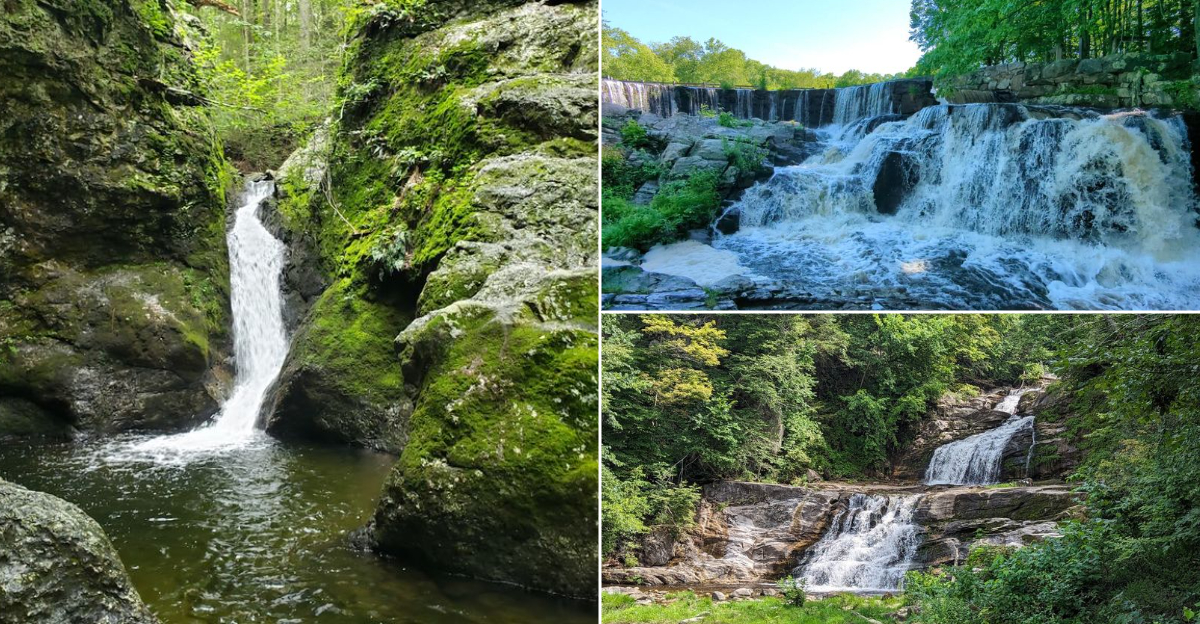
Connecticut’s waterfalls don’t ask for grand expectations. They appear in quiet pockets of forest, tucked behind old stone walls, along shaded roads, and within parks where the sound of rushing water reaches you before the view opens up.
In spring, after a stretch of rain and melting snow, every cascade feels fuller, the air carrying a cool mist that softens the edges of the trail.
You might find yourself pausing on a wooden bridge, watching water slip over dark rock, or following a short path where the trees part just enough to reveal a small but steady drop. There’s a calm rhythm to these places that makes even a quick stop feel unhurried.
It’s this blend of ease and beauty that makes waterfall chasing here so satisfying. No long journey required—just time, curiosity, and a willingness to wander.
Here are 10 Connecticut waterfalls that prove big natural beauty comes in small packages.
Kent Falls
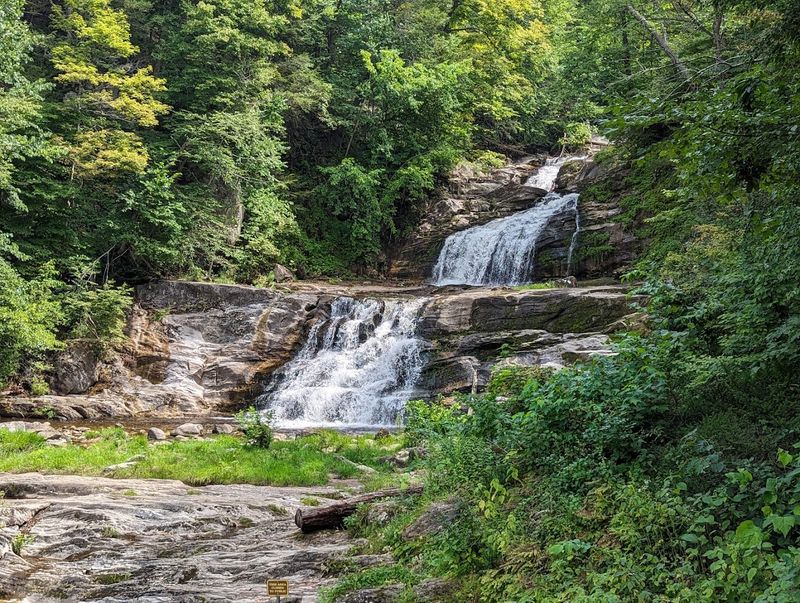
The sound reaches you before the full scene does – steady, bright, and surprisingly grand for a state better known for quiet woods and stone walls. As the path opens up, the layered drop of Kent Falls begins to reveal itself in stages, each tier adding more movement and drama.
It feels like one waterfall and several waterfalls at the same time, which is exactly why this stop leaves such a strong impression.
Located in Kent Falls State Park in Kent, this well-known cascade drops roughly 250 feet along Falls Brook in a beautiful series of steps. The lower viewing area is easy to access, while a short but rewarding walk leads you upward beside the falls for changing angles and wider views.
If you want a classic Connecticut waterfall experience with minimal effort, this is one of the best places to start.
Spring runoff makes the falls especially powerful, but the scene stays photogenic through summer and peak autumn color. The surrounding hills, bridge, and misty spray give you plenty to admire without needing a long backcountry trek.
Families, casual walkers, and dedicated hikers can all enjoy it at their own pace.
Go early if you want quieter views and easier parking, especially on weekends. Good footwear helps on wet surfaces, and lingering at different overlooks is worth your time.
For pure visual payoff, Kent Falls absolutely earns its reputation.
Roaring Brook Falls
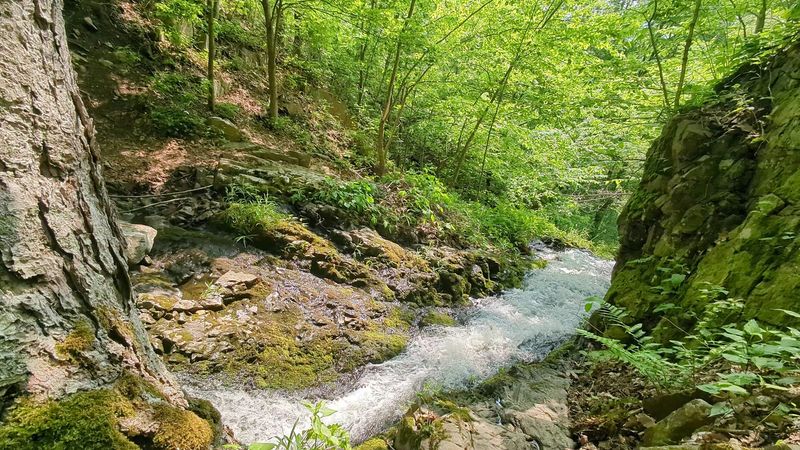
There is something instantly exciting about a waterfall that drops almost straight down from a cliff. Instead of spreading out across broad ledges, the water narrows, gathers speed, and plunges with a cleaner, sharper look than many cascades in the state.
The effect is dramatic, especially when you catch it after recent rain.
That striking profile makes Roaring Brook Falls in Cheshire one of Connecticut’s most memorable waterfall stops. Often cited as one of the tallest single-drop waterfalls in the state at around 80 feet, it descends from a traprock ridge in a way that feels unexpectedly bold.
The natural area around it is compact, but the vertical scale gives the scene real presence.
You are not coming here for a sprawling park with endless amenities. You are coming for a focused payoff: a quick approach, a distinct geologic setting, and a waterfall that looks different from the softer, stair-stepped falls found elsewhere in Connecticut.
The nearby cliffs and woodland edges add extra contrast, especially in leaf-on seasons.
Flow can vary, so timing matters if you want the strongest view. Visit after rain or during wetter stretches of the year, and wear shoes that handle uneven terrain well.
For a brief outing with a surprisingly high wow factor, Roaring Brook Falls delivers far more than its modest footprint suggests.
Wadsworth Big Falls
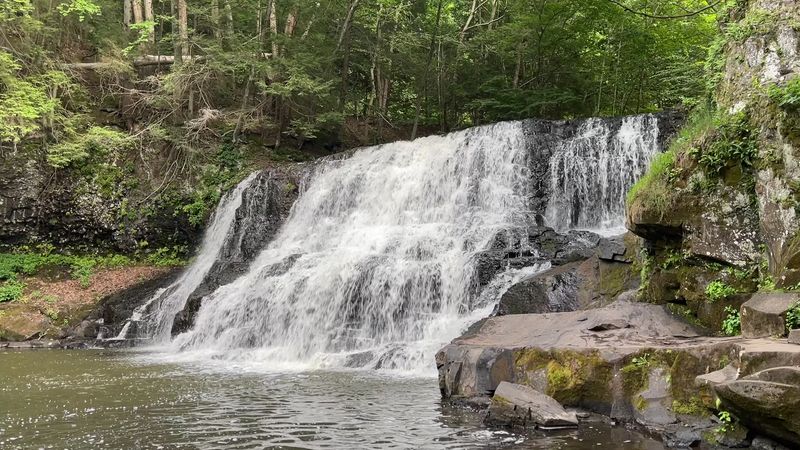
Wide sheets of water often create a calmer kind of drama, and that is exactly the charm here. Instead of one narrow plunge, the flow spreads across rock in a way that feels balanced, scenic, and easy to appreciate from several angles.
It is a waterfall that invites you to slow down rather than rush past.
You will find that experience at Wadsworth Big Falls in Wadsworth Falls State Park near Middletown and Middlefield. Depending on water levels and how the drop is measured, the falls are often described in the 30 to 50 foot range, with a broad face that looks especially attractive after rain.
The park is also one of the more accessible and versatile outdoor spots in central Connecticut.
A visit can be as simple or as active as you want it to be. Many people combine the waterfall with easy hiking, picnicking, or a relaxed walk through the surrounding forest and stream corridors.
Because the setting is approachable and popular, it works well for families and for anyone who wants scenery without committing to a strenuous day.
The best conditions usually arrive in spring or after a wet stretch, when the water spreads more fully across the ledge. Bring sturdy shoes for muddy patches and expect company on pleasant weekends.
If you want a classic state park waterfall with broad appeal, Wadsworth Big Falls is an easy choice.
Wadsworth Little Falls
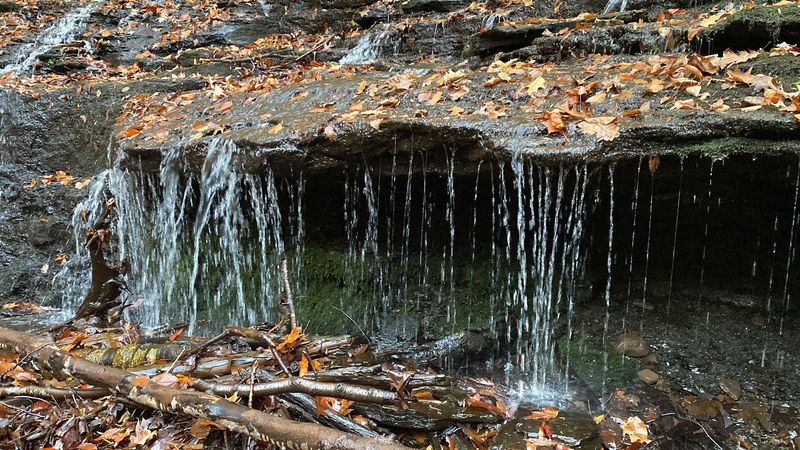
Not every memorable waterfall needs volume or height to leave an impression. Sometimes a smaller cascade wins you over with intimacy – quieter water, softer rock textures, and a tucked-away feeling that makes you pay closer attention.
This is the kind of place that rewards a slower pace and a little curiosity.
Upstream within Wadsworth Falls State Park, Wadsworth Little Falls offers that gentler experience. It is often paired with a visit to Big Falls, but it has a character all its own, with a more modest cascade that feels personal rather than showy.
Because it sits within the same park system, it is an easy addition to a short loop or a half-day outing.
The smaller scale actually works in its favor. You notice details that bigger waterfalls can overshadow, like the way water threads through rock, the quiet of the surrounding woods, and the changing seasonal colors around the stream.
It is especially appealing if you enjoy photographing textures, reflections, and close natural scenes.
Expect conditions to fluctuate with recent rainfall, since lighter flows can make the falls feel more subtle. Pairing both Wadsworth waterfalls gives you a satisfying contrast between broad spectacle and quiet charm.
If you like discovering the less celebrated companion that many visitors overlook, Little Falls is worth the extra steps.
Indian Well Falls
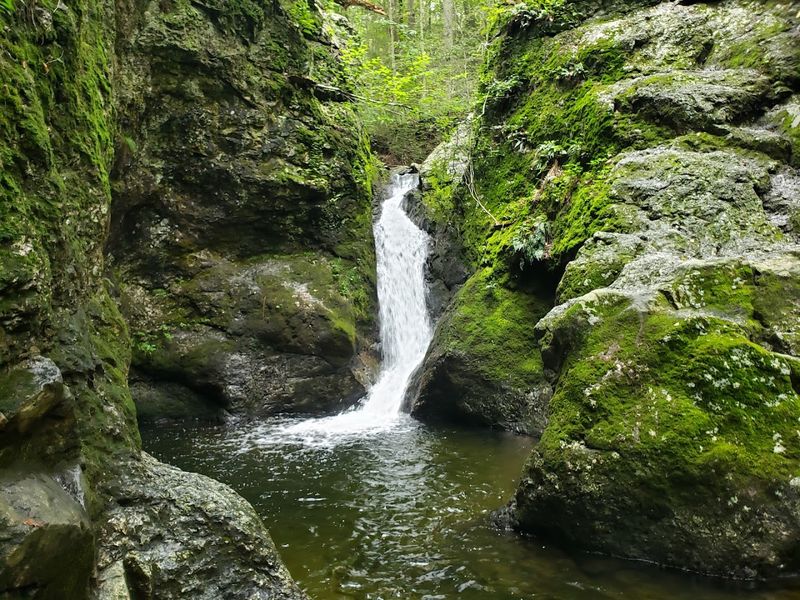
Cool water, shady trees, and the promise of a refreshing stop give this waterfall a different kind of popularity. It is not just a scenic viewpoint – it is the sort of place people remember from warm afternoons, easy walks, and summer plans that turn into longer stays than expected.
The atmosphere feels lively without losing its natural charm.
That appeal centers on Indian Well Falls in Shelton, within Indian Well State Park along the Housatonic River. The waterfall itself is about 15 feet high, dropping over a rocky ledge into a pool that has long attracted visitors in warmer weather.
Because of that mix of scenery and accessibility, it is one of the better-known lower-elevation waterfall spots in the state.
Even if you are not there to swim, the setting makes for a rewarding visit. The surrounding river corridor, wooded parkland, and picnic-friendly feel create a relaxed outing that works for families, couples, and anyone wanting a scenic break without a major hike.
It is especially inviting in summer, when the contrast between dark rock and bright green foliage really stands out.
Always check current park guidance before planning water activities, since rules and safety conditions can change. Go early on hot weekends if you want a calmer experience and easier parking.
For a waterfall with both visual appeal and classic summer energy, Indian Well Falls is hard to beat.
Southford Falls
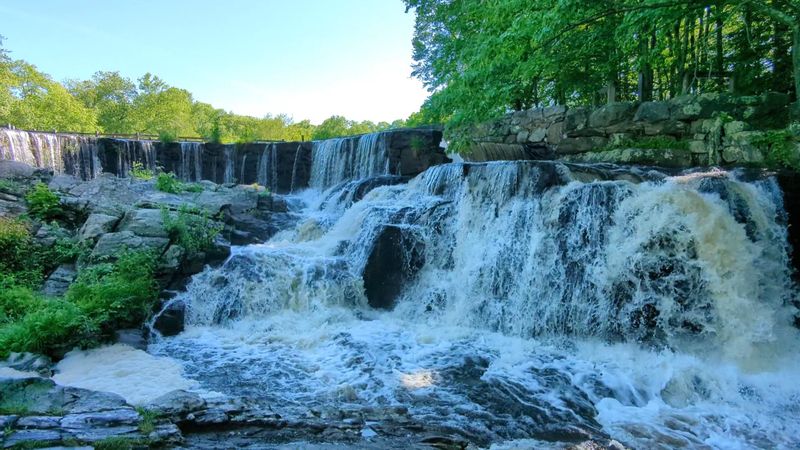
History gives some waterfalls an extra layer of appeal, and this one has it in abundance. The water, stone, bridge, and mill setting come together in a way that feels less like a remote wilderness scene and more like a classic New England landscape painting.
You get beauty, atmosphere, and a strong sense of place all at once.
That is the draw of Southford Falls in Southbury, located within Southford Falls State Park. The waterfall is closely tied to a historic mill pond area and a charming covered bridge, making the visit feel distinctly different from more rugged waterfall destinations.
It is scenic in every season, but especially photogenic when fall color frames the water and old structures.
The park’s compact layout makes it easy to enjoy without a long trek, which is great if you are planning a casual afternoon outdoors. Families and photographers tend to love the balance of accessibility and character here, since you can appreciate multiple features within a relatively short walk.
It is a good reminder that atmosphere can matter as much as raw size.
Bring your camera, take your time near the bridge, and look for reflections around the pond and stream edges. The falls may not be the tallest in Connecticut, but the surrounding setting makes the entire stop memorable.
If you enjoy waterfalls with heritage and charm, Southford Falls belongs on your list.
Burr Falls
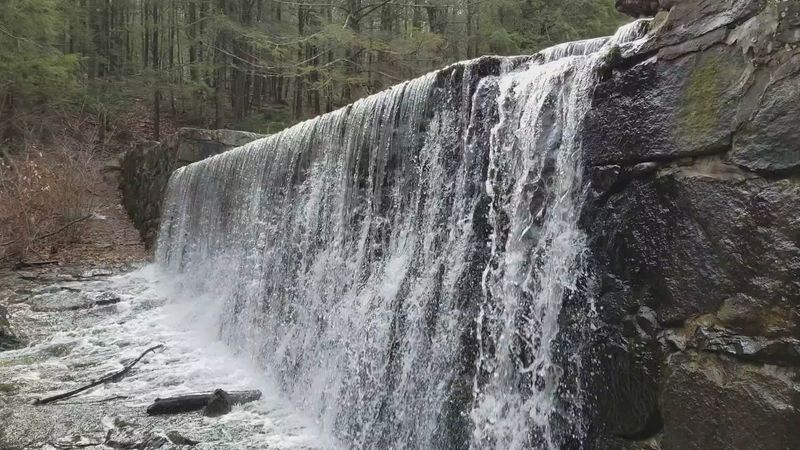
Seasonal waterfalls can feel like small rewards for paying attention to timing, weather, and local terrain. They are not always guaranteed, which makes a good visit feel a little more special when the water is actually moving with confidence.
This is one of those places where recent rain can completely transform the experience.
Near Burr Pond State Park in Torrington, Burr Falls is best known as a rain-dependent scenic stop rather than a constant showstopper. When conditions line up, the cascade becomes a lovely woodland feature that adds another layer of interest to an already attractive park area.
During drier stretches, though, it can feel far more subdued, so expectations should match the season.
That unpredictability is part of its character. If you enjoy chasing waterfalls as part of a broader outing, Burr Falls works well because you can combine it with time around Burr Pond, nearby trails, or a relaxed drive through northwestern Connecticut.
It is less about checking off a major destination and more about appreciating a well-timed natural moment.
Plan around recent storms or wetter months if you want the strongest flow and best photos. Good shoes help, since muddy or slick ground is more likely when the waterfall looks its best.
For travelers who enjoy lesser-known spots and are willing to let conditions shape the day, Burr Falls offers a satisfying detour.
Buttermilk Falls
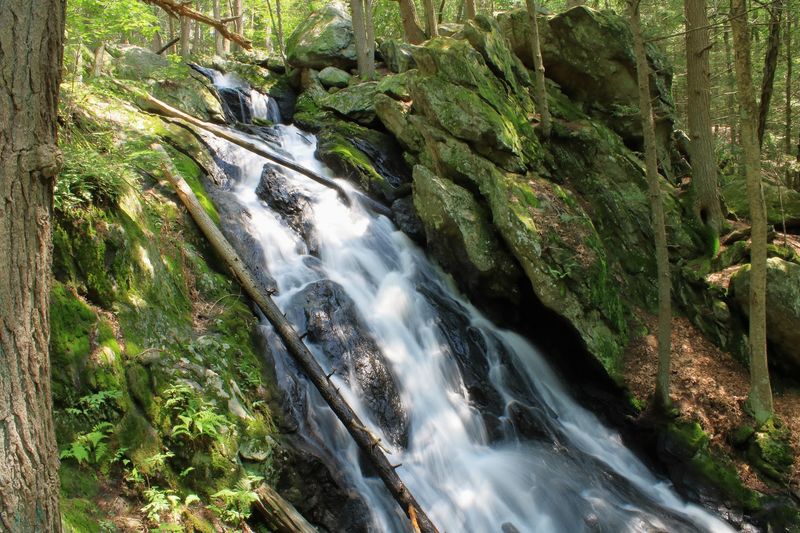
A little seclusion can make a waterfall feel bigger than it is, and that is part of the magic here. The approach carries a quieter, more tucked-away mood, with forest sounds, shaded trail sections, and the sense that you are heading toward something many casual visitors never bother to seek out.
That feeling of discovery matters.
In Plymouth, along the Mattatuck Trail corridor and Nature Conservancy-managed land, Buttermilk Falls offers a more intimate woodland experience. The waterfall is not among the state’s largest, but it earns attention through setting, texture, and a peaceful natural backdrop that feels pleasantly removed from busier parks.
For hikers who prefer atmosphere over crowds, it can be especially rewarding.
The name suits the visual character well, since the water often spreads in a softer, creamy way over rock rather than crashing down in one heavy plunge. Moss, leaf litter, and filtered light help create a scene that feels gentle and photogenic, particularly in spring and after rainfall.
It is the kind of stop where lingering makes sense.
Because access can feel less obvious than at major state park waterfalls, it helps to review trail information before you go. Expect a more natural, less developed outing, and respect the surrounding conservation area.
If you are drawn to hidden-feeling cascades with a quiet woodland personality, Buttermilk Falls is an excellent pick.
Dean’s Ravine Falls
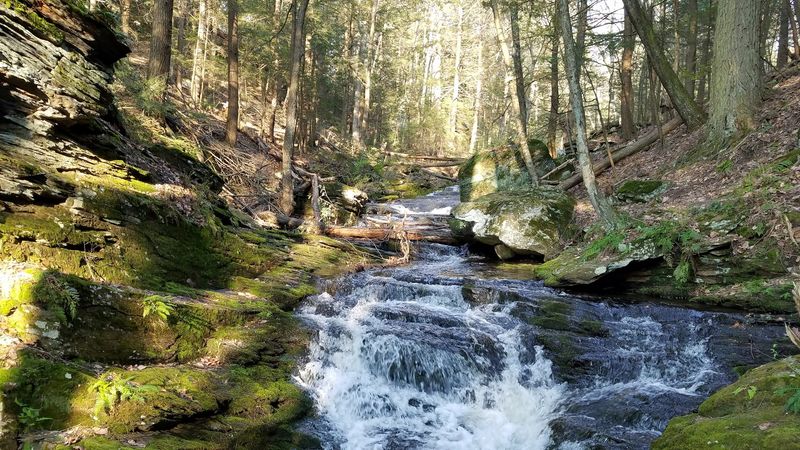
Ravines always add a little extra drama, especially when a waterfall cuts through them with a sense of depth and movement. The combination of steep sides, tumbling water, and forest shade creates a scene that feels older and more rugged than the mileage might suggest.
It pulls you in quickly.
That atmosphere defines Dean’s Ravine Falls in Falls Village, also associated with Canaan. Flowing along Reed Brook, the waterfall drops around 50 feet and has long been appreciated by hikers exploring this scenic corner of northwestern Connecticut.
Its historical connection to routes near Appalachian Trail country gives it added appeal for people who enjoy landscapes with a strong hiking tradition.
The setting is a big part of why the waterfall stands out. Rather than opening onto a broad, park-like viewing area, it feels woven into the terrain, with rocks, brook crossings, and surrounding woodland shaping the entire experience.
In wetter seasons, the cascade appears more forceful and the ravine feels especially alive with sound.
Because this area can be rougher and less developed than some family-oriented waterfall parks, a bit of preparation goes a long way. Check access details, wear sturdy shoes, and allow time to enjoy the broader landscape rather than racing in and out.
If you like your waterfalls with a wilder feel, Dean’s Ravine Falls is deeply satisfying.
Yantic Falls
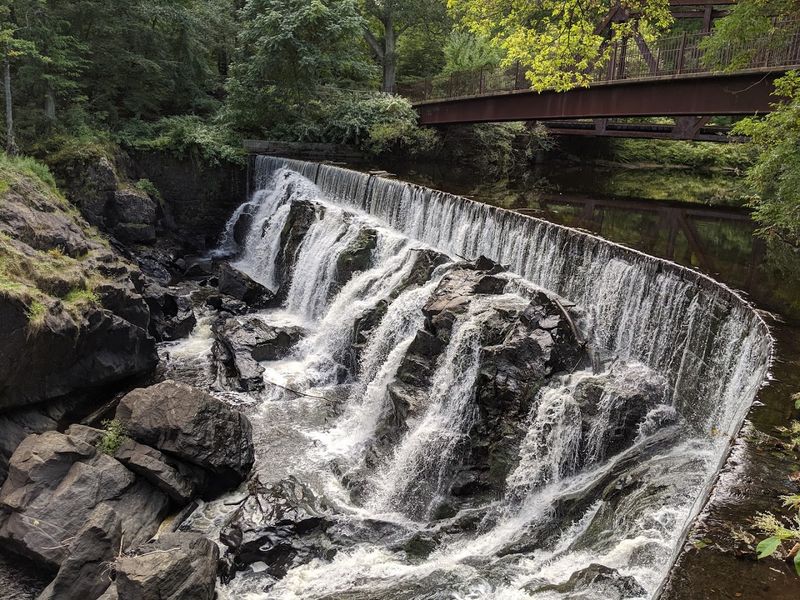
Urban waterfalls have a special kind of power because they feel unexpected. You can be near streets, buildings, and everyday routines, then suddenly find a forceful drop of water that seems to belong to a much wilder place.
That contrast gives this site a presence you do not easily forget.
In Norwich, Yantic Falls delivers exactly that effect. Also known as Indian Leap, the waterfall combines natural drama with layers of local history, including Native American stories that have long been tied to the site.
Its downtown setting makes it distinct from the forest-bound waterfalls that dominate most Connecticut waterfall lists.
The falls are notable not just for their appearance, but for the way they connect landscape and community. Old industrial surroundings, river infrastructure, and the force of the water all create a scene that feels both historic and immediate.
It is an excellent stop if you enjoy places where nature and human history visibly intersect.
Because the area is urban, a visit here is less about a hiking escape and more about understanding context while taking in a dramatic natural feature. Good light for photography often comes when the water contrasts with stone, brick, and overcast skies.
If you want a Connecticut waterfall experience that is powerful, unusual, and rooted in local story, Yantic Falls stands apart.