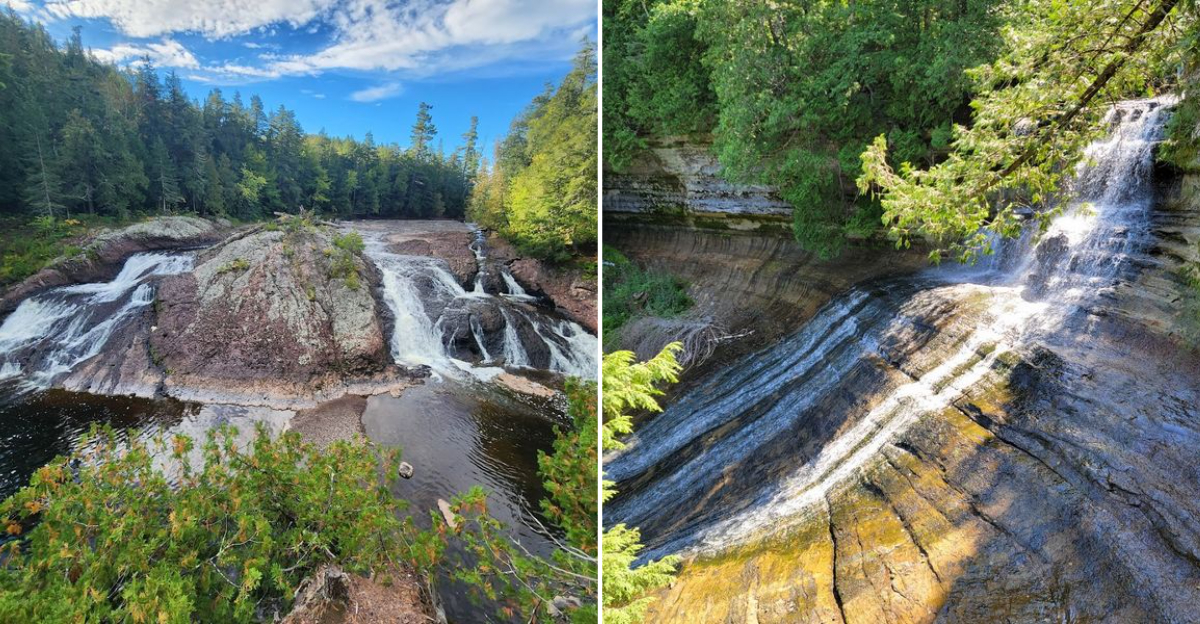
Michigan’s waterfalls feel like they belong in a place far more remote than the Midwest. Tucked into cedar-lined forests, carved through sandstone cliffs, and fed by rivers that run dark with tannins, they create pockets of quiet that feel unexpectedly wild.
In spring, melting snow and seasonal rain bring them to life, turning gentle streams into steady curtains of water and filling the air with a cool, earthy freshness.
Some of these falls sit just steps from the road, while others ask for a slow walk beneath towering trees where the only sound is moving water and wind in the branches. Small towns nearby add their own rhythm, the kind of simple stops that make a day feel unhurried and full.
It’s this mix of ease and wonder that makes waterfall chasing here so memorable. Here are 10 Michigan waterfalls that feel like hidden wonders of the Midwest.
Tahquamenon Falls
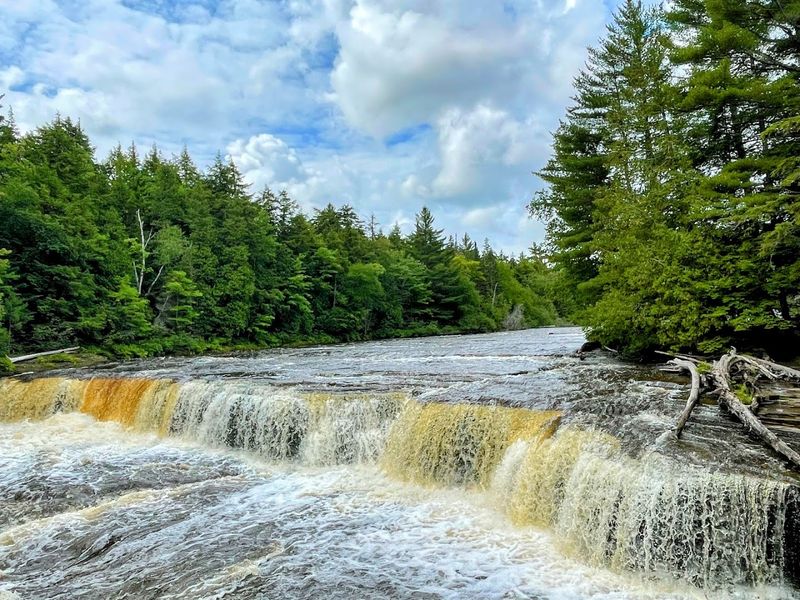
There is something unforgettable about hearing a river before you fully see it, especially when the water carries a warm amber glow through thick northern forest. That sense of scale builds fast at Tahquamenon Falls State Park near Paradise, where the Upper Falls spread wide and powerful, and the Lower Falls invite a quieter kind of wandering.
Together, they create one of Michigan’s most iconic waterfall experiences without losing that hidden wonder feeling.
The famous color comes from tannins released by cedar, spruce, and hemlock swamps upstream, giving the river its root-beer tone. The Upper Falls are among the largest east of the Mississippi, dropping nearly fifty feet across a broad curtain of water that feels especially dramatic after rain or spring snowmelt.
Downstream, the Lower Falls break into smaller channels around wooded islands, and you can often get closer to the water’s movement there.
Well-maintained trails, overlooks, and seasonal boat access make this an easy stop for many travelers, yet the setting still feels remote. If you arrive early or linger toward evening, the noise of the falls and the scent of wet pine make the park feel wonderfully untamed.
It is the rare famous place that still feels personal.
You can come for the postcard view, but you will probably remember the mood most. The river seems to move with the confidence of a much bigger wilderness, and every overlook reveals another shade of gold, brown, and white.
In a region full of beautiful cascades, Tahquamenon still feels like the grand statement piece.
Bond Falls
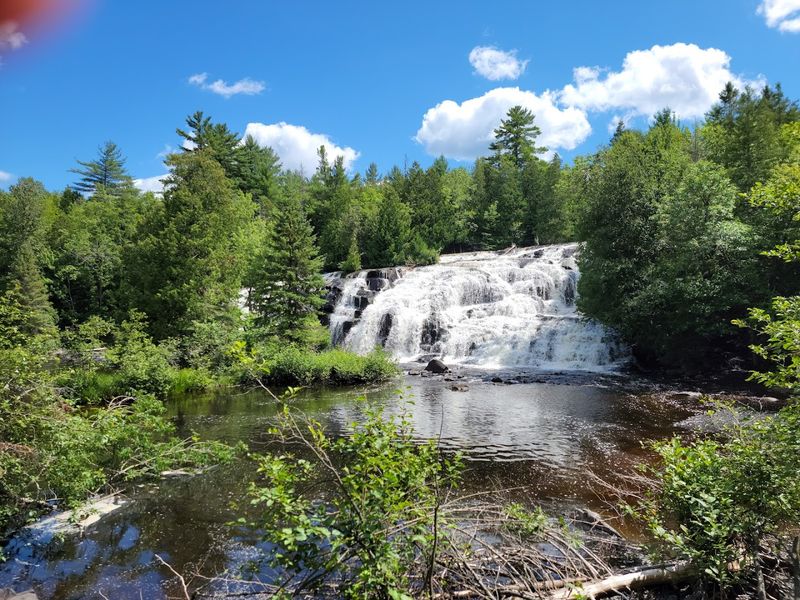
Few places make such a quick impression as a waterfall that seems to pour across an entire hillside. Near Paulding in the western Upper Peninsula, Bond Falls steps and fans over ancient rock ledges in a way that feels almost theatrical, yet the forest around it keeps the mood grounded and peaceful.
It is the kind of stop where you expect a short visit and end up staying much longer.
Rather than one clean vertical drop, the falls spread through a series of broad shelves and chutes, creating constant motion from top to bottom. That layered structure is exactly why photographers love Bond Falls, because every angle offers a different balance of rushing water, dark stone, and green trees.
During spring runoff, the volume can feel overwhelming in the best possible way, while summer brings out finer textures and calmer details.
One of the best parts is how accessible the site is for different kinds of travelers. A boardwalk and viewing platforms make it easy to appreciate the falls without a difficult hike, yet the setting still feels rooted in deep Northwoods country.
You get comfort and drama in the same stop, which is not always easy to find.
If you are building a Michigan waterfall road trip, this one deserves priority status. The scene feels expansive, polished by nature, and surprisingly intimate once you start listening to the smaller channels between the main drops.
Bond Falls proves that a highly visited place can still feel like a secret the moment the water takes over your attention.
Miners Falls
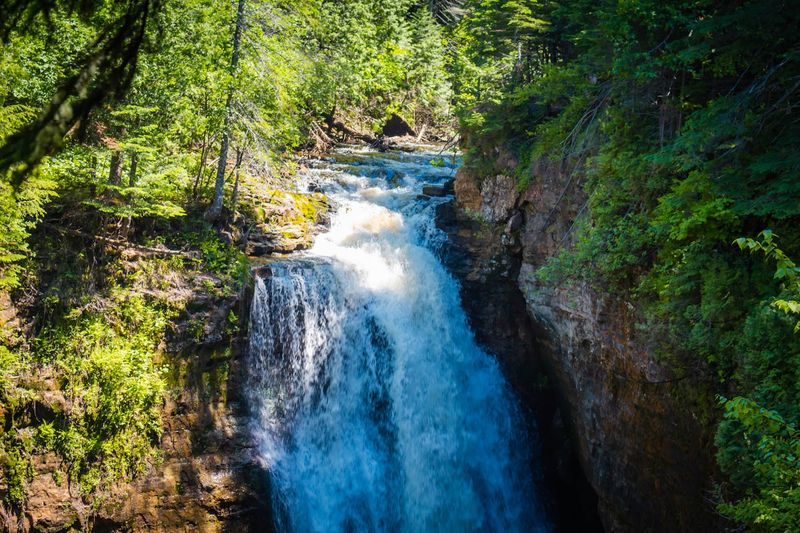
A longer forest approach often makes a waterfall feel more earned, and that is part of the appeal here. In the Pictured Rocks area near Munising, Miners Falls waits at the end of a wooded trail before revealing a powerful drop into a sandstone gorge.
The scene feels deeper, darker, and more dramatic than many first-time visitors expect from the Midwest.
The waterfall plunges roughly forty feet, but its force and setting make it appear even taller. Water narrows as it descends, then crashes into a gorge lined with layered rock and thick evergreens, creating a classic Upper Peninsula mood that feels both rugged and cool.
Several stairways and viewing platforms help you take in the best angles without needing technical hiking skills.
The walk to the falls is manageable for most people, which makes Miners a great middle ground between quick roadside stops and more demanding backcountry treks. Along the way, the trail passes through quiet forest that builds anticipation instead of giving everything away too soon.
By the time you reach the overlook, the roar of the water has already done half the storytelling.
This is one of those places that stays with you because the composition feels so complete. You have the dark gorge, the focused column of water, the surrounding woods, and that sense of distance from everyday noise.
If you want a waterfall that feels cinematic without being inaccessible, Miners Falls is an easy recommendation.
Chapel Falls
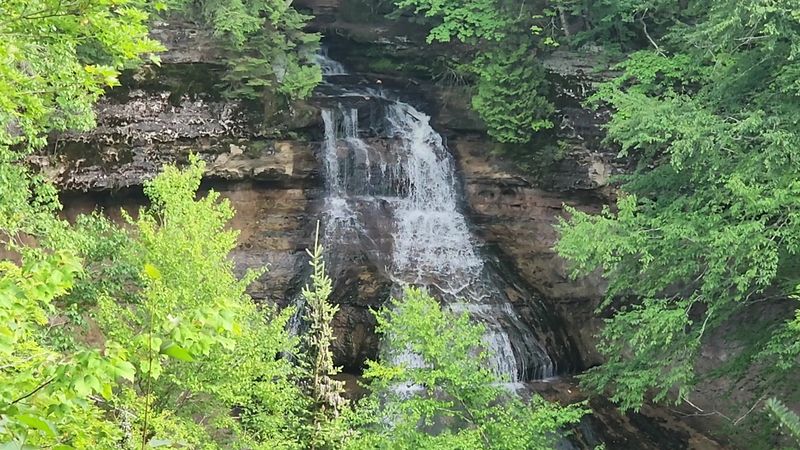
The best waterfall stops sometimes arrive as part of a full day outside, when the trail itself becomes part of the memory. Along the Chapel Basin area near Munising, Chapel Falls rewards hikers with a peaceful cascade tucked into one of the most scenic sections of Pictured Rocks National Lakeshore.
It feels less like a roadside attraction and more like a natural waypoint in a larger wilderness story.
The falls are formed by Chapel Creek as it drops over rock ledges within a heavily wooded ravine. While not the tallest or loudest waterfall in Michigan, it has a calm, satisfying beauty that fits the surrounding forest perfectly.
Many visitors pair it with hikes toward Chapel Rock, Chapel Beach, or the lakeshore cliffs, which makes the waterfall part of a bigger landscape experience.
That longer setting is exactly why Chapel Falls feels special. You are not just stepping out for a photograph, but moving through a trail network where birdsong, wind in the trees, and the smell of damp earth prepare you for the view.
When the water finally appears, it feels discovered rather than delivered.
If you enjoy destinations that blend movement, scenery, and a little effort, this stop is easy to love. The falls bring a quiet contrast to the dramatic Lake Superior cliffs nearby, reminding you that some of the most rewarding sights in Michigan are hidden slightly inland.
Chapel Falls is subtle, scenic, and deeply worth the walk.
Wagner Falls
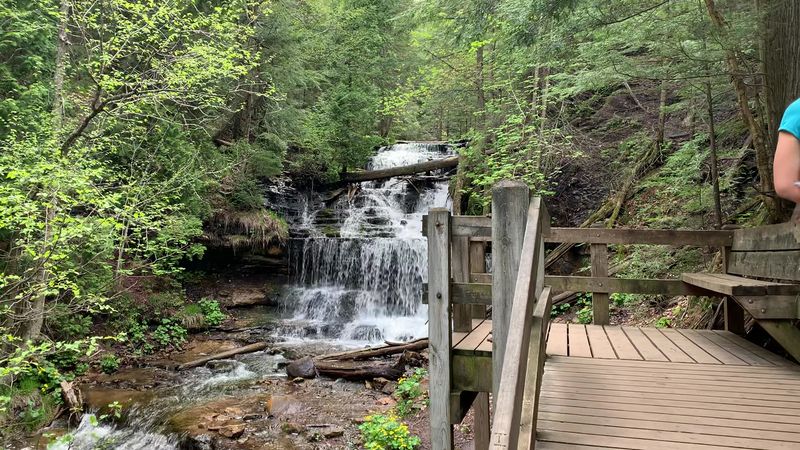
Soft light, mossy ground, and the hush of a short forest path set the tone before the waterfall even comes into view. Just outside Munising, Wagner Falls offers one of the easiest and most serene waterfall experiences in Michigan, yet it never feels overly developed or ordinary.
The whole visit is brief, but the atmosphere makes it linger in your mind.
The cascade drops about twenty feet over layered rock in a narrow, elegant sheet, framed by cedar and hemlock forest. Because the viewing area is close to the parking lot, this is a perfect stop if you want beauty without a strenuous hike or need a quieter break between bigger sightseeing plans.
The surrounding wetlands and trees help keep the site cool, shaded, and richly textured.
What makes Wagner Falls so appealing is its intimacy. Instead of delivering huge scale, it draws you in with detail, from the way water threads over dark stone to the thick green vegetation crowding the edges.
It is the kind of place where you naturally lower your voice because the setting feels almost enclosed and reflective.
If larger waterfalls impress you with power, this one wins with mood. There is a gentleness here that feels rare, especially so close to the road, and it makes the site a favorite for travelers who want something peaceful and photogenic.
Wagner Falls proves that hidden-wonder energy does not always depend on size, only on how completely a place changes your pace.
Laughing Whitefish Falls
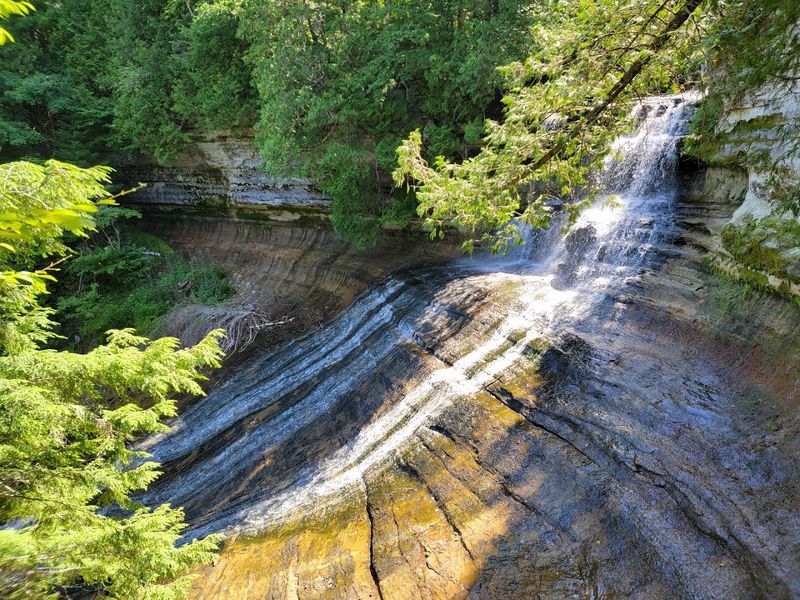
There is a different kind of thrill when a waterfall reveals itself from above, spilling down a forested escarpment in one long white rush. Near Sundell in the central Upper Peninsula, Laughing Whitefish Falls creates that moment beautifully, dropping about one hundred feet over limestone in one of the state’s tallest cascades.
It feels expansive, airy, and surprisingly dramatic for such a quiet corner of Michigan.
A trail and stairway system lead to overlooks that frame the falls against dense woodland, making the descent part of the experience. In spring, runoff gives the waterfall extra force, while autumn surrounds it with brilliant color that turns the whole ravine into a postcard scene.
The layered limestone and broad fan of water give it a shape that feels distinct from the tighter gorges found elsewhere.
This is a place where perspective matters. From the upper viewing area, you get a sweeping look at the full drop and the forest around it, while lower angles bring out the texture and movement in the water itself.
The climb back up reminds you that even a developed scenic site can feel adventurous.
If you want a waterfall that combines height, accessibility, and a classic Upper Peninsula backdrop, this one stands out quickly. The name alone is memorable, but the real reward is the way the falls seem to brighten the entire ravine.
Laughing Whitefish Falls feels hidden not because it lacks beauty, but because it delivers so much more than most travelers expect.
Canyon Falls
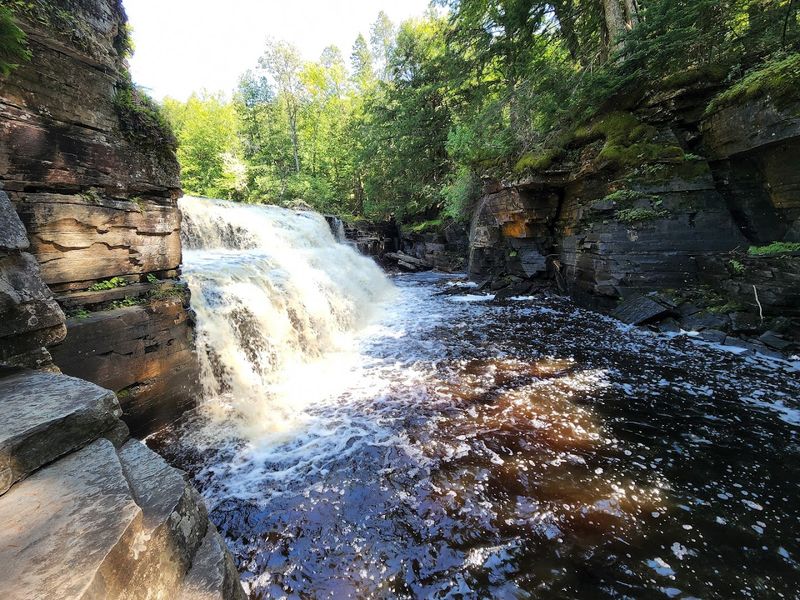
Not every waterfall announces itself with one obvious plunge, and that is part of what makes this place memorable. Near L’Anse, Canyon Falls pairs a rugged cascade with a dramatic river gorge that has earned the nickname Grand Canyon of Michigan, giving the entire stop a sense of layered discovery.
You come for the falls, but the canyon often steals the show.
The trail leads through forest before opening onto overlooks above the Sturgeon River, where water threads through rock channels and drops through a scenic bend. Depending on water levels, the falls can feel more like a forceful rapid system than a single classic curtain, which adds to the wild character of the place.
The rocky gorge, steep walls, and surrounding trees create a landscape that feels older and rougher than many roadside destinations.
This is one of the better stops for travelers who enjoy a little variety in their scenery. You get walking trails, changing viewpoints, and the satisfying sense that the river is constantly reshaping the terrain below.
It feels especially rewarding after rain, when the current gains energy and the gorge echoes with movement.
If your ideal waterfall outing includes geology, forest, and a little wonder at how such a place exists in Michigan, Canyon Falls delivers. The site feels adventurous without being overwhelming, and every overlook adds another layer to the experience.
It is a reminder that hidden wonders are often as much about the landscape around the water as the drop itself.
Hungarian Falls
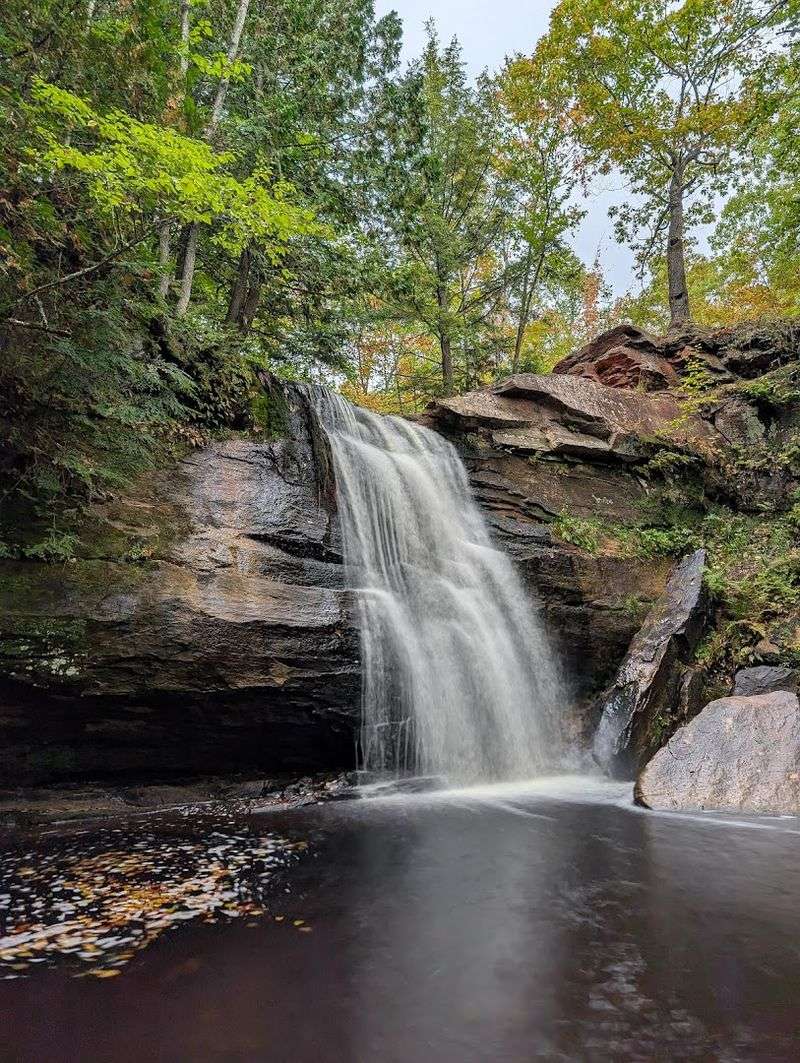
Some waterfalls reward curiosity more than signage, and that is exactly the appeal here. Near Hancock in the Keweenaw Peninsula, Hungarian Falls unfolds as a multi-tiered series of cascades along a forested stream, offering hikers several viewpoints instead of one neat finale.
The place feels a little wilder, a little less polished, and much more personal because of it.
There are upper, middle, and lower sections, each with a different mood depending on season and water flow. After rain or during spring melt, the stream gains force and the drops become more dramatic, while summer reveals more rock texture and calmer pools between the ledges.
The surrounding terrain is wooded and uneven, giving the entire visit a more exploratory feel than a standard scenic overlook.
This is a good choice if you like the idea of finding your own favorite angle rather than standing at one designated platform. The trail conditions can be muddy or rough in spots, so a little care goes a long way, but that lightly rugged quality is part of the charm.
You get the sense that you are seeing a place locals cherish rather than a heavily packaged attraction.
In a region already rich with dramatic water, Hungarian Falls stands out for its layered character. Instead of one signature drop, you get a sequence of moments, each one rewarding attention in a different way.
It feels hidden because it asks you to participate a little, and that makes the payoff even better.
Eagle River Falls
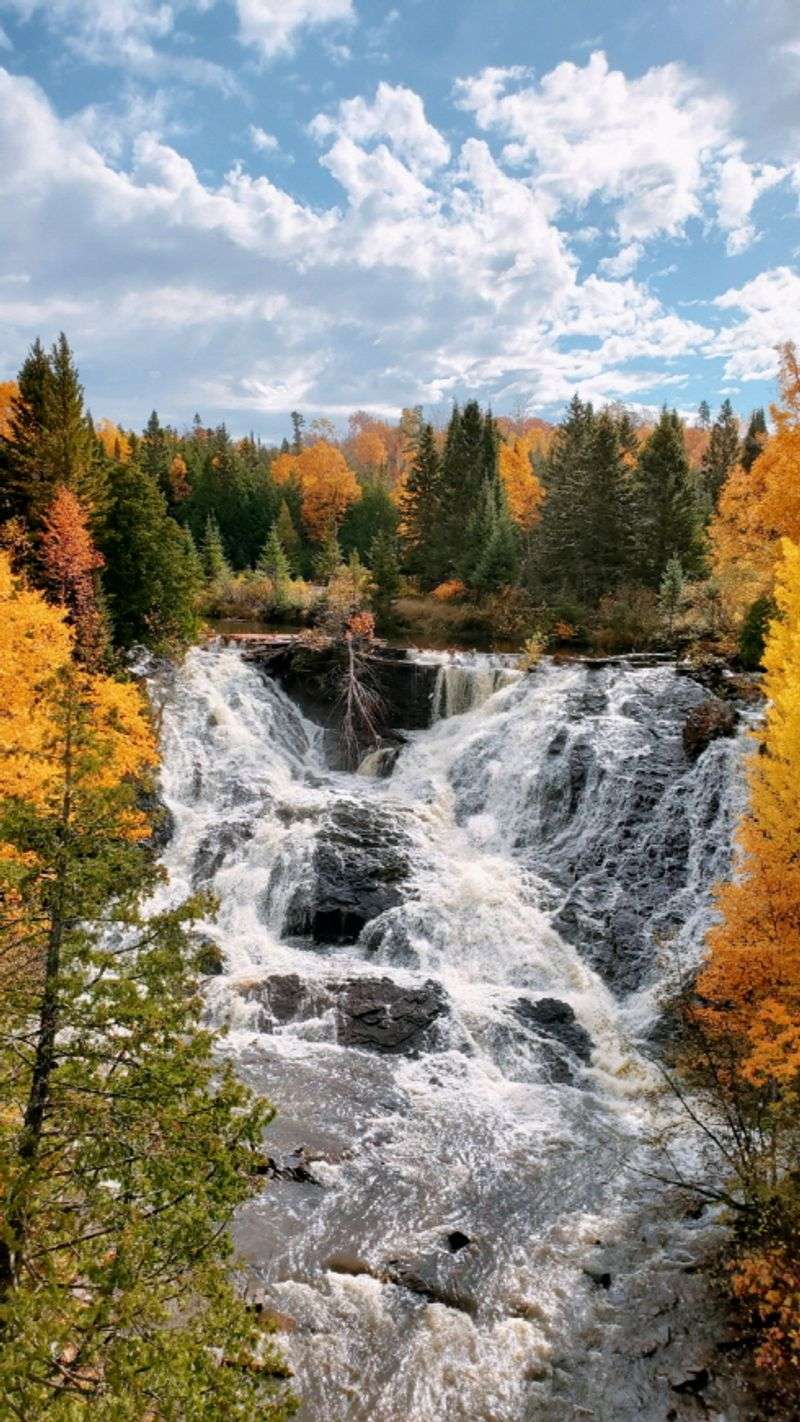
A waterfall pouring through a village and hurrying toward Lake Superior has a charm all its own. In the small community of Eagle River on the Keweenaw Peninsula, Eagle River Falls delivers that exact scene, combining easy access with a rugged drop that feels bigger than its roadside location suggests.
It is quick to reach, but it never feels forgettable.
The river funnels through a rocky gorge beneath a historic bridge before continuing toward the lake, creating a layered composition that is especially striking during spring runoff. High water gives the falls extra force, turning the channel into a loud, churning ribbon of white against dark stone.
Even in calmer seasons, the setting holds attention because the village, bridge, and shoreline environment add texture beyond the waterfall itself.
This is one of the best stops for travelers who want dramatic scenery without a long hike. You can appreciate the falls from nearby overlooks and still feel connected to the raw movement of the river.
The proximity to Lake Superior gives the whole area a windswept, edge-of-the-map quality that enhances the experience.
If you are exploring the Keweenaw, this stop makes an easy and worthy addition to your route. The falls feel embedded in the character of the town rather than separate from it, which makes the visit memorable in a different way than remote forest cascades.
Eagle River Falls proves that convenience and scenic impact can absolutely coexist.
Great Conglomerate Falls
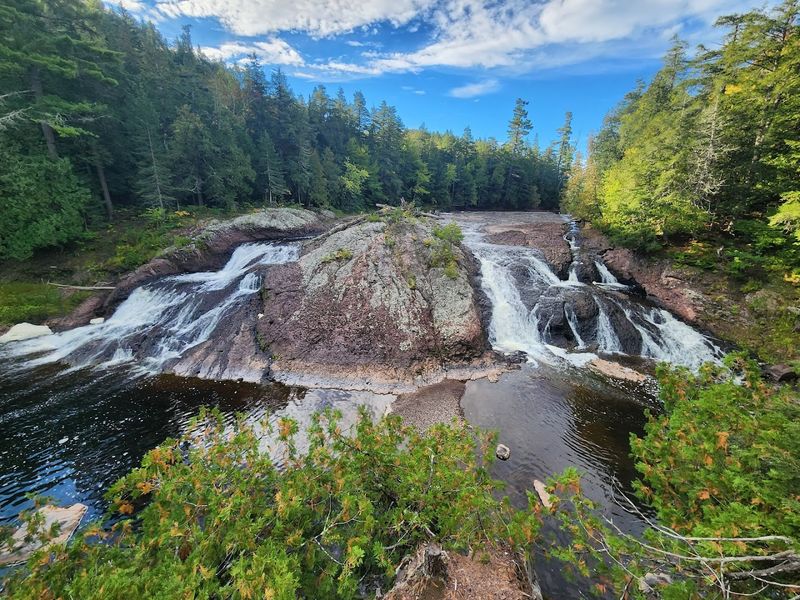
Along a scenic river corridor, the anticipation can be half the fun, especially when each stop reveals a different personality. On the Black River near Ontonagon, Great Conglomerate Falls stands out for its layered rock formations and forceful flow, creating a look that feels both geologically interesting and visually dramatic.
It is one of those waterfalls that rewards anyone who likes texture as much as raw power.
The falls tumble through a rocky section of river where the distinctive conglomerate stone adds extra pattern and depth to the scene. Depending on water levels, the cascade can appear muscular and loud or more intricate, with separate ribbons threading across the ledges.
Surrounded by forest and accessed along the Black River Scenic Byway, the site feels scenic in a classic Upper Peninsula way.
Part of the appeal is how well this waterfall fits into a larger day of exploration. The byway includes several notable falls, but Great Conglomerate holds its own by combining movement, rock detail, and a setting that feels slightly more tucked in than some of its neighbors.
It invites you to linger and study the river rather than simply snap a photo.
If you enjoy road trips where every stop adds a new variation on the same natural theme, this one will fit beautifully into your route. The waterfall feels substantial, photogenic, and pleasantly understated despite its obvious beauty.
Great Conglomerate Falls proves that even within a famous river corridor, individual stops can still feel like discoveries.