Georgia may be best known for its historic towns, mountain scenery, and Southern architecture, but it also hides a surprising collection of castle-like landmarks that feel completely out of place in the best possible way.
Scattered across the state are grand stone estates, turreted mansions, European-inspired retreats, and unusual structures that evoke the atmosphere of distant countries and centuries past.
Some were built by wealthy visionaries inspired by Old World design, while others developed unique identities through folklore, creativity, or architectural ambition.
Visiting them often feels like stepping into an entirely different setting, far removed from the landscapes most people associate with Georgia.
Towering facades, ornate interiors, and fascinating histories add to the sense of discovery.
Together, these hidden Georgia castles offer some of the state’s most unexpected and enchanting places to explore.
1. Swan House – Atlanta, Fulton County
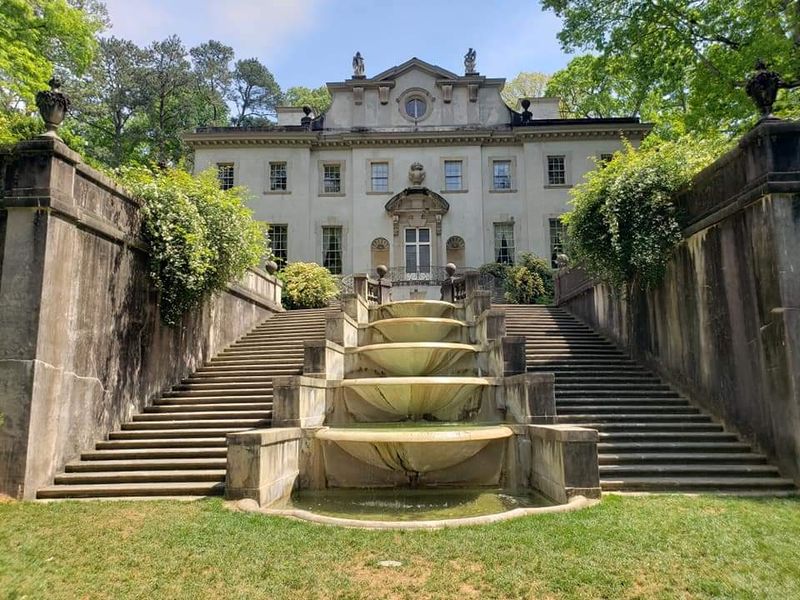
Graceful symmetry, clipped hedges, and a dramatic stairway make this estate feel less like Atlanta and more like a noble residence outside Rome.
Everything about the approach is composed to impress, from the terraces to the refined proportions of the facade.
That polished grandeur is the magic of Swan House in Atlanta.
Completed in 1928 for the Inman family and designed by Philip Trammell Shutze, the mansion is celebrated for its classical style and European influences.
Although it is not a castle in the medieval sense, it absolutely belongs on this list because it delivers the same transportive effect.
You arrive expecting a historic home and leave feeling as though you toured the country seat of an old-world dynasty.
The sweeping steps, fountain features, and formal landscaping create layers of drama before you even reach the interiors.
Once inside, the craftsmanship and carefully preserved rooms reinforce the sense of privilege, ceremony, and distance from everyday life.
The house changes with every angle, and its gardens do a lot of the illusion work that makes the place feel continental.
Swan House may be refined rather than rugged, but it still delivers one of Georgia’s most convincing trips into another country.
2. The Rock House – Thomson, McDuffie County
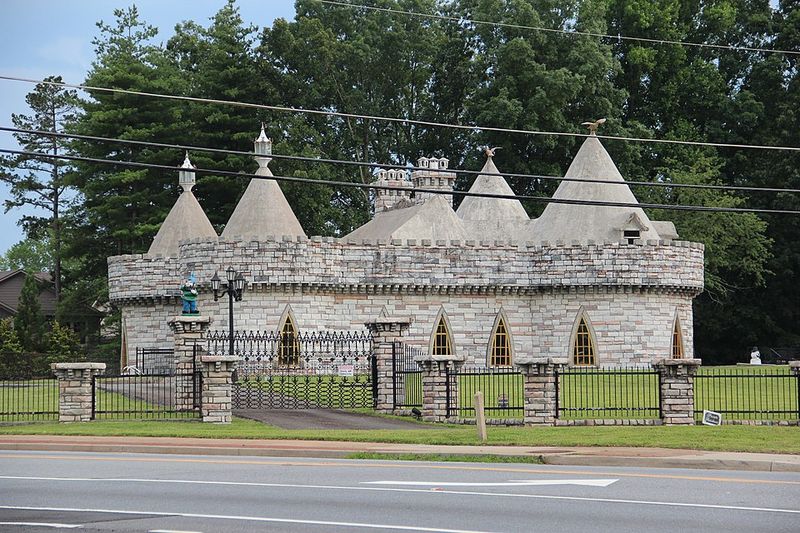
Lonely roads and open land make this site feel older than almost anything around it.
Its rough stone walls and squat, defensive shape suggest a frontier stronghold more than a simple roadside dwelling.
That striking impression belongs to The Rock House near Thomson in McDuffie County.
Built around 1785 and long associated with early travel routes, the structure is one of Georgia’s oldest stone houses.
Its thick masonry, unusual for the region and period, gives it a distinctly fortress-like look that sets it apart from familiar wood-frame Southern architecture.
You can easily understand why so many visitors describe it as castle-adjacent, even if its origins were practical rather than aristocratic.
There are no grand ballrooms or decorative towers, yet the building’s endurance and silhouette create a powerful sense of mystery.
It feels like the kind of place where weather, history, and human need shaped every decision, leaving behind something unexpectedly dramatic.
If you appreciate hidden sites that reward imagination, this is a worthy detour.
Stand back and notice how the stone rises from the Georgia landscape with a severity that feels almost British or Scottish.
Among the state’s castle-like landmarks, The Rock House offers a rougher, earlier, and far more frontier version of the fantasy.
3. Hay House – Macon, Bibb County
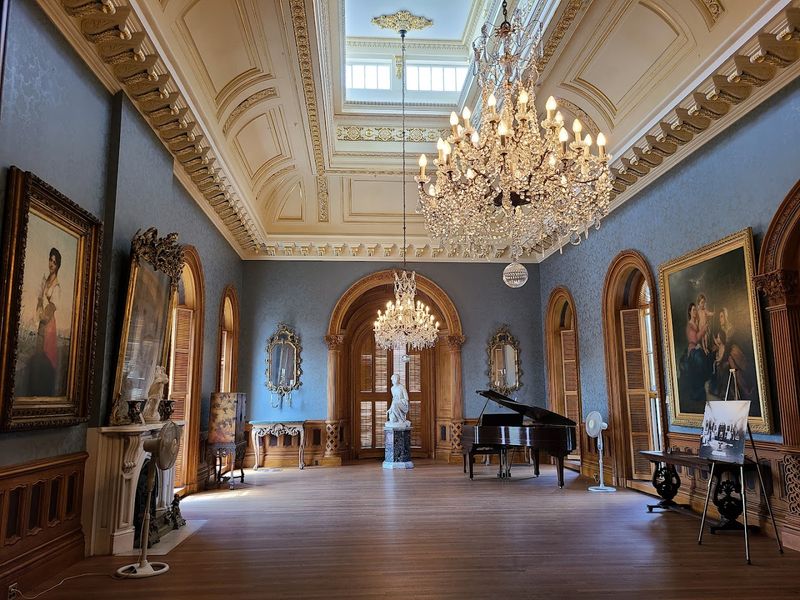
From the street, this mansion rises with such confidence that it feels closer to an Italian palace than a Georgia residence.
Its commanding height, elaborate ornament, and stately profile give it a larger-than-life presence that stops you immediately.
That unforgettable spectacle is Hay House in Macon.
Built between 1855 and 1859 for William Butler Johnston, the home is often described as one of the South’s finest examples of Italian Renaissance Revival architecture.
The design includes a cupola, lavish interiors, and engineering innovations that were remarkably advanced for the era.
While not a fortress, it creates the same kind of awe a European castle or grand urban palace might inspire.
Every detail suggests wealth, vision, and a desire to build something culturally ambitious in a city many travelers underestimate.
You can sense that the house was meant to declare status, but it now offers something better: a chance to step inside a beautifully preserved fantasy of nineteenth-century elegance.
The rooms, stair halls, and decorative finishes deepen the illusion that you have crossed into a far older and grander world.
Among Georgia landmarks that feel international, Hay House is less hidden than some, yet it still surprises people with how gloriously un-Southern it looks.
4. Uhuburg Castle – Summerville, Chattooga County
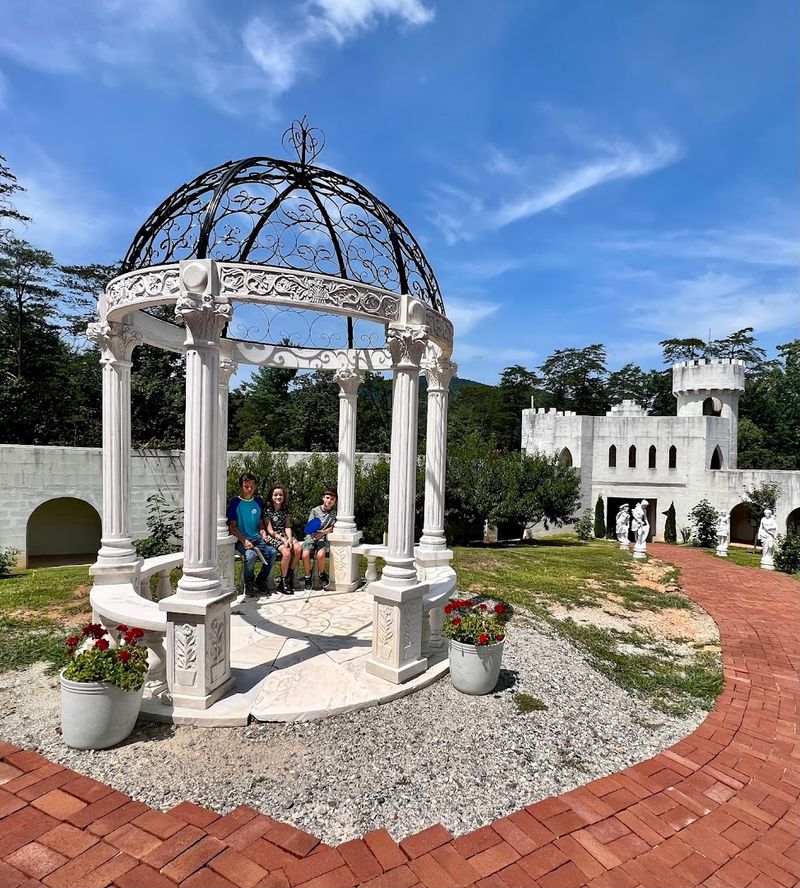
Color, clutter, and pure imagination make this place feel like a handmade kingdom assembled outside ordinary rules.
Instead of polished stone halls, you get mosaic pathways, painted messages, towers, and structures that seem to rise from a dream.
That unforgettable world is Uhuburg Castle in Summerville.
Created by visionary architect Bob Marthai, the site is less a single castle than an entire environment of symbolic architecture.
Still, parts of it absolutely evoke a whimsical fortress or eccentric pilgrimage site from another country, especially where spires, layered construction, and decorative surfaces overlap.
You are stepping into an artistic universe where every object seems to carry spiritual urgency and personal myth.
Rather than inherited wealth or formal design, the grandeur comes from obsession, creativity, and an almost impossible density of detail.
That makes the Uhuburg Castle feel deeply individual, yet strangely universal, like a sacred complex built from found materials and relentless vision.
The site rewards slow looking, and the more you notice, the more it resembles a fantastical citadel of memory, faith, and outsider art.
Among Georgia’s hidden wonders, the Uhuburg Castle may be the least conventional entry, but it is also one of the most transporting.
5. Old Governor’s Mansion – Milledgeville, Baldwin County
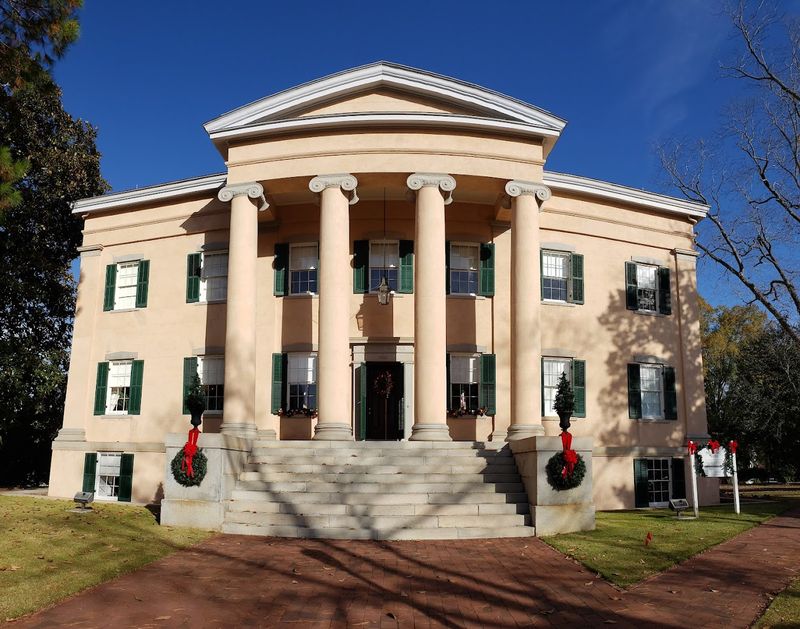
Wide lawns and imposing architecture give this landmark the air of a government palace from another century.
It does not rely on towers or battlements, yet its scale and ceremonial presence make it feel every bit as transporting as a castle.
That dignified effect belongs to the Old Governor’s Mansion in Milledgeville.
Completed in 1839 while Milledgeville served as Georgia’s capital, the building was home to governors before the seat of government moved to Atlanta.
Its design reflects Greek Revival grandeur, and the structure was intended to communicate authority, stability, and cultivated taste.
Those ambitions still read clearly today, especially when you approach it as a traveler looking for places that break your expectations of Georgia.
You can feel that public power once lived here, but the mansion also offers the romance of another world through its symmetry, formal rooms, and elevated setting.
It feels like a place where diplomacy, ceremony, and social ritual once unfolded behind heavy doors and polished surfaces.
The building’s presence is calm instead of theatrical, but that restraint is part of its charm.
Milledgeville Old Governor’s Mansion proves that Georgia can feel unexpectedly imperial, even without a single crenelated wall in sight.
6. Barnsley Resort Ruins – Adairsville, Bartow County
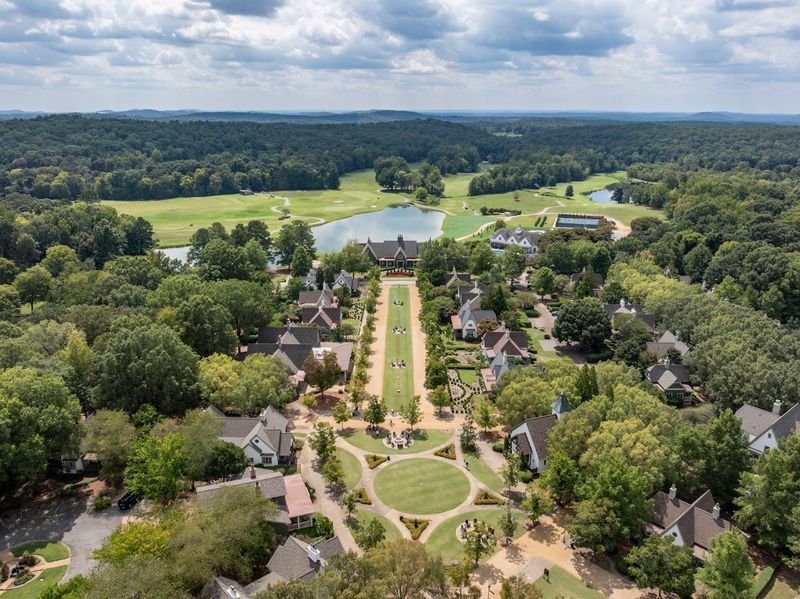
Misty gardens, broken stone walls, and a quiet hush give this place the feeling of a forgotten European estate.
You can wander through archways and courtyards that seem designed for a period drama rather than a North Georgia getaway.
That dreamlike mood settles in fully at the Barnsley Resort Ruins in Adairsville.
Originally built in the 1840s by Godfrey Barnsley for his wife, the manor was inspired by Italian villa design and grand romantic tastes.
A tornado later damaged the home, leaving behind the roofless shell that still anchors the property with haunting beauty.
What remains today is not just photogenic stone, but a layered story of grief, wealth, ambition, and reinvention.
I think what makes these ruins so memorable is the contrast between refinement and decay.
You will see carved details, old brickwork, and elegant proportions, yet nature softens everything with ivy, seasonal blooms, and shifting light.
It feels less like visiting a resort feature and more like stumbling onto a hidden chapter of aristocratic Georgia.
Among Georgia’s castle-like places, this one feels especially transportive because the ruins let your imagination finish the architecture.
7. The Castle at Wildwood Gardens – Molena, Pike County
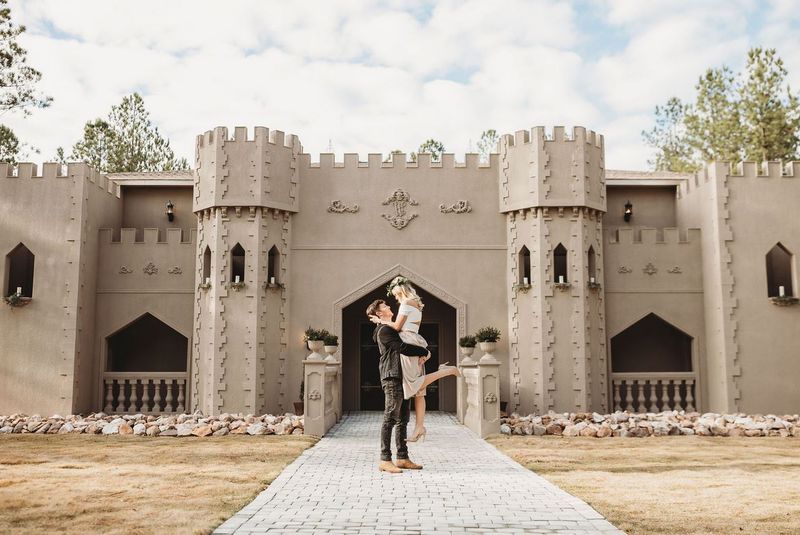
Tucked into a landscape of gardens and trees, this place feels like a secret borrowed from the countryside of France.
The stonework, towers, and secluded setting create the kind of atmosphere that makes you lower your voice without realizing it.
That old-world illusion comes alive at The Castle at Wildwood Gardens in Molena.
Unlike Georgia’s better-known mansions, this site leans fully into fairy-tale character.
Its medieval-inspired look pairs beautifully with the surrounding grounds, where flowers, pathways, and layered plantings soften the structure and make it feel timeless.
You are not just looking at a building here, but at a carefully staged mood of romance, retreat, and visual surprise.
One angle highlights rugged stone and defensive-looking forms, while another feels almost wedding-ready, elegant, and serene.
That mix keeps it from becoming kitschy, because the setting gives the architecture context and a sense of lived enchantment.
It is smaller and more tucked away than some grander landmarks, yet that hidden quality is exactly the point.
You leave feeling as though you discovered something personal, a place that belongs in a storybook but somehow ended up in Pike County.
8. Rock Eagle Effigy Mound Area Stone Structures – Eatonton, Putnam County
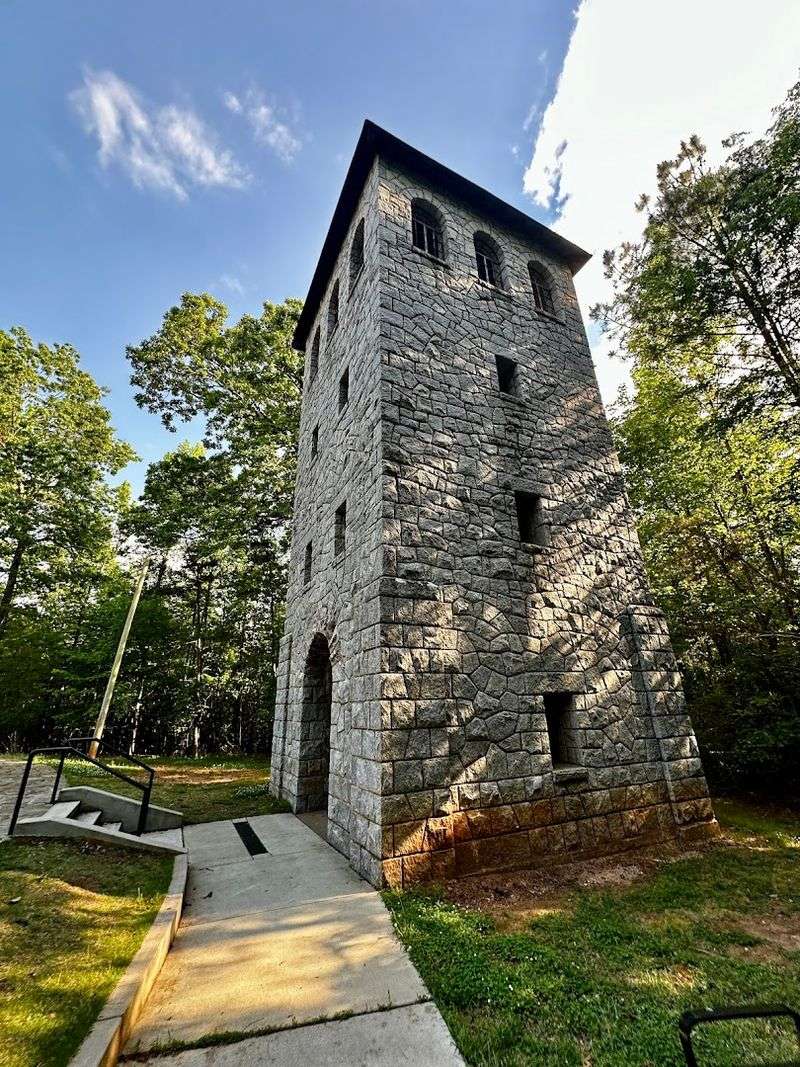
Deep woods, rough stone, and an air of unanswered questions give this area a surprising sense of old-world mystery.
The structures and surrounding landscape can feel more like the edge of an archaeological zone abroad than a familiar Georgia destination.
That unusual atmosphere surrounds the stone features near the Rock Eagle Effigy Mound area in Eatonton.
Most visitors come knowing Rock Eagle for its remarkable Native American effigy mound, a major prehistoric earthwork shaped like a bird.
Nearby stone structures and rustic built elements around the broader area have encouraged comparisons to ruins, lookout points, or fragments of some hidden compound.
Even when their origins are more recent or practical, the visual effect can still be strikingly castle-like, especially against forested terrain and uneven stone.
You should approach the area with respect for its Indigenous history while also noticing how certain views trigger that powerful feeling of being far from contemporary Georgia.
The stones, elevation changes, and quiet surroundings invite a slower, more interpretive kind of visit.
Its atmosphere depends on texture, setting, and the emotional charge of ancient-looking forms in the landscape.
If you enjoy places that feel mysterious first and explain themselves second, this area leaves a lasting impression.
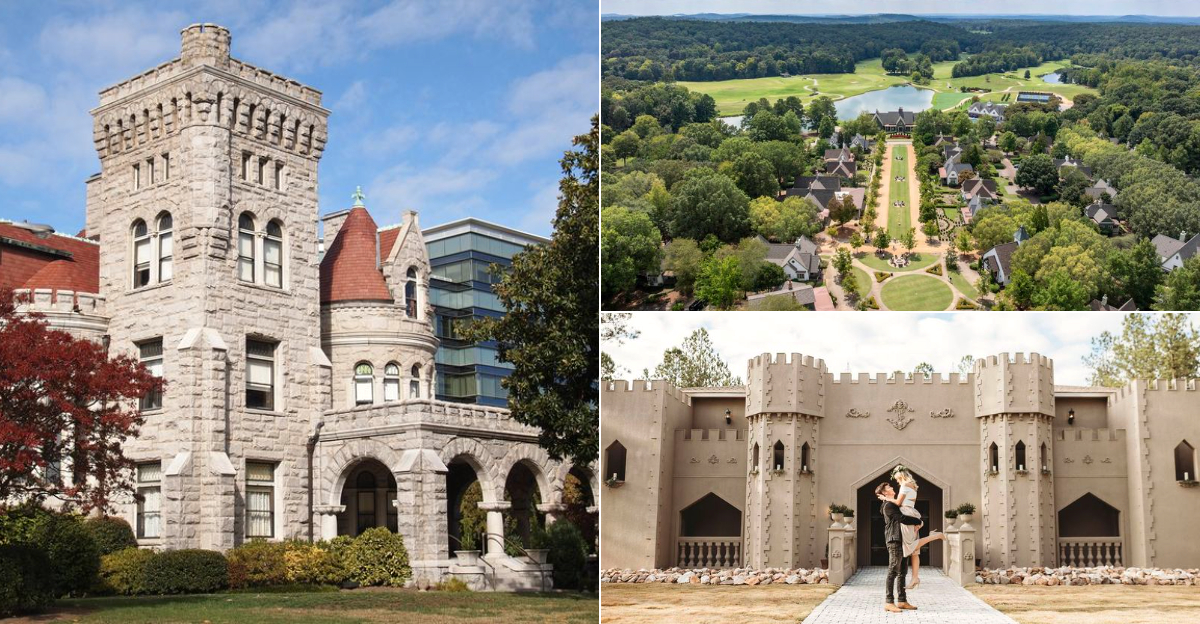
9. Rhodes Hall – Atlanta, Fulton County
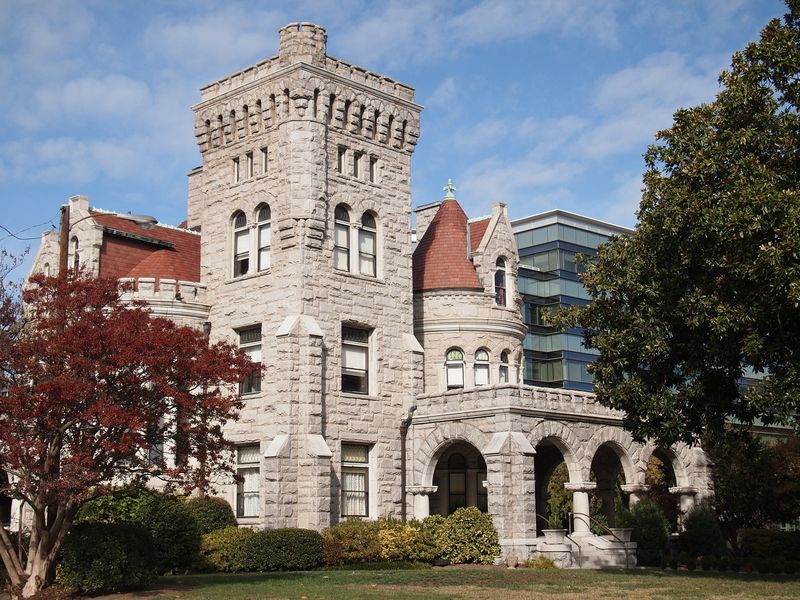
Traffic rushes past, glass towers glint nearby, and then suddenly a stone castle rises from Midtown like a glitch in time.
The turrets, heavy masonry, and richly detailed facade feel astonishingly out of place in the best possible way.
Built in 1904 for furniture magnate Amos Rhodes, the home was designed in a Romanesque Revival style that drew obvious inspiration from medieval Europe.
Inside, stained glass and handcrafted interiors deepen the sense that this is no ordinary historic house museum.
Even before you step through the doors, the exterior sells the dream of a private fortress planted in the modern city.
Rhodes Hall does not merely borrow castle features as decoration, but embraces them with stone arches, crenellated forms, and richly atmospheric rooms.
You can feel the ambition behind it, as if the house was meant to impress visitors before a single word was spoken.
For travelers who think hidden means rural, this stop is a fun correction.
It sits in plain sight, yet many people still drive by without understanding how unusual it really is.
Once you notice Rhodes Hall, Atlanta suddenly seems to hold a fragment of old Europe right along one of its busiest corridors.
10. The Castle Inn – Helen, White County
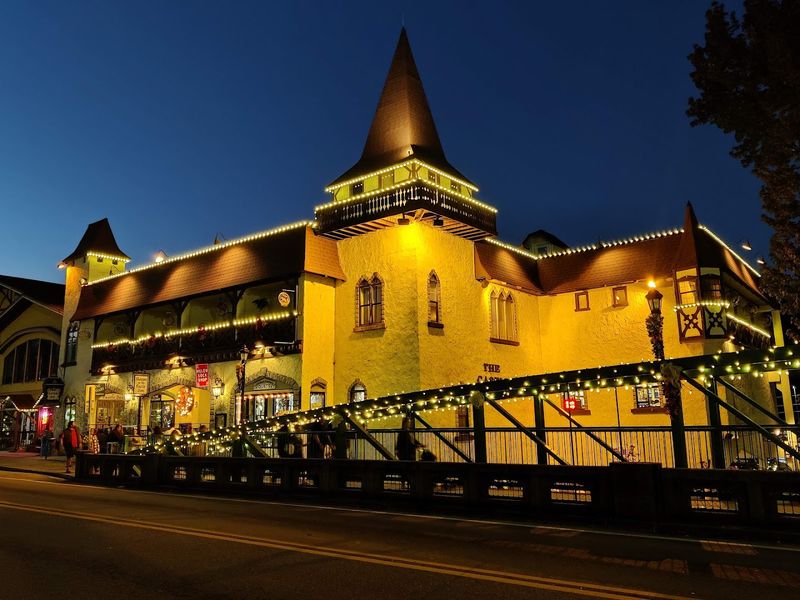
Alpine facades, mountain scenery, and a deliberately storybook atmosphere make Helen feel like it drifted in from another continent.
Within that theatrical setting, one lodging option leans even harder into fairy-tale fantasy with a name and look that promise pure escapism.
That playful stop is The Castle Inn in Helen.
Helen is already famous for its Bavarian-inspired architecture, so a castle-themed inn fits naturally into the town’s make-believe European identity.
The appeal here is less about age or aristocratic history and more about immersion, because you are staying inside the mood rather than simply photographing it.
Turret-like details, themed styling, and the surrounding streets all work together to create a quick passport-free shift in atmosphere.
Sometimes what you want is delight, and Helen understands that better than most Georgia destinations.
When the town is lit up and the mountains frame the buildings, the illusion becomes strong enough that a castle inn feels completely plausible.
You can pair it with walks through Helen, nearby scenery, and other White County attractions without needing a formal tour schedule.
Among Georgia’s hidden castle-like experiences, The Castle Inn offers the easiest route into full-on storybook mode.
11. Eagle Owl Castle – Helen, White County
On a wooded hillside, steep roofs, towers, and heavy stonework create one of the most convincing castle silhouettes in the state.
The structure looks as though it should overlook a valley in Germany or Austria, not a small North Georgia mountain town.
That striking vision is Uhuburg, also known as Eagle Owl Castle, near Helen.
Built as a private residence with unmistakable old-world inspiration, Uhuburg embraces the castle idea more directly than almost anywhere else in Georgia.
Its name, architecture, and elevated setting all deepen the impression that you have crossed into a fantasy landscape shaped by central European references.
Even from the outside, the building projects romance, seclusion, and just enough eccentricity to become unforgettable.
This is not a historic ruin or a merely decorative mansion, but a modern structure designed to evoke medieval and alpine precedents with confidence.
Because Helen already trades in Bavarian atmosphere, Uhuburg feels less like an oddity and more like the culmination of the region’s escapist character.
The surrounding mountains, changing light, and dramatic massing make it feel cinematic in every season.
Uhuburg proves that one of the state’s most transportive places is also one of its most unexpected architectural fantasies.