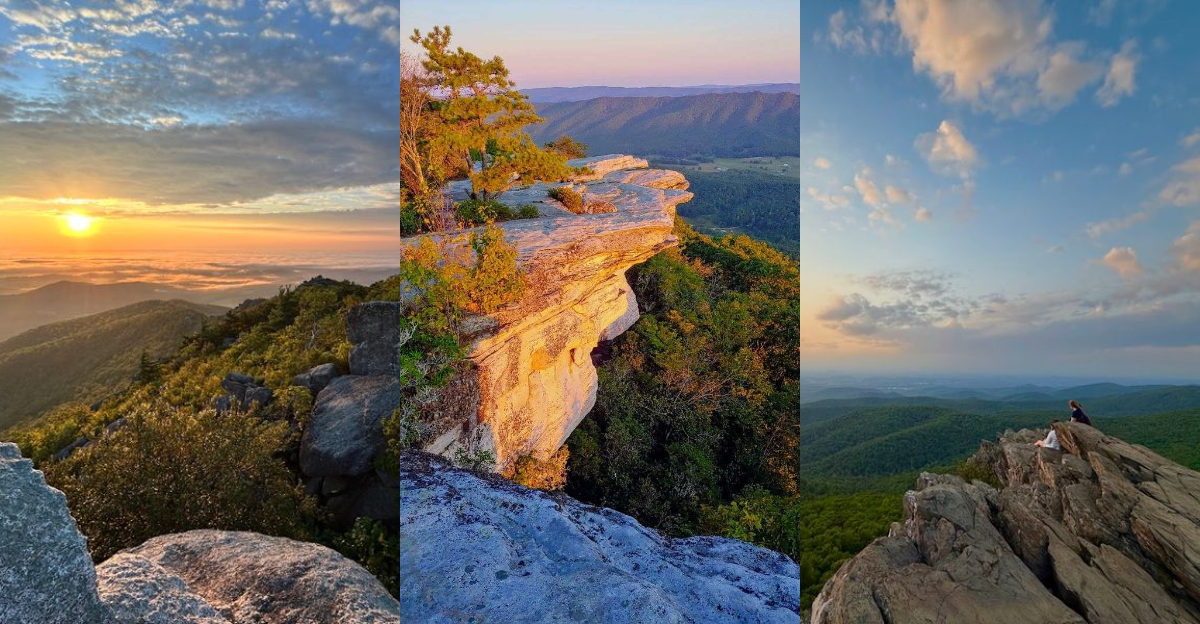
Virginia’s mountains hold the kind of places that make you slow your pace without realizing it. Along quiet trails and forested ridges, ancient stone rises from the landscape in unexpected ways—towering cliffs, weathered arches, winding rock corridors, and massive boulder fields that seem untouched by time.
Spring is an especially rewarding season to explore them. Fresh green leaves soften the hillsides, wildflowers brighten the forest floor, and cool mountain air makes every hike feel a little easier.
Between birdsong and rushing creeks, these formations often feel far removed from busy roads and daily routines.
Some are dramatic landmarks, while others reveal themselves only after a walk through the woods. Each offers a glimpse into a landscape shaped over millions of years.
Here are 10 Virginia rock formations that feel hidden from the rest of the world.
Natural Bridge
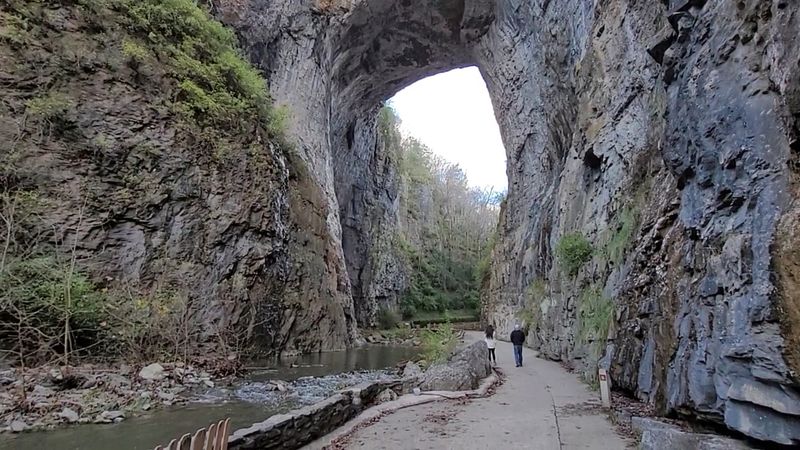
Some places make you feel tiny before you even understand what you are looking at. The air cools near the creek, the forest narrows, and suddenly a vast stone arch appears overhead like a cathedral ceiling shaped by time.
In Virginia, that unforgettable reveal belongs to Natural Bridge.
Rising about 215 feet, this limestone arch was carved gradually by Cedar Creek, which kept cutting through rock until the span remained suspended above the water. It is one of the state’s best known geologic landmarks, yet the approach through trees still gives it a secluded, almost secretive mood.
You are not just seeing a rock formation here, but a dramatic lesson in erosion, persistence, and scale.
The surrounding park adds more context, with wooded trails, nearby cascades, and views that shift as light moves across the stone face. Early morning and late afternoon usually feel especially atmospheric, when shadows deepen the arch and the creek sounds louder than nearby voices.
Even with other visitors around, the formation holds onto a powerful sense of age and isolation.
If you want a rock wonder that feels both iconic and oddly hidden, this is an easy choice. Natural Bridge blends accessibility with genuine awe, which is rarer than it sounds.
It feels like the landscape briefly opened and revealed one of Virginia’s oldest secrets.
McAfee Knob
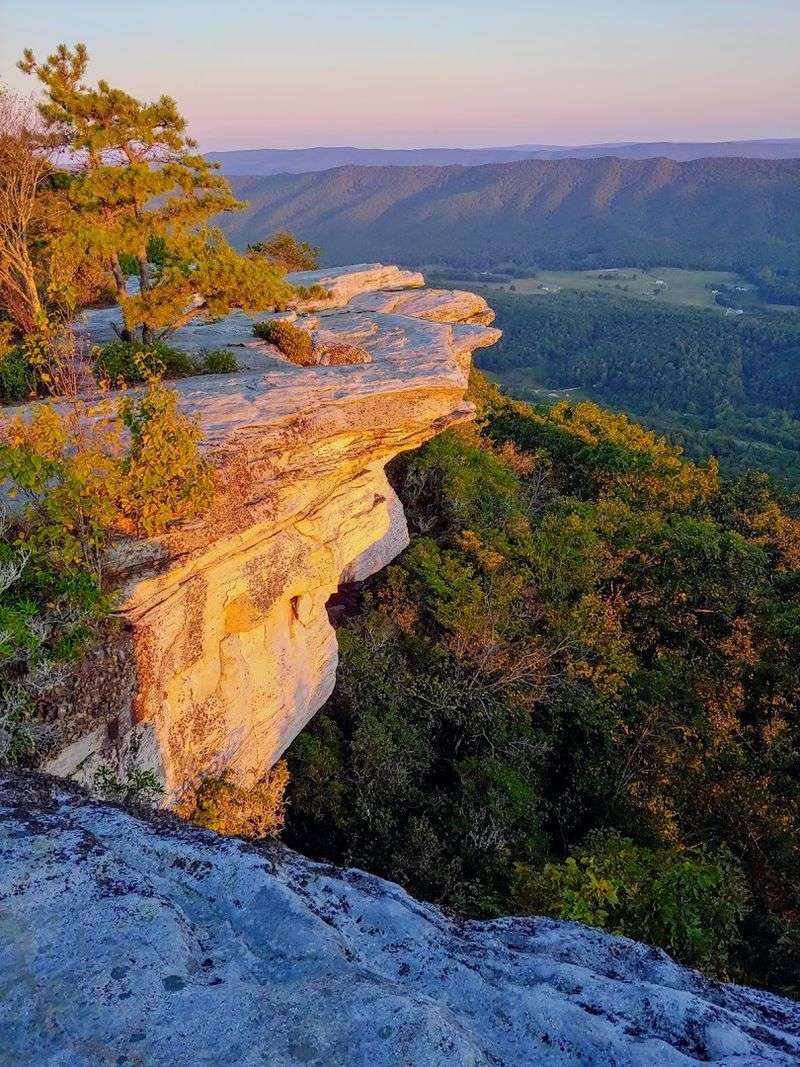
There is a moment on this trail when the woods finally give way and the world seems to drop out in front of you. Wind moves across the ridge, the valley opens in layers, and the rock ledge ahead looks almost too perfect to be real.
That famous perch is McAfee Knob.
Set along the Appalachian Trail near Catawba, this overhanging sandstone ledge has become one of the most photographed viewpoints in the country. Even so, the approach keeps a wild feeling, especially if you start early and hear little more than birds and boots on dirt.
The rock itself projects confidently above the slope, creating the kind of dramatic edge that makes the Roanoke Valley seem endless.
What makes it feel hidden is not secrecy, but the way the landscape swallows everyday noise once you gain elevation. Clouds drift beneath the horizon line, ridges stack into blue distance, and the knob becomes a natural stage above open air.
You can stay a while here and still feel like the mountain is larger than the moment.
If you are building a Virginia rock formation itinerary, McAfee Knob deserves its place. It offers cliff drama, Appalachian scale, and a satisfying sense of arrival.
For a well known destination, it still manages to feel like a world apart.
Dragon’s Tooth
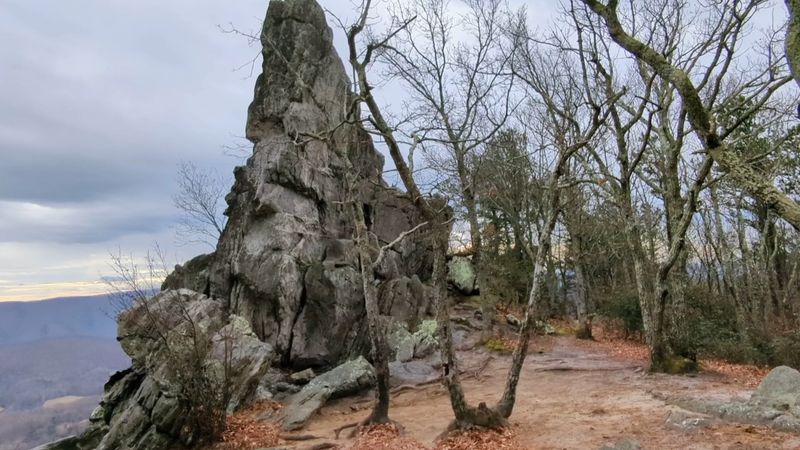
Few places in Virginia feel as fierce and theatrical as this one. The trail grows rougher, the rocks get sharper, and by the time the summit appears, a jagged stone fang rises from the ridge like something pulled from a legend.
That striking formation is Dragon’s Tooth.
Located near Catawba and part of the state’s hiking Triple Crown, this quartzite spire stands out because it looks so improbable against the sky. Reaching it usually involves a steep climb and a final rocky scramble, which gives the destination a harder won, more remote character.
Unlike broad overlooks, the summit here feels narrow, bold, and slightly wild in the best way.
The surrounding rocks create multiple perches and pockets for viewing the valleys below, but the spire remains the undisputed focal point. Weather changes the mood quickly, with sun making the quartzite glow and fog turning the ridge into something almost mythic.
It is the kind of place that makes you slow down, watch your footing, and appreciate how strange natural stone can become.
For travelers chasing formations that feel hidden from ordinary life, Dragon’s Tooth delivers pure personality. It is dramatic, rugged, and memorable without needing any built attraction around it.
The mountain lets the rock do all the talking, and it says plenty.
Tinker Cliffs
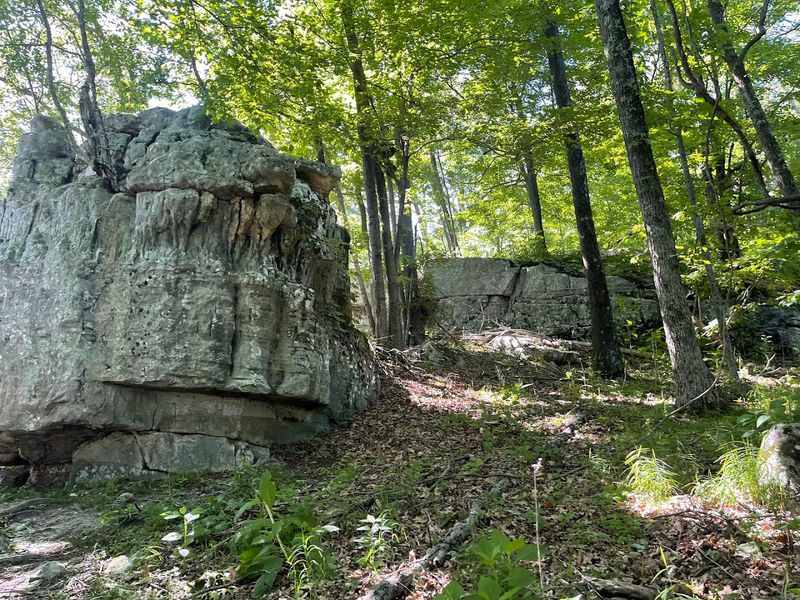
Some overlooks feel like a single viewpoint, but this ridge feels like an entire balcony carved into the mountains. The forest opens gradually, then the cliff line stretches onward with broad drops, open stone, and one sweeping panorama after another.
That commanding edge is Tinker Cliffs.
Part of the Appalachian Trail corridor in Botetourt County, Tinker Cliffs is known for its long series of rock outcrops overlooking Catawba Valley. The exposed limestone and quartzite ledges create an extended cliff experience rather than one isolated photo stop.
Because the formation runs along the ridge, you get changing angles, shifting light, and repeated reminders of just how high the valley floor sits below.
What makes this place feel removed from the world is the combination of scale and silence. You can sit on a warm slab of rock, watch hawks riding thermals, and feel the whole landscape breathe beneath you.
It has the grandeur of a major destination, yet the linear cliffs make it feel less staged and more naturally discovered.
If you are drawn to rocky places with room to linger, Tinker Cliffs stands out. It offers panoramic reward without losing its rough Appalachian character.
Instead of one dramatic formation, you get a whole cliffside world that unfolds step by step.
Devil’s Marbleyard
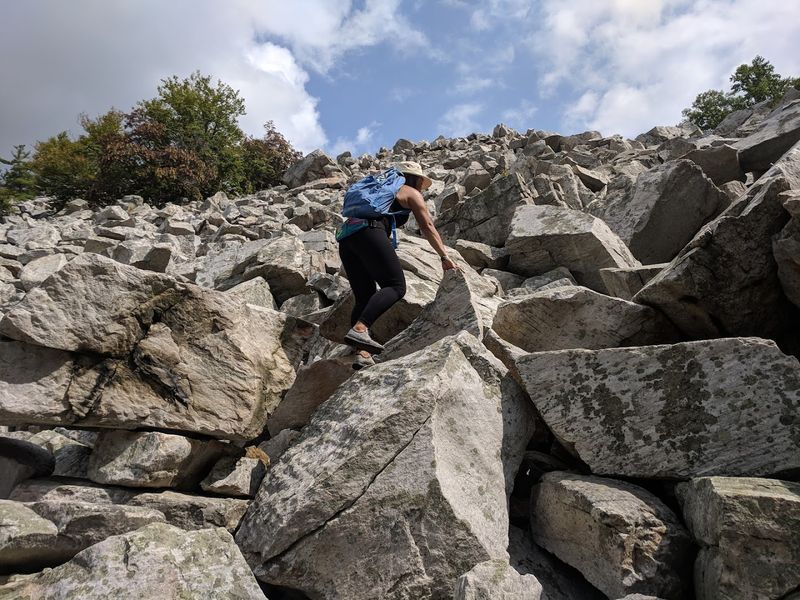
At first glance, it looks less like a trail destination and more like a frozen wave of stone. Huge pale boulders spill across the mountainside in every direction, turning the landscape into a chaotic sea of rock that feels almost post apocalyptic.
This surreal place is Devil’s Marbleyard.
Found in Jefferson National Forest near Glasgow, the formation is a sprawling boulder field made up largely of massive quartzite blocks. Many are house sized, and scrambling across them requires balance, patience, and plenty of route finding.
Because the rocks dominate everything around you, the forest can feel distant even when trees ring the edges.
The scale is what gives Devil’s Marbleyard its hidden world energy. There is no single arch, spire, or summit platform to define the experience, only an overwhelming field of broken stone stretching farther than expected.
Light bounces brightly off the pale surfaces, while gaps between boulders create dark pockets that add mystery and depth.
This is not the place for a quick, polished viewpoint, and that is exactly the appeal. It feels raw, exposed, and strangely ancient, as if the mountain cracked open and left its bones in plain sight.
For adventurous travelers, Devil’s Marbleyard is unforgettable Virginia geology.
The Channels Natural Area Preserve
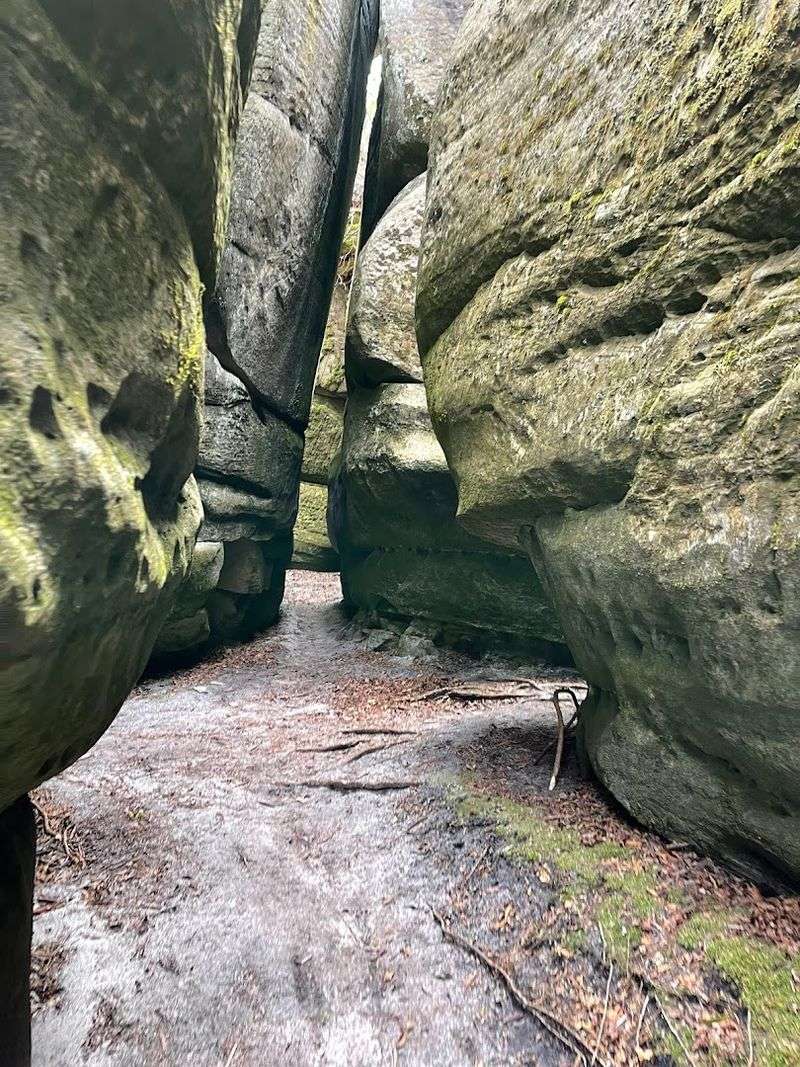
The forest here keeps its secret until the ground suddenly breaks into cracks, corridors, and narrow stone passageways. Cool air lingers between the rocks, moss softens the edges, and the mountain turns into a natural maze that feels impossible to predict.
This remarkable place is The Channels Natural Area Preserve.
Located near Hayters Gap in southwest Virginia, The Channels is famous for its network of deep sandstone crevices formed by weathering and erosion over long periods. Instead of one grand stone feature, you get a labyrinth of tight cuts and winding openings that invite slow exploration.
It feels less like standing before a formation and more like entering one.
That immersive quality is what makes the preserve so memorable. Shade, damp stone, and muffled sound create a pocket of atmosphere that can feel worlds away from the ridgeline above.
In autumn especially, fallen leaves and filtered light make the passages look almost enchanted, while the surrounding woods keep the whole setting surprisingly secluded.
If you want a Virginia rock formation that truly feels hidden, this one may be the strongest contender. The experience is intimate, unusual, and unlike the state’s better known overlooks.
The Channels does not overwhelm with height alone – it captivates by drawing you inward, deeper into the mountain’s stony puzzle.
Old Rag Mountain Summit Rocks
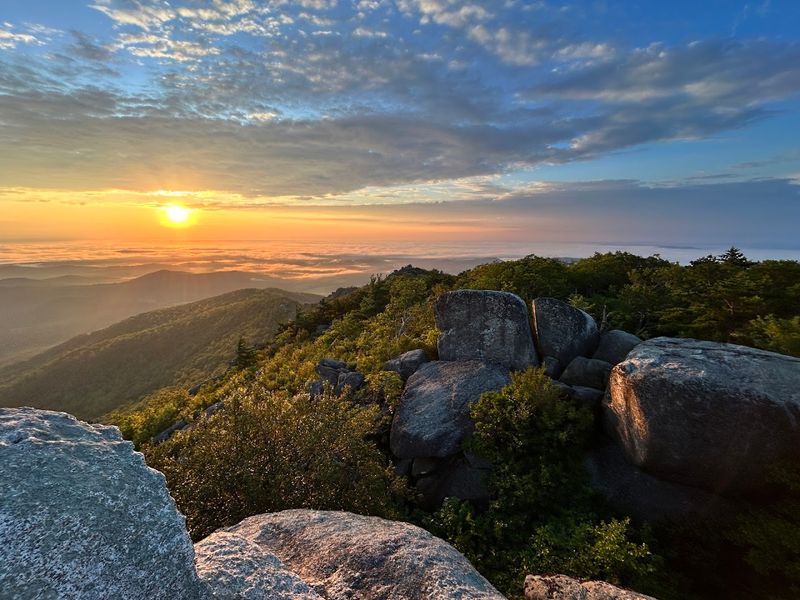
Long before the summit arrives, the mountain starts testing your confidence with stone. You squeeze through gaps, climb over granite, and move across exposed rock until the whole route feels like an initiation into a harsher, wilder side of Shenandoah.
Those unforgettable summit rocks belong to Old Rag Mountain.
Inside Shenandoah National Park, Old Rag is famous for its challenging rock scramble and expansive summit dome. The granite outcrops near the top create an obstacle course of ledges, slabs, and narrow passages that turn the ascent into part hike, part hands on adventure.
By the time you reach the open summit, the mountain has earned your full attention.
What makes Old Rag feel hidden is not solitude alone, but immersion. The boulders and exposed stone pull you so completely into the terrain that the outside world falls away, replaced by texture, footing, and sky.
Once you stand above it all, the 360 degree views feel even bigger because you met them through rock rather than a simple trail.
This is one of Virginia’s most celebrated mountain formations for good reason. It combines geology, physical challenge, and broad scenery in a way few places can match.
Old Rag’s summit rocks feel ancient, demanding, and thrilling enough to briefly make the rest of the world disappear.
Humpback Rocks
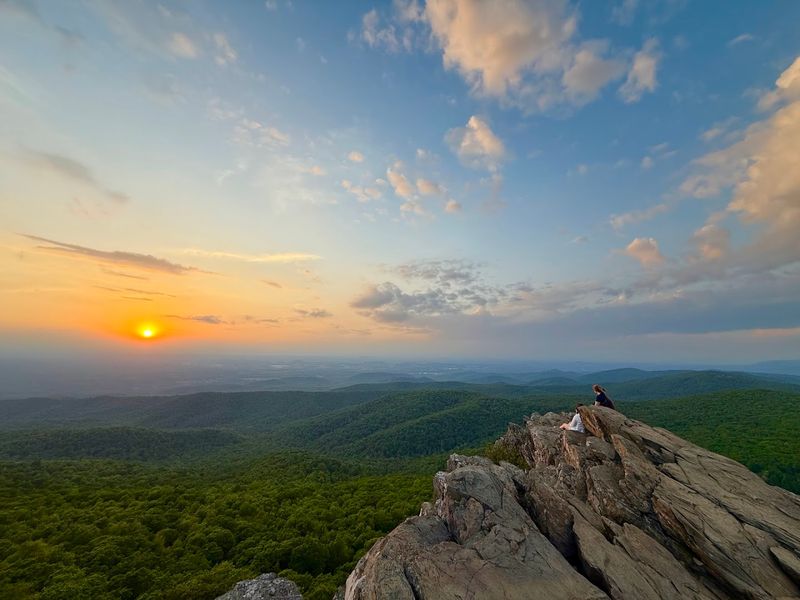
Some summits feel earned not because they are distant, but because the final outcrop arrives with real presence. Trees fall back, wind sweeps the ridge, and a broad mass of exposed rock opens toward the valley in a way that feels both welcoming and dramatic.
That high perch is Humpback Rocks.
Located off the Blue Ridge Parkway near milepost 5.8, Humpback Rocks is a popular but still stirring rocky summit with broad views over the Shenandoah Valley. The exposed stone outcrop gives the peak its character, creating a natural platform that feels sturdier and more elemental than a simple overlook wall.
It is the kind of place where you can sit directly on the mountain and understand its shape.
The setting helps it feel more hidden than its access might suggest. Once you are on the rocks, traffic and infrastructure seem far removed, replaced by folds of ridges and changing clouds.
Sunrise and sunset are especially rewarding, when color deepens across the stone and the valley starts to look almost oceanic.
Humpback Rocks belongs on this list because it delivers a classic Virginia summit experience without losing its sense of wildness. The outcrop is approachable, scenic, and geologically expressive.
For travelers wanting a powerful rock destination that still feels personal, it is an excellent stop.
Devil’s Bathtub Rock Formations
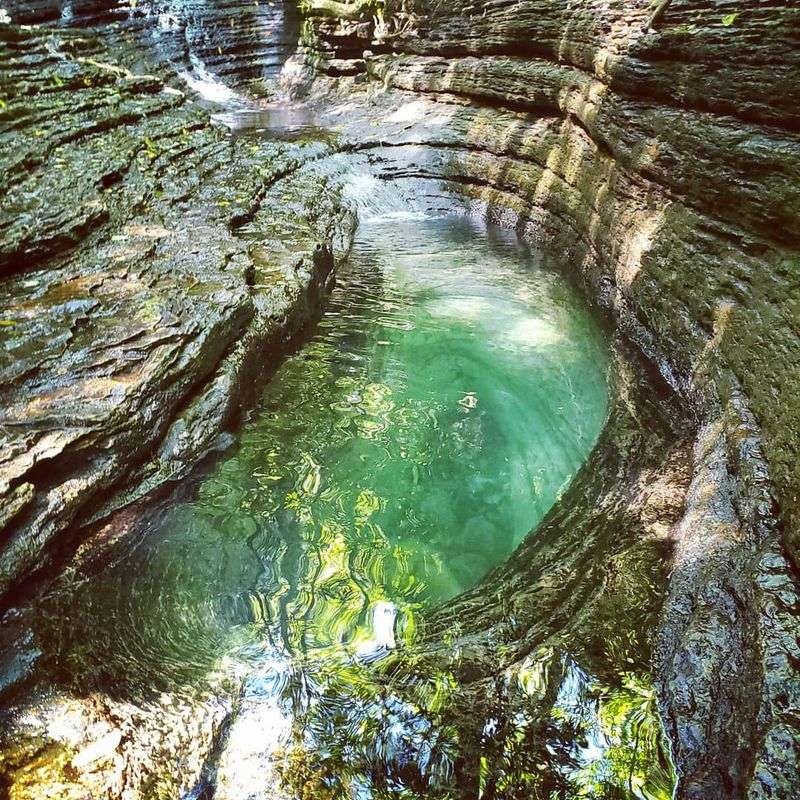
Not every striking rock formation rises into the sky. Here, the drama is carved downward, where running water has polished stone into smooth basins, chutes, and pools that feel hidden inside a shaded mountain stream.
Those water shaped features are the rock formations around Devil’s Bathtub.
In Scott County, the trail to Devil’s Bathtub follows a creek through forest before arriving at a famous natural pool surrounded by sculpted sandstone and stream worn rock. Over time, flowing water carved bowls, channels, and slick surfaces that now look almost designed rather than formed.
The result is one of Virginia’s most inviting examples of geology shaped by motion instead of height.
The setting adds to the sense of discovery. Footbridges, crossings, and rhododendron lined stretches build anticipation, and the final pool often feels tucked away from the wider world.
Even when visitors are around, the sound of water bouncing off stone creates a private, enclosed mood that is hard to shake.
This destination earns its spot because it shows a softer side of rock drama. Instead of cliffs or spires, you get polished basins and stream cut architecture that reveal the persistence of water.
Devil’s Bathtub feels hidden, refreshing, and surprisingly otherworldly for a place reached one creek crossing at a time.
Natural Chimneys
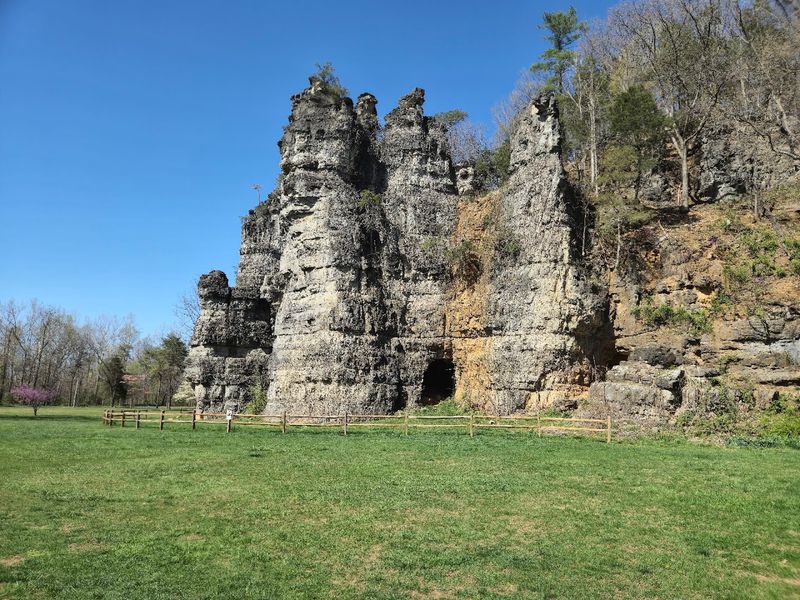
Rising unexpectedly from an open field, these stone towers look almost too vertical to be natural. Their pale surfaces catch the light, their silhouettes dominate the landscape, and the whole scene feels more like a forgotten monument than a simple geologic site.
In Virginia, that surprise belongs to Natural Chimneys.
Located in Mount Solon, Natural Chimneys consists of striking limestone spires that reach roughly 120 feet into the air. They are remnants of ancient seabed deposits, slowly shaped by erosion until the surrounding rock wore away and the resistant columns remained.
Because the formations stand apart rather than blending into a ridgeline, they feel especially dramatic and exposed.
That contrast between open ground and towering stone creates a memorable atmosphere. You can appreciate the chimneys from several angles, and each one emphasizes their improbable height and sculptural texture.
The rural Shenandoah Valley setting only adds to the feeling that you have stumbled onto something ancient and oddly overlooked.
Natural Chimneys deserves a place on this list because it offers a different type of hidden world experience. Instead of mountain wilderness, you get isolated vertical geology standing in quiet farmland.
The effect is bold, eerie, and deeply photogenic, like a surviving fragment from a much older Virginia landscape.