Florida is famous for sunshine and beaches, but scattered across the state are estates and landmarks that feel like they were lifted straight from a European storybook.
From the cobblestone streets of St. Augustine to the palm-lined avenues of Palm Beach and Miami, these properties showcase architecture, artistry, and ambition rarely found anywhere else in the country.
Some were built by railroad tycoons and circus magnates chasing old-world grandeur, while others sprang from the imagination of eccentric dreamers determined to leave their mark.
Wander through coquina fortresses, Moorish towers, and lavish winter mansions, and you will start to see Florida in a completely new light.
Whether you love history, architecture, or simply enjoy a memorable day trip, these thirteen castles promise something special.
1. Whitehall Mansion (Flagler Museum), Palm Beach, Palm Beach County
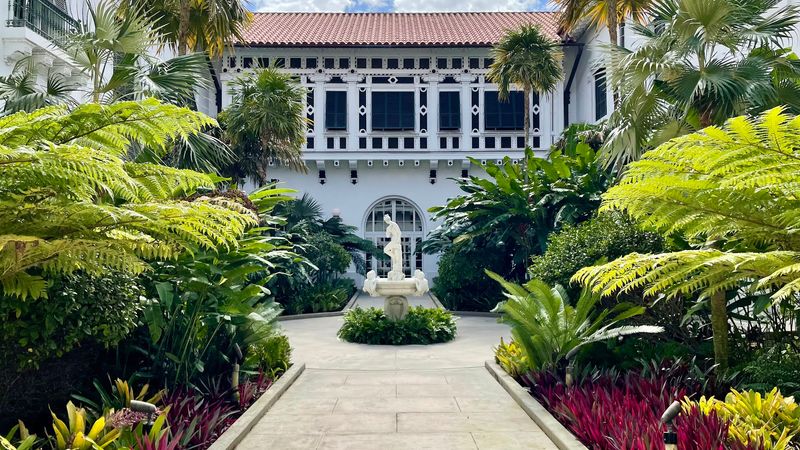
Gilded elegance meets tropical light in one of Florida’s most extravagant historic homes, where every room seems designed to impress.
You can feel the ambition of the Gilded Age in the scale, symmetry, and polished grandeur long before the full story unfolds.
That story leads directly to Whitehall Mansion, now the Flagler Museum in Palm Beach.
Completed in 1902 for Henry Flagler and his wife Mary Lily, the estate helped define Palm Beach as a winter playground for America’s elite.
Architect John Carrere designed it in the Beaux-Arts style, giving the mansion ceremonial staircases, marble surfaces, and richly decorated reception rooms.
It was more than a private residence – it functioned like a social statement about wealth, taste, and modern Florida development.
Inside, you will find period furnishings, art, and exhibits that connect the house to Flagler’s railroad empire and the state’s transformation.
The grand hall, music room, and library reveal how carefully every detail was staged for visitors and society events.
What makes Whitehall so fascinating is how personal luxury and statewide history overlap in one unforgettable place.
It feels opulent, but it also tells you how rail travel, tourism, and architecture reshaped Florida forever.
2. Castillo de San Marcos, St. Augustine, St. Johns County
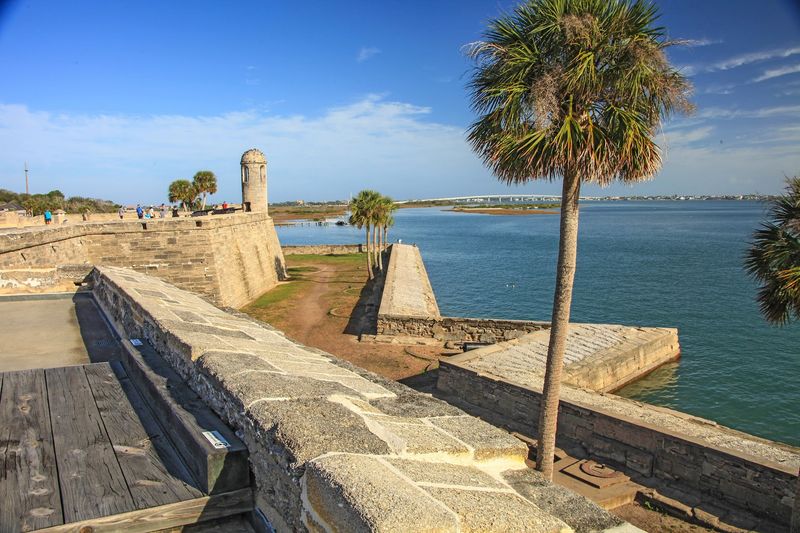
Salt air, weathered stone, and the sound of waves create an atmosphere that feels older than almost anywhere else in Florida.
Standing before these massive walls, you immediately sense that this place was built for endurance rather than ornament.
That unforgettable stronghold is Castillo de San Marcos in St. Augustine.
Construction began in 1672 under Spanish rule after earlier wooden forts proved too vulnerable to attack and fire.
Built from coquina, a shellstone that could absorb cannon impact, the fortress became one of the most durable military structures in North America.
Its star-shaped design, bastions, moat, and strategic waterfront position reveal how seriously Spain defended this colonial outpost.
Walking through the interior today, you can explore guard rooms, gun decks, courtyards, and narrow passages while learning about shifting empires.
The fort served Spain, Britain, Spain again, and later the United States, so its history reflects repeated political change.
Reenactments and cannon demonstrations make the site feel vivid without overshadowing the real historical weight.
This is not a fairy-tale castle – it is a practical, battle-tested monument shaped by conflict, engineering, and empire.
Should you want Florida history at its most dramatic and authentic, Castillo de San Marcos is impossible to skip.
3. Villa Zorayda, St. Augustine, St. Johns County
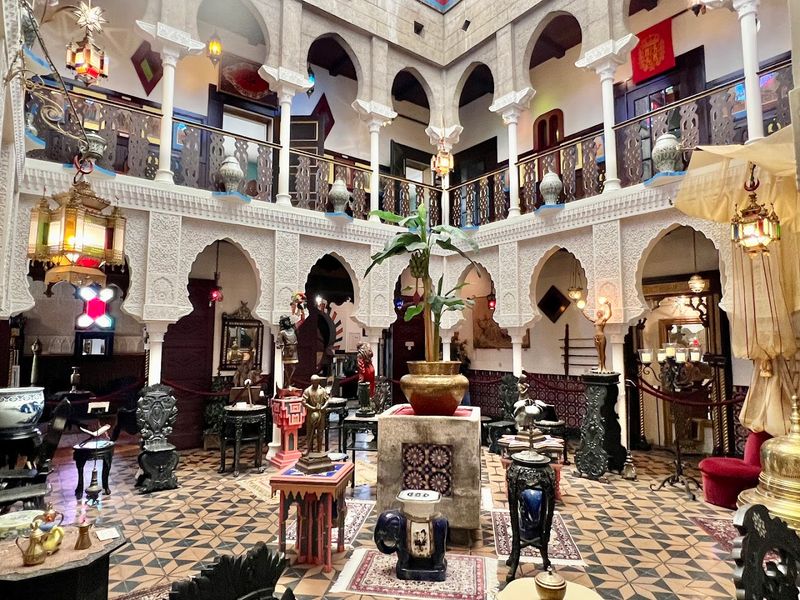
Exotic details, dramatic arches, and a touch of theatrical mystery make this landmark feel unlike anything else in old Florida.
At first glance, you might think you have stepped into a romantic vision of Spain or North Africa rather than St. Augustine.
That spellbinding place is Villa Zorayda, one of the city’s most distinctive architectural treasures.
Built in 1883 by businessman Franklin W. Smith, the villa was inspired by the Alhambra in Granada and designed in the Moorish Revival style.
Smith used an experimental poured concrete mixture to imitate ancient construction techniques while creating intricate visual effects.
The result was a winter residence that doubled as a bold artistic statement during St. Augustine’s rise as a resort destination.
Inside, you will encounter colorful tiles, carved details, antique furnishings, and rich decorative schemes that heighten the sense of fantasy.
The building later served several purposes, including a club and museum, adding layers to its already unusual story.
Its famous Holy Grail artifact claim only deepens the atmosphere of intrigue for visitors.
If you enjoy architecture that feels adventurous, intimate, and slightly mysterious, this is one Florida castle-like landmark you will remember.
Villa Zorayda stands out because it blends innovation, travel-inspired design, and showmanship in a deeply personal way.
4. Coral Castle, Homestead, Miami-Dade County
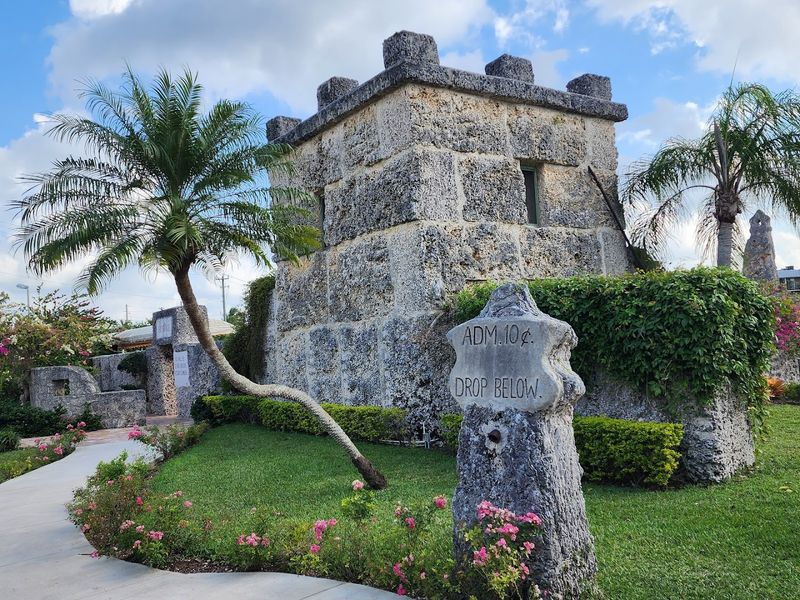
Mystery hangs over this South Florida landmark in a way few historic sites can match.
Massive stones stand arranged with eerie precision, and the whole place feels like a puzzle someone left behind for you to solve.
That puzzle is Coral Castle in Homestead, one of Florida’s most famous eccentric attractions.
It was created by Edward Leedskalnin, a Latvian immigrant who reportedly built the site alone between the 1920s and 1940s.
Working with coral rock blocks weighing many tons, he carved furniture, walls, towers, and a legendary revolving gate with remarkable accuracy.
Because he rarely let anyone watch him work, rumors spread that he used secret forces, magnetism, or forgotten ancient techniques.
The truth is probably less supernatural but still impressive: patience, leverage, engineering intuition, and relentless determination.
As you walk through the grounds, you will see stone chairs, celestial motifs, and carefully placed monoliths that suggest both practicality and private symbolism.
The site feels part sculpture garden, part folk-art monument, and part unsolved riddle.
What makes Coral Castle so compelling is not just the mystery – it is the emotional story beneath it.
Many believe Leedskalnin built it as a tribute to lost love, which gives the hard stone an unexpectedly tender undertone.
5. Solomon’s Castle, Ona, Hardee County
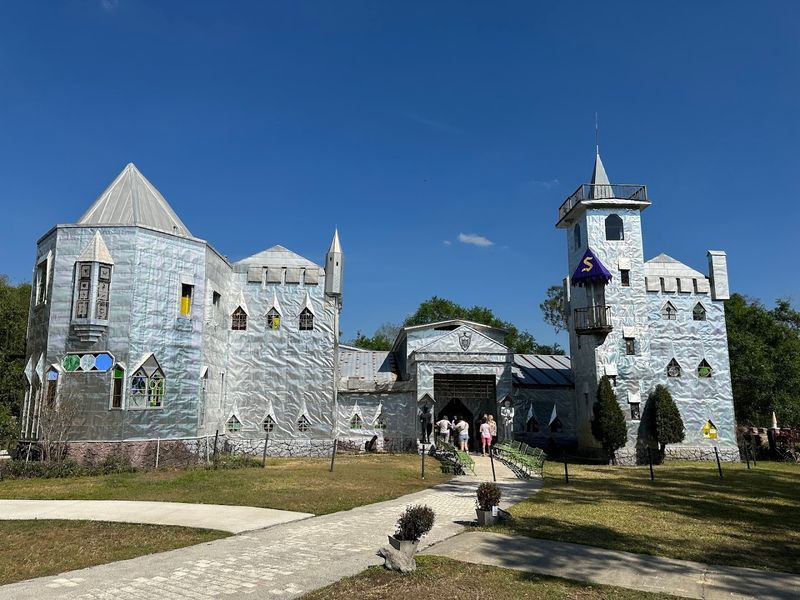
Deep in rural Florida, a shining fantasy rises from the landscape with a sense of humor all its own.
The metallic exterior glints through the trees, and you instantly know this is not a conventional historic mansion.
That unforgettable creation is Solomon’s Castle in Ona, built by artist Howard Solomon.
Unlike older fortresses or inherited estates, this castle-like landmark grew from one man’s imagination and craftsmanship beginning in the 1970s.
Solomon used reclaimed materials, including offset printing plates on the exterior, to create a whimsical structure filled with towers, corridors, and artistic surprises.
The result feels homemade, eccentric, and completely sincere in the best possible way.
Inside, you will find galleries packed with Solomon’s sculptures and assemblage art, much of it fashioned from found objects and infused with wit.
The adjacent restaurant and boat tour through the surrounding wetlands make the visit feel even more personal and offbeat.
Every corner reflects the artist’s playful view of beauty, storytelling, and transformation.
What makes Solomon’s Castle fascinating is that it expands the idea of what a Florida castle can be.
This is not aristocratic grandeur or military history – it is folk art on an architectural scale, rooted in creativity and place.
6. Stetson Mansion, DeLand, Volusia County
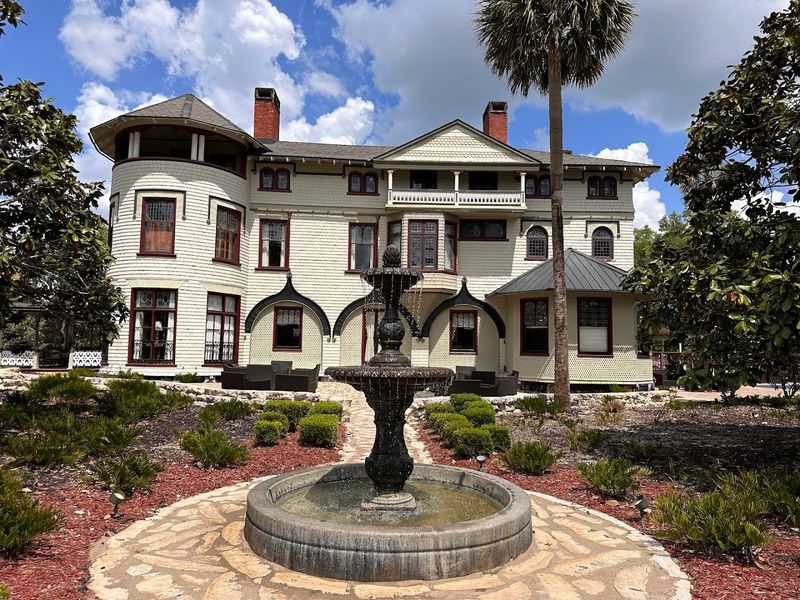
Victorian drama and Florida sunshine come together beautifully at a residence that feels both grand and surprisingly warm.
Rich woodwork, stained glass, and layered ornament create the sense that every room has a story waiting for you.
That remarkable home is Stetson Mansion in DeLand, one of the state’s finest examples of late nineteenth-century luxury.
Built in 1886 for hat maker John B. Stetson, the mansion reflected the wealth and innovation of its famous owner.
It included advanced features for its time, such as early electricity and modern plumbing, proving that elegance and technology could coexist.
The architecture blends Victorian exuberance with handcrafted detail, resulting in a house that feels richly textured rather than merely formal.
As you tour the interior, you will notice intricate parquet floors, hand-carved trim, leaded glass, and carefully restored historic finishes.
The mansion later endured neglect before a dedicated restoration brought it back to life, preserving both its craftsmanship and character.
Seasonal decorations, especially at Christmas, have also made it a beloved destination for many visitors.
What makes Stetson Mansion stand out is the intimacy of its splendor.
This is impressive, yet it still feels personal, as though the artistry was meant to be lived with rather than simply displayed.
7. Vizcaya Museum and Gardens, Miami, Miami-Dade County
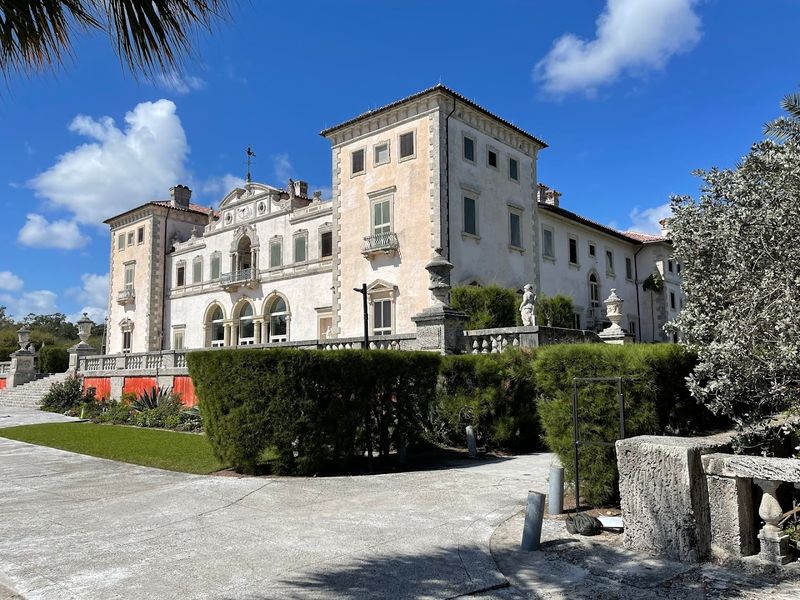
Bay breezes, sculpted gardens, and old-world elegance create a setting that feels almost cinematic.
The estate seems designed to transport you, blending European inspiration with the lush textures of subtropical Miami.
That transportive landmark is Vizcaya Museum and Gardens, one of Florida’s most celebrated historic estates.
Industrialist James Deering built Vizcaya between 1914 and 1922 as his winter residence, working with architect F. Burrall Hoffman and designer Paul Chalfin.
The result was a Mediterranean Revival villa filled with imported materials, antiques, and decorative elements inspired by Italian and French precedents.
Yet the estate was never a simple copy – it was carefully adapted to the climate, shoreline, and plant life of South Florida.
Inside, you will move through lavish rooms that balance grandeur with thoughtful composition, while outside the formal gardens unfold in terraces, fountains, and hidden corners.
The iconic stone barge on Biscayne Bay adds a theatrical focal point that feels both elegant and surreal. Vizcaya also reflects the labor, artistry, and global collecting practices that shaped elite American estates in the early twentieth century.
What makes this place unforgettable is its layered atmosphere.
For those who want a castle-like Florida destination where architecture, landscape, and social history come together beautifully, Vizcaya belongs near the top of your list.
8. Castle Warden (Ripley’s Believe It or Not), St. Augustine, St. Johns County
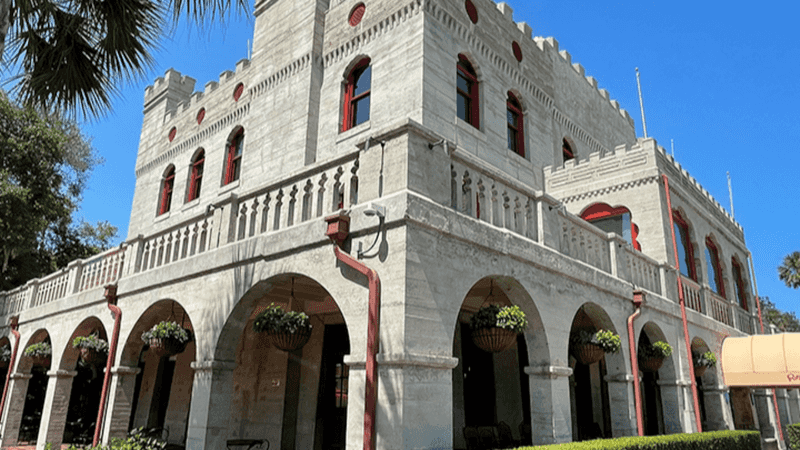
Strange stories seem perfectly at home in a building that already looks like a curiosity from another world. With its unusual silhouette and theatrical presence, this landmark makes a strong impression before you ever step inside.
That landmark is Castle Warden in St. Augustine, now widely known as Ripley’s Believe It or Not.
The structure was built in 1887 as the winter home of William G. Warden, a wealthy New York businessman.
Designed in a Moorish-inspired style, it reflected the era’s fascination with exotic architecture and resort-town spectacle.
Over the years, the building served several roles, including a hotel and community gathering place, before becoming a museum devoted to oddities and astonishing artifacts.
Its later identity fits surprisingly well because the architecture already feels playful, dramatic, and slightly surreal.
You can still appreciate the historic exterior while exploring exhibits that celebrate the bizarre and unbelievable.
That mix of serious preservation and pop-cultural entertainment gives the site a personality all its own.
It tells you something about St. Augustine’s long history of reinvention as a tourist destination. What makes Castle Warden interesting is the way it bridges Gilded Age ambition and modern roadside attraction culture.
9. Ca d’Zan, Sarasota, Sarasota County
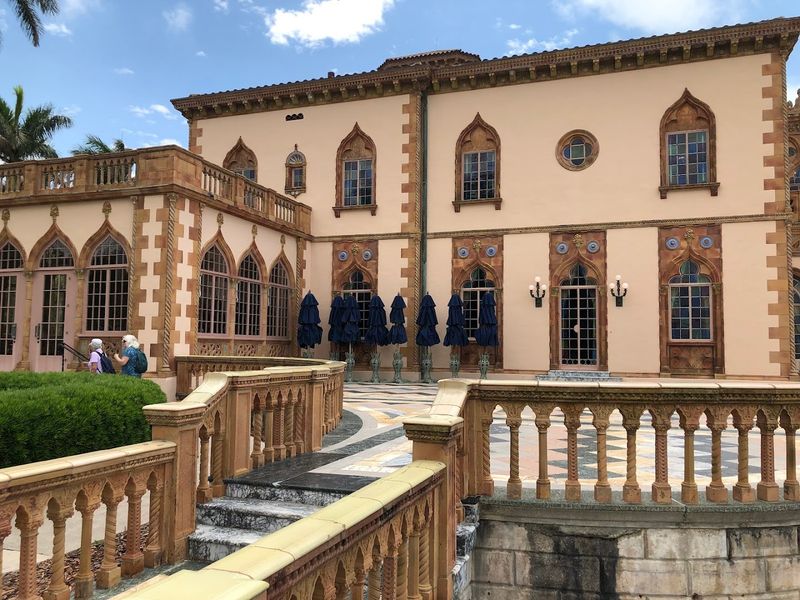
Waterfront glamour reaches a theatrical peak at this dazzling residence, where every façade seems ready for an entrance.
The colors, arches, and bayfront setting create a mood that is both romantic and unapologetically extravagant.
That dazzling home is Ca d’Zan in Sarasota, the former winter residence of John and Mable Ringling.
Built in the 1920s, the mansion takes inspiration from Venetian Gothic palaces and reflects the Ringlings’ love of art, travel, and spectacle.
Its name means House of John in Venetian dialect, but the house also expresses Mable’s influence in many decorative choices.
From stained glass to painted ceilings, the design turns domestic space into something almost operatic.
As you explore the rooms, you will notice how the home balances lavish detail with stunning views of Sarasota Bay.
The mansion is part of the larger Ringling estate, which includes museums and gardens that deepen the cultural context of the site.
Restoration work has preserved the building’s grandeur while making its history more accessible to visitors.
What makes Ca d’Zan so memorable is that it captures the confidence and fantasy of Florida’s boom-era elite.
It feels playful, artistic, and highly personal rather than purely formal.
10. The Ribault Club, Fort George Island, Duval County
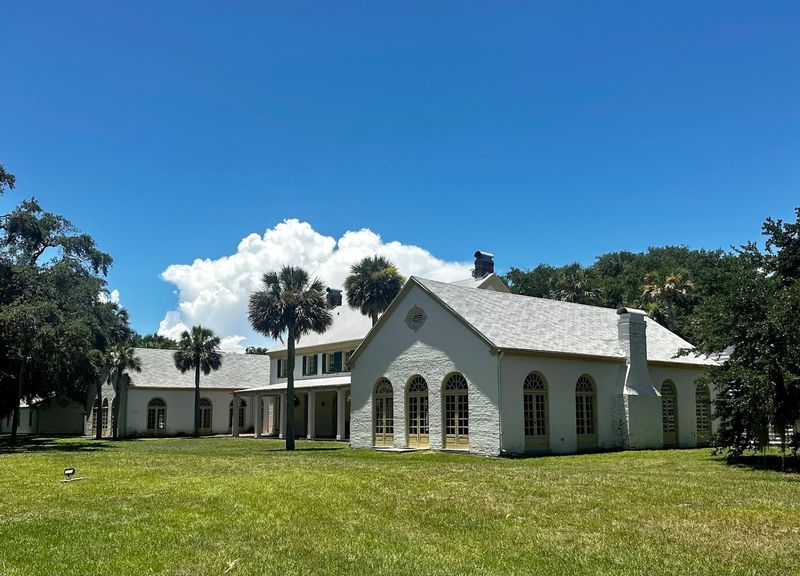
Quiet coastal beauty gives this historic landmark a more understated sense of grandeur than many castle-like estates in Florida.
Surrounded by marsh, river views, and old trees, it feels refined without trying too hard to dazzle you.
That graceful building is The Ribault Club on Fort George Island.
Completed in 1928 during Florida’s land boom, the club was intended as a luxurious centerpiece for an ambitious resort development.
Its Mediterranean Revival design fit the era’s taste for romantic architecture, while the island setting added exclusivity and natural drama.
Although the broader development never fully flourished as planned, the building survived as a reminder of those grand aspirations.
Today, you can appreciate its elegant proportions, arched details, and scenic location while learning about the island’s deeper history.
Fort George Island has ties to Indigenous communities, plantations, and later recreational development, so the club exists within a much larger historical landscape.
That layered context makes a visit here feel richer than simply touring an attractive old building.
What makes The Ribault Club compelling is its atmosphere of faded ambition and coastal charm.
It is not the most flamboyant place on this list, but it may be one of the most evocative.
Here, you can enjoy historic sites where architecture and landscape work together quietly.
11. Casa Feliz Historic Home Museum, Winter Park, Orange County
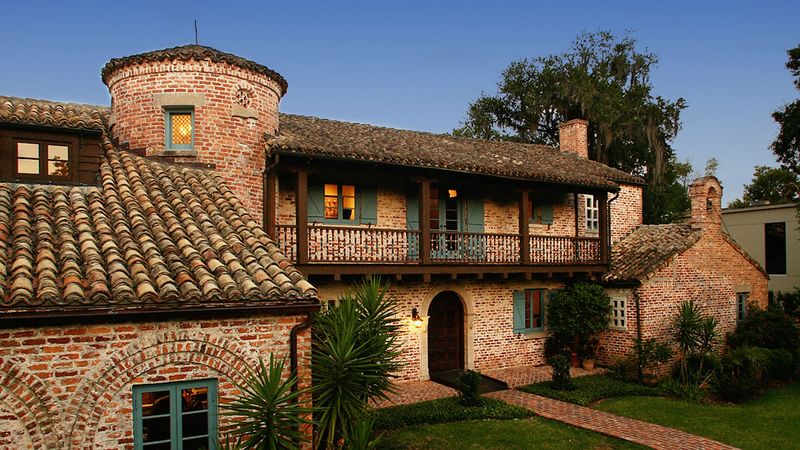
Warm stucco walls, heavy wooden doors, and a welcoming courtyard give this landmark an instant sense of intimacy.
Rather than overwhelming you with scale, it draws you in through texture, proportion, and lived-in charm.
That inviting treasure is Casa Feliz Historic Home Museum in Winter Park.
Designed in 1933 by architect James Gamble Rogers II, the house became one of the finest local examples of Spanish farmhouse-inspired architecture.
Its thick walls, clay tile roof, rustic beams, and carefully composed rooms reflect a romantic interpretation of old Spanish design adapted for Central Florida.
The home was originally built for the prominent Robert Bruce Barbour family and later became a beloved community landmark.
One of the most remarkable parts of its story is that the house was moved from its original site in 2000 to save it from demolition.
That rescue effort preserved not just the structure, but also an important piece of Winter Park’s architectural identity.
Today, tours, exhibits, and events help visitors experience the home as both a museum and a living cultural space.
What makes Casa Feliz special is its balance of beauty and accessibility.
Should you appreciate historic homes that reveal how architecture shapes community memory, this charming castle-like stop is absolutely worth your attention.
12. Bonnet House Museum and Gardens, Fort Lauderdale, Broward County
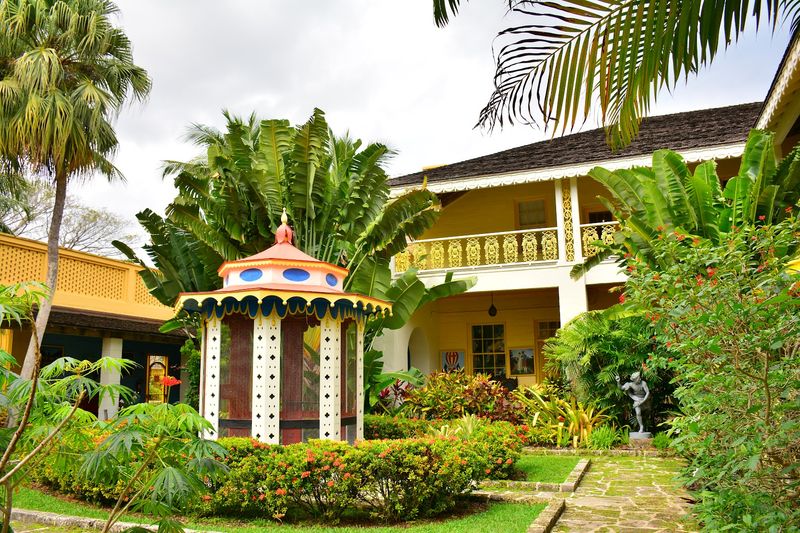
Tropical gardens, artistic interiors, and a sense of old South Florida serenity make this estate feel wonderfully distinct.
Instead of fortress walls or towering battlements, you get a softer kind of enchantment shaped by landscape and personality.
That enchanting place is Bonnet House Museum and Gardens in Fort Lauderdale.
The property was built in the 1920s for artists Frederic and Evelyn Bartlett, and its design reflects Caribbean plantation influences blended with personal creativity.
Set between the Atlantic Ocean and the Intracoastal Waterway, the estate preserves a rare slice of the region’s earlier natural and cultural environment.
The house itself is less about formal grandeur and more about charm, color, and artistic individuality.
As you explore, you will find whimsical decorative choices, studio spaces, lush courtyards, orchids, and wildlife-friendly grounds that feel deeply integrated with the home.
The Bartletts’ collections and tastes remain visible throughout, giving the estate an unusually intimate atmosphere.
It tells a story not only about architecture, but also about leisure, ecology, and artistic life in early twentieth-century Florida.
What makes Bonnet House memorable is its refusal to fit neatly into one category.
It is part house museum, part tropical retreat, and part cultural time capsule.
Fort Lauderdale landmark simply offers an experience you will not easily forget.
13. Edison and Ford Winter Estates, Fort Myers, Lee County
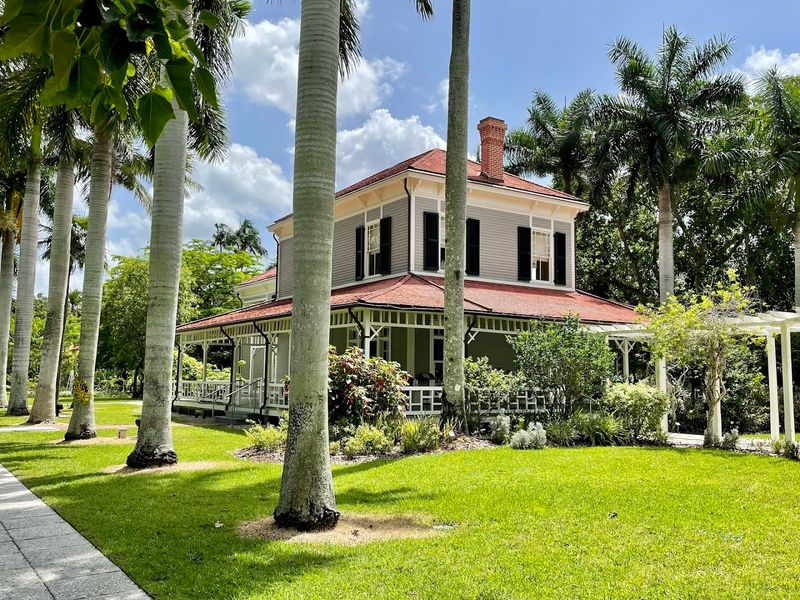
Riverfront calm and inventive energy define this historic property, where grand homes share space with laboratories and gardens.
The setting feels elegant, but the real excitement comes from knowing so many ideas were developed here. That remarkable destination is the Edison and Ford Winter Estates in Fort Myers.
Thomas Edison first established his winter retreat on the Caloosahatchee River in the 1880s, later joined nearby by his friend Henry Ford.
The estates include homes, botanical grounds, and Edison’s laboratory complex, creating a rare combination of domestic architecture and scientific history.
Rather than one castle-like building, the site offers an interconnected world shaped by industry, friendship, and seasonal life in Florida.
As you tour the property, you will see period furnishings, deep porches, towering banyan trees, and exhibits about invention, transportation, and plant research.
Edison’s experiments with rubber-producing plants give the landscape particular significance beyond its beauty.
The river setting also helps explain why this part of Florida appealed to wealthy northern innovators seeking both rest and inspiration.
What makes the estates so compelling is their breadth.
You are not just seeing beautiful architecture – you are stepping into a place where creativity, business, and daily life intersected.
If you want a historic Florida destination that feels intellectually rich as well as visually appealing, this one offers an especially rewarding experience.