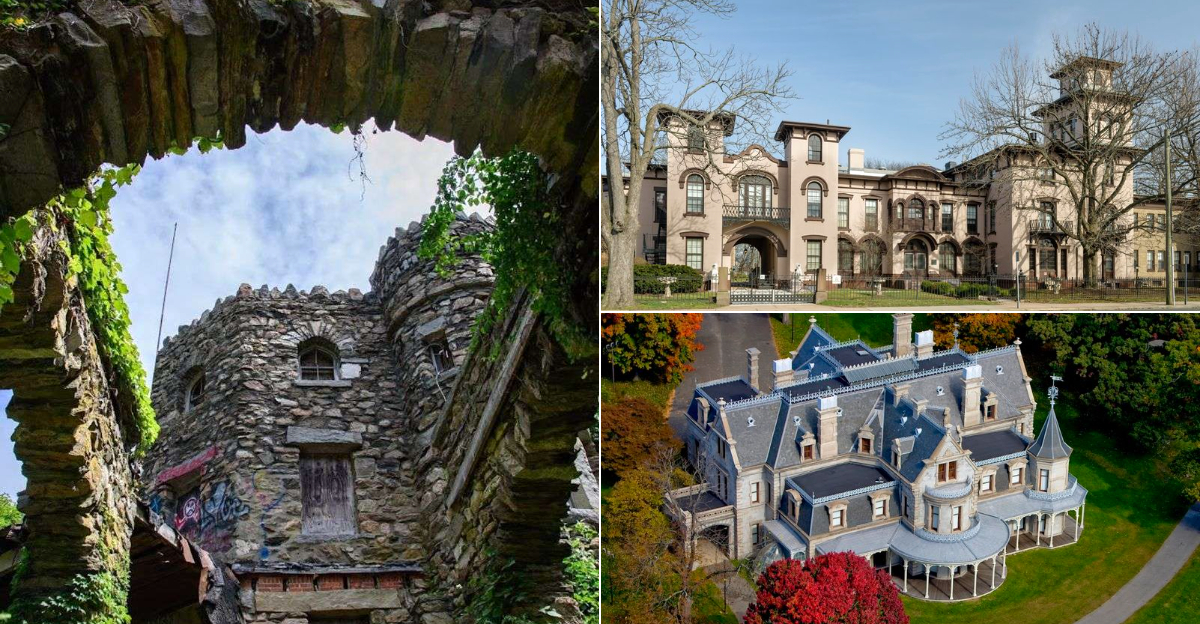
Connecticut is a state where Gilded Age fortunes and centuries of New England history come together in the most striking architectural form.
From quiet river valleys to bustling coastal towns, grand stone mansions and turreted towers rise above the landscape like scenes from an old European storybook.
Some were built by industrialists and showmen chasing extravagant dreams, while others came from artists, actors, and visionaries who wanted homes as unique as their imaginations.
Each one carries its own story, shaped by the fortunes, passions, and personalities behind its walls.
Wander through stone towers, sweeping gardens, and rooms filled with art and history, and you will discover a side of Connecticut rarely seen.
Get ready to explore fifteen of Connecticut’s most captivating castles, each one brimming with character and charm.
1. Gillette Castle, East Haddam, Middlesex County
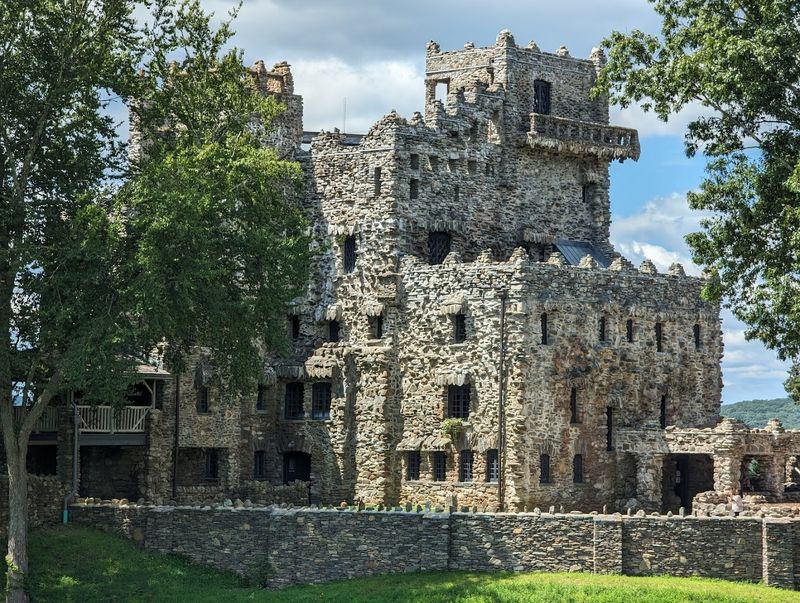
High above the Connecticut River, the mood shifts from classic New England to something theatrical and almost storybook.
That feeling reaches its peak at Gillette Castle, the eccentric hilltop home built by actor William Gillette in the early twentieth century.
Its rough stone walls, inventive woodwork, and fortress-like silhouette make it one of Connecticut’s most unforgettable architectural landmarks.
What makes this place so distinctive is how personal every detail feels when you step closer.
Gillette designed built-in seating, cleverly latched doors, and custom features that reflect both medieval fantasy and a sharp, practical mind.
Rather than copying a European castle exactly, the house creates its own romantic style rooted in craftsmanship, whimsy, and performance.
The surrounding state park adds even more drama to the visit, with river views, hiking paths, and remnants of Gillette’s miniature railroad.
Inside, the rooms feel intimate rather than grand, which makes the unusual design choices stand out even more.
You can sense how architecture here was meant to entertain, surprise, and shape the experience of everyone invited in.
Long after your visit, you will probably remember the doors, the stone, and the way the castle seems to belong perfectly to its bluff.
2. Castle Craig, Meriden, New Haven County

Perched high above the city, this rugged stone tower delivers the kind of dramatic silhouette many people do not expect in Connecticut.
You find that experience at Castle Craig in Meriden, rising from Hubbard Park on East Peak.
Its crenellated profile and hilltop position make it feel less like a monument and more like a watchtower from another era.
Built in 1900 and dedicated to local benefactor Walter Hubbard, the tower was designed as a civic landmark with romantic flair.
The rough stone construction, narrow openings, and elevated setting give it an unmistakably medieval character despite its relatively modern date.
Rather than serving as a residence, it functions as an architectural destination shaped by view, symbolism, and public use.
The climb or drive toward it adds to the appeal, since the structure slowly emerges through the landscape.
Its appeal comes from simplicity as much as detail, with massing and placement doing most of the visual work.
You may spend only a short time there, but the combination of stone, height, and horizon makes the visit feel remarkably grand.
Once there, sweeping vistas across Meriden and beyond explain why towers like this still hold such fascination.
3. Hill-Stead Museum, Farmington, Hartford County
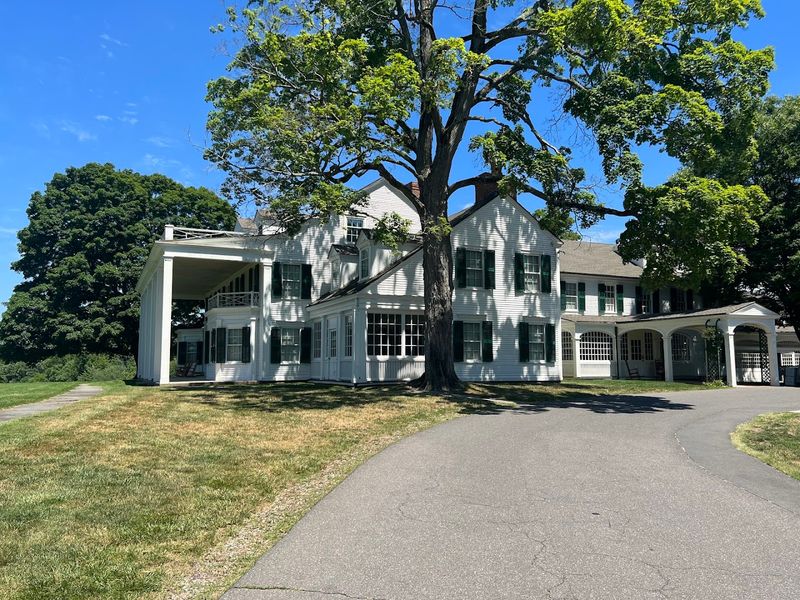
Graceful rather than fortified, this estate proves that castle-like grandeur in Connecticut can also come through scale, setting, and refined design.
That impression defines Hill-Stead Museum, the Colonial Revival home commissioned by Theodate Pope in Farmington.
Its architecture feels ordered and serene, yet it still carries the commanding presence of a private country seat built to impress.
Theodate Pope was among the nation’s first licensed female architects, and her vision gives the property unusual depth.
She drew inspiration from historic New England forms while shaping a residence that feels scholarly, artistic, and deeply intentional.
The broad rooflines, balanced facade, and carefully composed interiors show how restraint can be just as memorable as ornament.
Inside, you find an extraordinary collection of Impressionist art, but the building itself deserves equal attention.
Rooms open with an easy flow that supports both domestic comfort and cultured display, which feels remarkably modern.
Outside, the house sits confidently within rolling grounds, creating a complete landscape composition rather than a standalone mansion.
You leave appreciating how Connecticut architecture can feel powerful through proportion, authorship, and the quiet confidence of excellent design.
4. Armsmear, Hartford, Hartford County
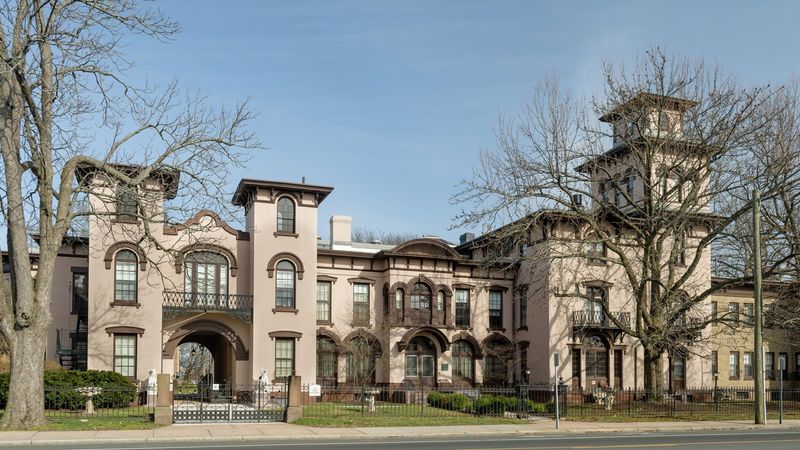
Set apart from ordinary city houses, this romantic residence carries the air of a private retreat shaped by taste and status.
That atmosphere defines Armsmear in Hartford, the Gothic Revival villa long associated with the Colt family.
Its picturesque massing, steep gables, and richly landscaped setting give it a distinctly European mood within an urban context.
Built in the mid nineteenth century, the house reflected both Samuel and Elizabeth Colt’s wealth and cultural aspirations.
The design embraced the era’s love of irregular forms, textured surfaces, and architecture that looked expressive from every angle.
Rather than symmetry alone, Armsmear relies on silhouette, layering, and garden relationships to create its memorable presence.
The property matters not only for its architecture but also for how it framed Hartford’s industrial and social history.
As part of the broader Colt estate, it connected domestic life, philanthropy, and the influence of one of Connecticut’s most famous families.
Even without entering, you can appreciate how the house transforms ideas of home into something more romantic and emblematic.
If you are drawn to buildings that feel intimate yet visually dramatic, Armsmear has lasting appeal.
Among Hartford’s historic sites, this residence stands out for turning domestic architecture into a richly atmospheric work of design.
5. Branford House, Groton, New London County
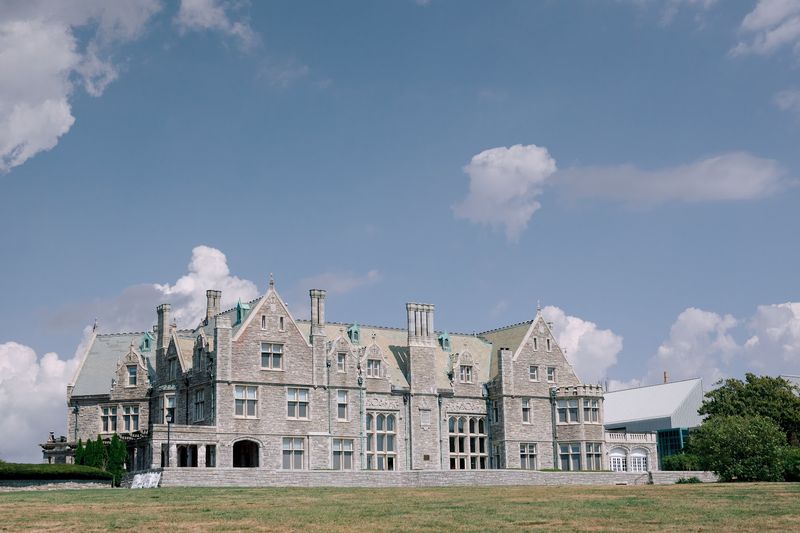
Facing the water with unmistakable drama, this mansion feels as if it was built to command every view around it.
That effect defines Branford House in Groton, a striking estate now set within the University of Connecticut’s Avery Point campus.
Its monumental presence, waterfront setting, and ornate design make it one of the state’s most visually arresting historic properties.
Completed in 1904 for Morton F. Plant, the house draws from Beaux-Arts planning while embracing romantic, almost castle-like flourishes.
Turrets, carved stonework, broad terraces, and richly detailed interiors once helped signal luxury on a very public scale.
Even today, the building balances formality with spectacle in a way that feels perfectly suited to its coastal perch.
The relationship between architecture and landscape is what really makes this place memorable when you visit.
Long Island Sound becomes part of the composition, giving the mansion a grand stage and constant changing light.
Because it now serves a public institution, you can experience a residence once reserved for elite guests with a more open sense of access.
It captures the era when wealthy owners used architecture to project prestige as much as comfort.
6. Lockwood-Mathews Mansion Museum, Norwalk, Fairfield County
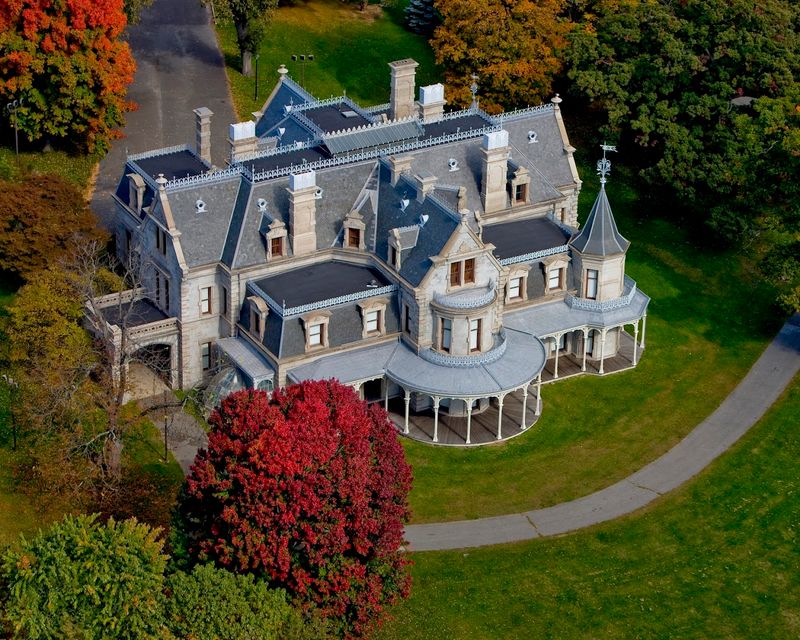
Few places announce Gilded Age ambition as boldly as this lavish mansion rising with ornate detail and unmistakable confidence.
In Norwalk, Lockwood-Mathews Mansion Museum stands as one of the earliest and finest Second Empire country houses in America.
Its mansard roof, decorative ironwork, and richly composed facade instantly separate it from more understated Connecticut estates.
The house was completed in the 1860s for railroad and banking magnate LeGrand Lockwood, and it was designed to astonish.
Architect Detlef Lienau brought European influence to the project, blending French-inspired massing with advanced nineteenth-century technology and comfort.
That combination of glamour and innovation still gives the mansion a forward-looking energy despite its historic pedigree.
As you move through its rooms, the scale and ornament become part of the story rather than mere decoration.
The mansion used modern systems for heating, ventilation, and plumbing, reminding you that luxury here meant engineering as much as style.
Painted ceilings, carved finishes, and formal spaces create a theatrical experience that feels perfectly matched to its era.
If you want architecture that captures wealth, taste, and experimentation in one unforgettable place, this is essential.
Lockwood-Mathews is not just beautiful, it marks a moment when American domestic design became grandly cosmopolitan.
7. Hearthstone Castle, Danbury, Fairfield County
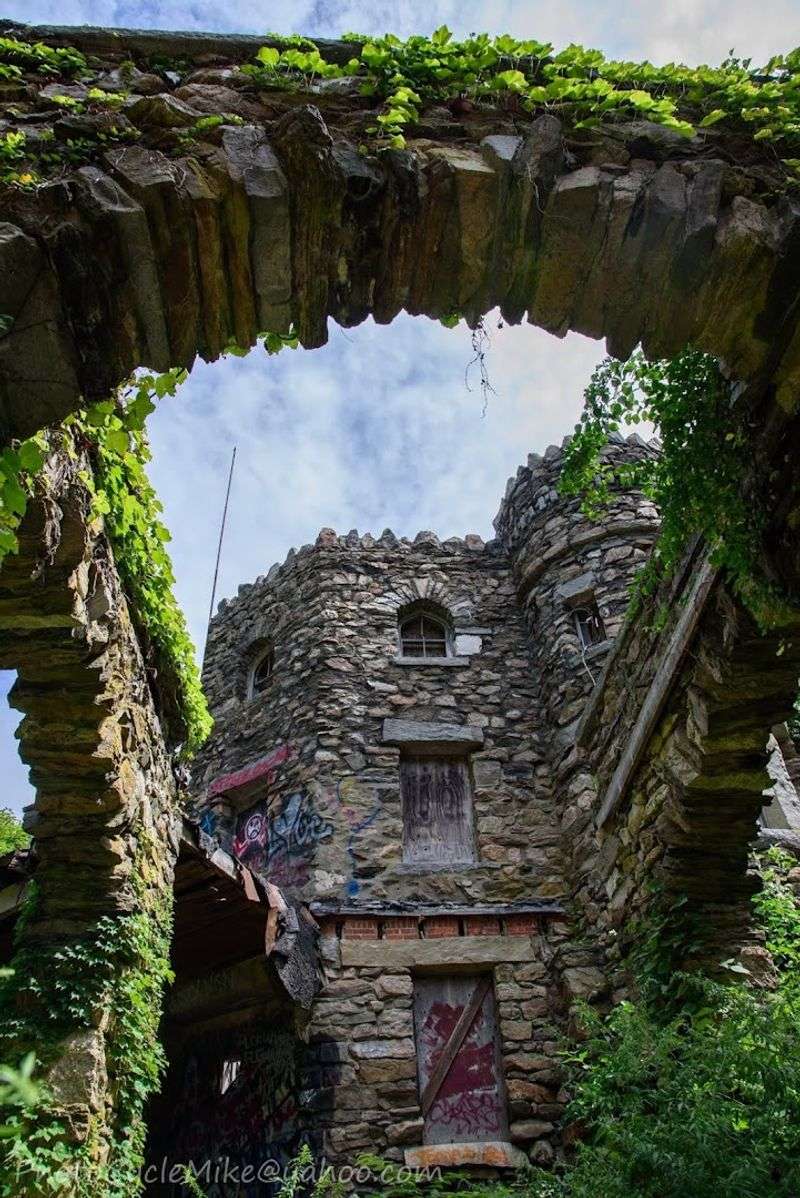
Tucked into a wooded park, this crumbling stone landmark carries a haunting beauty that polished mansions rarely achieve.
That atmosphere surrounds Hearthstone Castle in Danbury, a former summer residence overlooking what is now Tarrywile Park.
Even in partial ruin, its heavy masonry and romantic profile still hint at the ambition behind its original design.
Built around 1897 for E. Starr Sanford, the house embraced Romanesque Revival influences with robust stone walls and arched details.
Its elevated site added prestige, while the rustic exterior helped the building feel naturally rooted in the landscape.
That blend of wealth, retreat, and rugged imagery gave the residence a distinctly castle-like identity from the beginning.
Years of deterioration changed how people experience the property, but they also deepened its emotional power.
Instead of pristine interiors, you encounter the architecture through fragments, silhouette, and the persistent strength of surviving stone.
There is something especially compelling about seeing how design intent endures even after comfort and decoration have disappeared.
It shows a more fragile side of Connecticut’s grand estates while still commanding attention through mass and mood.
8. Saint Clements Castle, Portland, Middlesex County
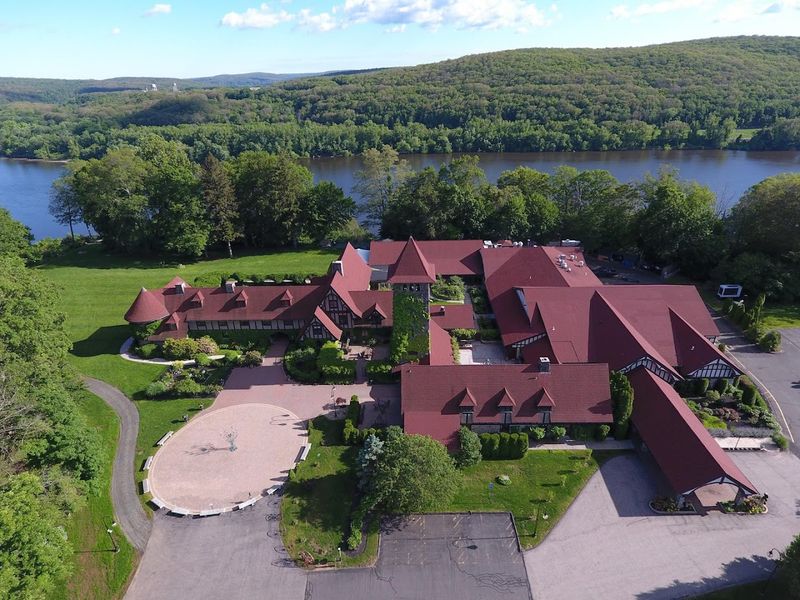
With formal grounds, a romantic silhouette, and a setting made for celebrations, this destination leans fully into storybook appeal.
That charm belongs to Saint Clements Castle in Portland, a hillside estate overlooking the Connecticut River valley.
Its towers, gardens, and event spaces create the impression of a private fantasy transplanted into central Connecticut.
The property developed over time, and its architectural identity reflects that layered history rather than one rigid original scheme.
Castle-like elements, landscaped paths, and companion structures work together to create an immersive environment instead of a single facade.
Because of that, the site feels theatrical in a welcoming way, almost as if every approach was designed to build anticipation.
Unlike some historic mansions that feel distant or museum-like, this estate remains active and socially animated.
Weddings and gatherings keep the grounds in use, which helps visitors connect architecture with lived experience rather than preservation alone.
The combination of romance and accessibility makes it especially memorable for people who want beauty without formality becoming intimidating.
If your idea of a Connecticut castle includes atmosphere as much as strict historical pedigree, this place fits perfectly.
Saint Clements offers visual drama, landscaped elegance, and a strong sense of occasion from start to finish.
9. Chrismark Castle, Woodstock, Windham County
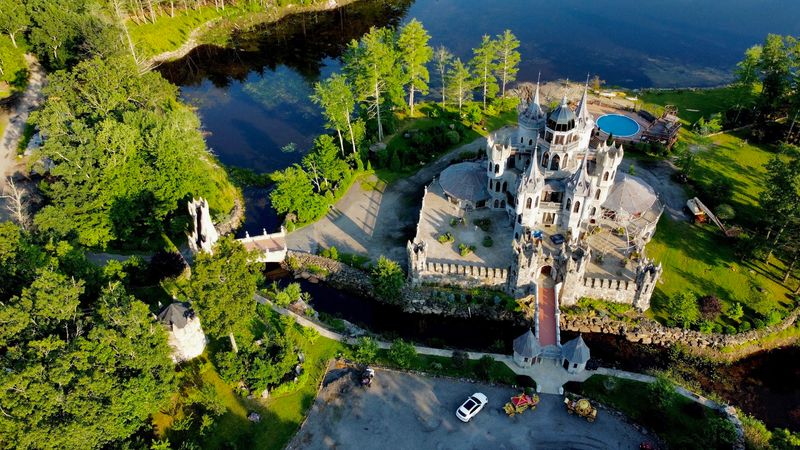
In the quiet northeastern corner of the state, an unexpected burst of fantasy architecture appears where you least expect it.
That surprise is part of the appeal at Chrismark Castle in Woodstock, a private residence with unmistakably medieval-inspired styling.
Its towers, battlements, and eclectic detailing give rural Connecticut a dose of pure whimsy.
Because it is not a conventional historic mansion or public museum, the building stands out for different reasons.
It reflects personal vision more than institutional prestige, showing how castle imagery still inspires individual builders in modern times.
That freedom gives the structure a playful energy, with decorative features chosen for drama, identity, and imagination.
The surrounding landscape helps the effect, since open country makes the silhouette feel even more improbable and memorable.
You are reminded that unusual architecture does not need great age to be fascinating when it commits fully to a strong idea.
If you enjoy offbeat landmarks that reveal the personal side of architectural fantasy, this one has real charm.
It expands the meaning of what a Connecticut castle can be by showing creativity outside the usual historic canon.
Chrismark Castle may not follow one strict academic style, but its confidence is exactly what makes it worth noting.
10. Castle House, New London, New London County
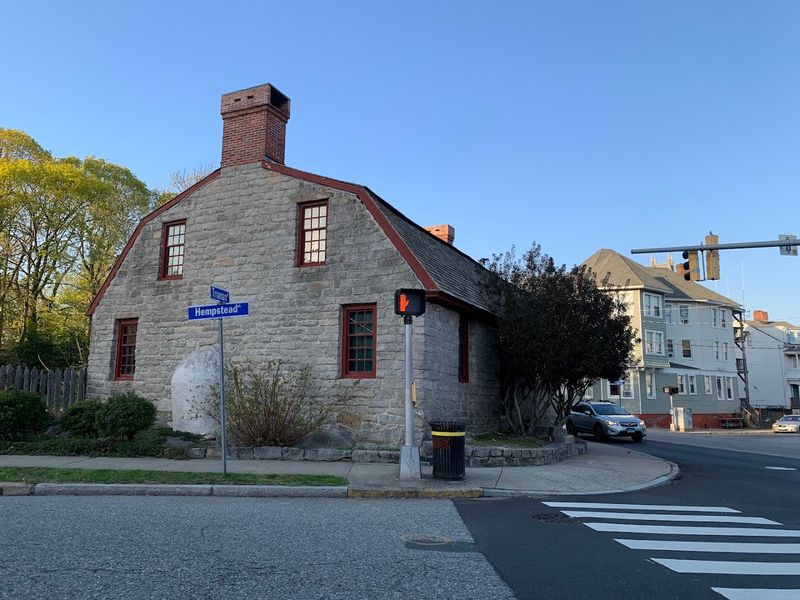
Along the coast, some historic homes borrow just enough medieval language to make an ordinary streetscape feel unexpectedly dramatic.
That is exactly the impression left by Castle House in New London, a building whose very name highlights its romantic character.
Its fortress-like details and strong profile make it a memorable example of how domestic architecture can adopt theatrical flair.
New London has long absorbed maritime, military, and cultural influences, and this house fits that layered backdrop well.
Rather than overwhelming the neighborhood through sheer size, it stands out through silhouette, detailing, and the confidence of its design.
Those castle cues suggest permanence and distinction, even within a more intimate urban setting than many grand estates enjoy.
Part of the appeal here is how architecture shapes expectation before you know much about the building’s history.
A turret, parapet, or boldly textured wall can instantly shift your reading of a house from residential to romantic.
That ability to spark imagination is why places like Castle House matter in a list focused on unique Connecticut architecture.
One leaves reminded that sometimes a few well-chosen details are enough to give a building an enduring and highly distinctive identity.
11. Hidden Valley Estate (Cornwall Castle), Cornwall, Litchfield County
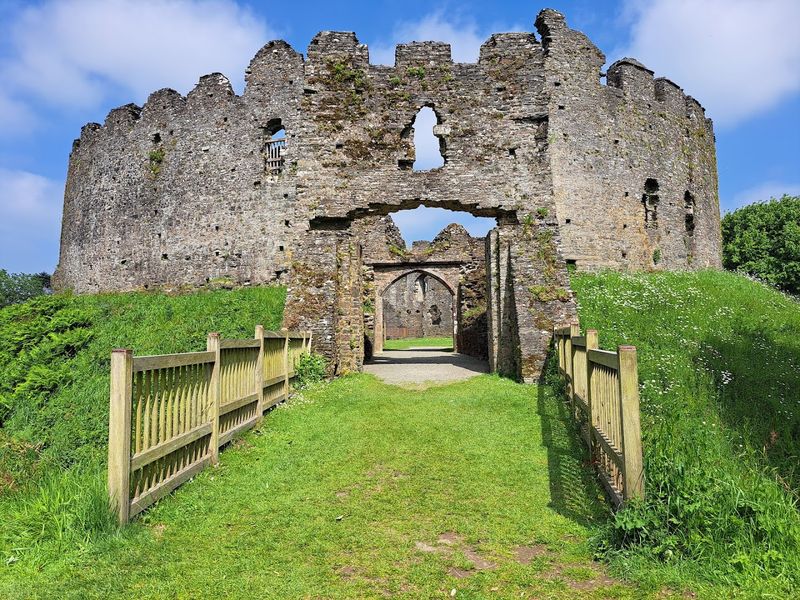
Deep in the Litchfield Hills, a secluded estate creates the kind of mystery that only a true countryside castle can deliver.
That secluded grandeur defines Hidden Valley Estate, often called Cornwall Castle, in the town of Cornwall.
Its commanding stone architecture and remote setting give it a presence that feels both protective and romantic.
Unlike more public historic sites, this property is known largely through its setting, silhouette, and reputation rather than broad access.
That relative privacy actually heightens its fascination, because the architecture seems to emerge from the landscape almost as legend.
The castle form feels especially convincing here, where wooded slopes and distance reinforce the impression of an old-world stronghold.
What makes it stand out architecturally is the way massing and material work together with topography.
Stone walls, elevated positioning, and the layered approach through the valley create a sequence of views instead of one simple reveal.
Even from afar, the estate suggests permanence, wealth, and the continuing appeal of medieval-inspired design in rural New England.
If you are interested in Connecticut architecture that feels dramatic precisely because it is not overexposed, this one belongs on your radar.
Hidden Valley Estate shows how location can magnify every architectural gesture.
12. Barnum Museum, Bridgeport, Fairfield County
Colorful, ambitious, and a little theatrical, this museum feels perfectly matched to the larger-than-life figure who inspired it.
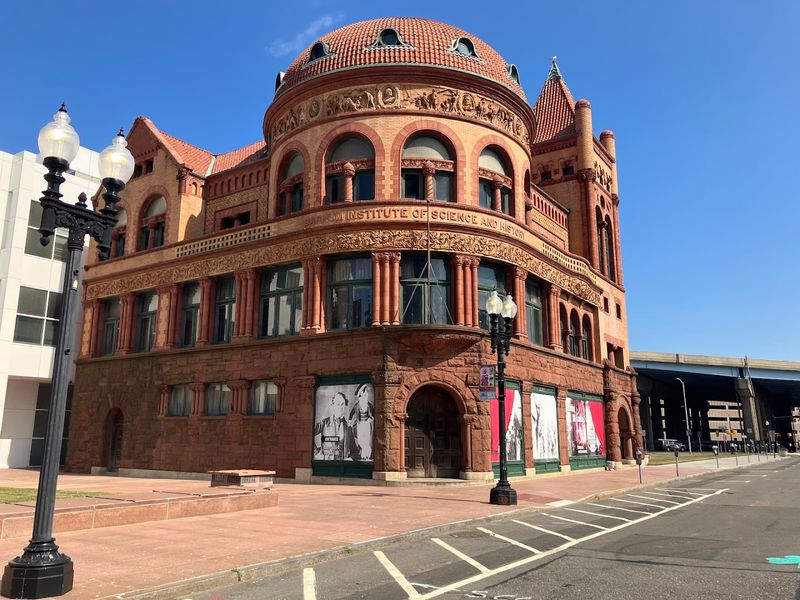
In Bridgeport, the Barnum Museum stands out through an eclectic mix of Romanesque, Byzantine, and Moorish Revival influences.
Its arches, patterned surfaces, and lively roofline make it one of Connecticut’s most unusual civic landmarks.
Completed in the 1890s as a monument to P. T.
Barnum, the building was never intended to fade into the background.
Its design embraces visual richness and variety, reflecting a showman’s taste for spectacle while still functioning as a serious public institution.
That tension between entertainment and monumentality gives the museum much of its architectural personality.
Even if you know Barnum mainly through popular culture, the building itself tells a broader story about civic aspiration.
Bridgeport used architecture here to project culture, curiosity, and confidence at a moment of urban growth.
The result is a structure that feels celebratory without becoming chaotic, which is harder to achieve than it looks.
If you want a castle-adjacent experience that expands the definition of fantasy architecture, this is an excellent stop.
The Barnum Museum proves that domes, arches, and exotic revival styles can be just as transporting as towers and battlements.
13. Bellamy-Ferriday House and Garden, Bethlehem, Litchfield County
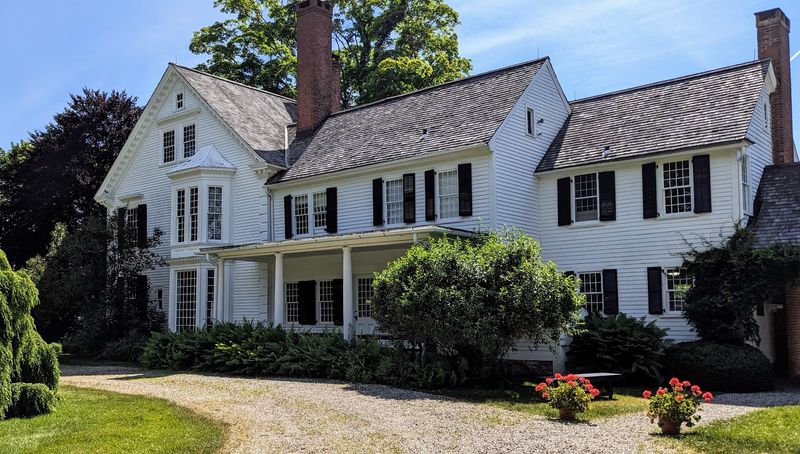
At first glance, this house may seem gentler than a castle, but its cultivated presence has a quiet authority of its own.
That distinction defines the Bellamy-Ferriday House and Garden in Bethlehem, where architecture and landscape work in close partnership.
The result is a refined estate experience shaped less by fortification than by taste, memory, and layered design.
The house originated in the eighteenth century, then evolved through later owners who gave it broader cultural significance.
Its restrained exterior reflects New England traditions, while the gardens and interiors reveal a more cosmopolitan sensibility over time.
That contrast is exactly what makes the property so compelling for visitors interested in architecture beyond obvious grandeur.
Rather than overwhelming you with scale, the site draws you in through proportion, intimacy, and continuity.
The gardens create outdoor rooms that extend the architectural experience, making movement through the property feel carefully staged.
As with many of Connecticut’s most memorable estates, the full impression comes from the relationship between building, setting, and story.
If you appreciate places where elegance unfolds gradually, this stop rewards patient attention.
Bellamy-Ferriday shows that unique architecture can be measured in composition and atmosphere as much as ornament.
14. Glebe House Museum, Woodbury, Litchfield County
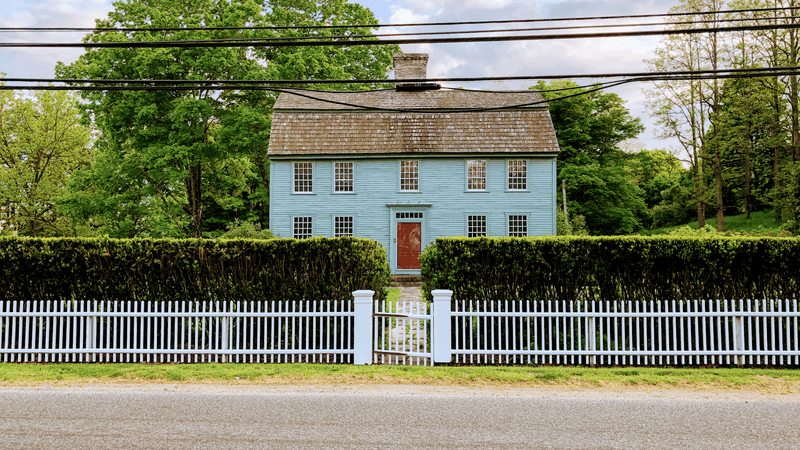
Quiet roads and mature trees set the tone for a property that reveals Connecticut’s architectural depth in a more intimate register.
That atmosphere surrounds the Glebe House Museum in Woodbury, one of the state’s important eighteenth-century house museums.
Its appeal comes from authenticity, proportion, and the way modest scale can still carry remarkable historical weight.
Built around the 1740s, the house reflects colonial New England building traditions with straightforward materials and balanced composition.
Unlike later mansions that pursued spectacle, this structure expresses status through craftsmanship, order, and domestic practicality.
That earlier architectural language broadens any conversation about castles by showing the foundations from which later ambition would depart.
The site is also known for its Gertrude Jekyll garden, which adds another layer to the visitor experience.
Architecture and horticulture meet here in a way that encourages slower looking, especially if you enjoy properties with human scale.
The museum setting helps you notice details like window rhythm, room arrangement, and how everyday life shaped the building’s design.
If you want this list to include places that ground Connecticut’s fanciful architecture in deeper history, the Glebe House matters.
It does not mimic a fortress, but it anchors the state’s architectural story with clarity and charm.
15. Webb-Deane-Stevens Museum, Wethersfield, Hartford County
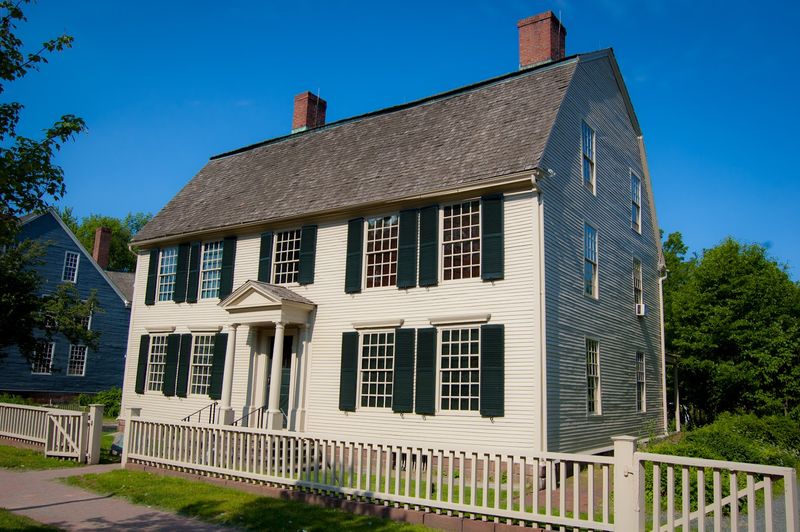
On one of New England’s most historic streets, this museum complex offers a layered look at domestic architecture across generations.
The Webb-Deane-Stevens Museum in Wethersfield includes three notable houses that together tell a broader architectural story.
Instead of one dramatic castle, you get a compact collection of residences that reveal status, style, and changing taste over time.
The Joseph Webb House is especially significant for its Georgian character and Revolutionary War associations.
Nearby, the Silas Deane House presents the kind of refinement expected from an ambitious colonial statesman, while the Isaac Stevens House adds later perspective.
Seen together, they create a rare opportunity to compare form, scale, interior arrangement, and decorative ambition within a shared setting.
What makes the site unique is its cumulative impact rather than a single flashy gesture.
As you move from house to house, architectural differences become easier to read, and history feels built into every threshold.
The museum’s village context also matters, because these structures still make sense within the streetscape that shaped them.
If you enjoy architecture as an unfolding narrative rather than a standalone spectacle, this is a rewarding stop.
The Webb-Deane-Stevens Museum shows how Connecticut’s built heritage gains power through preservation and comparison.