Oregon might be known for its mountains and coastline, but the state hides some seriously strange roadside attractions that most tourists never see.
From gravity-defying vortexes to shipwrecks sitting beside highways, these unusual spots prove Oregon has a wonderfully weird side.
After exploring countless odd locations across the state, I’ve narrowed down the most bizarre, fascinating, and downright peculiar places you can actually visit.
Get ready to discover Oregon’s strangest attractions that’ll make you question reality itself.
The Oregon Vortex (Gold Hill)
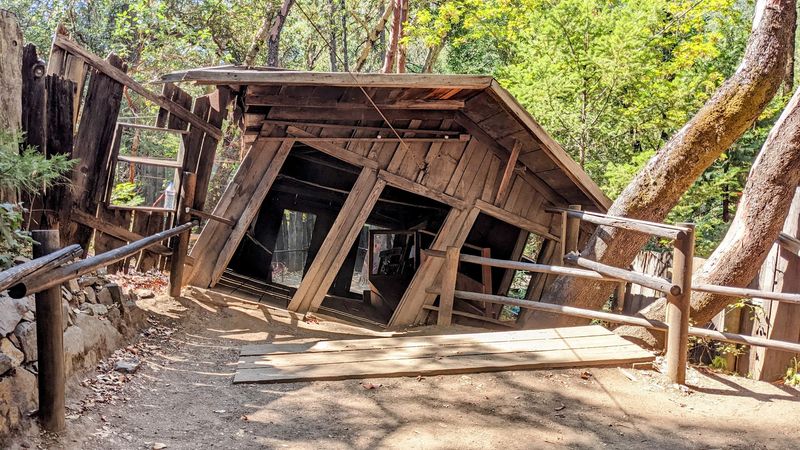
Standing inside the Oregon Vortex feels like stepping into a world where physics decided to take a vacation. Visitors watch balls roll uphill, see people appear to change heights when switching positions, and experience dizziness that can’t quite be explained away.
Brooms stand on their own without support, defying everything you learned in science class.
This mysterious spot has been puzzling travelers since 1930 when it first opened to curious visitors. The tilted wooden structures add to the unsettling atmosphere, making you question whether your eyes are playing tricks or something truly strange is happening.
Tour guides demonstrate mind-bending phenomena that even skeptics can’t fully dismiss.
Scientists have offered various explanations, from magnetic anomalies to simple optical illusions created by the slanted landscape. But experiencing it firsthand creates a sense of wonder that theories can’t quite capture.
Whether you believe in supernatural forces or geometric trickery, walking through this bizarre attraction leaves everyone scratching their heads and snapping photos that don’t quite make sense when viewed later at home.
Prehistoric Gardens (Port Orford)
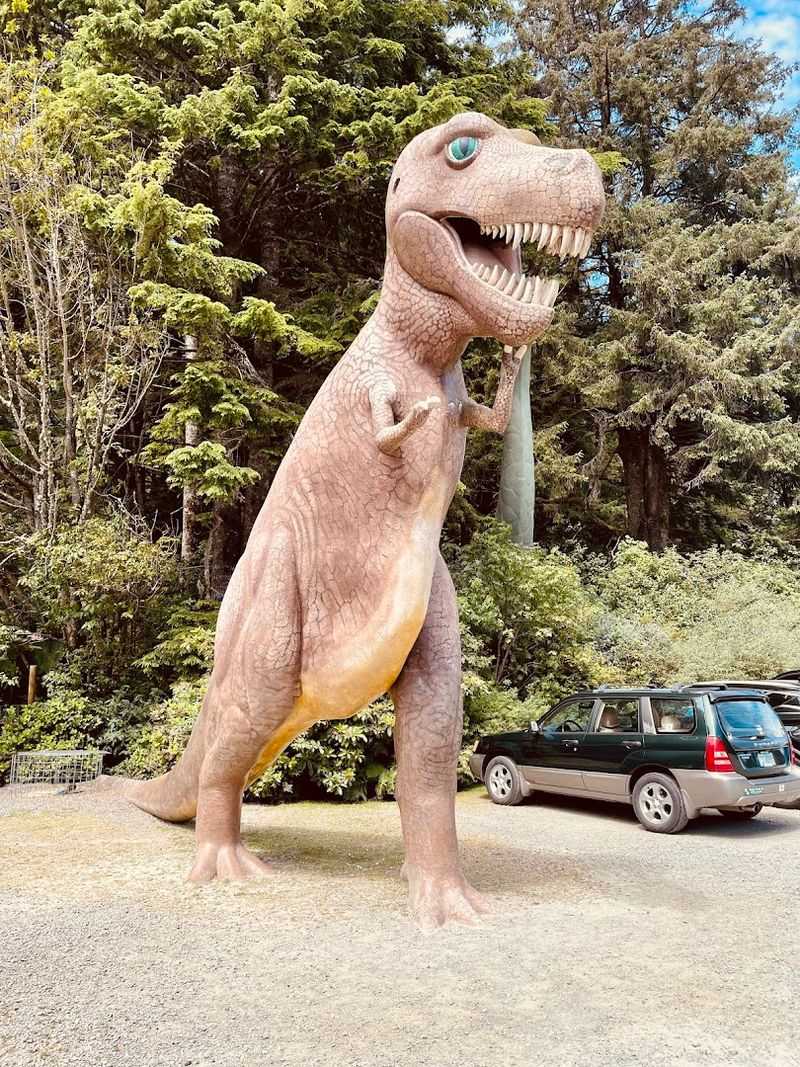
Picture a time when roadside attractions ruled America’s highways, and dinosaurs seemed like the coolest thing imaginable. That’s exactly what you’ll find tucked away in a coastal rainforest near Port Orford.
These aren’t your modern museum-quality replicas—they’re gloriously retro dinosaur sculptures that feel like they’ve been frozen since the 1950s.
Created by sculptor E.V. Nelson starting in 1953, these concrete creatures hide among towering ferns and moss-draped trees.
A T-Rex towers above you while a Stegosaurus peeks through the undergrowth, their bright colors creating a surreal contrast against the green Pacific Northwest landscape. Walking the forest paths feels like traveling back to when family road trips meant stopping at every quirky attraction along the way.
Sure, modern paleontology has updated our understanding of what dinosaurs actually looked like. But that’s part of the charm here.
The sculptures represent a specific era of American culture when imagination mattered more than scientific accuracy, and roadside wonder was its own reward. Bring your inner child and prepare for nostalgic delight.
The Witch’s Castle (Portland)
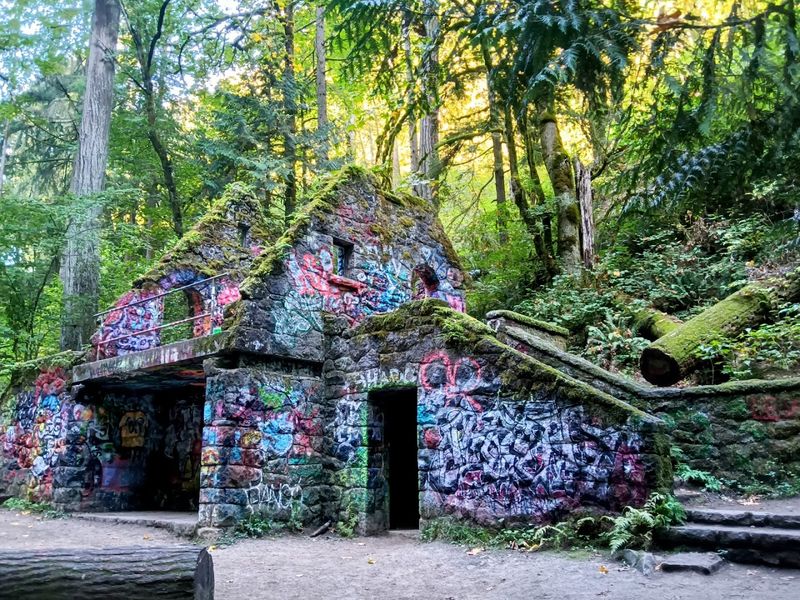
Deep within Portland’s Forest Park sits a crumbling stone structure that locals call the Witch’s Castle, though its real history is far less magical. Originally built as a ranger station and restroom in the 1950s, the abandoned building has been reclaimed by nature and transformed into something genuinely eerie.
Thick moss blankets every surface while trees grow through gaps in the stonework.
Local legends swirl around this spot like morning fog through the forest. Some stories speak of a woman accused of witchcraft who lived here centuries ago.
Others tell of tragic accidents and mysterious disappearances that may or may not have actually happened. The truth matters less than the atmosphere—standing among these ruins genuinely feels unsettling, especially at dusk.
Graffiti covers many walls, adding layers of modern mystery to ancient-looking stones. Hikers reach it via the Lower Macleay Trail, often stumbling upon it unexpectedly during forest walks.
Whether you believe the spooky tales or just appreciate creepy architecture, this moss-covered ruin delivers an experience that stays with you long after leaving the shadowy woods behind.
Petersen Rock Garden (Redmond)
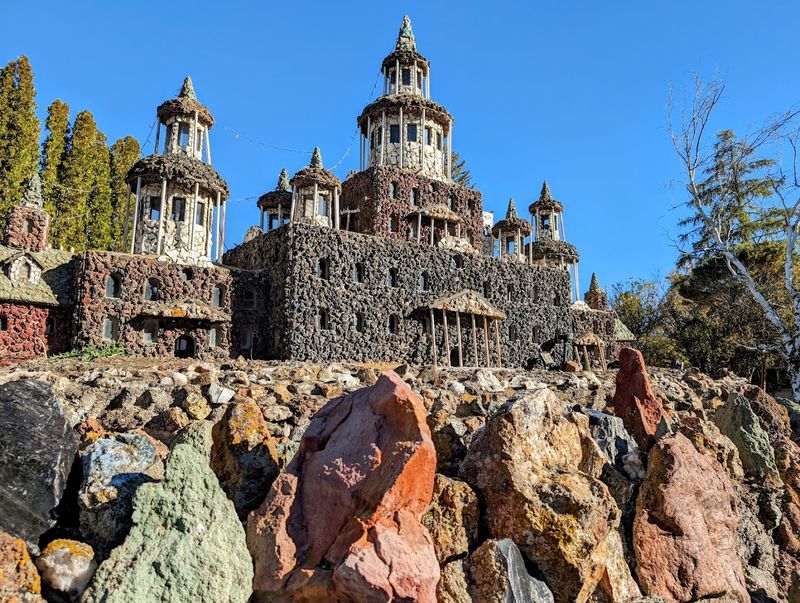
What do you do when you’re a Danish immigrant farmer with endless creative energy and access to lots of rocks? If you’re Rasmus Petersen, you spend decades building an entire fantasy world from stones, shells, and concrete.
Starting in 1935, this eccentric artist transformed four acres of Central Oregon desert into a wonderland that defies easy description.
Miniature castles rise from the ground alongside tiny bridges spanning imaginary rivers. American flags crafted from colored rocks wave permanently in stone breezes.
Towers spiral upward while grottos invite exploration, each section revealing new details that Petersen painstakingly created using materials he collected from across Oregon and beyond.
What makes this place special isn’t just the artistry—it’s the obsessive dedication behind every structure. Petersen worked on his garden until his death in 1952, and his family has preserved it ever since.
Walking through feels like entering someone’s decades-long daydream made solid. The sun-bleached colors and weathered concrete add authenticity that no modern theme park could replicate, making this truly Oregon’s most charming example of outsider art.
Shaniko Ghost Town (Shaniko)
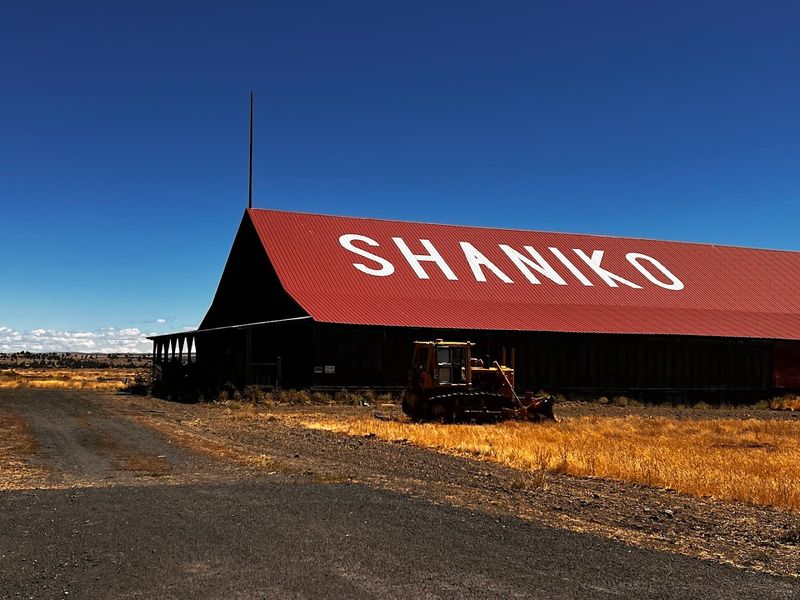
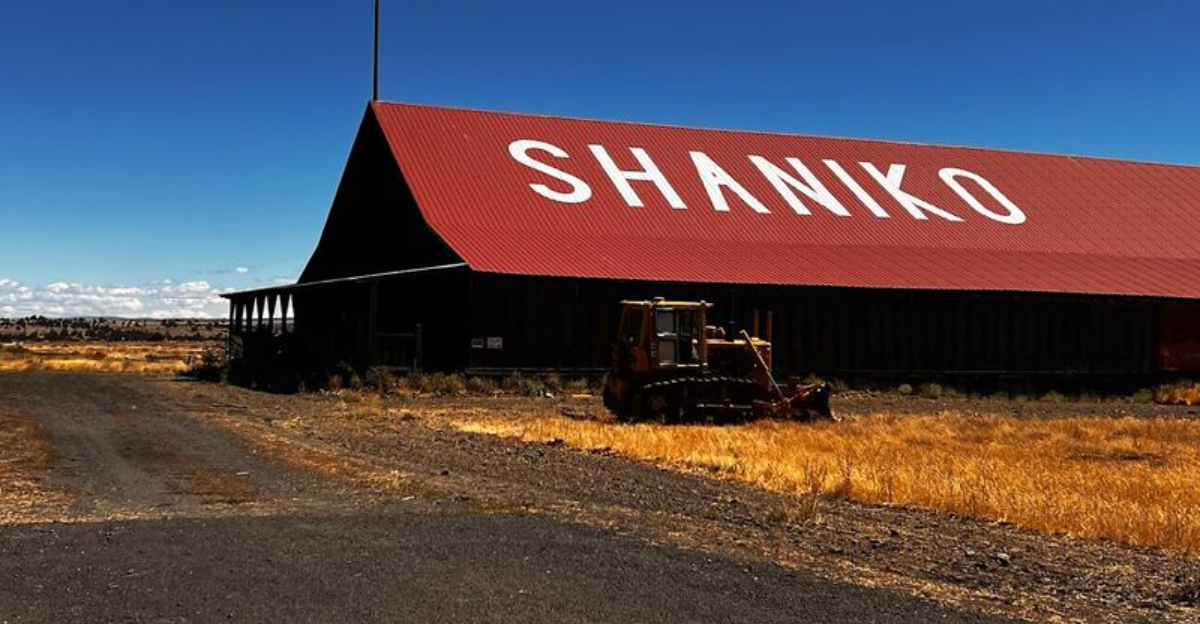
Time stopped in Shaniko around 1911, and nobody bothered to restart it. Once known as the “Wool Capital of the World,” this booming town shipped massive quantities of sheep wool across America until the railroad changed routes and left Shaniko high and dry.
What remains is one of Oregon’s best-preserved ghost towns, with weathered buildings still standing along dusty streets.
Walking through feels like stepping onto a movie set, except everything here is completely real. The old hotel, schoolhouse, and jail remain remarkably intact despite over a century of harsh high desert weather.
Wooden sidewalks creak underfoot while empty storefronts stare out with dark windows. You can almost hear the echo of cowboys and wool merchants who once filled these streets with life.
Unlike many ghost towns that crumbled or got developed over, Shaniko retains its authentic Wild West character. A few dedicated people maintain the town and welcome visitors who want to experience Oregon’s frontier past without reconstruction or theme park gloss.
Bring your camera and comfortable shoes—exploring these genuine historical buildings beats any museum exhibit hands down.
The Octopus Tree (Cape Meares)
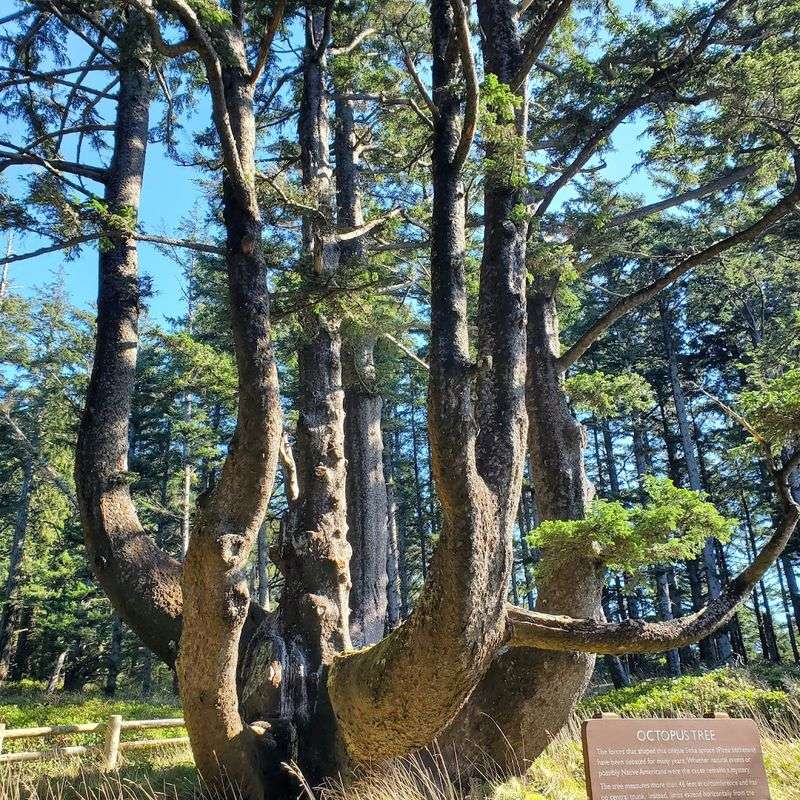
Most Sitka spruce trees grow straight and tall, reaching toward the sky with predictable branches. Then there’s the Octopus Tree, which apparently missed that memo entirely.
Instead of a single trunk, this ancient giant sends six massive limbs spreading horizontally from its base before curving upward, creating a shape so bizarre that naming it after an octopus seemed like the only logical choice.
Nobody knows exactly why this tree grows so differently from its forest neighbors. Some theories suggest Native Americans deliberately shaped it for ceremonial purposes.
Others believe natural damage to the main trunk forced the tree to adapt and survive through unconventional growth. Whatever the cause, the result is genuinely spectacular—each limb measures several feet thick and creates candelabra-like branches.
Located near Cape Meares Lighthouse along Oregon’s dramatic coastline, the tree sits just a short walk from parking areas. People have been photographing themselves standing inside the space between limbs for generations.
The surrounding forest provides a normal contrast that makes this botanical oddity even more striking. Nature occasionally creates something unexpected, and Oregon’s Octopus Tree proves that perfectly.
The Pronto Pup Whale and Oddities Display (Rockaway Beach)
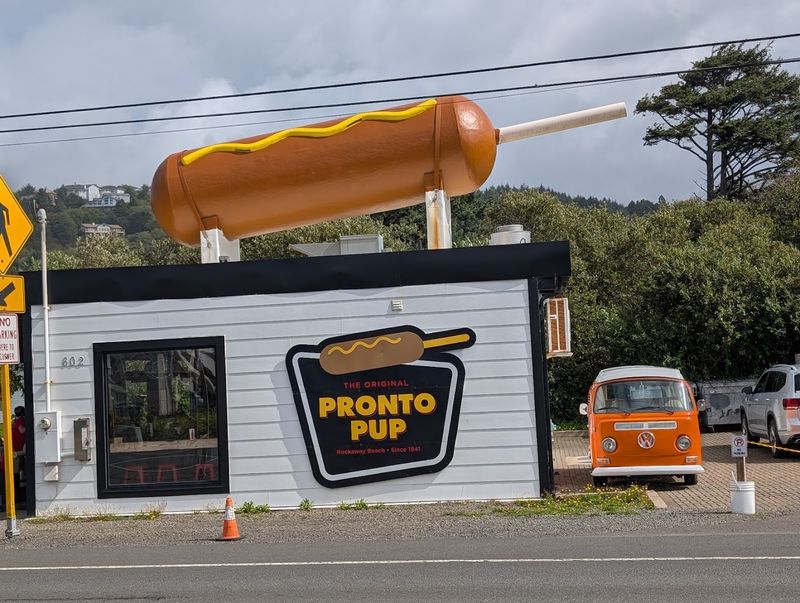
Rockaway Beach captures that classic Oregon coast vibe perfectly—a bit quirky, wonderfully unpretentious, and totally comfortable being different. The Pronto Pup, famous for their corn dogs, takes this attitude and runs with it by surrounding their restaurant with genuinely weird sculptures and oddities that demand attention.
A massive whale sculpture catches your eye first, but that’s just the beginning.
The collection grew organically over years as the owners embraced their inner weirdness and kept adding more unusual displays. Colorful characters and strange creatures populate the outdoor space, creating a visual feast that feels part folk art, part fever dream.
Kids love the bizarre sculptures while parents appreciate the nostalgic throwback to when roadside attractions didn’t take themselves seriously.
Honestly, explaining what makes this place special doesn’t quite capture the experience. You need to see the randomness yourself, corn dog in hand, surrounded by beachy Oregon oddness.
It’s the kind of attraction that makes road trips memorable—not slick or manufactured, just genuinely strange and fun. Stop for lunch and stay for the delightfully bizarre atmosphere that defines Oregon coast culture perfectly.
Crack in the Ground (Christmas Valley)
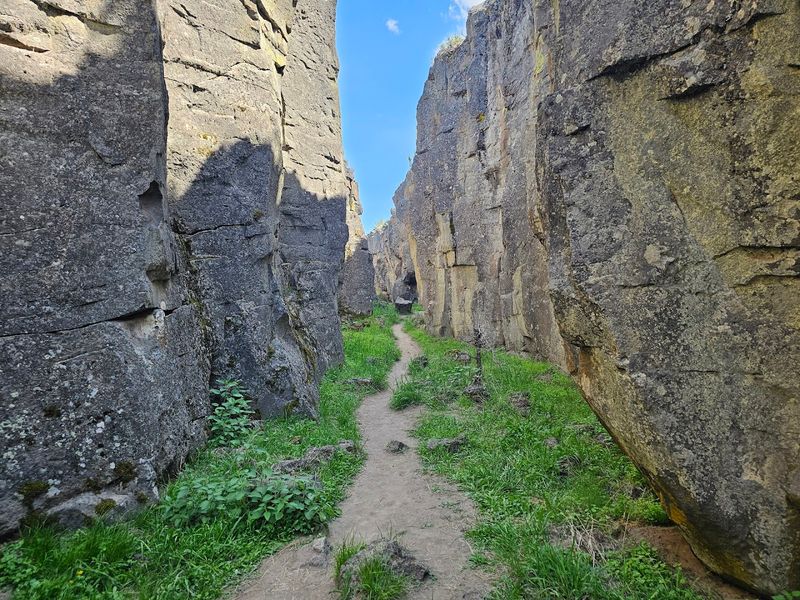
Imagine the earth just decided to split open one day and create a two-mile crack you can actually walk through. That’s essentially what happened thousands of years ago when volcanic activity created this incredible geological oddity in Oregon’s high desert.
The result is a fissure that reaches depths of 70 feet in places, narrow enough that you can touch both walls simultaneously while standing in the bottom.
Volcanic rock walls tower above you as you walk through this natural corridor, creating temperatures noticeably cooler than the surrounding desert—sometimes by 20 degrees during summer. Ancient lava flows formed the crack, and minimal rainfall since means erosion has barely touched it.
The walls show layers of volcanic history like pages in a stone book.
Getting there requires driving on gravel roads through remote high desert country, which keeps crowds minimal despite the attraction’s dramatic nature. Bring sturdy shoes because the rocky floor demands attention while walking.
The crack extends far enough that you’ll get genuine exercise exploring its length. Few people realize Oregon hides such spectacular volcanic features outside national parks, making this hidden gem even more rewarding to discover yourself.
The Mary D. Hume Shipwreck (Gold Beach)
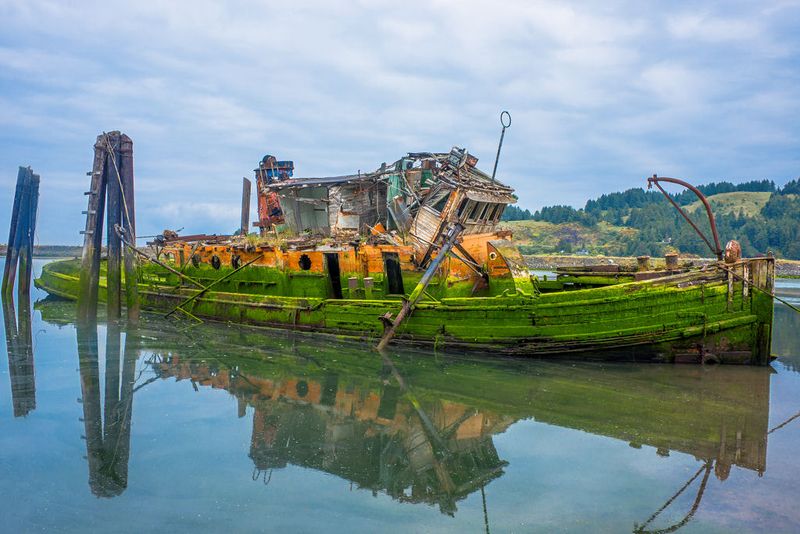
Most shipwrecks hide beneath ocean waves or rest on remote beaches where only dedicated hikers find them. The Mary D.
Hume takes a different approach—she’s sitting right beside Highway 101 where thousands of drivers pass daily, making her possibly Oregon’s most accessible maritime disaster. This weathered wooden vessel tells a story spanning over a century of Pacific Northwest maritime history.
Built in 1881, the Mary D. Hume worked as a tugboat and later a fishing vessel for decades before being retired.
She survived longer than most wooden ships, but time and neglect took their toll. Today, her skeleton rests partially submerged, ribs exposed to the elements, creating one of the coast’s most photographed and hauntingly beautiful sights.
Photographers flock here during golden hour when sunset light illuminates the decaying wood against the Rogue River backdrop. The ship represents Oregon’s logging and fishing heritage while serving as a reminder that nothing lasts forever.
You can view her from multiple angles without leaving your car, though walking closer reveals intricate details of her construction. This easily-viewed piece of history makes Gold Beach worth a stop.
Thor’s Well (Yachats)
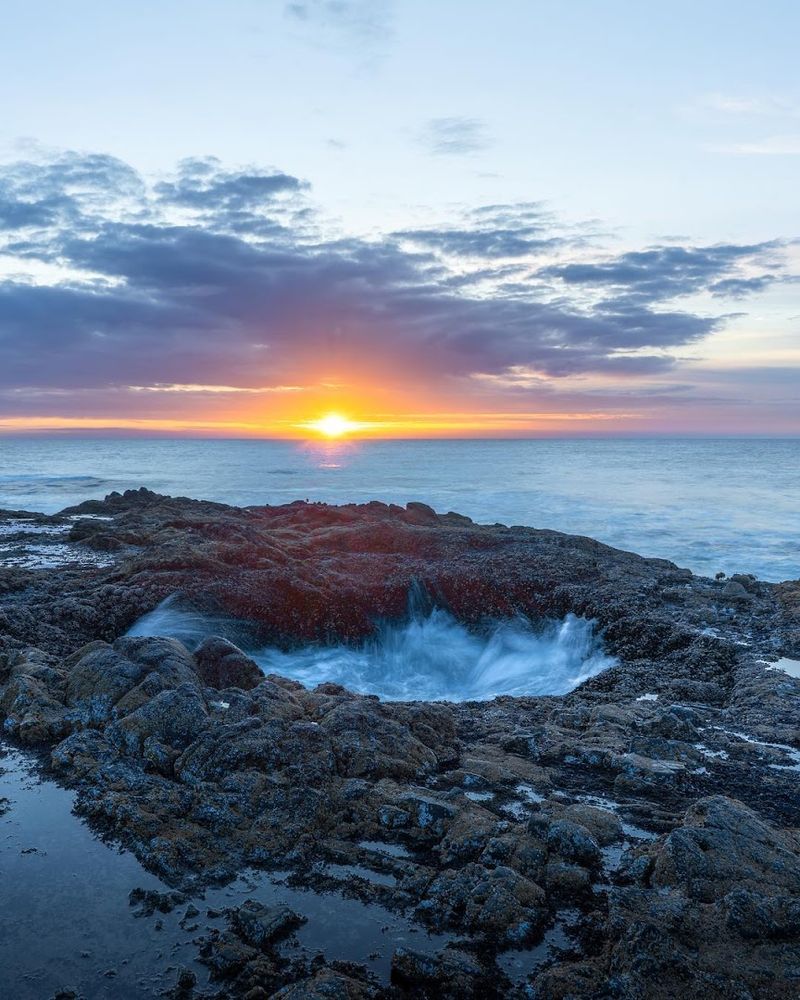
The Pacific Ocean appears to be draining into the center of the Earth at Thor’s Well, though that’s just an illusion—albeit a spectacularly dramatic one. During high tide, especially when winter storms create massive swells, water rushes into this natural sinkhole and erupts skyward in explosive bursts.
The effect looks supernatural, like something from Norse mythology, which explains the name perfectly.
Located along the stunning Cape Perpetua coastline, this geological feature is actually a collapsed sea cave where the ocean floor gave way. The “well” drains back into the ocean through underground passages, creating the illusion of an endless drain.
Timing your visit matters enormously—arrive at high tide during rough seas for maximum drama, or settle for gentler flows during calmer conditions.
Safety warnings are serious here because sneaker waves can knock photographers right off the rocks. Many visitors underestimate the ocean’s power while trying to capture the perfect shot.
Stay back from the edge, watch the wave patterns, and never turn your back on the water. The views justify the caution—Thor’s Well ranks among the most photogenic natural features on Oregon’s already spectacular coastline, delivering nature’s power and beauty simultaneously.
The Enchanted Forest (Turner)
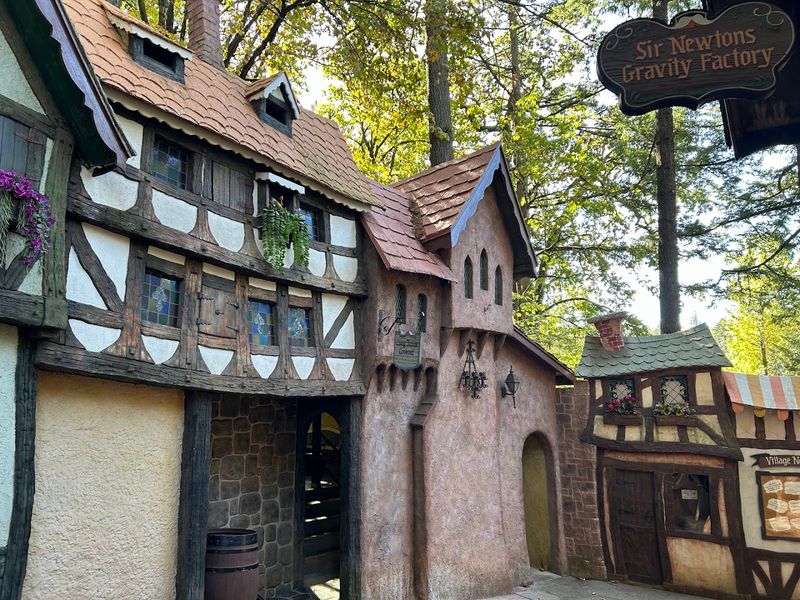
Tucked away in the small town of Turner just south of Salem, The Enchanted Forest is one of Oregon’s most delightfully unusual attractions. Unlike modern theme parks filled with massive roller coasters and cutting-edge technology, this family-owned destination embraces a whimsical, handcrafted charm that feels completely unique.
Opened in 1971, the park was largely built by founder Roger Tofte, who spent years creating fairy-tale scenes, storybook pathways, and imaginative attractions by hand.
Visitors can wander through colorful recreations of classic nursery rhymes and fairy tales, explore a crooked haunted house, and discover hidden passages that make the park feel like stepping into a fantasy world. The attention to detail is part of what makes the experience so memorable.
Everywhere you look, there are quirky sculptures, unusual buildings, and playful surprises tucked among the trees.
What makes The Enchanted Forest especially weird—in the best possible way—is that it doesn’t try to be anything other than itself. Its old-school creativity, eccentric design, and nostalgic atmosphere have turned it into a beloved Oregon landmark.
Decades after opening, it remains one of the state’s strangest and most charming roadside attractions.
Darlingtonia State Natural Site (Florence)
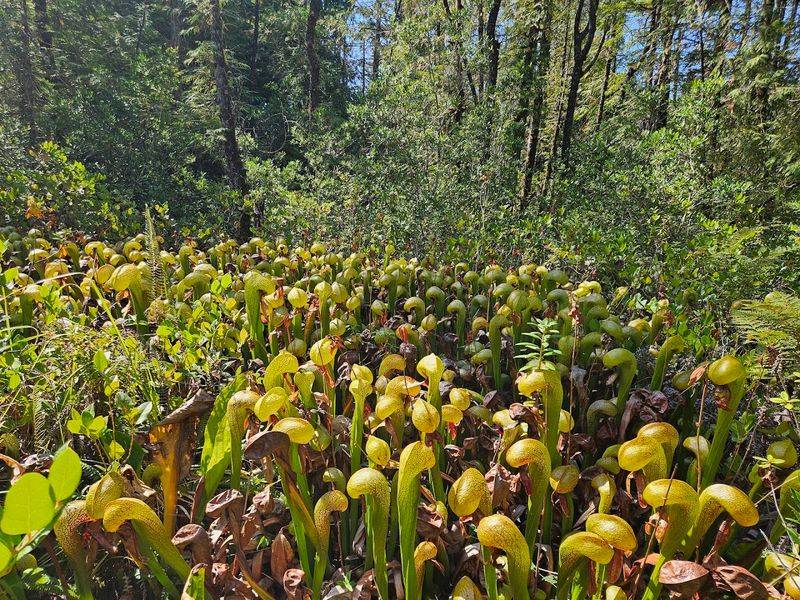
Just a few miles north of Florence, Darlingtonia State Natural Site protects one of Oregon’s most unusual natural wonders: a thriving colony of cobra lilies. Known scientifically as Darlingtonia californica, these rare carnivorous plants are famous for their striking shape, which resembles a rearing cobra ready to strike.
Their unusual appearance alone makes the site feel otherworldly, but it’s the plants’ ability to trap and digest insects that truly sets them apart.
A short boardwalk winds through the wetland habitat, allowing visitors to get an up-close look at these fascinating plants without disturbing the fragile ecosystem. The bog’s cool, misty atmosphere adds to the experience, creating a landscape that feels more like something from a science-fiction movie than the Oregon Coast.
During the growing season, hundreds of cobra lilies rise from the marsh, creating one of the most distinctive plant displays in the Pacific Northwest.
What makes Darlingtonia State Natural Site so unusual is that it offers a chance to see a rare carnivorous species thriving in its natural environment. Few places in the United States provide such easy access to these remarkable plants, making it one of Oregon’s most unique attractions.