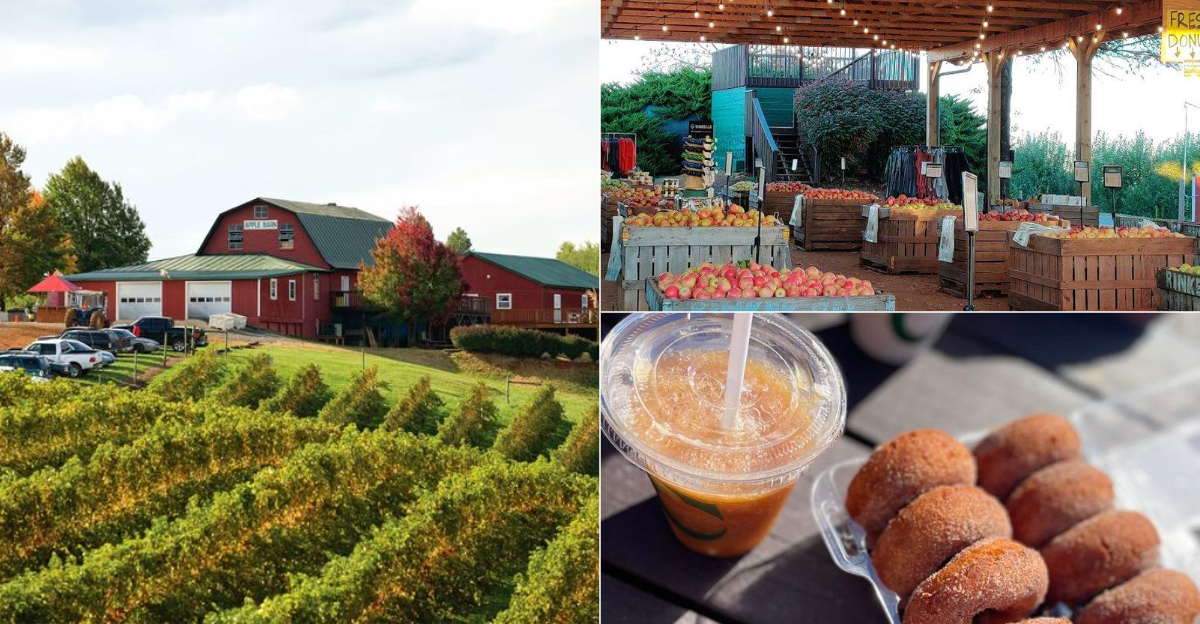
Maintaining productive farmland near growing university and urban centers has become one of the greatest challenges facing the modern rural economy.
For historic orchards to remain viable in today’s market, their success cannot depend solely on a short harvest season, but must also come from providing year-round value through specialty products and distinctive visitor experiences.
Stability is achieved by transforming a traditional farm into a cultural gathering place where local food traditions connect directly with the modern desire to escape the pace of city life.
Visitors who come to walk among rows of apples and peaches actively contribute to preserving a landscape that might otherwise give way to commercial development.
This successful model of sustainable agritourism can be experienced at Carter Mountain Orchard and Country Store, located at 1435 Carters Mountain Trail, Charlottesville, VA 22902.
We explored the history of this orchard destination and prepared a detailed guide to its most popular homemade products and enduring traditions.
Why the mountain road matters
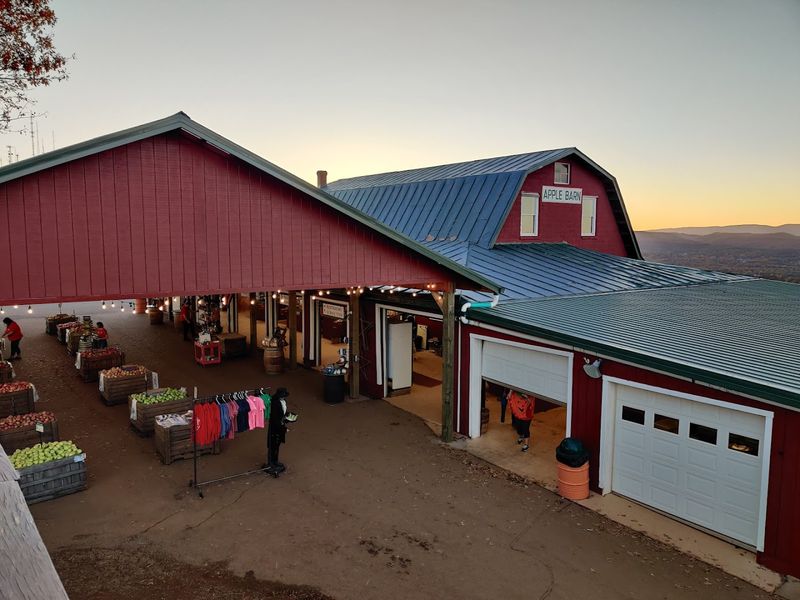
Because the approach rises steadily, the orchard experience starts before you see a single tree.
Higher turns on the road reveal rooftops, fields, and distant ridges in layers, which creates anticipation and also explains why the site feels separate from town despite being close.
Geography becomes part of the attraction long before visitors reach the parking area, turning a simple drive into an introduction to the landscape that supports the farm.
Around each bend, elevation changes your perspective on the surrounding countryside and makes the farm seem larger than it first appears.
Meanwhile, the climb signals that fruit growing here depends on slope, drainage, airflow, and exposure, not simply on available land.
Hillside agriculture requires careful management, and the route itself offers subtle clues about why orchards have long favored this terrain.
Below, traffic and daily errands begin to feel less urgent, which helps visitors slow down and pay attention once they arrive.
Open vistas encourage people to pause rather than rush toward the next activity.
By the time you step out, the combination of height, open sky, and visible orchard rows has already framed the visit as part landscape observation, part agricultural outing, and part day outdoors.
That gradual transition gives the destination a sense of separation that many lower-elevation farms cannot easily replicate.
Orchards shaped by Virginia growing conditions
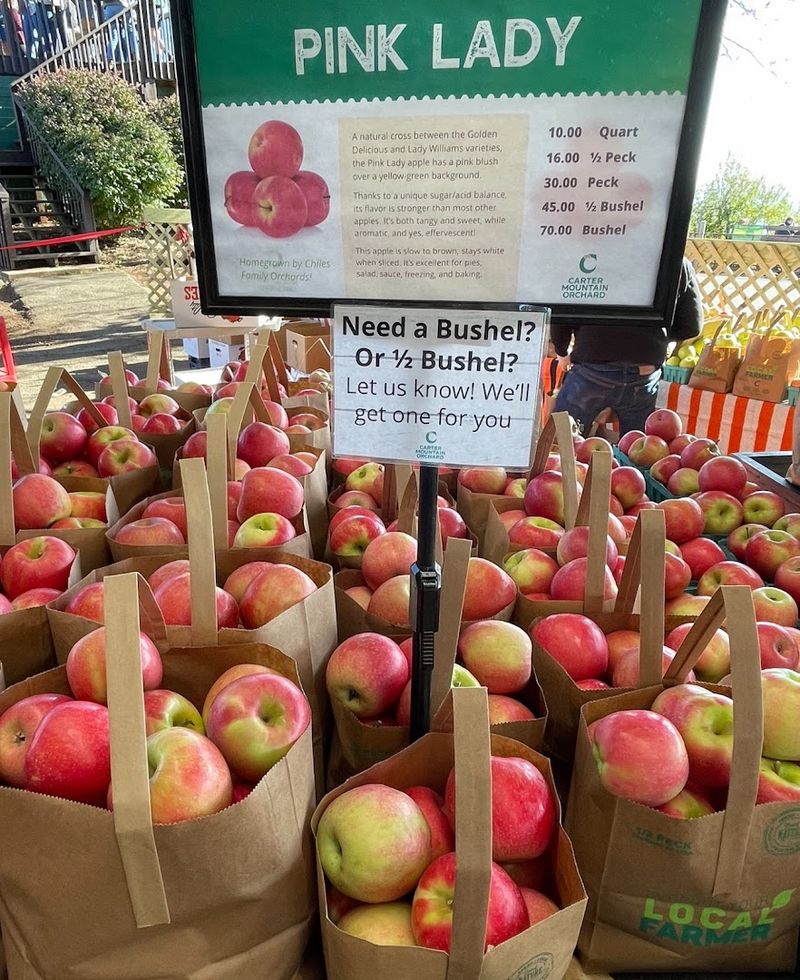
Virginia orchards succeed here because the region offers a useful mix of warm summers, cold winters, and hillside air movement.
Warm days help peaches develop sugar, while winter chill supports the dormancy many apple varieties need before spring growth begins.
Seasonal variation gives growers access to conditions that favor multiple crops rather than limiting production to a narrow harvest window.
Different slopes and elevations also influence bloom timing, fruit quality, and disease pressure across the farm.
Growers work with those conditions by monitoring ripening windows, managing pests carefully, and matching varieties to sites that can support reliable harvests.
Air circulation along the mountainside can reduce certain risks while helping fruit mature more evenly. Those natural advantages become most visible during harvest, when differences in location can affect both flavor and texture.
Balanced rainfall matters, yet too much moisture can encourage rot and fungal problems, especially during sensitive periods close to picking.
Successful production therefore depends on constant observation rather than simple routine.
Agricultural decisions must account for weather patterns, soil characteristics, and changing seasonal conditions.
Instead of treating fruit as a generic crop, this mountain setting shows how soil, climate, and orchard management combine to produce peaches in summer and apples that define the cooler months.
A panorama that changes the pace of a visit
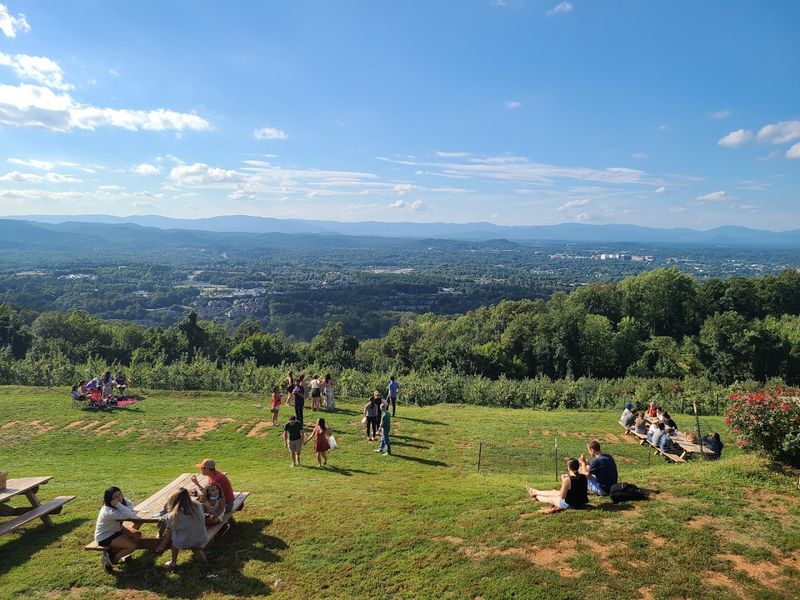
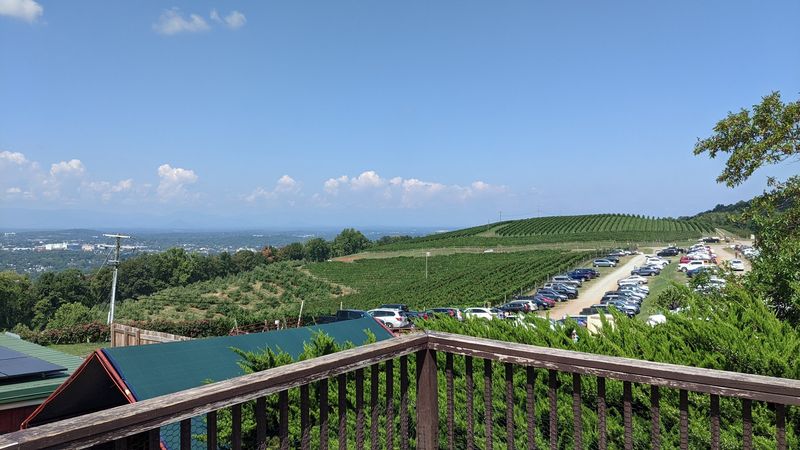
From the higher edges of the property, the landscape opens into a broad view that keeps people lingering. Blue ridges, valley farmland, and the city below sit in one frame, making the orchard feel tied to a much wider regional geography.
Elevation creates a perspective that is difficult to appreciate from lower ground, revealing how agriculture, forests, and development share the same landscape.
Late light is especially revealing because shadows define slopes, tree lines, and the patchwork of developed and agricultural land.
Seasonal changes become easy to observe from this vantage point. Spring introduces fresh greenery, summer deepens the color of the surrounding hills, and autumn adds variation through changing leaves and harvest activity.
Photographs matter here, but the real value is slower looking, since the setting helps visitors understand how farming still occupies strategic terrain near Charlottesville.
Open views also change behavior.
Afterward, many people stay longer than planned, not simply for food or shopping, but because a clear overlook encourages conversation, rest, and attention to weather, distance, and seasonal color in ways that flatter but do not oversimplify the countryside.
Visibility across such a large area also provides context for the agricultural landscape, showing how individual farms fit into a broader regional system shaped by geography and long-standing land use patterns.
More than a place to pick fruit
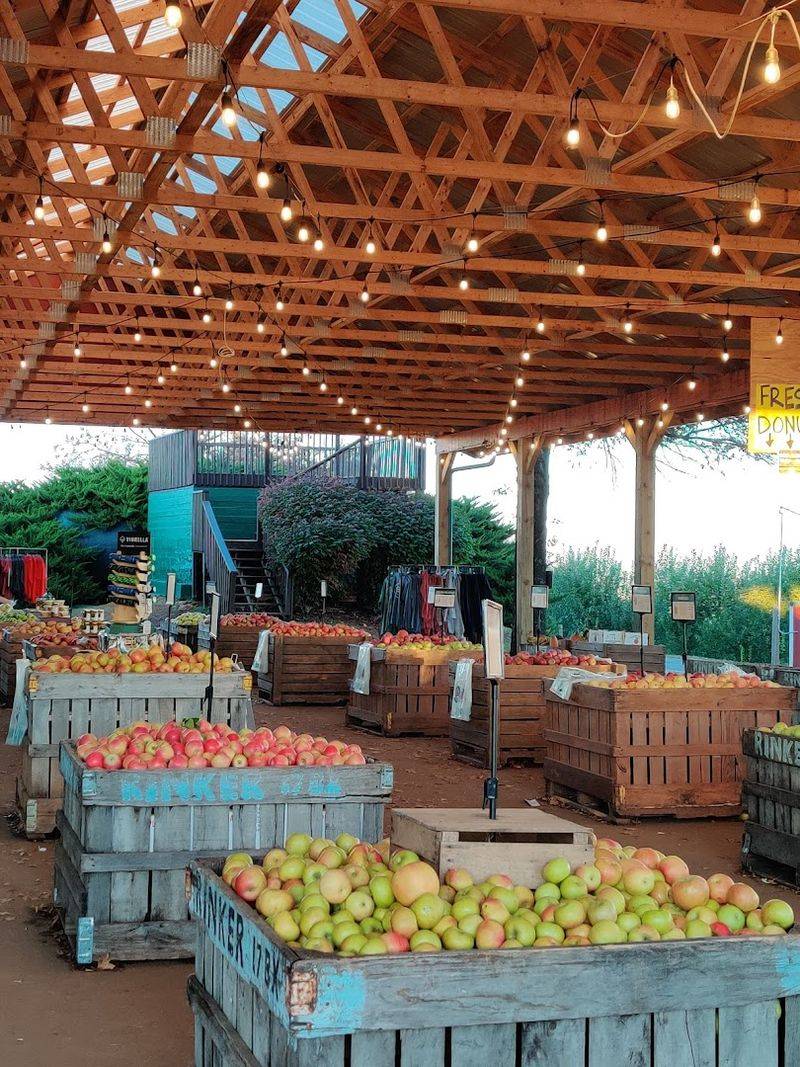
Families often arrive expecting a simple picking trip and leave having spent most of the day on varied activities.
School groups, hayrides, educational signs, and seasonal events give the farm a broader role than a field where fruit is sold directly from trees.
Multiple attractions encourage visitors to engage with the agricultural setting in different ways rather than treating the orchard as a brief stop.
Seasonal programming matters because it teaches children where food comes from and how weather shapes each harvest.
Educational experiences become more meaningful when they take place in a working environment where crops, equipment, and growing conditions are visible.
Children also learn practical habits, such as handling fruit gently, noticing ripeness, and understanding why farms need rules about where people walk and what they pick.
Those lessons help connect everyday food purchases to the realities of agricultural production.
Unlike amusement-based attractions, the entertainment remains tied to actual agricultural work and seasonal timing.
Activities change throughout the year because harvest schedules, weather patterns, and crop conditions change as well.
Planned events therefore support the orchard rather than distracting from it, giving visitors a clearer sense that recreation, learning, and farm income can exist together on the same mountain landscape.
That connection helps preserve interest in farming while creating experiences that feel rooted in place and purpose.
What the country store reveals about the region
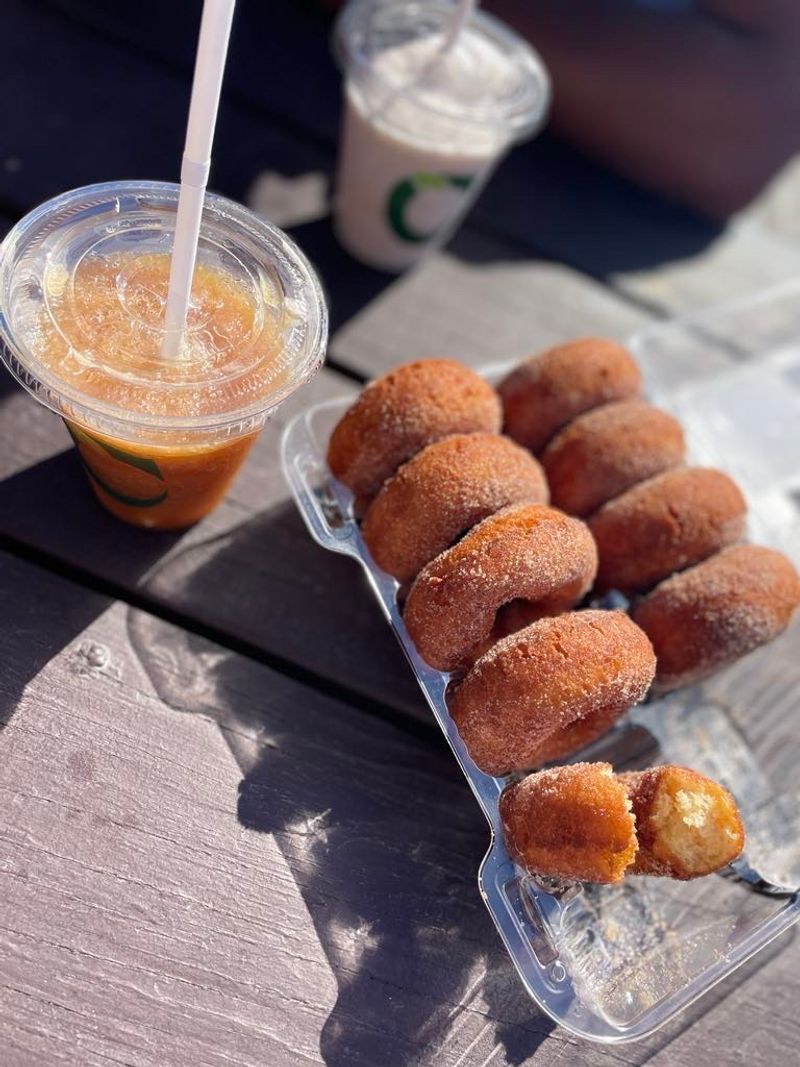
Inside the shop, the agricultural identity of the place becomes more tangible and more local.
Shelves of preserves, cider, apples, sauces, snacks, and regional gifts show how fruit extends beyond harvest day into products that support year-round business.
Every display reinforces the idea that orchards depend on multiple revenue streams rather than a single picking season.
Nearby farms and food makers are part of that story, since a country store often reflects a network rather than a single field.
Regional products help connect visitors to the broader agricultural community while supporting businesses that share similar goals and traditions.
Bakery counters reinforce the connection by turning orchard produce into pies, donuts, breads, and other items that make seasonal flavor easy to take home.
Freshly prepared foods also demonstrate how raw ingredients can be transformed into products with longer shelf life and wider appeal.
Jars and baked goods are not just souvenirs.
Taken together, they demonstrate how processing adds value, reduces waste, and keeps agricultural traditions visible to visitors who may not know much about crop timing, storage, or the economic pressures facing working farms in Virginia.
That educational role matters because it helps people understand how farms remain viable long after the harvest season has ended and why local food systems continue to play an important economic role.
Why fresh cider still matters
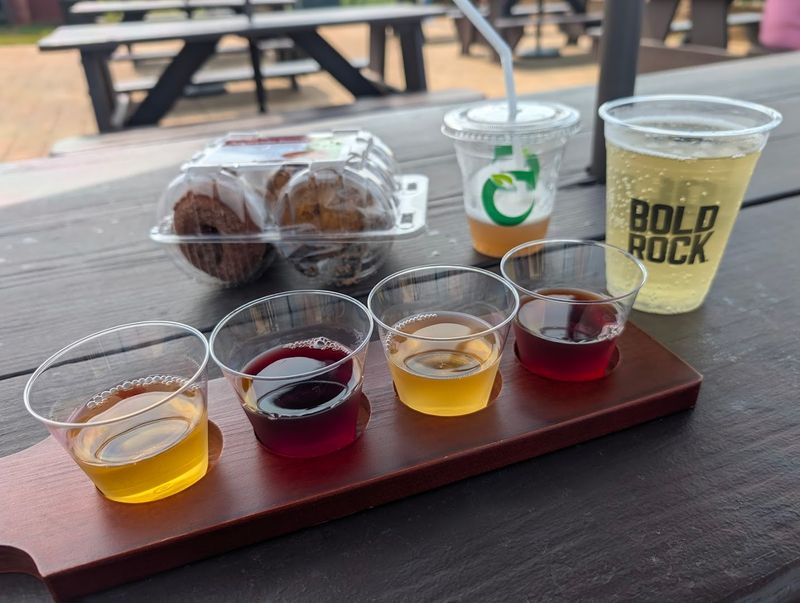
Pressed cider carries the orchard into a glass, which is why it remains central to the experience.
Sweetness, acidity, aroma, and texture all reflect apple varieties, freshness, and handling, making cider one of the clearest ways to taste the crop itself.
Differences between apple blends can be surprisingly noticeable, revealing how variety selection influences flavor long before fruit reaches a bakery or market shelf.
Historically, cider has also been a practical product because imperfect apples can still be used well when carefully processed.
Farmers have long relied on that flexibility to make efficient use of their harvests while reducing waste. Cooler weather increases its appeal, yet the drink matters beyond comfort, since it links modern visitors with older patterns of preserving and enjoying regional harvests.
Seasonal demand also helps sustain orchard operations during busy autumn months.
Good cider creates a benchmark for quality that packaged supermarket versions rarely match.
Fresh production preserves flavors that often fade during large-scale processing and long storage periods. That difference helps explain why people continue seeking orchards after picking slows, since a fresh cup or jug offers immediate evidence that agriculture is not only scenery on a hillside but a living food tradition.
Continued popularity also shows how a simple beverage can strengthen the connection between farming, local identity, and seasonal experiences.
The appeal of time spent outdoors
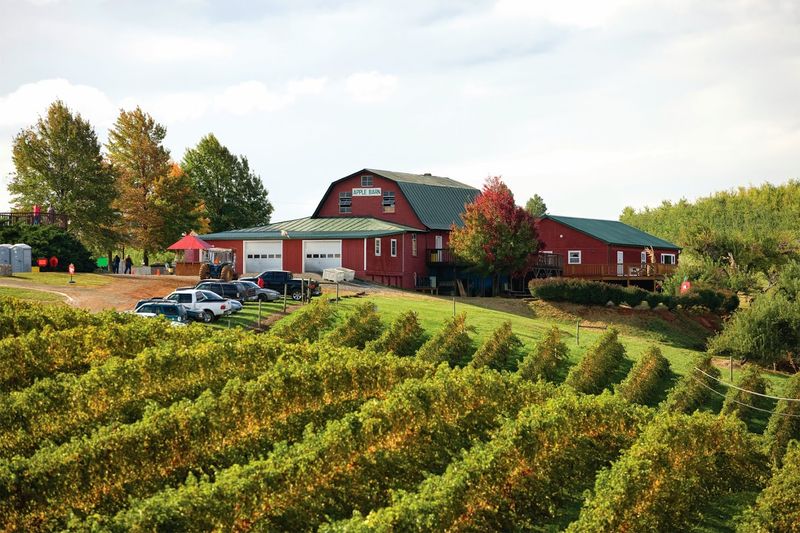
Time outdoors is one of the orchard’s most practical attractions, especially for visitors who spend much of the week indoors.
Paths, open slopes, fresh air, and room to move create a slower setting where a simple outing can feel structured without feeling rushed.
Wide open spaces encourage exploration while still keeping the focus on the agricultural landscape that surrounds the farm.
Parents often appreciate that children can focus on a concrete task, such as searching for ripe fruit or carrying a small bag.
Activities tied to harvesting tend to hold attention longer because they involve participation rather than passive observation.
Comfortable shoes matter because the terrain is real farm ground, not a flat park, and that physical effort makes the experience more memorable.
Walking through rows of trees also creates opportunities to observe seasonal changes that are easy to overlook in everyday settings.
Reliable outdoor spaces also have value in every season because they offer a reason to disconnect from screens and schedules.
Weather conditions, changing foliage, and shifting harvest cycles ensure that no two visits feel exactly alike. Visiting an orchard provides measurable activity, visible weather, and the chance to notice sounds, smells, and changing light.
Those simple experiences help explain why the destination remains appealing even when crowds thin and seasonal events are not taking place.
A Virginia tradition carried forward
Orchard culture in Virginia has deep roots, and this mountain farm reflects that continuity in visible ways. Earlier generations built fruit growing into regional identity by pairing practical agriculture with local markets, seasonal labor, storage, baking, and community habits tied to harvest.
Those traditions helped shape both the rural economy and the social rhythms that surrounded planting, picking, and selling fruit throughout the year.
Local memory still matters because many visitors return with parents, children, or friends and measure time through repeated seasonal visits.
Family routines often develop around bloom periods, summer peaches, or autumn apple harvests, creating traditions that extend beyond the farm itself.
Each trip adds another layer, yet the enduring draw comes from older fundamentals: land under cultivation, recognizable fruit varieties, and foods that signal autumn across the state.
Familiar experiences gain meaning through repetition, especially when they remain connected to the same landscape.
Driving up for apples or peaches may feel casual, but the ritual connects people to a longer agricultural story.
Weekend traditions can seem ordinary until farms disappear, which is why places like this carry cultural weight beyond recreation and remind visitors that heritage often survives through repeated, practical use. Continued public interest also helps support working farmland, reinforcing the connection between preservation, agriculture, and community identity.