Pennsylvania does not just stack history in museums and battlefields.
It plants it right out in the open, where bronze muscles, carved stone, and grand memorials can stop you mid-step.
From campus mascots with movie-star fame to solemn monuments that carry the weight of war, these 11 statues reveal how art can preserve memory, shape civic pride, and still look spectacular on a cloudy afternoon.
You will find wit, grit, symbolism, and some serious chisel skills in places ranging from Gettysburg to Pittsburgh, with a few Philadelphia heavy hitters ready to steal the spotlight without saying a word.
If you are up for a road trip with beauty, backstory, and the occasional goosebump, keep reading.
This lineup turns a simple statue hunt into one of the smartest, most unexpectedly entertaining ways to explore the Keystone State, and you may leave with a longer photo roll than planned this summer.
1. Nittany Lion Shrine
Sculpted school spirit rarely looks this majestic.
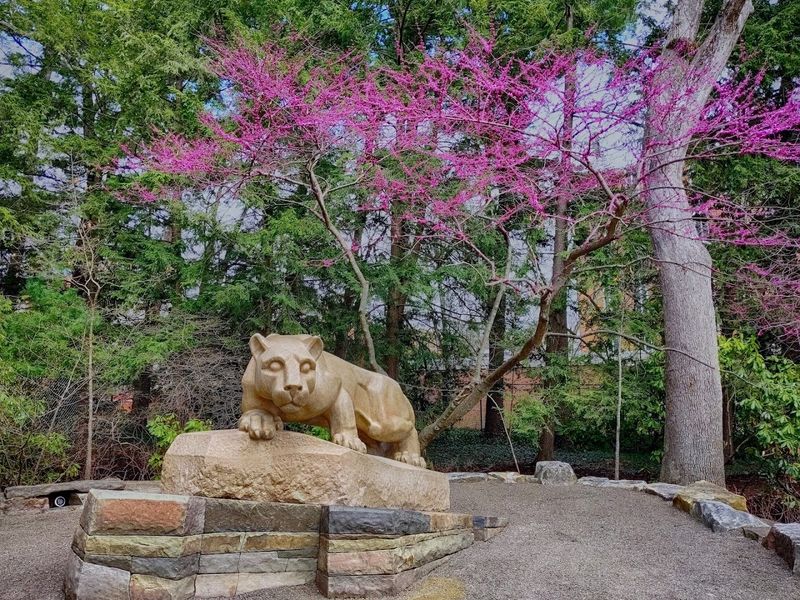
At Penn State University, the Nittany Lion Shrine has become one of the most beloved campus landmarks in Pennsylvania, and for good reason.
Created in 1942 by Heinz Warneke from Indiana limestone, the reclining mountain lion balances strength and calm with a kind of quiet confidence that makes every photo look slightly more heroic.
Set near the university’s Hintz Family Alumni Center, the shrine is easy to visit, and it draws everyone from wide-eyed first-year students to returning alumni who still know exactly where to stand for the classic picture.
The craftsmanship deserves more than a quick selfie, because the muscular paws, alert face, and smooth contouring show careful attention to anatomy without losing the statue’s symbolic punch.
It feels both approachable and monumental, which is a tricky artistic trick.
Beyond mascot status, the sculpture captures Penn State’s identity in one memorable image.
You do not need to care about football to appreciate how cleanly the form is carved or how naturally it fits the landscape.
Visit early for softer light, fewer crowds, and a lion that seems ready to pounce straight into Pennsylvania legend.
2. State of Pennsylvania Monument
Big battlefield emotion meets even bigger stonework here.
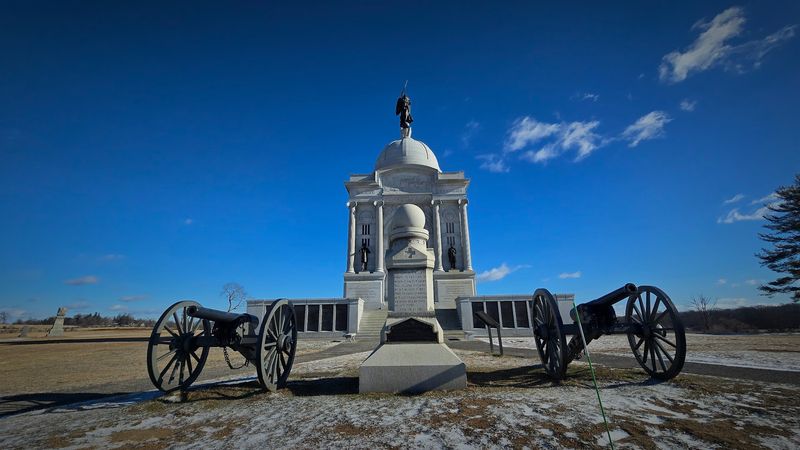
At Gettysburg National Military Park, the State of Pennsylvania Monument rises with commanding scale, honoring the state’s soldiers who fought in the Civil War while delivering one of the most visually striking memorial compositions in the region.
Dedicated in 1910, it combines a granite base, sweeping stairways, and bronze figures into a design that feels ceremonial without becoming stiff.
The monument’s dome, sculptural groups, and inscriptions create layers of meaning, so it rewards both a quick look and a slow walk around the perimeter.
You can climb to the observation deck for a broader view of the battlefield, which adds a powerful sense of context to the artistry below.
That elevated perspective turns the monument into both sculpture and storytelling device.
What stands out most is the balance between grief, pride, and technical precision.
The bronze figures carry motion and personality, while the granite mass gives the whole structure lasting weight, almost like memory itself took architectural form.
If you want one stop in Gettysburg that fuses public art, military remembrance, and sheer craftsmanship, this monument absolutely earns its towering reputation.
3. National Memorial Arch
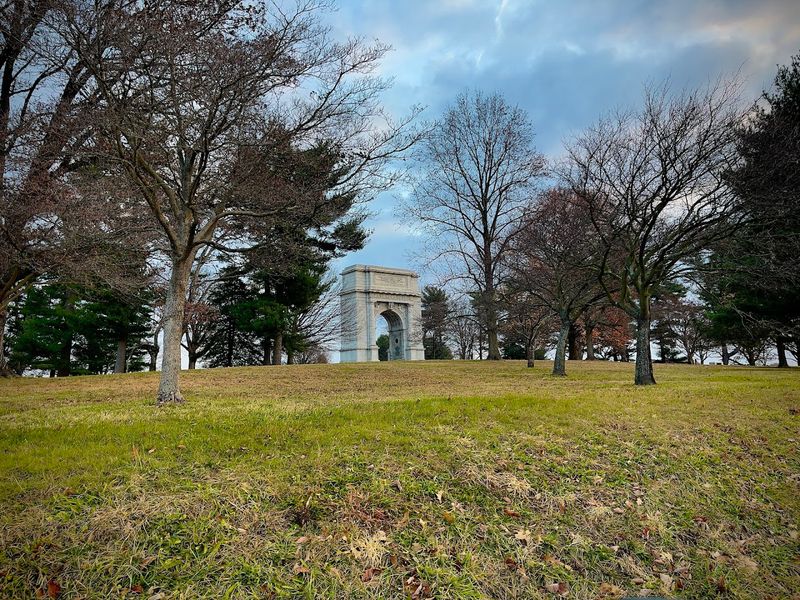
Some monuments whisper, but this one arrives with Roman-level confidence.
The National Memorial Arch in Valley Forge National Historical Park near King of Prussia commemorates the endurance of George Washington’s Continental Army, and its monumental scale gives that story the gravitas it deserves.
Completed in 1917, the soaring granite arch blends Beaux-Arts drama with patriotic symbolism in a way that feels both elegant and unmistakably American.
Its sculpted figures, carved inscriptions, and broad proportions reward a closer look, especially if you enjoy seeing how classical design was adapted for national memory.
Standing beneath it, you feel the structure’s weight and rhythm, yet the open arch keeps the composition from feeling heavy.
That tension between mass and openness is part of its artistic magic.
The setting helps seal the experience.
With lawns, trees, and historic roads nearby, the arch rises from the landscape like a ceremonial gateway to sacrifice, perseverance, and a very cold winter that changed the country.
Bring a camera, take your time, and look up, because the craftsmanship here is not just impressive from afar.
It is beautifully disciplined in every line.
4. General Anthony Wayne Monument
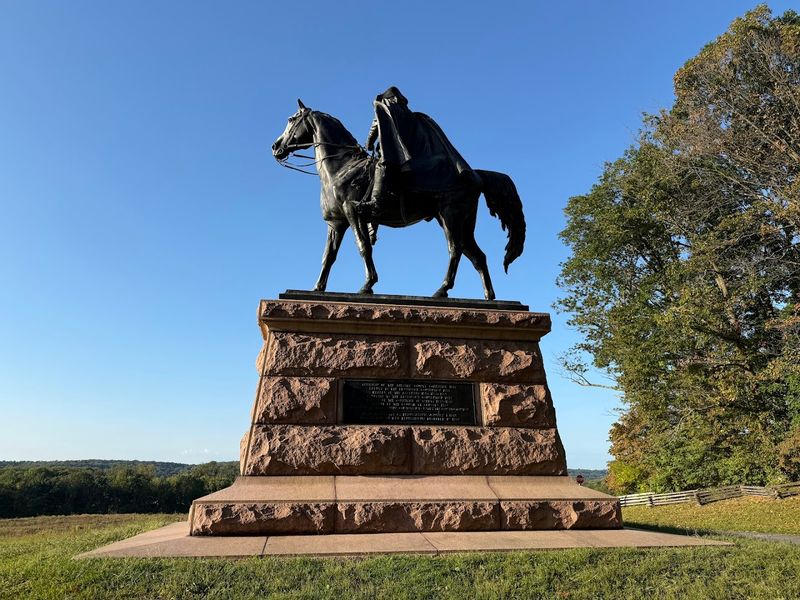
Horsepower gets a heroic upgrade at Valley Forge.
The General Anthony Wayne Monument in Valley Forge National Historical Park near King of Prussia honors the Revolutionary War officer with an equestrian composition that feels energetic, proud, and carefully controlled rather than overly theatrical.
The statue captures Wayne with the kind of commanding posture public sculpture loves, yet the craftsmanship keeps the figure grounded in believable anatomy and motion.
Equestrian monuments can easily become visual noise, but this one avoids that trap through strong proportions and a clear silhouette.
The horse’s lifted movement, the rider’s authority, and the sculpted details on the pedestal work together to create a scene that reads well from multiple angles.
That matters in a park setting where visitors approach from different paths and distances.
There is also a historical charge to the location itself.
At Valley Forge, where memory already hangs in the air, Wayne’s monument reinforces the site’s larger story of endurance, leadership, and military resolve without trying to steal the whole show.
If you appreciate statues that combine portraiture, symbolism, and seriously solid bronze problem-solving, this stop deserves more than a passing glance.
5. Point State Park Fort Pitt/Fort Duquesne Memorial Features
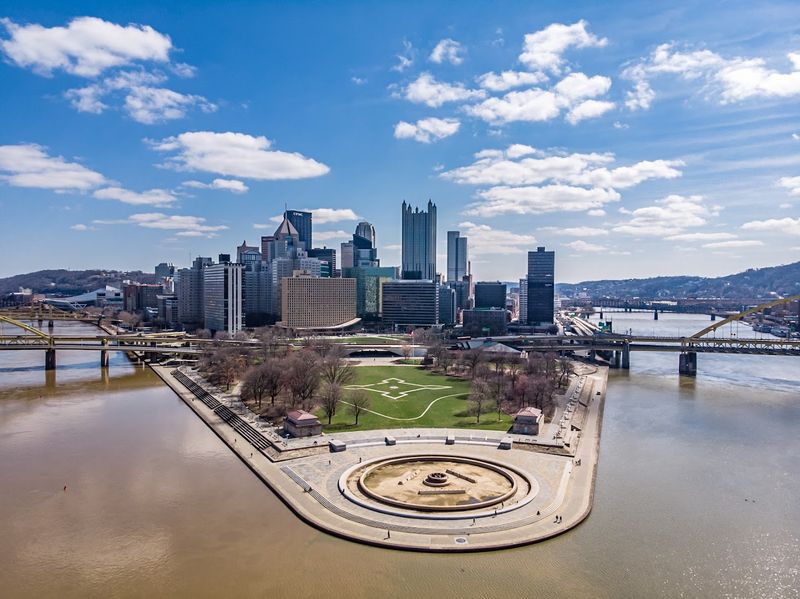
Where three rivers meet, history likes to show off.
At Point State Park in Pittsburgh, the memorial features tied to Fort Pitt and Fort Duquesne create a layered public art experience that combines sculpture, historical interpretation, and place-based storytelling in one of Pennsylvania’s most dramatic urban landscapes.
This is not a single stand-alone statue moment, but a set of memorial elements that give form to the strategic importance of the site.
The craftsmanship shines through in how the features interact with the park rather than competing with it.
Stonework, plaques, reconstructed outlines, and commemorative details help visitors imagine the French and British chapters of the area’s past while staying rooted in the present skyline.
That blend of old conflict and modern city energy gives the memorial area unusual visual tension.
You can stroll, pause, and piece together the story at your own pace, which makes the experience feel more personal than a quick monument stop.
The setting near the famous fountain also means you get both solemn history and postcard-worthy scenery in one visit.
If you like memorials that work through atmosphere as much as sculpted form, Point State Park delivers with quiet confidence.
6. Soldiers & Sailors Memorial Hall Sculptures
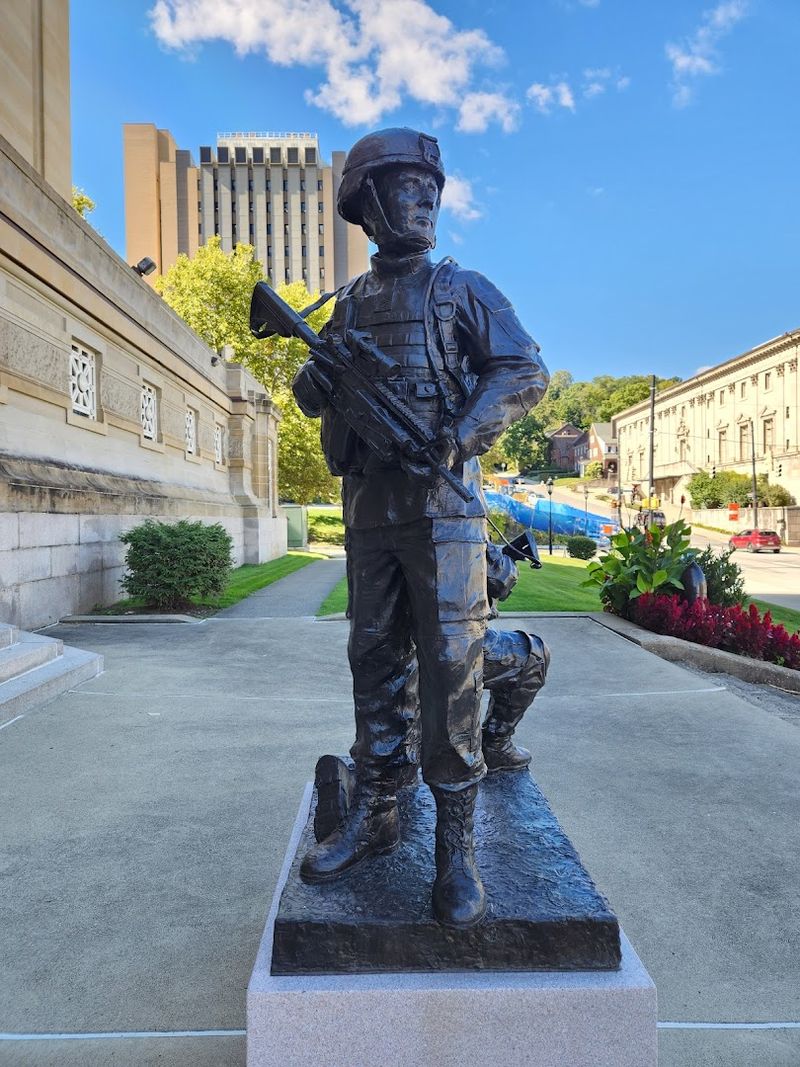
Few buildings wear sculpture as well as this Pittsburgh heavyweight.
At Soldiers & Sailors Memorial Hall in the Oakland neighborhood, the sculptural program surrounding the grand Beaux-Arts structure adds emotional depth and artistic polish to one of the city’s most important military memorial sites.
The figures, carvings, and architectural ornament work together so seamlessly that the entire facade feels like a carefully staged civic statement.
Completed in the early twentieth century, the hall honors veterans while also showing off a serious commitment to design.
The sculptural details carry symbolic weight, with allegorical forms and memorial motifs that reward slow looking instead of a quick glance from the sidewalk.
Stone carving here is crisp, disciplined, and full of quiet authority.
Because the hall remains an active cultural and historical destination, the artwork never feels frozen in the past.
You can admire the craftsmanship outside, then continue inside to connect the sculpted tribute with the broader stories of service and sacrifice preserved by the museum.
For anyone who likes their public art with architecture, history, and just a touch of grandeur, this stop is a very smart Pittsburgh pick.
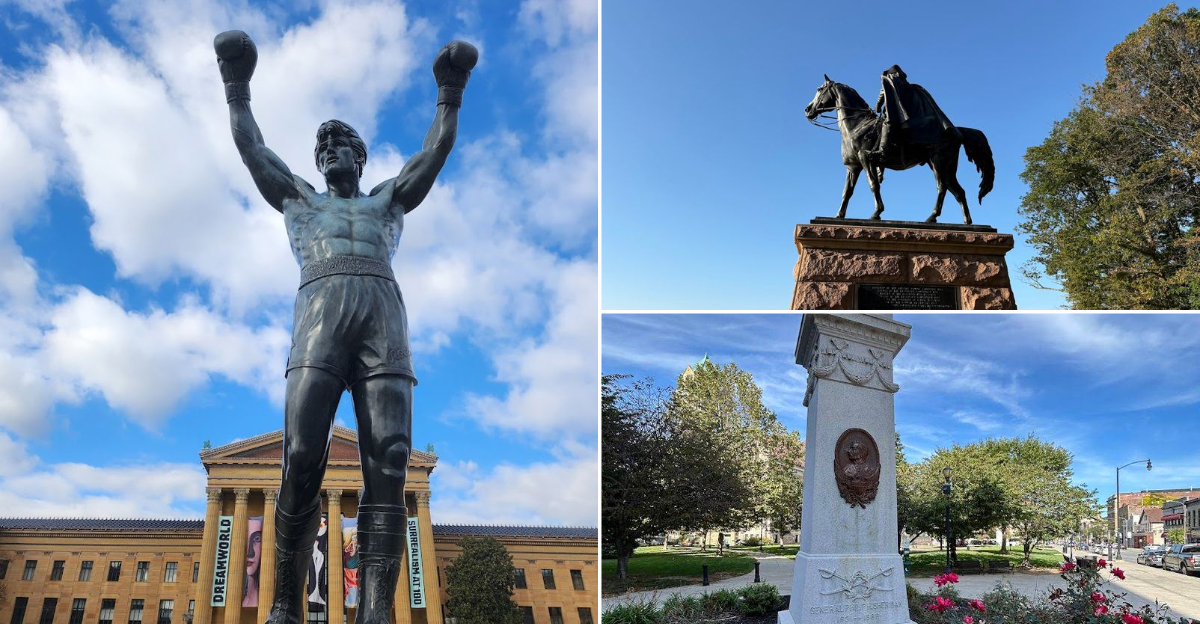
7. Rocky Statue
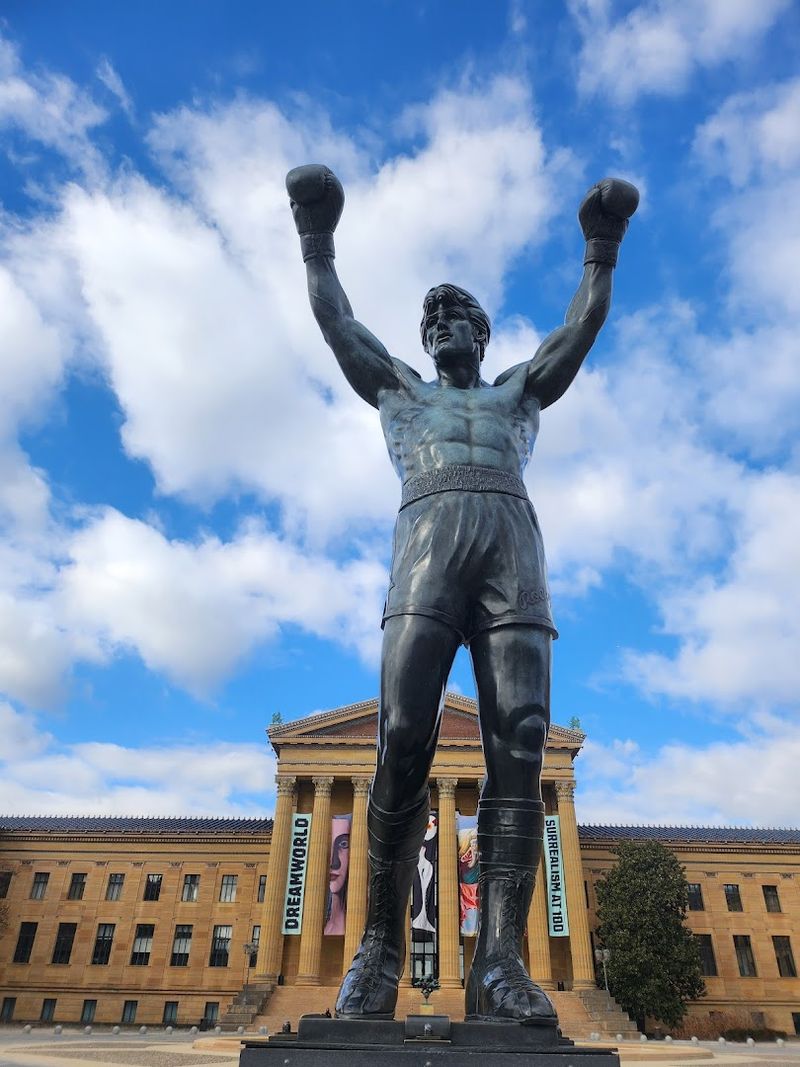
Bronze has rarely looked so ready for a rematch.
The Rocky Statue near the Philadelphia Museum of Art may be the most photographed sculpture in Pennsylvania, yet its staying power comes from more than movie nostalgia and triumphant stair-running fantasies.
Created by A.
Thomas Schomberg for Rocky III, the bronze captures movement, swagger, and underdog mythology in a pose that somehow remains charming instead of cheesy.
Set in the museum area along the Benjamin Franklin Parkway, the statue draws a constant crowd, but it still rewards close attention.
The lifted arms, tense torso, and textured surface give the figure real physical presence, translating cinematic energy into a durable public artwork.
Even if you have never hummed the theme song, the craftsmanship sells the moment.
What makes Rocky work as a statue is its clarity.
You understand the character instantly, yet the sculpture is not merely a prop because it communicates perseverance, grit, and Philadelphia self-image with unusual efficiency.
Go early if you want fewer photobombs, and embrace the fun, because public art that mixes pop culture with genuine sculptural skill deserves every victory lap it gets.
8. Statue of Benjamin Franklin
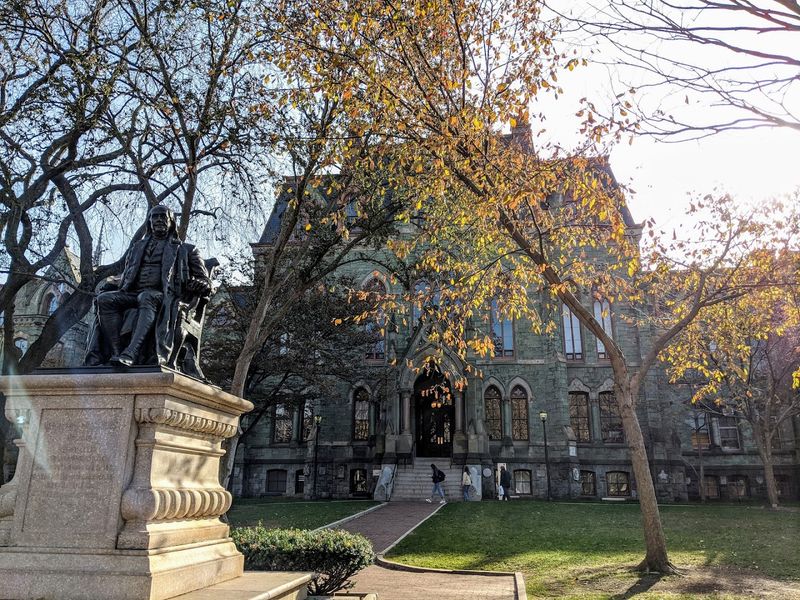
Brains get the bronze treatment in West Philadelphia.
At the University of Pennsylvania’s College Hall, the statue of Benjamin Franklin connects one of the state’s most famous historical figures with a campus he helped inspire through his vision for practical education and civic improvement.
The setting is perfect, because Franklin always feels most at home where ideas, ambition, and a little healthy mischief can share the same sidewalk.
The sculpture presents Franklin with dignity, but not stiffness.
Its craftsmanship emphasizes recognizable features, balanced posture, and a thoughtful presence that suits a man known for diplomacy, invention, and never wasting a good aphorism.
Against the Victorian Gothic backdrop of College Hall, the statue gains extra visual texture and historical resonance.
What I like most is how naturally it fits daily campus life.
Students pass by on their way to class, visitors stop for photos, and the figure remains both a landmark and a quiet reminder that ideas can shape institutions just as powerfully as armies can shape borders.
If you want a Philadelphia statue that pairs artistry with intellect, Franklin delivers with the calm assurance of someone who probably invented the perfect pose.
9. Christopher Columbus Statue
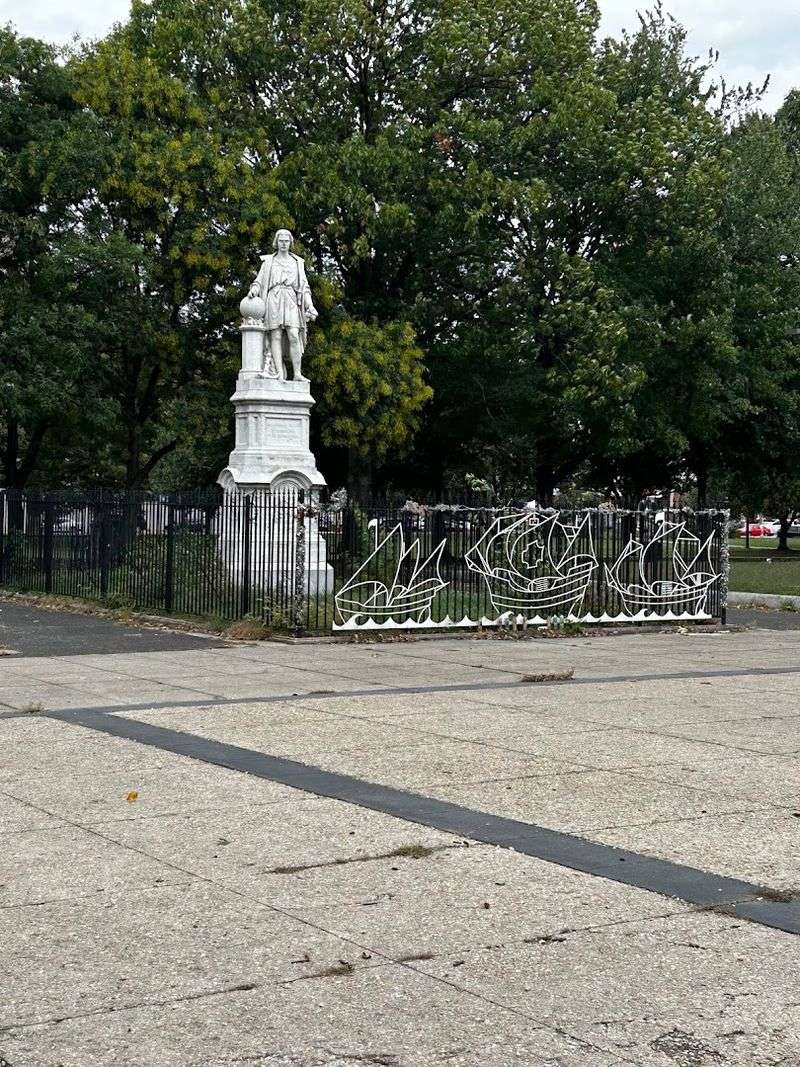
Not every statue comes without debate, and that context matters here.
In Philadelphia, the Christopher Columbus Statue stands as a visually notable monument whose artistry and craftsmanship can be observed alongside the changing public conversations surrounding whom communities choose to honor.
Whatever one thinks of its symbolism, the monument itself shows careful sculptural handling, formal composition, and a clear intent to project authority and discovery-era drama.
From a purely artistic standpoint, the figure’s stance, drapery, and pedestal detailing demonstrate the academic style common to many commemorative works of its era.
That style favors legibility and monumentality, and this piece delivers both.
It is worth approaching thoughtfully and with historical awareness.
Public sculpture often reveals as much about the period that built it as the person it depicts, and this monument is a strong example of that layered reality.
If you visit, take in the craftsmanship, note the location’s beauty, and consider how art, memory, and civic values can sit together in one complicated but important public space.
10. General Philip Sheridan Monument
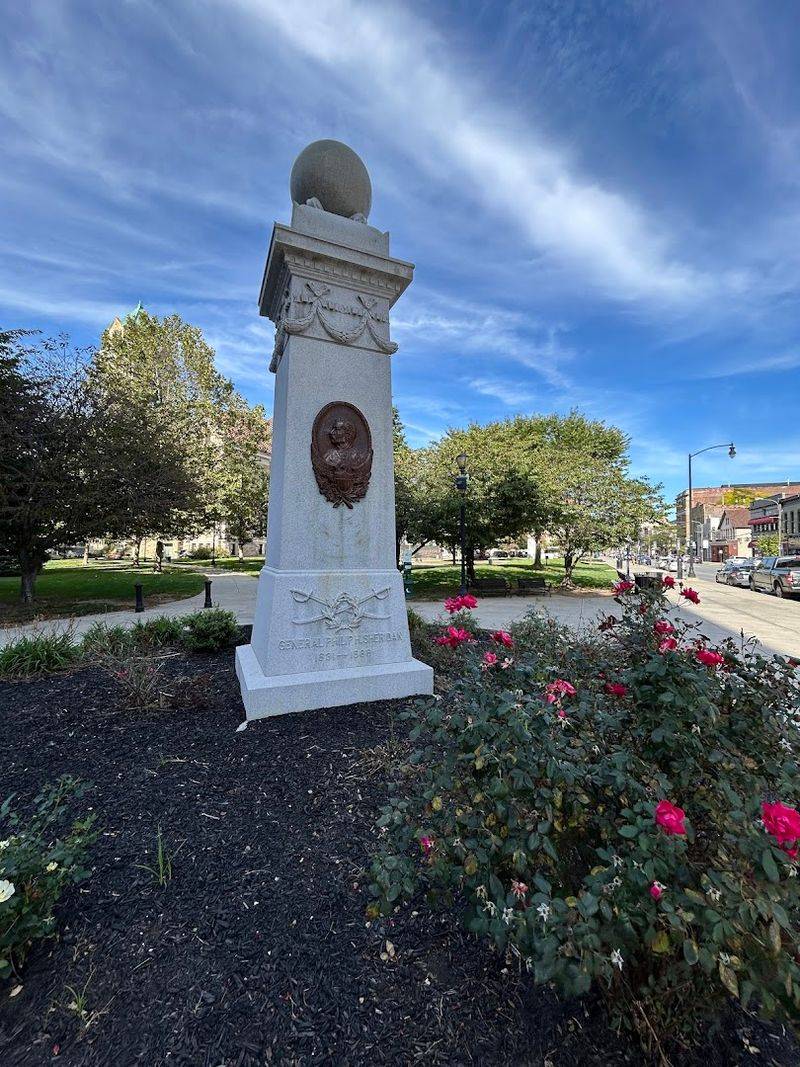
Downtown Scranton has more than electricity jokes up its sleeve.
In the Courthouse Square area, the General Philip Sheridan Monument brings military history into the civic heart of the city with a commanding presence that reflects both nineteenth-century commemorative style and strong sculptural discipline.
The monument honors Sheridan, a Union general associated with the Civil War, through a design that aims for authority without slipping into clutter.
The statue’s value lies in its clarity.
Whether you notice the posture first, the pedestal details second, or the way the monument anchors its surroundings, the composition reads cleanly and confidently in an urban setting.
That kind of visual control is a hallmark of good public memorial design.
Courthouse Square gives the monument an appropriately formal stage, surrounded by the rhythms of modern city life.
That contrast between daily traffic and historical remembrance helps the sculpture feel alive rather than sealed off behind ceremonial distance.
When exploring Scranton on foot, this is the kind of stop that rewards ten unhurried minutes, a careful look at the craftsmanship, and maybe one extra lap around the base to catch its strongest angle.
11. Nittany Lion Shrine
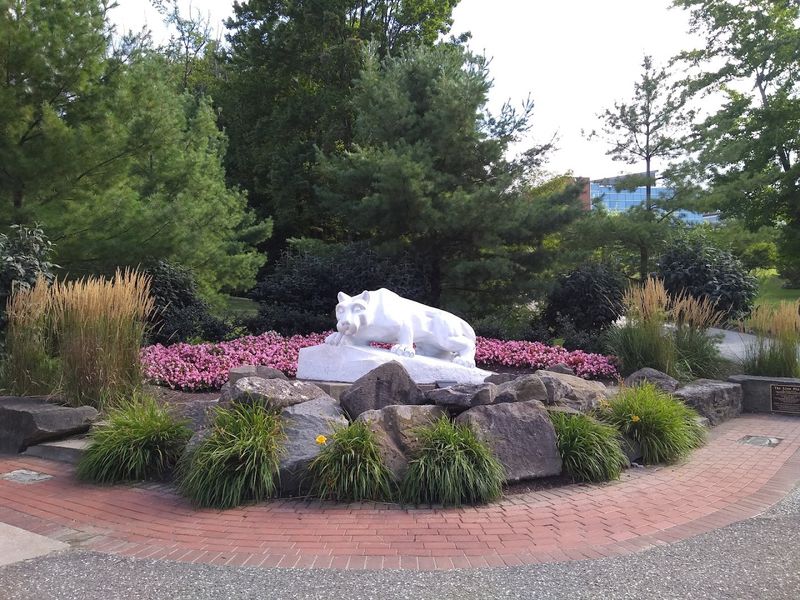
Erie proves one good lion can inspire another worthy stop.
At Penn State Behrend, the Nittany Lion Shrine offers a regional variation on the state’s best-known collegiate symbol, giving visitors a chance to see how campus identity and sculptural tradition travel beyond University Park.
The Behrend setting adds its own character, with landscaped grounds and a quieter atmosphere that lets the statue breathe a little more.
What makes this lion appealing is the familiar mix of strength and accessibility.
The form is clean, the expression is alert, and the craftsmanship emphasizes a solid, readable silhouette that works beautifully in an outdoor academic environment.
It carries mascot energy, yes, but it also functions as thoughtful public art rather than mere decoration.
Because the Erie campus has a different scale and mood, the experience feels less like a pilgrimage and more like a discovery.
That gives you room to notice the details, appreciate the symbolic continuity with Penn State tradition, and enjoy a statue that quietly holds its own in Pennsylvania’s crowded field of memorable landmarks.
If you are already exploring northwestern Pennsylvania, this lion is a clever bonus stop with real visual charm.