Michigan has a quiet talent for changing scenery without warning. One stretch of road might pass through small lakeside towns and open fields, then suddenly slip into dunes, deep forest shade, or shoreline cliffs where the wind feels like it belongs to another place entirely.
In spring, that variety feels even more alive. Water runs high and cold, forests fill in with fresh green layers, and trails soften underfoot as the last signs of winter fade.
The air carries a mix of lake breeze, pine, and damp earth that makes every stop feel a little renewed.
Some parks here don’t feel like single destinations. They feel like whole worlds with their own pace, their own light, and their own silence.
Here are 12 Michigan parks that invite you to slow down and explore them one layer at a time.
Tahquamenon Falls State Park
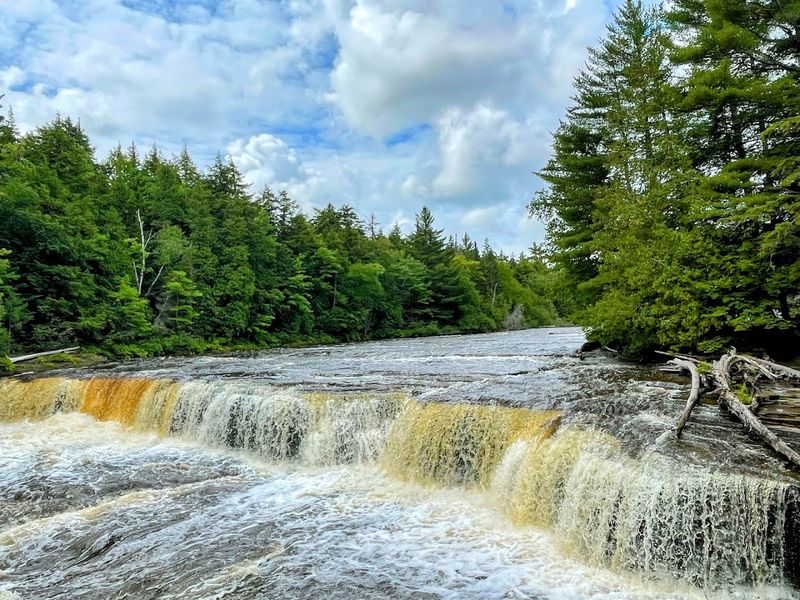
The first thing that hits you is the sound – a deep, rolling thunder that seems to belong to a much larger landscape than one park. Cedar, pine, and damp earth frame the approach, and every step feels like you are moving deeper into a northern forest story.
That feeling reaches its fullest expression at Tahquamenon Falls State Park near Paradise, where the river pours over broad rock ledges in famous amber-brown sheets.
The Upper Falls are the headline, and rightly so, because they rank among the largest waterfalls east of the Mississippi. Yet what makes this place feel like an entire natural world is the scale of surrounding wilderness, with miles of forest, river bends, boardwalks, and quieter inland stretches.
You are not just visiting a viewpoint here – you are entering a watershed.
The Lower Falls add another mood entirely, smaller and more intimate, with islands, rowboats, and gentler channels that invite lingering. Between the two, the park offers hiking, snowshoeing, and cross-country skiing that reveal how alive it stays through every season.
Fall color turns it theatrical, while winter makes it feel elemental.
If you want a Michigan park that feels cinematic from the first breath, this is an easy choice. Come for the waterfall, but stay alert for the deeper magic – the way water, forest, and distance work together to create a world that feels self-contained and immense.
Porcupine Mountains Wilderness State Park
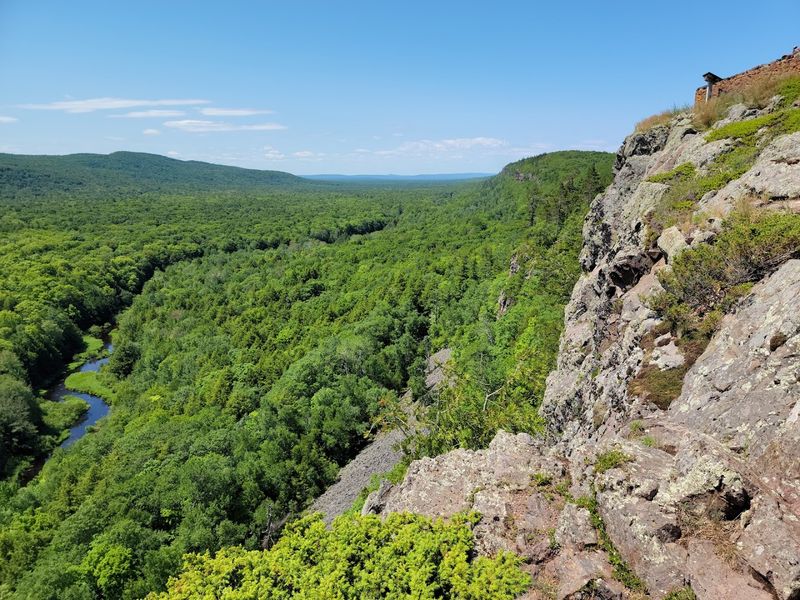
Mist hangs low over ridges, hidden waterfalls cut through hemlock shade, and the horizon keeps opening into something even older and wilder. It is the kind of landscape that makes you lower your voice without meaning to.
In Michigan’s far western Upper Peninsula, Porcupine Mountains Wilderness State Park delivers that effect on a grand scale.
This is one of the largest state parks in the Midwest, and its size matters because the experience here unfolds in layers. You get old-growth forest, rocky streams, inland lakes, and a long stretch of Lake Superior shoreline, all packed into one remarkably varied preserve.
Lake of the Clouds may be the iconic view, but it is only one chapter.
Hiking trails thread through dense stands of maple, birch, and towering conifers, then suddenly break toward cliffs or empty beaches. Backpackers can spend days here and still feel like they have only sampled its moods.
In summer it feels lush and almost endless, while autumn transforms the ridges into blazing color.
What stays with you most is the sense of intactness, as though the park still runs by ancient rules. You are not just passing through scenic overlooks – you are stepping into a functioning wilderness with its own pace, weather, and silence.
That is why the Porkies feel much bigger than a map suggests.
Pictured Rocks National Lakeshore
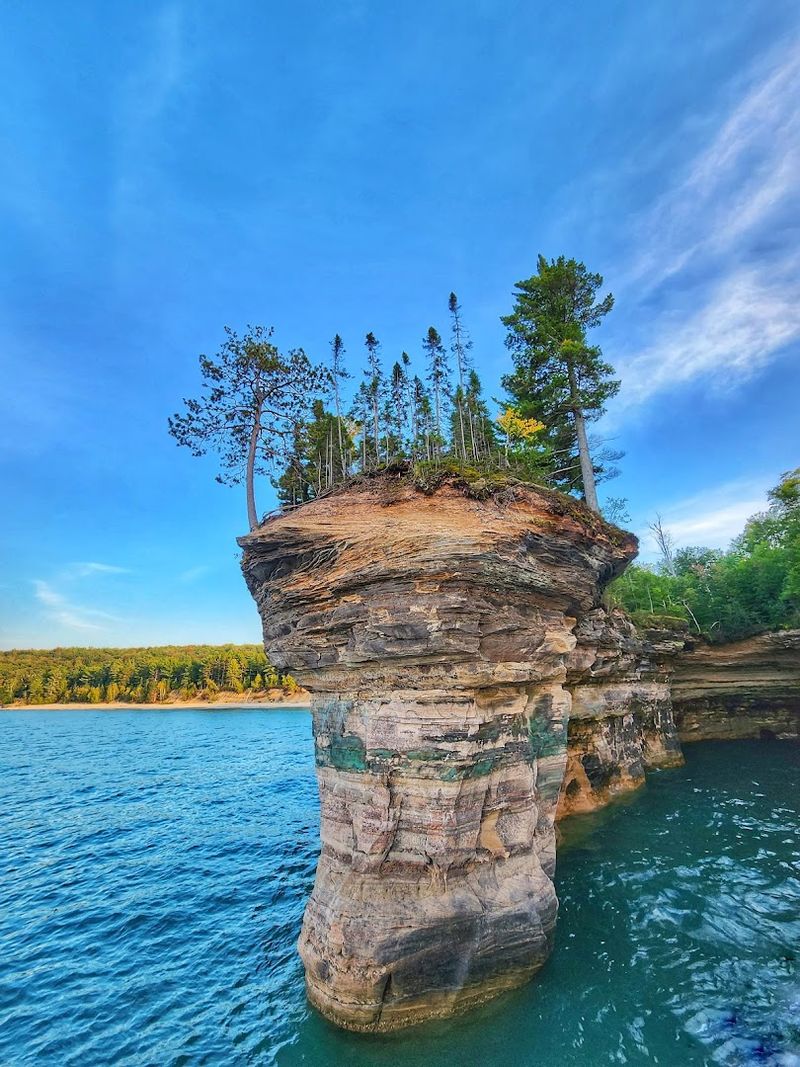
Water here looks almost tropical until the wind changes and reminds you this is Lake Superior, huge, cold, and commanding. Along the shore, cliffs rise in bands of rust, gold, white, and green, as if the stone itself has been painted by weather.
That surreal meeting of color and scale defines Pictured Rocks National Lakeshore near Munising.
Although it is not a state park, it belongs on this list because few protected places in Michigan feel so complete and immersive. The sandstone cliffs, arches, beaches, waterfalls, and forests create a landscape that shifts constantly depending on light, lake conditions, and season.
A boat tour reveals the famous walls and caves, but inland trails show another personality entirely.
You can hike to overlooks, duck into quiet forest, then emerge at dunes or secluded coves that feel hidden from the rest of the world. Kayaking beneath the cliffs turns the lakeshore into a towering canyon of mineral stains and echoing water.
In autumn, the forested rim blazes above the blue lake in unforgettable contrast.
What makes this place feel like its own natural world is how many environments coexist in one continuous edge of land. It is beach, cliff, boreal forest, and open water all at once.
Few Michigan destinations surround you so completely with color, texture, and pure geologic drama.
Isle Royale National Park
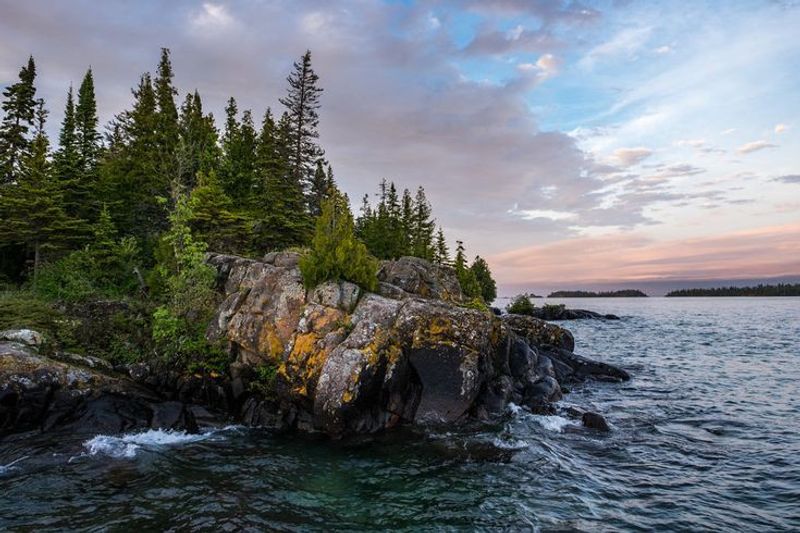
Isolation changes everything, especially when you have to cross a vast lake just to begin. The air feels cleaner, the silence feels deeper, and even the light seems sharpened by distance from the mainland.
That rare sense of removal is exactly what defines Isle Royale National Park in Lake Superior.
Once you arrive, the island does not feel like a single destination so much as a complete wilderness system. Boreal forest, inland lakes, rocky shores, ridgelines, and long trails create a setting where moose and wolves have shaped one of North America’s most studied predator-prey relationships.
Few parks in the Midwest feel this biologically and emotionally self-contained.
You explore here by ferry, seaplane, backpack, or canoe, which immediately slows the pace and raises the stakes. Campsites sit beside quiet coves, loons call across dark water, and weather can shift from gentle sun to raw wind with little warning.
Every mile brings a stronger sense that nature, not convenience, sets the rules.
That is what makes Isle Royale feel like an entire natural world rather than a simple national park stop. It asks for time, preparation, and attention, then rewards you with uncommon stillness and immersion.
If you want the most remote, mythic-feeling landscape in Michigan, this island is hard to match.
Sleeping Bear Dunes National Lakeshore
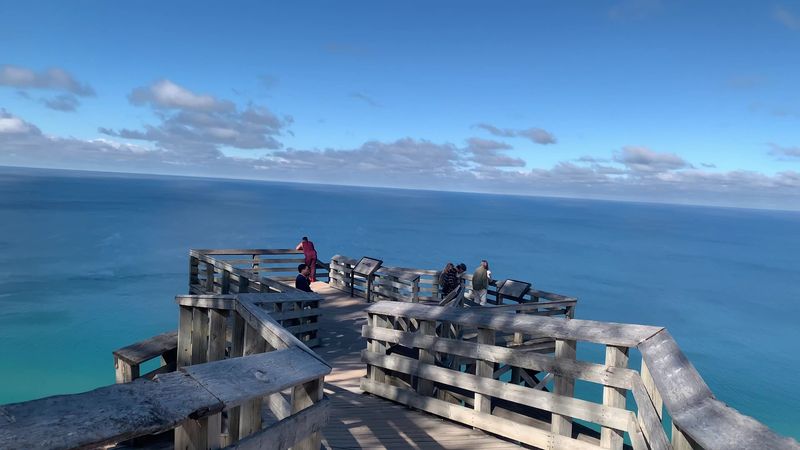
Sand moves like weather here, climbing into steep faces and falling away toward an inland sea of blue. Forest edges hold the dunes in some places, then give way to huge open slopes where sky and lake seem to take over.
That shifting, oversized drama is the signature of Sleeping Bear Dunes National Lakeshore near Empire.
The park is famous for towering dunes above Lake Michigan, but the real power lies in its variety. Scenic drives, quiet beaches, island views, beech-maple forest, and inland lakes all fit together into one surprisingly layered landscape.
You can stand on a high overlook one hour and walk a shaded trail the next.
The Dune Climb gives you the most immediate sense of scale, especially when the wind is up and the lake flashes below. Pierce Stocking Scenic Drive delivers broad panoramas, while trails to places like Pyramid Point add bluff-top perspective and a little solitude.
In every direction, the park feels sculpted by forces too big to ignore.
What makes Sleeping Bear feel like its own world is the tension between softness and enormity. Sand should seem gentle, yet here it forms massive terrain with real presence and power.
Add the lake, the forests, and the changing light, and you get one of Michigan’s most complete and memorable natural experiences.
Warren Dunes State Park
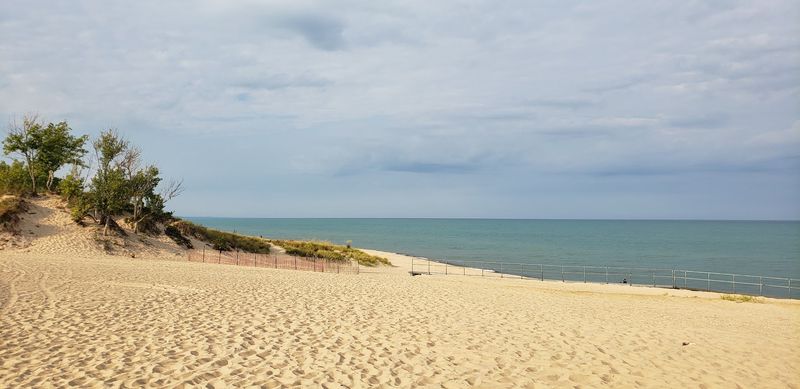
At first it feels like a beach stop, then the dunes rise above you and completely change the scale of the day. Wind pushes across open sand, grasses bend in sharp light, and Lake Michigan spreads out below like a horizon you could walk into.
That dramatic vertical surprise is what makes Warren Dunes State Park near Sawyer feel so much larger than expected.
The park’s most famous feature is its towering dune system, with some slopes reaching roughly 260 feet above the lake. Climbing them is part workout, part viewpoint chase, and all reward once you turn around and take in the water, shoreline, and rolling sand.
It is a compact park, but the terrain makes it feel expansive.
Beyond the main beach energy, you will find wooded trails, quieter stretches of shore, and enough variation to keep the place from feeling one-note. Families love the swimming and easy access, while hikers appreciate how quickly the landscape shifts from lively beachfront to windswept ridge.
Sunset can make the whole scene glow gold and soft.
What gives Warren Dunes its own world feeling is the contrast packed into a relatively small footprint. You get dune country, lake country, and forest edge all in one visit.
If you want a place that delivers immediate drama without demanding major logistics, this southwest Michigan classic is an easy yes.
Holland State Park
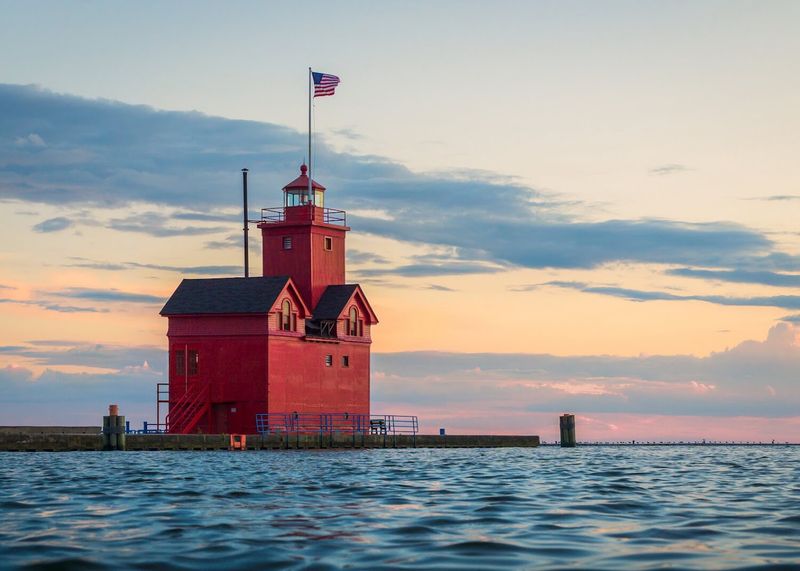
Some places earn their magic at the end of the day, when light softens, the water reflects copper and rose, and everyone instinctively turns toward the horizon. The beach becomes a viewing platform for one of Michigan’s most dependable evening shows.
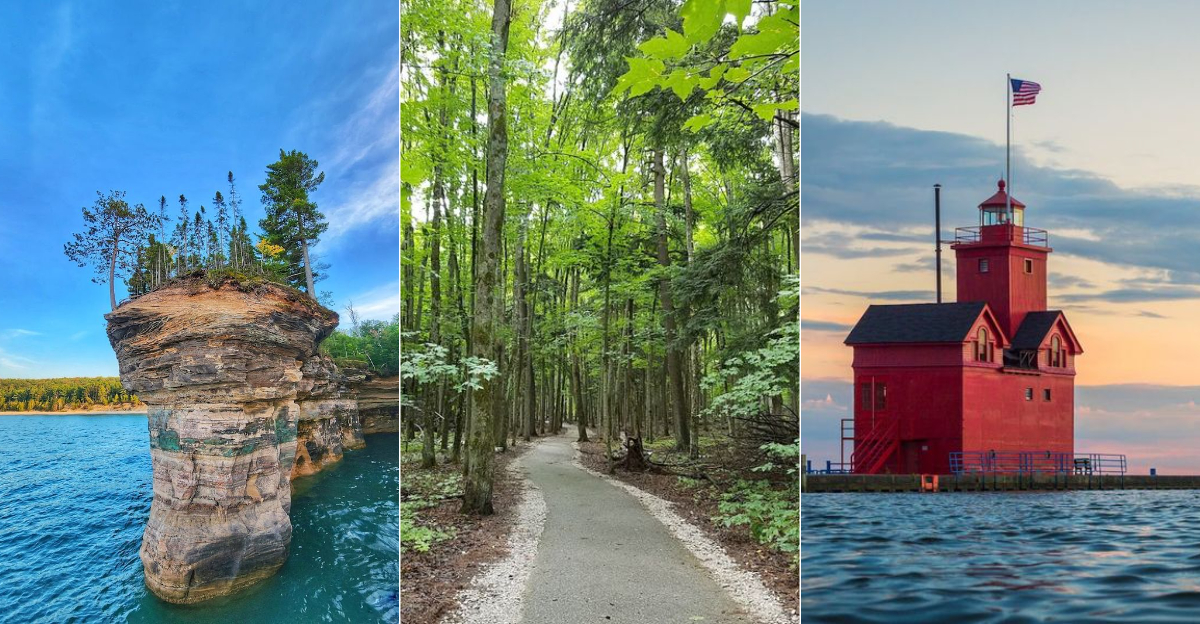
That mood defines Holland State Park, where Lake Michigan, the channel, and the famous Big Red lighthouse come together beautifully.
What makes this park feel like more than a city beach is how iconic and complete the setting is. On one side, you have broad sand and open lake; on the other, boats move through the channel with the lighthouse standing like a bright landmark from another era.
It feels coastal in a way that is instantly recognizable and deeply Michigan.
The park is easy to love because it offers simple pleasures done exceptionally well: swimming, sunbathing, shoreline walks, and sunset watching. Families settle in for the day, photographers wait for changing color, and even brief visits can feel memorable.
The atmosphere is relaxed, but the scenery still carries real presence.
Holland State Park belongs on this list because it creates a complete lakeshore world from familiar ingredients. Sand, water, sky, and architecture blend into something larger than the sum of its parts.
If you want a classic Michigan coastal experience that still feels transporting, this is one of the best places to find it.
Ludington State Park
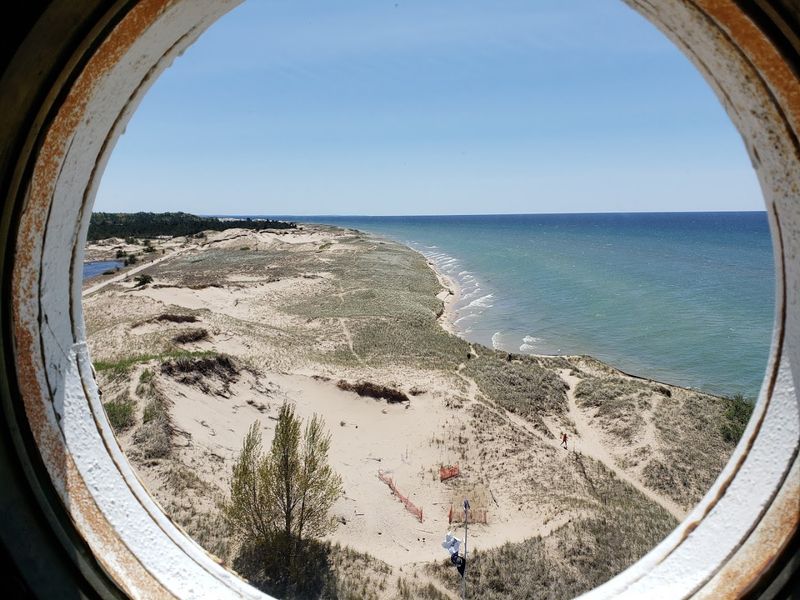
You can feel the variety almost immediately – beach wind, pine shade, inland water, and dune country all layered into one broad landscape. Few parks in Michigan let you move through so many distinct environments without ever losing a sense of cohesion.
That is the enduring appeal of Ludington State Park near the city of Ludington.
Set between Lake Michigan and Hamlin Lake, the park combines shoreline, marsh, river mouth, forest, and dunes in a way that feels unusually complete. Big Sable Point Lighthouse gives the whole area a visual anchor, especially after the scenic walk through woods and sand to reach it.
The journey there is part of the experience, not just the destination.
Trails and paddling routes reveal quieter corners that many beachgoers never fully see. You can swim in the lake, hike among ridges, watch birds near wetlands, and camp close enough to hear natural sounds settle in after dark.
It is busy in summer, yet still spacious enough to offer moments of calm.
What makes Ludington feel like an entire natural world is how gracefully its ecosystems connect. Nothing seems isolated or decorative here; each piece leads into the next.
If you want a park that offers both iconic scenery and a strong sense of ecological richness, this west Michigan favorite delivers exactly that.
Hartwick Pines State Park
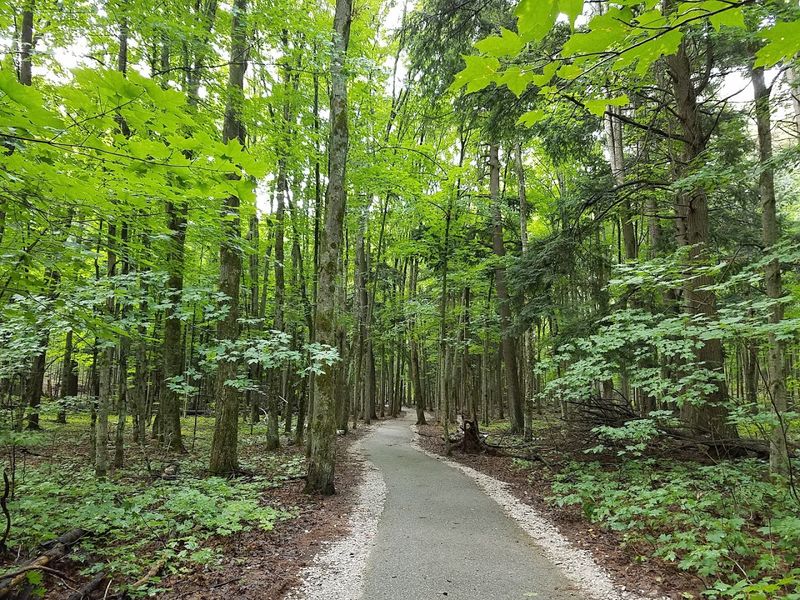
The silence in an old forest is different from ordinary quiet. It feels thicker, more settled, as if the trees have been holding the same conversation for centuries and you have stepped into it mid-sentence.
That sensation defines Hartwick Pines State Park near Grayling, home to one of the Midwest’s largest remaining old-growth pine forests.
This park does not overwhelm with cliffs or crashing water, yet it creates something just as powerful through age, height, and atmosphere. The towering white pines and red pines make the scale vertical, drawing your eyes upward while the forest floor stays cool and hushed below.
It is a place where time becomes the main landscape feature.
Well-kept trails and the old-growth loop make the forest accessible without draining it of mystery. The logging museum adds important context, showing how much of Michigan’s original pine empire vanished and why this surviving stand matters so much.
You leave with both wonder and perspective.
What makes Hartwick Pines feel like an entire natural world is its ability to transport you into a version of Michigan that once covered vast areas and now survives only in fragments. The park is less about spectacle and more about immersion in living history.
If you want depth, texture, and genuine forest reverence, this is the place.
Hart-Montague Trail State Park
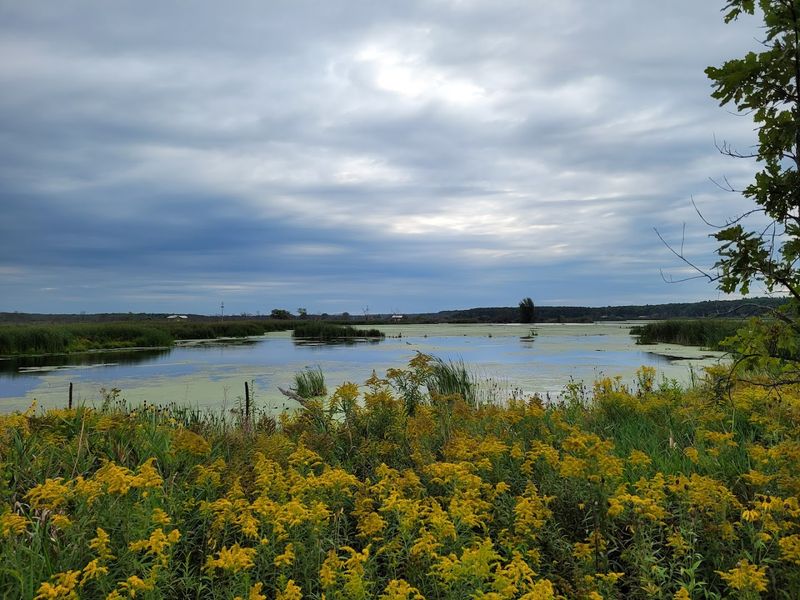
Sometimes a natural world is not defined by one dramatic landmark, but by the way a long route stitches together farms, woods, wetlands, and small-town edges. Motion becomes the lens, and every mile adds another texture to the experience.
That is the quiet strength of Hart-Montague Trail State Park in western Michigan.
This linear park follows a former railroad corridor for miles between Hart and Montague, creating an easy, scenic passage through changing rural landscapes. You ride or walk beneath leafy canopy, past open fields, near marshy areas, and into communities that still feel closely tied to the surrounding land.
The transition between environments is smooth and surprisingly immersive.
Because the trail is paved and approachable, it invites a slower kind of exploration than rugged wilderness parks do. You notice birdsong, old depots, roadside fruit stands, and the subtle shifts in light as the route bends through shade and sun.
It feels less like a straight path and more like a gentle survey of western Michigan’s living landscape.
Hart-Montague belongs on this list because it shows that a park can feel complete without being remote or monumental. Its natural world is built from continuity, rhythm, and connection.
If you like places that reveal themselves gradually and reward unhurried travel, this trail creates exactly that kind of experience.
Belle Isle Park
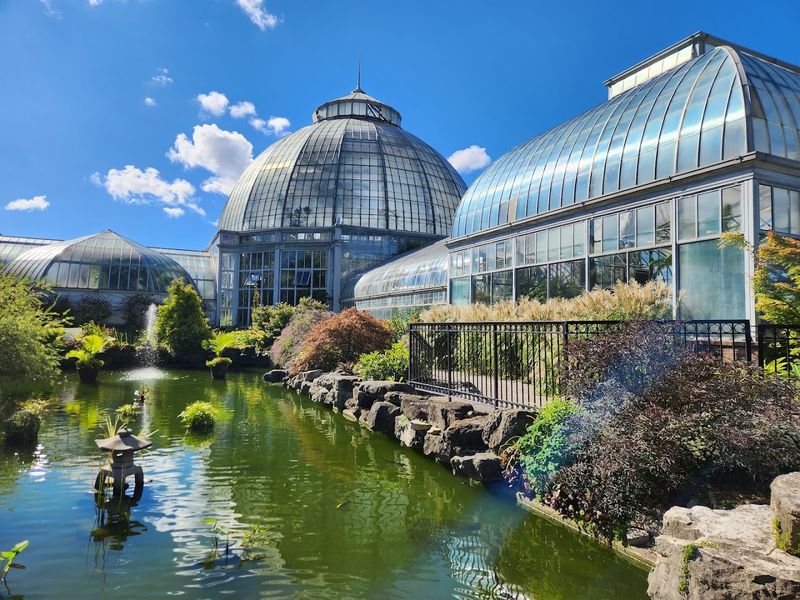
Urban energy usually pulls your attention outward, but here the river, gardens, and open lawns create a surprising pause. You can watch boats cut through the Detroit River, glance up at the skyline, and still feel rooted in a place with its own ecology and pace.
That layered contrast is what makes Belle Isle Park so compelling.
Set on an island between the United States and Canada, Belle Isle mixes city views with shoreline habitat, historic architecture, and cultural landmarks. The aquarium, conservatory, and broad drives give it a civic grandeur, while wooded edges, lagoons, and riverfront paths bring the natural side into focus.
It feels both metropolitan and self-contained.
What I love about Belle Isle is how many moods it can hold in one visit. You can come for biking, fishing, birding, picnicking, or simply to sit near the water and let the city drift into the background.
At sunrise or sunset, the island often feels almost cinematic.
It earns a spot on this list because it proves a natural world does not need to be remote to feel distinct. Belle Isle creates its own atmosphere right in the heart of Detroit, shaped by water, history, and skyline.
If you want a park where nature and city meet without canceling each other out, this is it.
Fort Custer Recreation Area
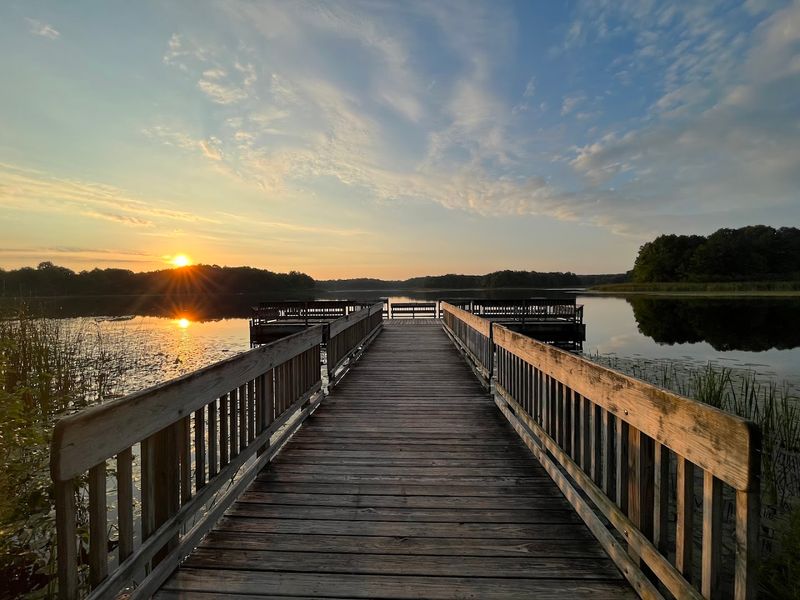
There is a grounded, all-day kind of beauty here – wooded hills, clear lakes, and enough trail miles to make the outside world fade. It does not rely on one signature postcard scene, which is exactly why the experience feels so substantial.
Fort Custer Recreation Area near Augusta unfolds as a broad, usable landscape rather than a single attraction.
Spread across thousands of acres, the area includes forests, wetlands, and several lakes that support swimming, paddling, fishing, and camping. Hikers and mountain bikers appreciate the trail network, which offers a little more variety and challenge than many casual recreation areas.
The terrain keeps changing just enough to stay interesting.
What stands out is how balanced the place feels. You can build a very active day here with biking and kayaking, or slow everything down with a campsite, a shoreline walk, and time under the trees.
Birdlife, seasonal color, and the sense of room all help the park feel larger than expected.
Fort Custer belongs on this list because it creates an immersive natural setting in southern Michigan without needing dramatic extremes. Its world is made of continuity, access, and depth of use.
If you want a park that invites you to settle in and experience many sides of the landscape, this one does it well.