This is the kind of place that makes you forget your phone is even in your pocket.
Raven Rock State Park hits hard with towering rock faces, deep forest shade, and the steady rush of the Cape Fear River cutting through it all. It feels wild, but still close enough for a simple day trip from the city.
One turn on the trail and the noise of everyday life drops away fast.
You move under thick tree cover where sunlight breaks into soft patches on the ground, then suddenly step out to high overlooks where the river twists and flashes below like moving glass. The air feels cooler here, heavy with pine and damp earth, like the forest is wrapping around every step you take.
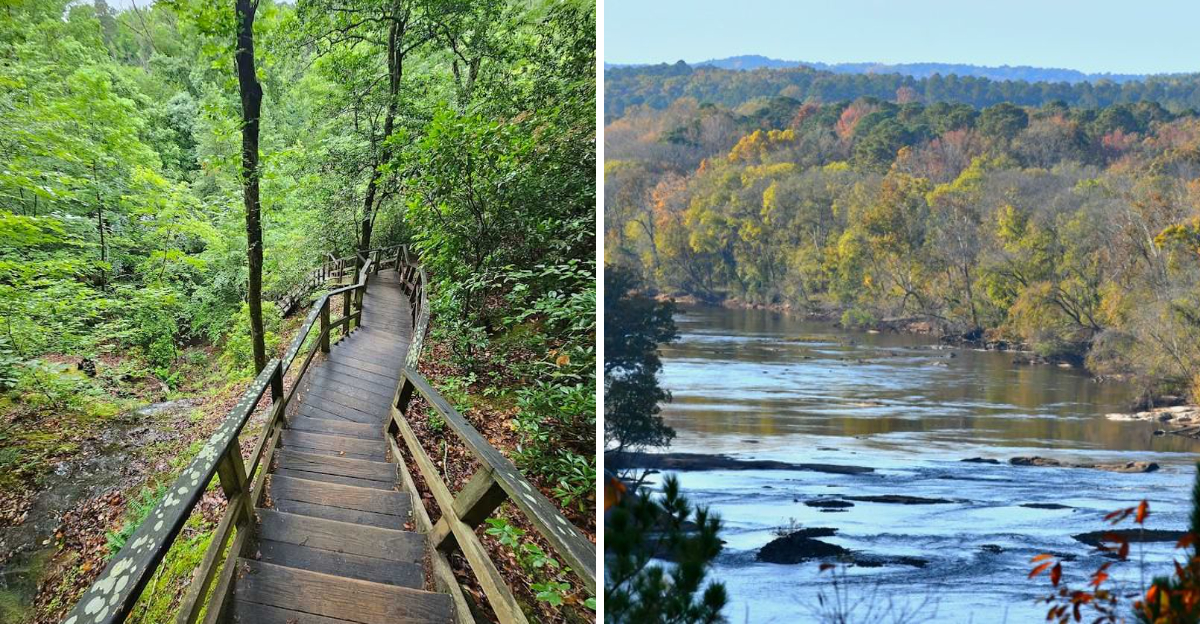
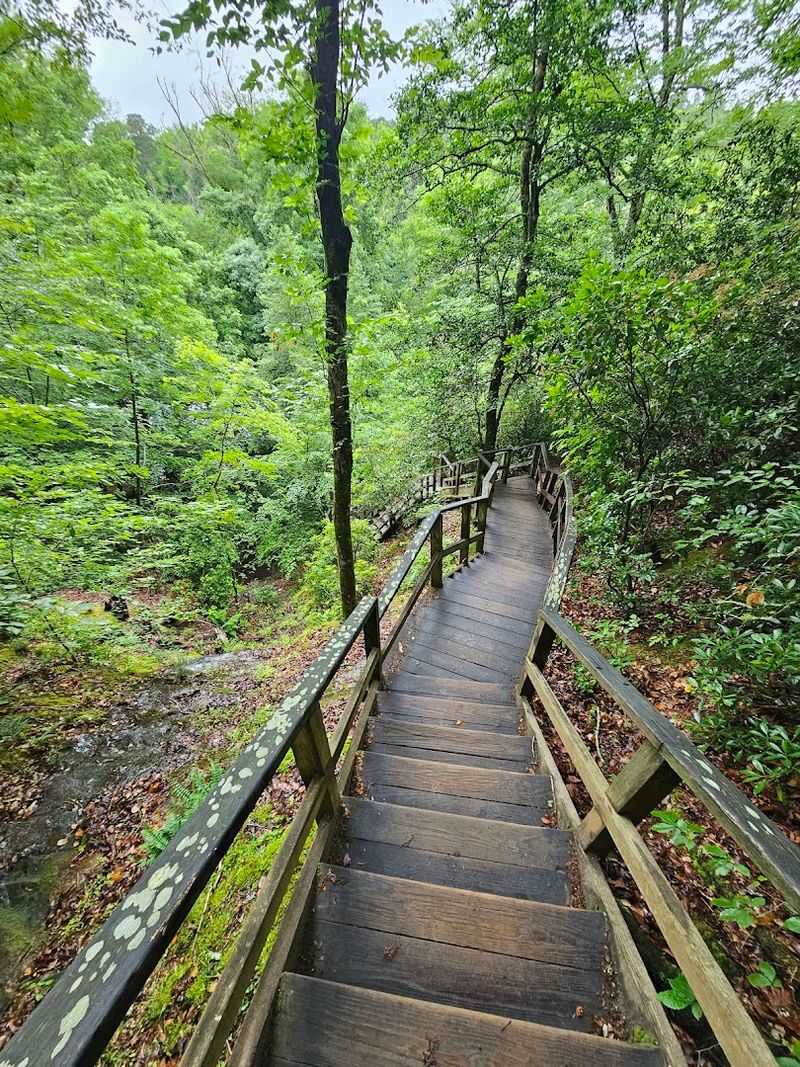
The trails keep changing mood—quiet wooded stretches, wooden stairs carved into the hillside, and sudden openings that reveal steep rock walls and rushing water below. Raven Rock itself rises with a quiet kind of drama, standing over the river like it’s been there forever watching time pass.
Even the soundscape feels alive here. Water rushing over rocks, leaves shifting in the breeze, distant birds calling through the trees.
It’s the kind of place where you slow down without trying, just to take it all in.
A Hidden Gem Along the Cape Fear River
Located just 40 miles southwest of Raleigh in Harnett County, Raven Rock State Park feels worlds away from urban hustle. The park stretches along the Cape Fear River, where massive rock formations tower above the water and thick forests blanket rolling hills.
What makes this place special is its dramatic 150-foot Raven Rock formation that gives the park its name. Carved by millions of years of erosion, this massive cliff face creates a stunning backdrop for riverside adventures.
The piedmont landscape here showcases the natural beauty North Carolina is famous for.
Despite being close to major cities, many visitors describe Raven Rock as a hidden gem that rarely feels overcrowded. The combination of river access, towering bluffs, and peaceful forest trails creates an outdoor experience that rivals more famous parks.
Morning visits offer the best chance to spot wildlife and enjoy quiet trails before afternoon crowds arrive. Pack a camera because the views here are absolutely worth capturing.
The Cape Fear River Views
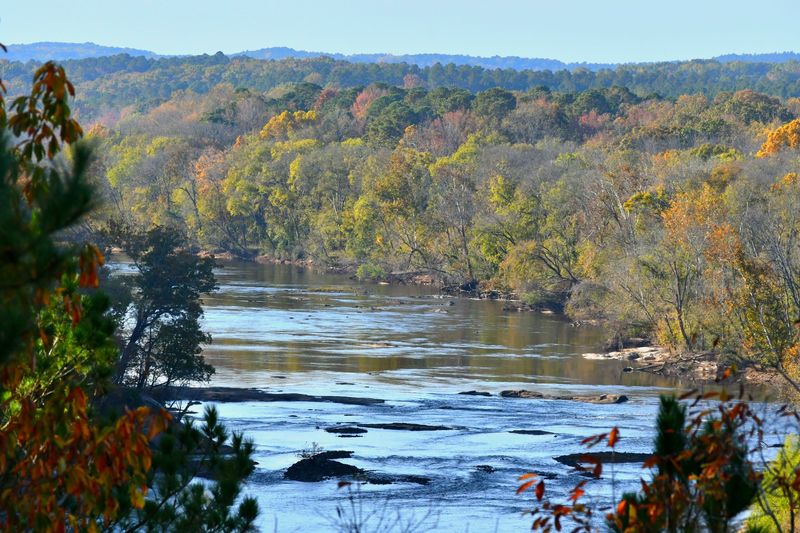
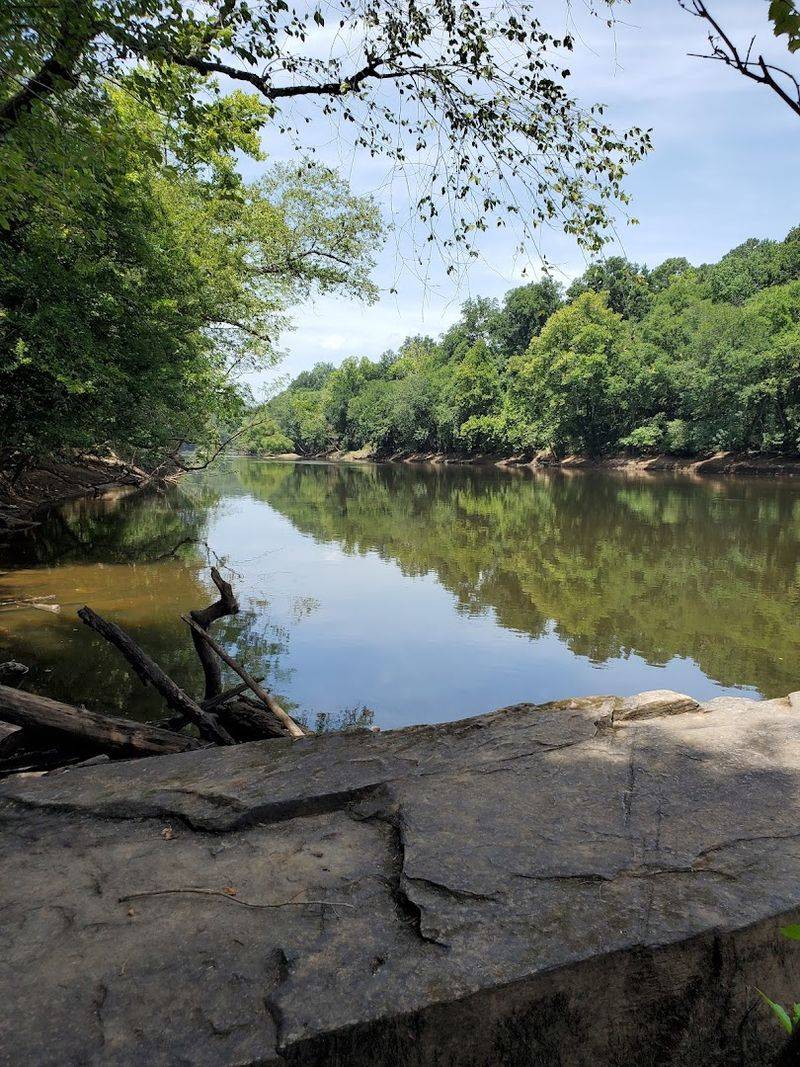
Standing on the high ridgelines above the Cape Fear River delivers moments that take your breath away. From these elevated spots, you can watch the river wind through valleys below, its dark waters reflecting surrounding trees and sky.
Rapids create white foam where water rushes over rocky sections.
The bluff trails follow natural ridges that rise dramatically above the river. Some viewpoints sit 100 feet or more above the waterline, offering panoramic scenes of forested slopes stretching into the distance.
On clear days, you can see for miles across the river valley.
These overlooks become especially magical during fall when leaves transform into brilliant reds, oranges, and yellows. Spring brings fresh green growth that contrasts beautifully with the dark river water.
Even summer visits reward hikers with cooling breezes at higher elevations. The sound of rushing water drifts up from below, adding a peaceful soundtrack to the visual feast before you.
Raven Rock Overlook Trail Experience
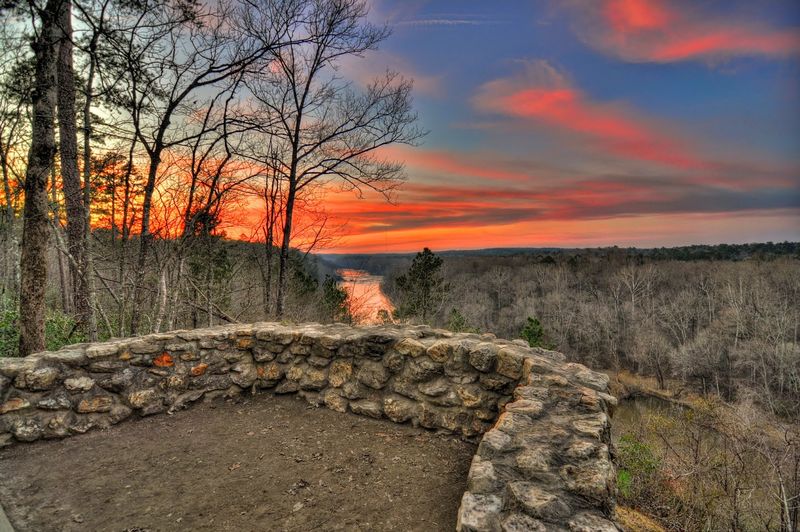
The trail to Raven Rock itself ranks as the park’s most iconic hike for good reason. This route winds through cool, shaded forest before reaching the massive rock wall that towers above the river.
Tall trees create a natural canopy overhead, keeping temperatures comfortable even on warm days.
As you approach the final viewpoint, the trail includes a long staircase that descends toward the riverbank. This section can challenge tired legs, but the payoff makes every step worthwhile.
At the bottom, you stand directly beneath the towering cliff face, craning your neck to see where rock meets sky.
The entire experience takes about two to three hours for most hikers, depending on pace and photo stops. Sturdy shoes with good traction help on steep sections and stairs.
Bring water and snacks because there are no facilities along the trail. The round-trip distance covers roughly three miles, making it manageable for anyone with moderate fitness levels.
Campbell Creek Loop Trail: Waterfalls & Forest Quiet
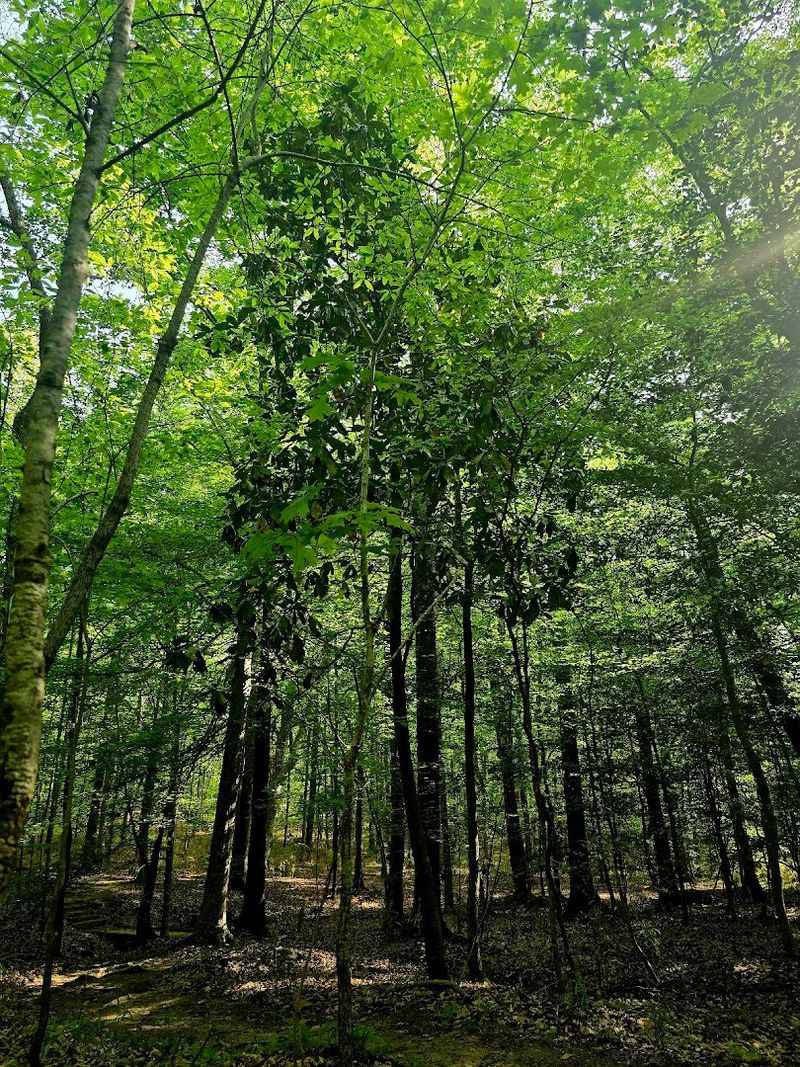
For hikers seeking solitude and deeper immersion in nature, Campbell Creek Loop delivers exactly that. This longer trail system takes you through quieter sections where human voices fade and forest sounds take over.
Birds call from treetops while creek water gurgles over rocks nearby.
Following Campbell Creek means encountering several beautiful water features along the way. The creek itself creates mini cascades and pools where you might spot salamanders or minnows.
Eventually, the trail leads to Lanier Falls, a scenic spot where water tumbles over rocky drops.
The full loop covers more distance than the main Raven Rock trail, making it ideal for experienced hikers wanting a longer workout. Expect fewer people compared to more popular routes, which means better wildlife viewing opportunities.
Deer tracks often mark muddy sections, and patient observers sometimes glimpse turtles sunning on fallen logs. The peaceful atmosphere here feels almost meditative, offering mental refreshment along with physical exercise.
Plan for three to four hours to complete the entire loop at a comfortable pace.
Lanier Falls Rapids Area
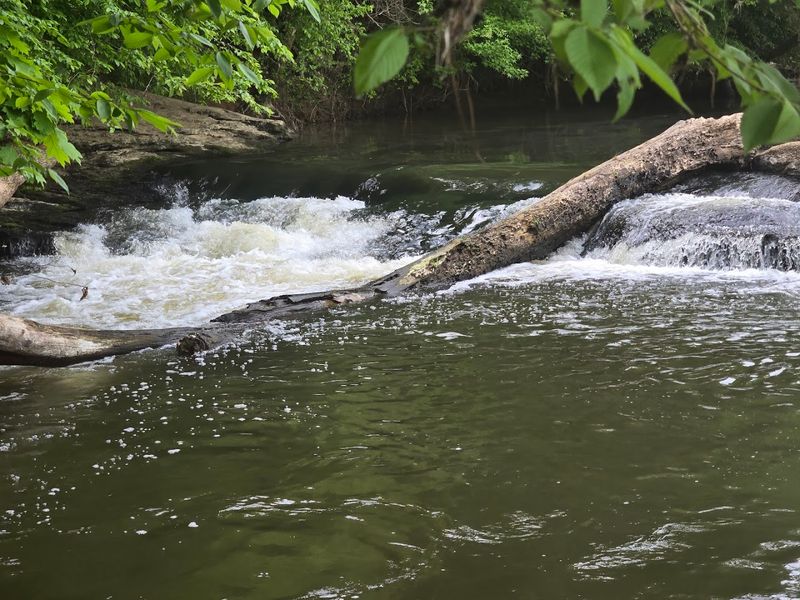
Water crashes dramatically over rocks at Lanier Falls, creating one of the park’s most photogenic river features. Unlike gentle streams, this spot showcases the raw power of moving water as it tumbles over natural stone steps.
Spray catches sunlight, sometimes creating tiny rainbows in the mist.
Photographers love this location for its dynamic visual appeal. The combination of rushing water, wet rocks, and surrounding greenery creates compositions that change with seasons and weather.
Spring brings higher water levels that make the falls more dramatic, while summer reveals more rock surfaces.
You can access Lanier Falls via the Campbell Creek Loop or shorter connector trails. The sound of rushing water grows louder as you approach, building anticipation before the falls come into view.
Rocks near the base provide spots to rest and watch the water’s constant motion. Some visitors spend an hour here simply enjoying the natural show and peaceful setting far from roads and crowds.
Fish Traps Rapids and Riverbank Access
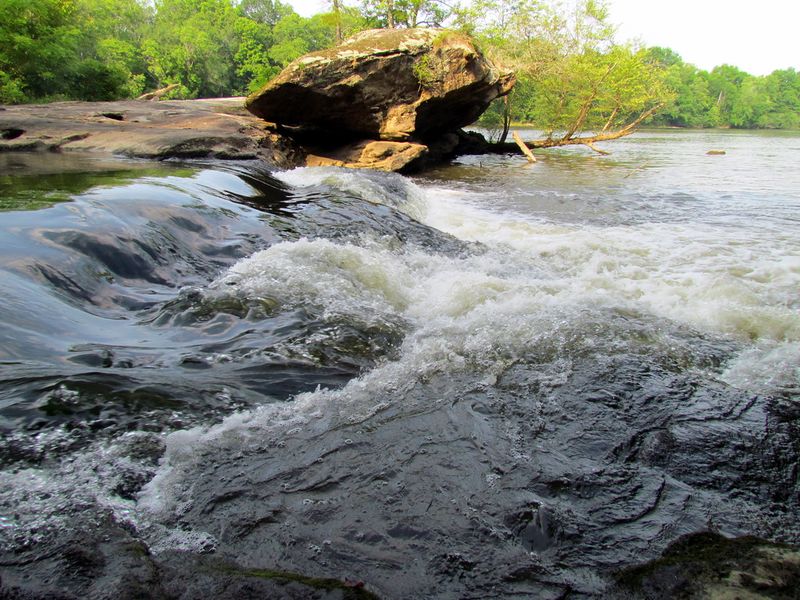
Fish Traps gets its name from natural rock formations that channel water through narrow passages. Centuries ago, people used similar setups to catch fish swimming upstream.
Today, these rocky sections create interesting water patterns and accessible spots where visitors can reach the river’s edge.
Unlike viewpoints high on bluffs, Fish Traps offers direct contact with the Cape Fear River. You can walk out onto riverside rocks, feel spray from rapids, and even dip your feet in calmer pools.
Anglers frequently cast lines here, hoping to hook bass or catfish.
The rocks provide natural seating where you can unpack a snack and watch water flow past. During lower water levels in late summer, more rock surfaces emerge, creating paths to explore.
Families often choose this spot for picnics since kids can wade safely in shallow areas while adults relax nearby. Just remember that river rocks can be slippery when wet, so watch your footing and supervise children closely near moving water.
Shaded Hardwood Forest Trails
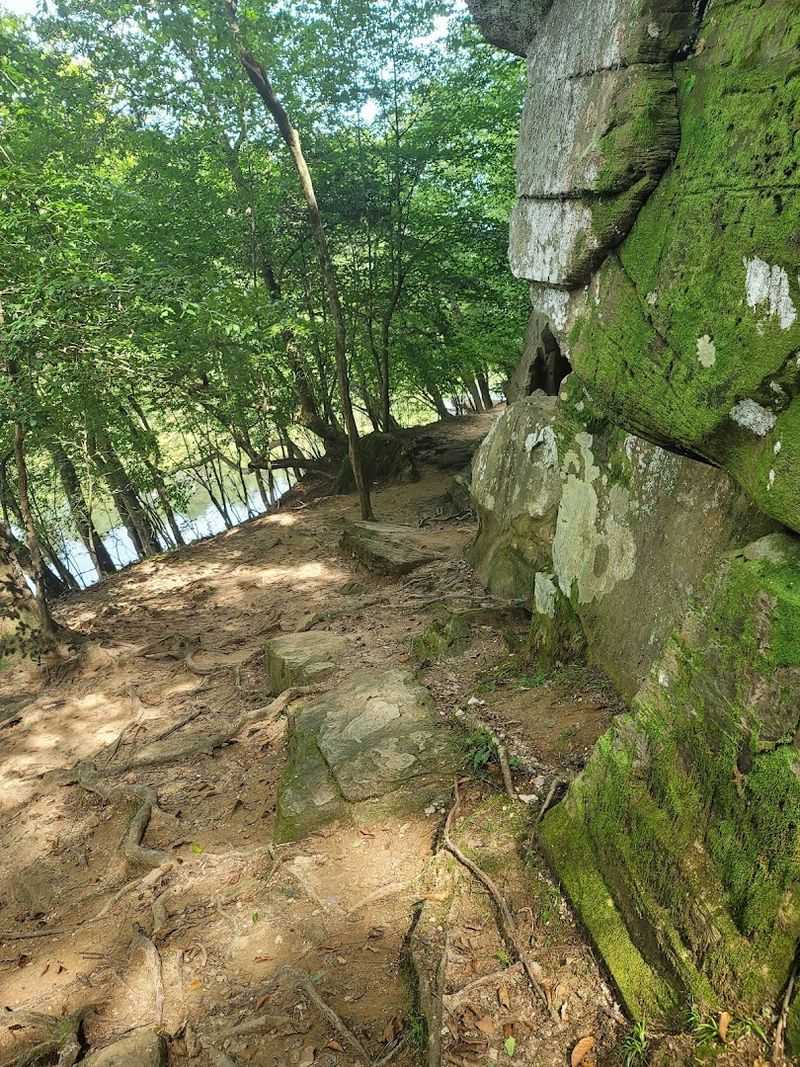
Walk beneath towering oaks, maples, elms, and pines that create a living ceiling above most trails. These mature forests make Raven Rock especially appealing during hot summer months when shade provides natural air conditioning.
Dappled sunlight filters through leaves, creating patterns on the forest floor.
The hardwood forest ecosystem here supports incredible biodiversity. Look closely at tree bark to spot lichens and moss.
Scan leaf litter for interesting fungi after rainy periods. Squirrels chatter warnings as you pass, while woodpeckers drum on dead tree trunks searching for insects.
Different seasons transform these forests dramatically. Spring brings flowering dogwoods and redbuds that add splashes of white and pink.
Summer means full green canopy and active wildlife. Fall delivers spectacular color as leaves change before dropping.
Even winter walks reveal forest structure usually hidden by foliage. The consistent shade keeps trail conditions relatively cool and dry, making hiking comfortable year-round.
These forests remind visitors why North Carolina’s natural landscapes deserve protection and appreciation.
American Beech Trail & Family-Friendly Walks
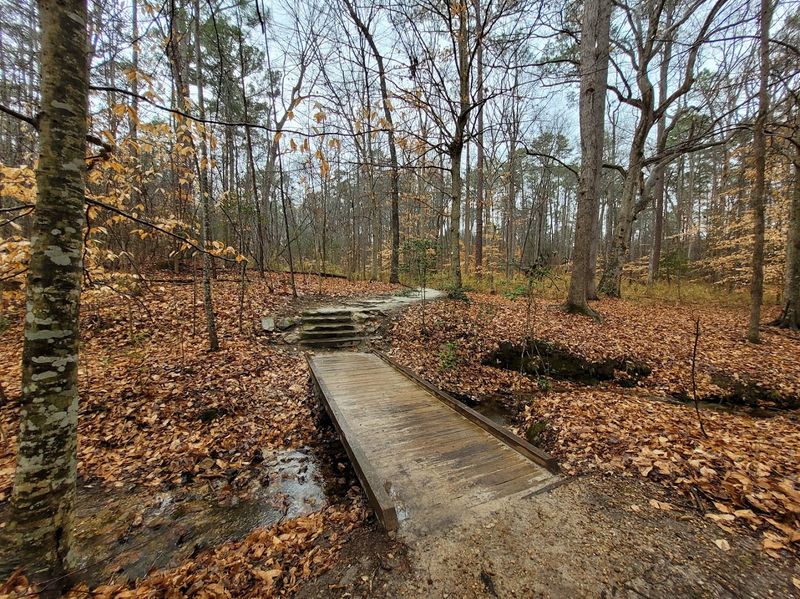
Not every park visitor wants a challenging hike, and that’s perfectly fine. The American Beech Trail offers gentle, accessible walking that introduces families and casual visitors to the park’s natural beauty.
This shorter route requires minimal effort while still delivering a satisfying outdoor experience.
Named for the distinctive smooth-barked beech trees found along the path, this trail showcases understory plants and seasonal wildflowers. Kids enjoy spotting different leaf shapes and hunting for acorns.
The relatively flat terrain means even younger children can complete the walk without exhaustion or complaints.
Interpretive signs along some family-friendly trails explain local ecology in simple terms. Learning about plants, animals, and forest processes adds educational value to physical activity.
These easier trails also work well for older adults or anyone recovering from injury who wants gentle exercise in beautiful surroundings. The short length typically allows completion in 30 minutes or less, making it perfect for visitors with limited time or energy.
Starting here helps gauge fitness levels before attempting longer, more demanding trails elsewhere in the park.
Wildlife, Geology & Natural History
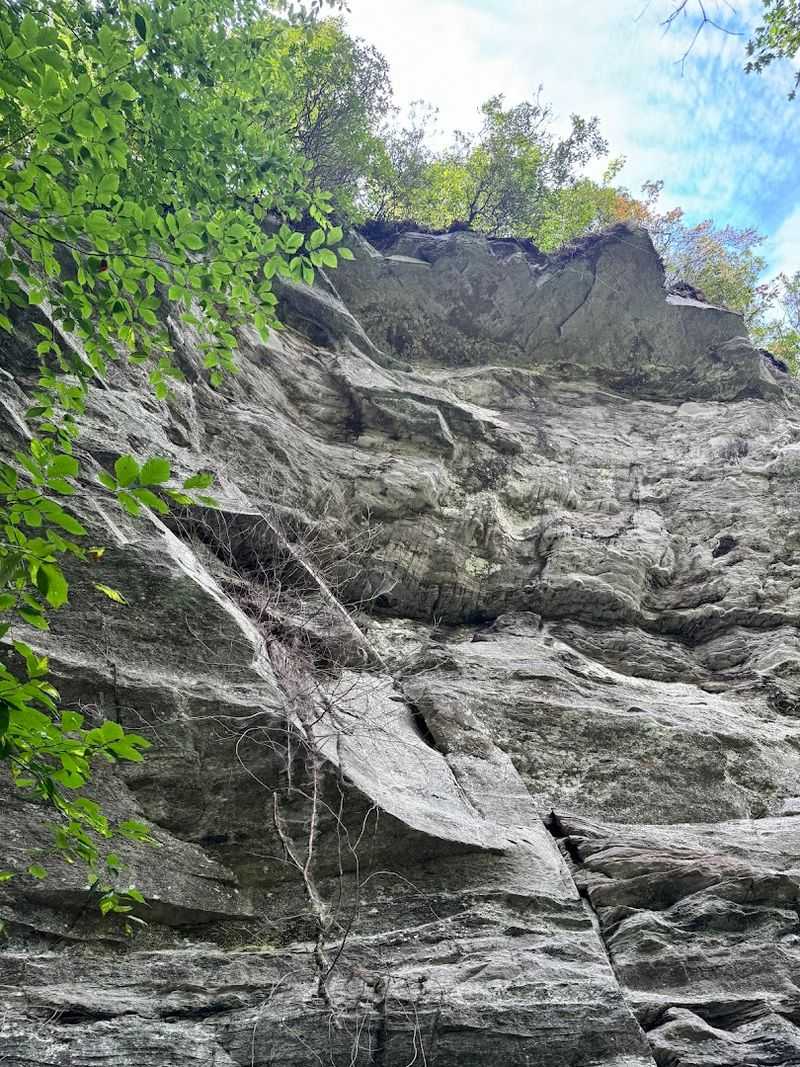
Raven Rock sits at a fascinating transition zone where Piedmont rock formations meet Coastal Plain ecosystems. This geological meeting point creates unusually diverse habitats that support varied wildlife.
Ancient rocks here tell stories spanning millions of years, shaped by erosion as the river carved through stone.
The park’s rock formations reveal layers deposited long before humans walked the earth. Fossils occasionally appear in exposed rock faces, though collecting is prohibited.
Geologists find this area particularly interesting because it shows how different rock types weather and erode at different rates.
Wildlife thrives in the diverse habitats created by this geological complexity. White-tailed deer browse forest edges at dawn and dusk.
River otters sometimes play in the Cape Fear River, though spotting them requires patience and luck. Numerous bird species nest in the varied terrain, from forest interior specialists to riverside dwellers.
Reptiles like box turtles and various snake species inhabit different park zones. Understanding these natural systems deepens appreciation for conservation efforts protecting this special landscape.
Visitor Info & Practical Tips
Before heading out, know that Raven Rock State Park welcomes visitors year-round with free day-use entry. The address is 3009 Raven Rock Road, Lillington, NC 27546.
Parking lots fill quickly on weekends, especially during pleasant weather, so arriving early ensures a spot.
Most trails range from easy to moderate difficulty, though steep stair sections down to the river require reasonable fitness. Sturdy hiking shoes provide better traction than sneakers on rocky or rooty sections.
Bringing plenty of water is essential since no water sources exist along trails.
Cell phone service becomes spotty or nonexistent in remote park areas, so download maps beforehand. The visitor center offers free trail maps, restroom facilities, and helpful staff who can recommend routes based on your interests and abilities.
Pets are welcome on leashes. Weather can change quickly, so pack layers even on days starting warm and sunny.
Most visitors spend three to five hours exploring, though you could easily fill an entire day here. Respect wildlife, stay on marked trails, and carry out all trash to help preserve this natural treasure.