There is a quiet charm to Annapolis, Maryland’s oldest city, where brick-lined streets meet the Chesapeake Bay. History feels close here, carried in colonial façades, weathered wharves, and the steady rhythm of boats in the harbor.
In summer, the city opens with sunlit docks, salty breezes through open windows, and cafés spilling onto sidewalks shaded by old trees. Sailboats glide past the waterfront, while flowers brighten tucked-away courtyards and corners.
From its colonial beginnings to its maritime traditions, Annapolis blends past and present in an easy, unhurried way. Even a simple walk feels like stepping through layered stories shaped by the sea.
Here’s a closer look at this historic coastal city and the places that define its character.
The Historic District’s Colonial Architecture
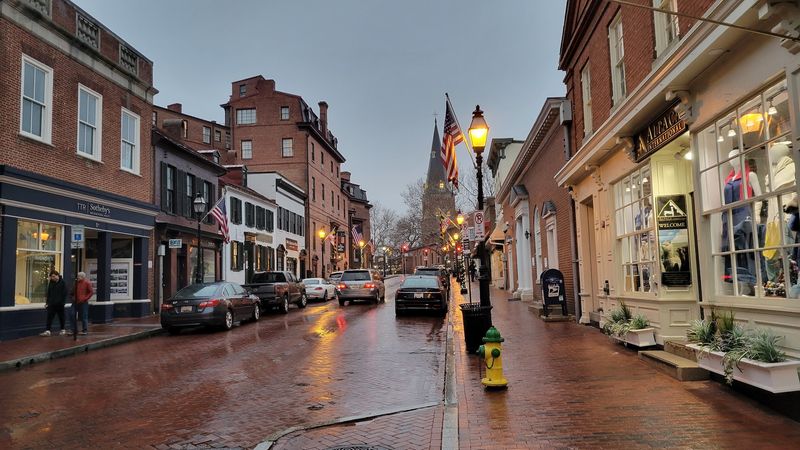
Walking through streets where centuries-old brick homes stand shoulder to shoulder creates an immediate sense of stepping back in time. The architectural landscape here showcases one of America’s finest collections of 18th-century buildings, with over 50 structures predating the Revolutionary War.
Every corner reveals Georgian-style homes with their distinctive symmetrical facades, tall windows, and decorative doorways that once welcomed colonial merchants and politicians.
Annapolis’s historic district earned National Historic Landmark status for good reason. The preservation efforts here are extraordinary, maintaining the original street layouts and building styles that George Washington himself would recognize.
Many of these brick beauties now house museums, boutique shops, and cozy restaurants, allowing modern visitors to experience history while enjoying contemporary comforts.
The charm extends beyond the main streets into quiet residential neighborhoods where locals still live in homes built before America declared independence. These aren’t just museum pieces but living, breathing parts of the community.
Original architectural details like wooden shutters, copper gutters, and hand-laid brickwork remind everyone that craftsmanship from three centuries ago still stands strong.
Exploring these historic blocks offers photography enthusiasts endless opportunities while history buffs can spend hours imagining the lives of early American settlers who shaped this remarkable city.
Maryland State House and Its Golden Dome
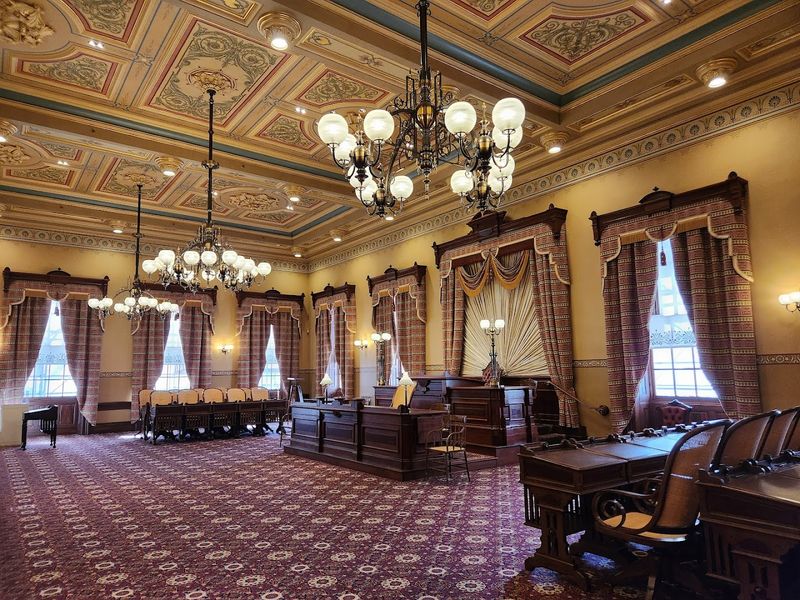
Perched atop State Circle, a magnificent dome catches sunlight and serves as the city’s most recognizable landmark. Built in 1772, this building holds the distinction of being America’s oldest state capitol still in continuous legislative use.
The wooden dome, completely constructed without nails, represents an engineering marvel of its time and towers over downtown as a symbol of governmental continuity spanning nearly 250 years.
Inside these hallowed halls, the Continental Congress met from 1783 to 1784, making it the nation’s capital during that critical period. George Washington resigned his military commission here in December 1783, marking a pivotal moment in American democracy.
The Treaty of Paris, officially ending the Revolutionary War, was ratified within these very walls, cementing this location’s importance in our nation’s founding story.
Today, visitors can tour the building and see the exact room where these historic events unfolded. The Old Senate Chamber remains preserved much as it appeared during colonial times, complete with period furnishings and architectural details.
Free guided tours run regularly, offering fascinating insights into Maryland’s governmental history and the building’s unique architectural features.
The surrounding grounds provide peaceful spots for reflection, while the dome’s presence reminds everyone of the enduring democratic principles established here centuries ago.
United States Naval Academy Campus
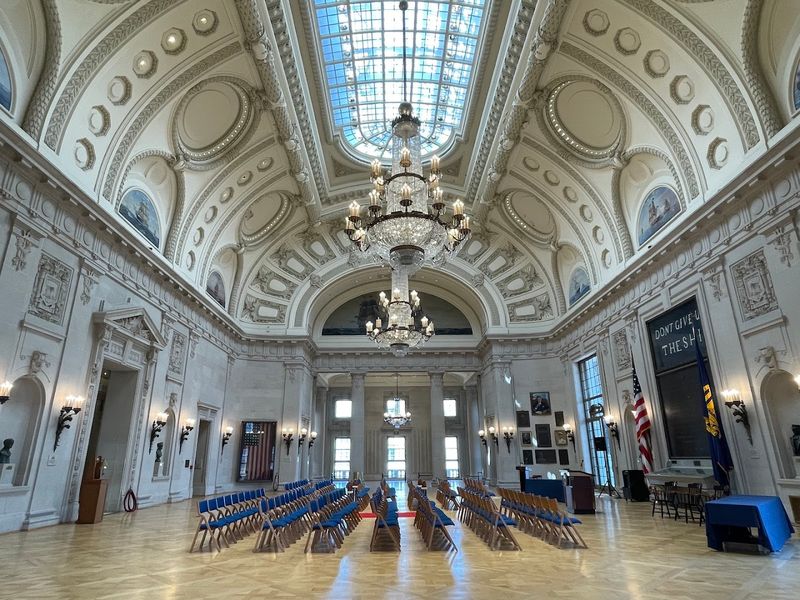
Sprawling across 338 waterfront acres, an institution of military excellence has shaped young officers since 1845. The campus itself resembles a small city, with stunning beaux arts buildings, manicured lawns, and impressive monuments honoring naval heroes throughout American history.
Visitors entering through the gates encounter a world where tradition meets modern military education, and where every pathway tells stories of dedication and service.
Midshipmen in crisp uniforms hurry between classes while tourists marvel at architectural gems like Bancroft Hall, one of the world’s largest dormitories housing the entire student body. The Naval Academy Chapel’s copper dome dominates the skyline, while its interior features beautiful stained glass and the crypt of John Paul Jones, father of the American Navy.
Watching formations of future officers march in perfect precision during noon meal formation offers a memorable spectacle.
The campus museum showcases naval history through fascinating exhibits of ship models, weapons, and artifacts spanning centuries of maritime warfare. Visitors can explore trophy displays, learn about famous graduates, and understand the rigorous training these students endure.
Public tours run daily, though security requirements mean bringing proper identification.
The waterfront location allows sailboats to dot the Severn River, creating picturesque views that blend military precision with natural beauty in ways few campuses can match.
City Dock and the Waterfront Harbor
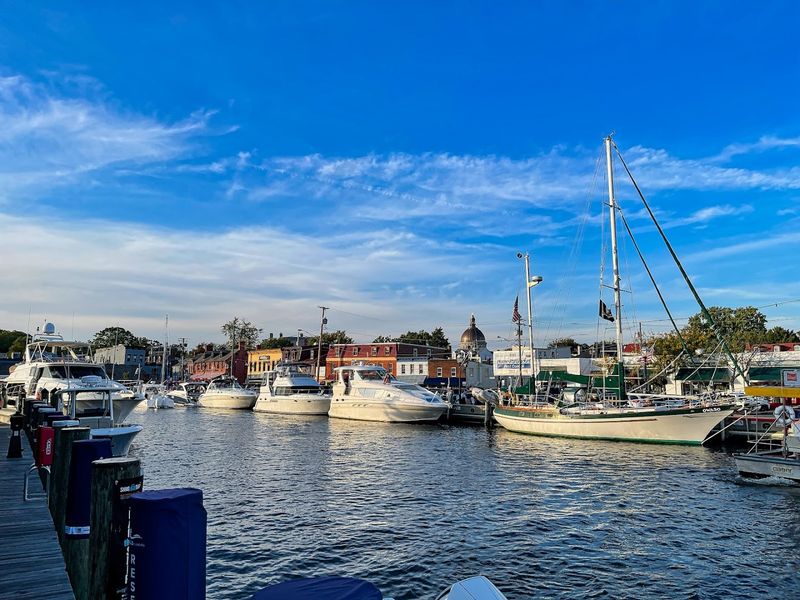
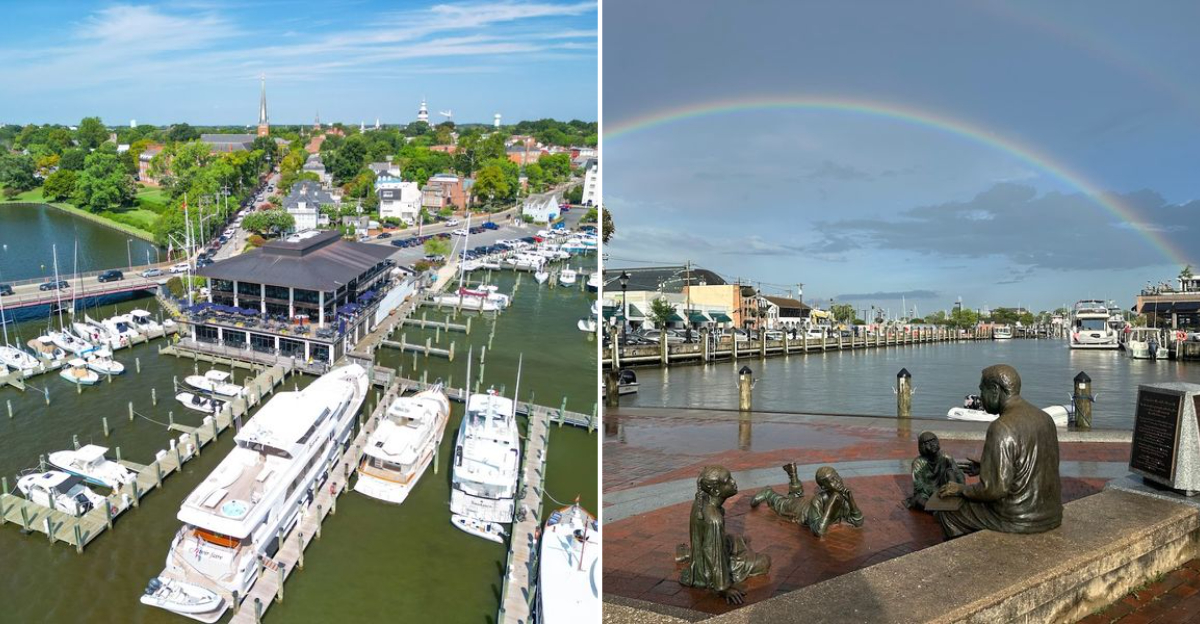
Salt air mingles with the sounds of halyards clanging against masts as water gently laps against dock pilings. This bustling waterfront area serves as the city’s social and commercial heart, where locals and tourists gather to watch boats glide across the harbor.
The circular harbor creates a natural amphitheater effect, with restaurants, shops, and historic buildings forming a scenic backdrop to the maritime activity that defines this sailing capital.
City Dock has witnessed everything from colonial shipping operations to modern yacht races. During summer months, the area buzzes with energy as sailors prepare for Wednesday night races, families enjoy ice cream cones, and street performers entertain crowds.
The historic market house still stands near the water’s edge, though now it hosts special events rather than colonial-era commerce.
Boat tours depart regularly from these docks, offering harbor cruises and sailing excursions on the Chesapeake Bay. Many visitors choose sunset cruises to experience the harbor’s beauty as golden light bathes the water and city skyline.
Local watermen sometimes sell fresh catches right off their boats, continuing traditions stretching back generations.
Restaurants with outdoor seating provide front-row views of sailing activity while serving fresh seafood caught nearby. Whether you’re a serious sailor or simply appreciate waterfront beauty, this harbor area captures the essence of Annapolis’s maritime soul perfectly.
St. Anne’s Episcopal Church and Cemetery
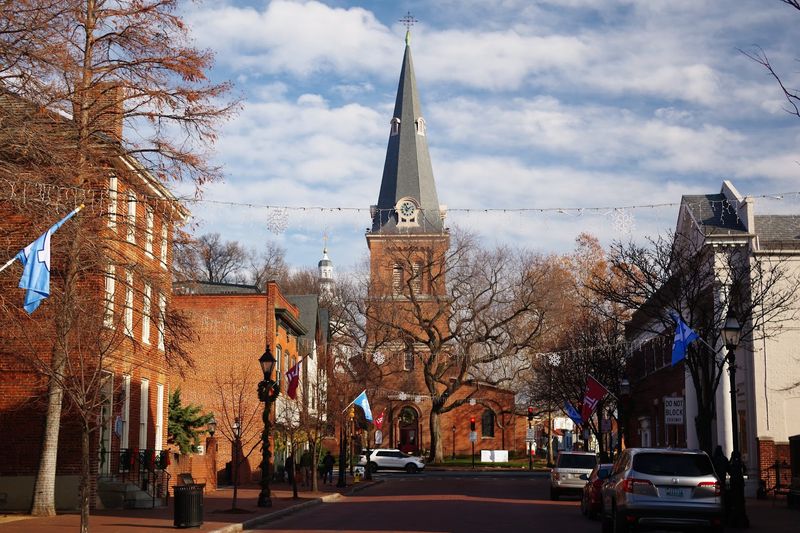
Church Circle anchors the historic district with a spiritual presence dating back to 1692, though the current Romanesque Revival structure was built in 1859. Magnificent Tiffany stained glass windows cast colorful patterns across wooden pews, creating an atmosphere of peaceful reverence.
The church’s architectural beauty draws visitors regardless of religious affiliation, as the craftsmanship represents some of the finest ecclesiastical design in Maryland.
Behind the church, weathered gravestones lean at various angles, marking the final resting places of colonial-era residents. This historic cemetery contains graves dating to the 1700s, including those of early governors, revolutionary war soldiers, and ordinary citizens who built this community.
Reading the faded inscriptions offers a poignant connection to people whose lives shaped early American history.
The church community remains active today, welcoming visitors to services and hosting concerts that showcase the building’s exceptional acoustics. The original communion silver, given by King William III in 1695, is still used during special services.
These tangible links to the past make worship here feel connected to centuries of faithful congregants.
Free tours allow visitors to appreciate the Tiffany windows up close and learn about the building’s architectural significance. The peaceful churchyard provides a quiet retreat from bustling downtown streets, offering benches where one can sit among ancient trees and contemplate the passage of time.
Sailing Culture and Yacht Clubs
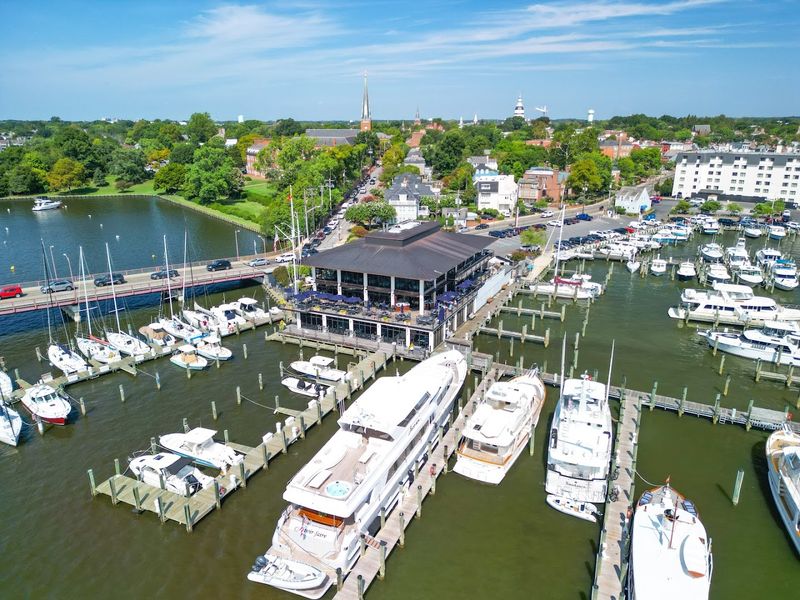
Few American cities embrace sailing with the passion found here. With more sailboats per capita than anywhere else in the country, the water culture runs deep through every aspect of community life.
Yacht clubs dot the shoreline, while marinas overflow with vessels ranging from small day sailers to impressive ocean-going yachts. Spring through fall, white sails fill the bay every evening as racing enthusiasts compete in weekly regattas that have run continuously for decades.
The annual boat shows transform the city into a floating showroom each October, drawing hundreds of thousands of visitors. Both power and sail enthusiasts flock to see the latest vessels, marine equipment, and innovations in boat design.
These events pump millions into the local economy while reinforcing the city’s reputation as America’s sailing capital.
Sailing schools welcome beginners who want to learn this timeless skill on the same waters where Olympic champions have trained. Many residents own boats or crew for friends, making sailing more lifestyle than hobby.
Weekend mornings find the harbor alive with activity as crews prepare their vessels for day trips exploring the Chesapeake’s countless coves and islands.
Waterfront bars and restaurants cater to the sailing crowd, with dock space available for those arriving by boat. The culture here celebrates maritime traditions while remaining welcoming to landlubbers who simply enjoy watching the graceful ballet of sailboats tacking across the bay.
The Naval Academy Museum Collection
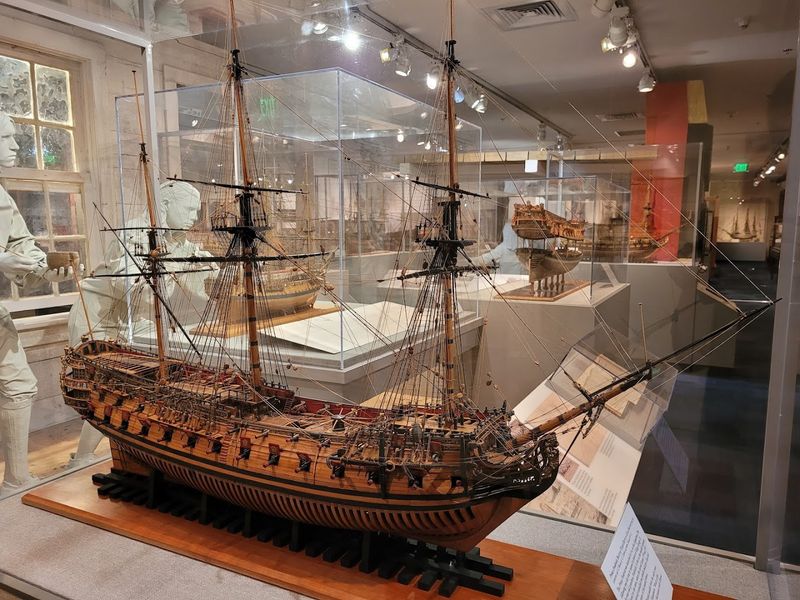
Housing over 50,000 artifacts, this remarkable collection tells America’s naval story through tangible pieces of maritime history. Ship models crafted with extraordinary detail fill display cases, representing vessels from Revolutionary War frigates to modern aircraft carriers.
Each model took skilled artisans hundreds of hours to complete, capturing intricate rigging, deck details, and historical accuracy that brings naval architecture to life.
The weapons collection spans centuries, from colonial-era cutlasses to sophisticated modern firearms used by Navy SEALs. Battle flags, uniforms worn by famous admirals, and personal items from notable naval figures create intimate connections to the men and women who served.
One particularly moving exhibit features artifacts recovered from significant naval battles, each piece telling stories of courage and sacrifice.
Interactive displays allow visitors to understand naval tactics, navigation techniques, and the evolution of maritime warfare technology. Children especially enjoy the hands-on elements where they can try tying nautical knots or learning semaphore signals.
The museum regularly rotates exhibits, ensuring repeat visitors discover something new each time.
Aviation enthusiasts appreciate the collection of early naval aircraft models and equipment, showcasing how the Navy pioneered carrier-based aviation. The museum’s location within the Naval Academy grounds means visitors experience it alongside the institution that continues training tomorrow’s naval officers, creating a living connection between past and present.
Main Street’s Boutiques and Galleries
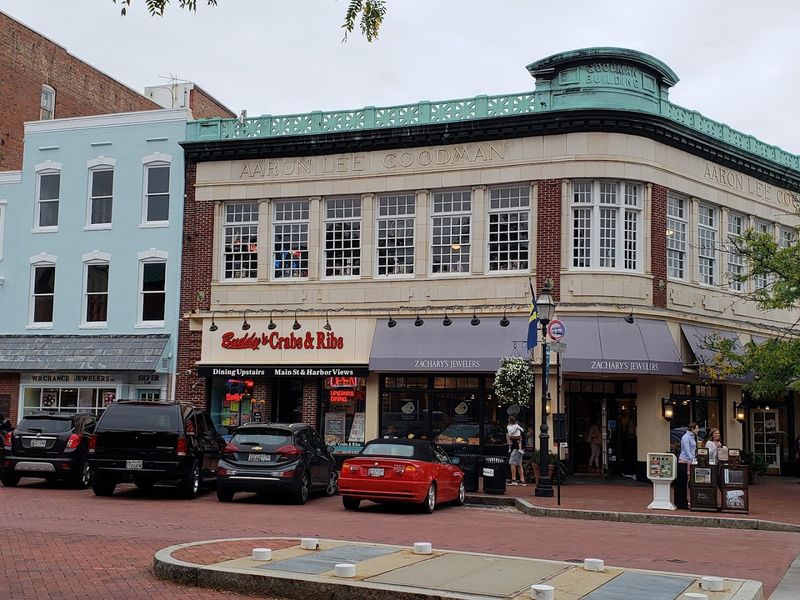
Stretching from Church Circle to the waterfront, this vibrant commercial corridor blends shopping with sightseeing in ways that feel authentically local. Unlike cookie-cutter retail districts, the storefronts here occupy historic buildings where merchants have conducted business for centuries.
Brick facades and traditional architecture create a charming backdrop for browsing unique boutiques, art galleries, and specialty shops impossible to find anywhere else.
Local artists display paintings, sculptures, and photography capturing Chesapeake Bay landscapes and maritime themes. Nautical-themed stores sell everything from marine equipment to decorative items featuring anchors and sailboats.
Jewelry shops showcase pieces incorporating sea glass and other bay-inspired designs, while clothing boutiques offer styles suited to coastal living.
The street’s restaurant scene ranges from casual cafes to upscale dining establishments, many occupying buildings with their own fascinating histories. Some restaurants operate in structures dating to the 1700s, where colonial merchants once stored imported goods.
Outdoor seating allows diners to people-watch while enjoying meals prepared with fresh local ingredients, including seafood caught that very morning.
Street performers often entertain passersby, adding to the lively atmosphere that makes strolling here feel more like experiencing community culture than typical shopping. Independent bookstores, antique shops, and gift stores ensure everyone finds something interesting, whether seeking souvenirs or genuine local treasures to take home.
Chesapeake Bay Maritime Heritage
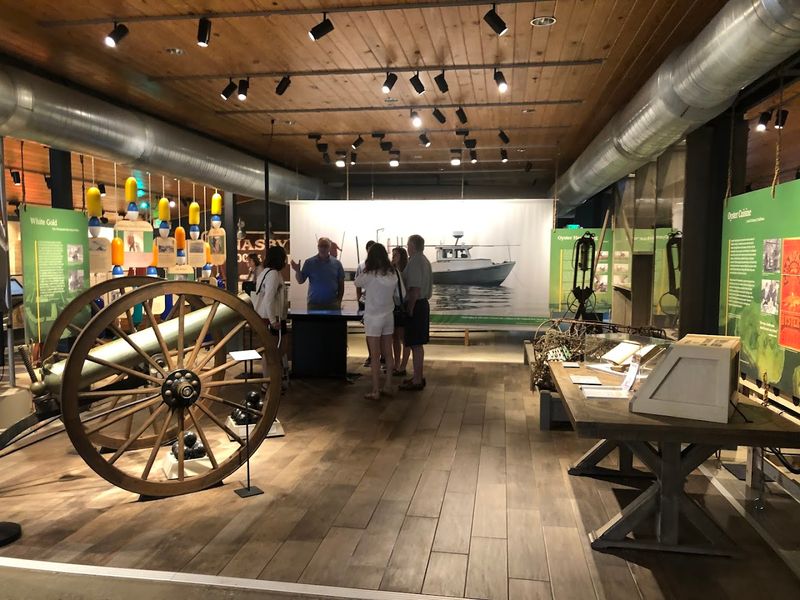
For thousands of years, these waters have sustained communities through fishing, crabbing, and oyster harvesting traditions passed down through generations. The bay’s influence on local culture cannot be overstated, as its rhythms dictate seasonal activities and its bounty fills restaurant menus throughout the region.
Watermen still rise before dawn to work their crab pots and oyster beds, continuing practices their grandfathers and great-grandfathers perfected decades ago.
Maritime museums throughout the area preserve wooden boats, traditional fishing gear, and oral histories from families who have worked these waters for centuries. Exhibits explain how watermen adapted to changing regulations, declining fish populations, and environmental challenges while maintaining their crucial role in the local economy.
The iconic skipjack sailboats, once numerous across the bay, now exist in limited numbers as working vessels and floating museums.
Blue crabs remain the bay’s most famous harvest, with the distinctive Maryland blue crab supporting both commercial watermen and recreational crabbers. Summer months see locals armed with chicken necks and nets heading to piers and docks for an afternoon of crabbing.
The ritual of steaming and picking crabs brings families together around newspaper-covered tables in a tradition deeply woven into regional identity.
Environmental restoration efforts work to revive the bay’s health, ensuring future generations can experience the same maritime heritage. Educational programs teach children about bay ecology, sustainable fishing practices, and the importance of preserving this invaluable natural resource.
Eastport’s Working Waterfront Character
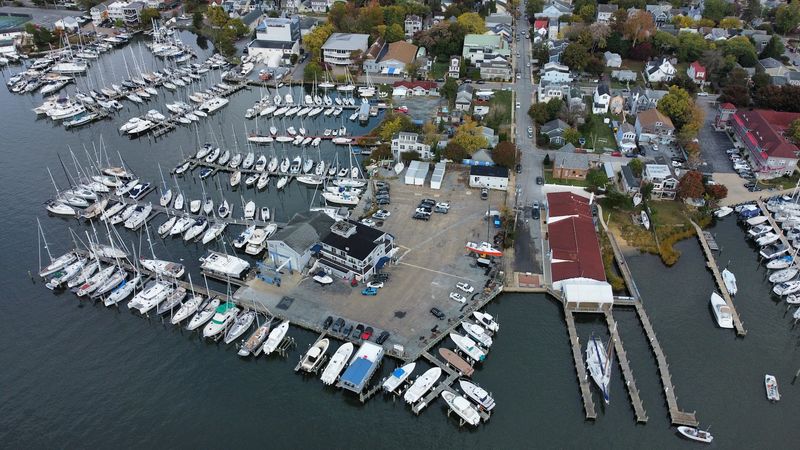
Crossing the Spa Creek drawbridge transports visitors into a neighborhood that retains authentic maritime community character often lost in gentrified waterfront areas. While technically part of the city, locals proudly declare themselves citizens of the independent Maritime Republic of Eastport, complete with their own flag and annual traditions.
Boat yards, marine supply stores, and working docks line the waterfront, where real maritime businesses operate alongside newer restaurants and galleries.
The neighborhood’s Tug O’ War across Spa Creek has become legendary, with Eastport residents competing against downtown teams each November in a spirited contest symbolizing good-natured rivalry. Community events like the Eastport Yacht Club’s opening day festivities bring neighbors together in celebrations that feel genuinely local rather than tourist-oriented.
Walking these streets reveals a mix of watermen’s cottages, Victorian homes, and modern condos creating architectural diversity.
Maritime entrepreneurs operate successful businesses here, from custom boat builders to sail makers whose craftsmanship attracts clients worldwide. The authentic working waterfront atmosphere provides striking contrast to the more polished downtown area across the creek.
Local bars and restaurants cater primarily to residents and sailors, offering casual atmospheres where everyone knows the bartender’s name.
Artists and musicians have discovered Eastport’s affordable spaces and creative vibe, establishing studios and performance venues that contribute to the area’s bohemian character. This blend of working waterfront grit and artistic energy creates a neighborhood unlike anywhere else around the bay.
William Paca House and Garden
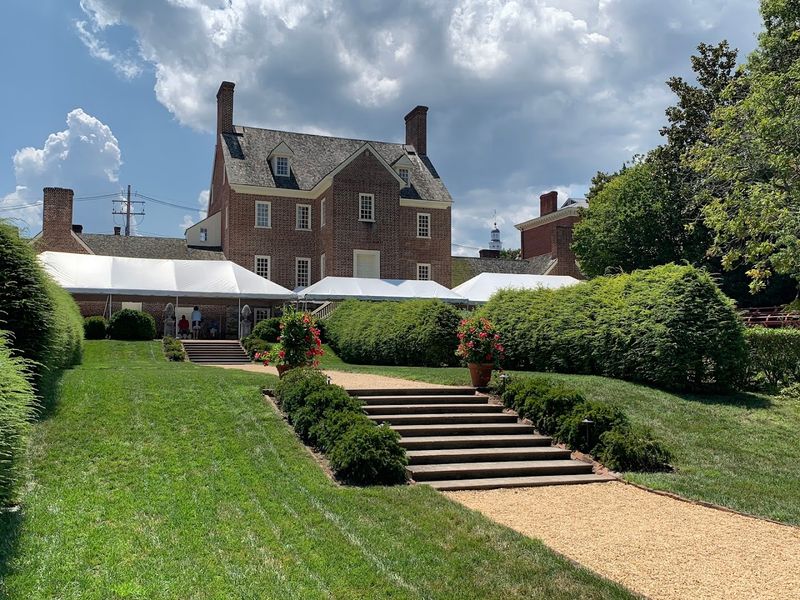
Behind a modest street entrance lies a spectacular five-part Georgian mansion surrounded by two acres of terraced gardens that transport visitors to colonial elegance. Built in the 1760s by William Paca, a signer of the Declaration of Independence and Maryland governor, the house showcases the lifestyle enjoyed by wealthy colonial merchants and politicians.
Careful restoration has returned the property to its 18th-century glory, complete with period furnishings, decorative arts, and architectural details reflecting Paca’s refined tastes.
The formal gardens descend in terraces from the house toward a fish-shaped pond, following the original 1760s design rediscovered through archaeological investigation. Boxwood parting, flower beds bursting with period-appropriate plants, and a charming Chinese Chippendale bridge create romantic settings for strolling and contemplation.
Garden historians consider this one of America’s finest examples of colonial landscape design, meticulously maintained to historical accuracy.
Guided tours reveal fascinating details about Paca’s life, from his revolutionary activities to his role in early state government. The house’s interior features hand-carved woodwork, elaborate plasterwork ceilings, and original floor plans that demonstrate how wealthy families lived and entertained guests.
Special programs throughout the year include candlelight tours, garden workshops, and historical reenactments.
Photography enthusiasts find endless inspiration in both the architecture and gardens, particularly during spring when flowering trees and bulbs create spectacular displays. The peaceful atmosphere provides welcome escape from downtown’s bustle while offering profound insights into colonial American life.
The Kunta Kinte-Alex Haley Memorial
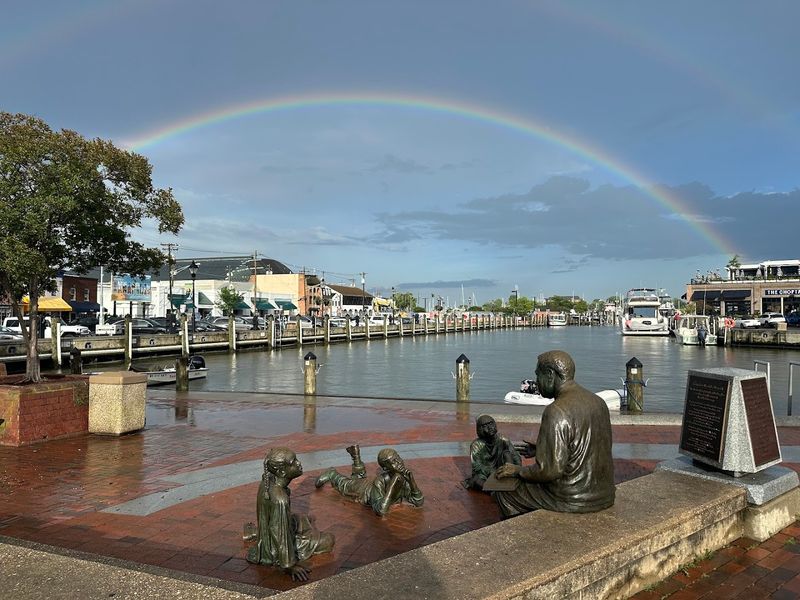
Standing at the water’s edge where countless enslaved Africans first touched American soil, a powerful memorial honors their memory and acknowledges this painful chapter of history. The sculpture group depicts figures reading together, symbolizing education and freedom while commemorating Alex Haley’s groundbreaking novel Roots and his ancestor Kunta Kinte, who arrived at this very dock in 1767.
Bronze plaques detail the Middle Passage journey and the experiences of enslaved people in colonial Maryland.
This memorial serves crucial educational purposes, ensuring visitors understand that behind the city’s charming colonial architecture lies a complex history involving enslaved labor that built much of what we admire today. School groups frequently visit to learn about slavery’s realities and its lasting impacts on American society.
The location at City Dock means thousands of tourists encounter this memorial, creating opportunities for reflection and learning they might not actively seek elsewhere.
Annual commemorations held here bring the community together to honor ancestors and recommit to justice and equality. Local historians lead tours exploring African American contributions to the city’s development, revealing stories often omitted from traditional historical narratives.
The memorial has sparked important conversations about how communities remember difficult histories while celebrating their heritage.
Visitors often pause here quietly, reading the inscriptions and contemplating the human cost behind America’s founding. This simple act of acknowledgment represents an essential step toward understanding our complete history, not just the comfortable parts we prefer remembering.