Summer in Key West feels like a soft breeze off the Atlantic, carrying salt, sunlight, and the slow rhythm of island life. Streets lined with pastel cottages, swaying palms, and blooming bougainvillea invite you to wander without a plan, where every turn feels like it belongs in a postcard.
This small island, only a few miles wide, is best experienced on foot. Morning light warms the pastel facades as bicycles pass quietly and cafés spill fresh coffee onto shaded porches.
The ocean is never far away—sometimes just a glimpse between rooftops, sometimes a wide-open horizon at the end of a street.
There’s a gentle ease here that makes time feel unimportant. You follow shaded sidewalks, drift through historic corners, and let curiosity lead the way.
Here’s how to make the most of a full day exploring Key West step by step.
Duval Street
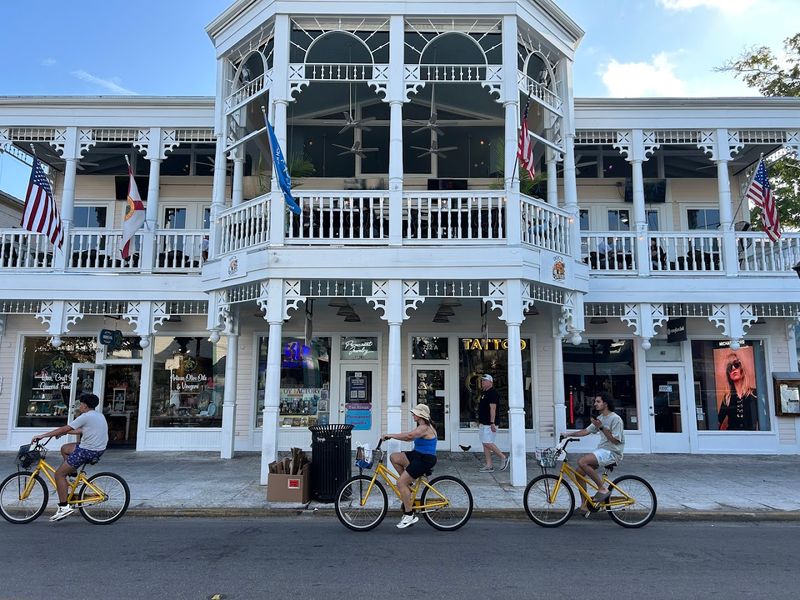
Imagine a mile-long stretch where every step brings a new discovery, from quirky souvenir shops to world-class art galleries. The energy here pulses with island rhythm as locals and tourists mingle under swaying palm trees.
Street performers entertain passersby while the scent of fresh key lime pie wafts from nearby bakeries.
Duval Street runs from the Atlantic Ocean to the Gulf of Mexico, earning its nickname as the longest street in America. You’ll find everything from upscale boutiques to dive bars, each offering its own slice of island culture.
The architectural mix of Victorian mansions and colorful conch houses creates a visual feast that’s distinctly Key West.
Early morning walks reveal a quieter side before the crowds arrive. Local coffee shops open their doors, and shopkeepers sweep their storefronts as roosters strut down the sidewalks.
This is when you can truly appreciate the street’s historic charm without the hustle.
As afternoon transitions to evening, the street transforms into a lively celebration zone. Happy hour specials appear on chalkboards outside restaurants, and live music begins floating from open-air bars.
Whether you’re shopping for treasures or simply people-watching from a sidewalk café, this iconic thoroughfare captures the essence of island life perfectly.
Mallory Square Sunset Celebration
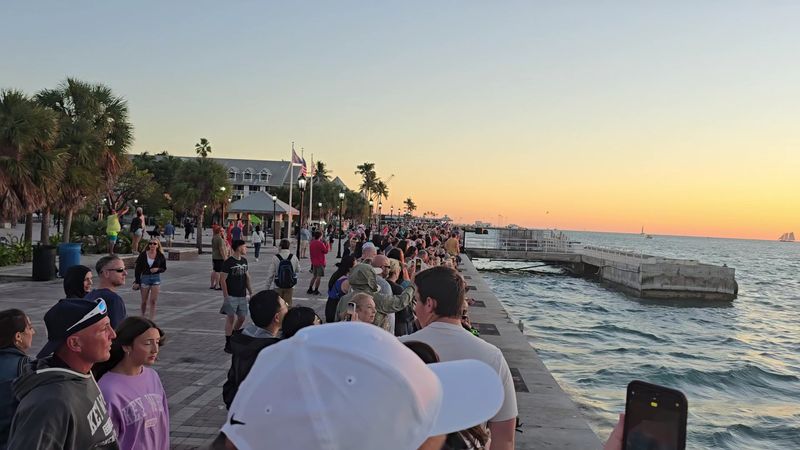
Every evening, a magical gathering unfolds along the waterfront where hundreds of people assemble for nature’s grand finale. The tradition dates back decades, transforming a simple sunset viewing into an outdoor carnival atmosphere.
Fire jugglers, acrobats, musicians, and artists create a street festival that’s become a Key West institution.
Mallory Square sits on the island’s northwestern edge, providing unobstructed views across the Gulf of Mexico. Arrive about two hours before sunset to secure a prime viewing spot and explore the artisan booths.
Local craftspeople display handmade jewelry, paintings, and island-inspired creations that make perfect souvenirs.
The performers are as entertaining as the sunset itself. Watch trained cats jump through hoops, escape artists wriggle free from chains, or cookie ladies balance treats on their heads.
Each act adds its own flavor to the celebration while working for tips from appreciative audiences.
As the sun begins its descent, painting the sky in brilliant oranges and pinks, the crowd grows quiet. Cameras click furiously, capturing the moment when day surrenders to night.
When the sun finally disappears below the horizon, applause erupts across the square—a nightly tradition honoring another beautiful day in paradise completed.
Ernest Hemingway Home and Museum
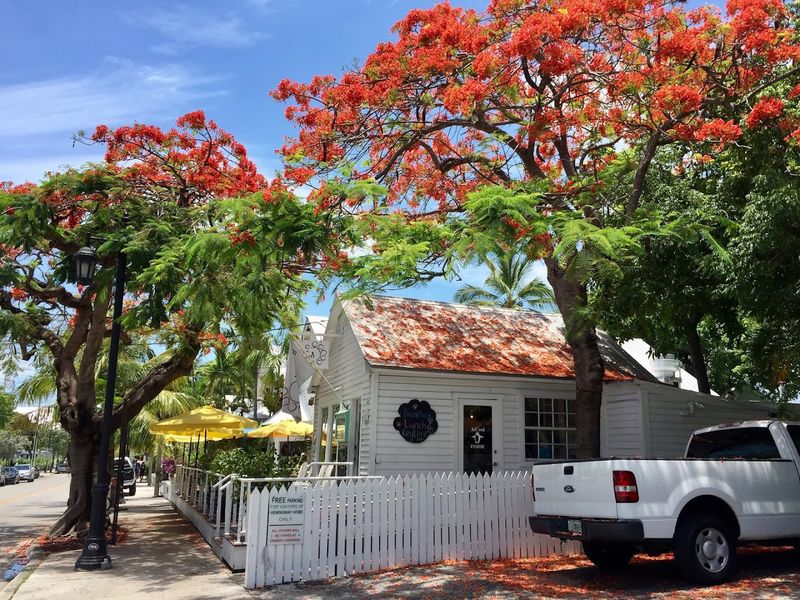
A Nobel Prize-winning author once called this Spanish Colonial beauty home, and his legacy still permeates every room. Built in 1851, the house witnessed Hemingway’s most prolific writing period during the 1930s.
Here, he penned classics like “For Whom the Bell Tolls” and “A Farewell to Arms” in a quiet studio above the carriage house.
The property sprawls across an acre of lush tropical gardens filled with exotic plants and towering palms. Nearly fifty polydactyl cats—descendants of Hemingway’s original pet—roam freely throughout the grounds.
These six-toed felines have become celebrities in their own right, lounging on antique furniture and greeting visitors with regal indifference.
Guided tours reveal intimate details about Hemingway’s island life and creative process. You’ll see his original typewriter, boxing ring, and the pool that reportedly cost more than the house itself.
The furnishings remain largely unchanged since his residency, offering a genuine glimpse into 1930s Key West lifestyle.
Walking through the rooms feels like stepping back in time to an era of literary greatness. The author’s presence seems to linger in the book-lined study and shaded verandas where he entertained friends.
Even non-literary buffs find themselves captivated by the stories these walls hold and the charming cats that preserve his memory.
Southernmost Point Buoy
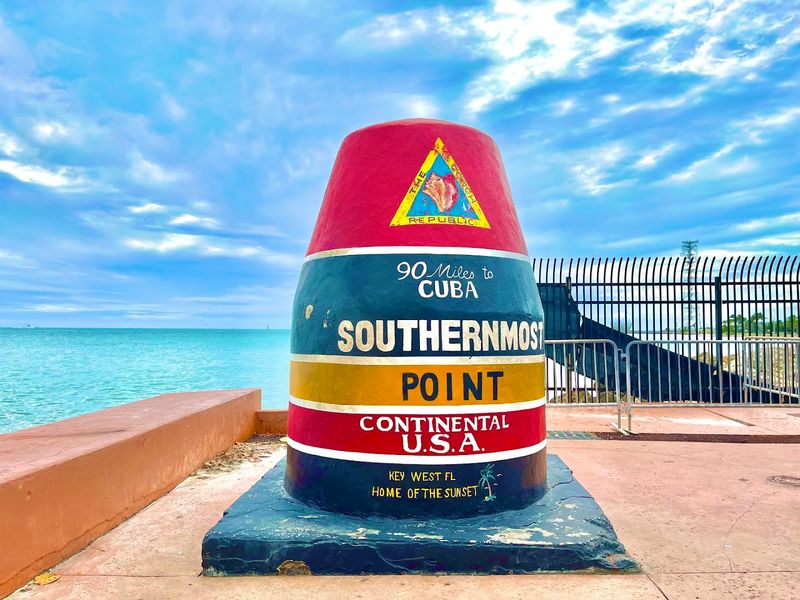
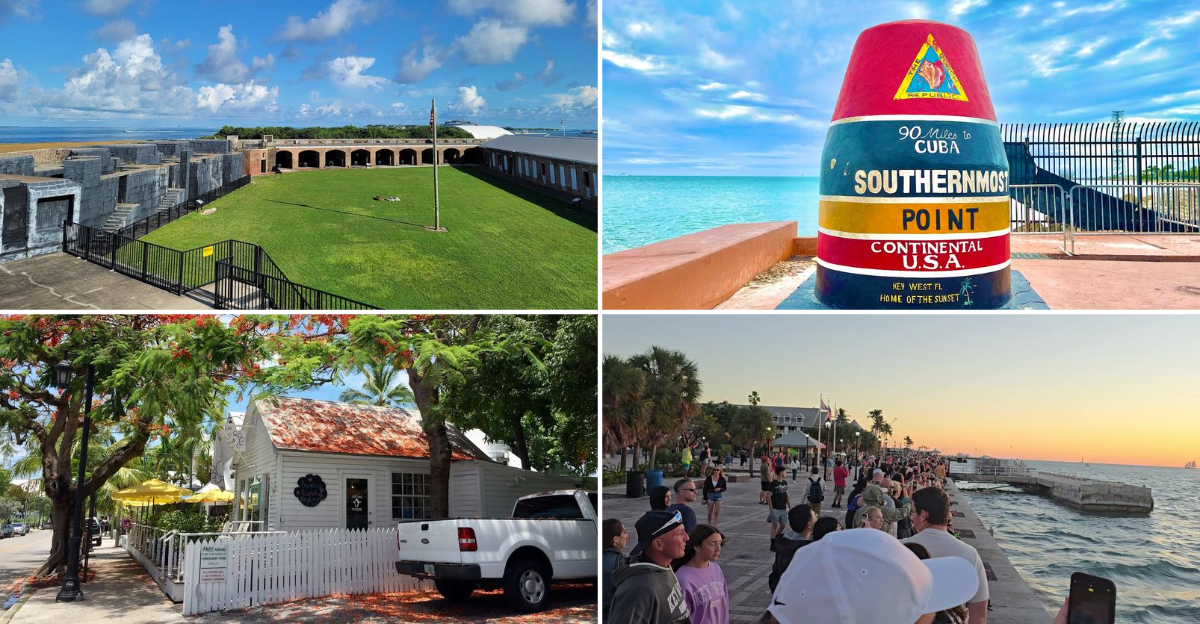
Standing before this colorful landmark feels like reaching the edge of America itself. The massive concrete buoy marks the continental United States’ southernmost accessible point, just ninety miles from Cuba.
Painted in vibrant red, yellow, and black stripes, it’s become one of the most photographed monuments in Florida.
Expect a line of fellow travelers waiting their turn for the perfect snapshot. The monument sits at the corner of South Street and Whitehead Street, where the Atlantic Ocean meets the Gulf of Mexico.
Despite its touristy nature, the location holds genuine geographical significance and offers stunning water views.
Early morning visits reward patient photographers with smaller crowds and beautiful golden light. The surrounding area features charming bed-and-breakfasts and historic homes that showcase classic Key West architecture.
Street vendors often set up nearby, selling coconuts, souvenirs, and locally made snacks.
The actual southernmost point of the island lies on private naval property, making this buoy the closest public access. Installed in 1983 by the city, it replaced an earlier sign that visitors kept stealing as a souvenir.
Today, the hefty concrete structure weighs several tons—definitely too heavy for anyone’s luggage—ensuring it stays put for future visitors to enjoy and photograph.
Key West Butterfly and Nature Conservatory
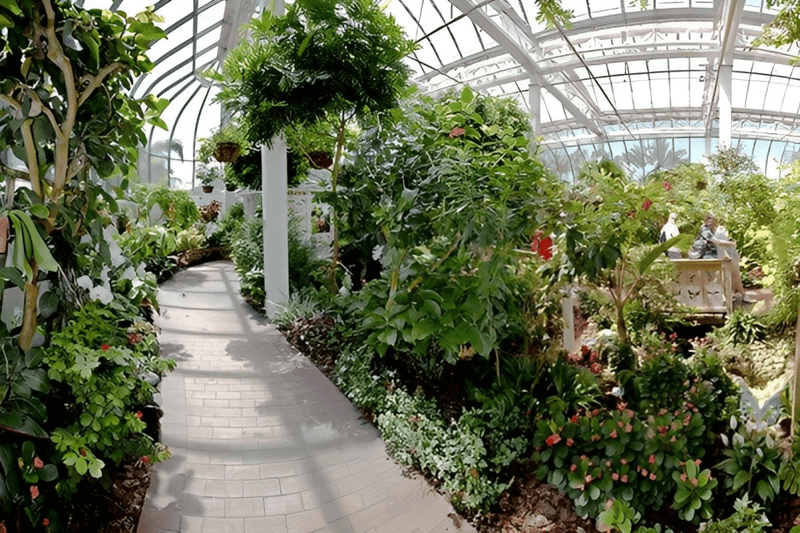
Step inside this climate-controlled paradise and enter a world where thousands of delicate wings flutter in constant motion. The conservatory houses more than fifty species of butterflies from around the globe in a lush indoor garden setting.
Flamingos, exotic birds, and cascading waterfalls complete the tropical atmosphere that feels both magical and peaceful.
Walking the winding pathways reveals butterflies in every stage of their lifecycle. Glass-enclosed displays show chrysalises in various stages of transformation, while butterflies emerge and take their first flights throughout the day.
Patient visitors might have these beautiful creatures land directly on their shoulders or outstretched hands—a truly memorable experience.
The conservatory maintains perfect conditions year-round, making it an ideal escape from Florida’s summer heat. Educational plaques identify different species and explain their unique characteristics and behaviors.
Learning stations designed for children make complex biological concepts accessible and fun for younger visitors too.
Beyond the butterfly habitat, the conservatory includes a gift shop specializing in nature-themed items and butterfly-related merchandise. The entire experience typically takes about an hour, providing a refreshing break from walking Key West’s sunny streets.
Many visitors describe it as unexpectedly enchanting—a hidden gem that exceeds expectations and offers something completely different from the island’s beaches and bars.
Fort Zachary Taylor Historic State Park
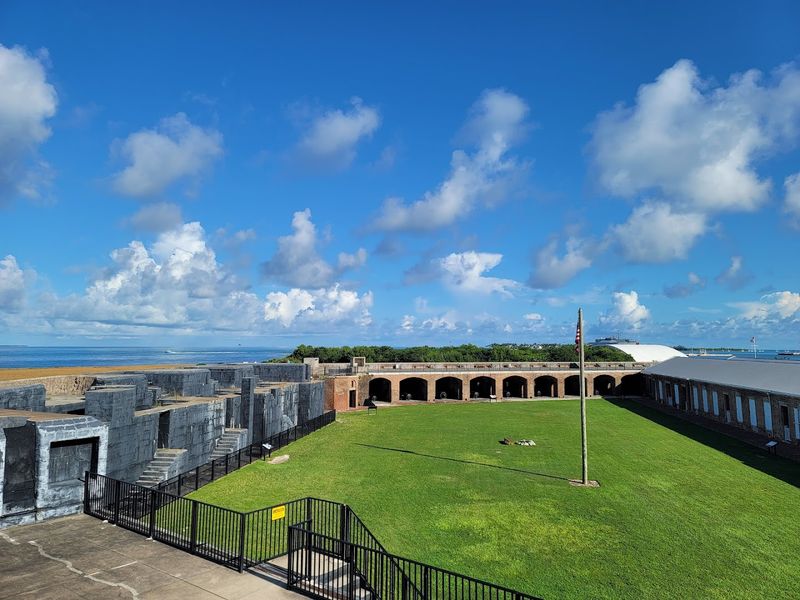
History and natural beauty converge at this Civil War-era fortress that once guarded America’s southern coastline. Built between 1845 and 1866, the fort played crucial roles in multiple conflicts including the Spanish-American War.
Today, it stands as one of the best-preserved Civil War fortifications in the country, housing the largest collection of Civil War cannons in the United States.
The fort itself offers fascinating tours through underground chambers, artillery rooms, and defensive batteries. Knowledgeable guides share stories of soldiers who served here and battles that never came.
The thick brick walls and strategic positioning demonstrate impressive 19th-century military engineering that protected Key West from potential invasions.
Beyond historical significance, the park boasts what many consider Key West’s finest beach. The rocky shoreline creates excellent snorkeling opportunities with clear waters teeming with tropical fish.
Unlike the island’s busier beaches, this spot maintains a quieter, more natural atmosphere perfect for relaxation.
Nature trails wind through native coastal hammock vegetation where bird watchers spot migrating species. Picnic areas with grills and shaded pavilions make it ideal for extended visits.
The combination of swimming, snorkeling, historical exploration, and nature walks means you could easily spend several hours here without running out of things to do or see.
Key West Lighthouse and Keeper’s Quarters Museum
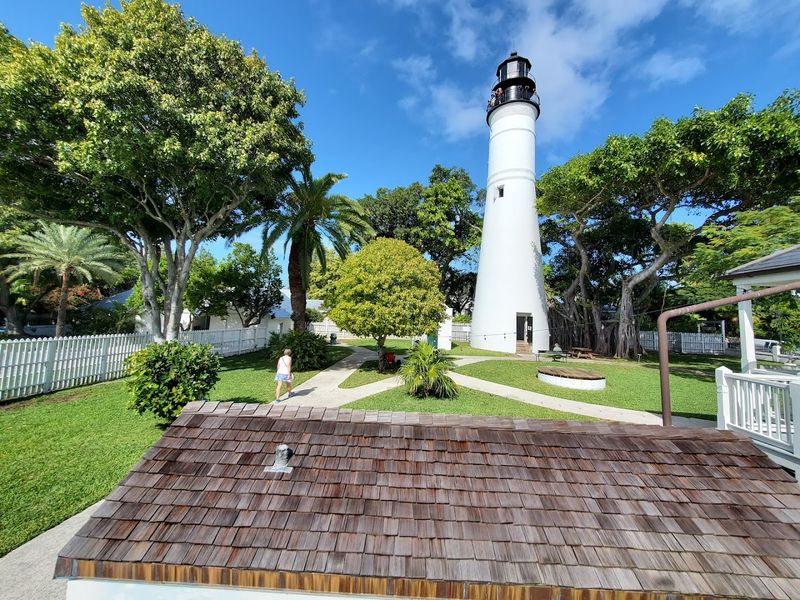
Climbing eighty-eight iron steps rewards adventurous visitors with panoramic views that stretch across the entire island and surrounding waters. Built in 1848 after a devastating hurricane destroyed the original lighthouse, this beacon guided ships safely through treacherous reef-filled waters for over a century.
The distinctive white tower with red trim stands sixty-five feet tall, serving as both navigational aid and architectural landmark.
The spiral staircase might test your fitness level, but each step brings you closer to breathtaking vistas. From the observation deck, you can see both the Atlantic Ocean and Gulf of Mexico simultaneously.
The view encompasses Duval Street, historic neighborhoods, and the endless blue waters that define Key West’s island identity.
At ground level, the restored Keeper’s Quarters Museum chronicles the lighthouse’s operational history. Original furnishings, photographs, and artifacts illustrate daily life for lighthouse keepers and their families.
Interactive exhibits explain how lighthouse technology evolved from oil lamps to electric beacons over the decades.
The meticulously maintained grounds feature native plants and interpretive signs about Key West’s maritime heritage. Many visitors find the museum unexpectedly fascinating, learning about shipwrecks, rescue operations, and the crucial role lighthouses played in coastal navigation.
The entire experience typically takes about an hour, making it a perfect mid-day stop during your walking tour.
Bahama Village
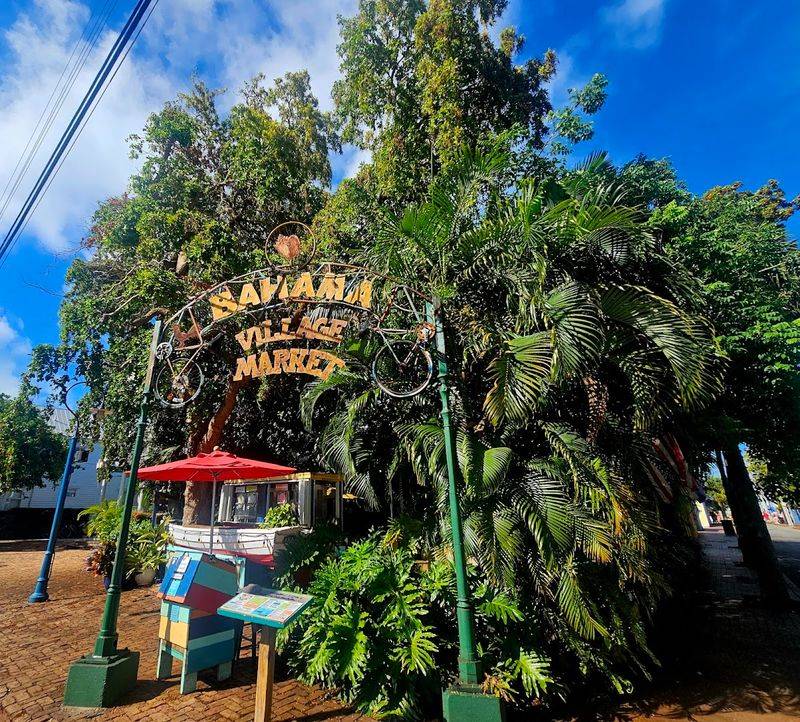
Authentic Caribbean culture thrives in this often-overlooked neighborhood where Bahamian immigrants established roots generations ago. The vibrant community pulses with a different energy than tourist-heavy Duval Street—more genuine, more local, more real.
Brightly painted cottages, mom-and-pop shops, and family-run restaurants preserve traditions brought from the Bahamas in the 1800s.
Walking these streets feels like discovering Key West’s soul beyond the postcard-perfect facade. Local residents gather on porches, playing dominoes and sharing stories while reggae music drifts from open windows.
The neighborhood’s boundaries roughly span Whitehead Street to Grinnell Street, and Truman Avenue to Southard Street—an easy walk from downtown.
Blue Heaven Restaurant exemplifies Bahama Village’s quirky charm, serving exceptional Caribbean-influenced cuisine where Hemingway once refereed boxing matches. Other local eateries offer authentic island cooking rarely found in tourist areas.
Small galleries showcase works by local artists, and vintage shops sell genuine treasures rather than mass-produced souvenirs.
Recent revitalization efforts have brought new life while respecting the area’s cultural heritage. Community murals celebrate Bahamian history and contributions to Key West’s development.
Visiting here provides context and depth to your understanding of the island’s diverse cultural tapestry, showing you a side of Key West that many tourists never discover but absolutely should experience.
Key West Aquarium
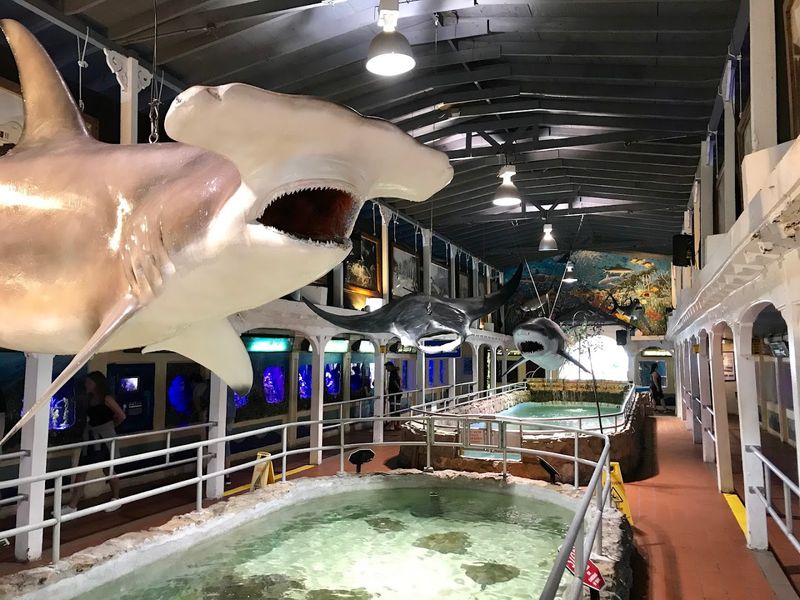
Opened in 1934 as Florida’s first tourist attraction, this historic aquarium continues delighting visitors with hands-on marine encounters. The building itself represents classic Keys architecture from the Depression era, constructed as a Works Progress Administration project.
Inside, touch tanks allow direct interaction with sea stars, conch, and other local sea creatures that call Florida waters home.
What this aquarium lacks in size, it compensates with personality and educational value. Knowledgeable staff members conduct feeding demonstrations throughout the day, sharing fascinating facts about shark behavior, sea turtle conservation, and reef ecology.
The Atlantic Shores exhibit recreates natural habitats showcasing species native to Key West’s surrounding waters.
Children especially love the interactive experiences unavailable at larger aquariums. Holding a horseshoe crab or touching a stingray creates memorable moments that spark lifelong interest in marine biology.
The compact layout means you won’t spend hours wandering—perfect for fitting into a day of walking exploration.
The aquarium’s location on Whitehead Street makes it conveniently accessible from other downtown attractions. Guided tours last approximately forty-five minutes, though you can linger longer if particular exhibits capture your interest.
Many families consider it an ideal afternoon activity, particularly during Key West’s warmest hours when indoor, air-conditioned attractions provide welcome relief while still offering engaging, educational entertainment for all ages.
Harry S. Truman Little White House
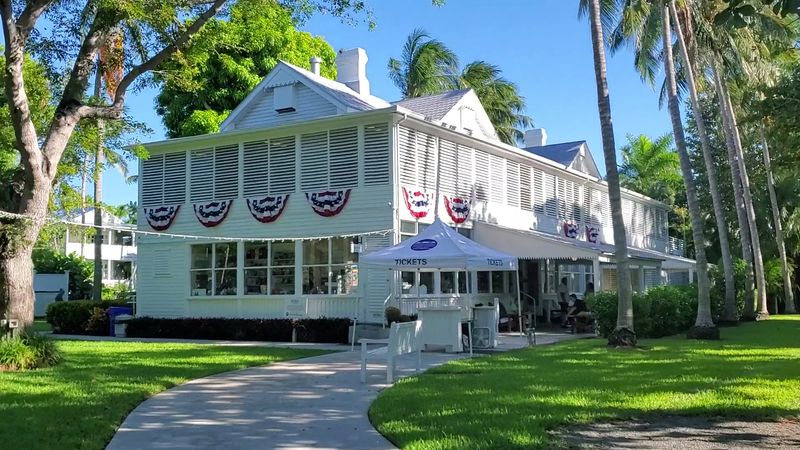
Presidential history unfolds within this charming white clapboard house where Harry Truman spent 175 days during his presidency. Built in 1890 as naval officers’ quarters, the building became a winter White House where critical Cold War decisions were debated.
The simple elegance and tropical setting provided respite from Washington’s political pressures while remaining fully functional as a command center.
Guided tours transport visitors to the 1940s and 50s when world leaders gathered around the poker table. Original furnishings, presidential memorabilia, and period photographs recreate the atmosphere of working vacations.
You’ll see the desk where Truman signed important documents and the porch where he relaxed in casual attire—a stark contrast to formal White House protocol.
Beyond Truman, five other presidents used this retreat, including Eisenhower, Kennedy, and Clinton. The stories span decades of American history, offering unique perspectives on how presidents unwound and conducted business in paradise.
Historical exhibits detail Key West’s military significance and the naval station’s crucial role in national defense.
The beautifully maintained grounds feature native botanicals and shaded pathways perfect for contemplative strolling. The entire visit takes about an hour, making it manageable within a full day’s walking itinerary.
Even those typically uninterested in presidential history find themselves engaged by the intimate glimpse into how America’s leaders lived and worked in this tropical setting.