Florida has a way of surprising you when you step away from the highways and crowded coastlines. In the heat of summer, the state slows into something more elemental—still water reflecting cypress trees, shaded boardwalks cutting through wetlands, and long stretches of trail where the air feels thick with life and quiet movement.
Beyond the beaches and theme parks, there’s a different Florida waiting under the canopy. Springs run clear and cool even on the hottest days, mangrove tunnels twist through tidal water, and forest paths open suddenly into wide, sunlit clearings.
Each trail feels like a small shift in perspective, as if the landscape is gently asking you to look closer.
It’s not the version of Florida most people expect, but it’s the one that lingers.
Here are 10 Florida trails that will completely change the way you see the state.
Anhinga Trail
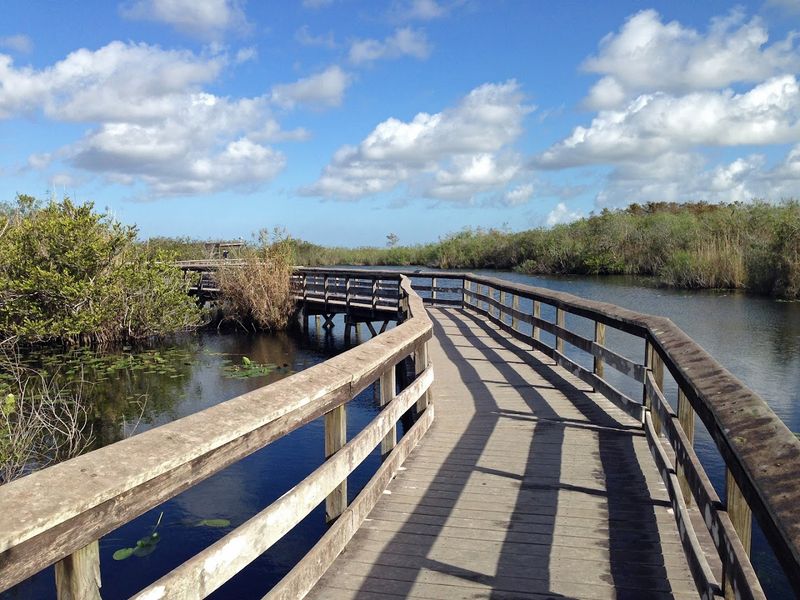
The first thing that hits you is the stillness, broken only by splashes, bird calls, and the low rustle of sawgrass in the breeze. This is the kind of place where wildlife feels startlingly close, yet the boardwalk makes the experience easy and approachable.
If you want a trail that instantly rewrites your idea of Florida, Anhinga Trail in Everglades National Park does it fast.
Located near Homestead in the Royal Palm area, this short walk packs in an astonishing amount of life. Alligators often float beside the path, turtles stack on logs, and herons, egrets, and anhingas seem to appear at every turn.
Because the route is flat, paved, and partially boardwalked, it works well for nearly any visitor.
What makes it unforgettable is not the distance but the intensity of the ecosystem around you. The sawgrass marsh feels open and expansive, yet every patch of water seems to hide movement.
Dry season visits are especially rewarding, when animals concentrate in visible water and the viewing becomes spectacular.
I love this trail because it delivers the Everglades without demanding a huge time commitment. You can move slowly, stop often, and still leave feeling like you stepped into a prehistoric world.
Few Florida walks offer such easy access to such dramatic wildlife encounters in one compact, iconic setting.
Shark Valley Tram Road Trail
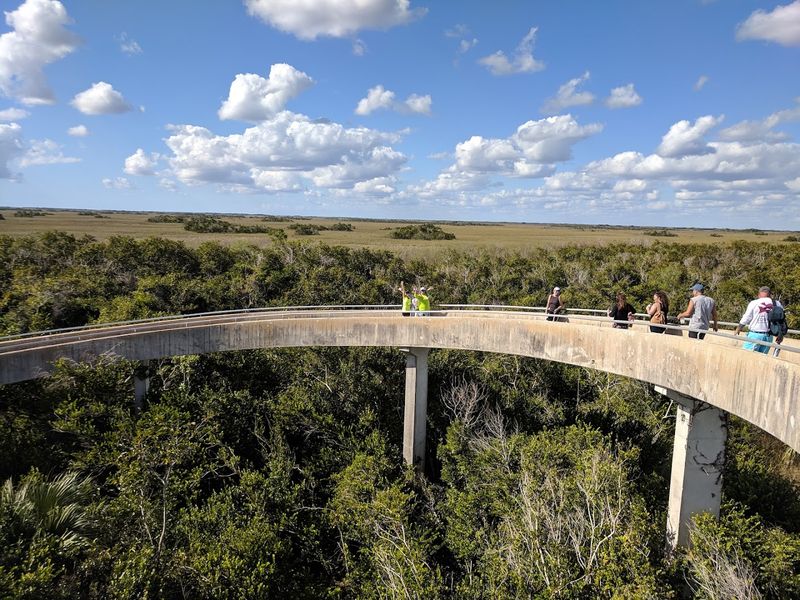
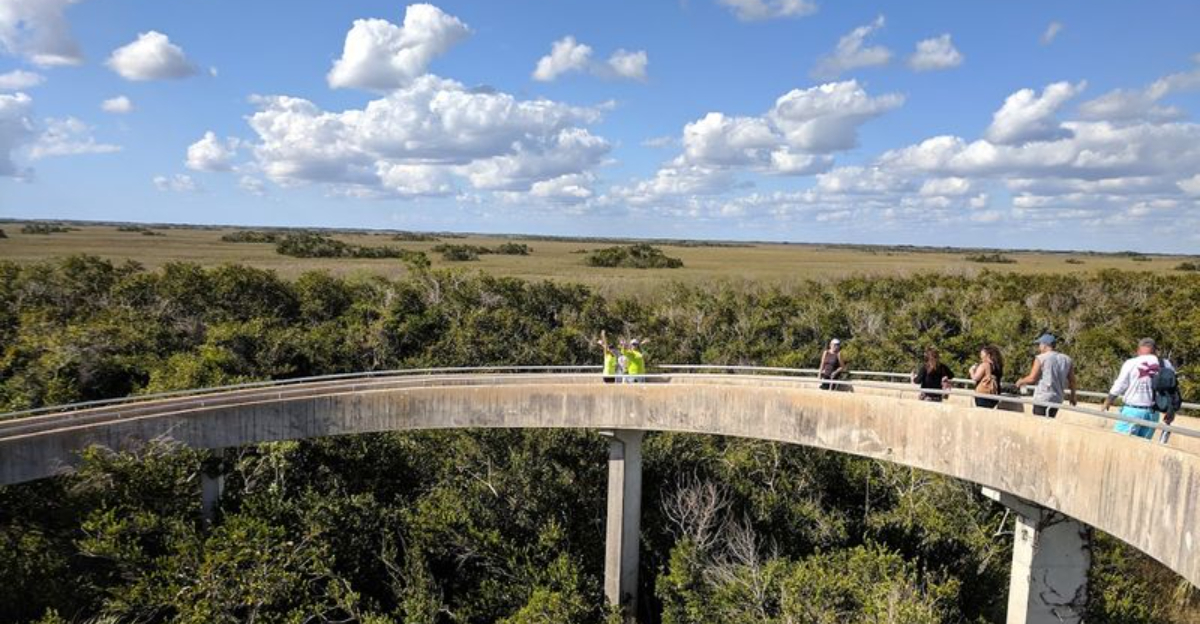
There is something almost surreal about standing on a straight ribbon of pavement and realizing the wilderness around you stretches for miles in every direction. The openness feels enormous, exposing a version of Florida that is less tropical postcard and more raw, watery frontier.
That is exactly the power of Shark Valley Tram Road Trail in Everglades National Park.
This 15 mile paved loop in Miami-Dade County gives you unusual access deep into the Everglades without requiring backcountry experience. Many people bike it, though walking a shorter portion can still be incredibly rewarding.
Wildlife is the main event here, with alligators, wading birds, turtles, and sometimes even larger surprises visible near the road.
The trail’s signature moment comes at the observation tower, where the landscape finally makes sense from above. You look out across a vast green mosaic of marsh and tree islands and suddenly understand how immense this ecosystem really is.
It is one of the best places in Florida to grasp scale, not just scenery.
I recommend starting early to beat both the heat and the crowds. Bring water, sun protection, and patience, because the best sightings often happen when you slow down.
This trail changes your perspective by proving Florida’s drama is not always vertical – sometimes it is gloriously wide, quiet, and wild.
Kirby Storter Boardwalk Trail
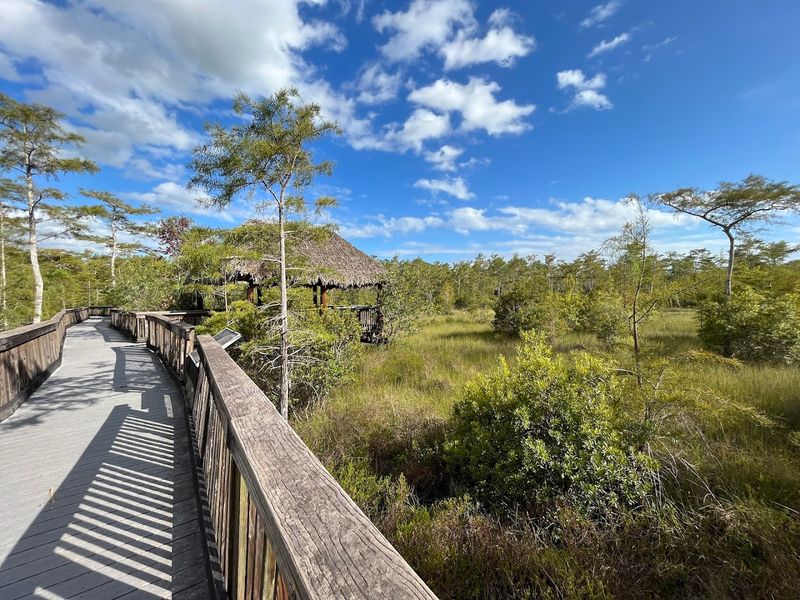
At first, it feels hushed and almost secretive, like the swamp is deciding whether to reveal itself to you. Light filters through cypress strands, reflections ripple in dark water, and every step deeper into the wetland sharpens your senses.
That atmosphere is what makes Kirby Storter Boardwalk Trail in Big Cypress National Preserve such a memorable introduction to Florida’s swamp country.
Near Ochopee along the Tamiami Trail, this easy half mile boardwalk offers a manageable but immersive look at a cypress ecosystem. The route leads through wet prairie and swamp toward a viewing platform, with interpretive signs helping you understand the landscape.
It is accessible, photogenic, and ideal if you want a short stop with real ecological payoff.
One of the most interesting features is the seasonal alligator hole, a depression that can hold water when surrounding areas dry out. That creates a refuge for fish, birds, reptiles, and other wildlife, turning a subtle landscape detail into a survival story.
It is a perfect example of how Florida’s wild systems depend on water levels and timing.
I think this trail works so well because it teaches you how to look, not just where to walk. Instead of overwhelming you with grand vistas, it invites close attention to texture, sound, and small movement.
By the end, the swamp feels less mysterious and far more fascinating than most visitors ever expect.
Anhinga Trail Loop Extension
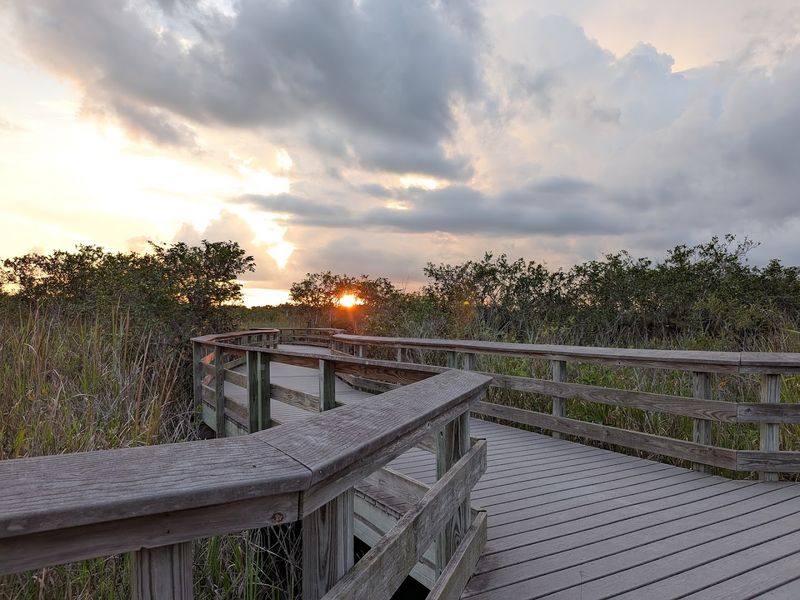
Just when you think you understand the Everglades as open marsh and wildlife ponds, the landscape closes in and changes the mood entirely. Shade deepens, tree trunks twist upward, and the air feels richer under a dense canopy.
That contrast is why the Anhinga Trail Loop Extension through the Royal Palm area is worth doing, especially if you pair it with Gumbo Limbo Trail.
Near Homestead, this extension broadens the Everglades experience beyond the famous marsh boardwalk. Instead of focusing only on alligators and wading birds, you move into a tropical hardwood hammock filled with gumbo limbo, palms, ferns, and shaded understory.
It is one of the easiest places in the park to experience two distinct ecosystems in one outing.
The shift in scenery is what stays with you. Florida often gets reduced to one-note stereotypes, but this loop shows how quickly habitat can transform over a short distance.
In the span of a relaxed walk, you pass from bright wetland openness into an almost jungle-like enclosure that feels ancient and intimate.
I find this route especially helpful for first-time visitors because it makes the Everglades feel layered rather than flat. You are not just seeing animals beside water – you are seeing how different environments connect.
That richer context changes the visit from a quick wildlife stop into a deeper understanding of South Florida’s astonishing ecological variety.
Mangrove Trail
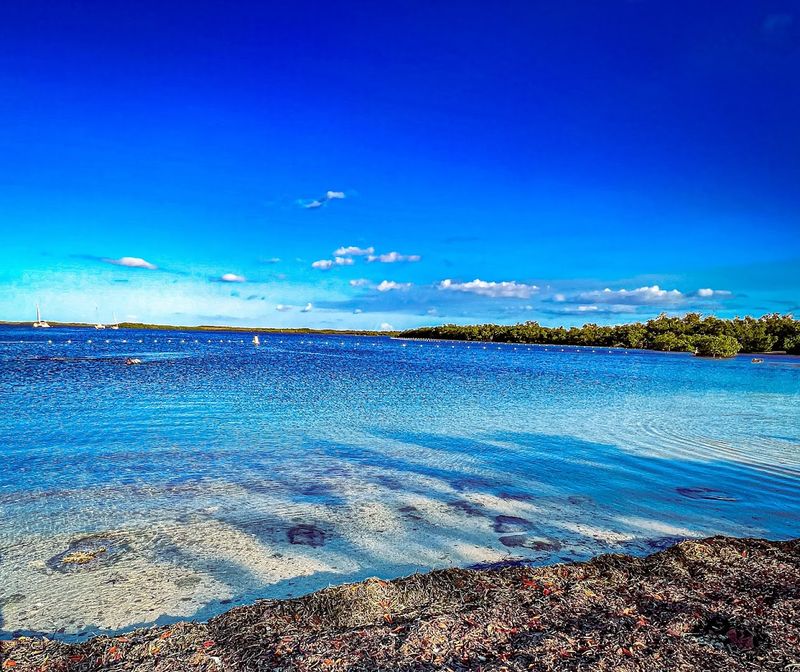
You can smell the salt before you fully notice the trees, and then the whole environment starts to feel wonderfully in between. Land becomes water, roots become architecture, and the coast reveals itself as something much more intricate than a simple shoreline.
That threshold quality is what makes the Mangrove Trail at John Pennekamp Coral Reef State Park so eye opening.
In Key Largo, this elevated boardwalk leads you into one of the most important ecosystems in the Florida Keys. Mangroves protect coastlines, shelter young marine life, and connect inland habitats with the reef environment offshore.
Walking here helps you understand that the Keys are not just about what lies under the water, but also about the living edge above it.
Birdwatchers appreciate the tidal scenery and frequent activity, while casual visitors usually remember the tangled roots and filtered light. The trail is short and accessible, making it an easy add-on to kayaking, snorkeling, or a scenic drive down the Overseas Highway.
It feels educational without ever losing its sense of calm and beauty.
I like this walk because it reveals Florida as a place of ecological transitions rather than obvious boundaries. The mangrove forest does not announce itself loudly, but it quietly reshapes how you see the coast.
Afterward, every bay, channel, and shoreline in the Keys seems more alive, connected, and essential than before.
Canopy Walkway & Swamp Trail
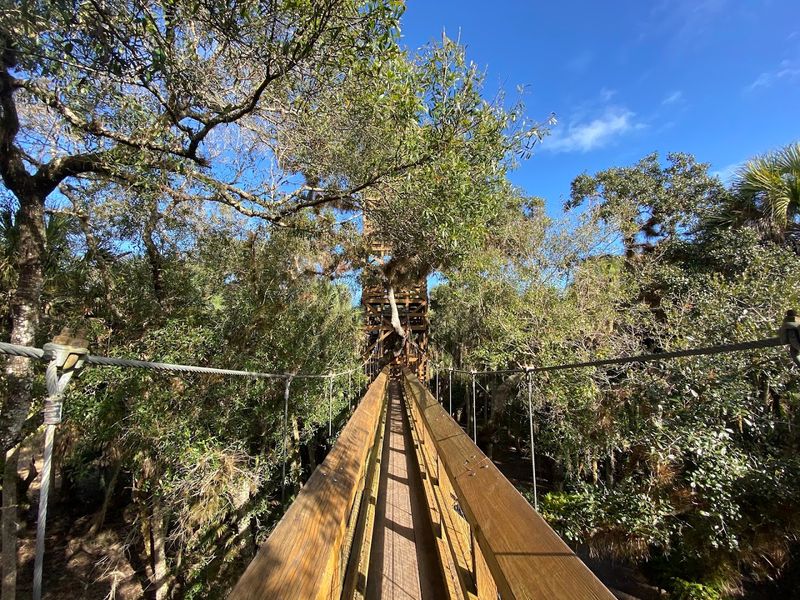
Most Florida trails keep you low to the ground, which is why this one feels like such a thrilling surprise. You climb, the perspective shifts, and suddenly the landscape opens above the trees instead of across the water.
The Canopy Walkway and Swamp Trail at Myakka River State Park offers a rare chance to see Florida vertically.
Near Sarasota, the famous suspended walkway rises into the treetops above an oak and palm hammock. It is not a long hike, but the elevated viewpoint changes everything, especially when paired with nearby swamp and wetland sections where alligators are often spotted below.
Few trails in the state deliver such a dramatic perspective with so little effort.
What stands out is the contrast between airy canopy views and the dense, humid world beneath them. From above, the forest feels orderly and expansive; from the lower trail, it feels tangled and full of hidden life.
That back and forth makes the park feel larger, wilder, and more textured than many visitors expect from central Gulf Coast Florida.
I always think this is one of the best trails for challenging the idea that Florida has no depth. It may not have mountain peaks, but it has layers – canopy, hammock, swamp, and river plain all stacked together.
Walk it slowly, and you start noticing how much complexity lives inside what outsiders often dismiss as flat scenery.
Lighthouse Levee Trail
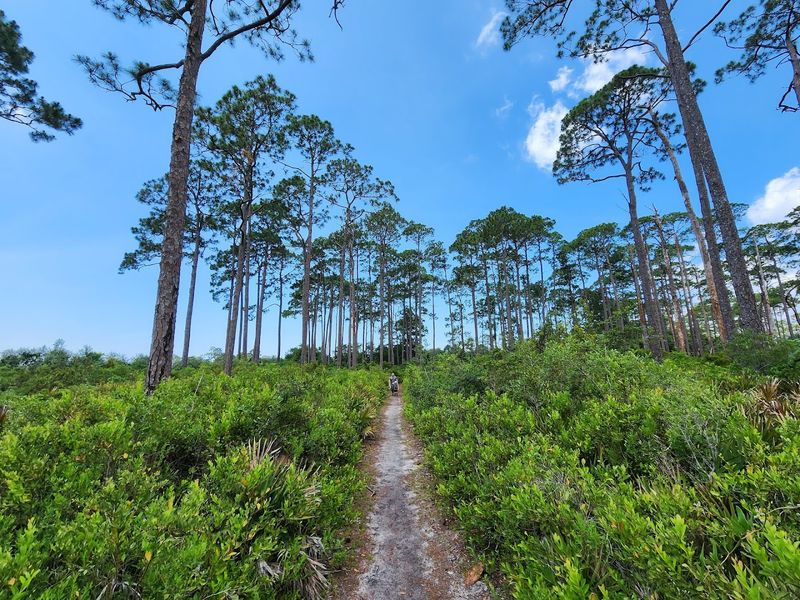
Wind, open sky, and the smell of salt marsh give this walk an almost coastal pilgrimage feel. Every step seems to pull you toward history, while the surrounding flats and wetlands keep reminding you that migration, tide, and weather still shape everything here.
That blend makes the Lighthouse Levee Trail at St. Marks National Wildlife Refuge especially powerful.
Near St. Marks, the trail offers wide views across marsh, pools, and tidal habitat leading toward the iconic lighthouse. Birders love this area during migration, when raptors, shorebirds, and waders can turn a simple outing into a spectacular day of sightings.
Even if you are not a dedicated birder, the sense of motion in the landscape is unforgettable.
This is the kind of Florida that often surprises people most – spare, windswept, and expansive rather than lush and crowded. The marshes feel alive in a subtler way, with changing light, moving water, and distant wings replacing the drama of dense forest or swamp.
It teaches you to appreciate space, patience, and seasonal rhythm.
I recommend taking your time and scanning constantly, because this trail rewards attention. The lighthouse gives the route a clear visual anchor, but the real story is the refuge itself and all the life passing through it.
By the end, Florida feels less like a single landscape and more like an entire chain of living habitats connected by migration.
La Chua Trail
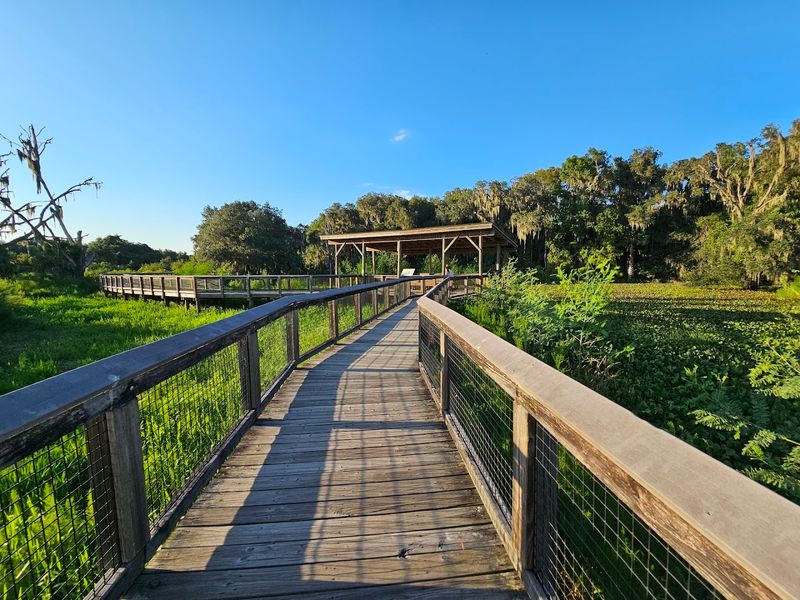
There is an unmistakable sense of tension here, the kind that makes you walk slower and look farther. Water glints beside the boardwalk, alligators are often visible below, and the prairie beyond feels huge and untamed.
That charged atmosphere is exactly why La Chua Trail at Paynes Prairie Preserve State Park leaves such a strong impression.
Near Micanopy, this route begins with a boardwalk through wetland before opening onto one of Florida’s most unusual landscapes. Paynes Prairie is a vast basin marsh and savanna system where visitors sometimes spot wild horses, bison, cranes, and countless other species.
It is a place that feels less like the modern Southeast and more like an older, wilder continent.
What changes your perception is the sheer ecological drama packed into one accessible walk. Few places let you see reptiles up close, scan a giant prairie horizon, and imagine large grazing animals in the same outing.
Florida suddenly feels broader, stranger, and much more biologically layered than its stereotypes suggest.
I think this trail is best when you are prepared for heat, mud, and unpredictability, because that rough edge is part of its character. Conditions can shift, wildlife appears on its own terms, and the landscape refuses to be neatly packaged.
That unpredictability is exactly what makes La Chua so transformative for anyone who thinks they already know Florida.
Juniper Springs Nature Trail
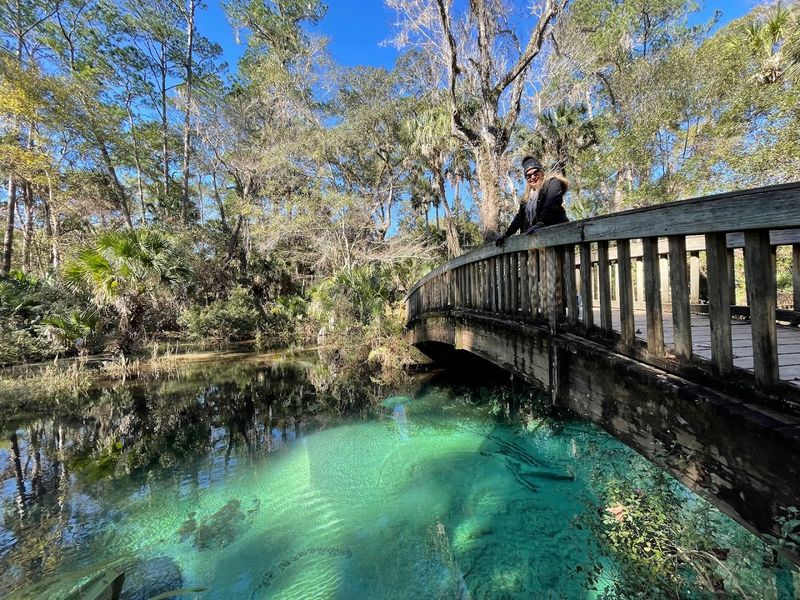
Cool shade, clear water, and the scent of pine make this place feel like a hidden version of Florida that many people never expect to find. Instead of broad marsh or coastal flats, you get a spring-fed forest that feels intimate, refreshing, and almost secretive.
That is why Juniper Springs Nature Trail in Ocala National Forest stands out so strongly.
Near Silver Springs along State Road 40, this area combines lush vegetation, crystal-clear spring water, and classic central Florida woodland. The nature trail itself is not especially long, but it delivers a rich mix of palms, hardwoods, sand, and water.
Nearby swimming and paddling opportunities make it easy to turn the hike into a full day outdoors.
The appeal here is partly visual and partly sensory. Light reflects off the spring in striking shades of blue and green, while the surrounding forest muffles noise and creates a sense of retreat.
It feels far removed from highways and crowds, even though it is one of the state’s most beloved natural areas.
I think this trail changes how you see Florida by emphasizing freshwater intimacy over grand spectacle. You are not chasing a summit or a huge overlook – you are noticing how clarity, shade, and ecosystem detail can be just as moving.
After a slow walk here, the state feels less flashy and far more quietly extraordinary.
Bluffs Trail
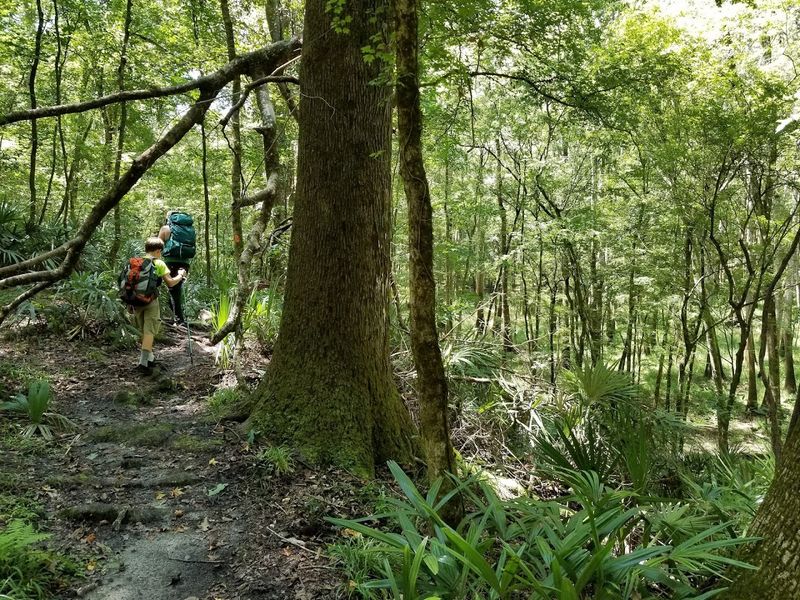
Steep slopes are not what most people associate with Florida, which is exactly why this trail feels so disorienting in the best possible way. The terrain folds, drops, and rises in ways that challenge every flat-state stereotype you may have arrived with.
Bluffs Trail at Torreya State Park is one of the clearest reminders that Florida can be unexpectedly rugged.
Near Bristol along the Apalachicola River, the park is known for dramatic elevation changes, ravines, and unusual plant communities. The trail rewards hikers with overlooks and wooded scenery that can feel more southern Appalachian than Gulf Coastal Plain.
That visual surprise alone makes it one of the most perspective-shifting hikes in the state.
Torreya is also biologically distinctive, supporting rare species and a cooler microclimate that allows northern plants to thrive. As you move through the forest, the composition of trees and the shape of the land both signal that you are in a very different Florida.
It is a place where geology and ecology work together to challenge assumptions.
I think this trail is best appreciated with enough time to stop at overlooks and absorb the river below. The beauty here is not flashy – it builds through terrain, silence, and contrast.
By the end, Florida no longer feels like a single flat peninsula but a far more complex landscape with pockets of genuine topographic drama.