This park feels like it slipped through time and forgot to leave a map behind.
Watson Mill Bridge State Park sits tucked into northeast Georgia, where the roads grow quieter, the signals fade, and most travelers pass it without even slowing down.
While bigger parks pull the crowds, this one holds onto something different—space, silence, and a sense that you’ve wandered somewhere that never learned how to get busy.
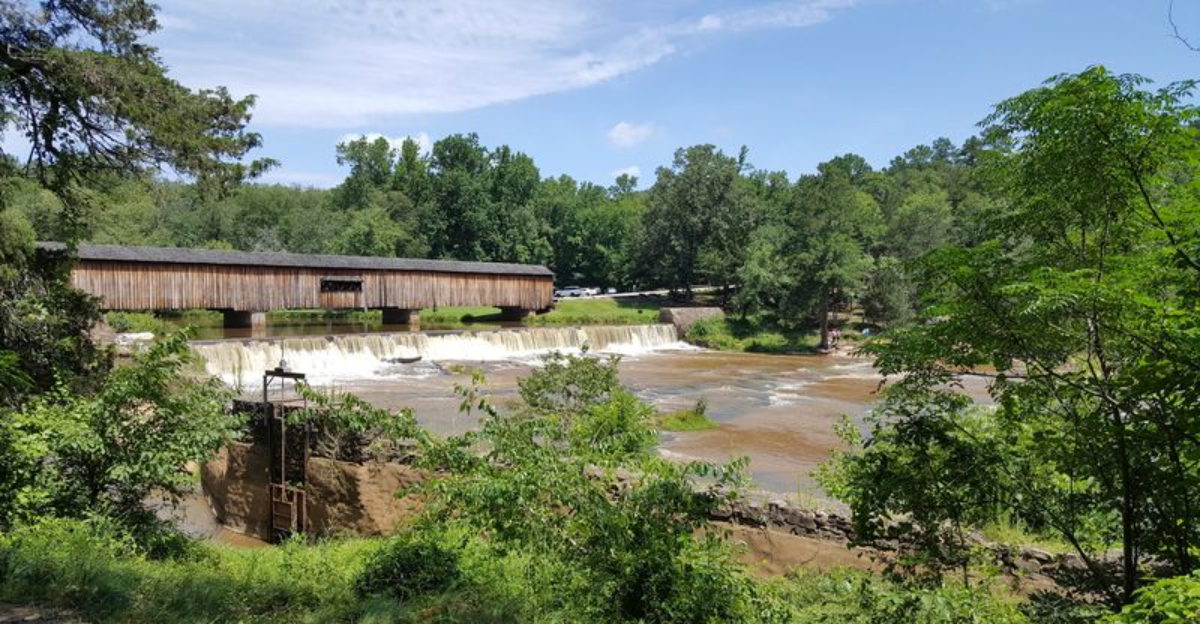
A covered bridge from 1885 still stretches across the South Fork Broad River, steady and unbothered by the years.
Step closer and everything shifts. Water slides over pale rock, the woods close in softly, and the air feels still in a way that makes you lower your voice without thinking.
Georgia’s Quietest Covered Bridge Experience
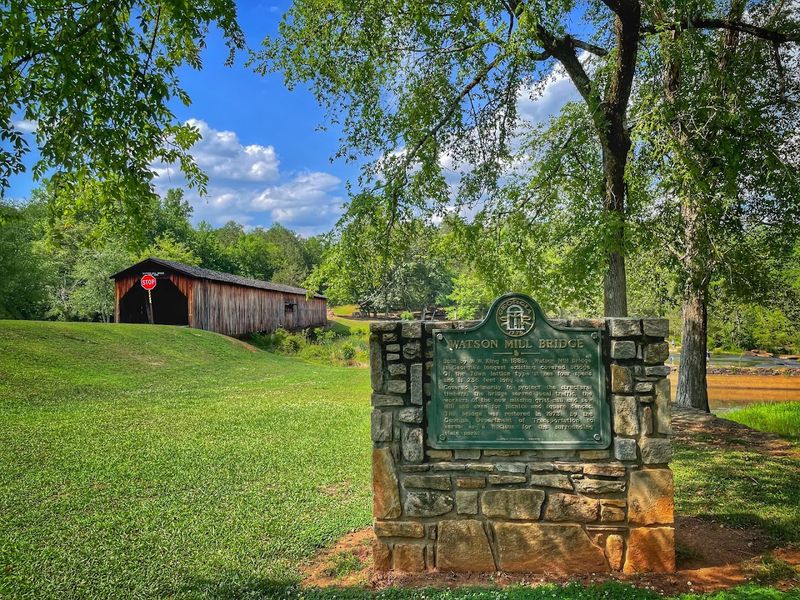
Standing at 229 feet across the South Fork Broad River, Watson Mill Bridge ranks among Georgia’s longest covered bridges. Most visitors to the state flock to Tallulah Gorge or Providence Canyon, leaving this architectural wonder blissfully empty even during peak seasons.
Walking through the bridge feels like stepping through a portal into Georgia’s past. The weathered wooden planks creak underfoot while sunlight streams through gaps in the sides.
You can actually hear the river flowing beneath you instead of crowds chattering around you.
Unlike the state’s more photographed landmarks, you might spend thirty minutes here without seeing another soul. Families come for quick visits, snap a few photos, and leave, never realizing how peaceful it becomes if you just linger.
Early morning visits reward you with mist rising from the river and golden light painting the bridge’s rusty-red exterior.
The lack of tour buses and gift shops means the experience stays authentic and personal. It’s exactly what exploring an overlooked treasure should feel like.
A Historic Bridge Built in 1885
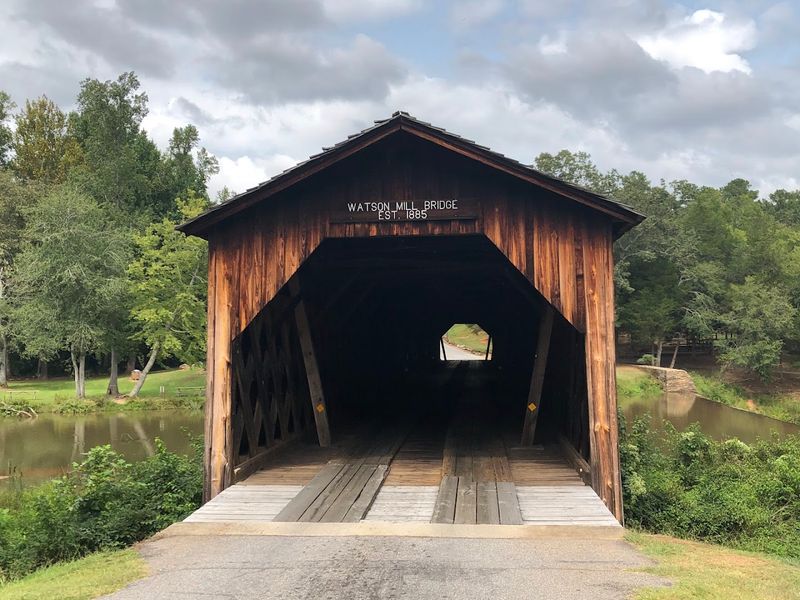
Washington W. King constructed this remarkable bridge in 1885, and his story deserves wider recognition.
Coming from a celebrated African American family of bridge builders, King’s craftsmanship created a structure that’s survived nearly 140 years of Georgia weather.
The bridge isn’t just sitting pretty as a museum piece. Cars still drive across it today, though weight and height restrictions keep modern traffic manageable.
Watching an occasional vehicle rumble through adds a living dimension that pure historical sites lack.
King used the Town lattice truss design, an engineering method popular in the 1800s that distributed weight beautifully across wooden beams. Look closely at the interior walls and you’ll spot the intricate crisscross pattern that’s held firm through decades of floods and storms.
Most Georgia history books skip right over Watson Mill Bridge when discussing the state’s covered bridges. That oversight means you’re experiencing something special that textbooks haven’t overhyped.
The bridge tells its own story quietly, without needing fancy interpretive centers or audio guides to make it meaningful.
A River That Feels Like a Hidden Swimming Hole
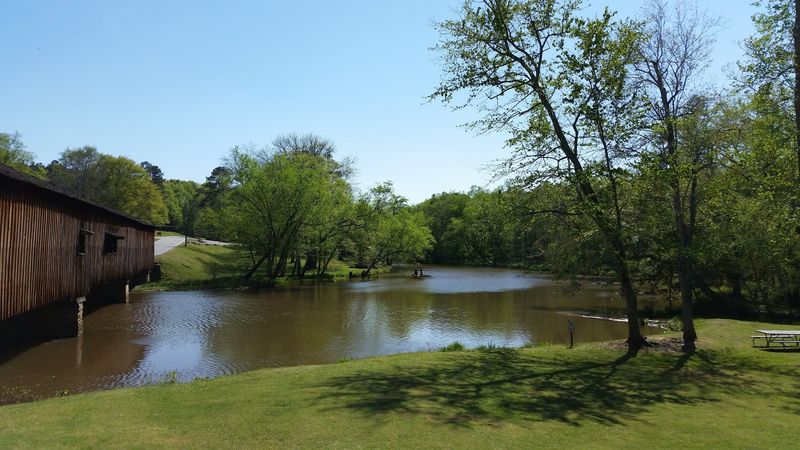
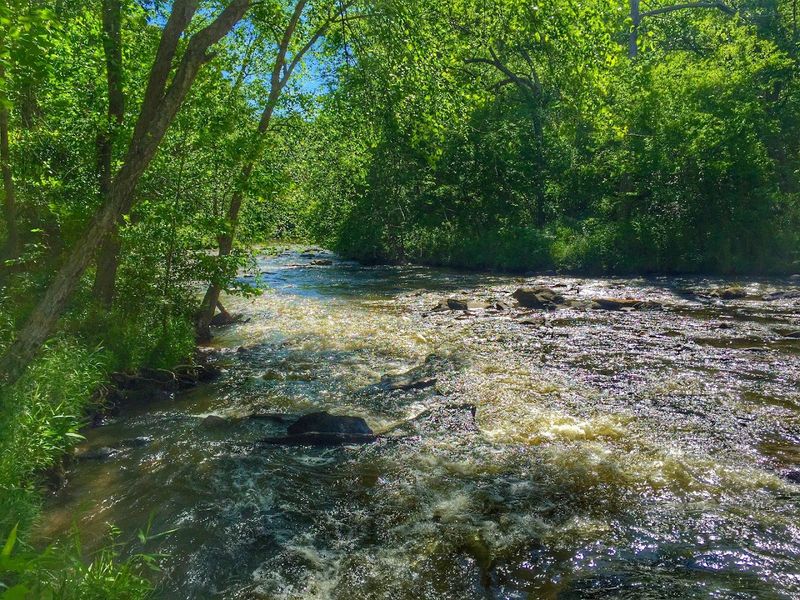
The South Fork Broad River moves gently through the park, creating perfect conditions for cooling off without battling lake crowds. Shallow shoals form natural wading pools where families spread out on hot afternoons, and the water stays refreshingly cool even in August.
You won’t find lifeguards, concession stands, or designated swimming areas here. What you get instead feels more authentic—a river that locals have enjoyed for generations without commercializing it.
Smooth rocks dot the riverbed, ideal for sitting while water rushes past your legs.
Photography enthusiasts love how sunlight dances across the flowing water, especially near the bridge. The combination of historic architecture and natural beauty creates scenes that belong on postcards, yet you’ll rarely need to wait for tourists to clear your shot.
Pack water shoes since the river bottom gets slippery, and remember this isn’t a maintained beach. That wild quality is exactly why it feels special.
Georgia’s bigger water destinations get packed shoulder-to-shoulder on summer weekends, but here you might share the river with just two or three other groups.
Easy Trails That Stay Surprisingly Empty
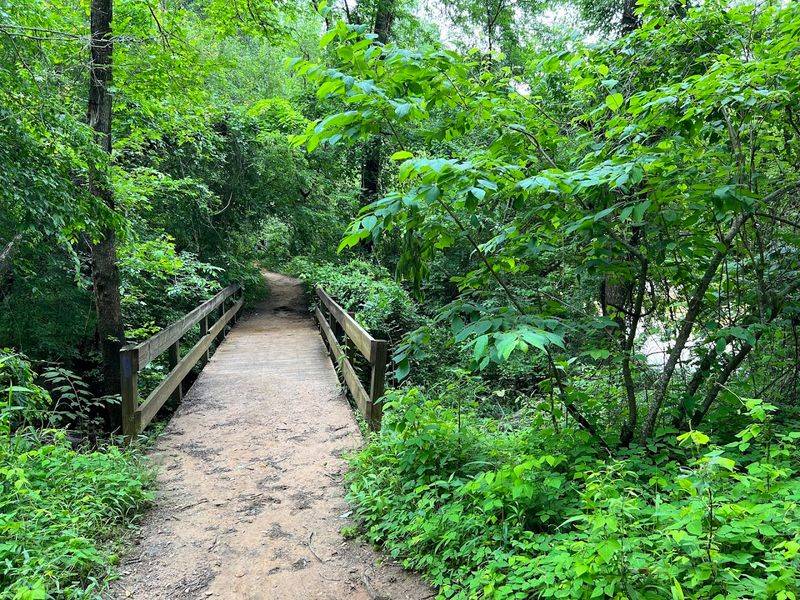
Five to seven miles of trails wind through Watson Mill Bridge State Park, perfect for beginners or families with young kids. None of the paths demand serious elevation changes or technical hiking skills, yet they deliver surprisingly rewarding views of the forest and river.
Saturday mornings at popular Georgia trails mean parking nightmares and constant trail traffic. Here?
You’ll encounter maybe a handful of other hikers during a two-hour walk. The riverside loops especially stay quiet, offering long stretches where birdsong replaces conversation.
Hardwood forest dominates the landscape, creating natural shade tunnels that keep summer hikes comfortable. Spring brings wildflowers along the trail edges, while fall transforms the canopy into brilliant orange and gold.
Winter hiking reveals more of the park’s bones—old stone foundations and creek beds hidden during leafier seasons.
Trail markers are clear enough that you won’t get lost, but rustic enough that they don’t feel intrusive. No fancy boardwalks or paved sections interrupt the natural experience.
Bring sturdy shoes since muddy patches appear after rain, and these trails stay authentically unpaved throughout.
A Forest That Still Feels Undisturbed
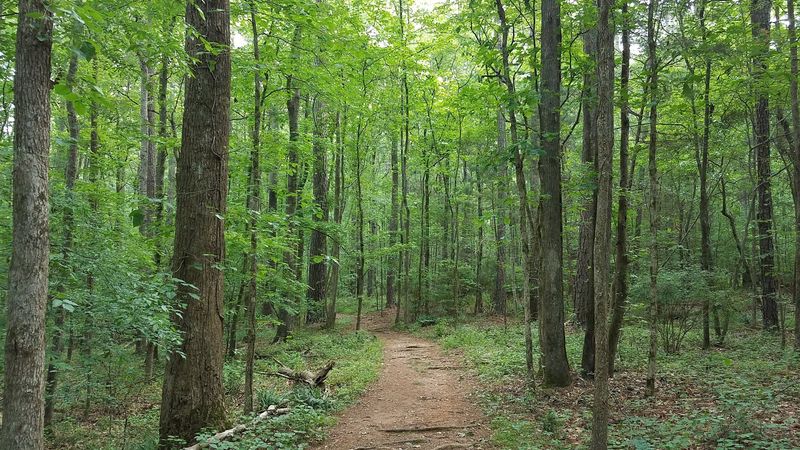
Step fifty feet from the parking area and Watson Mill Bridge’s forest swallows you whole. Thick stands of hardwood trees create an overhead canopy that filters light into soft green patterns across the forest floor.
Development here stops at the essentials—campsites, trails, and basic facilities. No visitor centers dominate the landscape, no souvenir shops interrupt the natural flow.
This minimal approach lets the forest breathe and wildlife thrive without constant human interference.
Birdwatchers regularly spot woodpeckers, warblers, and occasional hawks gliding between trees. Deer tracks mark muddy trail sections, and if you’re lucky and quiet, you might glimpse them browsing at dawn or dusk.
The absence of crowds means animals act more naturally instead of fleeing constant foot traffic.
Many state parks balance preservation with heavy recreational use, tilting toward the recreation side. Watson Mill Bridge leans the other direction, keeping enough wilderness character that you forget civilization sits just minutes away.
That undisturbed quality grows rarer across Georgia as development spreads, making this park’s preservation philosophy even more valuable for future generations seeking authentic natural experiences.
A Photographer’s Dream With Almost No Crowds
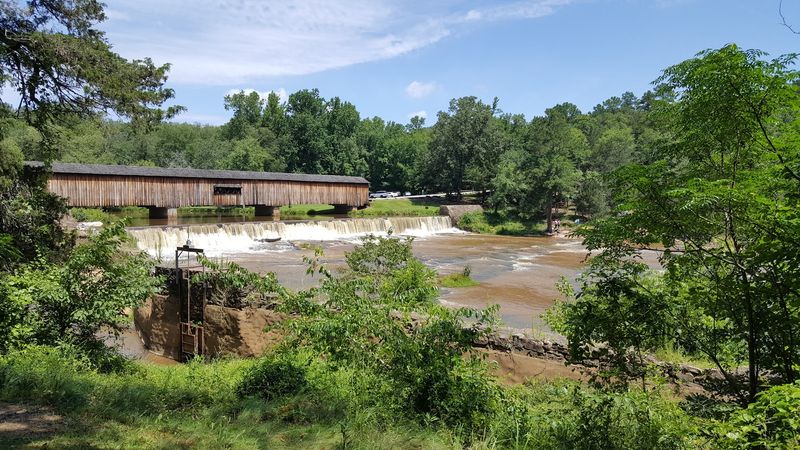
Golden hour at Watson Mill Bridge creates magic that professional photographers dream about. Light slants through the covered bridge’s openings, painting geometric shadows across weathered wood and stone.
The river reflects these patterns while forest greens add depth to every composition.
Popular Georgia photography spots mean arriving at dawn to claim your space, then competing with dozens of other shutterbugs for the same angles. Watson Mill Bridge offers a refreshing alternative—take your time setting up tripods, experiment with different lenses, and actually enjoy the creative process without feeling rushed.
The combination of architectural history and natural beauty provides diverse subject matter within walking distance. Macro photographers find fascinating details in tree bark and bridge construction.
Landscape shooters capture sweeping river views and forest vistas. Even beginners with smartphones leave with frame-worthy images.
Seasonal changes bring completely different palettes to work with throughout the year. Spring’s fresh greens, summer’s deep forest tones, autumn’s fiery colors, and winter’s stark branches each create unique moods.
Visit multiple times and you’ll never repeat the same photograph twice, yet tourist pressure stays minimal year-round.
A Peaceful Campground Hidden in Plain Sight
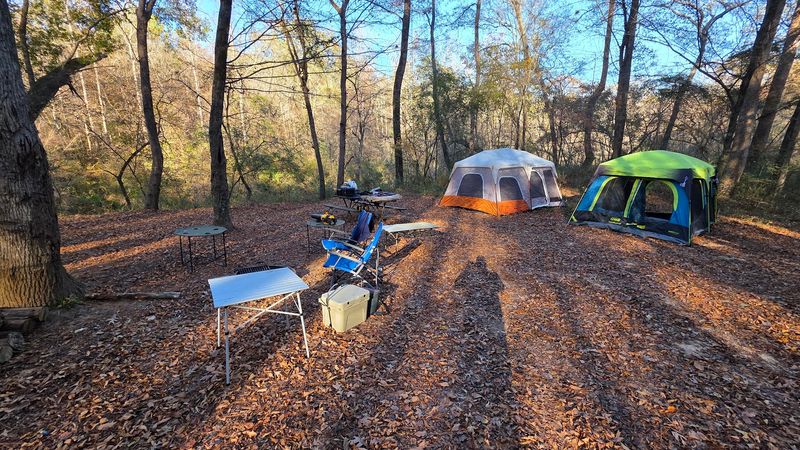
Watson Mill Bridge’s campground sprawls across wooded acreage with tent sites, RV hookups, and primitive pioneer campsites scattered throughout. Full amenities include clean bathrooms, hot showers, and electrical connections, yet the atmosphere stays refreshingly low-key and uncrowded.
Compare this to Georgia’s blockbuster parks where campground reservations fill months ahead and sites sit practically on top of each other. Here you’ll find breathing room between neighbors and actual darkness at night—no light pollution from nearby cities washing out the stars.
Pioneer campsites appeal to those seeking backcountry experiences without hiking miles from their vehicle. These basic sites offer just enough clearing for a tent and fire ring, keeping costs down while maximizing the wilderness feeling.
Families introduce kids to camping here without overwhelming them on their first outdoor overnight.
The campground’s hidden quality isn’t about difficult access—it sits right off the main park road. Rather, its low profile comes from flying under the radar while flashier Georgia destinations grab all the attention.
Savvy campers who discover Watson Mill Bridge return repeatedly, enjoying consistent availability and peaceful nights that busier campgrounds simply cannot deliver anymore.
A Link to Georgia’s Industrial Past
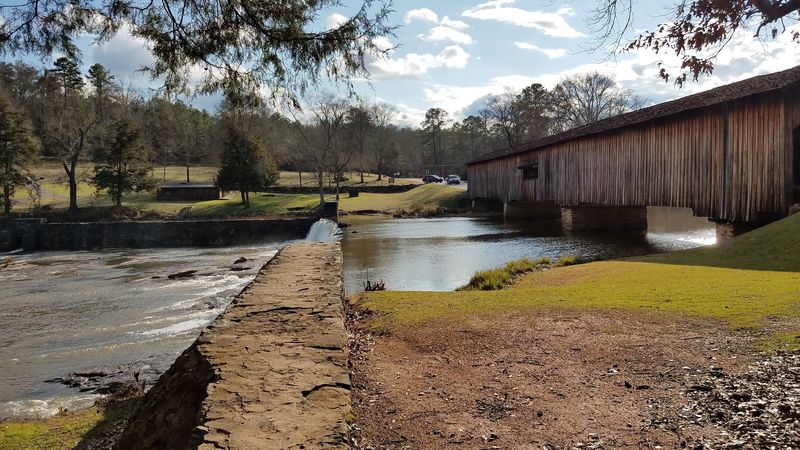
Beyond natural beauty, Watson Mill Bridge State Park preserves traces of Georgia’s industrial evolution along the river. Old mill foundations poke through vegetation, while stone remnants mark where water-powered machinery once drove local commerce.
These subtle historical layers add depth that pure nature parks lack.
The original Watson Mill operation processed grain using the river’s flow, representing technology that powered rural Georgia before electricity reached everywhere. A powerhouse site nearby shows how communities adapted water power for generating electricity decades later.
Walking past these ruins connects visitors to generations of Georgians who worked and lived here.
Unlike museum displays behind glass, these industrial traces blend organically with the forest. Moss grows over stone walls, trees root through old foundations, and nature slowly reclaims human construction.
That balance between history and wilderness feels more authentic than heavily restored historical sites.
Most visitors focus entirely on the covered bridge and miss these industrial remnants completely. Taking time to explore beyond obvious attractions rewards curious visitors with richer understanding of how this landscape evolved.
Georgia’s industrial past wasn’t all urban factories—rural mills like Watson’s formed the backbone of local economies, and their preservation matters for understanding the state’s complete story.
What to Know Before You Go
The covered bridge imposes strict vehicle limits—nine-foot clearance and three-ton weight restrictions—that catch oversized RVs by surprise. Larger recreational vehicles must use designated entrances and parking areas that bypass the bridge entirely.
Check your vehicle specs before planning your route through the park.
Spring and fall provide ideal visiting conditions at Watson Mill Bridge. Spring brings wildflowers, comfortable temperatures, and active wildlife after winter dormancy.
Fall delivers spectacular foliage and pleasant hiking weather without summer’s humidity and biting insects. Summer works fine if you stick near the river where shade and water keep things manageable.
Bug spray belongs on your packing list year-round but especially matters during warmer months. Mosquitoes and ticks inhabit the forest and riverside areas, though they’re not worse here than typical Georgia outdoor spaces.
Sturdy closed-toe shoes handle muddy trail sections better than sandals, particularly after recent rainfall.
Weekend mornings offer the best parking availability and quietest trail conditions. Arriving after 10 AM might mean hunting for spots near popular areas like the bridge.
The park charges standard Georgia state park fees, and passes work across the entire system if you’re planning multiple state park visits during your trip.