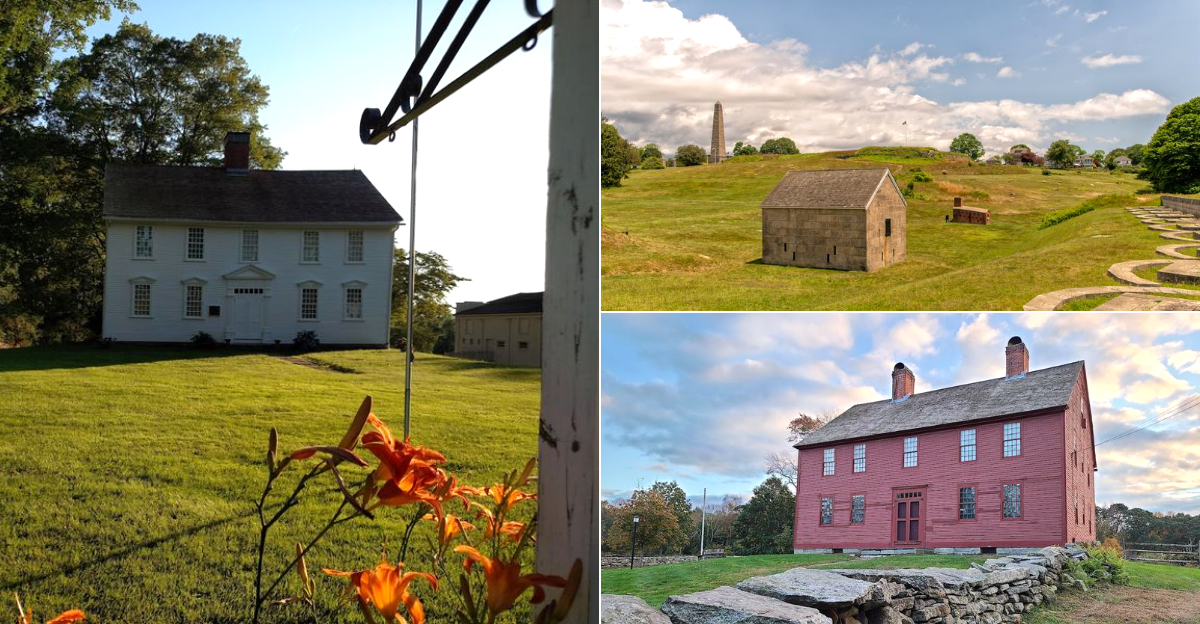
Connecticut may be one of the smallest states in the nation, but its role in the American Revolution was anything but small.
From dramatic coastal battles to the backroom meetings where patriots planned their next move, the Nutmeg State was a hotbed of revolutionary activity.
History lovers will find that Connecticut rewards those who venture off the beaten path with stories that are both surprising and deeply moving.
Many of these landmarks feel frozen in time, giving visitors a genuine sense of what life looked like during the fight for independence.
Here are eleven Connecticut landmarks that peel back the layers of history and reveal the state’s extraordinary revolutionary legacy.
1. Danbury Scott-Fanton Museum – Danbury, Fairfield County
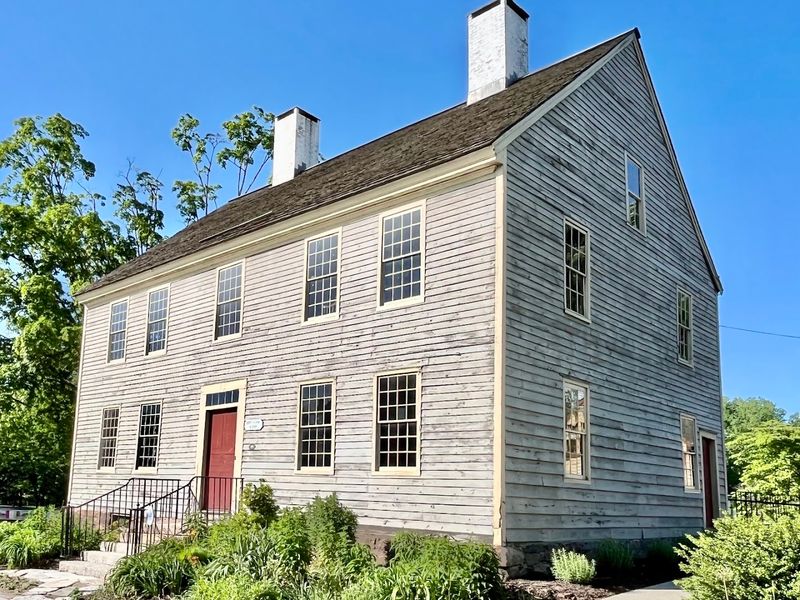
Sometimes a city’s Revolutionary past survives not in one famous monument, but in a house that gathers fragments into a fuller story.
That is the experience waiting in Danbury, where local memory sharpens into something vivid and personal.
The Danbury Scott-Fanton Museum helps interpret a town transformed by war and attack.
Danbury’s role in the Revolution was shaped by its strategic military supplies depot.
In 1777, British forces raided and burned much of the town, triggering the events remembered in the Battle of Ridgefield campaign.
The museum connects visitors to that destruction while also preserving broader regional history through objects, furnishings, and interpretation rooted in community experience.
What makes this stop worthwhile is the way it restores local perspective.
Rather than telling the Revolution only through generals and large campaigns, it shows what invasion meant for homes, businesses, and families.
You begin to see Danbury not as a footnote, but as a place where the war disrupted daily life with terrifying speed.
The house setting reinforces that lesson beautifully.
Within rooms that feel intimate and grounded, the political becomes personal in a way that is easy to grasp.
In case you want to understand how Connecticut towns endured the war’s violence and rebuilt their identity afterward, the Scott-Fanton Museum offers a meaningful and often overlooked window.
2. Webb-Deane-Stevens Museum – Wethersfield, Hartford County
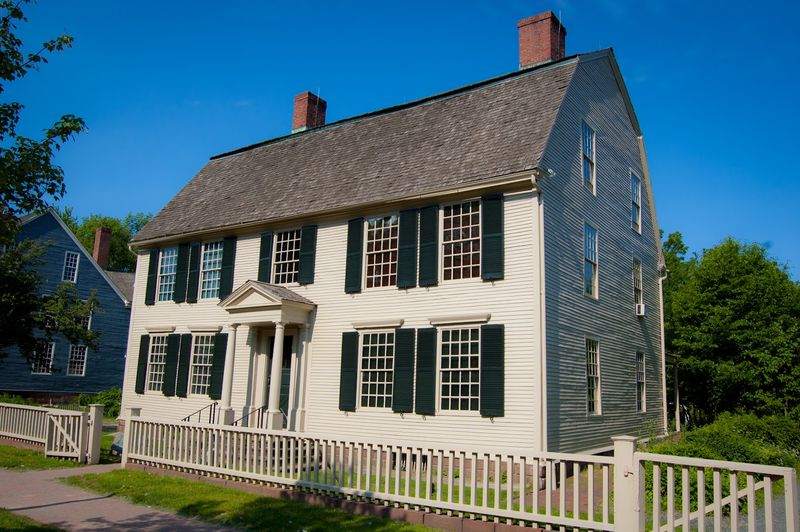
Along one of New England’s most atmospheric historic streets, the past feels organized, polished, and surprisingly alive.Grand doorways and neatly kept gardens hint that political history was often shaped in domestic spaces.
That impression becomes unmistakable at the Webb-Deane-Stevens Museum in Wethersfield, where three preserved homes open a window onto the Revolutionary era.
The Joseph Webb House is especially significant because George Washington and French general Rochambeau met here in 1781.Their conversations helped coordinate the campaign that would lead to Yorktown, making this elegant house part of a world-changing alliance.
The neighboring Deane and Stevens houses broaden the story, showing wealth, trade, daily routines, and shifting loyalties in colonial Connecticut.
What I find compelling here is the way diplomacy and household life overlap.You move through refined rooms and realize that strategy was often discussed over meals, correspondence, and private conversation rather than dramatic public spectacle.
That intimacy makes the Revolution feel less distant and more dependent on relationships, trust, and careful planning.
If you want a landmark that links Connecticut directly to the war’s decisive final phase, this is an essential stop.The museum turns architecture into evidence and furniture into historical context.
By the time you leave, Wethersfield feels less like a preserved town and more like an active participant in independence.
3. Putnam Memorial State Park – Redding, Fairfield County
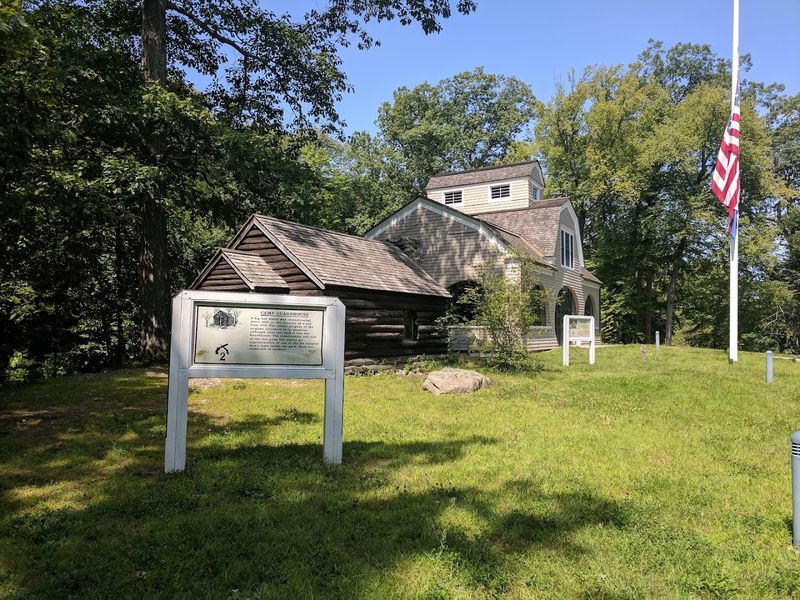
Deep woods, uneven ground, and quiet trails can make this place feel more like a retreat than a military site.Yet that calm setting preserves the memory of hunger, exposure, and determination during one of the war’s hardest winters.
Putnam Memorial State Park in Redding marks the 1778-1779 encampment of General Israel Putnam’s troops.
Often called Connecticut’s Valley Forge, the camp represents the less glamorous side of the Revolution.Soldiers here battled cold, shortages, and uncertainty while protecting the region after British raids along the coast.
The reconstructed log buildings, monuments, and interpretive displays help you picture how endurance itself became a form of service.
What stands out most is how ordinary the landscape feels.There is no towering fortress or dramatic harbor, just forested terrain where discipline and patience carried enormous strategic importance.
That simplicity underscores a truth you can feel in your bones: wars are not won only in famous battles, but also in camps where people keep going.
This park gives Connecticut’s Revolutionary history a rugged, grounded dimension.You leave with greater respect for the soldiers whose names rarely headline textbooks but whose suffering sustained the cause.
For anyone trying to understand the war beyond speeches and victories, Putnam Memorial State Park is indispensable.
4. Trumbull House – Lebanon, New London County
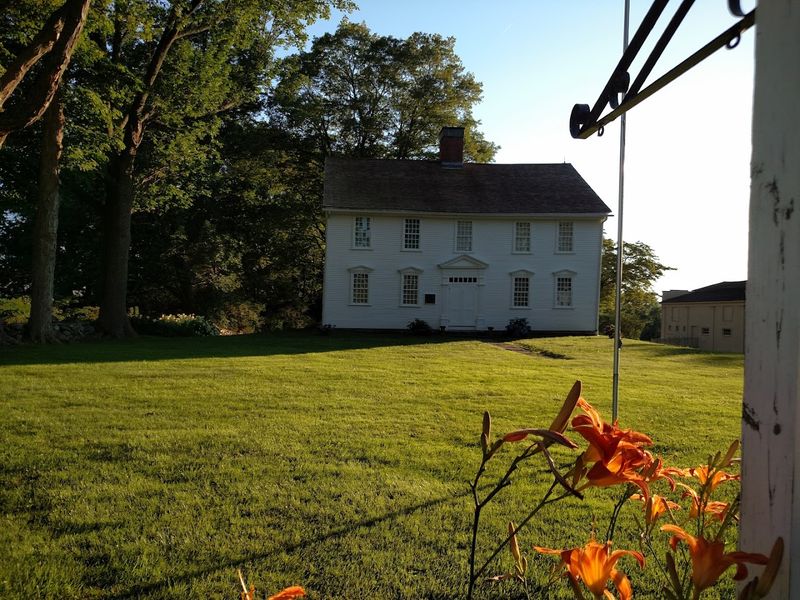
Some Revolutionary landmarks whisper about military action, but others speak through paperwork, planning, and relentless political responsibility.
This is the kind of place where decisions mattered as much as gunfire.
At the Trumbull House in Lebanon, you step into the home of Governor Jonathan Trumbull, one of George Washington’s most trusted allies.
Trumbull was the only colonial governor to support the Patriot cause from start to finish.
From this house, he oversaw supplies, correspondence, military coordination, and state leadership during a dangerously unstable era.
Lebanon became so important to wartime administration that it earned the nickname the Heartbeat of the Revolution.
The house itself helps explain why.
Its preserved rooms and furnishings ground sweeping political history in a domestic setting where strategy, family life, and public duty constantly intersected.
You can imagine messengers arriving, letters being drafted, and vital decisions unfolding without ceremony but with enormous consequence.
What makes this landmark memorable is its focus on leadership under pressure.
Rather than celebrating a single dramatic event, it shows how independence depended on stamina, organization, and trusted civilian authority.
Those who want to understand Connecticut’s role as a logistical and political engine of the Revolution, the Trumbull House is one of the clearest places to start.
5. Nathan Hale Homestead – Coventry, Tolland County
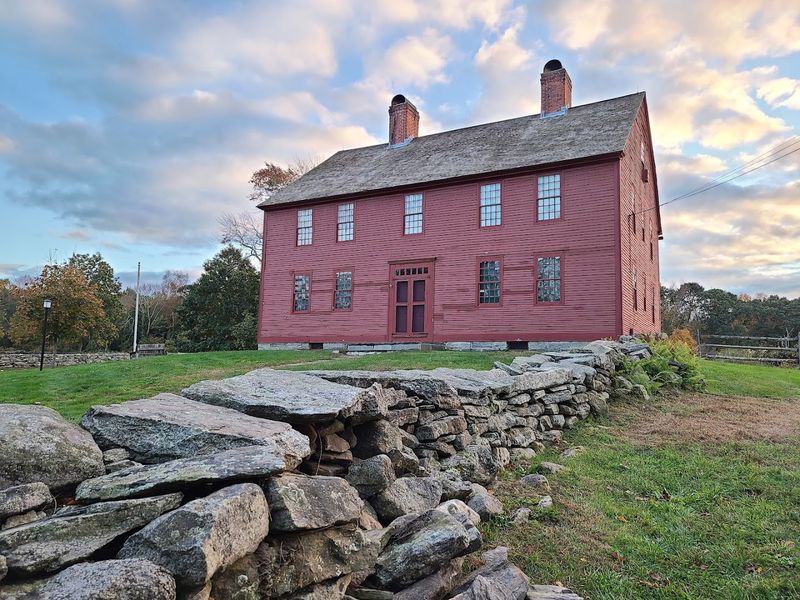
Quiet fields and old stone walls make this stretch of Connecticut feel almost untouched by time.You can sense how an ordinary farm upbringing could shape extraordinary resolve.
That feeling deepens when you arrive at the Nathan Hale Homestead in Coventry, where Connecticut’s most famous patriot spent his early years.
Built by Hale’s family in 1776, the house connects visitors to the world that formed the young schoolteacher turned soldier and spy.Although Nathan himself never lived here for long before his execution, the property preserves the family’s story with remarkable intimacy.
Period furnishings, guided interpretation, and the surrounding landscape help you imagine the values of duty, education, and sacrifice that defined his short life.
What makes this landmark powerful is not military drama but emotional clarity.You stand inside a family home and remember that the Revolution asked real people to risk everything, often before they had built lives of their own.
That personal scale gives Hale’s famous final words a more human, heartbreaking weight.
If you want a place that turns legend into lived experience, this homestead delivers it beautifully.It is reflective rather than grand, but that is exactly why it stays with you.
Connecticut’s Revolutionary past feels deeply personal here.
6. New Haven Green – New Haven, New Haven County

Open space in the middle of a busy city does not always announce its age.People cross the grass, gather for events, and pass by without realizing how many centuries of public life meet here.
On New Haven Green, however, that layered atmosphere becomes part of the Revolutionary story.
Established long before independence, the Green served as a civic and military center during the colonial and Revolutionary periods.Militia drilled here, public announcements circulated here, and anxieties about war unfolded in a place shared by merchants, ministers, students, and ordinary residents.
Its importance grew again when British forces raided New Haven in 1779, bringing the conflict directly into the town’s streets.
What makes the Green especially revealing is its continuity.Unlike a preserved battlefield frozen in one moment, this site shows how the Revolution lived inside everyday community life.
You can look around and understand that public squares were where politics, fear, religion, and local identity mixed in real time.
For me, the Green works best as a connective landmark.It ties together Yale’s intellectual world, New Haven’s civic growth, and the vulnerability of coastal Connecticut during wartime.
If you want to feel the Revolution not as an isolated episode but as a shared civic experience, New Haven Green offers exactly that perspective.
7. Lebanon War Office – Lebanon, New London County
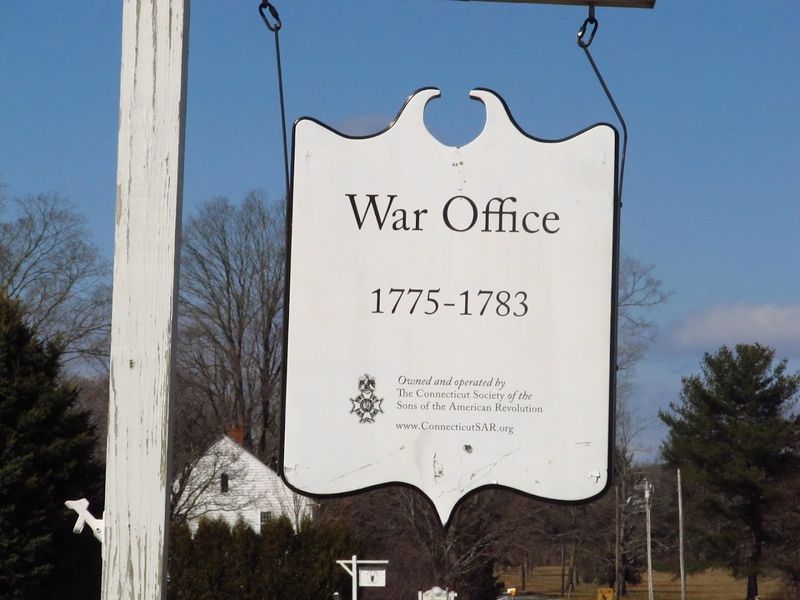
At first glance, this modest structure seems too small to hold a major chapter of national history.
That is part of its power, because the Revolution often depended on cramped rooms filled with urgent paperwork.
The Lebanon War Office shows exactly how that happened in Connecticut.
Built for Governor Jonathan Trumbull, this simple office became an operational hub for the Patriot cause.
Correspondence with George Washington moved through here, along with decisions about soldiers, supplies, and military coordination.
In practical terms, this little building helped transform Connecticut into a crucial support system for the Continental Army.
Standing inside or nearby, you get a different sense of wartime leadership.
This was not glory on horseback, but disciplined administration carried out through letters, ledgers, and constant problem solving.
That perspective is invaluable because it reminds you that winning independence required more than courage – it required systems that worked.
The War Office also deepens the larger story of Lebanon as a political center during the Revolution.
If you appreciate places where national history becomes tangible through humble scale and real function, the Lebanon War Office leaves a lasting impression.
Together with the Trumbull House and surrounding historic district, it reveals how one Connecticut town quietly shaped events far beyond its size.
8. Fort Griswold Battlefield State Park – Groton, New London County
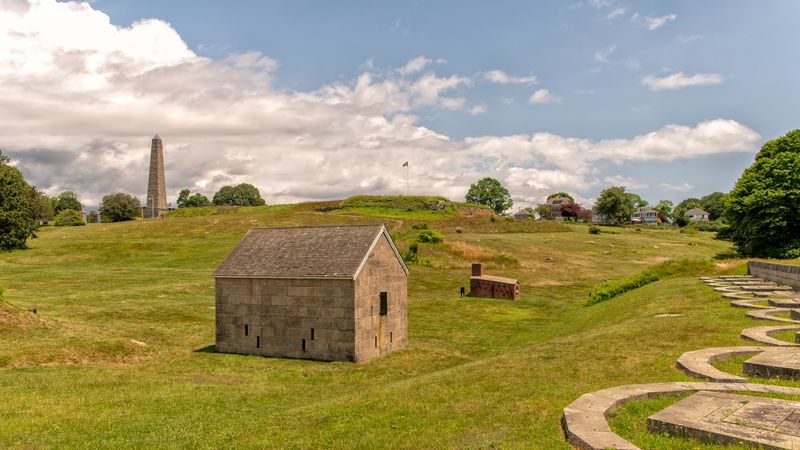
Wind off the Thames River adds an edge to this hilltop, and the view feels deceptively calm.It is hard to reconcile the peaceful setting with the brutality that unfolded here in 1781.
At Fort Griswold Battlefield State Park in Groton, you encounter one of Connecticut’s most devastating Revolutionary War sites.
The park commemorates the Battle of Groton Heights, when British forces under Benedict Arnold attacked New London and Groton.American defenders, led by Colonel William Ledyard, held the fort against overwhelming odds before the fighting ended in shocking bloodshed.
That final assault turned the site into a symbol of resistance, sacrifice, and the war’s cruel intimacy in coastal Connecticut.
Walking the earthworks and monument grounds, you can follow the physical shape of the battle.The setting helps you understand how local geography, river access, and fort design influenced both strategy and survival.
Inside the museum, artifacts and interpretation give names and context to men who otherwise risk becoming abstractions in a tragic story.
This landmark matters because it reveals the Revolution at its rawest.You are not just learning about heroic memory, but confronting how vulnerable communities were to invasion and revenge.
Few places in Connecticut communicate the violence, urgency, and cost of independence more clearly than Fort Griswold today.
9. Compo Beach – Westport, Fairfield County
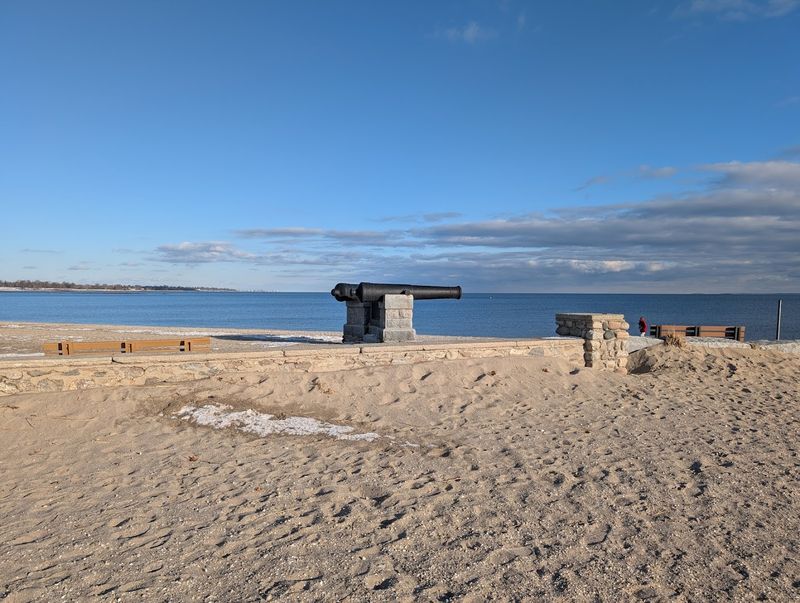
Sunlight on the water and a wide sandy shoreline can make this coast feel purely recreational today.
But the openness of the beach also explains why it mattered during wartime.
At Compo Beach in Westport, British troops landed in 1777 on their way to raid Danbury, pulling this peaceful shoreline into the Revolutionary struggle.
The landing triggered a chain of events that led to fierce resistance from American forces and local militia.
Figures like Benedict Arnold, before his treason, joined efforts to counter the British movement inland.
Because of that connection, the beach is not just scenic ground but the opening stage of one of Connecticut’s best known wartime episodes.
What you notice here is the geography.
The shoreline makes invasion feel frighteningly plausible, and the route inland helps you understand how vulnerable coastal towns were to sudden attack.
This is one of those places where a simple view becomes historical evidence, showing how landscape shaped both fear and strategy.
Compo Beach offers a different kind of Revolutionary landmark experience.
Instead of preserved buildings or enclosed exhibits, you get wind, distance, and the physical logic of movement across land and sea.
10. Windham County Courthouse – Brooklyn, Windham County

Civic buildings can seem quieter than battlefields, yet they often reveal what independence actually had to build.Courts, laws, and local authority gave the Revolution lasting structure after the fighting.
That is why the Windham County Courthouse in Brooklyn deserves attention in any Connecticut Revolutionary itinerary.
Built in the late eighteenth century, the courthouse stands close to the era when the new nation was defining how self-government would work in practice.Windham County sent men, resources, and political energy into the Patriot cause, and this building reflects the civic world that emerged from those sacrifices.
Its architecture and function speak to a society moving from colonial administration toward republican institutions rooted in local participation.
What I like most here is the sense of continuity between wartime ideals and peacetime responsibilities.The Revolution was not only about resisting Britain, but about creating systems people could trust after independence was won.
A courthouse makes that outcome visible in brick, timber, and public purpose.
While it may not carry the drama of a fort or raid site, the landmark broadens your understanding of Revolutionary history.It reminds you that liberty had to be organized, argued, recorded, and enforced at the county level.
For anyone interested in how Connecticut translated rebellion into governance, the Windham County Courthouse offers an important final chapter.
11. Old State House Hartford – Hartford, Hartford County
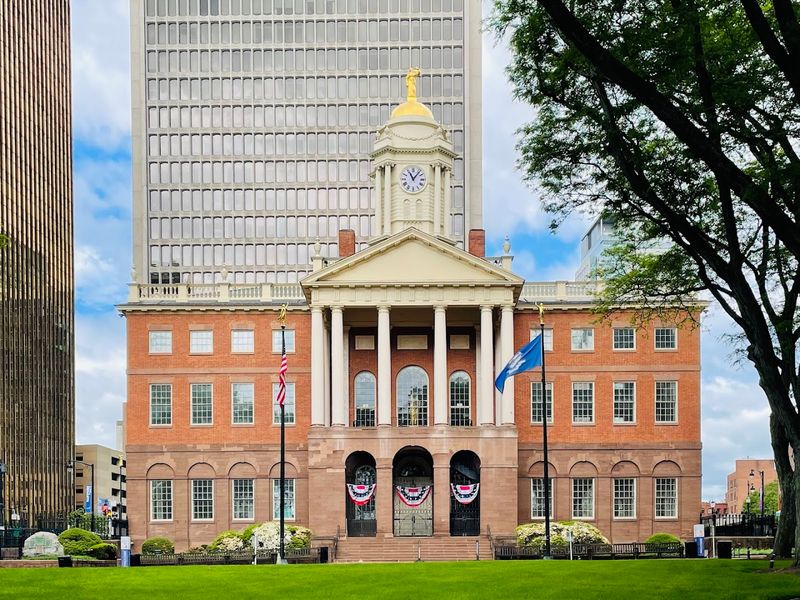
Few places capture the transition from colony to statehood as clearly as a former seat of government.
When you stand before this brick landmark, you can almost feel debate, uncertainty, and ambition still echoing through the walls.
The Old State House in Hartford anchors Connecticut’s Revolutionary story in politics, law, and public identity.
Although the current building dates from the years just after the Revolution, the site represents the governmental continuity that carried Connecticut through the conflict and into the early republic.
Here, leaders shaped policy, responded to wartime demands, and helped define how the state would function in a newly independent nation.
The location ties together colonial governance, Revolutionary commitment, and the constitutional future that followed.
Inside the museum, exhibits trace debates over representation, rights, and the practical realities of governing.
That context matters because it pushes the story beyond military triumph and into the harder work of building institutions.
You come away seeing the Revolution not as an ending, but as the beginning of political experiments that would affect everyday lives.
This landmark is especially valuable as a capstone stop.
It gathers the themes found across Connecticut – sacrifice, leadership, local action, and civic responsibility – into one powerful setting.