Pennsylvania was a crucible of the American Revolution, a place where some of the most decisive battles were fought, where the Declaration of Independence was signed, and where General Washington’s army endured its most brutal winter.
The Keystone State’s revolutionary history runs so deep that you could spend weeks exploring it and still find something new around every corner.
From Philadelphia’s cobblestone streets to the rolling hills of Valley Forge, each site carries a palpable sense of the stakes that once rode on every decision made here.
Visiting them with family, a history class, or simply on your own is an experience that is hard to put into words.
Here are twelve Pennsylvania Revolutionary War sites that bring this pivotal chapter of American history to life in remarkable ways.
1. Independence Hall – Philadelphia, Philadelphia County
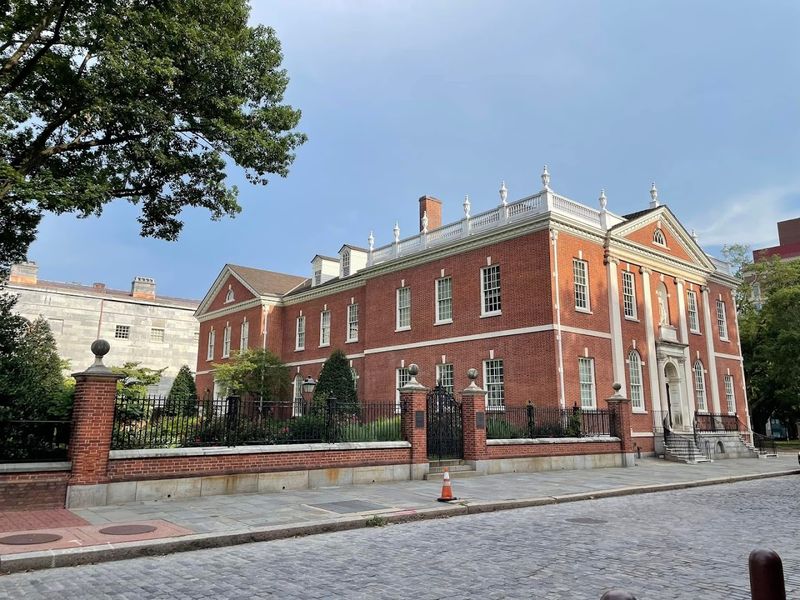
The air feels charged here, as if every brick still remembers arguments that changed the world.You can almost picture anxious delegates stepping through the doorway, carrying hopes, doubts, and impossible decisions.
That sense of consequence is exactly what makes Independence Hall in Philadelphia such an unforgettable starting point.
Inside, you are not just looking at elegant colonial rooms.You are standing where the Declaration of Independence was debated and where the Constitution later took shape, giving this site a double layer of national significance.
The Assembly Room, with its green tables and Windsor chairs, makes huge events feel surprisingly human.
What stands out most is how intimate the building feels compared with its outsized legacy.Guided tours help connect the famous names to real personalities, political tensions, and compromises that were anything but simple.
Outside, the surrounding historic district adds context with nearby landmarks like Congress Hall and the Liberty Bell.
If you want a place that turns abstract founding ideals into something tangible, this is it.Come early, listen closely, and let the details sink in.
Few American sites make you feel history happening in the present quite like Independence Hall does.
2. Valley Forge National Historical Park – King of Prussia, Montgomery County
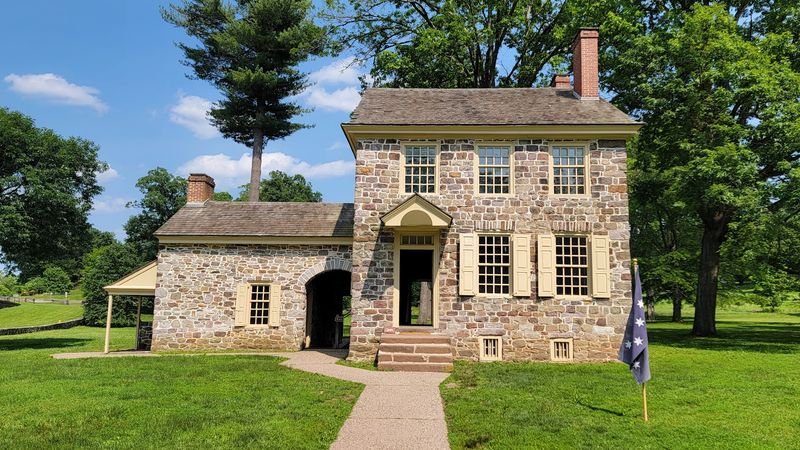
Quiet fields and long rolling roads set a reflective tone before you even reach the heart of the park.It is easy to think first about battle, yet this place is really about endurance, discipline, and survival under crushing pressure.
That is what makes Valley Forge National Historical Park near King of Prussia so powerful.
This was the Continental Army’s winter encampment of 1777 to 1778, where hardship became a turning point.The reconstructed huts, Washington’s Headquarters, and monuments help you imagine what months of cold, hunger, disease, and training demanded from ordinary soldiers.
Rather than celebrating easy heroics, the site shows how perseverance shaped the Revolution’s future.
You can walk, bike, or drive through a landscape that still feels expansive enough to absorb difficult history.Interpretive signs and ranger programs explain how Baron von Steuben’s drilling transformed the army into a more effective fighting force.
That military story is balanced by personal details that make the suffering and resilience feel real.
Valley Forge works best when you give yourself time to move slowly.The distances, weather, and quiet spaces all become part of the lesson.
If you want to understand how independence depended on sacrifice as much as ideals, this is one of the most moving places to visit.
3. Brandywine Battlefield Park – Chadds Ford, Delaware County
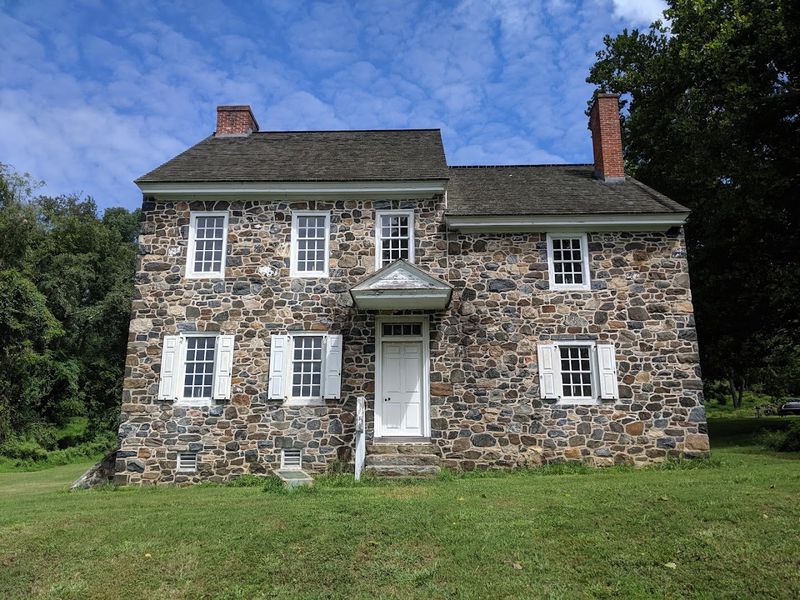
Wide countryside and deceptively peaceful hills make this landscape feel almost too calm for what happened here.That contrast is part of the experience, because the beauty of the land never fully hides the violence once unleashed across it.
At Brandywine Battlefield Park in Chadds Ford, the Revolution suddenly feels uncertain and fragile.
The Battle of Brandywine, fought in September 1777, was the largest single-day battle of the war.British forces under General Howe outmaneuvered Washington’s army, opening the road to Philadelphia and reminding the Patriots that independence was far from secure.
Today, preserved ground, historic structures, and exhibits help you follow both the tactics and the consequences.
Visitor interpretation often centers on the Benjamin Ring House and the role of the battlefield as Washington’s headquarters during the fight.What I find especially compelling is how the site reveals confusion, movement, and split-second decisions across a broad rural setting.
You start to understand battle not as a neat map, but as a disorienting human experience.
This park rewards visitors who arrive curious about strategy as well as emotion.Bring a map, ask questions, and imagine the smoke rolling over the fields.
Brandywine makes clear that the Revolution advanced through setbacks, miscalculations, and stubborn resolve as much as through celebrated victories.
4. Gettysburg National Military Park – Gettysburg, Adams County
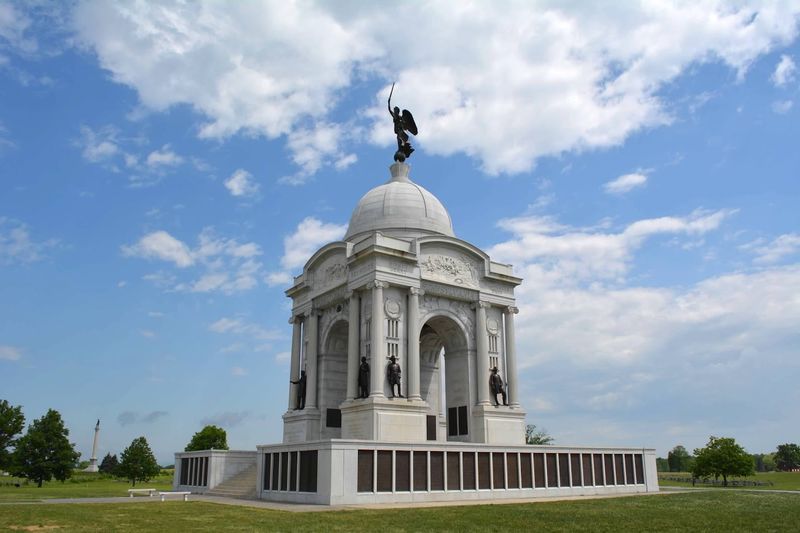
At first glance, this stop seems to belong to another chapter of American conflict entirely.Yet walking these fields reminds you how the nation’s founding struggles continued to echo through later wars over liberty, union, and identity.
That is why Gettysburg National Military Park in Adams County can still deepen a Revolutionary-era itinerary.
Although Gettysburg is best known for the Civil War battle of 1863, the park helps visitors see how ideals born during the Revolution remained contested generations later.The language of self-government, sacrifice, and national purpose did not end in 1783.
Here, those principles reappear in a different, devastating context.
The scale of the battlefield is immense, with roads, ridges, monuments, and views that demand time and attention.Excellent interpretation explains troop movements and major turning points, but it also encourages broader reflection on the American experiment itself.
For travelers interested in the long afterlife of Revolutionary ideas, that perspective is valuable.
This site is not a Revolutionary War battlefield, and it should not be mistaken for one.Still, including Gettysburg can sharpen your understanding of how founding principles were tested long after independence was won.
Visit with that lens, and the park becomes a meaningful bridge between the Revolution’s promises and the nation’s unfinished struggles.
5. Washington Crossing Historic Park – Washington Crossing, Bucks County
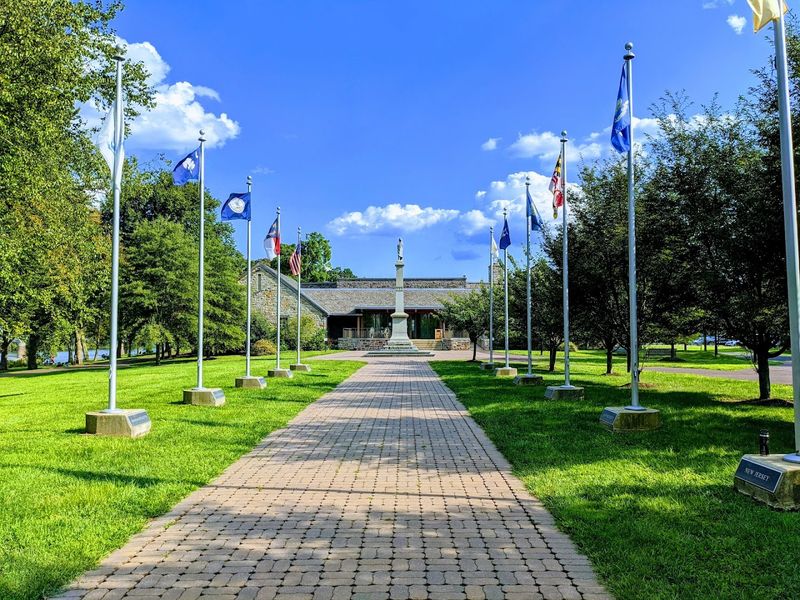
Few moments in American history carry as much drama as a desperate nighttime crossing into danger.Standing by the river, you can feel how weather, darkness, and uncertainty would have magnified every decision.
That tension is preserved beautifully at Washington Crossing Historic Park in Bucks County.
This site commemorates George Washington’s famous crossing of the Delaware on December 25, 1776, before the attack on Trenton.Although the battle itself happened in New Jersey, the Pennsylvania side tells the story of planning, embarkation, and nerve.
The river setting gives the event a physical reality that paintings alone can never capture.
Historic buildings, reconstructed boats, and interpretive exhibits help you imagine the logistical challenge involved.The annual crossing reenactment draws crowds, but even on quieter days the landscape carries a strong sense of anticipation.
It is a place where leadership stops feeling abstract and starts looking like risk taken under impossible conditions.
I especially like how accessible the site is for visitors who may not know every military detail.You can appreciate the broader story while still diving into the tactical significance of the campaign.
For anyone interested in turning a legendary episode into something vivid and human, Washington Crossing delivers a memorable experience.
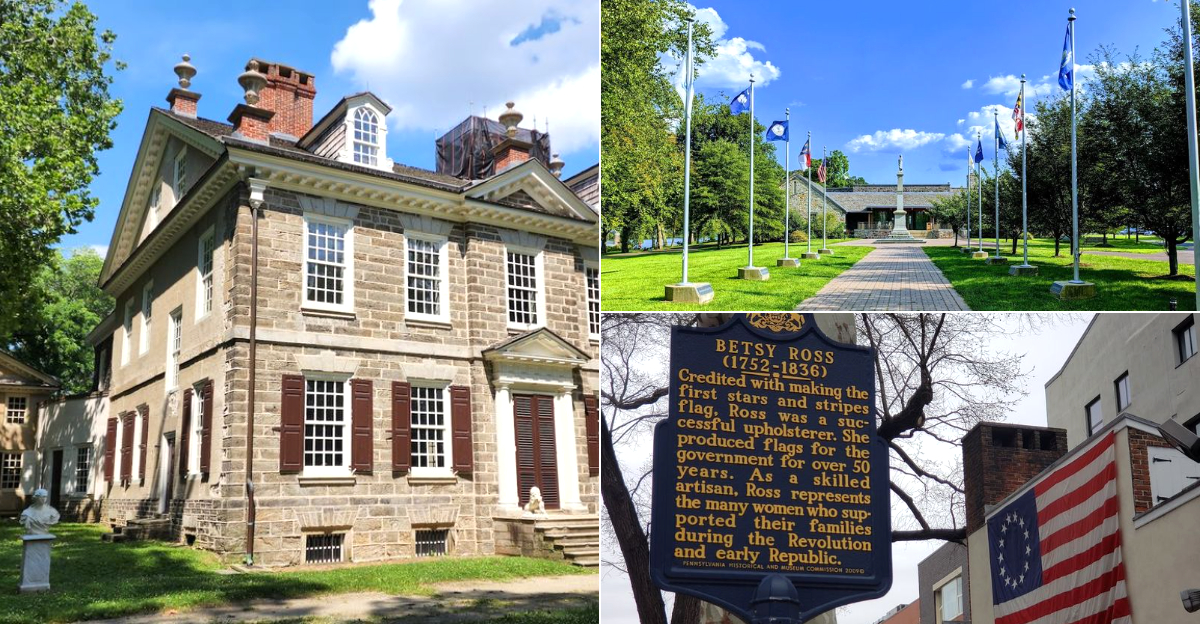
6. Betsy Ross House – Philadelphia, Philadelphia County
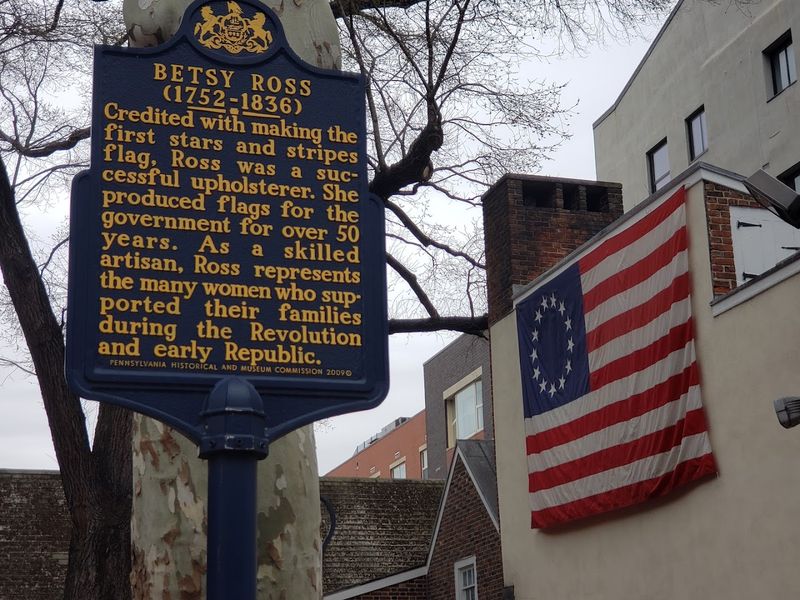
Small spaces can sometimes tell bigger stories than grand monuments.When you step into a modest eighteenth-century home, the Revolution suddenly looks less like a pageant of generals and more like a world of working people.
That is the appeal of the Betsy Ross House in Philadelphia.
Whether every detail of the famous flag story is provable or not, the site opens an engaging conversation about memory, myth, and women in the Revolutionary era.The house interprets the life of Betsy Ross as an upholsterer, businesswoman, and Philadelphian living through political upheaval.
That context matters because it grounds legend in everyday labor and survival.
The rooms are compact, atmospheric, and easier to connect with than some larger institutions.Reenactors and exhibits often help visitors imagine domestic routines, craft work, and the pressures of wartime city life.
Instead of focusing only on a single symbolic object, the house encourages you to think about who made things, sold things, and kept households functioning during revolution.
I like this stop best when approached with curiosity rather than certainty.Ask what is documented, what is debated, and why the story endured.
The Betsy Ross House brings the era down to a human scale, which is often exactly what makes history feel alive.
7. Eastern State Penitentiary – Philadelphia, Philadelphia County
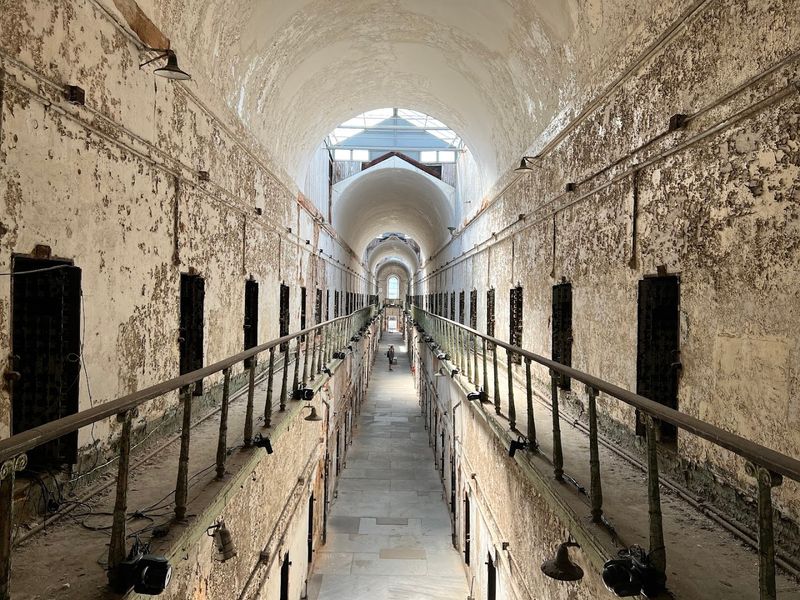
Massive stone walls and shadowed corridors create a mood that feels more gothic than revolutionary.Even so, this place adds an unexpected layer to understanding the ideals that emerged from the founding era.
Eastern State Penitentiary in Philadelphia is not a Revolutionary War site, but it does connect to the Revolution’s long intellectual aftermath.
Opened in 1829, the prison reflected reform movements shaped by Enlightenment thinking about morality, individual conscience, and the role of the state.Those currents were closely related to the political philosophies that influenced the American founding.
Visiting here lets you consider what happened after independence when the new nation began testing its ideals through institutions.
The architecture is unforgettable, with radial cellblocks designed for isolation and reflection.Interpretation explores both the original theory behind the penitentiary and the harsh realities that followed, making the experience morally complicated in the best way.
You are asked to think about liberty not only as a slogan, but as something measured against power and punishment.
If your trip focuses strictly on battlefields, this stop may feel unconventional.But if you want a fuller sense of how Revolutionary ideas evolved within Pennsylvania, it is surprisingly worthwhile.
Eastern State shows that the legacy of the founding reached far beyond war and into everyday systems of justice.
8. Fort Mifflin – Philadelphia, Philadelphia County
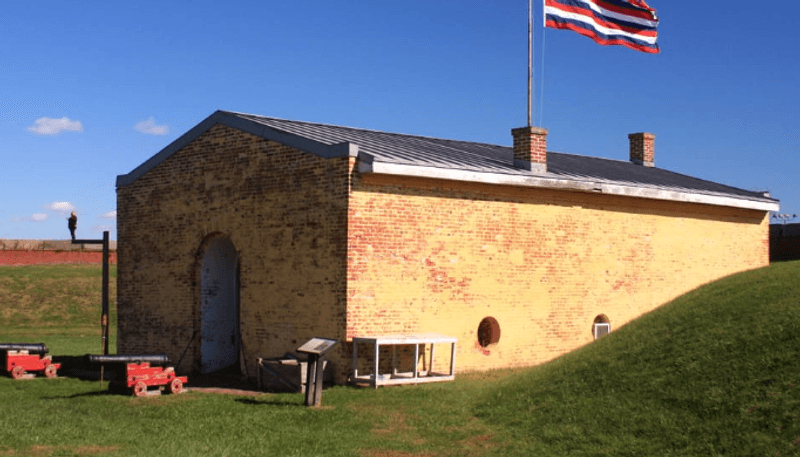
Wind off the Delaware and weathered ramparts make this place feel tough, exposed, and stubbornly alive.You do not need much imagination to picture cannon fire, smoke, and men trying to hold an impossible position.
Fort Mifflin in Philadelphia offers one of the most atmospheric military sites of the Revolutionary era.
During the 1777 siege, American defenders resisted British and Hessian attacks long enough to become symbols of extraordinary determination.The fort eventually fell, but its defense delayed the enemy and demonstrated a level of grit that still commands respect.
Because the site retains so much physical character, the story lands with unusual force.
Walking the barracks, casemates, and river-facing defenses helps you understand how vulnerable the fort really was.Interpretive programs often highlight not just officers, but also rank-and-file soldiers and the brutal conditions they faced.
That balance keeps the experience grounded in human endurance rather than abstract patriotism alone.
Fort Mifflin also feels less polished than some major landmarks, which honestly adds to its appeal.The rough edges, open views, and layered history create a setting that is memorable in every season.
If you want a Revolutionary site where the landscape and structures do much of the storytelling, this fort is hard to beat.
9. Graeme Park – Horsham, Montgomery County
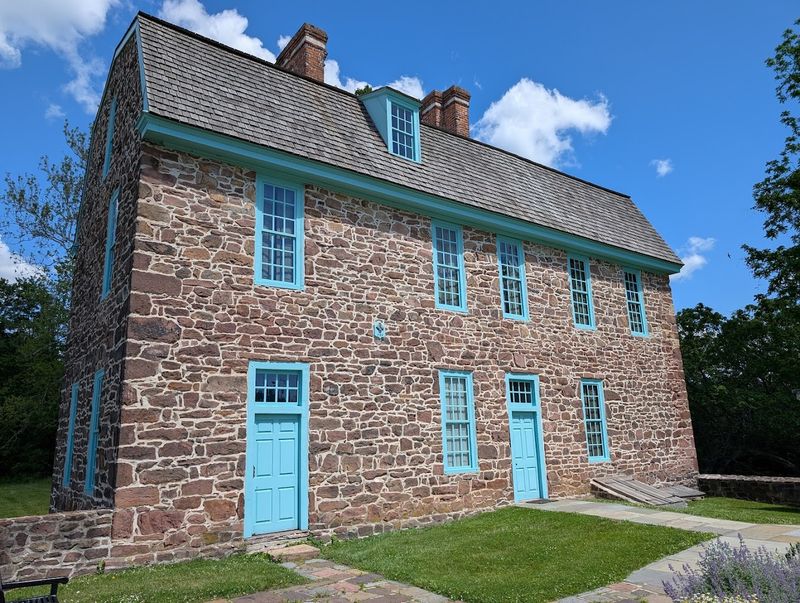
Not every Revolutionary site announces itself with battle scars or famous declarations.Some places draw you in through quiet elegance, then reveal how deeply politics and war reached into private lives.
Graeme Park in Horsham is one of those subtler destinations that grows more interesting the longer you linger.
The centerpiece is the Keith House, a beautifully preserved colonial residence with connections to Pennsylvania’s political and social world before and during the Revolution.Most notably, it is associated with Dr. Thomas Graeme and later with Elizabeth Graeme Fergusson, whose life reflects the divided loyalties and cultural tensions of the era.
That personal angle gives the site real emotional texture.
Instead of focusing only on troop movements or public speeches, Graeme Park explores what revolution meant for families, property, and allegiance.The house museum helps you think about how war unsettled elite households just as surely as it transformed governments.
For visitors who enjoy nuance, that makes the experience refreshing.
The grounds are peaceful, which creates a striking contrast with the uncertainty embedded in the story.You come away with a stronger sense that the Revolution was lived in drawing rooms and correspondence as well as on battlefields.
Graeme Park may be quieter than headline sites, but it offers one of the more thoughtful windows into Pennsylvania’s wartime society.
10. Battle of Paoli Massacre Site – Malvern, Chester County
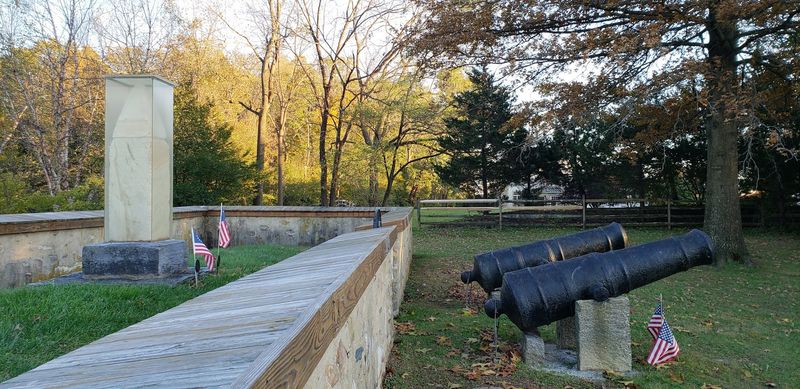
Some historic places feel less triumphant than haunting, and this is one of them.The landscape is modest, but the emotional weight is heavy once you understand what unfolded in the darkness.
At the Battle of Paoli Massacre Site near Malvern, the Revolution becomes brutally intimate.
In September 1777, British troops launched a nighttime bayonet attack on forces under General Anthony Wayne.American casualties and the shocking nature of the assault led Patriots to memorialize the event as a massacre, even as historians continue to debate aspects of that label.
What is beyond debate is the terror and confusion experienced by the men caught there.
The site does not overwhelm you with grand scale, which actually suits the story.Markers, preserved ground, and interpretation invite reflection on vulnerability, propaganda, and the way wartime memory is shaped.
You begin to see how single events could harden public sentiment and deepen commitment to the Patriot cause.
I appreciate this stop because it resists easy romanticizing.It asks you to confront fear, surprise, and the darker edges of the war without losing sight of why the story mattered politically.
If you want to understand how suffering influenced Revolutionary identity in Pennsylvania, Paoli is a deeply important place to visit.
11. Old Barracks Museum – Trenton, Mercer County
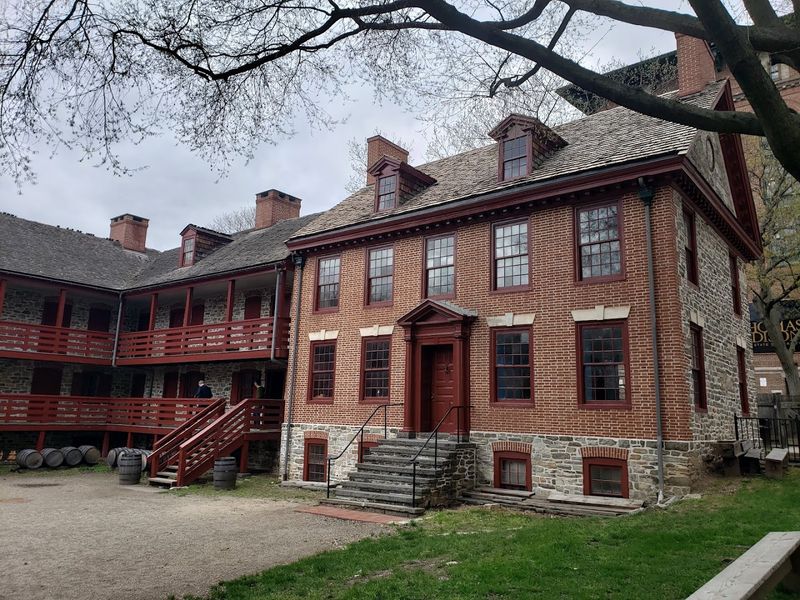
Military history feels especially tangible when you are standing inside a building once filled with soldiers, noise, and uncertainty.Though this stop sits across the river in New Jersey, it connects closely to the Pennsylvania story of the Revolution.
The Old Barracks Museum in Trenton earns its place through that regional importance.
Built in the 1750s for British troops during the French and Indian War, the barracks later became part of the Revolutionary narrative during the Trenton campaign.After Washington crossed from Pennsylvania, the surrounding area turned into the setting for one of the war’s most morale-shifting victories.
The museum helps visitors understand the broader geography of that crucial moment.
Inside, exhibits and interpreters often do a strong job of explaining daily military life alongside larger political developments.That balance matters because revolutions are carried forward by logistics, shelter, supplies, and ordinary routines as much as by dramatic speeches.
The structure itself makes those practical realities easier to grasp.
If your itinerary follows the Delaware River campaign, this museum fits naturally even if it is not in Pennsylvania proper.It adds depth to Washington Crossing and the winter of 1776 in a way few places can.
The Old Barracks turns a famous victory into a more complete and grounded regional story.
12. Cliveden of the National Trust – Philadelphia, Philadelphia County
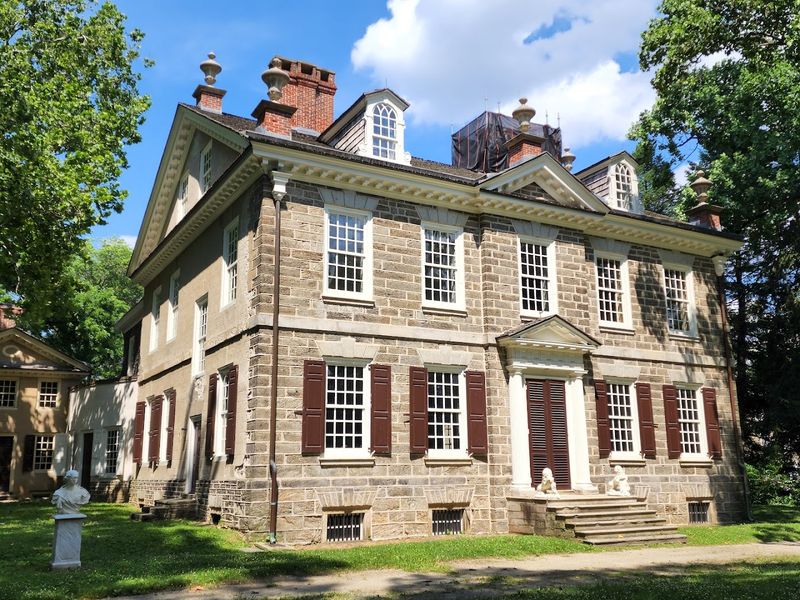
Grand architecture and a leafy urban neighborhood can make this site seem serene at first.Then you learn that intense close-quarters fighting erupted here, and the calm takes on a completely different meaning.
Cliveden of the National Trust in Philadelphia offers one of the most compelling house-and-battlefield combinations in the region.
Built as a country home for Benjamin Chew, Cliveden became the focal point of the 1777 Battle of Germantown.British troops occupied the sturdy stone house, and American forces under Washington attacked, turning the property into a deadly stronghold.
That unusual military role gives the mansion extraordinary interpretive power.
What makes Cliveden memorable is the way domestic space and combat history collide.You are not just hearing about troop movements on a distant field, but imagining battle pressing against walls, windows, stairways, and family rooms.
The site also explores the lives of the enslaved people and household members connected to the property, broadening the historical picture.
This layered approach makes Cliveden feel richer than a simple battlefield stop.It invites questions about class, loyalty, slavery, and the disruptive force of war in everyday spaces.
If you want a Revolutionary site that is intimate, complex, and surprisingly immersive, Cliveden is an excellent place to end your journey.