You don’t have to drive hours into the mountains to lose yourself in the wild.
Just outside Raleigh, William B. Umstead State Park drops you into a world of towering pines, quiet lakes, and winding dirt trails that feel far removed from traffic and city noise.
One minute you’re in the middle of the Triangle. The next, it feels like civilization disappeared.
This sprawling forest stretches across more than 5,500 acres, hiding creeks, wildlife, and miles of peaceful paths under a thick green canopy. It’s the kind of place where the air feels cooler, the sounds feel softer, and time slows down.
For hikers, runners, bikers, or anyone craving a break from the daily grind, Umstead is the reset button Raleigh keeps close. And once you step inside, it’s hard to believe the city is still right there.
A Hidden Wilderness Just Minutes From Downtown
Only 10 miles separate downtown Raleigh from one of North Carolina’s most impressive urban wilderness areas. William B.
Umstead State Park sprawls across 5,579 acres of protected forest, creating a natural buffer between the Triangle’s busiest communities.
Dense hardwood forests and towering pines form a green canopy that completely blocks out the surrounding suburbs. Multiple lakes shimmer quietly beneath the trees, connected by over 20 miles of winding trails.
The park sits strategically between Raleigh, Cary, and Durham, making it incredibly accessible yet surprisingly isolated.
What makes Umstead truly remarkable is how thoroughly it hides the modern world. Highway noise fades within minutes of entering the trail system.
Office buildings and shopping centers vanish behind thick tree cover. Instead, visitors find themselves surrounded by the sounds of rustling leaves, calling birds, and flowing creeks.
This proximity to urban centers makes Umstead perfect for morning runs before work, lunch break walks, or weekend camping trips without the travel time. The park welcomes over one million visitors annually who seek this convenient wilderness experience.
The Fascinating History Behind the Park
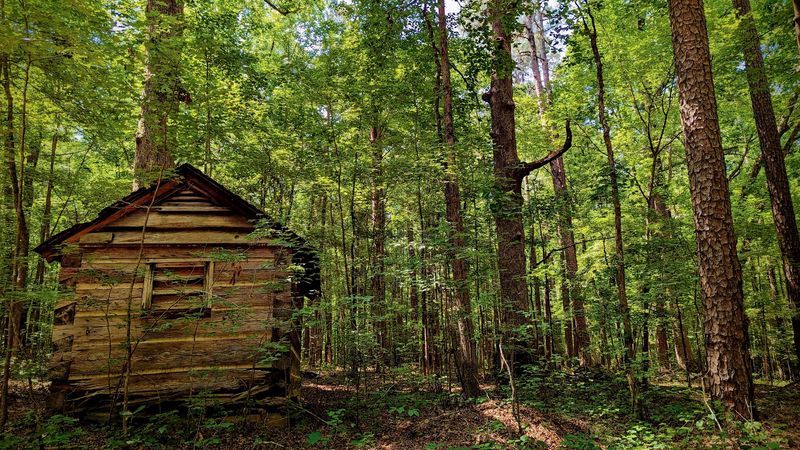
During the 1930s, much of the land now occupied by Umstead was worn-out farmland. The Great Depression had devastated local agriculture, leaving families unable to work the exhausted soil.
The federal government purchased these struggling properties as part of a relief program designed to restore damaged landscapes.
The Civilian Conservation Corps transformed the area during this period, planting thousands of trees and building recreational facilities. However, the park’s early years were marked by segregation.
Separate facilities existed for Black and white visitors until integration laws changed everything in the 1960s.
Originally called Crabtree Creek Recreation Area, the park was renamed in 1955 to honor William B. Umstead, a North Carolina congressman and senator.
Today, hikers occasionally stumble upon remnants of the area’s agricultural past. Old stone foundations peek through the underbrush, and traces of forgotten roads wind through the forest.
Local historians love pointing out these historical markers during guided walks. The park’s transformation from depleted farmland to thriving ecosystem demonstrates nature’s incredible ability to recover when given proper protection and time.
The Trail That Defines the Experience: Company Mill Loop
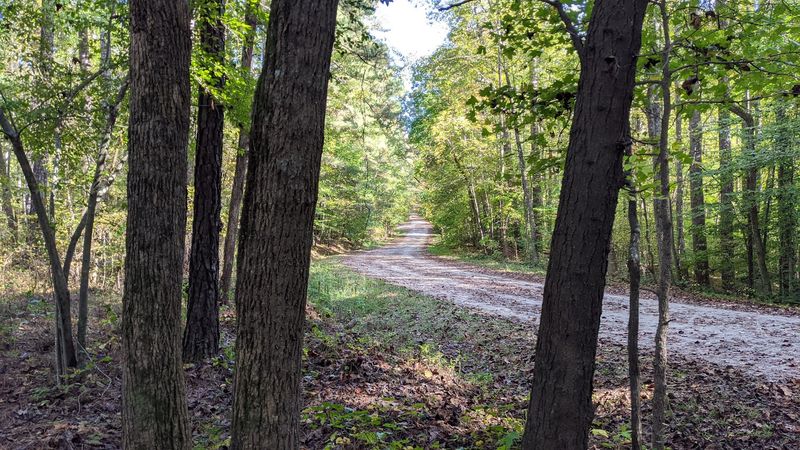
Company Mill Trail captures everything that makes Umstead special in one 5.8-mile loop. This moderate route winds through diverse terrain, crossing bubbling creeks and climbing gentle hills before descending back into shaded valleys.
Most hikers complete the loop in about three hours, though many take longer to soak in the scenery.
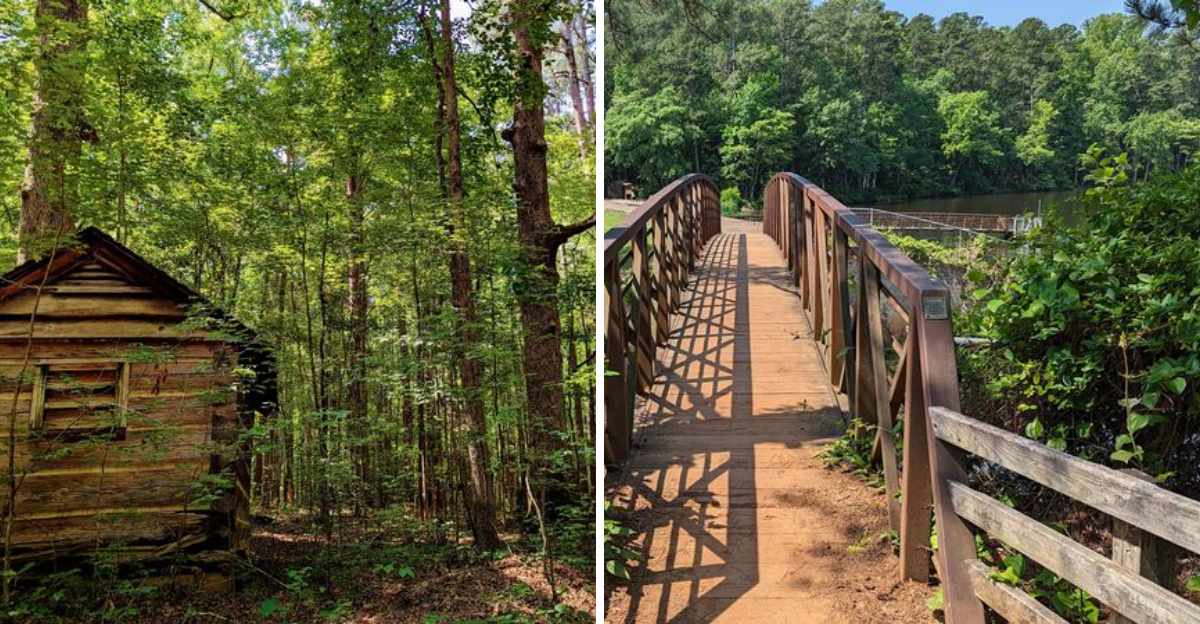
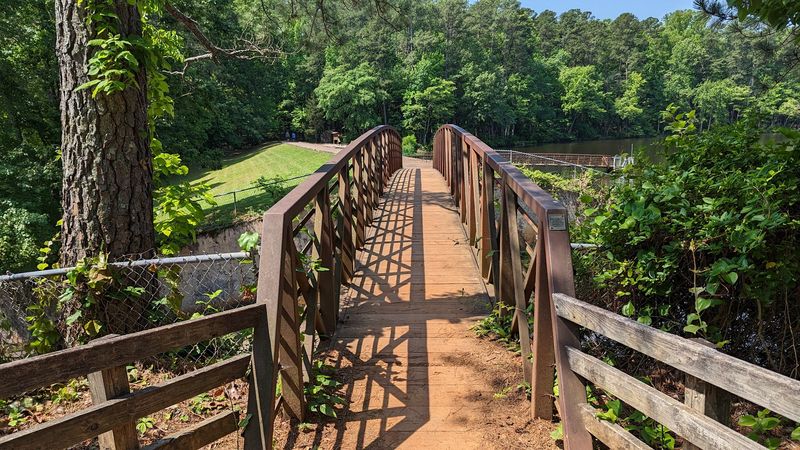
The trail follows an old roadbed for portions of its route, offering relatively easy footing compared to more technical paths. Wooden footbridges carry you over streams where water tumbles across smooth stones.
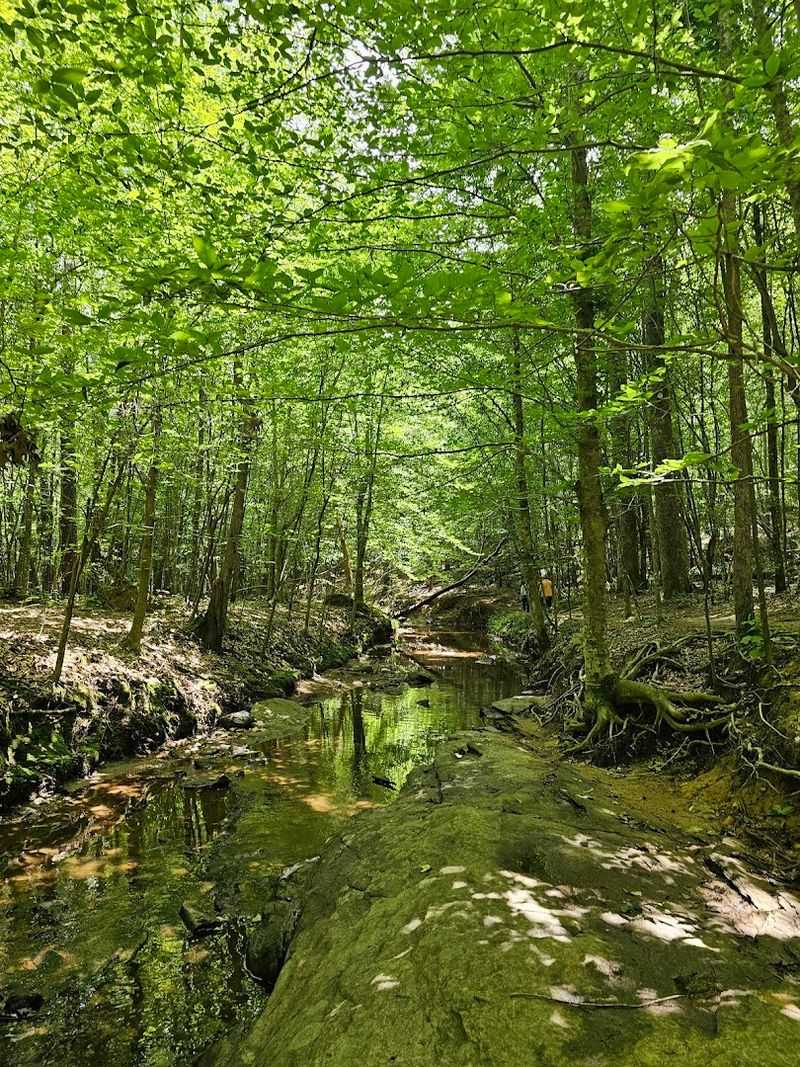
During spring, these creeks swell with runoff, creating miniature waterfalls that add sound and movement to the hike.
Dense hardwood forests provide excellent shade during summer months when temperatures climb. Oak, hickory, and beech trees form a natural cooling canopy overhead.
The trail’s elevation changes keep things interesting without becoming exhausting, making it perfect for intermediate hikers or ambitious beginners.
Park rangers consistently recommend Company Mill as the best introduction to Umstead’s trail system. It showcases the forest’s best features while remaining accessible to most fitness levels.
First-time visitors who complete this loop almost always return to explore more of the park’s offerings.
Seven Lakes, Creeks, And Quiet Water Views
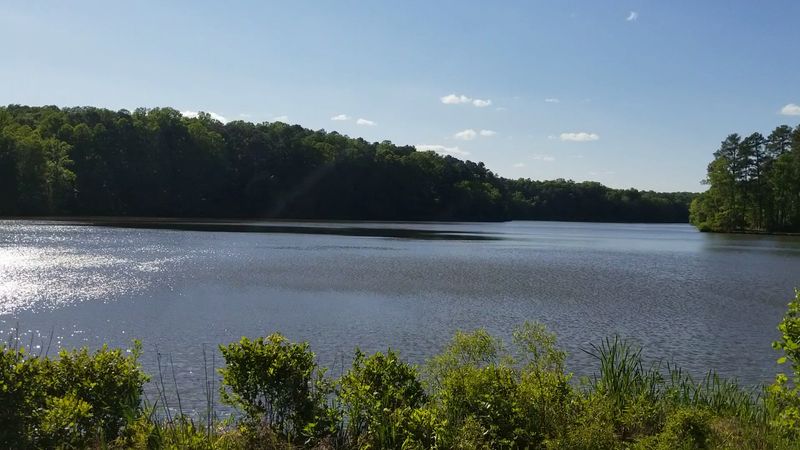
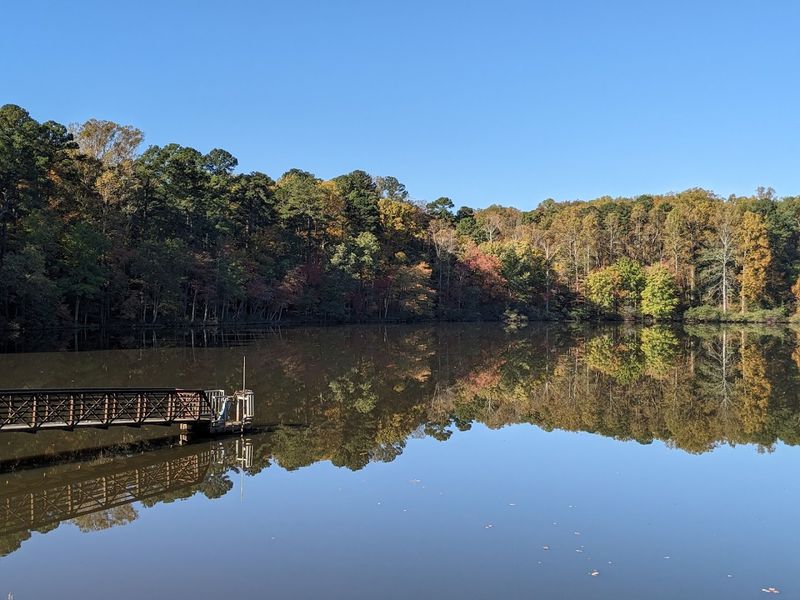
Big Lake stretches across 55 acres of calm water, serving as the park’s centerpiece water feature. Created by damming natural drainages, this manmade lake reflects the surrounding forest like a massive mirror on still mornings.
Sycamore Lake offers a quieter, more intimate water experience for those seeking solitude.
Several smaller creeks thread through the park, connecting these larger bodies of water. Crabtree Creek forms the park’s northern boundary, while smaller tributaries create crossing points along many trails.
These waterways add dimension and life to the forest, attracting wildlife and creating natural gathering spots.
Fishing enthusiasts cast lines for bass, catfish, and bream from the shoreline. Seasonal boat rentals allow visitors to paddle across Big Lake’s glassy surface during warmer months.
Even non-water enthusiasts appreciate how these lakes break up the forest landscape, creating peaceful viewpoints perfect for rest stops.
The reflective quality of these waters changes throughout the day. Morning mist rises from the surface at dawn, while afternoon sun creates dancing light patterns.
Sunset brings warm colors that paint both sky and water in matching shades. These waterways transform ordinary forest walks into truly memorable experiences.
Why It Feels So Wild Despite Being In The Triangle
Standing deep in Umstead’s interior, you would never guess that three major cities surround this forest. The park’s sheer size creates an effective buffer against modern intrusions.
Rolling terrain helps absorb highway sounds that might otherwise penetrate the tree line.
Thick stands of loblolly pines and mixed hardwoods form natural sound barriers throughout the property. These dense plantings muffle traffic noise from nearby Interstate 40 and other major roads.
Strategic trail placement keeps the most popular routes away from property boundaries, enhancing the wilderness feeling.
The park’s layout also contributes to this sense of remoteness. With two main entrances that don’t directly connect by road, visitors must commit to exploring one section at a time.
This design prevents the park from feeling like a simple pass-through route between cities.
Natural topography creates hidden valleys where cell phone signals fade and city sounds completely disappear. Many first-time visitors express surprise at how thoroughly disconnected they feel despite knowing urban areas sit just beyond the trees.
This rare combination of location and design makes Umstead uniquely valuable among North Carolina state parks, offering genuine wilderness therapy without requiring a road trip.
Biking, Horseback Riding, And More Than Just Hiking
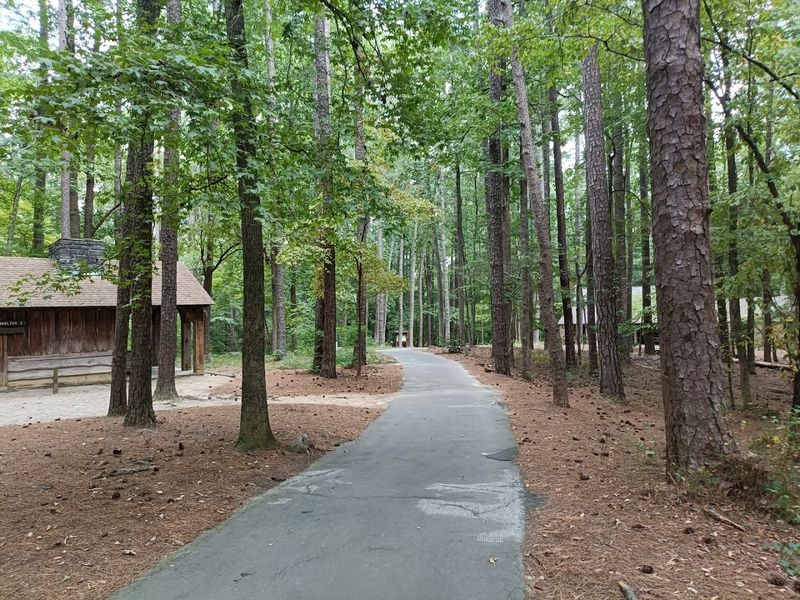
Umstead recognizes that outdoor enthusiasts have varied interests beyond walking. The park maintains 13 miles of designated multi-use trails where mountain bikers can navigate technical roots and flowing descents.
These paths offer enough challenge to satisfy experienced riders while remaining accessible to intermediate cyclists building their skills.
Equestrian trails wind through quieter sections of the park, allowing horseback riders to explore the forest from a different perspective. These designated paths help protect more sensitive trail areas while giving horse enthusiasts their own space.
Riders must bring their own horses, as the park doesn’t offer rental services.
Seasonal boat rentals at Big Lake attract paddlers during spring and summer months. Kayakers and canoeists glide across the calm water, exploring coves and watching for wildlife along the shoreline.
Trail runners have claimed Umstead as one of the Triangle’s premier training grounds, with enough varied terrain to prepare for competitive races.
Group camping facilities accommodate Scout troops and organized outdoor programs throughout the year. This diversity of activities means families can visit multiple times, trying something different each trip.
The park truly serves as a multi-sport destination rather than a single-purpose recreation area.
Wildlife You’re Likely To Spot

White-tailed deer are the most commonly spotted large mammals in Umstead, often appearing along trails during early morning or late afternoon hours. These graceful creatures have grown somewhat accustomed to human presence, though they maintain a respectful distance.
Patient observers might watch them browse on understory plants or lead fawns through the forest.
Great blue herons stalk the shallow edges of both Big Lake and Sycamore Lake, hunting for fish and frogs. Their prehistoric appearance and deliberate movements captivate photographers and birdwatchers alike.
Smaller wading birds join them during migration seasons, creating temporary avian communities along the shorelines.
Eastern box turtles lumber across trails throughout warmer months, their distinctive domed shells catching hikers’ attention. Songbirds fill the canopy with calls year-round, though species composition shifts with the seasons.
Sharp-eyed visitors might spot owls roosting in thick branches or hear their haunting calls after sunset.
The biodiversity here reflects healthy forest ecosystems rarely found so close to urban development. Every visit brings potential for different wildlife encounters, making each hike feel like a new adventure.
Spring and fall migrations add extra excitement as traveling species pass through the protected corridor.
The Best Seasons To Experience Umstead
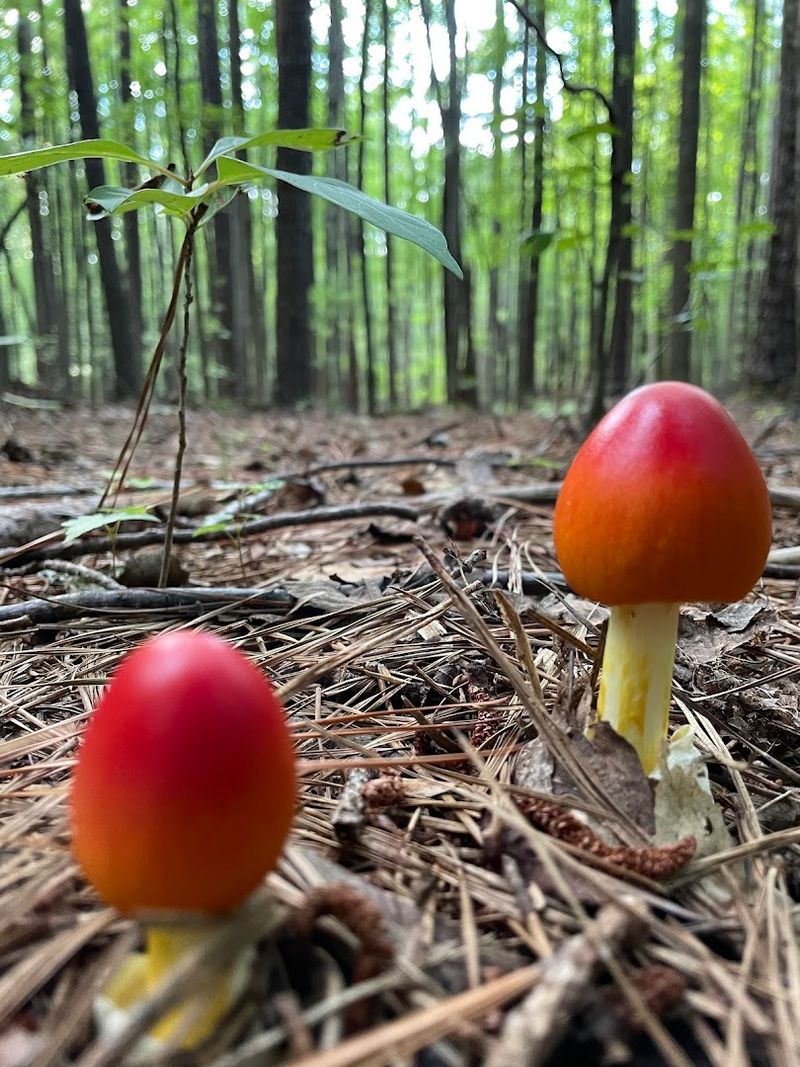
Spring transforms Umstead into a wildflower showcase as bloodroot, trillium, and Virginia bluebells carpet the forest floor. Creeks run high with winter runoff, creating rushing sounds and impressive water crossings.
Migrating birds arrive daily, filling trees with songs and activity that energizes every trail walk.
Summer brings dense green canopy coverage that provides natural air conditioning even during North Carolina’s hottest months. While temperatures outside the park might reach the 90s, shaded trails remain surprisingly comfortable.
Early morning visits offer the best conditions before afternoon heat builds.
Fall delivers the visual spectacle most visitors anticipate. Hardwood trees explode in reds, oranges, and golds that rival any mountain display.
Cooler temperatures make this the most popular hiking season, so expect fuller parking lots on weekend mornings. The changing leaves create a different landscape each week from September through November.
Winter offers unexpected advantages for those willing to brave occasional cold snaps. Bare trees allow longer sight lines through the forest, revealing topography hidden during leafier seasons.
Wildlife becomes easier to spot against brown backgrounds. Fewer visitors mean peaceful, private trail experiences that feel even more remote than usual.
Why Locals Keep Coming Back Again And Again
Trail runners from across the Triangle treat Umstead like their personal training facility, logging hundreds of miles annually on its interconnected paths. The varied terrain provides ideal conditioning for races while remaining close enough for quick after-work runs.
Many runners know every root and rock along their favorite routes.
Families return because the park grows with their children. Toddlers start with short lakeside strolls, graduating to longer trail adventures as they age.
Parents appreciate having a safe, accessible outdoor classroom where kids can learn about nature without traveling hours from home. Weekend camping trips become treasured traditions passed between generations.
The park’s variety prevents repetition boredom. With multiple trail systems and seasonal changes constantly refreshing the scenery, regular visitors discover new details on familiar paths.
A trail walked in summer reveals completely different features during winter or spring.
Mental health benefits keep many locals returning weekly. The park serves as a natural stress reliever, offering peaceful refuge from work pressures and daily responsibilities.
Some visitors describe their Umstead time as essential therapy, necessary for maintaining balance in demanding Triangle careers. This emotional connection transforms casual visitors into devoted regulars who consider the park part of their community identity.
What To Know Before You Go
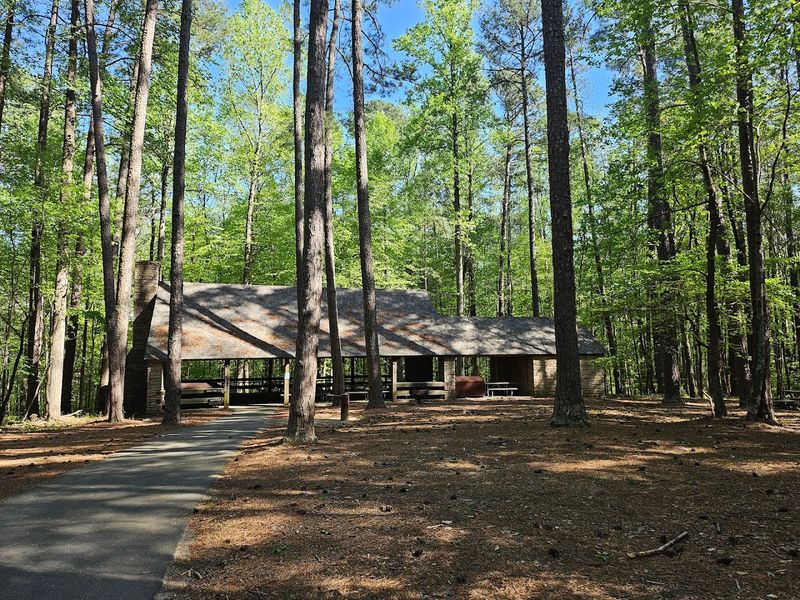
The park operates two main entrances at Crabtree Creek and Reedy Creek, located on opposite sides of the property without direct road connections. This means choosing your entry point matters based on which trails you want to explore.
The main address at 8801 Glenwood Avenue leads to Crabtree Creek entrance, which accesses the most popular trails including Company Mill.
Weekend parking fills quickly, especially during pleasant weather and peak fall foliage periods. Arriving before 9 AM guarantees spots at popular trailheads.
Bug spray becomes essential during warmer months when mosquitoes and ticks populate the forest.
Recent heavy rains can leave trails muddy and slippery, particularly in low-lying areas near creek crossings. Mountain bikers must stick to designated multi-use trails, as hiking-only paths remain off-limits to wheels.
Dogs are welcome but must stay leashed at all times to protect wildlife and other visitors.
Cell phone service becomes unreliable in deeper forest sections, so download trail maps before arriving. Turkey Creek trails occasionally close for maintenance and bridge repairs, so check current conditions on the park website.
Summer heat requires carrying extra water, as no sources exist along most trails. These small preparations ensure safe, enjoyable visits to this remarkable urban wilderness.