
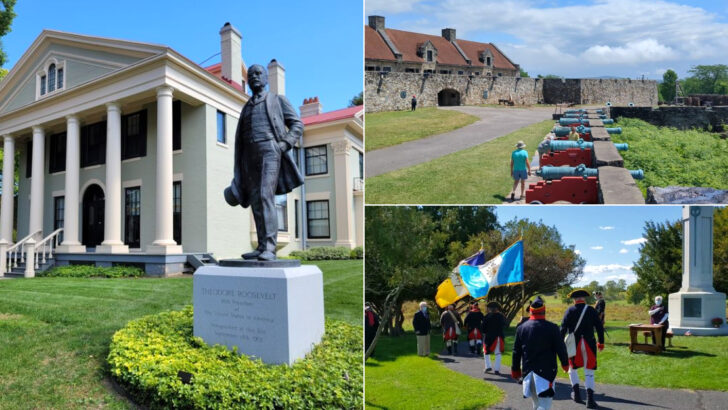
New York State is a living museum of American history, with battlefields, estates, and monuments that shaped the nation.
From the rolling hills of Saratoga to the storied shores of Lake Champlain, the state holds some of the most pivotal chapters of the Revolutionary War and beyond.
Whether you’re tracing the footsteps of Harriet Tubman, exploring the birthplace of the women’s rights movement, or standing on the grounds where presidents once lived, every visit leaves a lasting impression.
Many of New York’s historic parks are federally protected national sites, ensuring their stories are preserved for generations to come.
These 11 parks will inspire, educate, and remind you just how much history is waiting to be discovered across the Empire State.
1. Eleanor Roosevelt National Historic Site – Hyde Park, Dutchess County
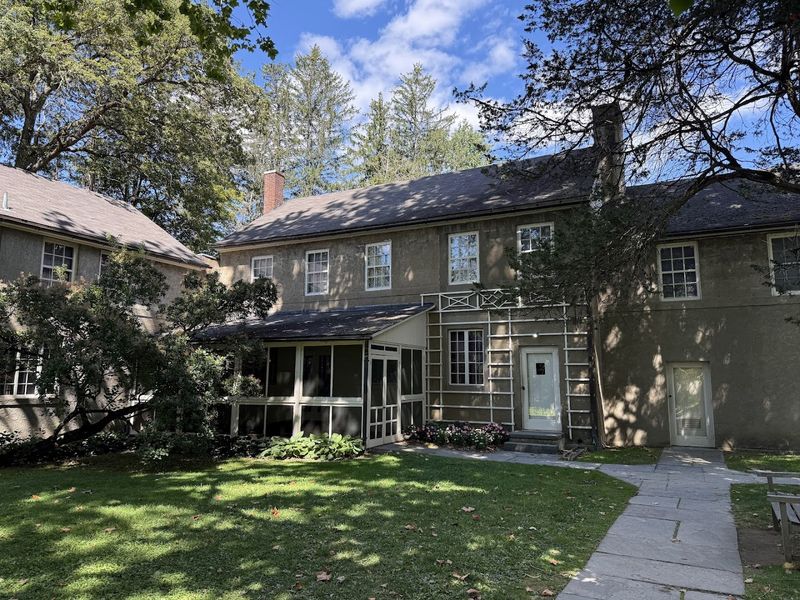
Quiet paths, modest buildings, and a strong sense of purpose give this place unusual emotional depth.
Instead of celebrating power through grandeur, it reveals how leadership can grow from conversation, compassion, and determined public service.
That is exactly what makes the Eleanor Roosevelt National Historic Site in Hyde Park so memorable.
Known as Val-Kill, this retreat was the only home Eleanor Roosevelt ever owned for herself.
It became a working space where she wrote, hosted guests, advanced social causes, and shaped ideas that influenced national and international life.
Visiting the property helps you understand her not simply as a First Lady, but as an independent political force with global impact.
The house feels approachable, which is part of its strength.
Rooms and furnishings reflect practicality rather than display, and that atmosphere makes her daily routines seem surprisingly accessible to modern visitors.
Tours often illuminate her advocacy for human rights, labor issues, racial equality, and expanded roles for women in public life.
If you are drawn to stories of reform and civic courage, this site is deeply rewarding.
Its scale encourages close attention instead of spectacle.
By the time you leave, Hyde Park feels less like a presidential waypoint and more like the setting where one of the twentieth century’s most influential voices kept refining her mission.
2. Sagamore Hill National Historic Site – Oyster Bay, Nassau County
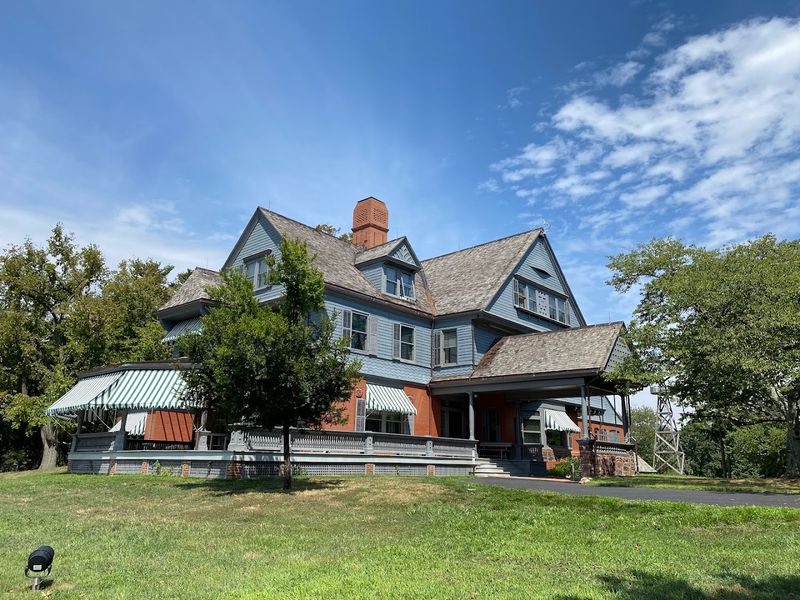
There is an energetic confidence in the air here that feels unmistakably tied to Theodore Roosevelt.
Perched above Oyster Bay, the house and grounds suggest both family warmth and a restless appetite for action.
That combination makes Sagamore Hill National Historic Site in Oyster Bay one of New York’s most vivid presidential destinations.
Roosevelt called this home his Summer White House, and the nickname was no exaggeration.
During his presidency, diplomats, politicians, military figures, and journalists came here while major national decisions unfolded around them.
Walking the estate today lets you connect private domestic life with the larger machinery of American power in the early twentieth century.
The mansion interior is especially compelling because it feels lived in rather than ceremonial.
Books, trophies, collections, and personal objects reveal Roosevelt’s curiosity about nature, history, exploration, and public life.
Outside, the grounds and nearby trails deepen that impression by showing the landscape that nourished his love of the outdoors and his conservation ethic.
If you enjoy personalities as much as events, this site delivers both in equal measure.
Sagamore Hill is not simply a preserved home.
3. Fort Stanwix National Monument – Rome, Oneida County
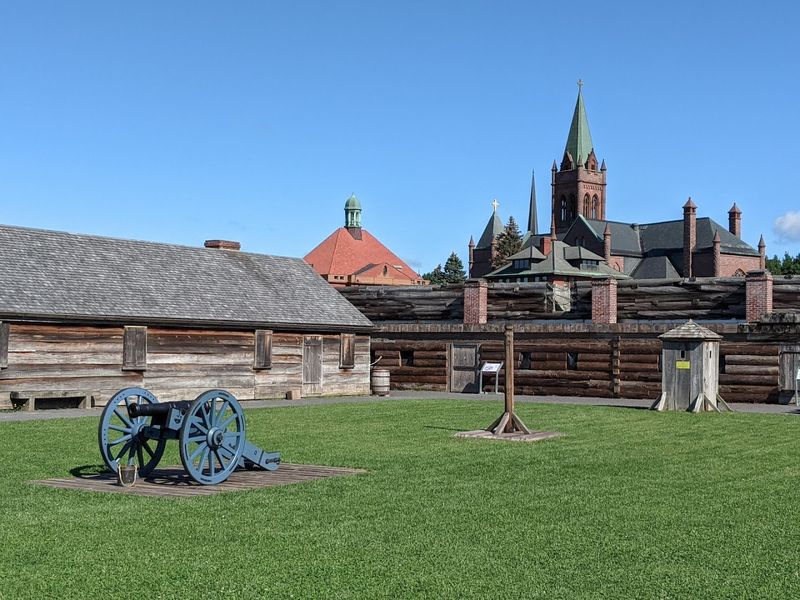
On the old frontier, survival often depended on strong walls and stronger resolve.
This reconstructed fort brings that world back with enough clarity that you can almost hear tools striking timber and orders crossing the parade ground.
That vivid sense of place makes Fort Stanwix National Monument in Rome well worth your time.
During the American Revolution, Fort Stanwix helped block British efforts to divide the colonies along the Mohawk Valley corridor.
Its defenders resisted a difficult siege in 1777, contributing to the broader Saratoga campaign that changed the war’s direction.
The site also sits within a region shaped by complex relationships among European powers, settlers, and Haudenosaunee nations.
What I appreciate most is how the fort balances military history with frontier context.
Reconstructed barracks, storehouses, and defensive features give you a strong visual understanding of life inside a strategic outpost.
Programs and exhibits often explore diplomacy, trade, daily routines, and the cultural tensions that made this area far more than a simple battlefield.
Because the original structure no longer survives above ground, the reconstruction does important interpretive work.
It turns abstraction into space you can walk through and question.
Fort Stanwix offers a grounded, thoughtful, and surprisingly immersive look at war on the interior frontier.
4. Saratoga National Historical Park – Stillwater, Saratoga County
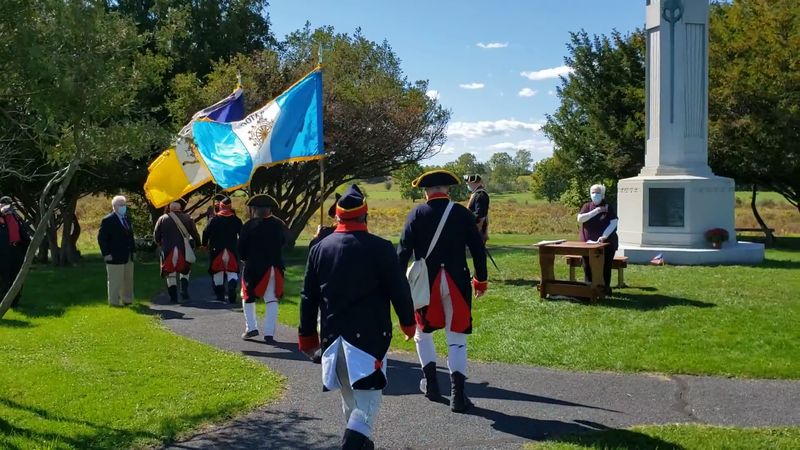
The breeze across these open fields still carries the weight of a world-changing victory.
Standing here, you can picture smoke drifting over ridgelines while exhausted soldiers fought for a cause larger than themselves.
That atmosphere defines Saratoga National Historical Park in Stillwater, where the 1777 Battles of Saratoga marked a decisive turning point in the American Revolution.
What makes this park so powerful is how readable the landscape remains for visitors today.
You can follow the touring road, stop at key overlooks, and understand how terrain shaped British and American decisions during the campaign.
The visitor center adds useful context, especially if you want maps, exhibits, and a clearer sense of why this battle convinced France to openly support the American cause.
I think history lovers will especially appreciate the balance between solemnity and accessibility here.
The battlefield feels expansive rather than crowded, which gives you time to absorb details and imagine troop movements without distraction.
Monuments, reconstructed elements, and walking trails help connect military strategy with the very human cost of war.
If you want one Revolutionary War site in New York that truly explains why events mattered globally, start here.
Saratoga is not just a preserved battlefield.
It is a place where you can feel the momentum of independence begin to shift unmistakably toward success.
5. Women’s Rights National Historical Park – Seneca Falls, Seneca County
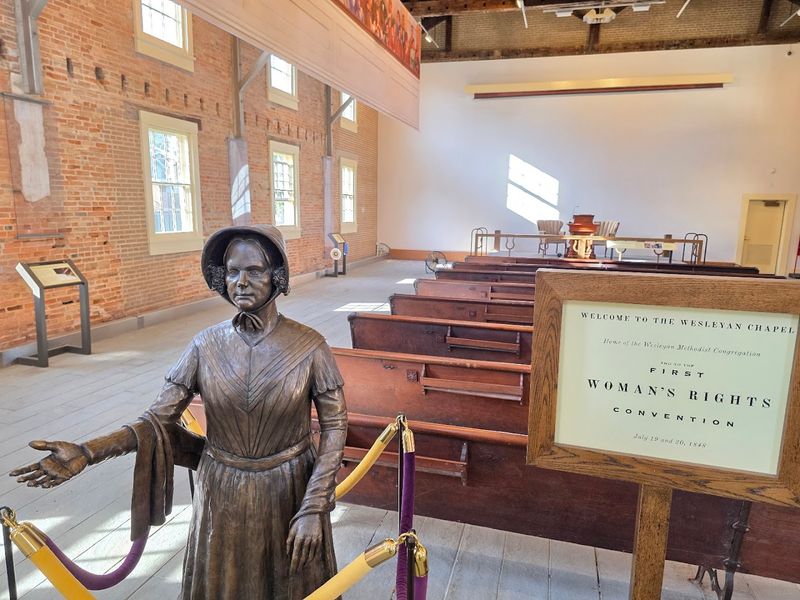
Some places feel charged not by warfare, but by words that altered the future.
In this compact but immensely important setting, demands for equality moved from conversation into organized public action.
That is why Women’s Rights National Historical Park in Seneca Falls remains essential for anyone serious about American history.
The park preserves and interprets sites connected to the 1848 Seneca Falls Convention, widely recognized as the first women’s rights convention in the United States.
Here, Elizabeth Cady Stanton, Lucretia Mott, and other reformers advanced the Declaration of Sentiments, challenging legal, political, and social inequality.
Seeing these spaces in person gives the movement’s origins a weight that summaries rarely convey.
The restored Wesleyan Chapel is especially moving because it places you where those arguments were publicly aired.
Nearby exhibits broaden the story by addressing abolition, reform networks, opposition, and the long campaign that continued far beyond one meeting.
You leave understanding that progress came through persistence, disagreement, coalition building, and generations of activism.
I find this park compelling because it links a local gathering to national transformation.
It does not pretend the fight was simple or complete.
Instead, Seneca Falls invites you to stand at the beginning of a movement and consider how bold ideas, once spoken aloud, can reshape citizenship for everyone.
6. Harriet Tubman National Historical Park – Auburn, Cayuga County
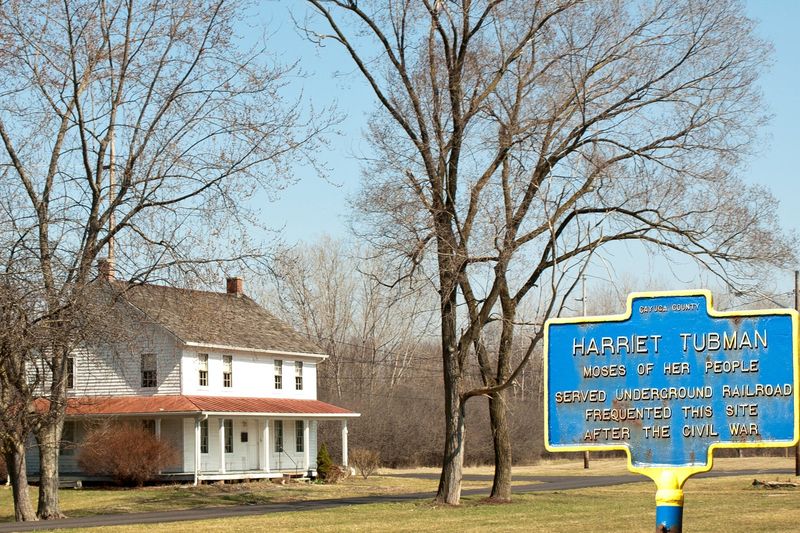
Few historic places carry the moral force that you feel almost immediately upon arrival here.
The landscape is quiet, but the life remembered on it speaks of courage, risk, faith, and a relentless commitment to freedom.
That power defines Harriet Tubman National Historical Park in Auburn.
After escaping slavery and repeatedly returning south to guide others to liberty, Tubman eventually made her home in this part of New York.
The park interprets the later chapters of her life, including her family home, her community work, and her care for elderly African Americans.
It reminds visitors that her heroism did not end with the Underground Railroad.
What stays with you is the sense of continuity between her activism and her everyday life.
This was not merely a symbolic residence, but a place where conviction translated into service, hospitality, and practical support for vulnerable people.
The site also encourages a fuller understanding of Black history in New York, where abolition, refuge, and reform intersected in important ways.
If you want a destination that honors both legend and lived experience, Auburn delivers that balance beautifully.
The story here feels intimate instead of distant.
By walking the grounds connected to Tubman’s final decades, you gain a deeper respect for a woman whose bravery changed lives and whose compassion kept shaping community long afterward.
7. General Grant National Memorial – New York City, New York County
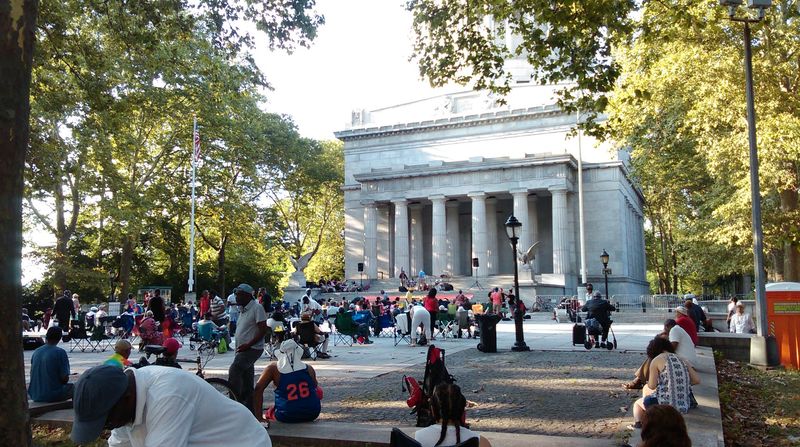
Rising above its surroundings with solemn dignity, this memorial feels more like a national statement than a neighborhood landmark.
Its scale reflects not only personal remembrance, but also the enormous public importance of the man honored within.
That atmosphere makes General Grant National Memorial in Manhattan a striking place to consider war, leadership, and memory.
Commonly called Grant’s Tomb, it commemorates Ulysses S. Grant, the Civil War general who helped preserve the Union and later served as president.
The classical structure, completed in 1897, houses the tombs of Grant and his wife, Julia Dent Grant.
Standing inside, you sense how nineteenth-century America used monumental architecture to express gratitude, grief, and national identity.
The site works especially well for visitors interested in how reputations are built and revised over time.
Interpretation can connect Grant’s military accomplishments, presidency, and later historical reassessments, including renewed attention to his role in defending Reconstruction and civil rights.
Its urban setting also creates a compelling contrast between everyday city movement and ceremonial remembrance.
I think this memorial rewards a slower visit than many people expect.
The design encourages reflection rather than quick sightseeing.
General Grant National Memorial offers a powerful encounter with the ways Americans have chosen to honor one of their most consequential national figures.
8. Fort Ticonderoga – Ticonderoga, Essex County
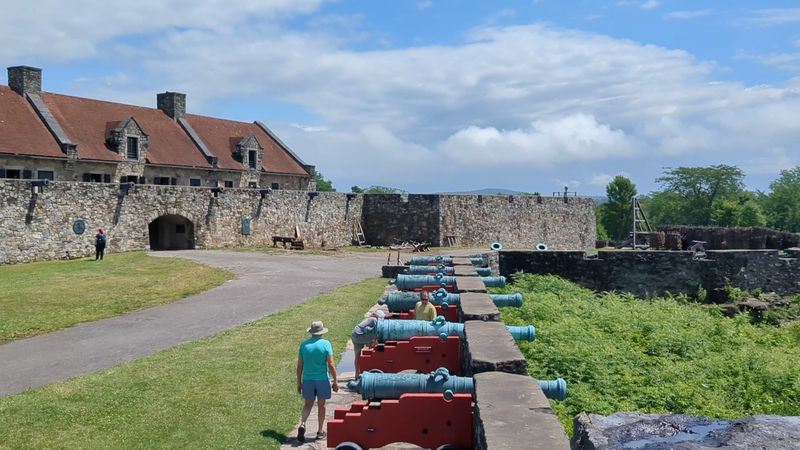
Stone walls, sweeping water views, and the feeling of contested empire come together dramatically at this landmark.
Before you even step inside, the setting suggests why armies repeatedly fought to control the corridor between New York and Canada.
That strategic tension defines Fort Ticonderoga in Ticonderoga, one of the most important military sites in early American history.
The fort began under the French, later passed to the British, and then entered Revolutionary legend after Ethan Allen and Benedict Arnold captured it in 1775.
Its cannons also helped Henry Knox force the British evacuation of Boston, linking this northern stronghold to events far beyond Lake Champlain.
When you walk the grounds, those connections become much easier to grasp than they do on a printed timeline.
I like that this site offers more than static architecture.
Living history demonstrations, costumed interpretation, gardens, exhibits, and boat views create a fuller sense of daily life inside a military post.
You are not only learning about commanders and campaigns here, but also about labor, logistics, families, and survival in a tense borderland.
For anyone fascinated by colonial warfare and the Revolution, this is an essential stop.
Fort Ticonderoga feels both grand and immediate.
9. Theodore Roosevelt Inaugural National Historic Site – Buffalo, Erie County
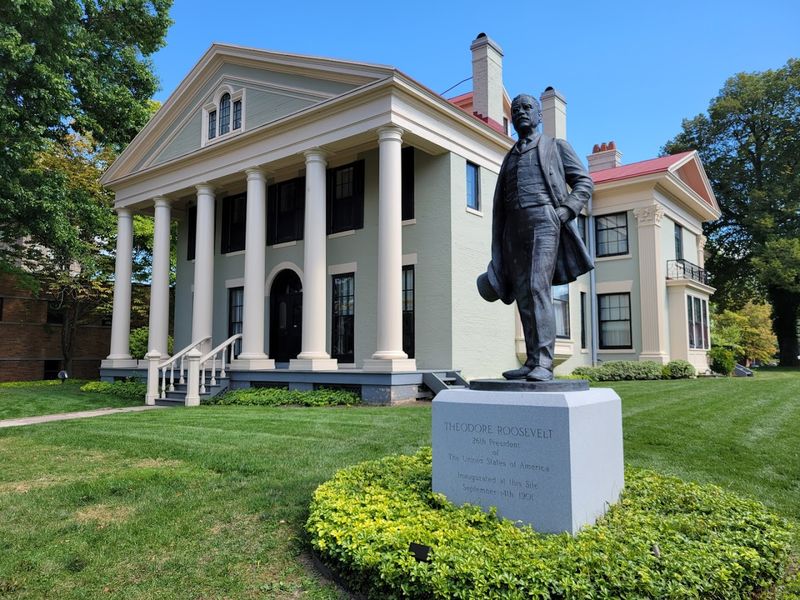
Few historic houses capture a sudden national turning point as clearly as this one.
Inside these elegant rooms, grief, uncertainty, and constitutional continuity collided during one of the most dramatic moments in presidential history.
That significance makes the Theodore Roosevelt Inaugural National Historic Site in Buffalo an unforgettable stop for history lovers.
After President William McKinley was assassinated in 1901, Theodore Roosevelt took the oath of office here at the Ansley Wilcox House.
The event transformed a private residence into a place forever linked with presidential succession and the beginning of a consequential new administration.
When you visit, the story feels immediate because the setting remains intimate rather than monumental.
Exhibits help explain not only the inauguration itself, but also the political climate of the era.
You get a richer sense of Buffalo’s prominence at the time, the tensions facing the nation, and the expectations suddenly placed upon Roosevelt.
Interactive interpretation and restored interiors make the experience especially accessible without flattening the seriousness of the moment.
I think this site stands out because it emphasizes transition instead of triumph alone.
You are seeing democracy continue under pressure, in real rooms occupied during real uncertainty.
Buffalo offers a compact but remarkably powerful historical experience here.
10. Hamilton Grange National Memorial – New York City, New York County
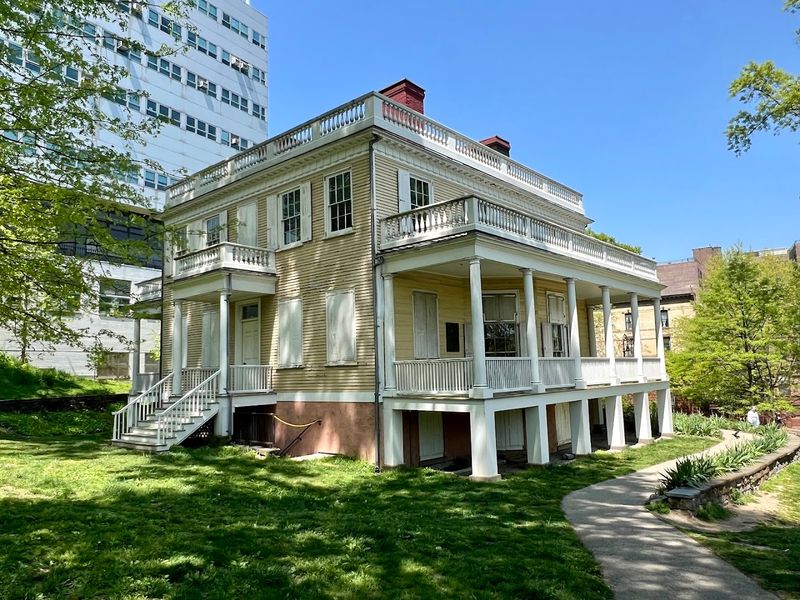
Tucked within modern Manhattan, this elegant house offers a surprising sense of calm and intellectual presence.
It feels less like a shrine to myth and more like an invitation to meet a complicated founder on personal terms.
That is a major reason Hamilton Grange National Memorial in Harlem deserves your attention.
This was the only home Alexander Hamilton ever owned, completed in 1802 near the end of his life.
Today the restored structure helps visitors move beyond broad political legends and consider Hamilton as a husband, father, immigrant, statesman, and builder of institutions.
Rooms, furnishings, and interpretation provide a valuable domestic frame for a figure often treated only through debates over finance and ideology.
Because the house survives in New York City, it also reinforces Hamilton’s deep connection to the city’s growth and to the young republic’s commercial future.
You can trace links from this residence to national banking, constitutional arguments, party conflict, and the broader urban world he helped shape.
That mix of personal space and national consequence gives the site unusual richness.
If you want a historic home that sharpens your understanding of the early United States, this one succeeds beautifully.
It feels intimate, thoughtful, and historically grounded.
Hamilton Grange turns an often oversized historical personality into someone more legible, while still preserving the ambition and intensity that made his legacy endure.
11. Olana State Historic Site – Hudson, Columbia County
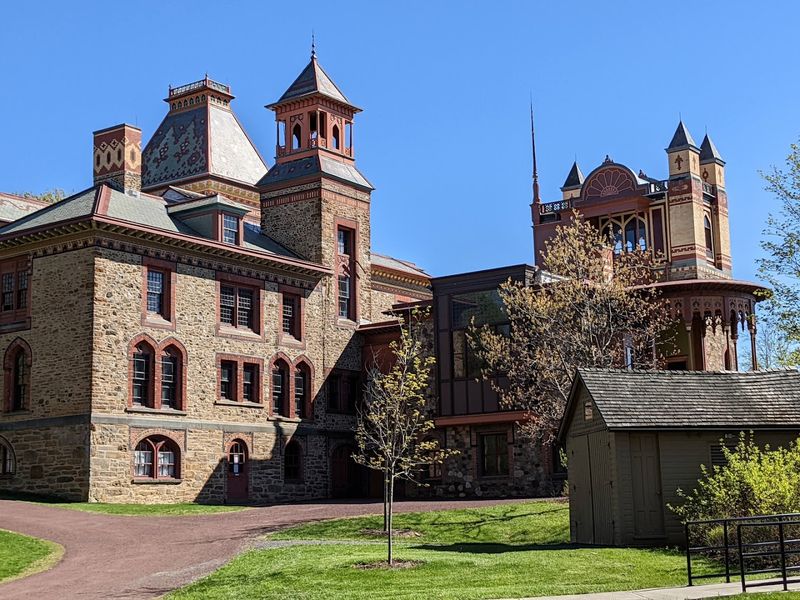
Wide skies, layered river views, and a house that looks almost dreamlike make this destination instantly distinctive.
The setting feels carefully composed, which is fitting because art and landscape were intentionally fused here into one experience.
That creative vision defines Olana State Historic Site in Hudson.
Olana was the home of Frederic Edwin Church, one of the leading painters of the Hudson River School.
More than a residence, the estate functioned as a total work of art, with architecture, interiors, carriage roads, and panoramic views all shaped to heighten visual drama.
When you visit, you are stepping into the mind of an artist who thought on both canvas and landscape scale.
The house itself is remarkable for its eclectic design, drawing inspiration from Church’s travels in the Middle East.
Inside, decorative details, collections, and preserved rooms reveal refined taste without losing a lived-in character.
Outside, the grounds are just as important, since the designed vistas connect beauty, environmental awareness, and nineteenth-century cultural ambition.
I would recommend Olana even to travelers who do not usually seek out house museums.
It offers art history, architectural interest, and unforgettable scenery in one place.
For anyone exploring how New York’s natural grandeur shaped American culture, Olana provides one of the state’s most inspiring and visually rewarding historic experiences.