Michigan has a talent for spectacular scenery that few other states can match, and the Upper Peninsula alone could fill a photography portfolio for years.
From the haunting silhouette of a lighthouse above Lake Michigan’s eastern shore to misty ribbons of water dropping through ancient hemlock forests, every turn produces something impossible to ignore.
Some spots are legends among seasoned road-trippers; others are still making their way onto traveler maps for the first time.
Waterfalls, canopied drives, volcanic rock formations, and lake vistas so vast they resemble open ocean, Michigan’s range is genuinely astonishing.
These 11 locations prove that the Great Lakes State still has views left to discover, even if you thought you’d already seen the best of it.
1. Tunnel of Trees – Harbor Springs, Emmet County
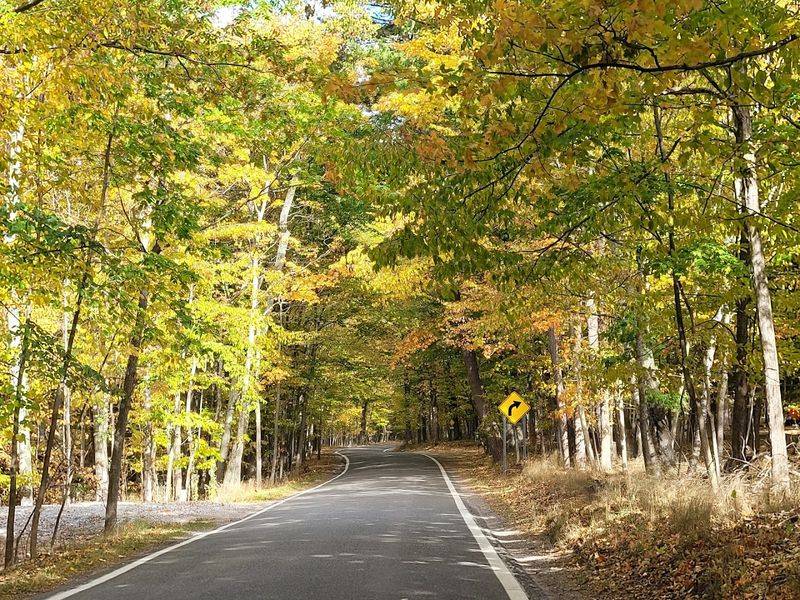
The road narrows, the trees lean in, and suddenly the world feels quieter.
Light flickers through maple leaves, lake air drifts across the pavement, and every curve makes you slow down on purpose.
That mood belongs to the Tunnel of Trees near Harbor Springs, one of Michigan’s most memorable scenic drives.
Stretching along M-119 above Little Traverse Bay, this route pairs dense forest with quick blue flashes of Lake Michigan.
In fall, the color show gets most of the attention, but summer’s deep green canopy and spring’s fresh leaves are just as beautiful.
I love that the drive never feels staged, because the barns, churches, overlooks, and farmstands keep it rooted in northern Michigan life.
Good stops include Good Hart, St. Ignatius Church, and several roadside pullouts where the shoreline suddenly opens wide.
Cyclists and motorcyclists also flock here, though the narrow shoulder means drivers should stay patient and careful.
Morning light feels soft and peaceful, while late afternoon adds dramatic shadows and richer color through the trees.
If you want a view that unfolds instead of arriving all at once, this is the one.
It is less about one grand overlook and more about a continuous feeling of wonder around every bend.
2. Lake of the Clouds – Carp Lake Township, Ontonagon County
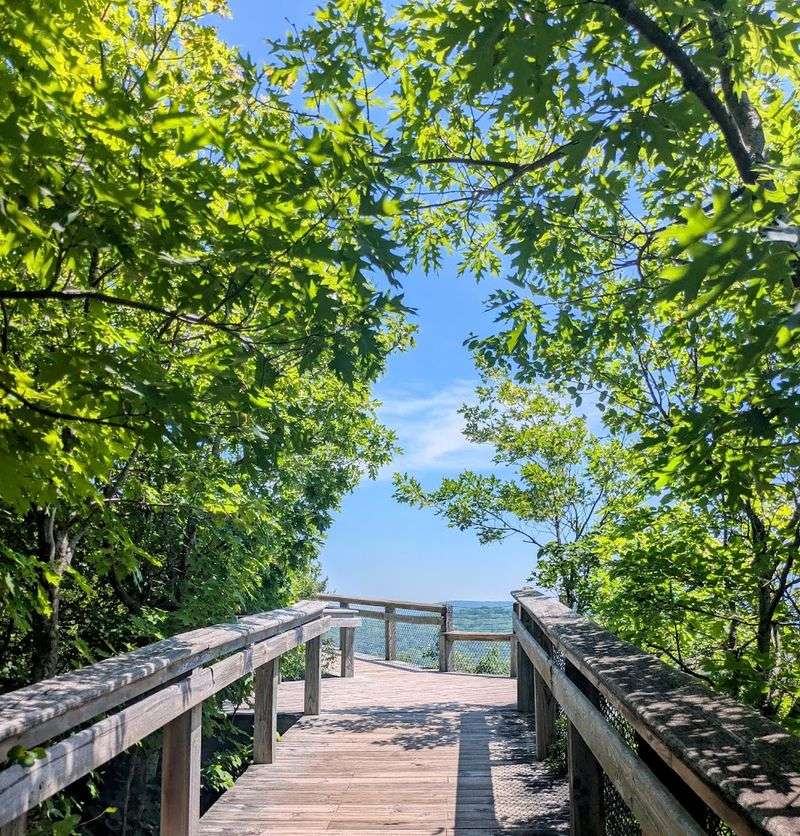
There is a moment when the forest parts and the horizon suddenly stacks itself into ridges, water, and sky.
The scene feels too dramatic for the Midwest, which is exactly why Lake of the Clouds catches so many people off guard.
Hidden in the Porcupine Mountains near Carp Lake Township, it is one of Michigan’s most iconic overlooks.
From the main viewing area, the long lake rests deep in a valley surrounded by rolling hardwood hills and ancient rocky slopes.
The perspective is what makes it unforgettable, because you are not just seeing a lake, you are looking into a whole wilderness system.
At sunrise and sunset, fog can drift across the basin and make the name feel especially fitting.
The overlook is accessible by a short walk, but nearby trails offer quieter angles and a stronger sense of immersion.
Fall brings blazing color, while summer reveals endless green layers that seem to stretch beyond the state line.
If you visit after rain, the atmosphere often turns moodier and the ridges appear even more textured and alive.
It gives you grandeur, but it also offers detail if you stop long enough to notice the changing light on each ridge.
Few Michigan views balance scale and intimacy as beautifully as this one does.
3. Canyon Falls – L’Anse, Baraga County
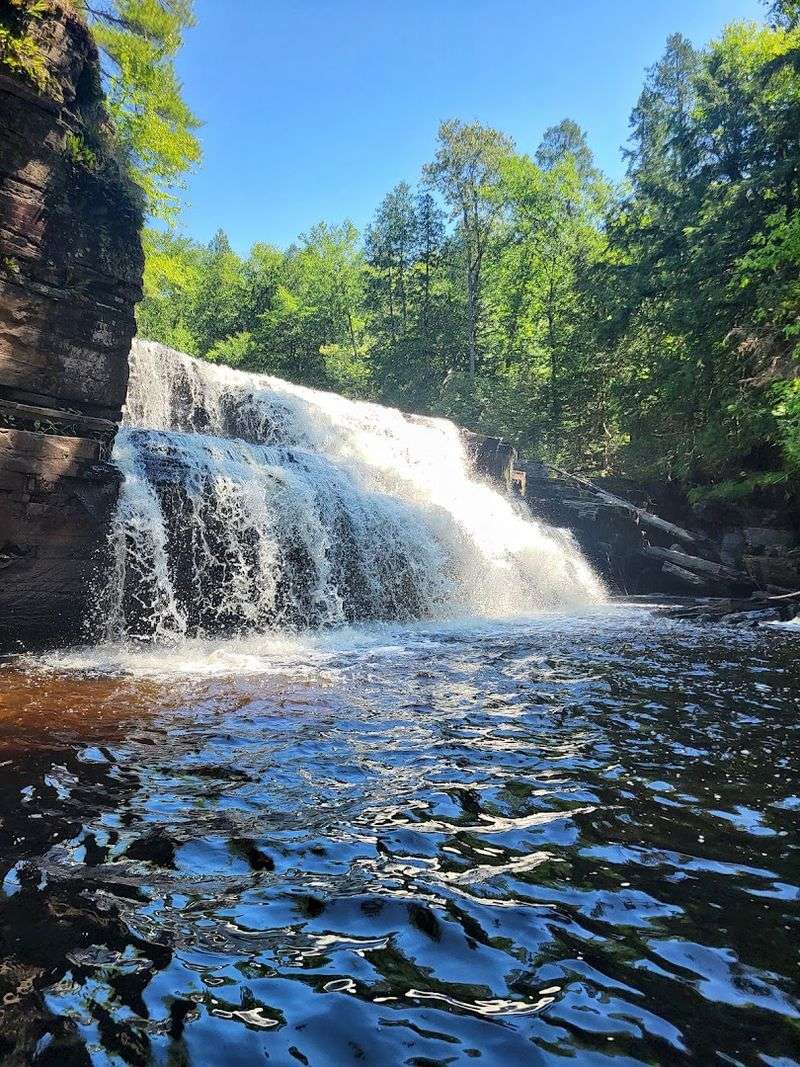
Water threads through rock here with a kind of restless energy that keeps you moving from one vantage point to the next.
The trail hums with anticipation, and every few minutes the river shows a new shape, a new bend, or another shelf of tumbling water.
That changing rhythm is the draw at Canyon Falls near L’Anse, often called the Grand Canyon of Michigan.
Set along the Sturgeon River, the area includes rapids, cascades, and a narrow gorge that creates far more drama than many visitors expect.
The walk from the parking area is manageable, though roots, rocks, and occasional mud make sturdy shoes a smart choice.
A suspension bridge and multiple viewing spots help break up the route, giving you both broad and close-up looks at the river’s movement.
Fall is especially popular thanks to colorful hardwoods, but spring runoff can make the water feel even more powerful.
What stands out most is how the site rewards curiosity, because the best impressions come from exploring beyond the first obvious viewpoint.
Look downstream, listen for changes in volume, and notice how the gorge narrows and widens through the forest.
I appreciate that Canyon Falls feels adventurous without being inaccessible.
4. Munising Falls – Munising, Alger County
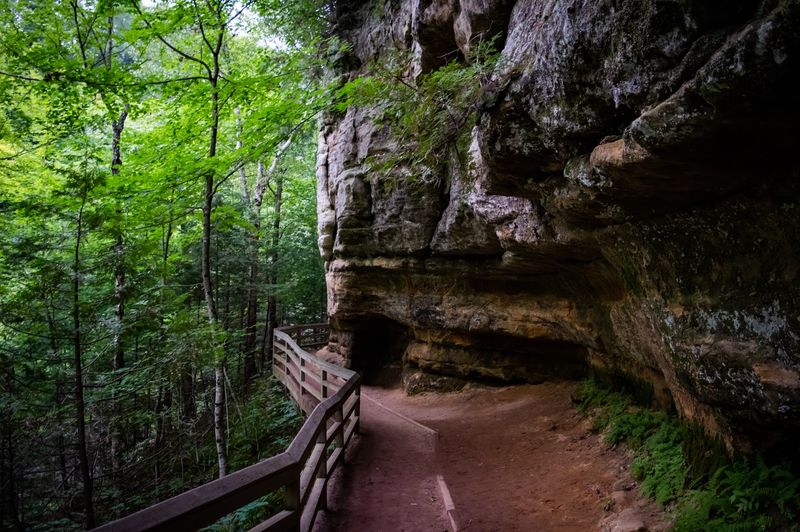
Cool air settles into the gorge even on warm days, and the trail seems to pull you forward with almost no effort.
You hear water echoing off rock walls before the falls come into view, which makes the reveal feel bigger than the short walk suggests.
That easy magic is exactly what makes Munising Falls such a rewarding stop in Munising.
Located within Pictured Rocks National Lakeshore, the waterfall drops around 50 feet over a sandstone cliff into a fern-lined recess.
The main path is brief and accessible, with viewing platforms that give you clear looks without requiring a strenuous hike.
Families love it for that reason, but the setting still feels scenic enough to satisfy travelers chasing standout Upper Peninsula landscapes.
Winter transforms the falls into a striking column of ice, while spring and early summer bring the strongest flow.
Because the gorge stays shaded, the area often feels refreshingly cool and quiet compared with busier shoreline stops nearby.
If you continue to the upper platform, you get a different perspective that shows how the stream slips toward the edge before dropping cleanly away.
It is a reminder that not every great Michigan view requires a long trek or a full-day plan.
Sometimes a short forest path, a hidden gorge, and a beautifully framed waterfall are more than enough.
5. Rock River Canyon – Eben Junction, Alger County

The forest feels ordinary until the land suddenly breaks open beneath you.
One moment you are surrounded by quiet trees, and the next you are staring into a rugged gorge cut by dark water and stone.
That contrast is what makes Rock River Canyon near Eben Junction feel like such a startling discovery.
Located within the Hiawatha National Forest, this canyon offers elevated views of the Rock River as it winds through steep walls and rocky ledges.
Several observation points let you study the curves of the gorge, and each one reveals different textures in the stone and current.
In autumn, the overlook becomes especially striking, with bright foliage framing the darker river corridor below.
The area feels more remote than many famous Michigan viewpoints, which adds to its appeal.
A short network of paths connects overlooks and nearby waterfall views, so you can explore without committing to a difficult backcountry trek.
If you arrive early or on a weekday, there is a good chance you will hear little more than wind, birds, and moving water.
It combines geology, river movement, and forest depth in a way that feels distinctly wild and less polished than better-known destinations.
For anyone who loves dramatic terrain and quieter beauty, Rock River Canyon absolutely earns its place on this list.
6. Laughing Whitefish Falls – Sundell, Alger County
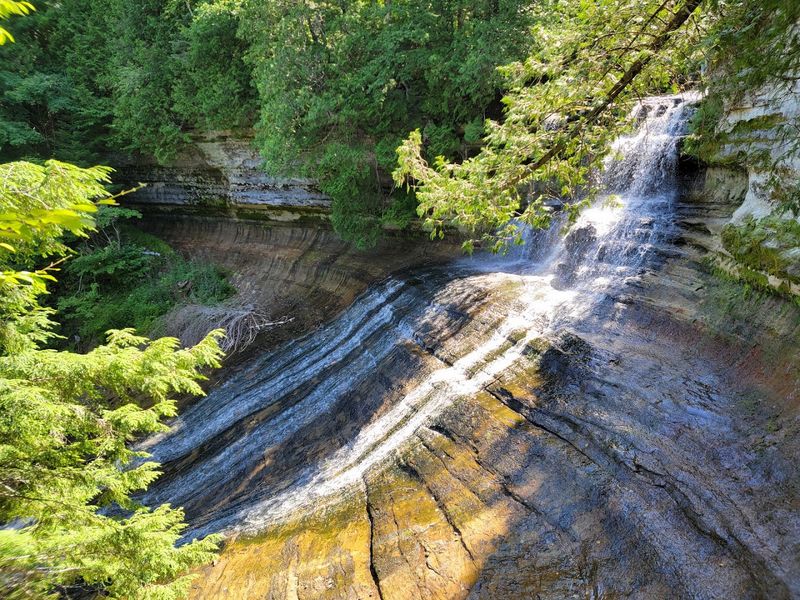
The sound reaches you before the waterfall does, carried through cedar and hardwood forest like a steady invitation.
Then the trail opens and the drop reveals itself in tiers, elegant rather than thunderous, framed by a deep green ravine.
That first impression defines Laughing Whitefish Falls in Alger County, one of the Upper Peninsula’s most graceful natural sights.
The falls plunge about 100 feet over limestone escarpments, creating a long, ribboned cascade that feels almost theatrical from the lower viewing area.
A stairway and boardwalk system help you experience different angles, and each one changes how the height and shape register.
In spring, runoff gives the water extra force, while summer surrounds the gorge with lush, cool vegetation.
The short hike through the state park is part of the appeal, because it builds anticipation without demanding a huge effort.
Photographers love the layered rock, but even without a camera, the scene holds your attention longer than expected.
If you come after rainfall, the falls look fuller, and the forest carries that rich earthy smell that makes the whole place feel alive.
What surprised me most was the sense of depth.
This is not just a waterfall you glance at and leave, because the ravine, trees, and descent create a fuller experience.
7. Big Sable Point Lighthouse – Hamlin Township, Mason County
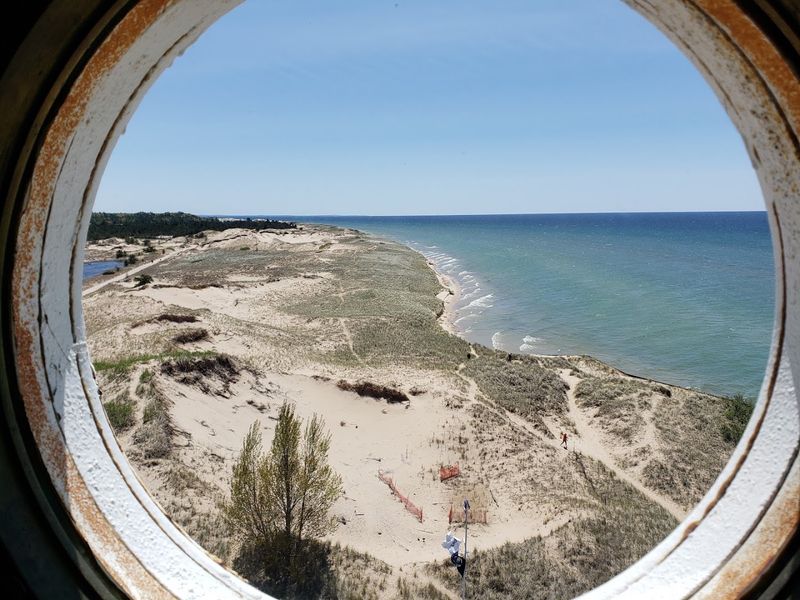
Wind moves through the dune grass, waves roll in with a steady pulse, and the shoreline feels bigger with every step.
Before you even reach the lighthouse, the landscape starts doing the work, opening wide with sand, sky, and that unmistakable Lake Michigan blue.
That buildup makes Big Sable Point Lighthouse in Hamlin Township such a satisfying destination.
Reaching the tower requires a walk of roughly two miles through Ludington State Park, which helps preserve the feeling of isolation.
When the lighthouse finally appears, its bold black-and-white daymark rises above the dunes like something from another era.
The contrast between engineered history and raw shoreline scenery is what gives this place its lasting visual power.
You can tour the lighthouse in season, but even from outside, the setting is the real show.
The beach stretches in both directions, the lake horizon looks almost oceanic, and sunsets here can turn the entire scene amber and rose.
On windy days, the surf adds drama, while calmer evenings bring a softer, reflective mood that feels almost meditative.
The walk is not difficult, but it creates a sense of arrival that parking-lot overlooks rarely match.
If you want Michigan coastal beauty with history, scale, and atmosphere, Big Sable Point delivers all three beautifully.
8. Covered Road – Houghton Lake, Roscommon County
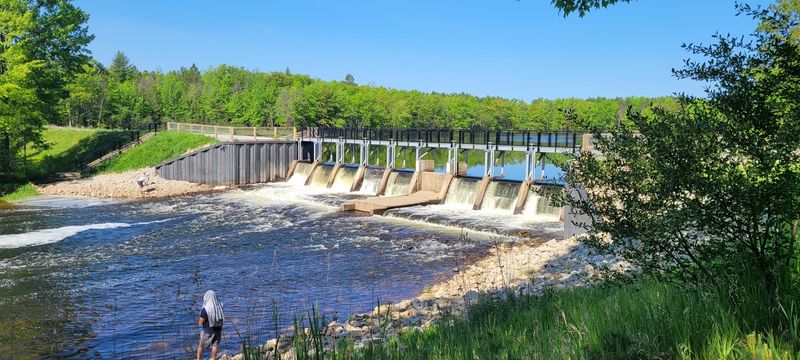
Some views do not rely on cliffs, waterfalls, or giant horizons.
Instead, they work through mood, repetition, and the feeling that a familiar road has quietly slipped into something enchanted.
That is the charm of Covered Road near Houghton Lake, a lesser-known stretch that turns a simple drive into a scenic experience.
The road is lined so tightly with mature trees that the canopy forms a living tunnel in the warmer months.
Sunlight filters through in shifting patches, and the changing shadows make even a slow drive feel cinematic.
In autumn, the corridor becomes even more striking as gold, orange, and red leaves create layers of color above and beside the pavement.
Unlike major scenic routes, this spot feels local and unhurried.
You are not chasing one signature overlook here, but enjoying how the atmosphere builds as the tree cover thickens and the outside world fades back.
Photographers often appreciate the symmetry, while casual visitors simply enjoy the cozy, almost storybook quality of the drive.
I think places like this matter because they broaden what counts as a great view.
Covered Road proves beauty can come from enclosure as much as openness, from shade as much as skyline.
9. Taquamenon Lower Falls – Paradise, Chippewa County
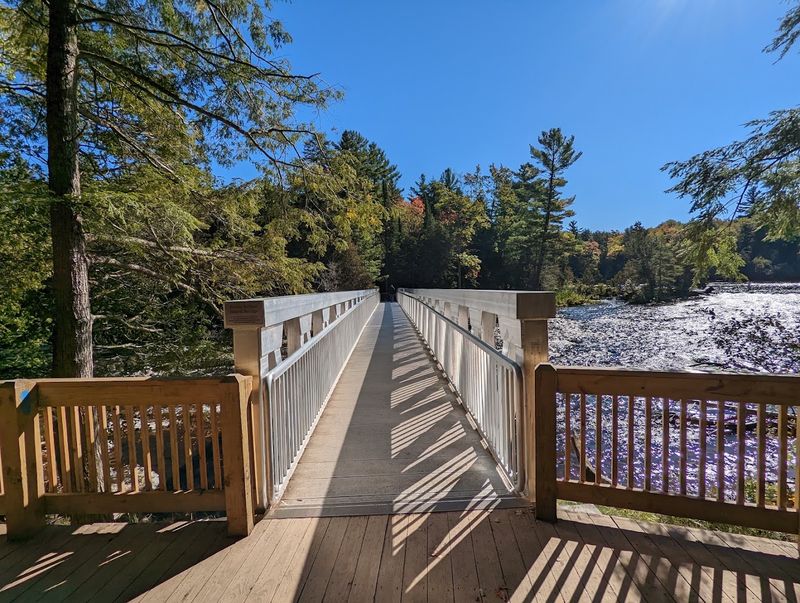
The river arrives in multiple voices here, breaking around islands and rejoining in broad, amber-tinted surges.
Instead of one dramatic plunge, the scene spreads outward, which makes it feel immersive and alive from almost every angle.
That wide, layered beauty defines Taquamenon Lower Falls near Paradise, one of the Upper Peninsula’s most beloved water views.
Part of Taquamenon Falls State Park, the lower falls consist of several cascades surrounding a wooded island in the middle of the river.
Boardwalks and viewing platforms offer excellent perspectives, and in warmer months, rowboats sometimes take visitors even closer to the central island.
The tannin-rich water gives the river its famous tea color, adding a distinctive visual texture that photographs never fully capture.
This is a place where movement matters.
You notice water slipping over rock shelves, swirling in side channels, and flashing differently as clouds shift above the trees.
Because the area is broad and walkable, you can keep changing vantage points and discover new compositions without much effort.
I find the lower falls especially appealing because they feel interactive rather than singular.
You are not just looking at one drop from one railing, but entering a whole riverscape shaped by current, forest, and light.
10. North Country Trail Black River Harbor – Bessemer Township, Gogebic County
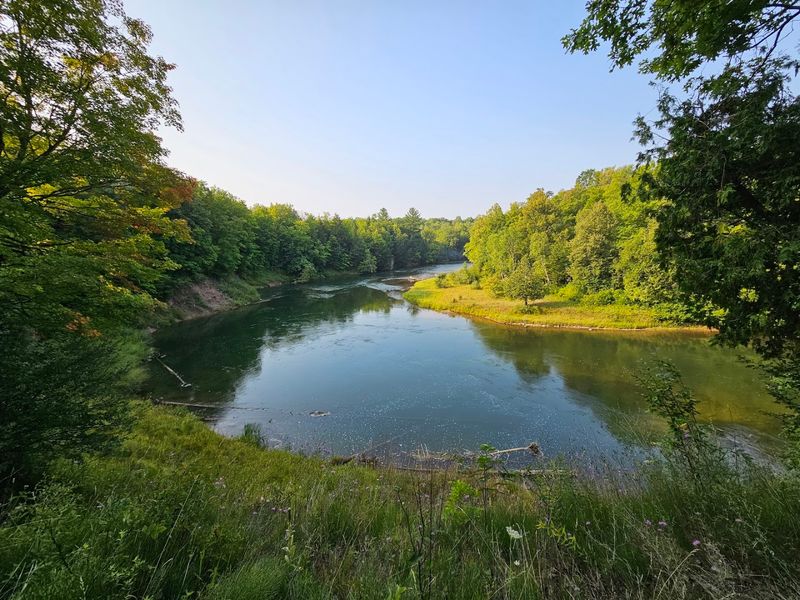
Everything feels elemental here – rock, water, wind, and distance.
The trail rises and falls through thick forest and along rugged shoreline, revealing scenes that feel far larger than a casual day hike might suggest.
That is the thrill of the North Country Trail near Black River Harbor in Gogebic County.
This section combines some of the Upper Peninsula’s best ingredients in one route: Lake Superior views, dramatic river crossings, steep bluffs, and access to the celebrated Black River waterfalls.
Depending on the segment you choose, you can move from roaring inland cascades to wide open lake panoramas in a surprisingly short span.
The harbor itself adds another layer, with the bridge, beach, and dark volcanic rock creating a striking foreground against Superior’s endless horizon.
Conditions can change quickly, which is part of the appeal.
On bright days, the lake looks almost tropical near shore, but under clouds it turns steel blue and intensely powerful.
Fall colors make the wooded stretches glow, while summer offers the clearest long-distance shoreline views.
I appreciate this place because it rewards both hikers and scenic stop seekers.
Even a shorter outing can deliver huge visual payoff, yet the broader trail network invites deeper exploration if you have the time.
11. Au Train Falls – Au Train, Alger County
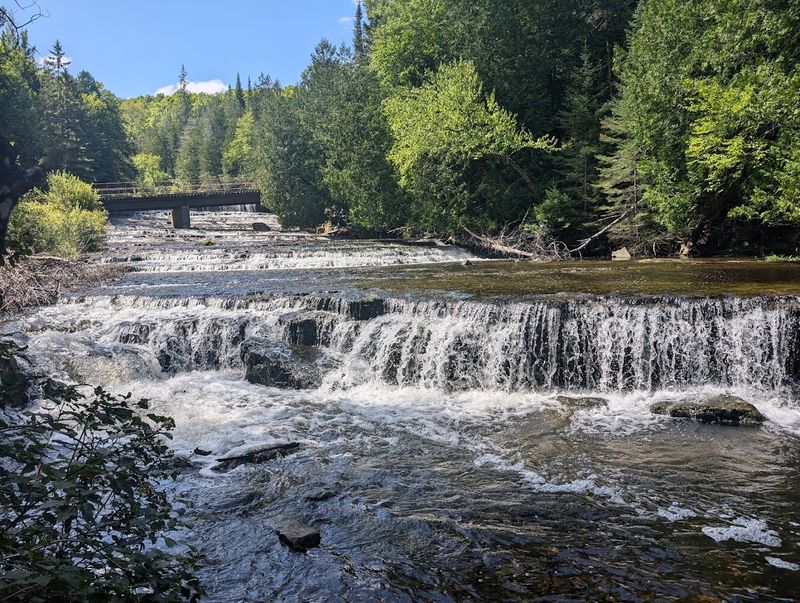
The river seems to gather itself all at once here, then spill forward in a broad, muscular sweep.
There is an industrial history in the background, but the first thing you notice is the force of the water and the way it brightens the dark rock below.
That visual punch makes Au Train Falls near Au Train a memorable final stop for any Michigan scenic list.
Situated on the Au Train River, the falls are shaped in part by hydroelectric infrastructure, yet they still feel undeniably wild when the flow is strong.
The main cascade spreads across a rocky lip and drops into a gorge lined with thick forest, creating a scene that is both rugged and unexpectedly elegant.
Nearby viewpoints and trails offer different perspectives, from broader river context to tighter looks at the descending water.
Spring and periods after rain tend to show the falls at their most energetic.
In autumn, the surrounding hillsides add color that softens the harder lines of rock and concrete in the area.
That mix of human alteration and natural drama is part of what makes the location interesting instead of generic.
I came away liking Au Train Falls more than I expected.
It may not have the fame of some nearby attractions, but the scale, motion, and setting give it real presence.