Iowa has a knack for hiding its best landmarks in plain sight, and the eleven places on this list are proof that the state rewards those who look past the obvious.
From bluffs carved by ancient glaciers to sacred burial mounds that predate European settlement by centuries, Iowa’s landscape carries a depth of history that most travelers never expect to find.
Some have been cherished by locals for generations while remaining almost entirely unknown to visitors arriving from out of state.
Others have seen recent surges of interest as travelers seek out slower, more meaningful experiences away from crowded tourist corridors.
Pack comfortable shoes, give yourself more time than you think you’ll need, and let Iowa show you what it’s been quietly holding back.
1. Backbone State Park, Dundee, Delaware County
Rugged cliffs, shaded trails, and a spine-like ridge create the kind of scenery many travelers do not expect to find in Iowa.
The landscape feels older, sharper, and more dramatic than the state is often given credit for.
That surprise is part of the appeal of Backbone State Park near Dundee.
Established as Iowa’s first state park in 1920, it still feels refreshingly untamed in places.
The park takes its name from a narrow bedrock ridge called the Devil’s Backbone, where steep limestone edges rise above the Maquoketa River.
When you hike here, you get a stronger sense of Iowa’s geologic character than you would from a quick roadside stop.
Beyond the iconic ridge, the park offers caves, fishing areas, picnic spots, and wooded campgrounds that make it easy to linger.
It works equally well for a serious day hike or a slower weekend escape where you simply want to trade noise for birdsong.
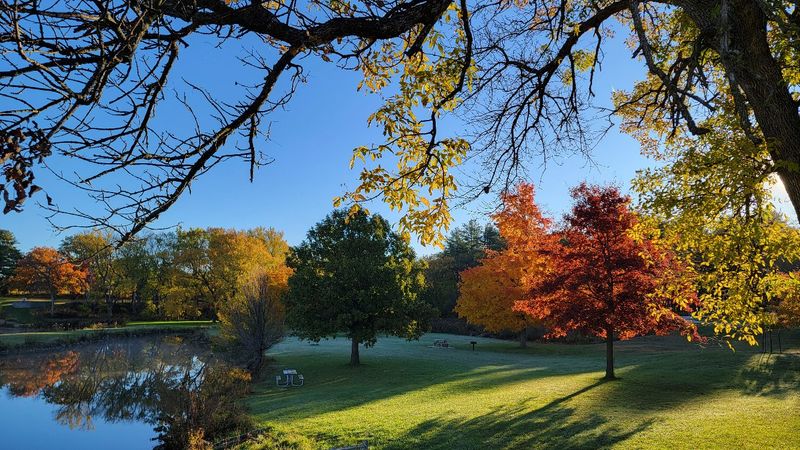
In fall especially, the colors along the bluffs make the views feel almost theatrical.
What makes this landmark underrated is how complete the experience is.
You are not just looking at a pretty vista, you are moving through a place shaped by stone, water, and time.
For travelers who want Iowa with more texture and elevation, Backbone State Park deserves far more attention than it usually gets.
2. Pikes Peak State Park Overlook, McGregor, Clayton County
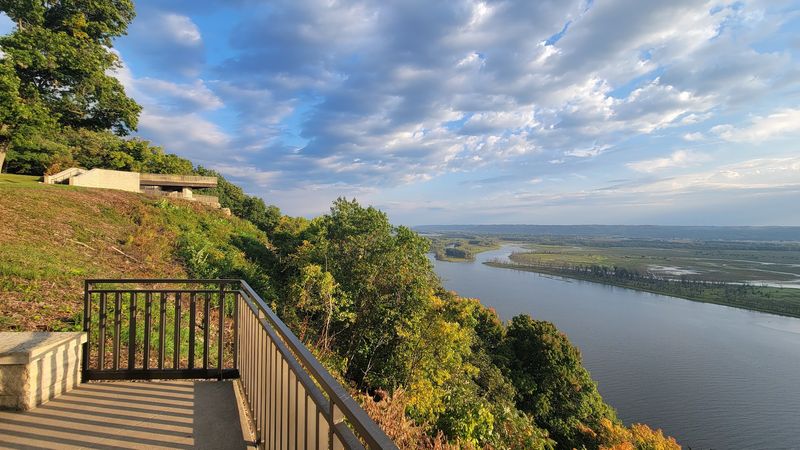
Few moments on an Iowa road trip feel as instantly expansive as stepping onto a bluff and watching the Mississippi stretch in every direction.
The river widens, wooded hills roll into the distance, and the whole scene invites you to pause longer than planned.
That is the power of the overlook at Pikes Peak State Park near McGregor.
Named in honor of explorer Zebulon Pike, this northeastern Iowa landmark delivers one of the state’s most famous views, yet it still feels oddly undercelebrated outside regional travel circles.
From the overlook, you can see the Mississippi and Wisconsin River valleys unfold in layered bands of water, forest, and sky.
It is the kind of panorama that makes Iowa’s edges feel far more dramatic than stereotypes suggest.
The park offers more than a viewpoint.
Hiking trails lead through wooded ravines, Bridal Veil Falls adds another scenic reward, and changing seasons constantly reshape the mood of the landscape.
Spring greens, summer haze, and fall color each give the bluff a different personality.
What makes this place special is the combination of easy access and genuine grandeur.
You do not need an epic trek to earn a memorable scene here.
If you want one stop that quickly proves Iowa belongs in any conversation about Midwestern beauty, the Pikes Peak State Park Overlook makes a convincing case.
3. Effigy Mounds National Monument, Harpers Ferry, Allamakee County
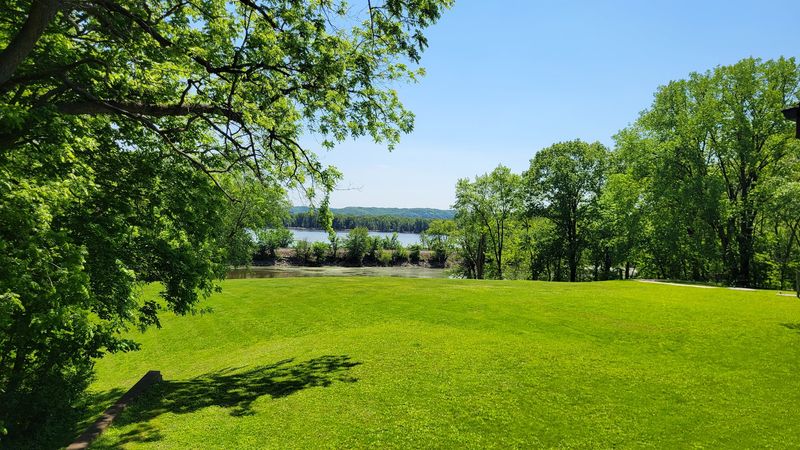
Some landscapes ask for excitement, but others ask for reverence.
On the wooded bluffs above the Upper Mississippi, the ground itself carries memory, meaning, and centuries of human presence.
That is what makes Effigy Mounds National Monument near Harpers Ferry such an essential Iowa landmark.
This protected site preserves more than two hundred prehistoric mounds, including rare shapes representing bears and birds.
Built by Native peoples, these earthworks were not casual decorations on the land but places of ceremony, burial, and cultural significance.
Walking here should feel less like checking off an attraction and more like entering a space that deserves humility and attention.
The monument also happens to be beautiful.
Trails climb through hardwood forest to overlooks where the Mississippi River valley opens below, creating a powerful connection between sacred geography and natural scenery.
You leave with the sense that the setting was chosen with deep intention, not convenience.
Effigy Mounds deserves more public attention because it broadens how people understand Iowa.
This is not only a scenic destination, but also one of the state’s most meaningful links to Indigenous history.
4. Sergeant Floyd Monument, Sioux City, Woodbury County
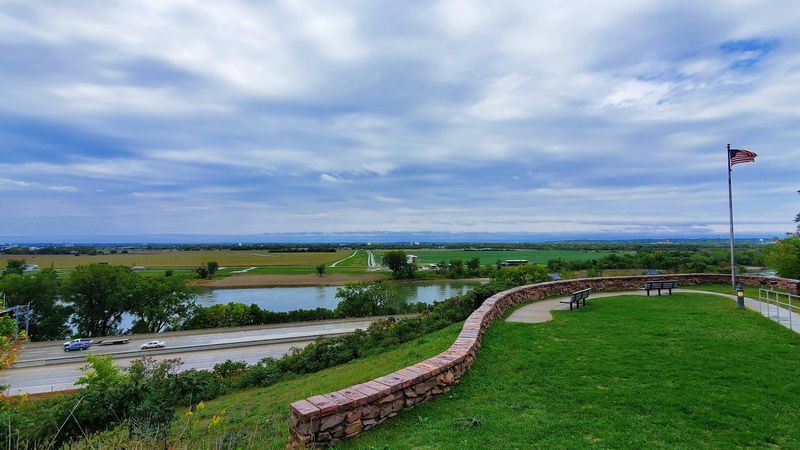
High on a bluff above the Missouri River, a tall stone obelisk rises with more quiet dignity than fanfare.
The setting feels reflective rather than crowded, which suits a landmark tied to one of America’s most famous expeditions.
That understated presence is part of what makes the Sergeant Floyd Monument in Sioux City worth a closer look.
The monument commemorates Sergeant Charles Floyd of the Lewis and Clark Expedition, believed to be the expedition’s only member to die during the journey.
His 1804 death near this area gave the site national historical significance long before many travelers ever heard of it.
Today, the monument stands as both memorial and viewpoint, connecting frontier history to the geography that shaped it.
The obelisk itself is striking, but the broader experience matters too.
From the hilltop location, you can take in wide views of the surrounding valley and better imagine the scale of the landscape early explorers encountered.
It is a place where context deepens the scenery, rather than competing with it.
This landmark deserves more attention because it links Iowa directly to a foundational American story.
It is not flashy, but it is meaningful, accessible, and visually distinctive.
5. Dunning’s Spring Park, Decorah, Winneshiek County
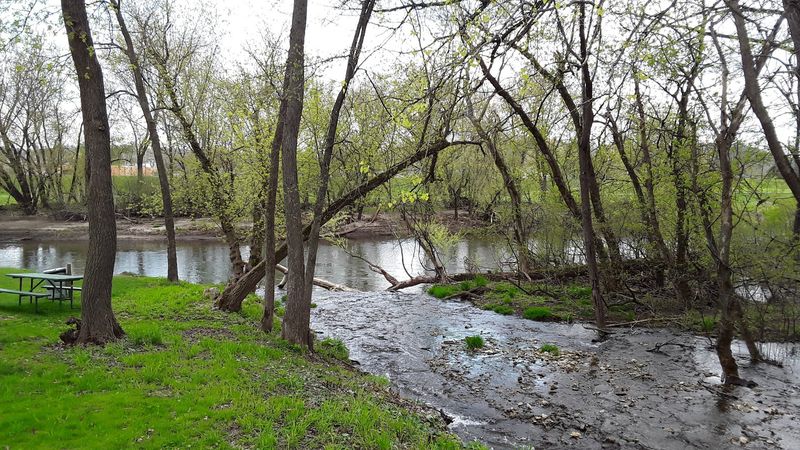
There is something deeply satisfying about hearing a waterfall before you fully see it.
The sound bounces off limestone, the air cools, and suddenly a simple park visit feels much more dramatic than expected.
That is exactly the charm of Dunning’s Spring Park in Decorah.
Tucked into one of Iowa’s most scenic small cities, this compact park centers on a spring-fed waterfall spilling over a rocky bluff into a sheltered basin.
It is easy to access, which makes the experience feel almost unfairly rewarding for the amount of effort involved.
You do not have to commit to a major hike to enjoy water, stone, and a setting that feels naturally cinematic.
Decorah already has a strong reputation for outdoor beauty, but Dunning’s Spring still deserves individual recognition.
The surrounding cliffs, greenery, and nearby trout hatchery give the area a layered sense of place that rewards both quick stops and slower wandering.
Photographers, families, and road trippers can all find something to like here.
What makes this landmark especially lovable is its intimacy.
It is not trying to overwhelm you with scale, yet it leaves a strong impression because the combination of waterfall, rock, and town setting feels so balanced.
Dunning’s Spring Park deserves much more attention than it usually receives.
6. Catfish Creek, Dubuque, Dubuque County
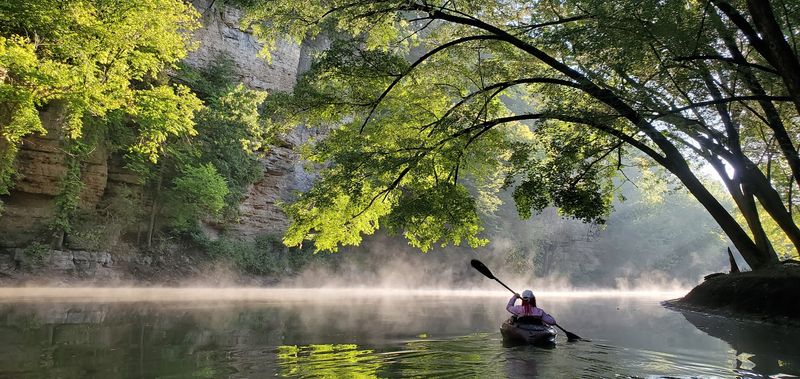
Not every great landscape announces itself with a famous sign or a crowded overlook.
Sometimes the real magic is found in a quieter corridor of water, woods, and bluff country that locals know better than most visitors.
That is the case with Catfish Creek near Dubuque.
This watershed and recreation area showcases a more intricate side of eastern Iowa.
Depending on where you explore, you may encounter forested trails, wetlands, prairie pockets, limestone features, and creek views that reveal how ecologically rich the Driftless-influenced region can be.
It is the kind of place that rewards curiosity rather than speed.
Catfish Creek also matters because it offers a living landscape, not just a scenic snapshot.
Hiking, paddling, birding, and habitat restoration all shape the experience, giving you a stronger sense of how people and environment can interact thoughtfully.
That balance makes the area feel grounded and current, not frozen behind interpretive signs.
As an underrated landmark, it deserves more attention for showing Iowa in a wilder, more layered way.
You come here for texture, movement, and the chance to notice small details that bigger destinations can overshadow.
Catfish Creek offers one of the state’s most rewarding under-the-radar outings.
7. Grotto of the Redemption, West Bend, Palo Alto County
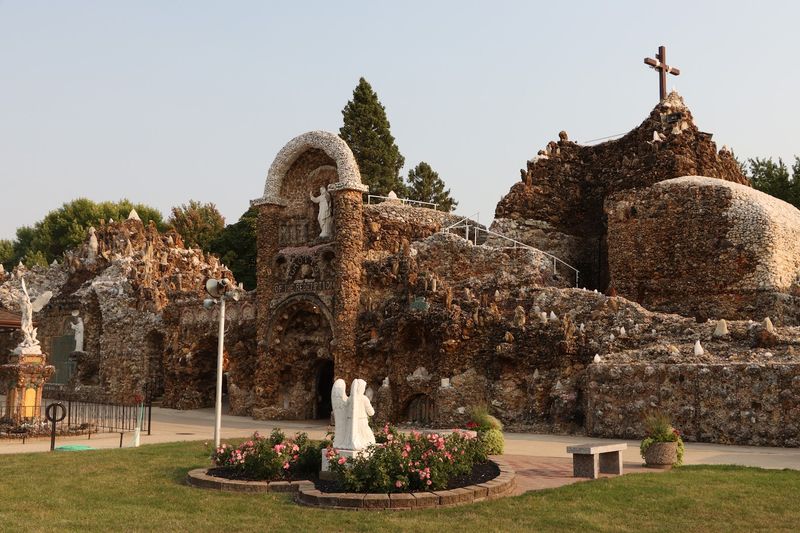
A quiet small town street suddenly gives way to something almost impossible to process at first glance.
Stone glitters from every surface, colors flash in the sun, and the scale feels far bigger than you expect in rural Iowa.
That sense of disbelief is exactly what makes the Grotto of the Redemption in West Bend so memorable.
Built largely through the vision of Father Paul Dobberstein, this sprawling religious complex blends devotion, folk art, and geology into one extraordinary environment.
Its walls and grottos contain thousands of minerals, petrified wood, shells, fossils, and gemstones arranged into scenes from Christian scripture.
Even if you are not visiting for religious reasons, the craftsmanship and persistence behind it are deeply moving.
What stays with you most is the density of detail.
Every arch, niche, and pathway rewards slow looking, and you can tell this landmark was made with patience rather than spectacle in mind.
The result feels intimate and immense at the same time, which is a rare balance.
If you want an Iowa landmark that surprises, photographs beautifully, and offers genuine originality, this one absolutely delivers.
It is both an act of faith and a monumental work of outsider art.
You will leave wondering why it is not discussed far more often in conversations about great American roadside attractions.
8. Dan Nagle Walnut Grove Pioneer Village, Long Grove, Scott County
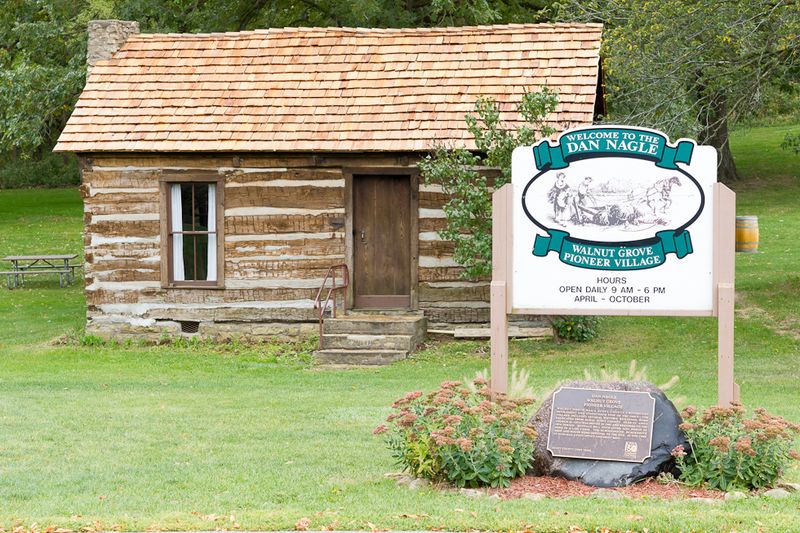
Dusty pathways, weathered wood, and the quiet arrangement of old buildings can do something polished museums rarely manage.
They make history feel inhabitable instead of distant.
That is the appeal of Dan Nagle Walnut Grove Pioneer Village near Long Grove.
This open-air historical site brings together restored and relocated structures that reflect everyday life in an earlier Iowa.
Cabins, a church, school buildings, farm structures, and domestic spaces create a village atmosphere where you can better picture how communities actually functioned.
Rather than isolating one artifact behind glass, the site lets context do much of the storytelling.
What makes it especially valuable is its focus on ordinary experience.
You are not just learning about major events, but about routines, craftsmanship, education, worship, and the practical realities of settlement.
That wider lens gives the village an honesty that feels surprisingly engaging, especially if you enjoy local history with texture.
This landmark deserves more attention because it preserves a kind of memory that can disappear quietly.
Grand monuments often dominate travel lists, yet places like this explain how people lived between the headline moments.
Dan Nagle Walnut Grove Pioneer Village is an easy choice to add to your route.
9. Toolesboro Mounds, Wapello, Louisa County
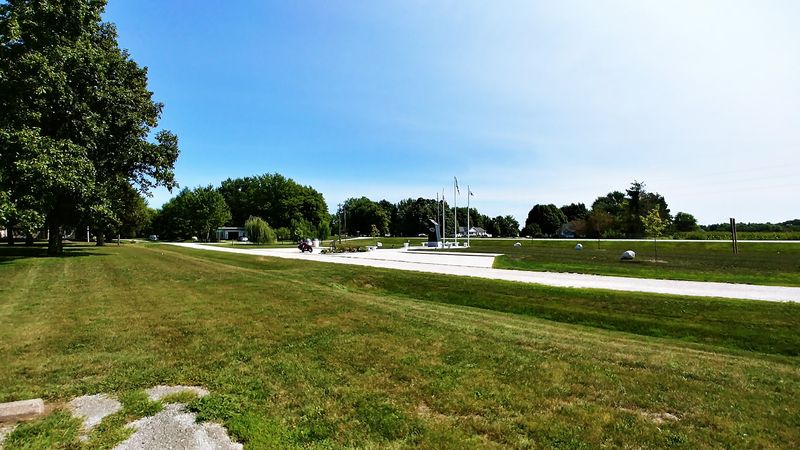
On a quiet rise above the river plain, a set of grassy forms might seem modest at first glance.
But the longer you stand there, the more the place asks you to think about time on a much larger scale.
That reflective power is what makes Toolesboro Mounds near Wapello so compelling.
These ancient earthworks are associated with the Hopewell tradition and represent one of Iowa’s most important archaeological sites.
The remaining burial mounds and interpretive materials point to extensive trade networks, ceremonial practices, and cultural sophistication that reached far beyond this immediate landscape.
It is a powerful reminder that Iowa’s deep history did not begin with European settlement.
The site is not grand in a conventional tourist sense, and that may be why it remains underappreciated.
Its importance comes through quiet observation, imagination, and a willingness to respect what the land still holds.
When you look across the surrounding area, the connection between geography and human meaning becomes easier to understand.
Toolesboro deserves far more attention because it expands the story people tell about the state.
This is a place of memory, archaeology, and Indigenous heritage, not just scenery.
Toolesboro Mounds offers one of Iowa’s most meaningful and overlooked stops.
10. Waubeek Bluffs, Harpers Ferry, Allamakee County
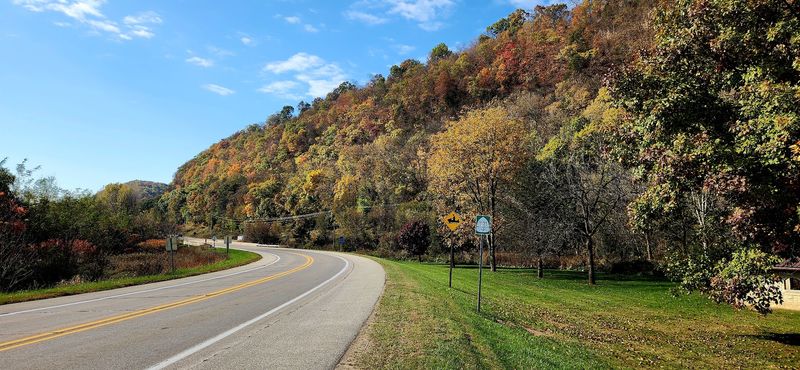
Morning light over the river backwaters can make northeastern Iowa feel almost dreamlike.
Mist hangs low, wooded ridges layer into the distance, and the bluffs seem to hold the whole landscape in place.
That atmosphere captures the appeal of Waubeek Bluffs near Harpers Ferry.
Part of the Upper Mississippi River refuge region, this bluff area offers striking views shaped by steep terrain, dense forest, and the complex water patterns below.
It is not as widely promoted as some major overlooks, which only adds to its sense of discovery.
When you reach a good vantage point, the scenery feels both intimate and expansive at once.
Birders, photographers, and quiet-seeking travelers all have reasons to care about this place.
The surrounding habitat supports rich wildlife, and seasonal changes can transform the color and mood of the bluffs dramatically.
You are not just seeing a viewpoint here, but a living river system framed by one of Iowa’s most distinctive landscapes.
Waubeek Bluffs deserves more recognition because it delivers the kind of beauty many travelers cross state lines to find.
If you want an Iowa landmark that offers peace, perspective, and a reminder of how varied the state can be, Waubeek Bluffs is a strong candidate for your next scenic detour.
11. Ledges State Park, Madrid, Boone County
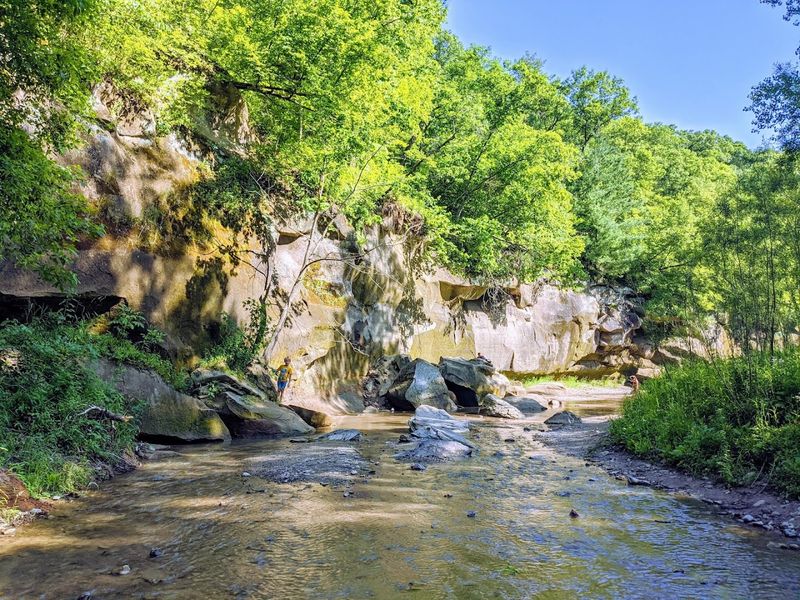
Sandstone walls, shallow creek crossings, and twisting canyon roads create a scene that feels unlike the Iowa many people think they know.
The setting has movement, texture, and just enough drama to make even a short visit feel adventurous.
That is why Ledges State Park near Madrid deserves a much bigger share of attention.
Located along the Des Moines River valley, the park is famous for its eroded sandstone ledges and the stream that runs through the canyon floor.
In the right season, driving or walking through the lower sections can feel immersive in the best way, with rock walls rising around you and water shaping the route.
It is one of the clearest examples of how varied central Iowa’s terrain can be.
The park also rewards people who like options.
You can hike ridge trails, enjoy scenic overlooks, picnic among the trees, or simply appreciate the Civilian Conservation Corps legacy visible in some of the park’s structures.
Fall color is especially beautiful here, but the ledges have year-round character.
What makes this landmark so memorable is the contrast it provides.
It breaks expectations and proves that Iowa can offer geological drama without needing mountains to do it.
Ledges State Park is one of the state’s most deserving overlooked classics.