
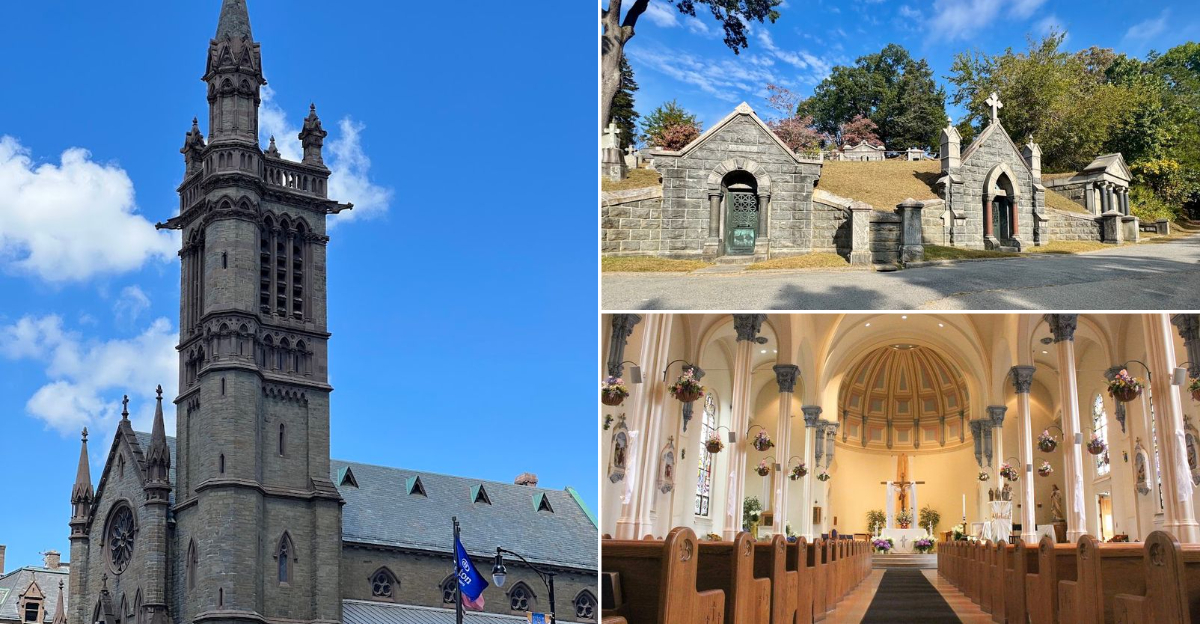
New York is full of headline-grabbing landmarks, but some of its most unforgettable places have been standing quietly for centuries, watching the state change from colony to global icon while still opening their doors to curious visitors today.
Step inside these old churches and you will find weathered stone, hand-cut beams, cemetery paths, stained glass, and stories that connect Revolutionary battles, river towns, immigrant neighborhoods, and village life in a way no textbook ever could.
Some sit beside busy city streets, others feel tucked into postcard-perfect hamlets, yet each one offers that rare thrill of meeting history face to face instead of reading about it from a distance.
If you love architecture, local lore, peaceful corners, or simply the feeling of discovering places that have truly lasted, these twelve remarkable New York churches make an irresistibly memorable journey across the state.
1. Old Dutch Church of Kingston — Kingston, New York (completed 1699)
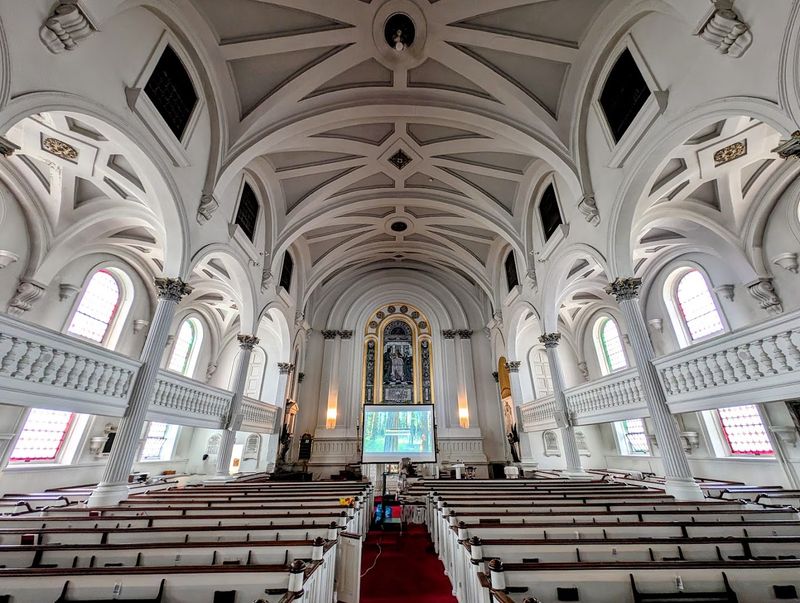
Right in the heart of uptown Kingston, the Old Dutch Church looks like it has been calmly outlasting trends for generations.
Completed in 1699, it stands among New York’s oldest churches and anchors one of the state’s most historically rich small-city centers.
If you enjoy places where architecture and local history practically overlap on every block, this stop delivers without trying too hard.
The congregation dates to the Dutch colonial era, and the church has long been tied to Kingston’s early development, resilience, and civic life.
Its present appearance reflects later changes, including the striking steeple, but the site’s seventeenth-century roots remain the real draw for anyone tracing the state’s oldest sacred spaces.
Step outside and you are immediately surrounded by Kingston’s Stockade District, where stone buildings, museums, and walkable streets make it easy to build an entire afternoon around one visit.
There is something appealingly grounded about this church.
It does not rely on grandeur alone.
Instead, it wins you over with longevity, setting, and the quiet confidence of a place that has watched New York grow up around it.
2. Saint Paul’s Church National Historic Site — Mount Vernon, New York (1764)
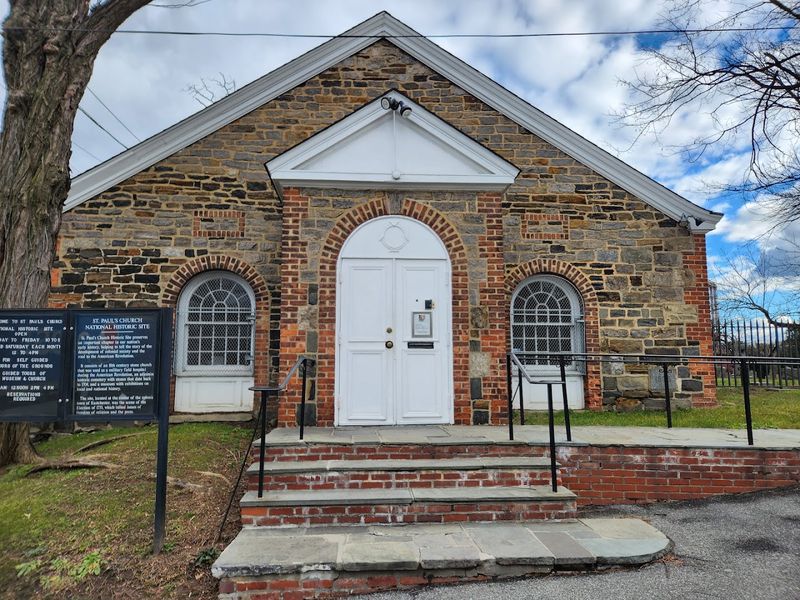
A church that doubled as a Revolutionary War landmark instantly earns extra attention.
Saint Paul’s Church in Mount Vernon, completed in 1764, is not only one of New York’s oldest churches but also one of its most historically layered destinations.
You come expecting an old building, and you leave realizing the grounds witnessed moments that helped shape the nation.
During the American Revolution, the church and its surrounding village sat near the neutral ground between British and Patriot lines, giving the site unusual military and political significance.
The surviving structure, with its colonial proportions and adjacent cemetery, offers a vivid sense of eighteenth-century Westchester that feels rare so close to New York City.
Because it is a National Historic Site, interpretation here goes beyond architecture and reaches into local life, wartime uncertainty, and the evolution of the parish itself.
The location in Mount Vernon also makes it an easy historical detour if you are exploring lower Westchester.
Give yourself time to wander the churchyard.
Names on old stones often tell as much of the story as the building does.
3. Marble Collegiate Church — New York City, New York (1854; congregation founded 1628)
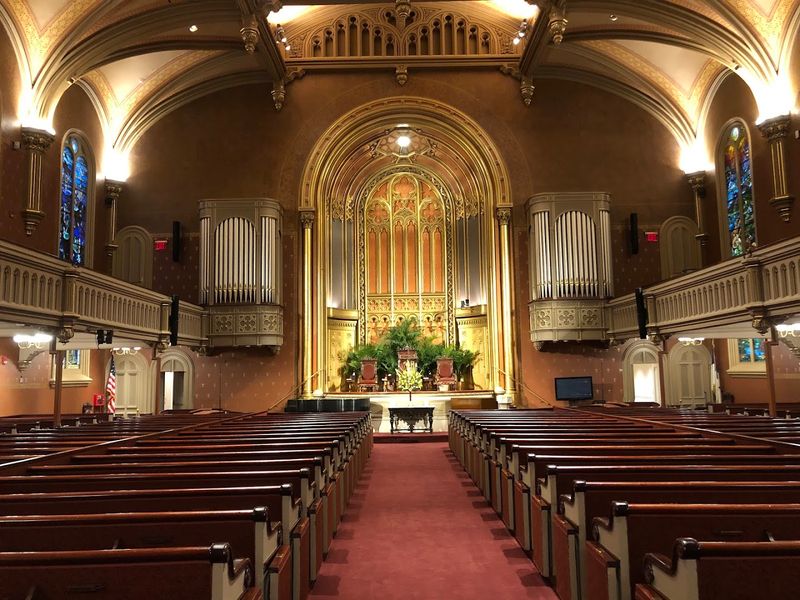
Few churches in Manhattan can claim roots older than New York City itself, but Marble Collegiate Church absolutely can.
The current building dates to 1854, yet the congregation was founded in 1628, making it one of the oldest continuous Protestant congregations in North America.
That kind of timeline gives the church a remarkable dual personality: part active city sanctuary, part living witness to the Dutch beginnings of New Amsterdam.
Located on Fifth Avenue and 29th Street, Marble Collegiate stands amid the noise and speed of Midtown with a confidence that feels almost theatrical.
Its Gothic Revival design in Tuckahoe marble gives it visual distinction, while the congregation’s long history connects today’s visitors to nearly four centuries of worship, change, and urban reinvention.
Even if you are not deeply familiar with church history, the contrast between ancient institutional roots and the modern city outside makes this place memorable.
This is a stop that rewards both architecture lovers and curious wanderers.
Look up at the details, then think about the generations who gathered before skyscrapers took over the skyline.
In Manhattan, that perspective feels especially powerful.
4. Cathedral of St. Patrick (Old St. Patrick’s Cathedral) — New York City, New York (1815)
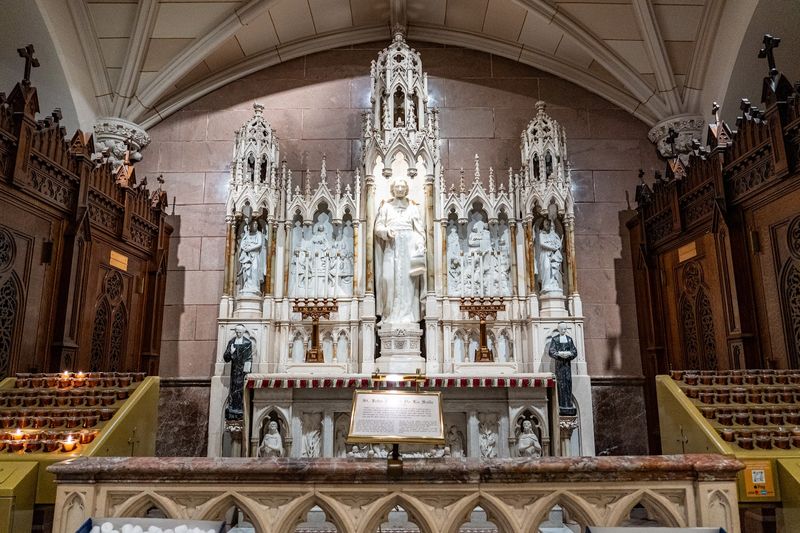
Tucked into Nolita, Old St. Patrick’s Cathedral feels like a secret with a dramatic past.
Completed in 1815, it was the first cathedral church of the Roman Catholic Diocese of New York and remains one of the city’s most compelling religious landmarks.
You can sense immediately that this place has seen waves of immigration, anti-Catholic tension, neighborhood change, and the relentless transformation of lower Manhattan.
The cathedral’s walled cemetery, imposing facade, and unexpectedly calm grounds create a striking break from the surrounding streets.
Historically, it served a growing Catholic population at a time when the faith was still far from socially secure in New York, giving the site a significance that extends well beyond architecture.
Today, visitors often come for its beauty, catacombs, and cinematic atmosphere, but the deeper appeal lies in how vividly it reflects the city’s nineteenth-century religious and cultural story.
Its location near lively restaurants and shops only heightens the surprise.
One moment you are in modern Manhattan.
The next, you are standing inside a place that still carries the gravity of an earlier New York.
5. Old Dutch Church of Sleepy Hollow — Sleepy Hollow, New York (1685)
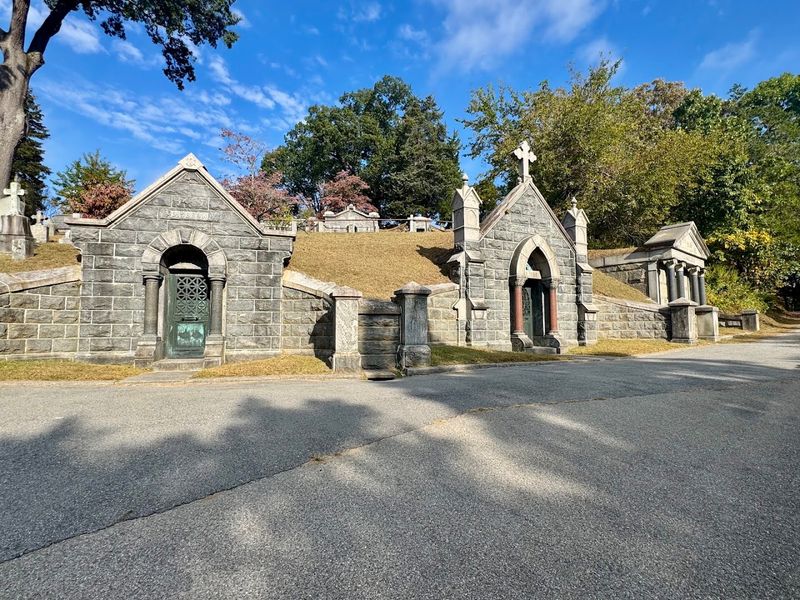
Mist seems made for the Old Dutch Church of Sleepy Hollow, and that alone makes arriving here feel cinematic.
Built in 1685 in Sleepy Hollow, this fieldstone landmark is one of the oldest surviving churches in New York and a centerpiece of Hudson Valley history.
You may recognize its legendary aura from Washington Irving’s famous tale, but the real site is even better because it delivers atmosphere, architecture, and deep local roots all at once.
The church’s rough stone walls, compact form, and old burying ground create a setting that feels wonderfully untouched by time.
Walk the grounds and you are standing where early Dutch settlers worshipped, where centuries of families were laid to rest, and where folklore still clings to the landscape in the best possible way.
Its location near the Pocantico River and close to Philipsburg Manor makes it an easy stop if you are exploring Sleepy Hollow’s historic corridor.
Come for the ghost-story fame, but stay for the stillness, craftsmanship, and sense of continuity.
This is one of those places where history does not feel distant.
It feels close enough to hear.
6. Basilica of St. Mary of the Assumption — Lancaster, New York (1843)
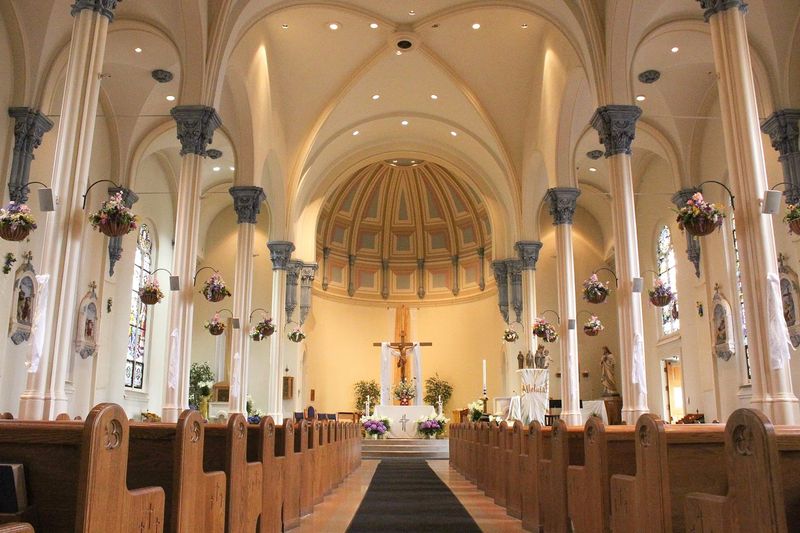
Western New York has its share of historic surprises, and this basilica in Lancaster is one of the best.
Founded with a church dating to 1843, the Basilica of St. Mary of the Assumption stands as a powerful reminder of the region’s early Catholic growth and enduring community identity.
Its scale alone catches your eye, but the story behind it is what gives the visit real staying power.
Located just east of Buffalo in the village of Lancaster, the parish developed as immigrant communities reshaped the spiritual and cultural landscape of nineteenth-century New York.
The church became known for its rich liturgical life and impressive architecture, and its later elevation to basilica status reflects significance that reaches beyond the local level.
When you visit, you are not just seeing an old building, you are stepping into a place shaped by faith, settlement patterns, and the ambitions of a growing town.
The setting feels welcoming rather than overwhelming.
That balance makes it easy to appreciate both the artistry and the history.
If your church tour includes western stops, this one adds grandeur, local character, and a meaningful change of pace.
7. St. Peter’s Church — Albany, New York (1860; parish established 1793)
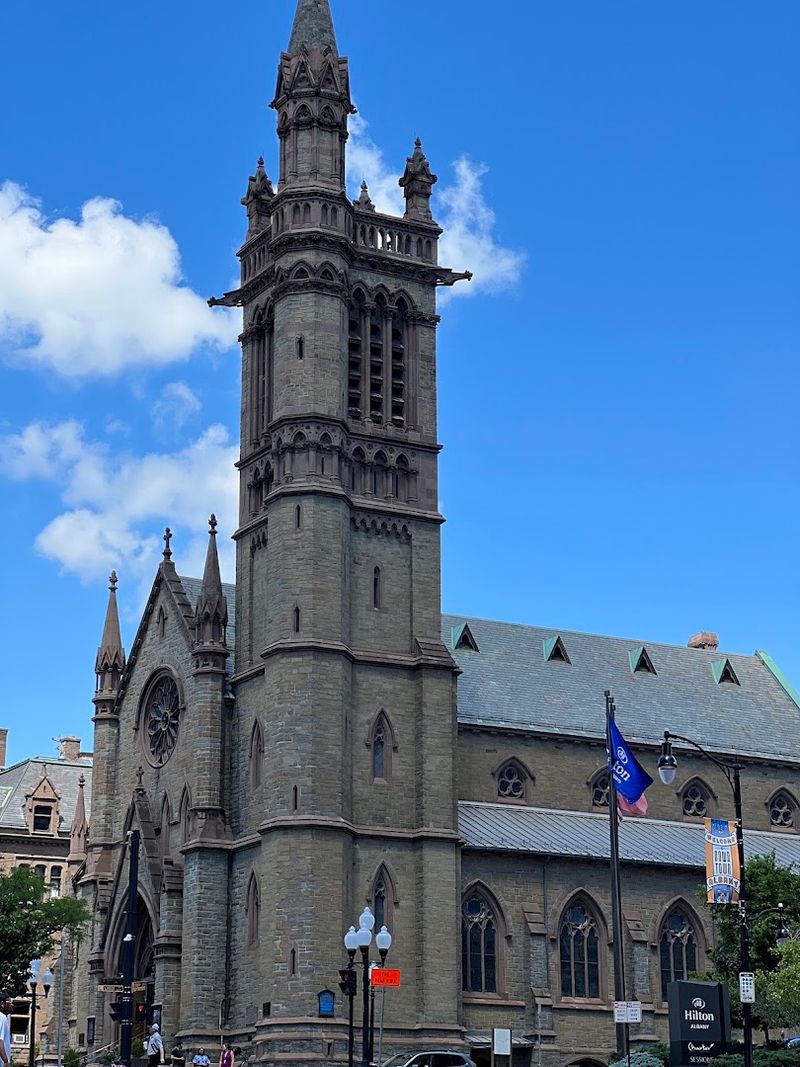
In downtown Albany, St. Peter’s Church rises with the kind of confidence a state capital seems to demand.
The present building dates to 1860, while the parish itself was established in 1793, linking the church to the early civic life of New York’s political center.
It is a later addition than some on this list, yet its historical importance and unforgettable design make it impossible to skip.
Designed by Richard Upjohn, one of the major architects of American Gothic Revival ecclesiastical style, the church is known for its soaring proportions and handsome stone exterior.
Its location near government buildings places it within the daily rhythm of Albany, creating a vivid contrast between nineteenth-century sacred architecture and the practical bustle of the capital city.
Inside and out, you get a strong sense of how ambitious church design had become by the mid-nineteenth century, especially in communities with civic prominence.
If you like your history with a side of dramatic architecture, this stop delivers both.
Take time to notice the vertical lines and craftsmanship.
They make the whole building feel as if it is still reaching upward, even after more than a century and a half.
8. First Presbyterian Church — Sag Harbor, New York (1844; congregation founded 1766)
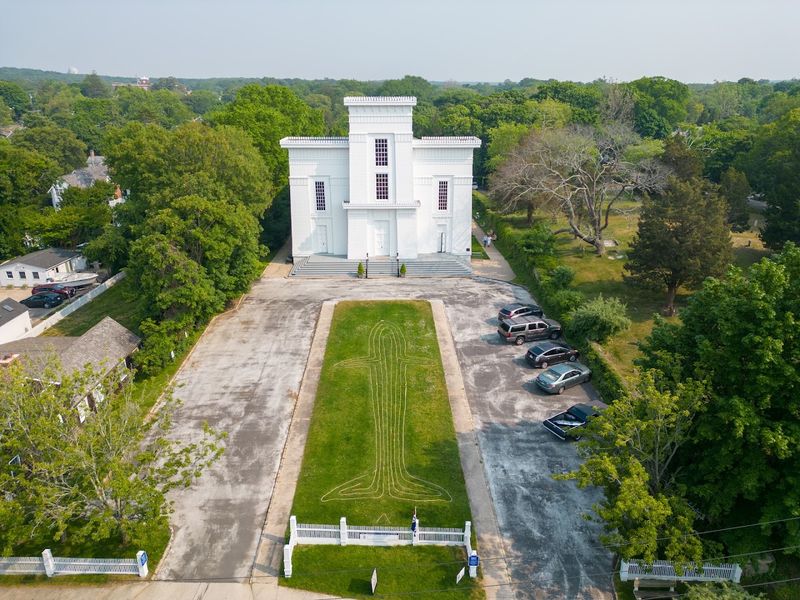
Salt air and old steeples are a winning combination, and Sag Harbor’s First Presbyterian Church proves it.
The current church dates to 1844, while the congregation was founded in 1766, giving this East End landmark roots that reach deep into Long Island’s colonial and maritime past.
It fits perfectly into a village known for whaling history, elegant streets, and the kind of atmosphere that makes you slow down without being told.
Set in the heart of Sag Harbor, the church reflects the community’s long development as a seaport and later as a cherished historic destination.
Its classic appearance and central location make it feel woven into everyday village life rather than isolated as a museum piece, which is part of its charm.
When you visit, you can easily pair it with a walk past historic homes, nearby shops, and the waterfront, turning one church stop into a broader immersion in local history.
The appeal here is gentle but real.
Nothing feels forced.
You simply stand there, look around, and understand why this congregation has remained part of Sag Harbor’s story for generations.
9. St. George’s Episcopal Church — Hempstead, New York (1822; parish founded 1702)
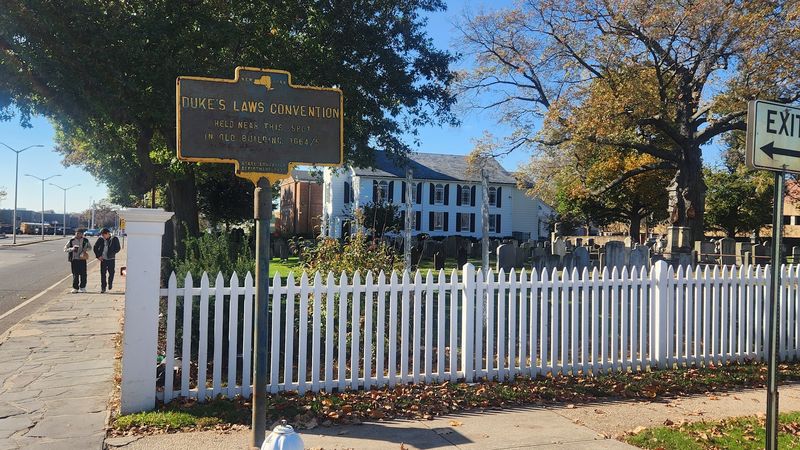
Long Island history runs deeper than beach traffic suggests, and St. George’s Episcopal Church in Hempstead is a perfect example.
The current building dates to 1822, but the parish was founded in 1702, placing it among the oldest religious communities in the state.
That long continuity gives the site a quiet authority, especially in a region better known today for suburbs than colonial-era landmarks.
Hempstead was one of Long Island’s early English settlements, and St. George’s grew alongside the town as generations of worshippers passed through its doors.
The church’s historic role reflects both local development and the spread of Anglican, later Episcopal, worship in the colony and early republic.
Its location in Nassau County makes it a rewarding stop if you want a different perspective on New York history, one shaped by village greens, parish life, and the layered evolution of Long Island communities.
Visitors who appreciate understated places will likely enjoy this one most.
It does not need flashy surroundings to make its point.
Its staying power, setting, and centuries of parish life speak clearly enough on their own.
10. St. James Episcopal Church — Hyde Park, New York (1844; parish established 1803)
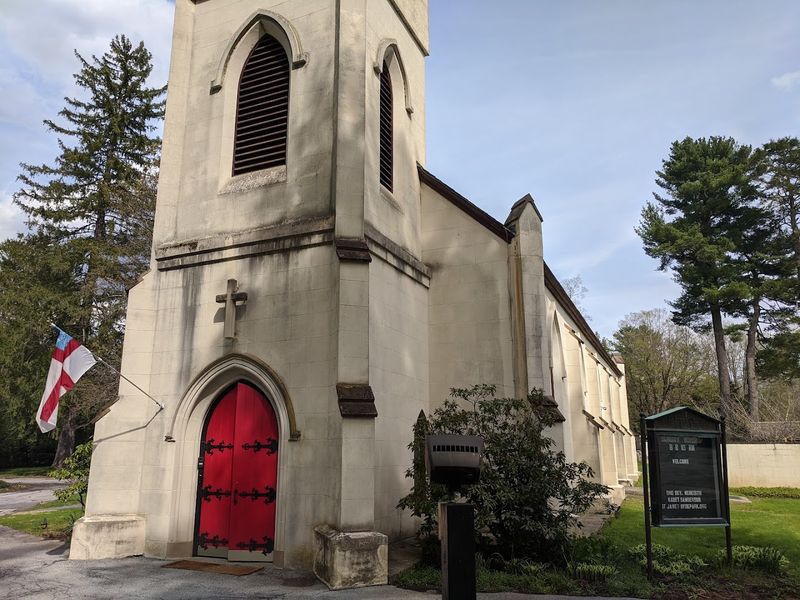
Some churches impress by towering over you, while others win with pure Hudson Valley charm.
St. James Episcopal Church in Hyde Park, dating to 1844 with a parish established in 1803, belongs firmly in the second group.
Its appeal comes from the way it feels rooted in place, surrounded by the kind of landscape and local history that make Dutchess County so rewarding to explore.
Located in Hyde Park, a town better known to many visitors for grand estates and presidential history, St. James offers a quieter but equally meaningful encounter with the region’s past.
The church reflects nineteenth-century parish development in a growing river valley community, and its continued presence adds depth to any historical itinerary through the area.
Because Hyde Park attracts travelers interested in heritage sites, this church works especially well as a thoughtful stop between larger, more famous attractions.
There is a refreshing modesty to the experience here.
You are not fighting crowds or spectacle.
Instead, you get architecture, local continuity, and a sense of how spiritual life fit naturally into everyday Hudson Valley history, which can be every bit as memorable as a mansion tour.
11. Christ Church Episcopal — Poughkeepsie, New York (1834)
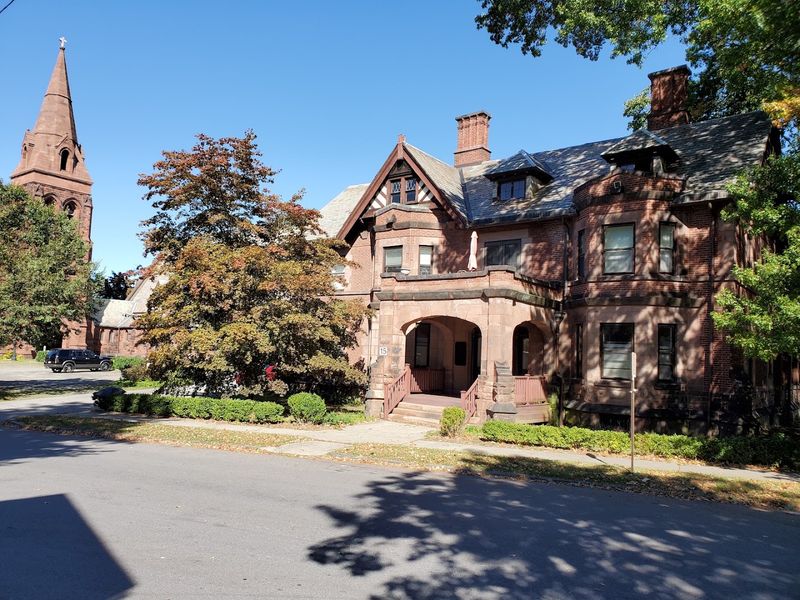
Right when Poughkeepsie begins to feel brisk and busy, Christ Church Episcopal adds a note of old-world calm.
Built in 1834, this historic church stands as one of the Hudson Valley’s important early nineteenth-century religious landmarks.
It also shows how quickly communities along the river were growing, organizing, and investing in architecture that expressed both faith and civic ambition.
Located in Poughkeepsie, the church has long been part of a city shaped by commerce, transportation, education, and river connections.
Its Gothic character and enduring parish life make it a meaningful stop for visitors who want to understand the spiritual and social fabric of the region beyond the better-known estates and scenic overlooks.
The building’s age places it within a fascinating period when New York communities were expanding and refining their public identities through institutions that still structure the streetscape today.
This is the kind of church that rewards close looking.
Notice how it sits within the city rather than apart from it.
That relationship between sacred space and everyday urban life gives Christ Church much of its lasting appeal.
12. Church of St. Luke in the Fields — New York City, New York (1821)
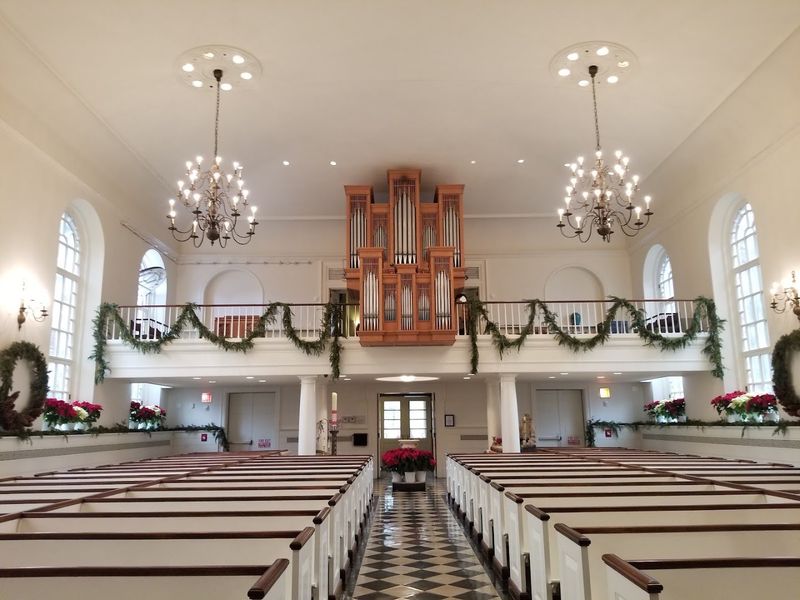
Finding a peaceful church garden in Manhattan always feels a little miraculous, and St. Luke in the Fields delivers exactly that.
Completed in 1821, this Episcopal church in the West Village is one of the city’s oldest surviving houses of worship and one of its most charming.
Its name alone is memorable, but the real magic comes from the way the church and grounds create a genuine sense of retreat inside lower Manhattan.
Located on Hudson Street in New York City, St. Luke’s has long served a neighborhood that evolved from semi-rural edges into one of Manhattan’s most storied districts.
The church’s historic significance is matched by its physical setting, where gardens soften the urban grid and invite visitors to linger rather than rush off to the next attraction.
That combination of age, architecture, and atmosphere makes it stand out even in a city crowded with notable landmarks.
If you are exploring the West Village, this is an easy and deeply worthwhile stop.
Come for the history, then give yourself a few quiet minutes outside.
The calm here feels earned, as if two centuries of city life have only made the sanctuary more valuable.