Iowa has a way of surprising visitors who think they know what to expect from the Heartland, and its landscapes are nothing short of breathtaking.
From ancient limestone cave systems to soaring bluffs overlooking the Mississippi River, this state offers natural wonders that feel like they belong on a movie screen.
Ancient geological formations, peaceful prairies, and dramatic river overlooks come together to create scenery unlike anything most travelers have imagined.
Each spot carries its own unique character, from rolling tallgrass prairies to art-inspired stone villages nestled along winding country roads.
Come with an open mind and a camera ready, because Iowa is about to show you something truly cinematic.
1. Effigy Mounds National Monument, Harpers Ferry, Allamakee County
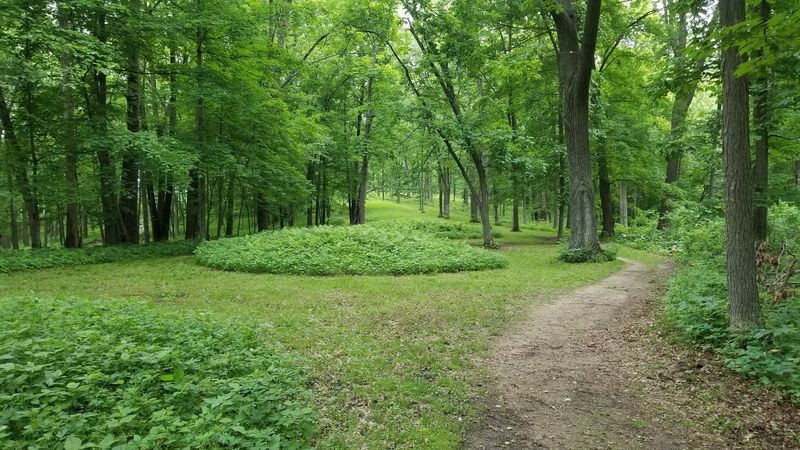
There is a quiet gravity in this northeastern Iowa landscape that you feel before you fully understand why.
Forest trails climb toward sweeping overlooks, and the Mississippi River valley opens with a scale that feels ancient, solemn, and deeply cinematic.
That atmosphere defines Effigy Mounds National Monument near Harpers Ferry.
This is not a place to rush through with a checklist.
The monument protects ceremonial earthworks built by Native peoples more than a thousand years ago, including rare animal-shaped mounds that give the site its name.
Walking here asks for a slower pace, because the scenery and the history work together.
As you move along the ridges, the light through oak and maple trees keeps changing the mood.
Some sections feel intimate and enclosed, while the overlooks suddenly widen into vast views of water, bluff, and sky.
That contrast makes every trail feel emotionally layered rather than simply scenic.
I would come for the views, but stay for the feeling of being connected to something much older than the modern world.
Read the interpretive material, take your time, and let the landscape speak.
It is one of Iowa’s most hauntingly beautiful places for anyone who values meaning as much as scenery.
2. Pikes Peak State Park, McGregor, Clayton County
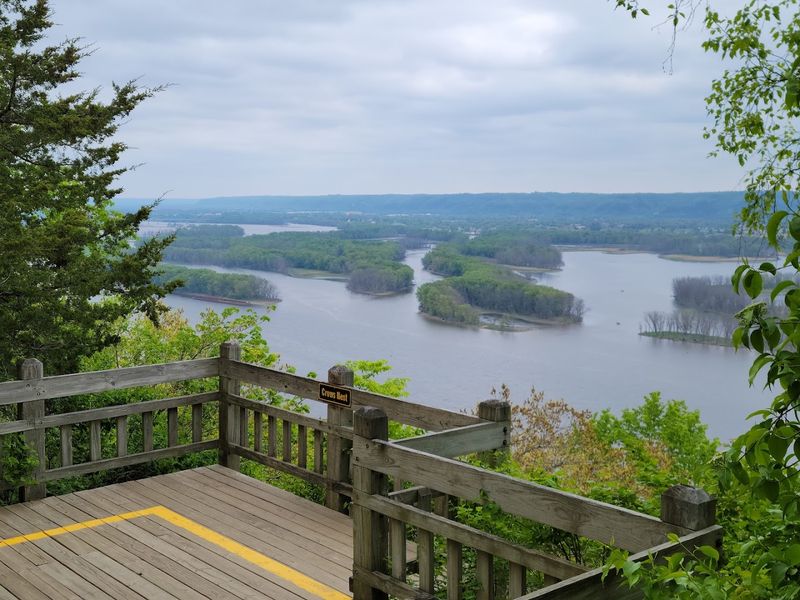
High above the river, wind moves through the trees and the horizon seems to stretch far beyond what most people expect from Iowa.
The first impression is pure scale, with layered bluffs, water, and sky combining into a scene that feels almost too grand for the region.
That is the magic of Pikes Peak State Park near McGregor.
The famous overlook is the star, and for good reason.
From that blufftop vantage, you can watch the Mississippi and Wisconsin rivers shape the landscape below, while distant ridges fade softly into the background.
It is one of those views that makes conversation stop for a moment.
Still, the park is more than a single panorama.
Trails lead through wooded ravines to Bridal Veil Falls, where mossy stone, trickling water, and shaded steps create a very different mood from the expansive overlook above.
That shift between intimacy and openness gives the park a distinctly cinematic rhythm.
Autumn may be the most dramatic season, when the valley turns into a patchwork of red, gold, and bronze.
But even in summer, the bluff light and river distance feel unforgettable.
If you want one place that proves Iowa can be breathtaking on a big screen scale, this belongs near the top of your list.
3. Ledges State Park, Boone, Boone County
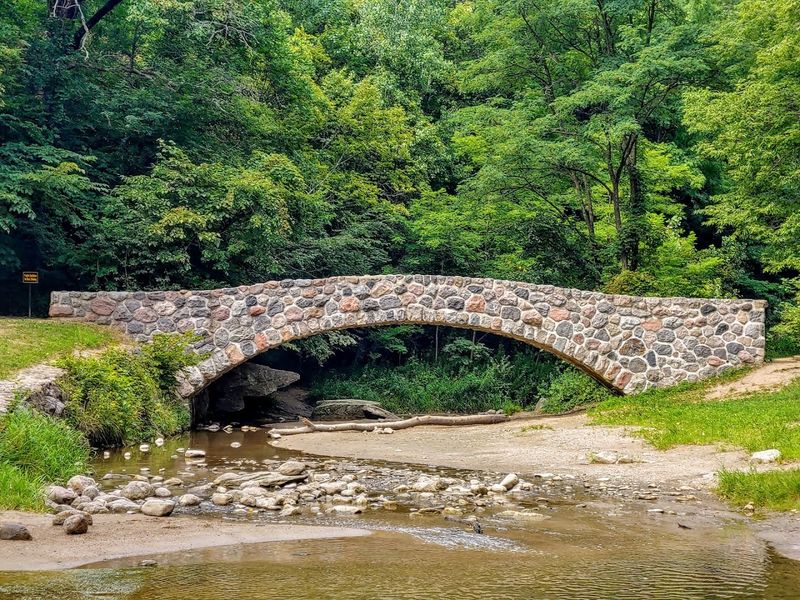
Water running over a stone road, canyon walls glowing in filtered light, and a dense forest canopy give this park an unexpectedly dramatic entrance.
Instead of broad open prairie, you get a compact world of sandstone ledges, creek beds, and shaded ravines that feels cinematic from the first minute.
That distinct setting is what makes Ledges State Park near Boone so compelling.
The Des Moines River valley carved this landscape into a series of cliffs and narrow passages.
Trails weave through the canyon and climb toward overlooks, where you can look down on the winding terrain and appreciate how unusual it is for central Iowa.
Every change in elevation adds a new angle and a new mood.
One of the most memorable features is the low water crossing, where the road itself interacts with the stream.
After rain, the whole park feels amplified, with louder water, darker rock, and greener foliage making the scenery even more intense.
Families love it, photographers love it, and hikers who want a bit of drama without a huge trek will too.
Go early if you want quieter trails and softer light.
Ledges proves that even a relatively accessible park can still feel wild, immersive, and unexpectedly cinematic.
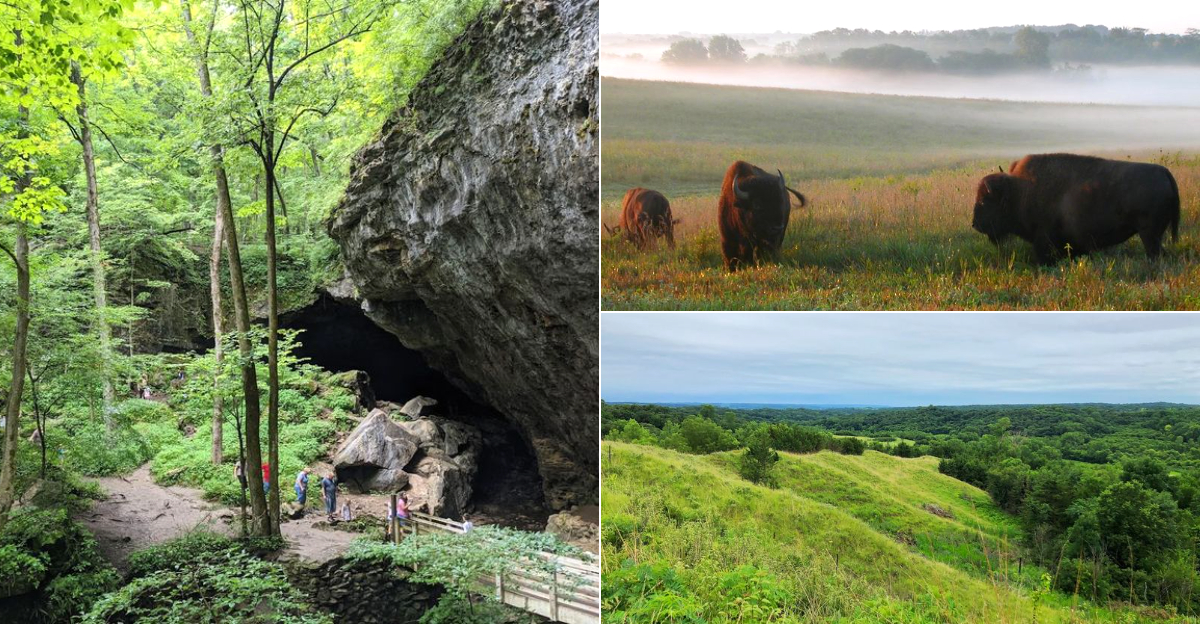
4. Maquoketa Caves State Park, Maquoketa, Jackson County
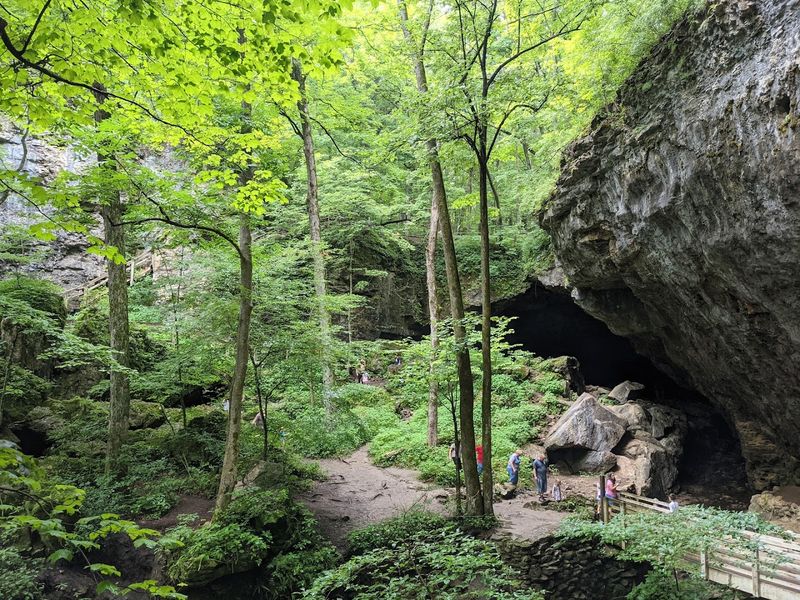
Cool air, dripping stone, and a canopy of deep green make this corner of eastern Iowa feel more like a fantasy set than a Midwestern park.
The landscape shifts quickly from sunlit trails to shadowy openings in the rock, creating the kind of contrast that keeps you alert and curious.
That sense of discovery is exactly what makes Maquoketa Caves State Park so memorable.
You are not just visiting one cave here.
You move through a whole limestone world of formations, crevices, and wooded ridges, with Dancehall Cave offering one of the park’s biggest visual payoffs.
Short trails connect overlooks, natural bridges, and enclosed passages, so every turn feels like a scene change.
It is especially striking in early morning, when mist lingers among the trees and the rock walls hold the night’s chill.
After rain, everything smells earthy and alive, and the textures of moss, stone, and roots seem even sharper.
If you like places that feel immersive instead of polished, this one delivers.
Bring sturdy shoes, a flashlight, and enough time to wander slowly.
The beauty here is not just in a single viewpoint, but in how the entire park keeps revealing itself step by step.
5. Backbone State Park, Dundee, Delaware County
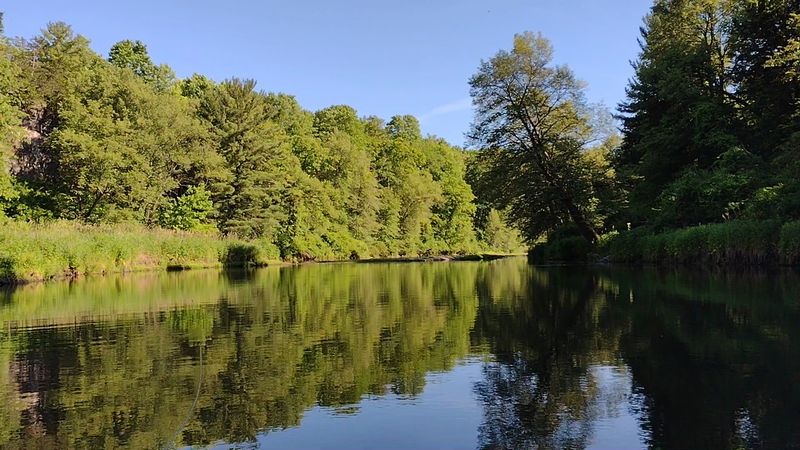
Rugged ridges, deep woods, and a narrow spine of limestone give this park a tougher, older feel than many people associate with Iowa.
The terrain has shape and attitude, with cliffs, water, and thick tree cover working together to create an atmosphere that feels adventurous rather than gentle.
That striking character defines Backbone State Park near Dundee.
The park takes its name from the long rocky ridge known as the Devil’s Backbone.
Walking that area, you get elevated views, exposed stone, and a stronger sense of drama than you might expect in the Midwest.
Backbone Lake adds another visual layer, especially when the water mirrors the surrounding hills in calm weather.
Boating, fishing, and paddling soften the experience, while nearby trails and climbing areas keep the landscape feeling active and dynamic.
There is a nice balance here between relaxation and rugged scenery.
In fall, the ridge lines and shoreline become even more photogenic as color fills the valleys.
But any season works if you appreciate texture, elevation, and places with a little edge.
If you want Iowa scenery that feels storied, physical, and surprisingly bold, Backbone deserves a serious spot on your itinerary.
6. Dunning’s Spring Park, Decorah, Winneshiek County
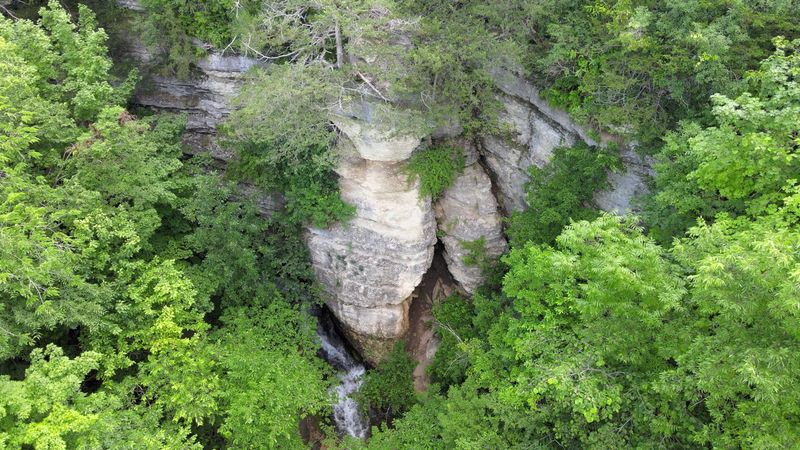
The sound arrives first, echoing off limestone and drawing you toward a scene that feels improbably lush for a small city park.
Greenery crowds the rock walls, water slips over the ledge in a bright ribbon, and the whole setting feels intimate, cool, and almost hidden.
That is the charm of Dunning’s Spring Park in Decorah.
The waterfall is not enormous, but it does not need to be.
Its beauty comes from proportion and setting, with steep stone, dense foliage, and a compact basin creating a picture that feels naturally composed.
You can appreciate it quickly, yet it still leaves a strong impression.
Because the park sits so close to town, it is easy to pair with the rest of Decorah’s scenic appeal.
But even if you only stop here, the layered cliffs and shaded atmosphere make the place feel special, especially after rain or during spring’s brightest green weeks.
The short access also means almost anyone can enjoy the payoff.
I like places that do not require a huge commitment to feel transportive, and this is one of them.
Bring a camera, linger on the steps, and let the cool air settle around you.
Dunning’s Spring proves that a small footprint can still deliver one of the most cinematic natural moments in Iowa.
7. Hayden Prairie State Preserve, Howard County
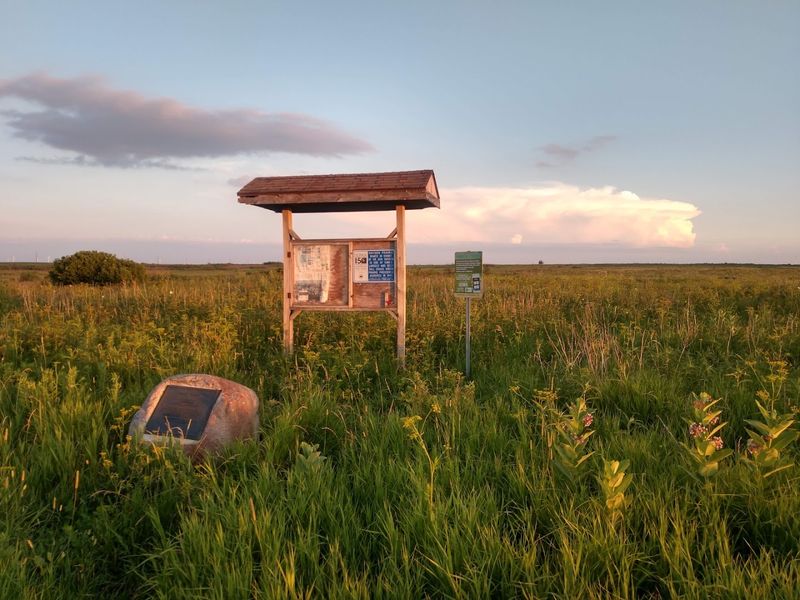
At first glance, openness itself becomes the spectacle here.
Waves of tallgrass, shifting light, and an immense sky create a kind of visual minimalism that feels calm, powerful, and unexpectedly cinematic when you stop trying to hurry through it.
That experience is the essence of Hayden Prairie State Preserve in Howard County.
This remnant tallgrass prairie preserves a landscape that once covered much of Iowa.
Today, that makes it feel both beautiful and rare, especially when native flowers bloom among big bluestem and switchgrass in summer.
The colors are subtler than a canyon or waterfall, but no less dramatic.
Wind travels visibly across the grasses, birds rise and disappear, and changing clouds completely alter the tone of the scene from one minute to the next.
If you give it your attention, the place feels alive in every direction.
This is not a destination for flashy landmarks or instant spectacle.
It is for people who love mood, ecology, and the emotional weight of standing inside a nearly vanished world.
Visit near sunrise or sunset, when the light turns the grasses gold and the horizon seems endless, and you may find this quiet preserve becomes one of the most memorable landscapes on your entire Iowa trip.
8. Stone City, Anamosa, Jones County
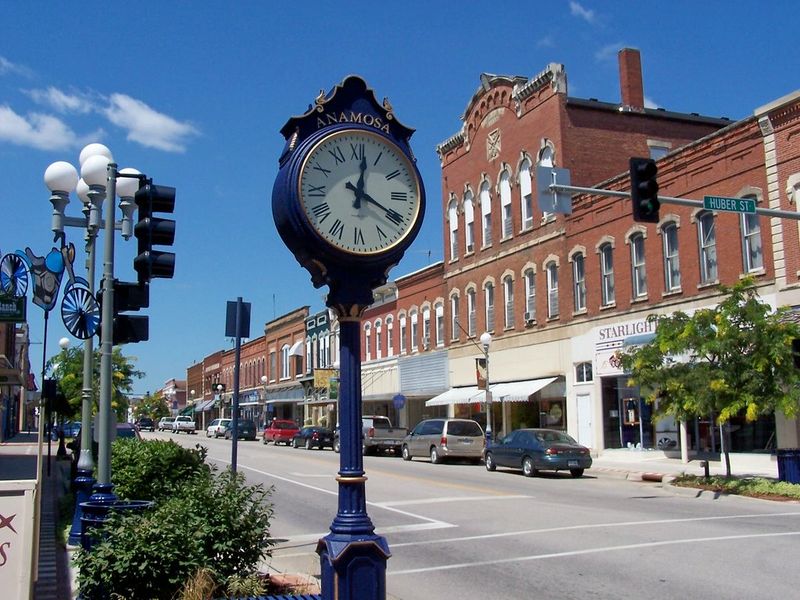
Soft hills, weathered limestone, and a sense of artistic memory give this tiny community a mood that lingers longer than you expect.
Instead of feeling like a conventional stop, it feels like a place suspended between landscape and legend, with every stone surface catching the light beautifully.
That unusual atmosphere belongs to Stone City near Anamosa.
The town became known for its limestone architecture and later for the artists connected to Grant Wood.
Even now, there is something painterly about the way the buildings sit within the rolling countryside, as if the setting was arranged to be studied rather than simply passed through.
It is history with visual texture.
You notice how the pale stone contrasts with trees, fields, and seasonal color, and how the scale of the place remains intimate despite its cultural importance.
It does not overwhelm you, which is part of its charm.
Stone City is ideal for travelers who appreciate places with atmosphere more than attractions stacked on top of each other.
Pair it with nearby scenic drives or the Wapsipinicon State Park area, and the visit feels even richer.
If you are drawn to destinations where art, geology, and rural Iowa meet in a quietly cinematic way, this small historic village earns its place on the list.
9. Neal Smith National Wildlife Refuge, Prairie City, Jasper County
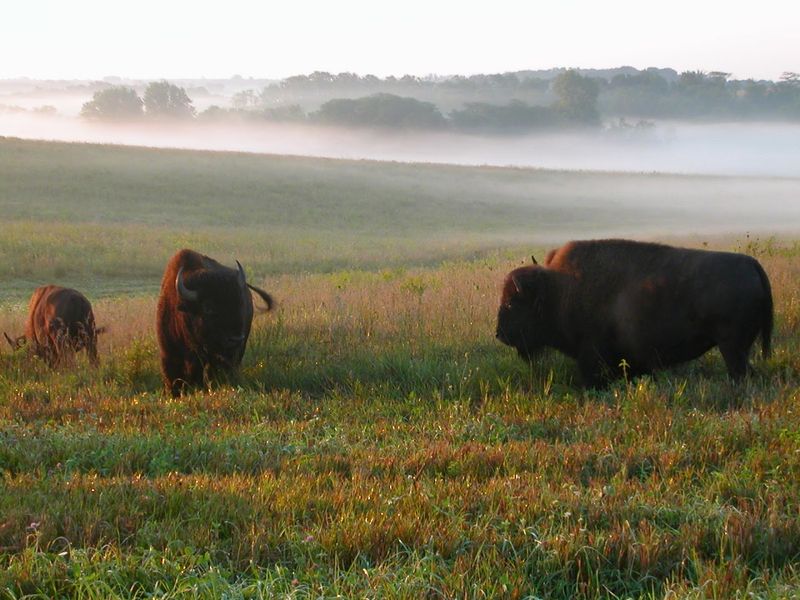
Few places in Iowa make you feel the size of the original prairie quite like this one.
Big skies, rolling grasslands, and the chance of spotting bison create a scene that feels expansive and elemental, almost as if the modern world has been pushed to the edges.
That immersive quality makes Neal Smith National Wildlife Refuge near Prairie City unforgettable.
The refuge protects and restores tallgrass prairie and oak savanna, offering a glimpse of the ecosystem that once dominated the state.
Driving the auto tour or walking the trails, you begin to understand prairie as a living, layered landscape rather than empty space.
That shift in perspective is one of the best reasons to visit.
Wildlife adds suspense and presence.
Bison and elk are the headline animals, but birds, insects, and changing seasonal blooms constantly reshape the experience, especially when summer light turns the grasses silver and gold.
The land never feels static here.
The visitor center helps frame what you are seeing, but the emotional payoff comes outside.
Stay long enough for changing weather or late day light, and the refuge starts to feel almost cinematic in slow motion.
10. Preparation Canyon State Park, Monona County
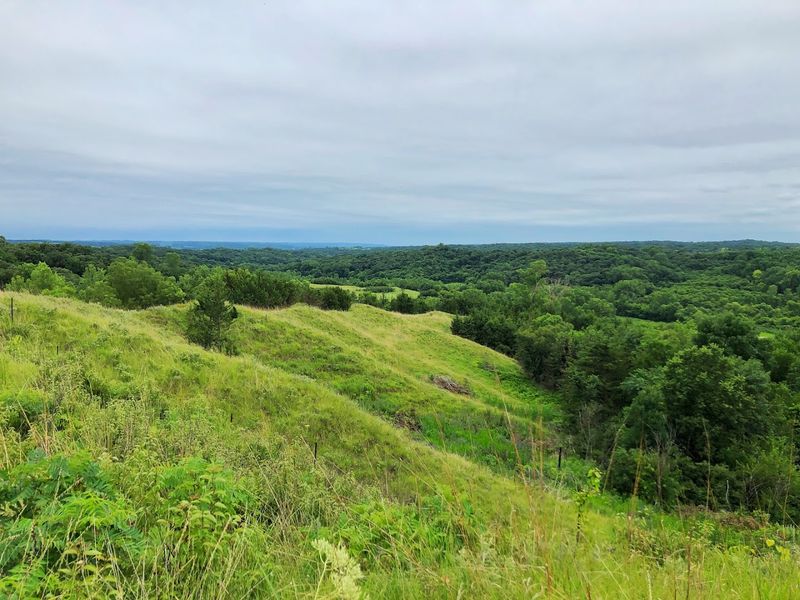
Silence feels deeper here, as if the hills are intentionally holding the outside world at a distance.
Long ridges, wooded slopes, and a secluded valley create an atmosphere that is both peaceful and slightly mysterious, the kind of setting that immediately suggests story.
That feeling is central to Preparation Canyon State Park in Monona County.
Tucked within the Loess Hills region, the park offers a more remote experience than many of Iowa’s better known destinations.
Trails move through forests and open areas with a sense of solitude that is increasingly rare, especially if you visit on a quiet weekday.
The terrain feels layered and intimate rather than dramatic in a flashy way.
The canyon takes its name from a nineteenth century settlement founded by Mormon pioneers, and that abandoned past gives the landscape an added sense of depth and reflection.
You are not just hiking through pretty hills, but through a place shaped by ambition, hardship, and departure.
This is a destination for travelers who like mood as much as scenery.
Bring water, expect fewer amenities, and let the quiet become part of the experience.
Preparation Canyon may not shout for attention, but its remoteness, history, and Loess Hills beauty make it one of Iowa’s most cinematic hidden places.