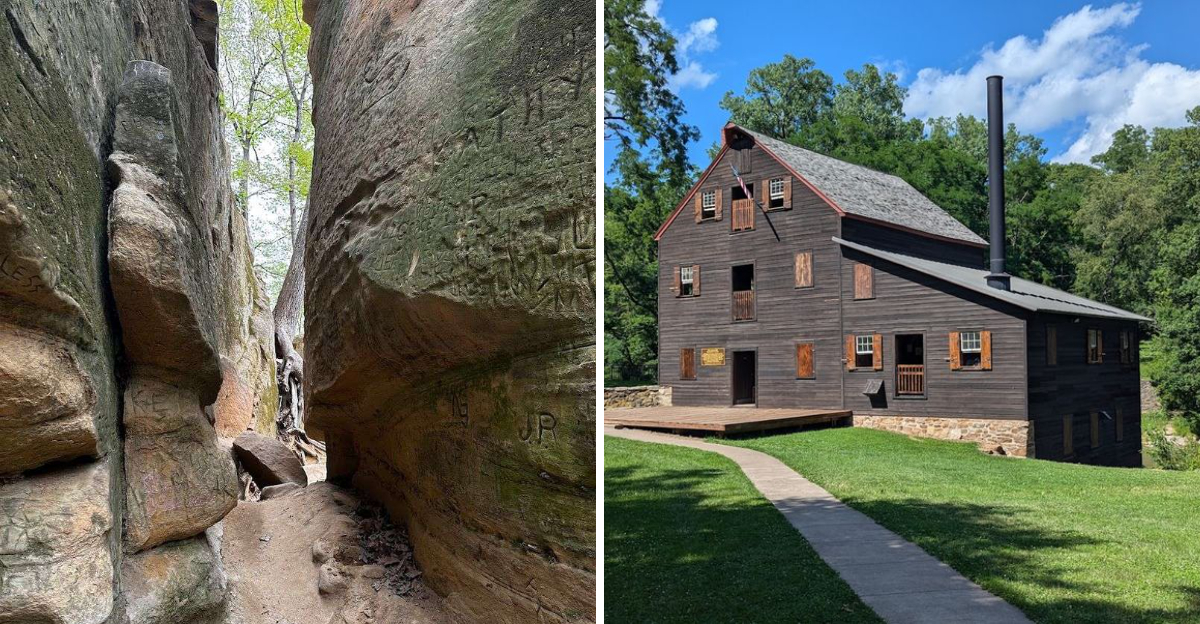
Iowa has a wild side, and Wildcat Den State Park is ready to show it off.
Just outside Muscatine, this rugged 400-acre escape feels nothing like the endless fields many visitors expect from the state. Massive sandstone formations rise from the woods, narrow trails twist through forested ravines, and hidden rock features make every turn feel like a small discovery.
Then comes the history.
The beautifully restored 1848 Pine Creek Grist Mill sits beside the creek, bringing Iowa’s pioneer past straight into the present. Nearby historic buildings add even more character to a park already packed with surprises.
Whether you’re squeezing between sandstone walls, climbing rugged trails, or exploring a historic mill, Wildcat Den delivers a rare mix of adventure and history.
This is the kind of Iowa park that completely changes your expectations.
A Rare Iowa Park Where Geology And History Meet
Wildcat Den State Park packs more than 400 acres of surprises into a corner of eastern Iowa most travelers never see. Sandstone cliffs tower above forested ravines while Pine Creek cuts through rocky passages below.
The landscape looks more like Appalachia than the Midwest.
History runs as deep as the geology here. A working grist mill from 1848 still stands beside the creek, its wooden gears and grinding stones preserved for modern visitors.
Pioneer cabins and a one-room schoolhouse add to the authentic frontier atmosphere.
Few Iowa parks combine natural beauty and historical significance this effectively. The rock formations alone would make Wildcat Den worth visiting, but the preserved structures turn it into an outdoor museum.
Families can hike rugged trails in the morning and tour a 19th-century mill in the afternoon.
This combination makes Wildcat Den special among Iowa’s state parks. The terrain challenges hikers while the history lessons engage curious minds.
Every visit reveals something new about Iowa’s wilder side.
The Sandstone Bluffs That Give The Park Its Dramatic Character
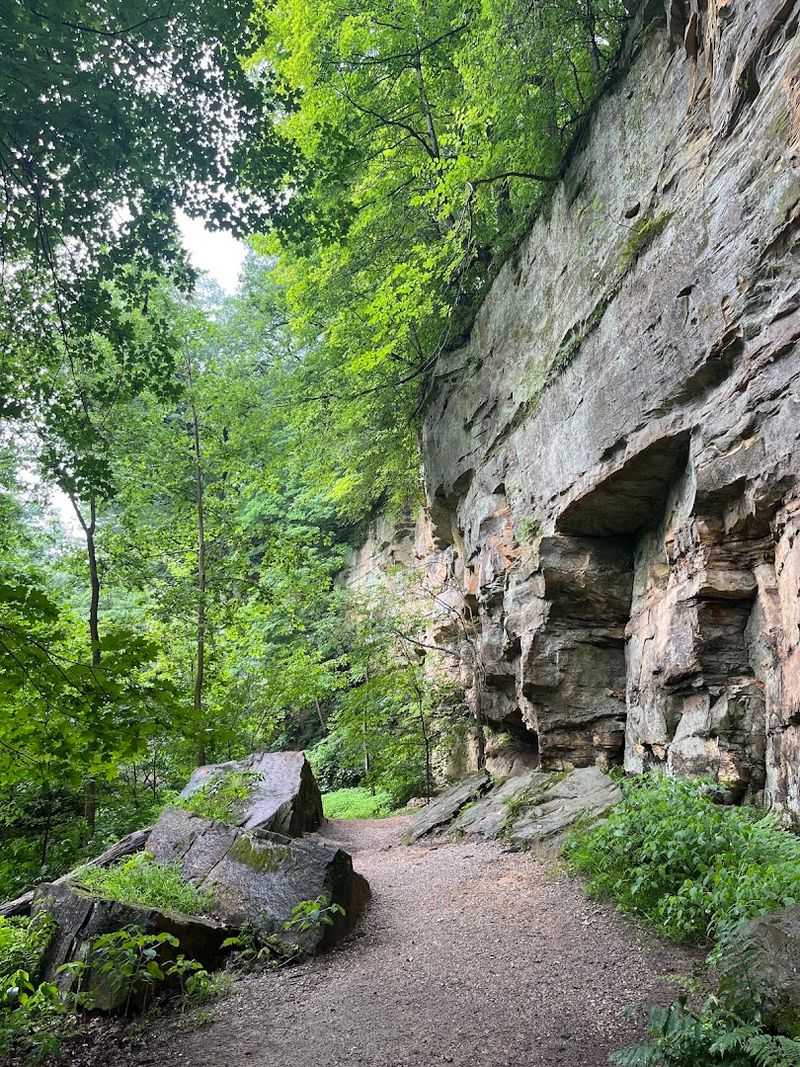
Massive sandstone bluffs define Wildcat Den’s character from the moment you arrive. These imposing rock walls rise sharply from the forest floor, their layered surfaces displaying millions of years of geological history.
The formations create dramatic views that feel completely unexpected in Iowa.
Most visitors associate the state with gentle rolling hills and cornfields. Wildcat Den challenges that image with cliffs that demand attention and respect.
The steep faces show clear sediment layers deposited when ancient seas covered this region.
Weather and water have sculpted these bluffs into striking shapes over countless centuries. Some sections overhang trail paths, while others stand vertical and forbidding.
Moss and lichen add color to the stone surfaces, creating natural artwork on the rock faces.
The sandstone here differs from typical Midwest geology, making the park scientifically interesting as well as visually impressive. Geologists study these formations to understand Iowa’s prehistoric environment.
Hikers simply enjoy the rugged beauty these ancient rocks bring to their outdoor adventures.
Steamboat Rock And The Park’s Most Memorable Rock Formations
Steamboat Rock earns its name from its distinctive shape that resembles an old paddle wheeler frozen in stone. This formation sits prominently along one of the main trails, impossible to miss and irresistible to photograph.
Kids love climbing on its weathered surface while parents appreciate the natural sculpture.
The formation shares trail space with other geological celebrities. Devil’s Punch Bowl creates a mysterious hollow carved from solid rock.
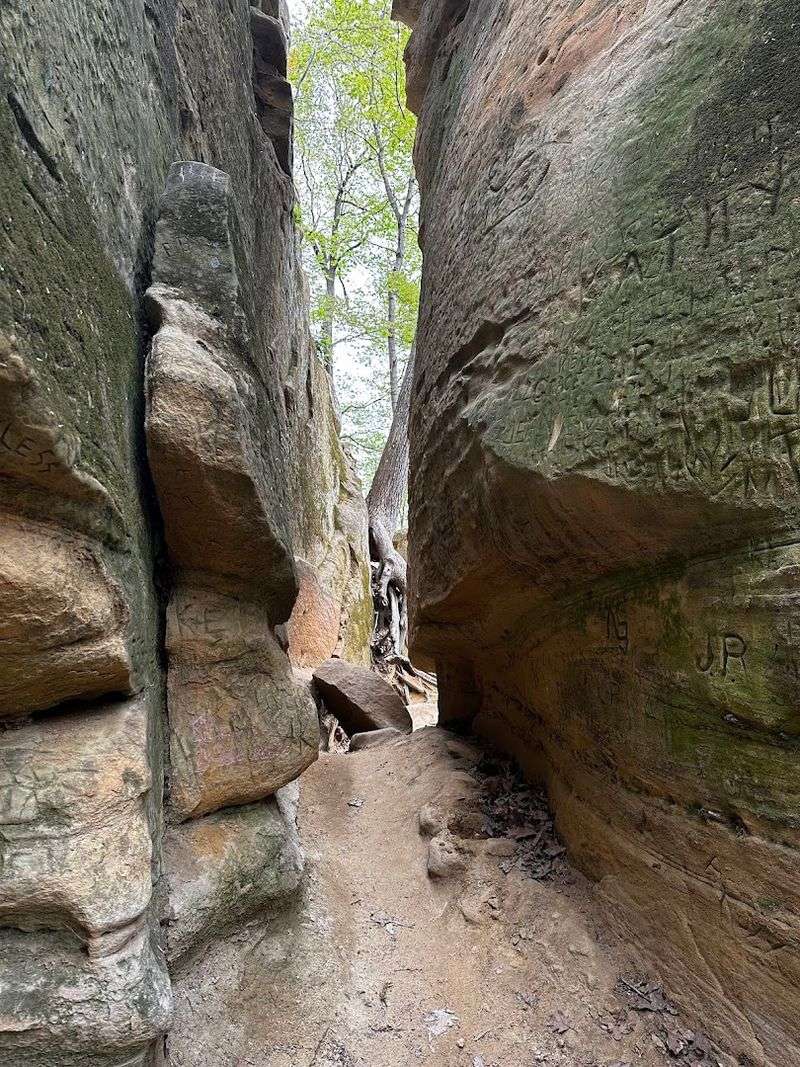
Fat Man’s Squeeze tests hikers’ nerve as they navigate between two massive stone walls that nearly touch overhead.
Each formation tells a story of erosion, pressure, and time measured in millennia rather than years. Water, wind, and seasonal freeze-thaw cycles worked together to create these natural artworks.
The results look almost intentional, as if some ancient sculptor planned every curve and angle.
Walking among these rocks transforms a simple hike into an interactive geology lesson. Trail markers explain how each formation developed, but the rocks speak for themselves.
Their presence makes Wildcat Den feel wilder and older than most Iowa destinations.
Devil’s Punch Bowl Is A Natural Wonder Hidden Along The Trails
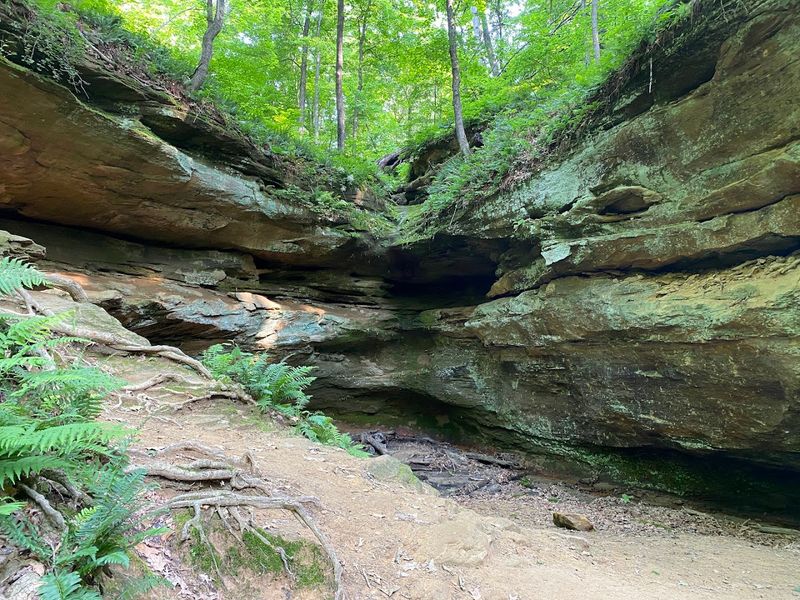
Nature carved Devil’s Punch Bowl from solid sandstone using nothing but water and time. This distinctive bowl-shaped depression sits in the cliff face, its interior smooth from centuries of flowing water.
The formation’s walls show beautiful color variations from iron and mineral deposits layered through the stone.
Water from the bluff above created this natural wonder by constantly dripping and flowing over the same spot for thousands of years. The process hollowed out softer rock layers while harder sections remained.
The result looks almost like someone used a giant spoon to scoop a bowl from the cliff.
The formation’s unusual appearance makes it one of the park’s most photographed features. Its layered interior displays red, tan, and gray bands that tell the region’s geological story.
Visitors often touch the smooth interior walls, amazed by how soft water shaped hard rock.
Finding Devil’s Punch Bowl requires following the trail system through the woods, but the discovery makes the walk worthwhile. The formation proves that Iowa’s landscape holds surprises worth seeking out.
Trails That Turn A Short Hike Into A Full Adventure
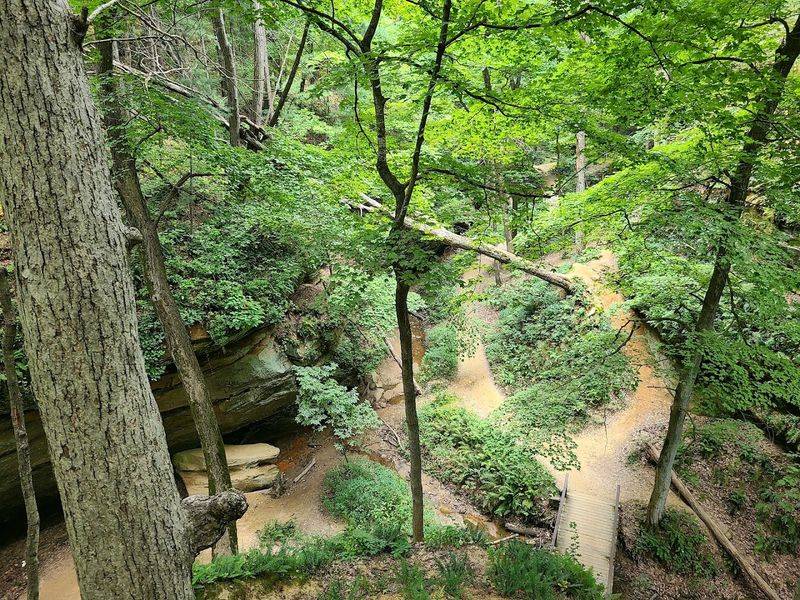
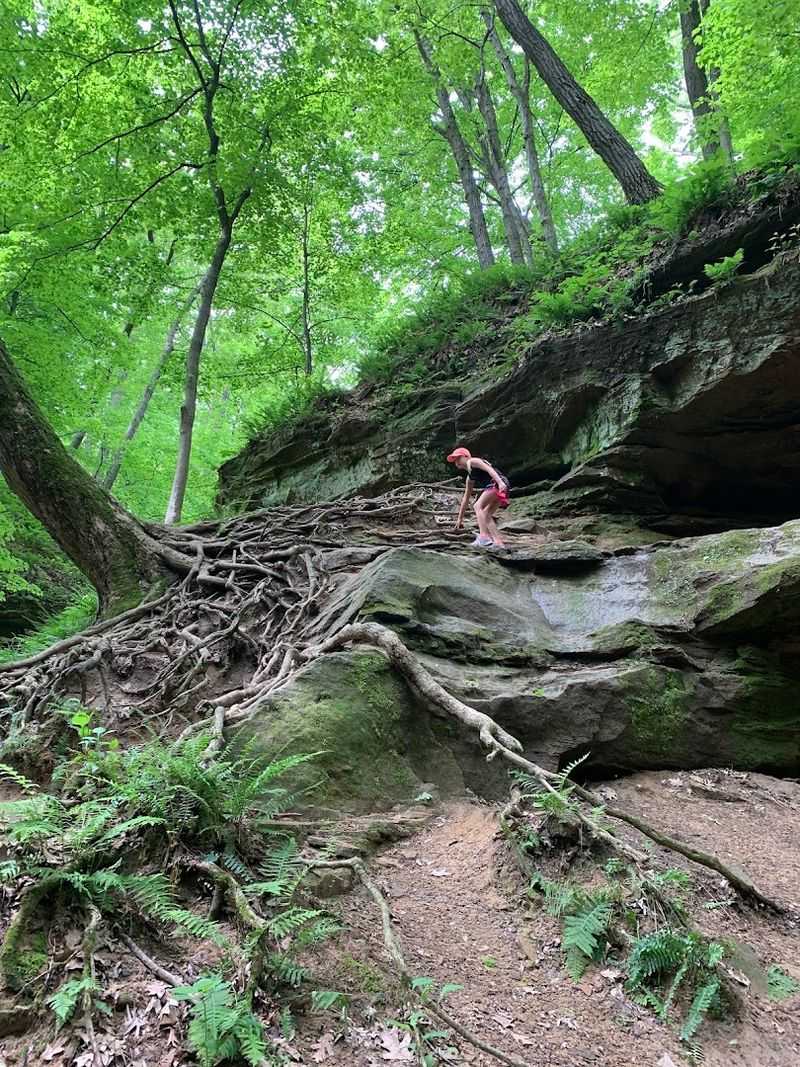
Wildcat Den’s trail network transforms ordinary hiking into genuine adventure. The paths wind through forests, climb steep ravines, pass towering bluffs, and deliver breathtaking overlooks.
Some sections challenge even experienced hikers with rugged terrain and significant elevation changes that demand careful footing.
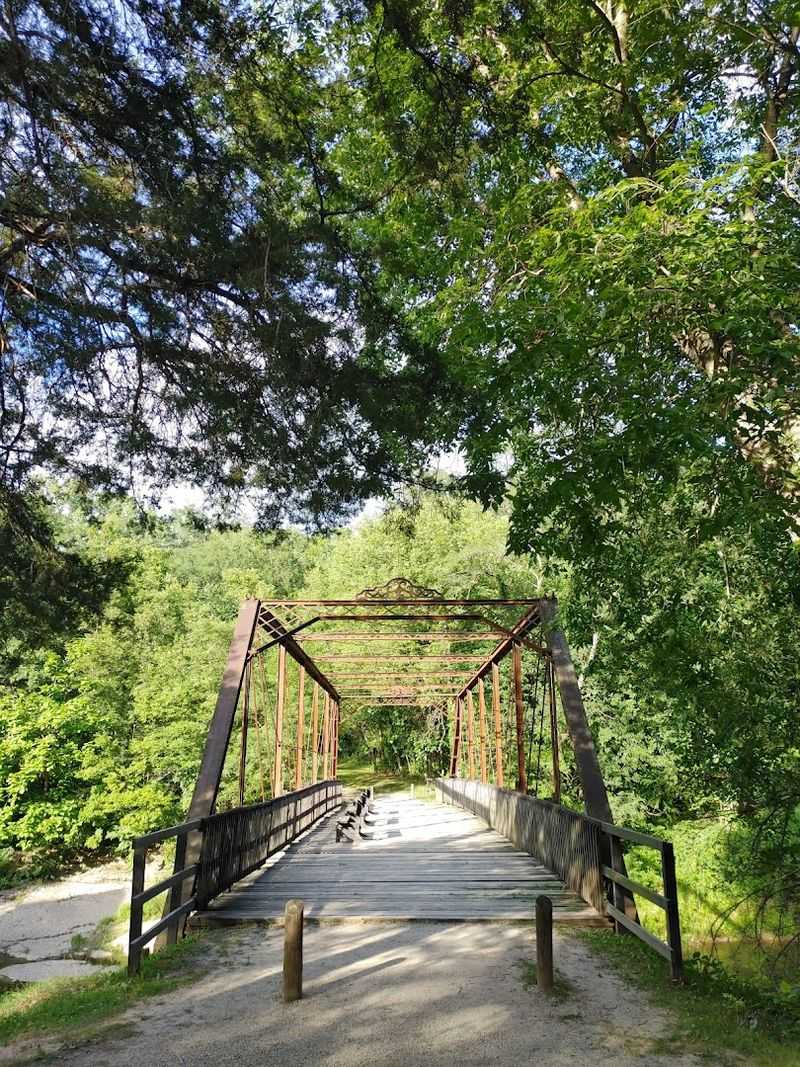
The trails connect all major park features into one continuous experience. Hikers pass Steamboat Rock, squeeze through Fat Man’s Squeeze, peer into Devil’s Punch Bowl, and cross Pine Creek on historic bridges.
Each turn reveals something new worth stopping to examine.
Trail difficulty varies from moderate walks to strenuous climbs. Steep grades test leg muscles while rocky sections require attention to foot placement.
The reward comes in close-up views of geological wonders and forested beauty that few Iowa trails can match.
Smart hikers carry a trail map because the network offers multiple route options. Some paths loop back quickly while others extend the journey considerably.
The terrain’s ruggedness makes distance feel longer than expected, but most visitors consider the challenge part of the park’s appeal.
Pine Creek Grist Mill Brings Iowa’s Pioneer Past To Life
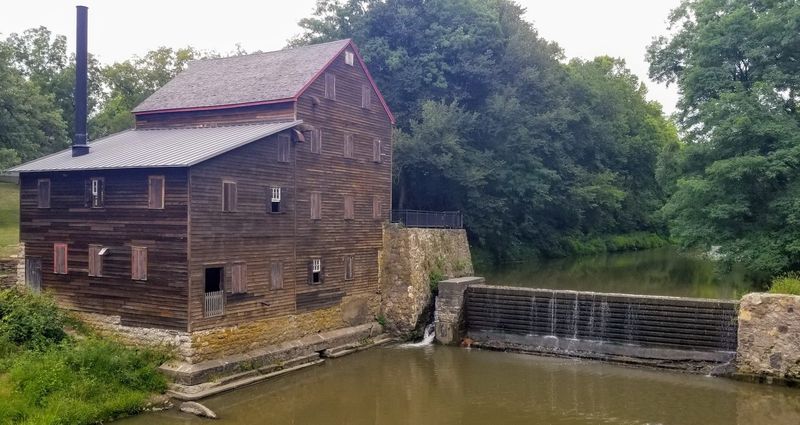
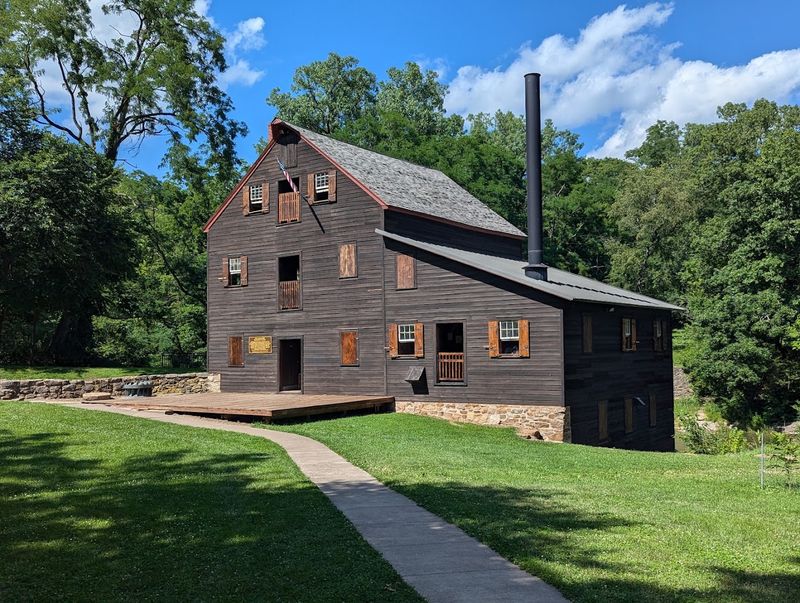
Benjamin Nye built Pine Creek Grist Mill in 1848 when Iowa’s frontier was still raw and untamed. The sturdy wooden structure stands beside Pine Creek exactly where Nye positioned it to harness the water’s power.
Today, the restored mill represents one of the finest surviving examples of mid-19th-century milling technology in the entire region.
The mill served pioneer families who needed grain ground into flour for bread and livestock feed. Farmers traveled miles to reach this vital community resource, often waiting their turn while neighbors shared news and gossip.
The mill became a social hub as well as an economic necessity.
Walking through the mill today feels like stepping backward in time. Original timbers, massive grinding stones, and wooden gears remain in place, maintained by preservation efforts.
The structure’s solid construction explains how it survived more than 170 years of Iowa weather and flooding.
This building connects modern visitors directly to Iowa’s settlement era. The mill represents pioneer ingenuity, hard work, and the determination required to establish communities in wild territory.
The Historic Mill Still Feels Like A Working Piece Of The Past
Step inside Pine Creek Grist Mill and the machinery tells stories without words. Enormous grinding stones sit ready to crush grain between their grooved surfaces.
Wooden gears connect wheels and shafts in a mechanical ballet designed before electricity existed. The water-powered system shows remarkable engineering for its era.
During operating demonstrations, the mill comes alive exactly as it did in the 1850s. Creek water flows through the millrace, turns the wheel, and powers the grinding mechanism.
Visitors watch grain transform into flour using technology their great-great-great-grandparents would recognize instantly.
The mill’s working demonstrations transform abstract history into tangible experience. Seeing the stones spin and feeling the building vibrate makes pioneer life understandable in ways textbooks never could.
The grain’s earthy smell and the machinery’s rhythmic creaking complete the sensory journey backward through time.
Seasonal tours and demonstrations vary throughout the year, so checking current schedules before visiting ensures catching the mill in action. When the machinery runs, history stops being dates and facts and becomes something visitors can truly experience firsthand.
Melpine Schoolhouse And Other Historic Treasures Add Even More Character
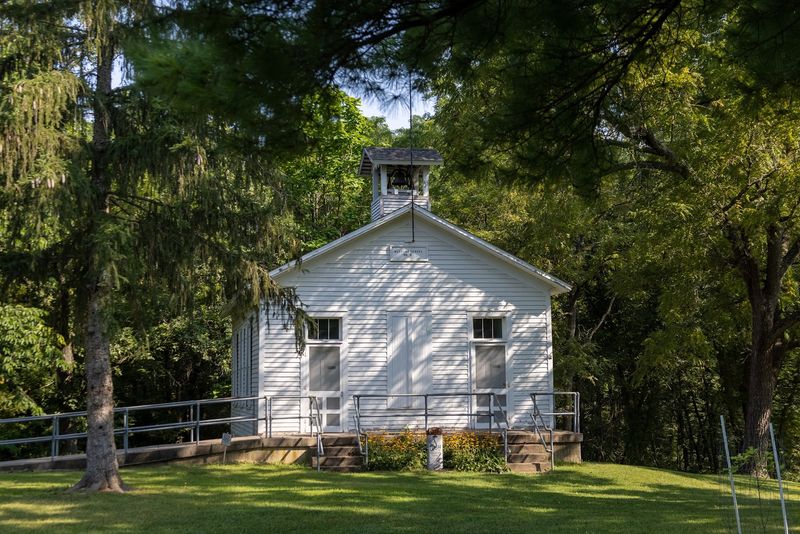
Melpine schoolhouse represents rural education when one teacher taught every grade in a single room. The restored building preserves original details including wooden desks, a slate chalkboard, and the pot-bellied stove that barely kept frontier children warm during Iowa winters.
Walking inside feels like attending school 150 years ago.
A pioneer cabin near the mill shows how Iowa’s earliest settlers actually lived. The simple log structure demonstrates the harsh reality of frontier existence.
Modern visitors often marvel that entire families survived in such cramped, primitive conditions during brutal Midwest winters.
Pine Mill Bridge adds another historic layer to the park experience. This restored structure crosses Pine Creek using construction methods common in the 19th century.
The bridge connects trails while serving as a preserved example of early transportation infrastructure.
Together, these structures create an unusually rich historical collection within one state park. Few locations preserve this many authentic pioneer-era buildings in their original setting.
The combination lets visitors understand how Iowans worked, learned, and traveled during the state’s frontier period.
A Peaceful Outdoor Escape With Hiking, Picnicking, And Primitive Camping
Wildcat Den rewards visitors who choose to slow down and stay awhile. The non-electric campground offers primitive sites tucked into the woods, where Pine Creek’s gentle sounds replace traffic noise.
Campers wake to birdsong and fall asleep watching stars appear through forest canopy overhead.
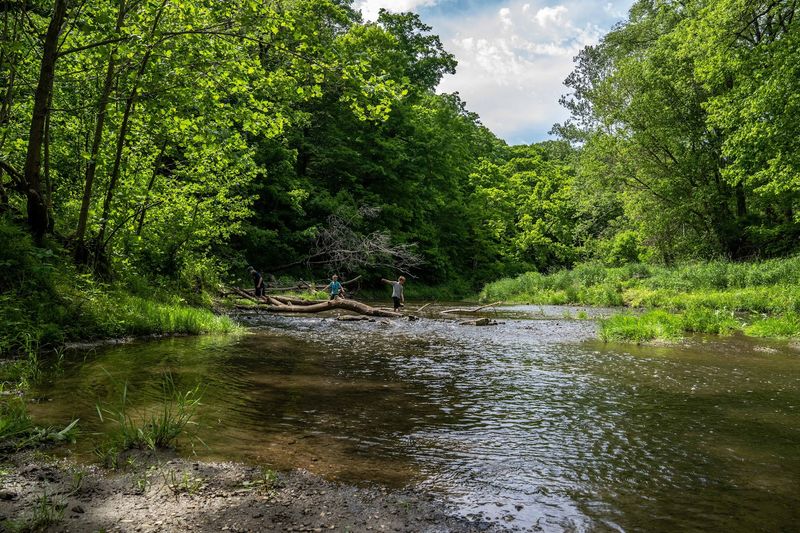
Day visitors find plenty of picnic areas scattered throughout the park. Shelters provide shade and tables while scenic spots along the creek invite blanket spreading and basket unpacking.
The combination of quiet woods, flowing water, and historic surroundings creates an atmosphere perfect for outdoor meals and family gatherings.
The park’s remote feeling makes it ideal for travelers seeking genuine escape from modern life’s constant noise. Cell signals grow weak, encouraging people to actually talk and explore together.
The rugged trails and historic sites provide plenty to do without electronic entertainment.
This combination of primitive camping, scenic picnicking, and engaging trails transforms Wildcat Den into more than a quick stop. The park invites immersive experiences where visitors genuinely disconnect and rediscover why outdoor spaces matter.
What To Know Before You Go
Wildcat Den State Park sits at 1884 Wildcat Den Road in Muscatine, Iowa, about 12 miles northeast of downtown Muscatine. The park provides hiking trails, picnic areas, shelters, restrooms, and a primitive campground for visitors planning overnight stays.
All camping sites are non-electric, so plan accordingly with proper gear and supplies.
Campground reservations become necessary during peak season when sites fill quickly. The park office handles reservations and can answer questions about current conditions and facility availability.
Their phone number is 563-263-4337 for anyone needing specific information before making the drive.
Pine Creek Grist Mill operates on seasonal hours that change throughout the year. Calling ahead ensures the mill will be open for tours when you arrive.
Trail conditions can vary significantly depending on recent weather, with some paths becoming muddy or challenging after rain.
Bringing a current park map helps locate major formations and historic attractions efficiently. Several trails feature steep, rugged sections requiring proper footwear and reasonable fitness levels.
Plan extra time because distances feel longer on uneven terrain.