Michigan’s Upper Peninsula holds far more than stunning lakeshores and dense forests, it harbors a remarkable underground world that most visitors never discover.
From sea caves carved by the cold waters of Lake Superior to ancient rock formations tucked into hillsides, the state’s cave landscape is genuinely surprising.
Each site tells a story shaped over thousands of years, written in stone, sediment, and shadow.
What makes Michigan’s caves special is their variety: arched sandstone, volcanic remnants, and glacial formations all coexist within driving distance of one another.
These 10 Michigan caves are the kind of hidden treasures that make you feel like you’ve uncovered something most people overlook.
1. Miners Castle – Munising, Alger County
You can feel the landscape shifting the moment the cliffs come into view.
Wind off Lake Superior adds a cold edge, and the layered sandstone seems built for secrets.
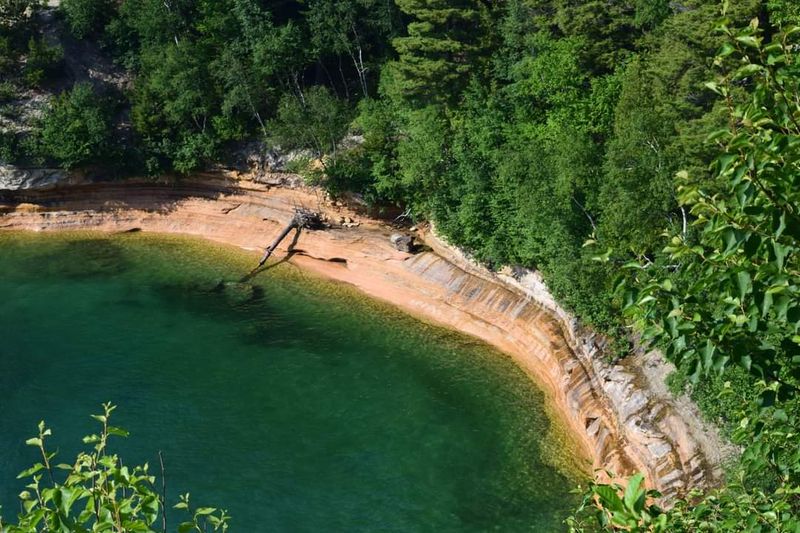
That sense of discovery is strongest around Miners Castle near Munising in Alger County, where erosion has carved dramatic recesses and sea cave-like formations into the shoreline.
While the most famous feature is the towering rock outlook itself, the surrounding cliff base tells a deeper story.
Waves, ice, and relentless weather have hollowed pockets and sheltered nooks that feel hidden even when other visitors are nearby.
I think this spot works best if you slow down, study the textures, and imagine how long Superior has been chiseling away at these walls.
Photographers love the contrast between pale stone, dark evergreens, and changing blue water.
You will also find that light changes everything here, especially early or late in the day when shadows exaggerate every curve and opening.
Even a short visit can feel surprisingly immersive because the overlook hints at a much larger wild system stretching along the coast.
It may not be a deep cave in the classic sense, but it absolutely delivers hidden-treasure energy.
That is where Miners Castle starts to feel personal, moody, and unforgettable.
2. Bridal Veil Falls Cave – Munising, Alger County
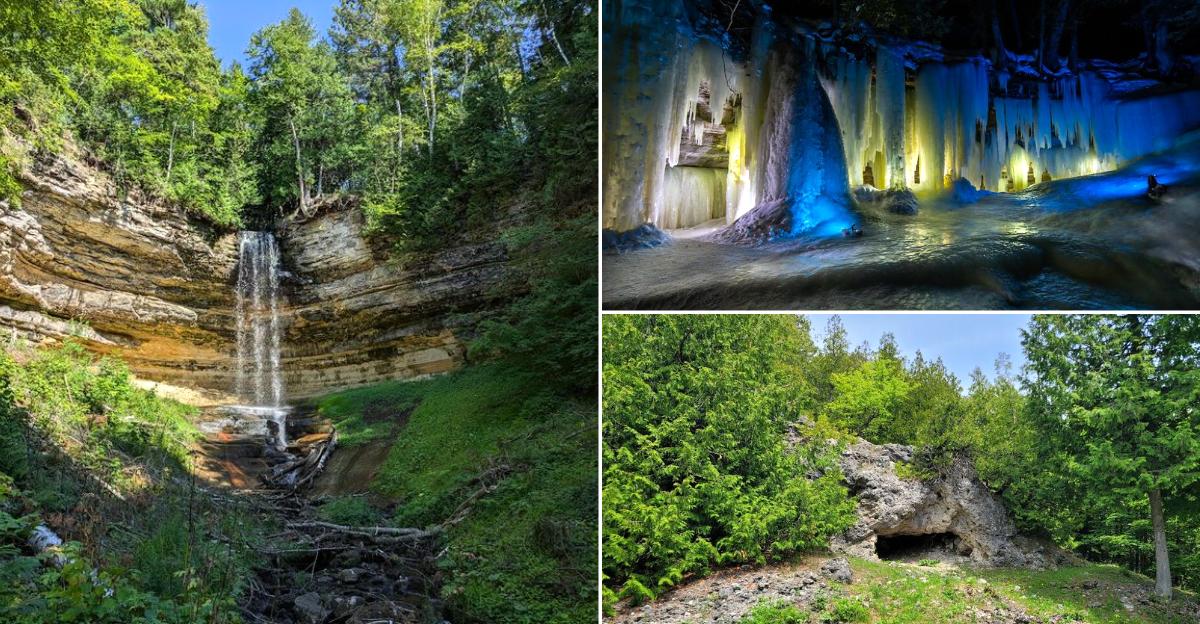
Mist has a way of making familiar landscapes feel secretive.When water spills in a thin curtain over stone, even a modest recess can seem like a hidden chamber.
That is exactly the draw of Bridal Veil Falls Cave near Munising in Alger County, where waterfall and sandstone combine into one of the shore’s most alluring little hideaways.
The cave-like space here is shaped as much by perspective as geology.Viewed from the right angle, the falling water acts like a doorway, briefly separating you from the outside world and inviting a closer look at the rock behind it.
The effect is especially striking in warmer months, when sunlight catches the spray and softens the whole scene.
Like many Pictured Rocks features, this spot feels best experienced with curiosity rather than a checklist.Look for the color changes in the sandstone, the slick surfaces, and the way the water amplifies every sound around you.
I think that sensory detail is what turns this stop from pretty to memorable.
Because it is more delicate than dramatic, Bridal Veil Falls Cave can surprise people who expect only big landmarks.Instead, it offers intimacy, movement, and a touch of mystery packed into a compact setting.
If you enjoy places that feel discovered rather than conquered, this Munising area gem absolutely earns its place among Michigan’s hidden treasures.
3. Scott Falls Cave – Au Train, Alger County
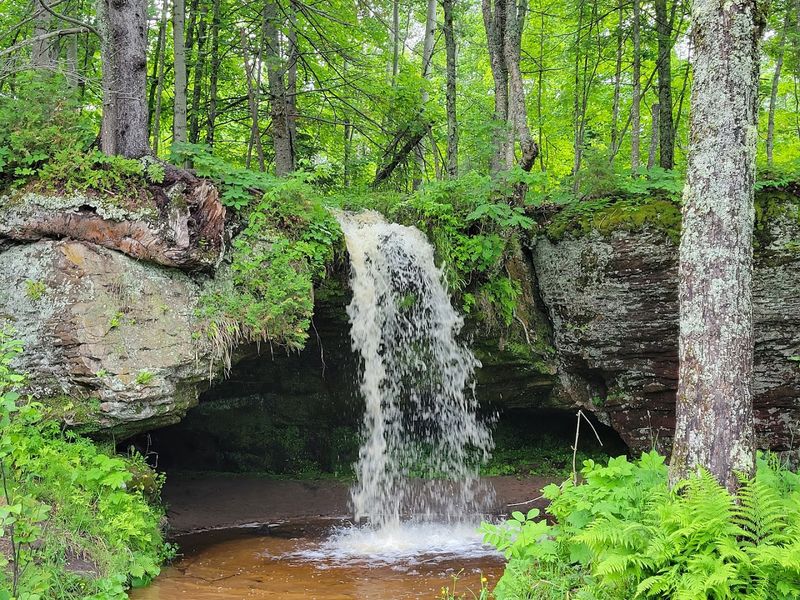
There is something satisfying about finding a cave where you least expect one.
Cars pass nearby, yet the scene quickly shifts from roadside stop to cool little sanctuary.
At Scott Falls in Au Train, Alger County, a shallow cave-like recess behind and beside the waterfall adds a secret layer to one of the Upper Peninsula’s easiest natural attractions.
The waterfall itself is not enormous, but that makes the setting feel more approachable and intimate.
You can study the rock wall up close, notice the damp textures, and appreciate how flowing water has helped shape the alcove over time.
After rain, the whole area becomes even moodier, with louder water, greener moss, and darker stone.
What I like most is how quickly this place delivers atmosphere.
In just a few steps, you get the sound of falling water, the cooling mist, and that sheltered feeling only a rock overhang can create.
It is ideal if you want a short stop that still feels rewarding, especially for families or anyone mixing scenic drives with easy exploration.
Its charm comes from accessibility, texture, and the feeling of stumbling onto a pocket of wilderness with almost no effort.
Scott Falls Cave is small, scenic, and exactly the kind of hidden treasure that makes a road trip feel richer.
4. Chapel Rock Cave – Pictured Rocks, Alger County
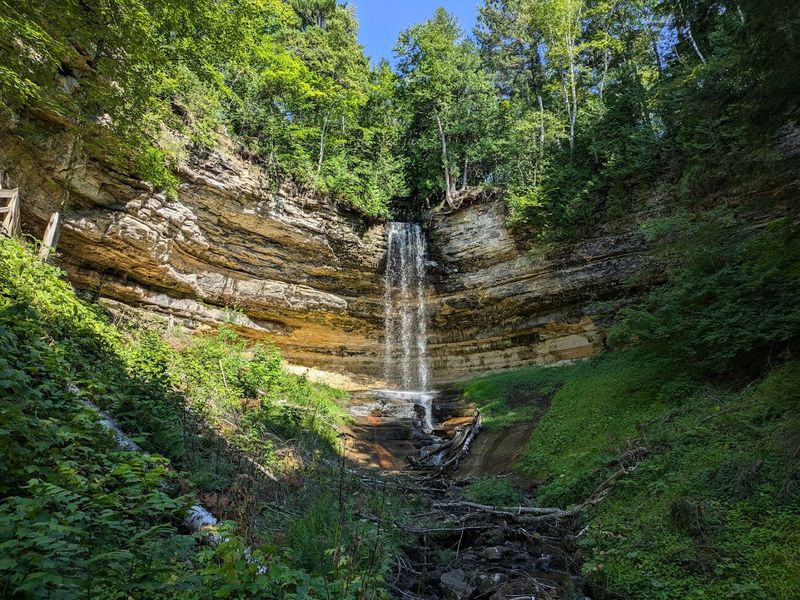
The shoreline feels quieter here, almost like it is asking you to pay closer attention.
Forest, water, and sandstone meet in a way that makes every bend look promising.
Near Chapel Rock in Pictured Rocks, Alger County, that promise becomes real with cave-like recesses cut into the cliff by centuries of Superior’s force.
Most visitors know the famous tree standing stubbornly on the rock, but the surrounding geology deserves just as much attention.
Small chambers, undercut walls, and shadowy openings give this area a secretive character that rewards patience.
If you arrive by kayak or boat, the perspective is even better because the stone seems to rise directly from the water in sculpted layers.
What makes this stop memorable is the mix of beauty and raw exposure.
You are never far from stunning scenery, yet the darker hollows in the cliff create a mood that feels almost hidden from the postcard version of Pictured Rocks.
I love how the sound of water bouncing off stone makes the place feel alive, especially on cooler days.
This is not a cavern you wander deep into, but that is part of the appeal.
Chapel Rock Cave proves that even a modest opening in these cliffs can feel mysterious when the lake, weather, and light all cooperate.
5. Sand Caves – Saugatuck, Allegan County
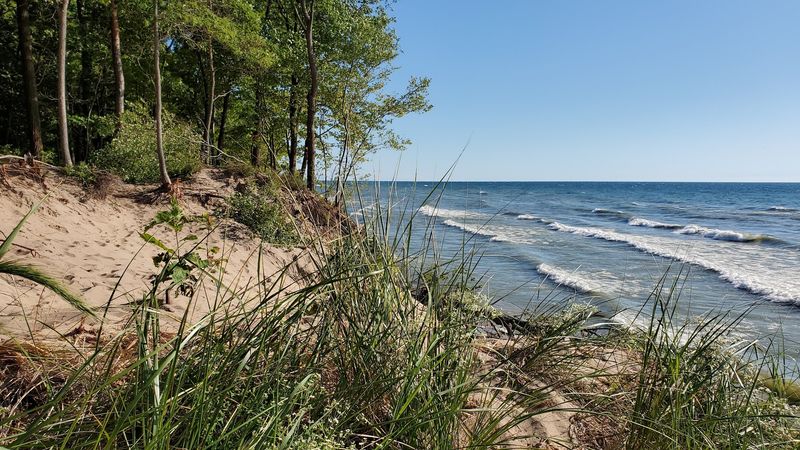
Not every cave in Michigan is carved into hard stone.
Sometimes the hidden feeling comes from wind-shaped hollows, steep dune faces, and soft walls that seem to change with every season.
That is the magic of the Sand Caves near Saugatuck in Allegan County, where the landscape feels playful, fragile, and slightly unreal.
These formations are best understood as temporary treasures rather than permanent landmarks.
Shifting sand creates pockets, overhangs, and sheltered areas that can look dramatically different depending on weather, erosion, and foot traffic.
Because of that, visiting feels a little like chasing something fleeting, which only adds to the appeal.
The setting itself does plenty of work.
Lake Michigan brings fresh air, the dunes create a sense of scale, and the pale sand reflects light in a way that makes even small hollows feel cinematic.
If you enjoy places that are both scenic and a bit unpredictable, you will probably find this stop especially memorable.
Still, when the shapes align, the result feels wonderfully hidden – like nature built a secret room and may erase it tomorrow.
The Sand Caves of Saugatuck offer a softer, stranger version of cave exploration that stands apart from the Upper Peninsula’s rocky shorelines.
6. Arch Rock – Mackinac Island, Mackinac County
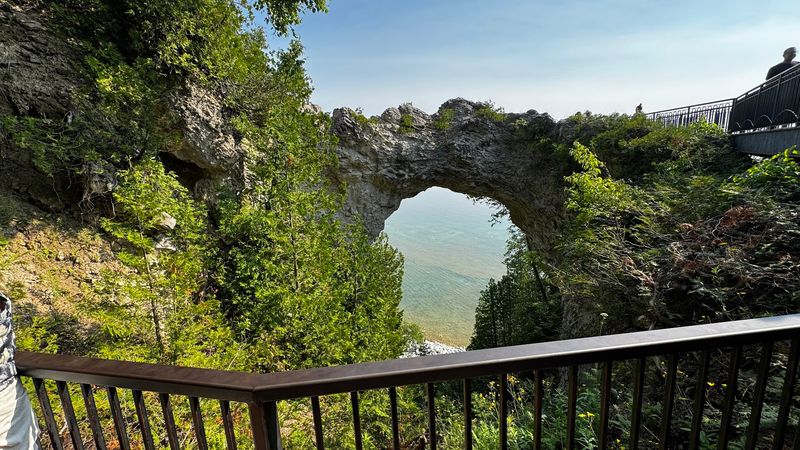
Height changes everything when you are looking for hidden wonder.
A formation does not need to be enclosed to spark that cave-like sense of mystery and age.
At Arch Rock on Mackinac Island in Mackinac County, the giant limestone opening feels like nature carved a ceremonial gateway above the water.
The arch rises dramatically from the bluff, and that vertical setting gives it a presence you can feel before you fully understand its scale.
From below or from the viewing area above, the opening frames sky and landscape in a way that feels almost theatrical.
I love how the surrounding forest softens the scene, making the rock seem even older and more improbable.
Geologically, this landmark formed through erosion and the retreat of ancient waters, which adds depth to the experience.
You are not just looking at a beautiful opening in stone – you are seeing the remains of processes that shaped the island itself.
That long timeline is part of what makes the place feel like a treasure preserved in plain sight.
Maybe it is the elevation, the clean lake air, or the way the opening draws your eye through it and beyond.
Either way, this Mackinac Island classic deserves a place on the list for anyone drawn to natural formations that blur the line between arch, cave, and wonder.
7. Skull Cave – Mackinac Island, Mackinac County
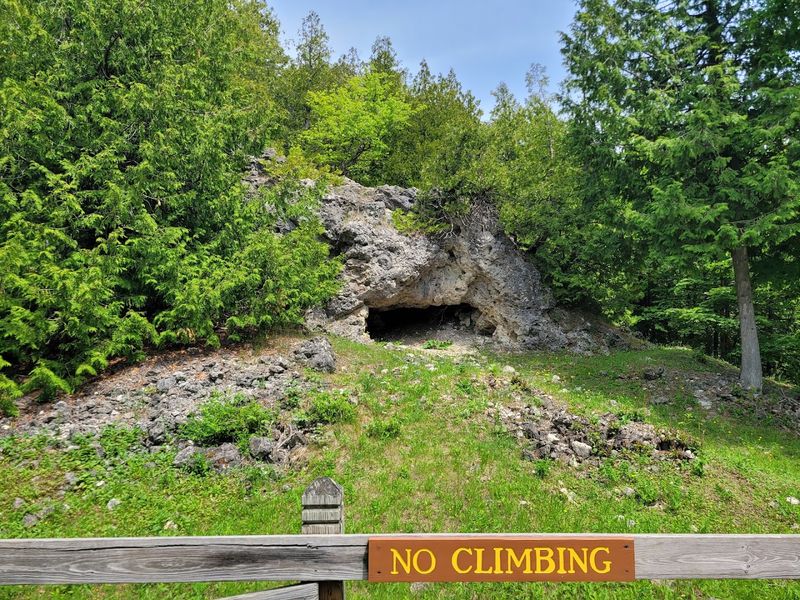
Legends can make a cave feel bigger before you even see it.
When a place carries stories of ancient use, military history, and eerie nicknames, the atmosphere arrives first.
That is very much the case at Skull Cave on Mackinac Island in Mackinac County, one of Michigan’s most famous natural chambers.
The cave sits in limestone and opens into a cool, shadowy space that feels surprisingly substantial.
Its reputation comes partly from its shape and partly from the human stories attached to it, including Indigenous history and the well-known account of a British trader sheltering there in winter.
Even if you know the facts are layered with retelling, the setting still delivers a distinctly haunted kind of intrigue.
What stands out to me is how accessible the mystery feels.
You do not need technical gear or a long trek to reach a place with genuine historic weight and real cave atmosphere.
The chamber is wide enough to spark imagination immediately, especially when light fades near the back and cooler air settles around you.
Skull Cave is not hidden in the strictest sense, but it absolutely feels like a discovered secret once you step inside.
The mix of geology, folklore, and island character gives it an identity unlike anywhere else in the state.
8. Carp River Caves – Munising, Alger County
The best hidden places usually require a little uncertainty.
A rougher path, a quieter shoreline, and fewer signs can make the reward feel much more personal.
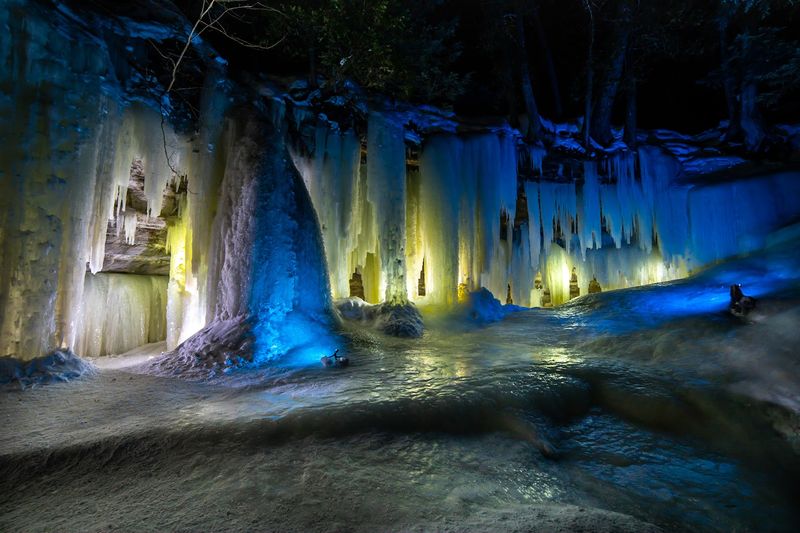
That is part of the appeal of the Carp River Caves near Munising in Alger County, where river, lake, and sandstone create a more tucked-away adventure.
These cave-like formations are less polished in reputation than some better-known Pictured Rocks landmarks.
Because of that, they tend to attract people who enjoy exploring with attention and respect rather than rushing toward a famous photo stop.
The setting feels wilder, with water shaping the rock in subtler, rougher ways than the grand postcard cliffs nearby.
Expect texture instead of spectacle.
The surrounding area offers forested calm, changing light, and the kind of erosion patterns that reward close observation.
I think this spot works especially well for travelers who like the feeling of piecing together a landscape rather than being told exactly what to admire.
Conditions can vary, and part of the challenge is understanding access, safety, and shoreline changes before you go.
The Carp River area may not be the loudest name on this list, but its quieter, more elusive character is precisely what makes it memorable.
9. Porcupine Mountains Cave – Ontonagon County
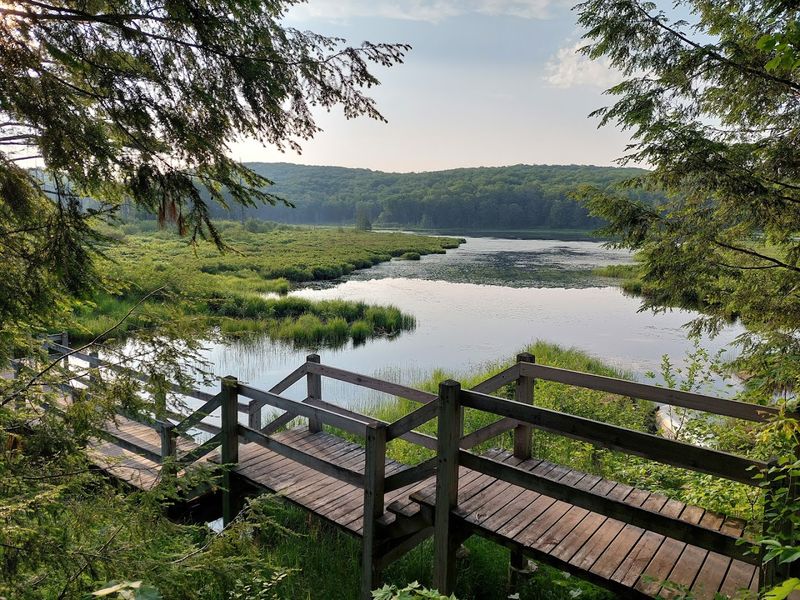
Deep woods can make even a small cave feel immense.
When the forest is dense, the air cool, and the terrain rugged, a rock shelter starts to feel like a true discovery.
Somewhere within the wild character of the Porcupine Mountains in Ontonagon County, that is exactly the mood this cave-like destination delivers.
The Porkies are already famous for old-growth forest, ridgelines, waterfalls, and remote beauty.
Adding a cave or rock shelter to that setting intensifies the sense that you have stepped into a less polished, more ancient corner of Michigan.
The stone here feels grounded and durable, shaped by time but still very much part of the mountain landscape around it.
What I appreciate most is the context.
A cave in a busy tourist zone can be fun, but a cave in a big wilderness setting feels different because the silence around it matters just as much as the opening itself.
You notice roots, moss, damp air, and the way the forest seems to hold the place in protective shade.
This is the kind of stop that appeals to hikers, patient explorers, and anyone who prefers atmosphere over convenience.
It may not have the fame of shoreline arches or island legends, but it offers something just as valuable – the feeling of finding shelter in a truly wild landscape.
10. Sea Caves – Pictured Rocks, Alger County
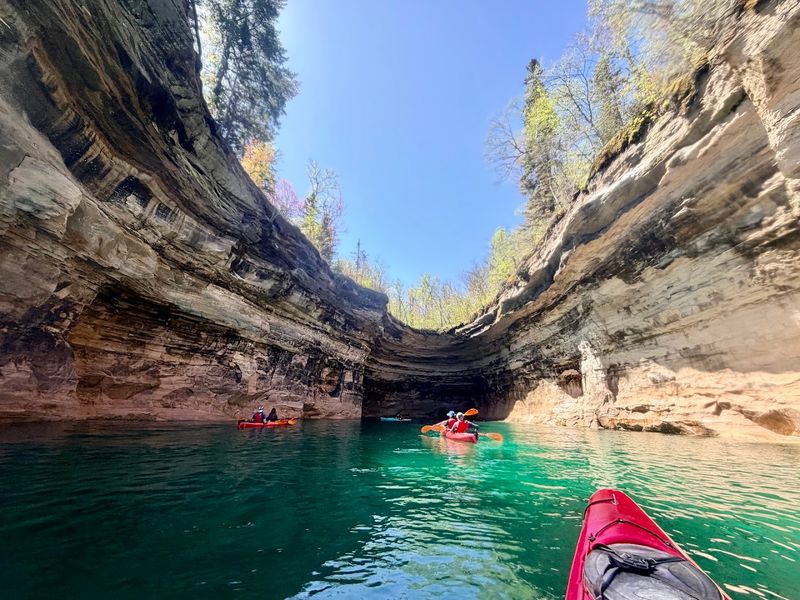
Nothing on this list feels more like a genuine hidden-treasure hunt than approaching a cave from the water.
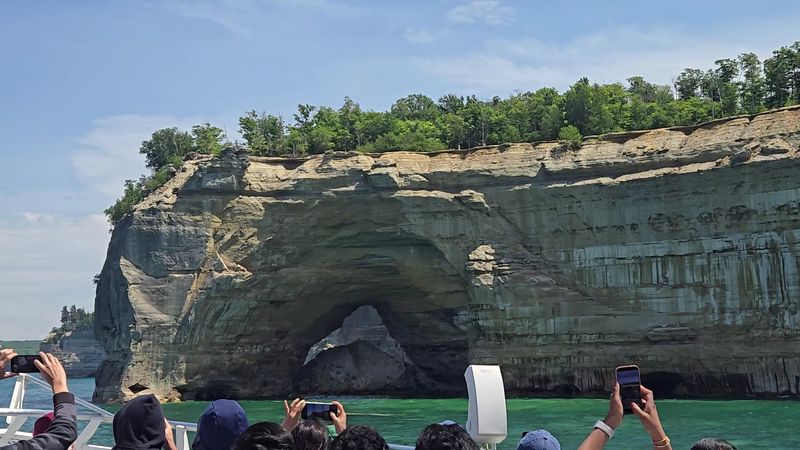
The cliffs rise, the color bands sharpen, and dark openings suddenly appear where you only saw stone from a distance.
That is the unforgettable experience of the Sea Caves at Pictured Rocks in Alger County, one of Michigan’s most extraordinary natural wonders.
These caves are carved into multicolored sandstone by Lake Superior’s waves, winter ice, and relentless weather.
Some openings are narrow and moody, others wider and cathedral-like, but all of them feel shaped for awe.
Kayaking alongside them is especially memorable because you can see every texture, curve, and reflected ripple up close.
The atmosphere changes by season and conditions.
On calm summer days, the water can glow with rich blues and greens, while colder months sometimes transform the caves into icy sculptures that look almost unreal.
I think that variety is part of why people return – the caves never seem to present themselves exactly the same way twice.
Every opening hints at hidden depth, constant change, and the raw power that shaped this coast.
If you only visit one cave-related destination in Michigan, the Pictured Rocks Sea Caves make a spectacular case for taking the long way around the lake.