North Carolina hides some of its most breathtaking landscapes not on its mountain peaks or along its coastline, but deep beneath the surface.
From the ancient limestone passages of the Blue Ridge to the shadowy caverns tucked into its Piedmont forests, the state’s underground world rewards those willing to seek it out.
Each cave tells a geological story millions of years in the making, shaped by water, time, and the slow patience of stone.
Whether you’re a first-time spelunker or a seasoned cave explorer, North Carolina offers formations that genuinely stop you in your tracks.
These 10 North Carolina caves are ready to be explored, and each one offers something you simply won’t find anywhere else above ground.
1. Table Rock Cave – Morganton, Burke County
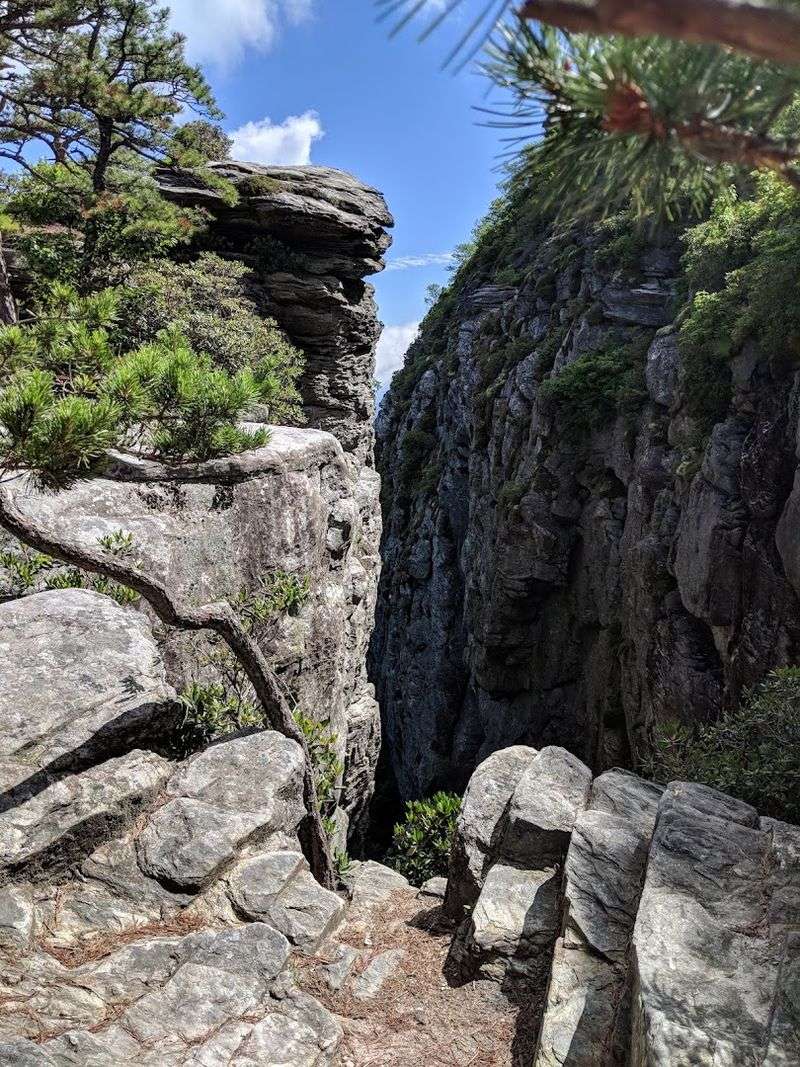
Granite walls, tough trails, and a feeling of true elevation give this area a serious mountain personality.
You come here expecting views and challenge, but the hidden rock features add a quieter kind of excitement.
That is what makes the cave presence around Table Rock near Morganton in Burke County so appealing to adventurous travelers.
Set near one of the most iconic peaks in Pisgah National Forest, this area is defined by exposed stone, deep woods, and dramatic terrain.
The cave element is more natural and understated than commercial, often taking the form of shallow openings, shelters, or dark recesses shaped by time and weather.
Those details may be subtle, but they deepen the sense that you are moving through a rugged geological masterpiece.
What stands out here is how well the underground feel complements the summit seeking energy of Table Rock.
After stretches of climbing and sweeping overlooks, even a modest cave or stone chamber feels like a secret tucked inside the mountain.
It changes the rhythm of the day and gives you another reason to slow down and look carefully.
This destination works best for hikers who value landscape as much as any single attraction.
Bring sturdy shoes, patience, and an appreciation for wild places that are more earned than presented.
2. Bat Cave – Bat Cave, Henderson County
Some places feel legendary before you even arrive, and this mountain landmark absolutely has that effect.
Dense forest, steep rock, and the name alone set the tone for a stop that sounds like pure Appalachian folklore.
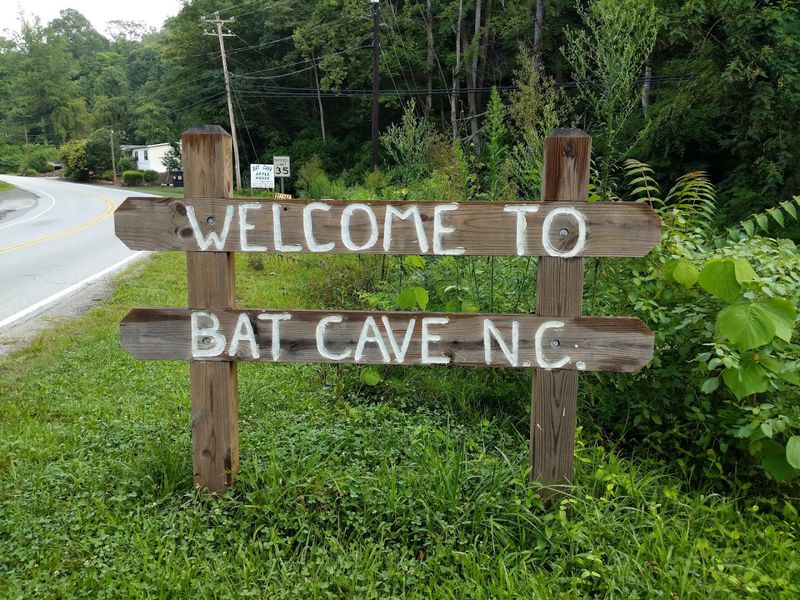
That sense of mystery is part of what makes Bat Cave in Bat Cave, Henderson County, so memorable to curious travelers.
Although the famous cave itself is not generally a casual walk-in attraction, the area carries enormous natural and historical interest.
Bat Cave has long been associated with one of the largest granite fissure caves in the eastern United States, giving it an outsized reputation in North Carolina.
Even from the surrounding area, you can feel the drama of the landscape and understand why this place captured imaginations for generations.
This is a destination best appreciated with respect for private property, safety limits, and the rugged nature of the terrain.
Instead of expecting a polished tourist cave, think of it as a place where the story, the setting, and the wildness matter most.
Nearby scenic drives, hiking areas, and mountain viewpoints help turn the stop into a fuller exploration of Hickory Nut Gorge country.
It is less about easy underground wandering and more about standing near something geologically significant and deeply atmospheric.
3. Blowing Rock Caves – Blowing Rock, Watauga County
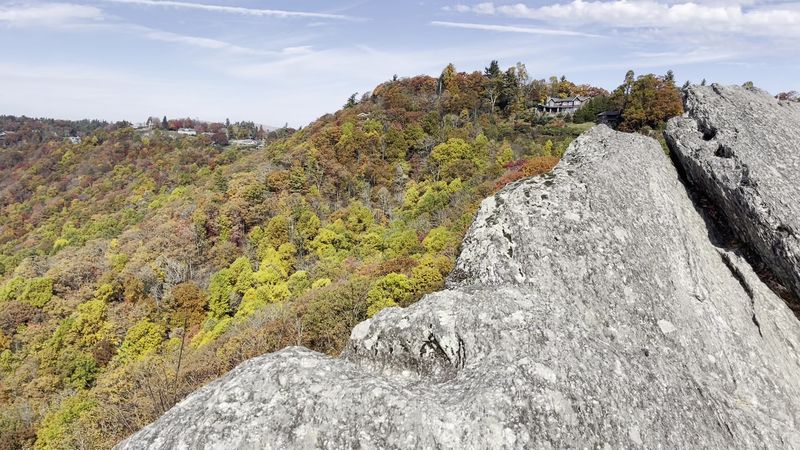
Fog, spruce scent, and cool mountain air can make this part of the High Country feel almost enchanted.
Add in hidden rock openings and cave like recesses, and the landscape starts to feel like something built for wandering slowly.
That mood is exactly why the cave spots around Blowing Rock in Watauga County deserve a place on your radar.
This area is better known for overlooks, the Blue Ridge Parkway, and polished village charm, yet its rougher geological side is easy to appreciate once you start exploring.
Cave references here often involve smaller openings, crevices, and rock shelters rather than a large commercial cavern.
That does not lessen the appeal, because the surrounding scenery gives every dark opening a little extra mystery.
The best approach is to treat Blowing Rock as a base for discovery rather than expecting one famous underground attraction with a ticket booth.
Nearby trails, boulder fields, and mountain slopes can reveal tucked away features that feel rewarding precisely because they are not overproduced.
If you love combining cozy town energy with a more rugged outdoor side trip, this area delivers beautifully.
For travelers who chase atmosphere as much as landmarks, Blowing Rock’s cave settings are worth the miles.
4. Chimney Rock State Park Caves – Chimney Rock, Rutherford County
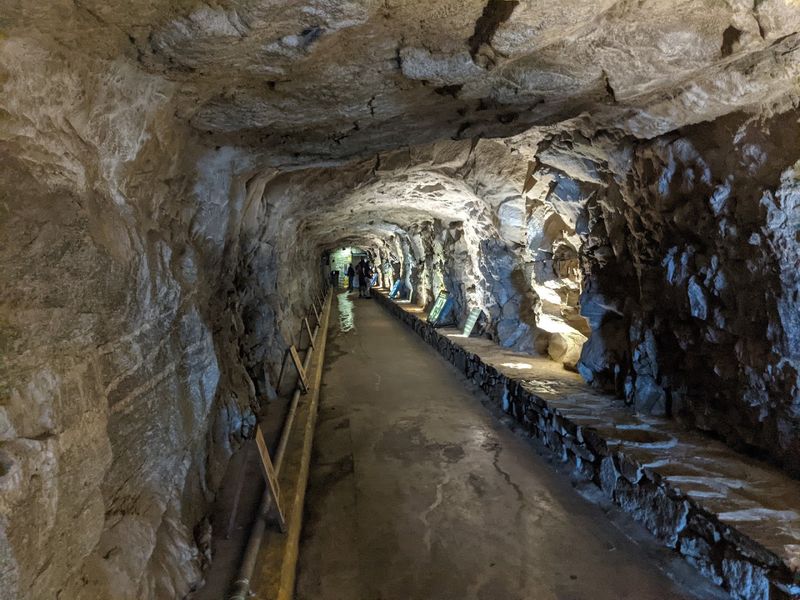
Sheer cliffs, winding trails, and sweeping gorge views already make this park feel dramatic before any cave enters the picture.
Then you notice the darker openings and rock shelters tucked into the landscape, and the adventure suddenly feels more layered.
That extra dimension is what makes the cave areas around Chimney Rock State Park in Chimney Rock, Rutherford County, so intriguing.
These are not classic show caverns with handrails and glowing formations, but they add geological texture to one of western North Carolina’s best known destinations.
Small caves, overhangs, and sheltered pockets in the rock create moments of discovery along hikes and scenic routes.
They also help you understand how water, elevation, and time shaped this rugged section of the Hickory Nut Gorge.
What I like most is how easily the underground feeling blends into a bigger outdoor day.
You can pair cave curiosity with waterfall stops, iconic overlooks, and forest trails without needing a separate trip.
Good footwear and realistic expectations go a long way here, since the appeal is more natural and exploratory than formal.
Still, the rocky chambers and shaded spaces give the park an added sense of mystery.
5. Wiseman’s View Cave – Linville Falls, Burke County
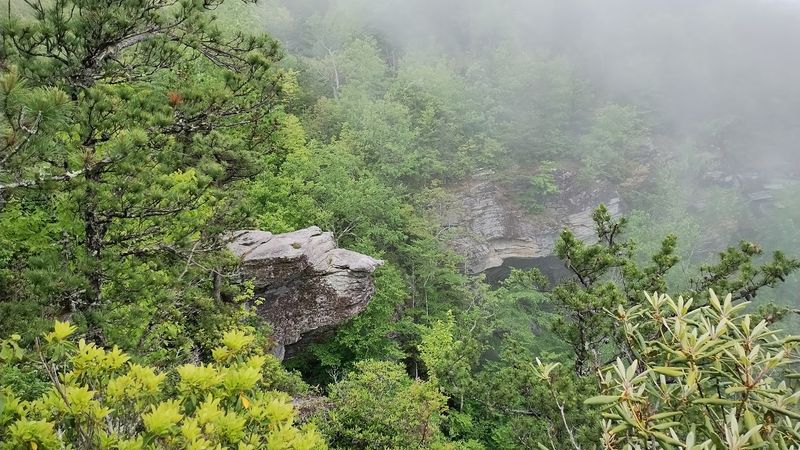
Few places in North Carolina feel as raw and overwhelming as the edges of Linville Gorge.
Wind moves through the pines, cliffs drop hard into the distance, and every turn seems to hint at hidden geology.
That wild energy makes the cave area associated with Wiseman’s View near Linville Falls in Burke County especially compelling.
This is not a polished attraction, which is part of the appeal if you prefer places that still feel untamed.
The cave reference here is best understood as part of the greater gorge landscape, where rock shelters, recesses, and rugged formations reward careful exploration.
Instead of bright lights and paved paths, you get drama, solitude, and a stronger sense of the mountain’s ancient structure.
Wiseman’s View itself is already one of the state’s most breathtaking overlooks, so adding nearby cave curiosity makes the trip even richer.
You can come for the famous gorge panorama and stay for the deeper geological story written into the stone.
That contrast between expansive views and hidden spaces is what gives this area so much personality.
Preparation matters here because the terrain can be serious, conditions can change, and wilderness ethics should guide every step.
Still, if you like your cave destinations with a side of awe, this one stands out.
6. Linville Caverns – Marion, McDowell County
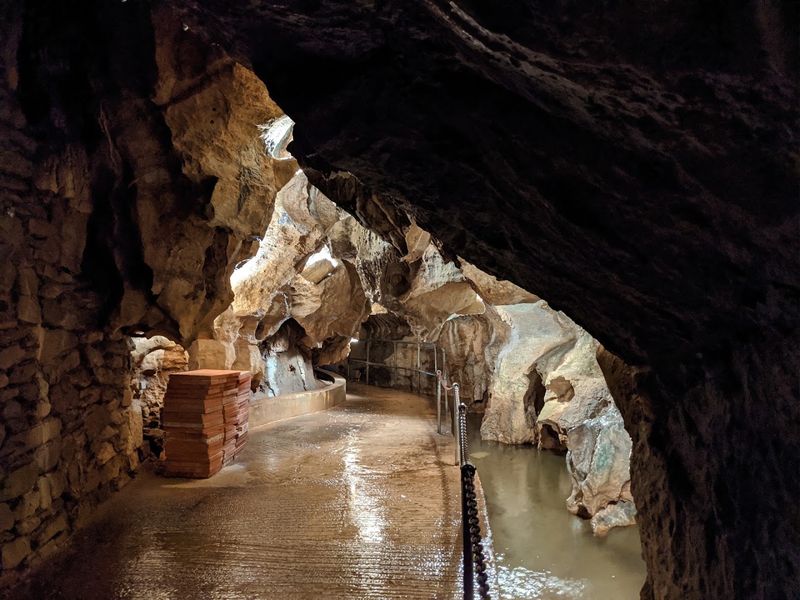
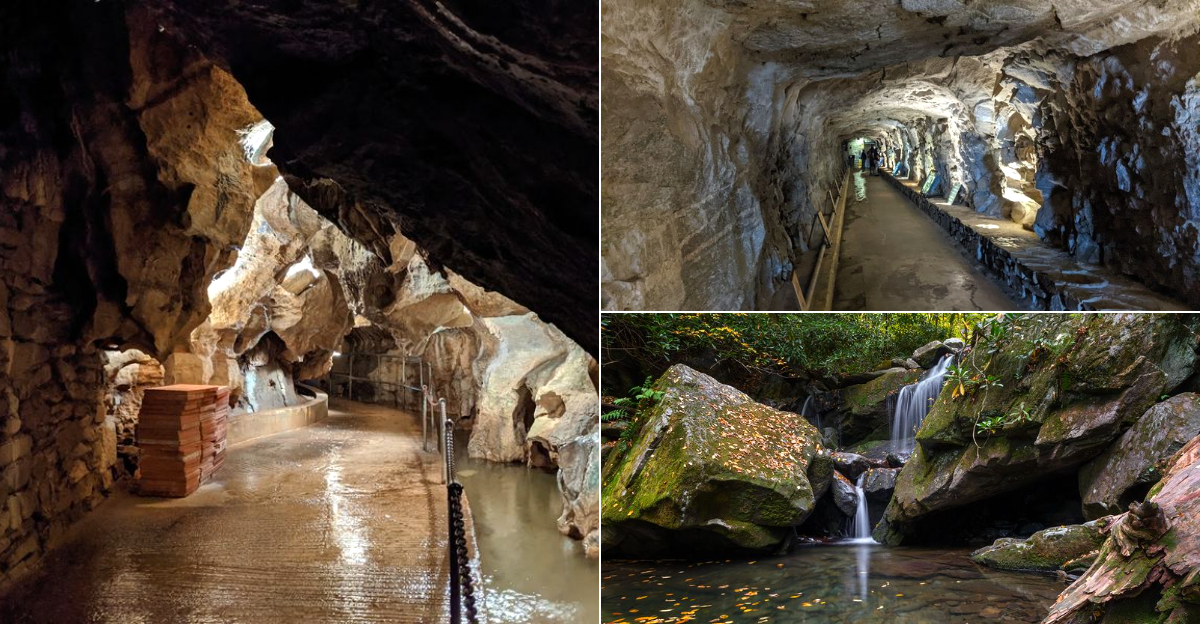
The temperature drops the moment you step inside, and the mountain suddenly feels alive in a completely different way.
Cool air, echoing water, and low golden lighting create the kind of atmosphere that makes you slow down and pay attention.
That is exactly the pull of Linville Caverns, one of North Carolina’s most accessible and memorable underground experiences.
Tucked near Marion in McDowell County, this privately operated cave is known for guided tours that explain the geology without draining the wonder from the visit.
You follow a paved path past stalactites, flowstone, and shallow pools while hearing stories about fish, formations, and the cave’s long history.
It feels welcoming for first timers, but still interesting enough if you already love caves and want something with real character.
Because tours are guided, you get a more informative visit than you would at many wild cave sites across the region.
The interior stays cool year round, which makes it especially refreshing after a summer drive on winding mountain roads.
Photos are fun here, but the sound of trickling water and the darkness beyond the lights leave the stronger impression.
If you want an easy underground stop with real atmosphere, this one earns every mile.
Among North Carolina cave experiences, Linville Caverns remains one of the most reliable and rewarding choices.
7. Grotto Falls Area Cave – Boone, Watauga County
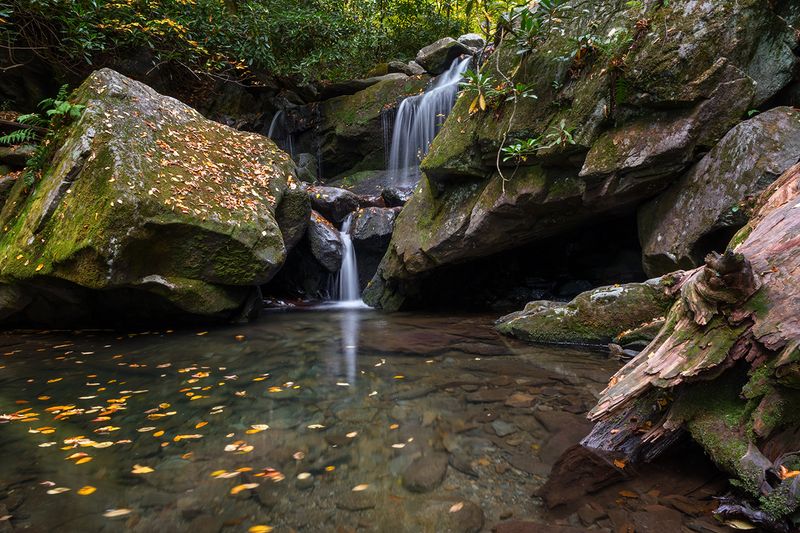
Waterfall spray, slick stone, and the smell of wet leaves make this kind of spot feel instantly refreshing.
When a cave or grotto feature enters that scene, the whole place takes on a hidden world atmosphere.
That is the charm of the Grotto Falls area cave near Boone in Watauga County, where water and rock shape the experience together.
Rather than focusing on a massive underground chamber, this destination offers a more intimate kind of discovery.
The appeal comes from tucked away stone spaces, shaded recesses, and the way flowing water enhances every sound and texture around you.
It feels peaceful and exploratory, especially if you prefer smaller natural features that reward attention over spectacle.
Boone already attracts travelers with hiking, cool weather, and easy access to the Blue Ridge Parkway, so this cave area fits naturally into a mountain weekend.
You can pair it with scenic drives, overlooks, and local food without sacrificing the sense that you found something a bit secret.
That balance makes it especially satisfying for couples, families, and casual adventurers alike.
Expect natural terrain, changing conditions, and a setting that is more about mood than formal interpretation.
The best moments here are often simple, like hearing water echo off stone or feeling the temperature dip near the opening.
8. Stone Mountain State Park Cave – Roaring Gap, Wilkes County
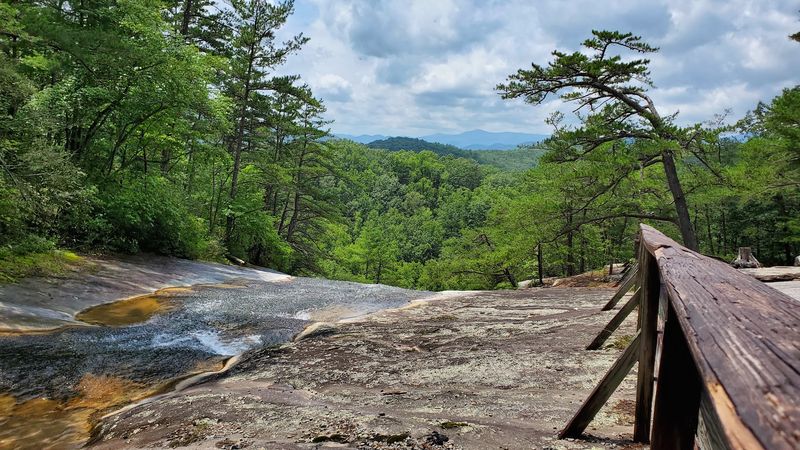
Big granite scenery can feel almost otherworldly, especially when the light hits stone and forest at the same time.
In a park already famous for its massive dome, the smaller cave features add a welcome layer of intimacy and surprise.
That is part of the appeal of the cave areas at Stone Mountain State Park near Roaring Gap in Wilkes County.
This landscape is shaped less by deep limestone caverns and more by exposed rock, weathered shelters, and formations that invite careful observation.
The cave interest here comes from those tucked away spaces in and around the broader mountain environment.
They may not be enormous, but they fit perfectly with the park’s mix of geology, hiking, and scenic exploration.
One reason this stop works so well is that Stone Mountain already offers a complete outdoor day.
You get waterfalls, trails, historical features, and iconic views, then the cave or shelter elements give you something extra to seek out along the way.
That creates the satisfying feeling of a destination with more depth than many people expect at first glance.
Come with curiosity rather than a checklist, and this place rewards you generously.
The textures of the rock, the shifting forest light, and the quiet around the stone openings make a lasting impression.
9. Whitewater Falls Cave – Cashiers, Jackson County
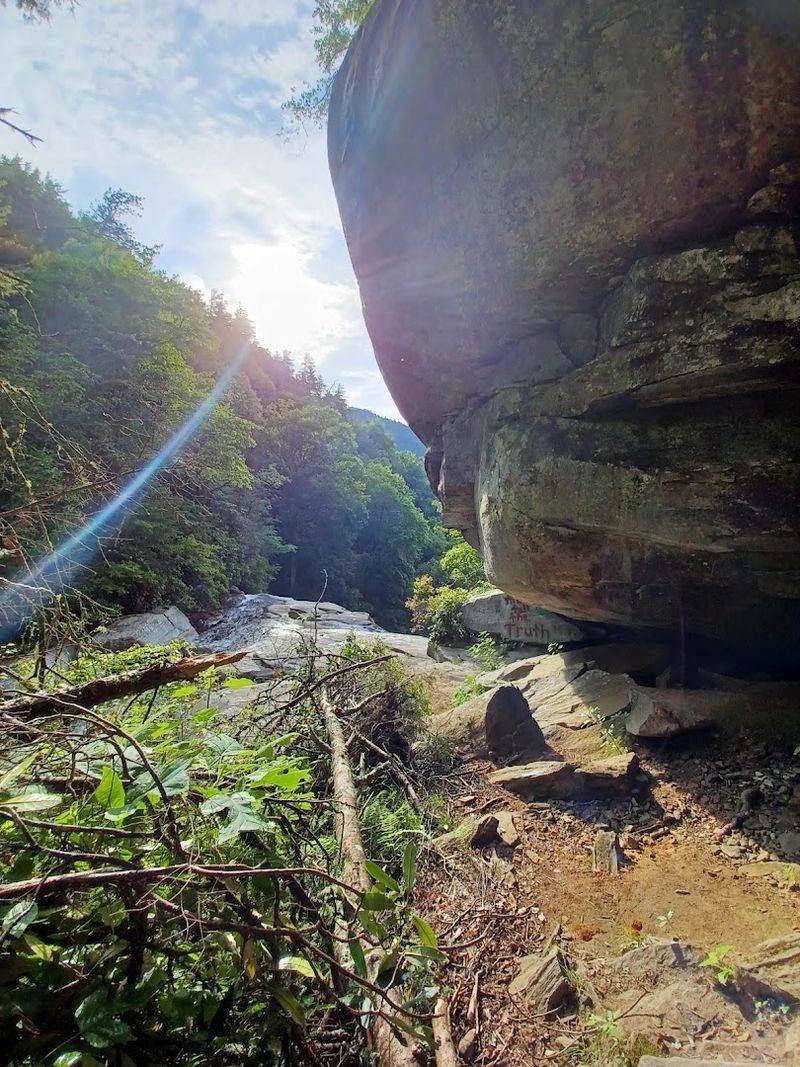
Mist hangs in the air here, and every surface seems touched by water, shadow, or green light.
That alone makes the landscape memorable, but a cave feature nearby adds even more intrigue to an already dramatic setting.
The result is a rewarding stop around Whitewater Falls near Cashiers in Jackson County that feels both scenic and slightly secretive.
Whitewater Falls is celebrated for being one of the tallest waterfalls east of the Rockies, so most visitors come focused on the cascade itself.
Yet the surrounding gorge terrain includes rocky recesses and cave like spaces that deepen the sense of wildness in this corner of western North Carolina.
They are the kind of features that make you linger instead of rushing back to the car after snapping the obvious photo.
What makes this area special is the layering of sensations.
You hear water before you see every detail, feel cooler air near the rock, and notice how the forest closes in around the openings.
That combination makes even a modest cave feature feel cinematic.
As always, natural conditions and trail realities matter, so sturdy footing and common sense are important.
Still, this is the kind of place that rewards anyone who loves pairing famous scenery with smaller discoveries nearby.
10. Lost Cove Cave – Newland, Avery County
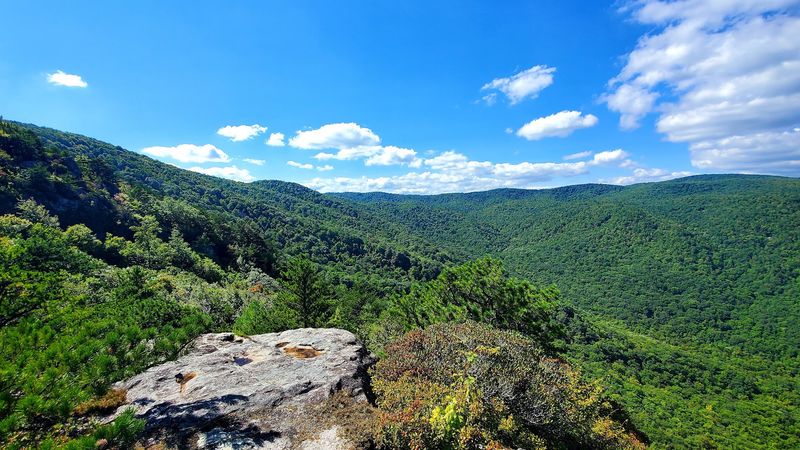
There is something irresistible about a place with a name like Lost Cove.It suggests isolation, old stories, and the feeling that the map only tells part of what waits there.
That mood carries straight into Lost Cove Cave near Newland in Avery County, a destination that feels remote in the best possible way.
The broader Lost Cove area is already known for its off the beaten path character and connections to abandoned history and rugged mountain terrain.Add a cave feature to that setting, and the result is a trip that feels more exploratory than typical sightseeing.
This is where atmosphere does a lot of the work, turning every rock face and wooded slope into part of the experience.
Unlike heavily interpreted cave attractions, this area appeals most to travelers who enjoy earning their discoveries.The cave is part of a larger sense of place, where the journey, the surrounding landscape, and the lingering mystery all matter as much as the opening itself.
That gives the visit a depth that can stay with you long after the drive home.
Preparation is important, especially in remote mountain settings where conditions and access can change.Still, if your favorite travel moments come from places that feel hidden, moody, and a little legendary, this one delivers.
Lost Cove Cave is the sort of North Carolina stop that makes you glad you kept going past the obvious attractions.