Ohio has a well-earned reputation for its rolling farmland, vibrant cities, and Great Lakes shoreline, but what lies beneath its surface is a story most visitors never get to hear.
Hidden under the state’s hills and valleys are some of the most striking cave systems in the entire Midwest, from glittering limestone chambers to ancient geological formations that took millions of years to build.
The diversity here is remarkable: you’ll find caves with electric-blue lighting that illuminates cathedral-sized rooms, others tucked into the pages of Native American history, and still others carved by glacial forces that shaped this region long before humans arrived.
These 10 Ohio caves are proof that the state’s most beautiful sights aren’t always visible from the highway.
1. Ohio Caverns, West Liberty, Logan County
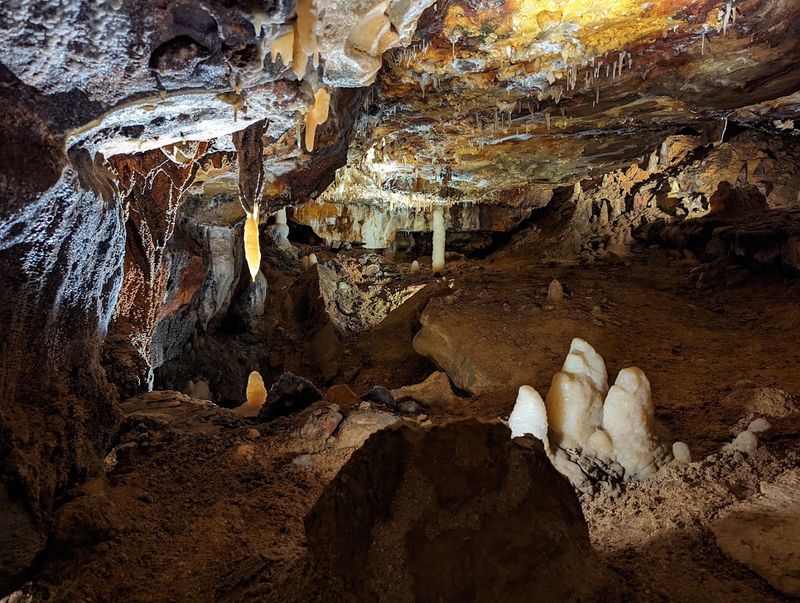
Cool air hits your skin almost immediately, and the world above starts to feel very far away.
This is the kind of place where every turn reveals another cluster of delicate formations glowing under soft light.
That sense of wonder defines Ohio Caverns in West Liberty, one of the state’s most impressive underground attractions.
Often called America’s most colorful caverns, this limestone cave system is known for crystal-heavy rooms, long passageways, and intricate calcite details.
You can expect stalactites, stalagmites, flowstone, and rare formations that look almost too precise to be natural.
Because tours follow developed paths, the experience feels approachable without losing the thrill of entering a hidden world.
The historic value here matters too, since the caverns were discovered in 1897 and later opened for guided visits.
Different tour options help you match the outing to your comfort level, whether you want a shorter overview or a deeper look.
Even if you have visited caves in other states, the colors and density of formations here make this stop memorable.
What stays with you most is the contrast between ordinary rural Ohio and the extraordinary scenery below it.
If you want the cave in Ohio that most clearly resets expectations, this is the one to prioritize first.
2. Olentangy Indian Mounds, Delaware, Delaware County
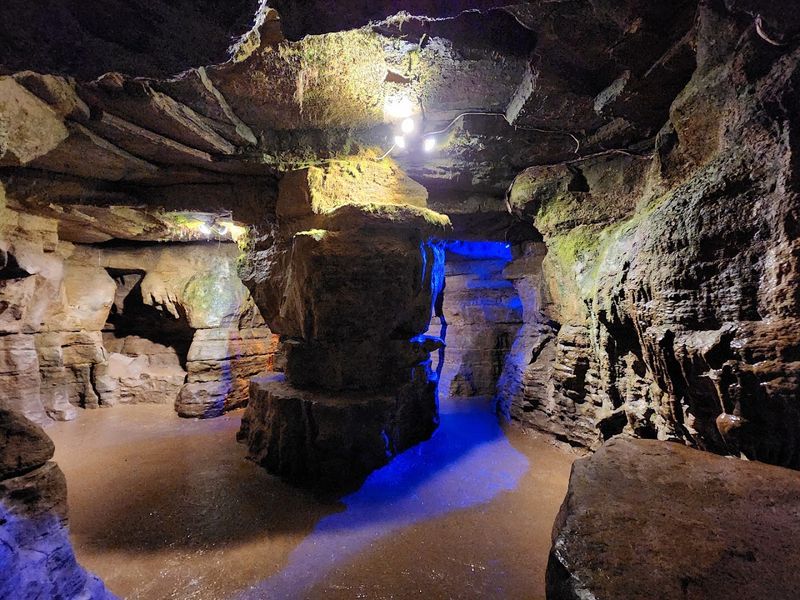
Low ceilings, twisting passages, and a little bit of mystery make this stop feel playful from the start.
Instead of huge cathedral-like chambers, you get a tighter maze that encourages curiosity and a slightly adventurous mood.
That is exactly the appeal of Olentangy Indian Caverns in Delaware, a longtime favorite for families and casual explorers.
The cave is tied to local stories that Indigenous peoples once used these passages for shelter, adding a layer of cultural intrigue to the visit.
While the site today is developed as a family attraction, the underground routes still deliver a genuine limestone cave experience.
You move through narrow corridors, uneven spaces, and small openings that make the environment feel intimate rather than grand.
Above ground, the property includes activities that give the stop a broader roadside appeal, especially if you are traveling with kids.
That mix can make this destination feel lighter and less rugged than some southern Ohio cave experiences.
Still, the cave itself remains the heart of the visit, because the winding layout creates a fun sense of discovery.
What makes it worth including is its accessibility and personality, not raw scale alone.
You come here for the maze-like atmosphere and the surprising feeling of stepping into hidden rooms beneath suburban-looking surroundings.
3. Crystal Cave, Put-in-Bay, Ottawa County
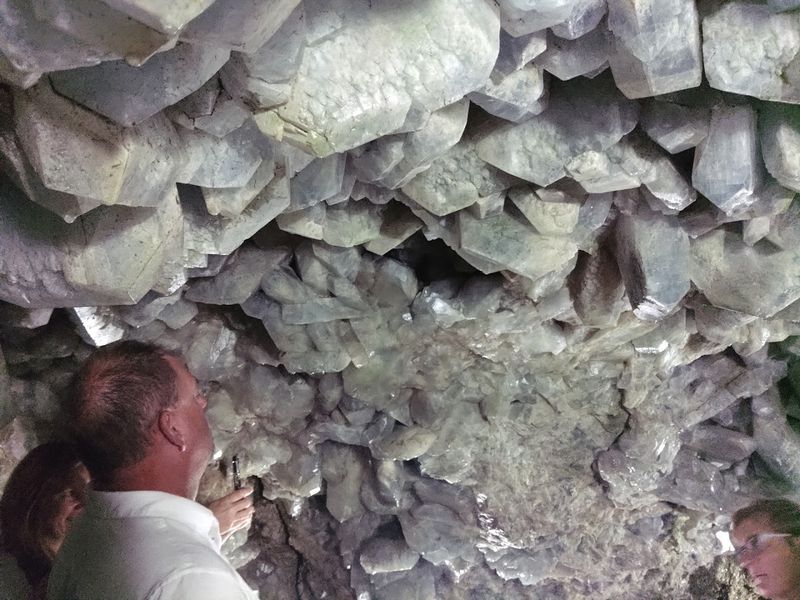
Nothing prepares you for the moment rock suddenly starts sparkling like a treasure chest cracked open underground.
Instead of standard cave formations, you are looking into a giant geode lined with brilliant celestite crystals.
That rare visual spectacle is what makes Crystal Cave in Put-in-Bay one of Ohio’s most unusual subterranean experiences.
Located on South Bass Island, this chamber is famous for containing enormous celestite crystals, some measuring well over a foot across.
The cave was discovered during a winery well-drilling project in the late nineteenth century, which already gives the story a memorable twist.
Today, visitors descend into the chamber and view the crystal-lined walls from a platform that lets the mineral beauty take center stage.
Because it is not a sprawling passage cave, the experience feels more focused and museum-like than rugged.
You are not coming here for a long underground trek, but for a brief and striking encounter with something genuinely uncommon.
The island setting adds extra charm, making the visit feel like part of a bigger Lake Erie adventure.
Between ferry rides, historic sites, and waterfront energy, the cave becomes an unforgettable surprise in the middle of a resort destination.
4. Seneca Caverns, Bellevue, Huron County
The deeper you go, the more the surface world seems to loosen its grip and fade behind you.
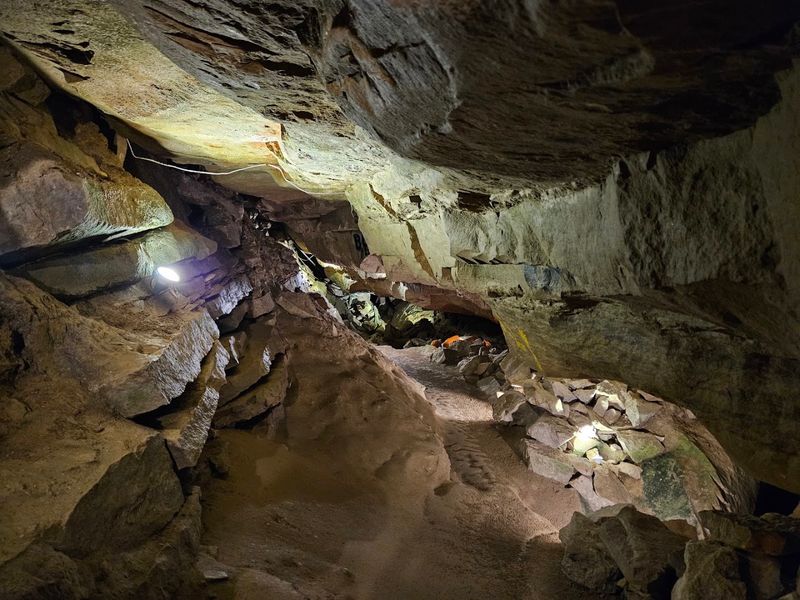
A steady descent through limestone opens into cool chambers that feel older, darker, and more mysterious with every level.
That building sense of depth is central to the experience at Seneca Caverns in Bellevue.
Marketed as the cave where you can go down and touch the stream, this destination offers one of Ohio’s more immersive guided underground walks.
The route descends more than one hundred feet below the surface through a series of connected rooms and passageways.
Along the way, you see natural formations, hear cave history, and eventually reach the subterranean water that gives the tour its memorable finale.
There is also a strong interpretive angle here, including stories about the Seneca people and the area’s long human connection to the land.
That context helps the cavern feel like more than just a geological attraction.
Even with developed steps and pathways, the descent still delivers a satisfying sense of adventure and scale.
What many visitors remember most is how the cave balances accessibility with atmosphere.
It is organized enough for first-timers, yet dramatic enough to feel genuinely underground in a serious way.
5. Perry’s Cave, Put-in-Bay, Ottawa County
A cave on an island already feels a little unexpected, and this one adds history and underground water to the mix.
The atmosphere is quieter and more intimate than you might guess from lively Put-in-Bay above.
That contrast makes Perry’s Cave on South Bass Island a fascinating stop during any Lake Erie getaway.
The site is named for Commodore Oliver Hazard Perry, whose forces relied on fresh water from the island during the War of 1812 era.
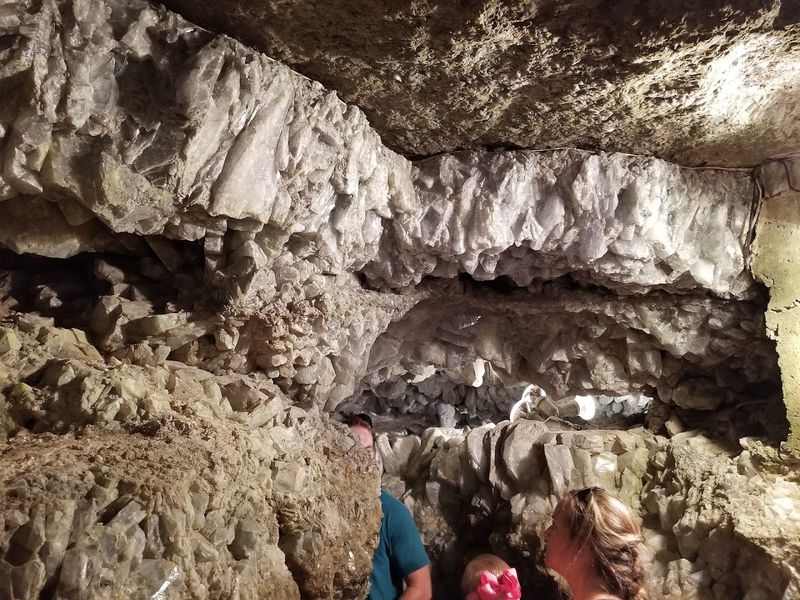
Inside, the key feature is an underground lake sitting within a limestone chamber reached by stairs.
You are not wandering through miles of passageways here, but the compact setting gives the cave a distinctive, almost secretive charm.
Because the visit is relatively short, it works well for travelers balancing several island attractions in one day.
The cave is often paired with nearby family activities, though the geological stop itself remains the standout for anyone drawn to hidden places.
Its historic connection and freshwater pool make the experience feel more layered than a simple look underground.
What I like about this cave is how efficiently it surprises you.
Within a small footprint, it combines island scenery, military history, and subterranean beauty in a way that feels uniquely Ohio.
6. Zane Caverns, Bellefontaine, Logan County
There is a roadside Americana feeling here that makes the underground portion even more fun to discover.
You arrive expecting a classic local attraction, then step into a cool limestone world with its own stories and textures.
That blend of charm and cave adventure defines Zane Caverns near Bellefontaine in Logan County.
Known today as part of the Zane Shawnee Caverns property, the site has a long tourism history and a family-friendly atmosphere.
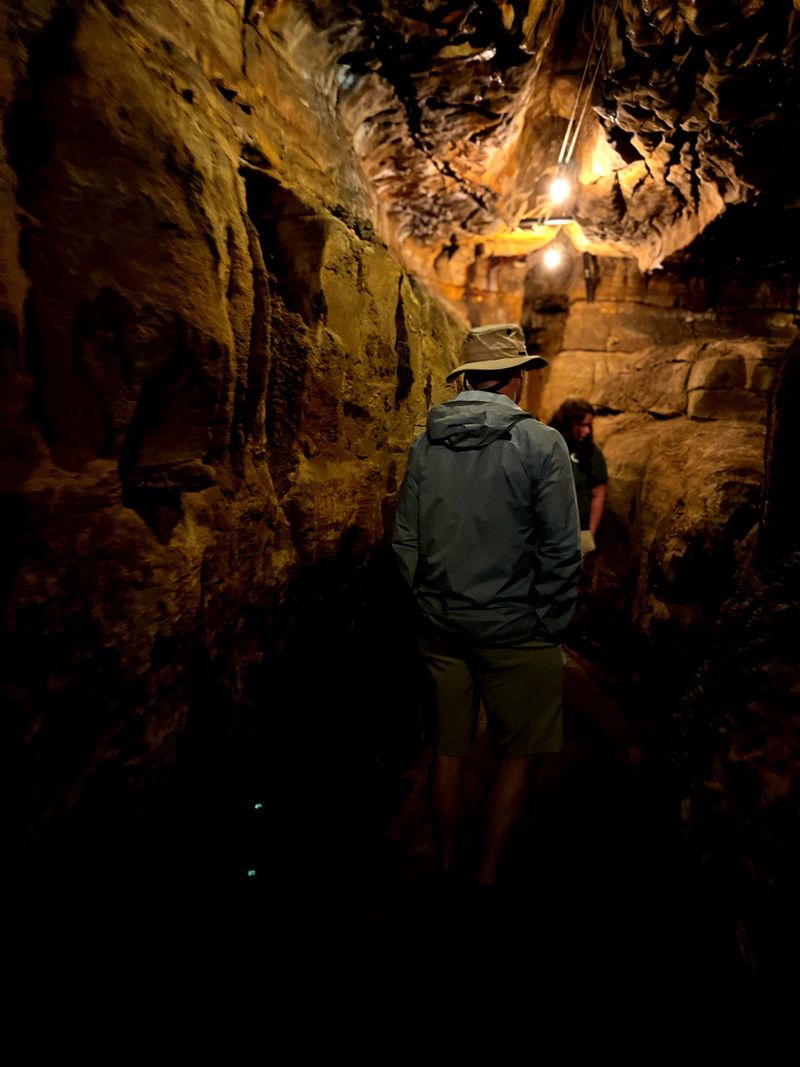
Guided tours take visitors through natural limestone passages where formations and tight corridors create a genuine subterranean mood.
It may not have the fame of Ohio Caverns nearby, but that underdog quality gives it a different appeal.
The experience tends to feel more personal and less polished than some larger commercial cave destinations.
For many travelers, that is part of the draw, because you get a closer sense of regional cave tourism traditions.
There is also broader site history tied to the surrounding property, which adds context beyond the rock formations alone.
What makes this stop worthwhile is its combination of accessibility, nostalgia, and local character.
It feels like the kind of place you discover on a scenic drive and end up talking about long after the trip ends.
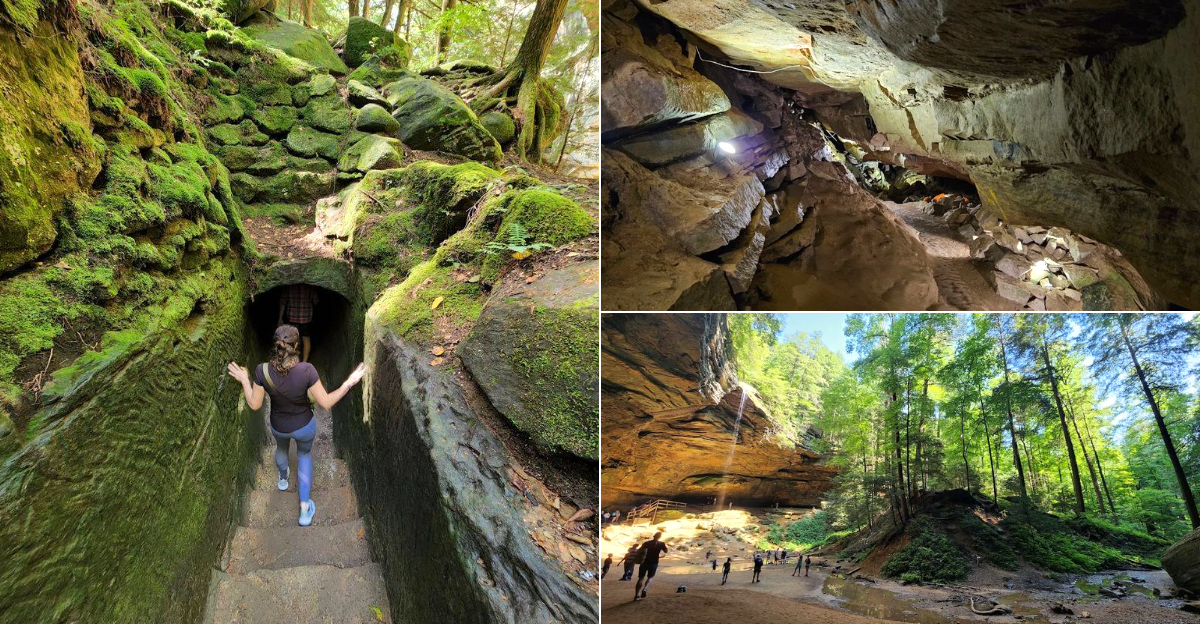
7. Ash Cave, Hocking Hills, Hocking County
Soft light, towering rock, and a wide natural shelter make this place feel instantly cinematic.
Even before you reach the recess itself, the trail builds anticipation with forest scenery and a growing sense of scale.
That payoff arrives at Ash Cave in Hocking Hills, one of Ohio’s most visually dramatic rock shelters.
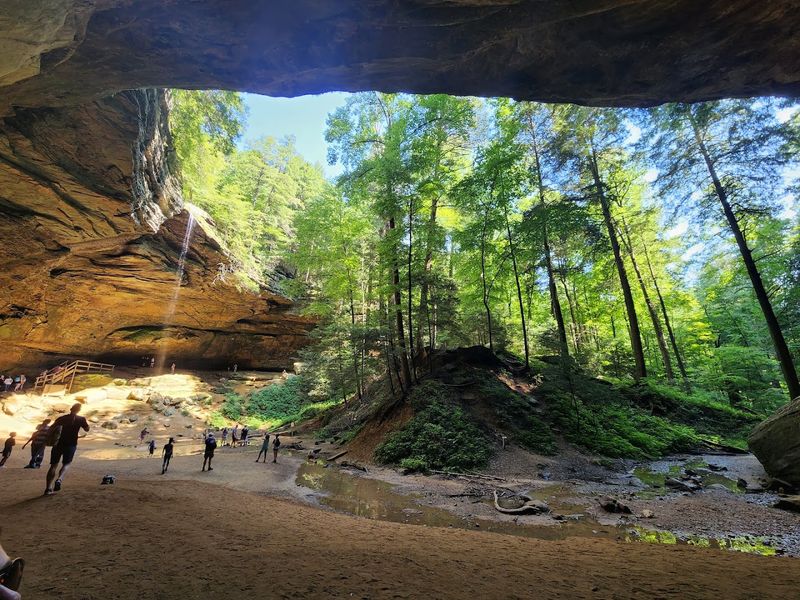
Unlike a deep underground cavern, Ash Cave is a massive horseshoe-shaped recess carved into Blackhand sandstone.
Its enormous overhang creates an amphitheater effect, and after rain or during wetter seasons, a waterfall drops from the rim into the basin below.
The result is less about squeezing through passages and more about standing in awe beneath a cliff that seems to swallow sound.
The site carries archaeological significance too, with evidence that Indigenous peoples and early settlers used the area long ago.
That history deepens the atmosphere, making the shelter feel both scenic and culturally important.
Because the path is relatively accessible, it is also one of the easiest ways to experience Hocking Hills grandeur without a strenuous hike.
What makes Ash Cave belong on a cave list is the sheer emotional impact of the space.
It feels protective, ancient, and unexpectedly monumental, especially when the surrounding woods are quiet.
8. Old Man’s Cave, Hocking Hills, Hocking County
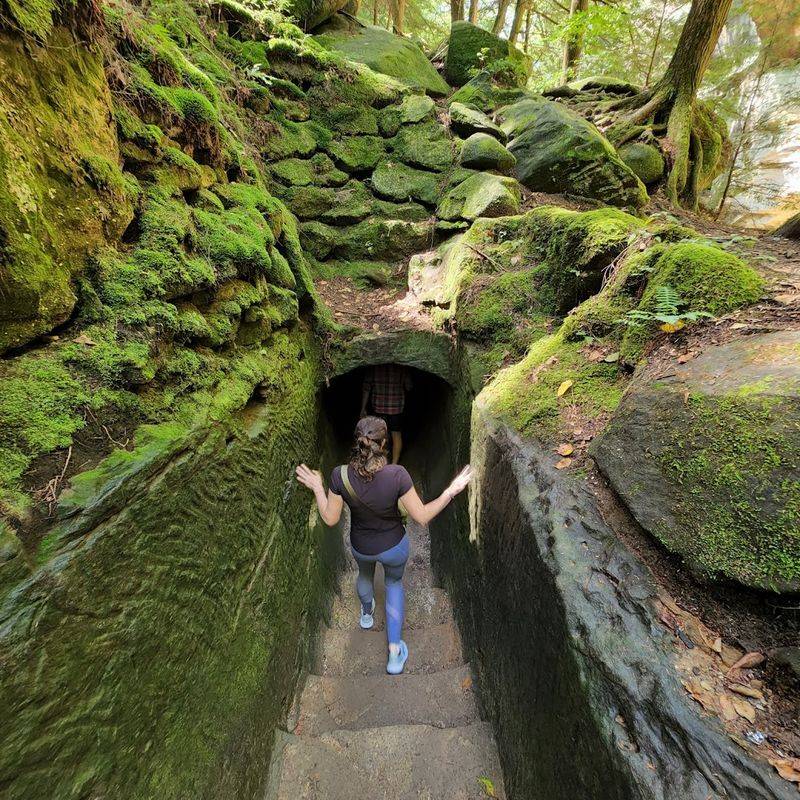
Rushing water, stone bridges, and towering gorge walls create a setting that feels adventurous from the first steps.
This is one of those places where the trail itself keeps stealing your attention with every bend.
That constant drama is why Old Man’s Cave in Hocking Hills remains one of Ohio’s most beloved natural landmarks.
Despite the name, this destination is not a single enclosed cave but a gorge system with notable recesses, overhangs, and rock shelters.
The area is named for Richard Rowe, a hermit nicknamed the Old Man, who reportedly lived here in the eighteenth century.
As you move through Upper Falls, Middle Falls, and Lower Falls sections, the layered sandstone scenery gives the entire route a cave-like mood.
What stands out is how the landscape combines vertical scale with intimate details.
Mossy walls, dripping ledges, and shadowy cutouts in the rock create countless moments that feel hidden and ancient.
It is a busy park for good reason, since few Ohio trails pack this much scenery into one connected walk.
Old Man’s Cave earns its place on this list because it expands what underground beauty can mean.
You are not descending into total darkness, but you are moving through a stone world shaped by water, time, and sheltering cliffs.
9. Rock House, Hocking Hills, Hocking County
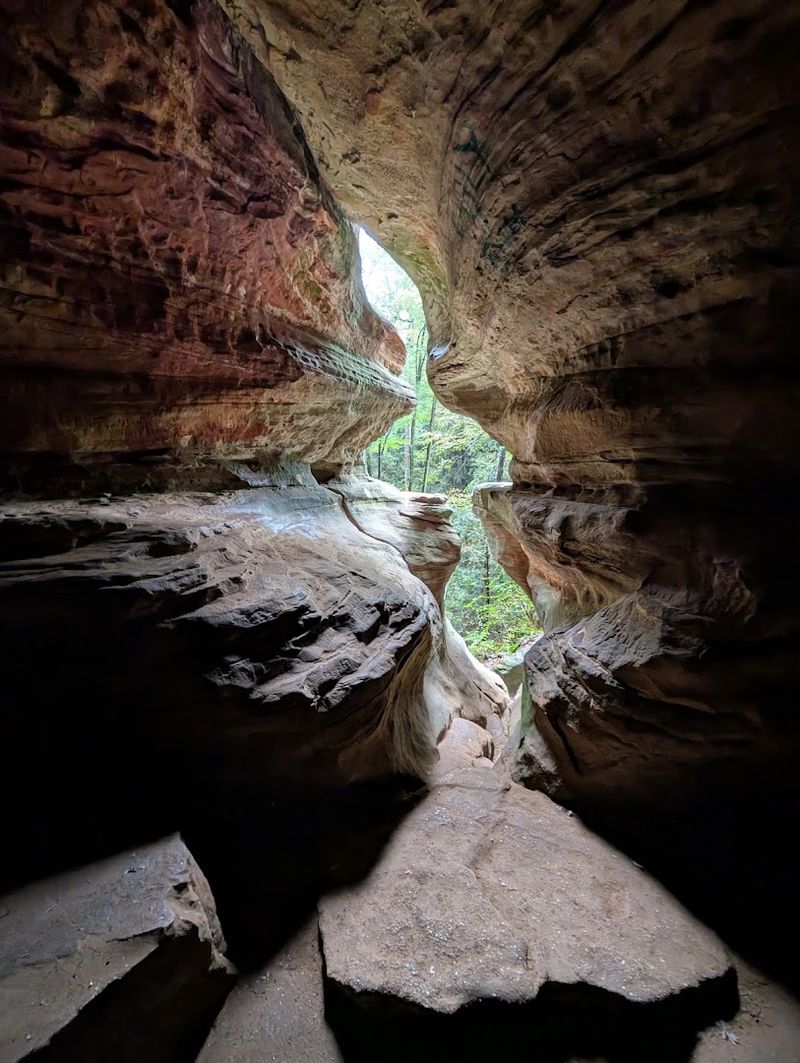
Few places in Ohio feel quite this fortress-like once you step inside the stone walls.
Light slips through natural openings, creating windows and shadows that make the interior seem half cave, half ruined hall.
That unforgettable atmosphere belongs to Rock House in Hocking Hills.
Unlike the broad recesses found elsewhere in the region, Rock House is a true tunnel-like corridor carved into Blackhand sandstone.
Its long chamber features window-shaped openings, a high ceiling, and a narrow interior space that invites slow exploration.
The structure has inspired visitors for generations because it feels architectural, almost as if nature intentionally designed a shelter with rooms and views.
History adds another layer, since stories persist about past use by travelers, outlaws, or Native peoples, even when details are difficult to verify.
Whatever the exact timeline, it is easy to see why people would have been drawn to such a naturally protected space.
The hike to reach it is moderate, and the payoff feels distinct from every other major stop in Hocking Hills.
What makes Rock House special is how enclosed it feels without being fully underground.
You get the mood of a cave, the drama of cliffside views, and the novelty of walking through a stone corridor lit by openings in the wall.
10. Conkle’s Hollow Cave, Hocking Hills, Hocking County
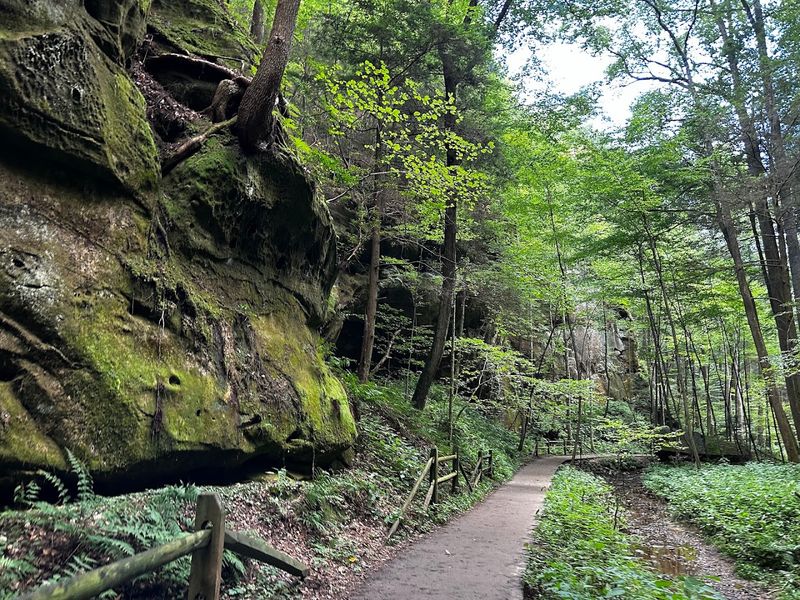
Silence settles differently here, helped by towering cliffs that narrow the world into a cool green corridor.
The effect is immersive and almost protective, like nature has folded the landscape inward around you.
That distinctive feeling is a big reason Conkle’s Hollow in Hocking Hills deserves attention from cave lovers too.
This scenic gorge is known for some of the highest cliffs in Ohio, with sandstone walls rising dramatically above the trail.
While it is not a traditional underground cave system, cave-like recesses, overhangs, and shadowed rock formations give the hollow a strongly sheltered character.
The lower trail is relatively easy and allows you to absorb the scale without rushing, while the rim trail offers wider perspectives for experienced hikers.
Compared with more famous Hocking Hills stops, Conkle’s Hollow can feel quieter and more contemplative.
That calmer atmosphere helps you notice the textures of fern-lined walls, damp stone, and filtered light.
It is the kind of place where you slow down naturally because the environment feels almost sacred.
Conkle’s Hollow earns its place on this list by showing another side of subterranean beauty.
Instead of deep darkness, you get a canyonlike refuge shaped by the same forces that create caves and shelters elsewhere in the region.