You could live in North Carolina for decades and still miss some of its most unforgettable places.
Sure, the mountains get the postcards and the beaches get the summer crowds, but the state’s best surprises often hide far from the usual routes. Think forgotten villages, strange museums, ancient carvings, mysterious swamps, and giant sculptures spinning in the wind.
These are the places that make you stop and say, “How have I never heard of this?”
From remote coastal communities that feel frozen in time to unexpected roadside treasures and peaceful parks hiding in plain sight, each spot brings something completely different to the adventure.
If you think you have already seen North Carolina, prepare to question that confidence.
These 14 overlooked destinations prove the state still has plenty of surprises waiting around the next bend.
Merchants Millpond State Park — Gatesville
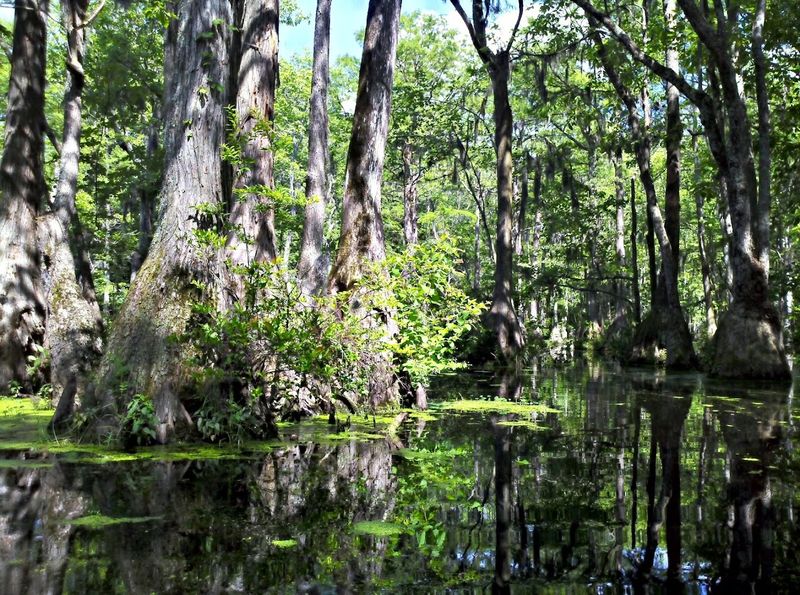
Forget what you think North Carolina looks like. This eastern park transports visitors to an almost prehistoric landscape where 760 acres of still water reflect towering cypress trees wrapped in Spanish moss.
The scenery feels more Louisiana than Carolina, and that unexpected quality makes it remarkable.
Paddling through the millpond offers one of the quietest outdoor experiences in the state. Ancient trees rise from dark water, creating natural corridors perfect for canoes and kayaks.
Wildlife thrives here, from river otters to rare wading birds, and the silence broken only by paddle strokes creates a meditative atmosphere.
Few people realize this park exists, which keeps crowds minimal even during peak seasons. The trails wind through forests and alongside waterways, offering hikers a glimpse of ecosystems dramatically different from North Carolina’s mountains or coastline.
Recognition as one of the state’s less-visited parks only adds to its appeal for anyone seeking genuine solitude and natural beauty without the typical tourist experience.
Emerald Hollow Mine — Hiddenite
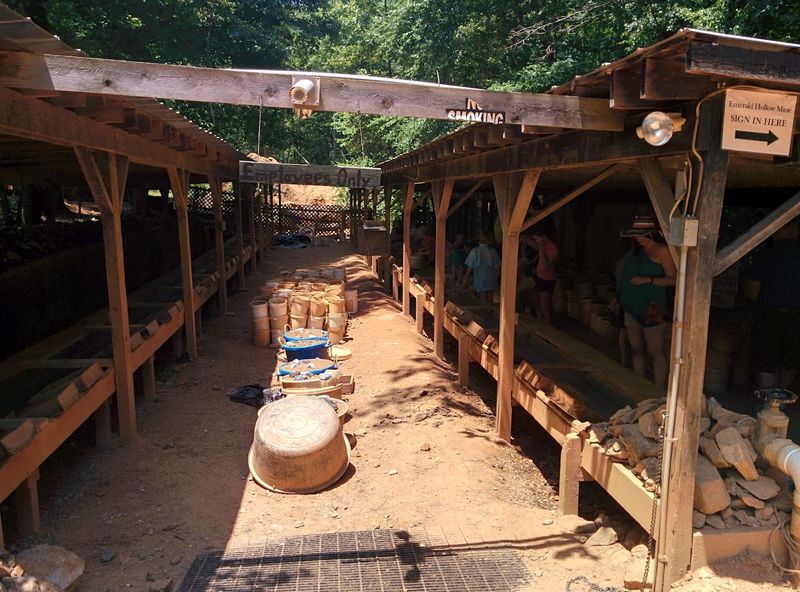
How often do you get to dig for actual emeralds? North Carolina stands among the few places where regular folks can hunt for precious gems at a working mine.
Emerald Hollow Mine hands visitors buckets and basic tools, then turns them loose to search for emeralds, hiddenite, quartz, and other minerals hiding in North Carolina soil.
The experience feels surprisingly hands-on compared to typical attractions. No glass cases or roped-off exhibits here—just dirt under fingernails and the genuine possibility of discovering something valuable.
Families particularly enjoy the treasure-hunt atmosphere, though plenty of adult rockhounds become completely absorbed in the search.
Most longtime North Carolina residents have never tried gem mining despite living in one of the nation’s richest emerald regions. The mine sits in Hiddenite, appropriately named for the rare green gemstone first discovered locally.
Whether visitors find impressive specimens or just interesting rocks, the experience offers something memorable and distinctly different from standard North Carolina tourism.
Boone’s Cave Park — Lexington
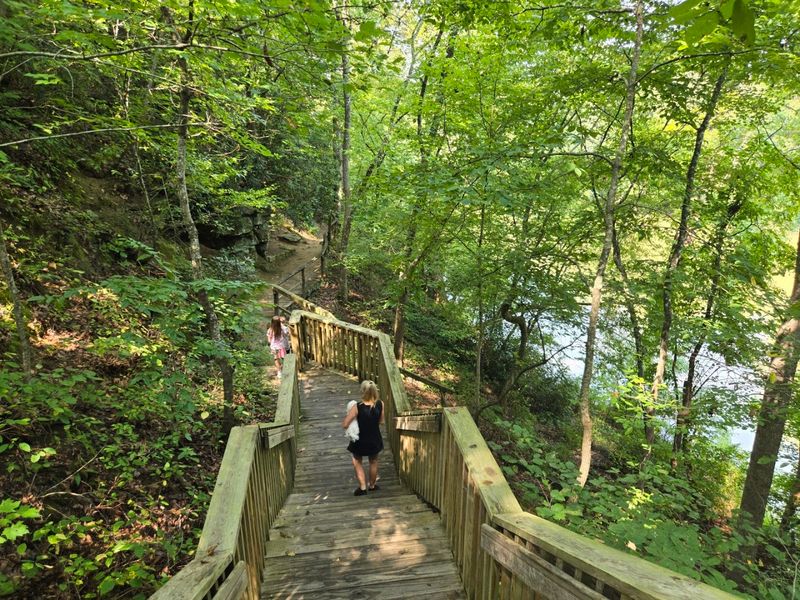
Tucked away in the Piedmont region, this small park combines natural beauty with frontier history in ways that surprise first-time visitors. Wooded trails meander past wildflowers and wildlife before reaching a cave connected to Daniel Boone’s family story.
The modest size actually works in the park’s favor, creating an intimate experience rather than an overwhelming one.
Legend connects the cave to Daniel Boone’s relatives, who supposedly used it for shelter during their pioneering days. Whether the stories hold complete historical accuracy matters less than the atmosphere they create.
Standing near the cave entrance, surrounded by Carolina forest, brings North Carolina’s frontier past closer than any textbook ever could.
This represents exactly the kind of destination that disappears from view when bigger attractions dominate travel guides. No massive marketing campaign promotes Boone’s Cave Park, no tour buses clog the parking area.
Just peaceful trails, interesting history, and the satisfying feeling of discovering something genuinely off the beaten path in a state where truly hidden spots grow increasingly rare.
Tory’s Den Cave and Waterfall — Hanging Rock State Park
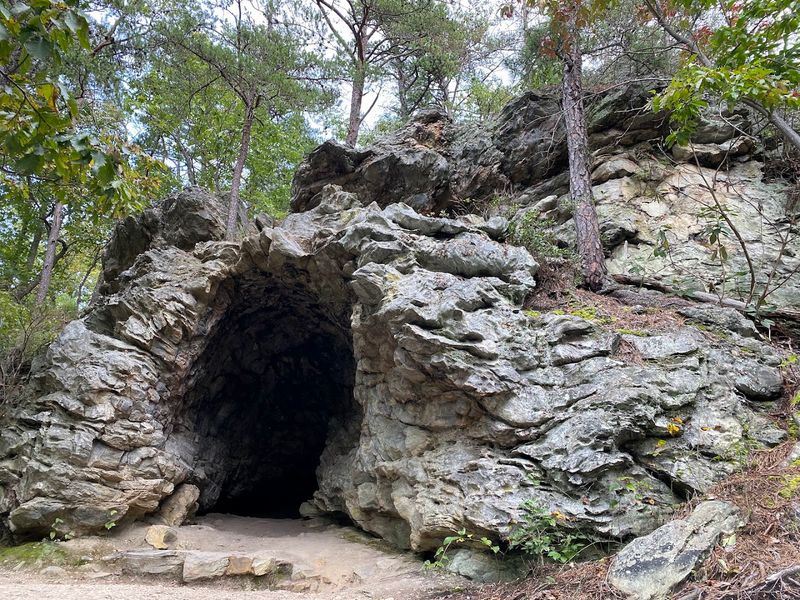
Revolutionary War hideouts rarely appear on modern hiking itineraries, but this tucked-away cave proves history and nature make excellent companions. While most Hanging Rock visitors photograph the famous summit views, they walk right past this fascinating site where Loyalists supposedly hid from patriot forces during America’s founding conflict.
The waterfall adds natural beauty to historical intrigue. Water cascades over rocks near the cave entrance, creating a peaceful spot that rewards anyone willing to explore beyond the park’s most crowded trails.
The site requires a moderate hike, which naturally filters out casual visitors and preserves the contemplative atmosphere.
Park rangers mention that many regular visitors have never seen Tory’s Den despite making multiple trips to Hanging Rock. The cave and waterfall combination creates a destination within a destination, offering something fresh even for people who think they know the park well.
Revolutionary War connections provide conversation material, while the scenery itself justifies the extra walking required to reach this overlooked corner of an already popular park.
Goose Creek State Park — Washington
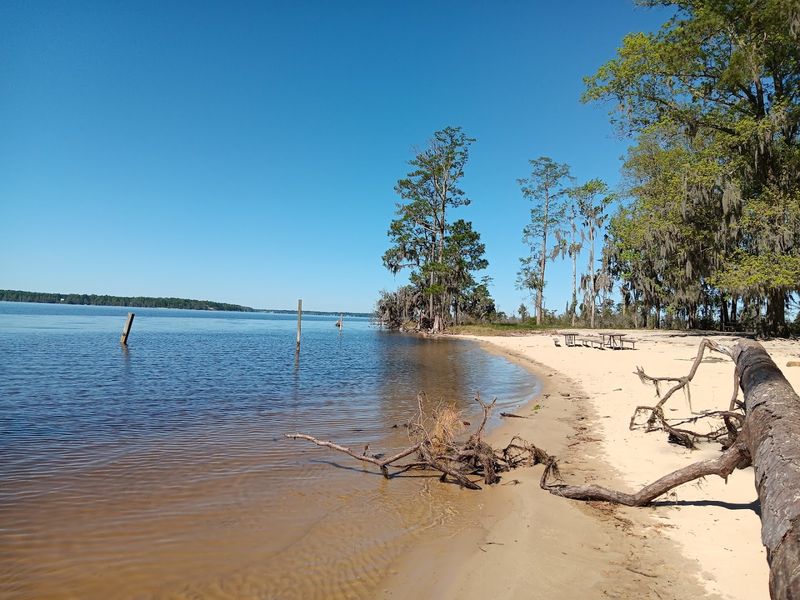
Eastern North Carolina’s quieter coastline reveals itself beautifully at this peaceful riverside park. Along the Pamlico River, Goose Creek offers wetlands, coastal forests, boardwalks, and shoreline views that never make it onto typical beach vacation itineraries.
The park feels like a secret kept by locals who appreciate nature without needing entertainment complexes nearby.
Boardwalks carry visitors over marshland where wading birds hunt and turtles sun themselves on logs. Paddling opportunities attract kayakers seeking calmer waters than ocean conditions provide.
The trails wind through environments that shift from forest to wetland to open water views, showcasing eastern North Carolina’s diverse ecosystems.
Highway travelers regularly pass this area heading toward better-known coastal destinations, never realizing what they miss. The park provides exactly what overstimulated beach-goers often crave—genuine quiet, natural beauty, and the chance to observe wildlife without competing against crowds.
For anyone who thinks North Carolina’s coast means only sandy beaches and boardwalk attractions, Goose Creek offers a complete education in the region’s quieter, equally beautiful alternative landscapes.
Dismal Swamp State Park — South Mills
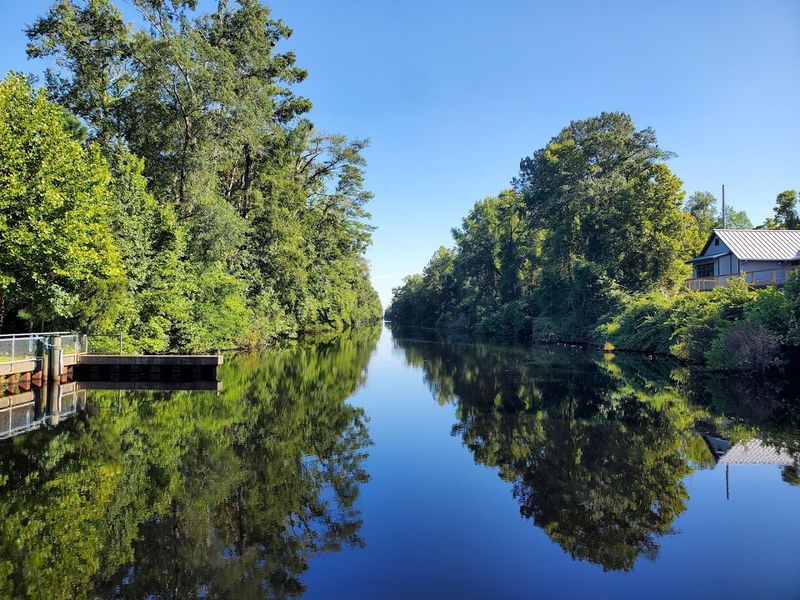
The name sounds ominous, yet the landscape proves utterly fascinating. This park provides access to the Great Dismal Swamp through hiking trails and paddling routes that carry visitors into one of North Carolina’s most unusual natural environments.
Dark water reflects towering trees, creating scenes that look borrowed from fantasy novels.
History saturates this landscape as thoroughly as the groundwater. The swamp sheltered freedom seekers during slavery times, served as a lumber source for generations, and inspired writers including Harriet Beecher Stowe.
Walking these trails means moving through both natural habitat and historical significance, though many visitors never consider the human stories connected to this wilderness.
Most North Carolina residents know the Great Dismal Swamp by name but have never actually explored it. The park makes this mysterious environment accessible without destroying the wildness that makes it special.
Boardwalks and well-maintained trails allow safe exploration, while the surrounding swamp maintains its untamed character. For anyone curious about North Carolina’s less conventional landscapes, this represents a must-visit destination hiding in plain sight along the state’s northeastern border.
Judaculla Rock — Cullowhee
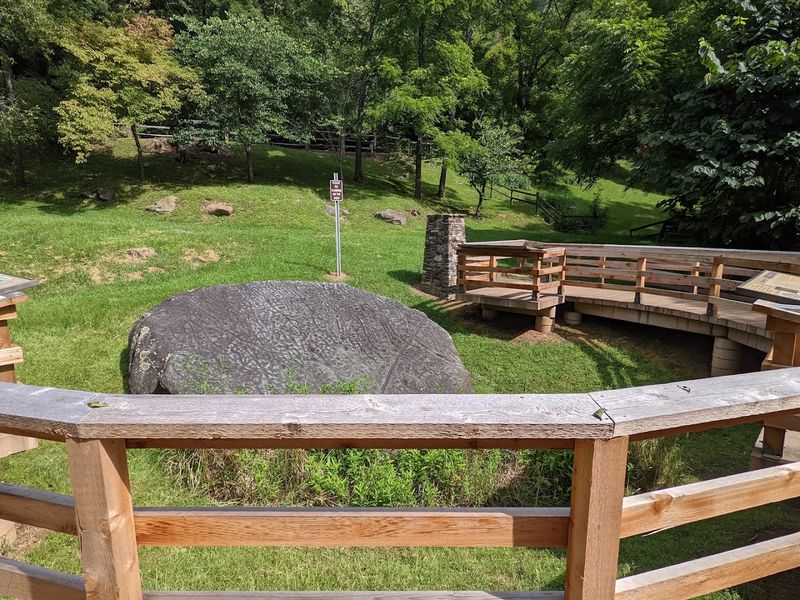
Thousands of mysterious carvings cover this soapstone boulder hidden in Jackson County’s mountains. The petroglyphs connect to Cherokee tradition and Indigenous history stretching back centuries before European contact.
Standing before this marked stone raises more questions than answers, which somehow makes the experience more powerful rather than less.
Cherokee tradition links the rock to Judaculla, a legendary giant and powerful figure in Cherokee stories. Scholars continue debating the carvings’ exact meanings and origins, but the mystery enhances rather than diminishes their significance.
The markings include everything from obvious shapes to abstract patterns defying easy interpretation.
This remarkable piece of North Carolina history sits in a relatively accessible location, yet most residents never realize it exists. No major signage announces its presence, no gift shops exploit its story.
Just an ancient carved boulder in a mountain field, waiting for curious visitors who take time to seek it out. For anyone interested in Indigenous history or archaeological mysteries, Judaculla Rock offers something genuinely rare—a prehistoric artifact you can actually visit and contemplate without museum barriers.
The American Museum of the House Cat — Sylva
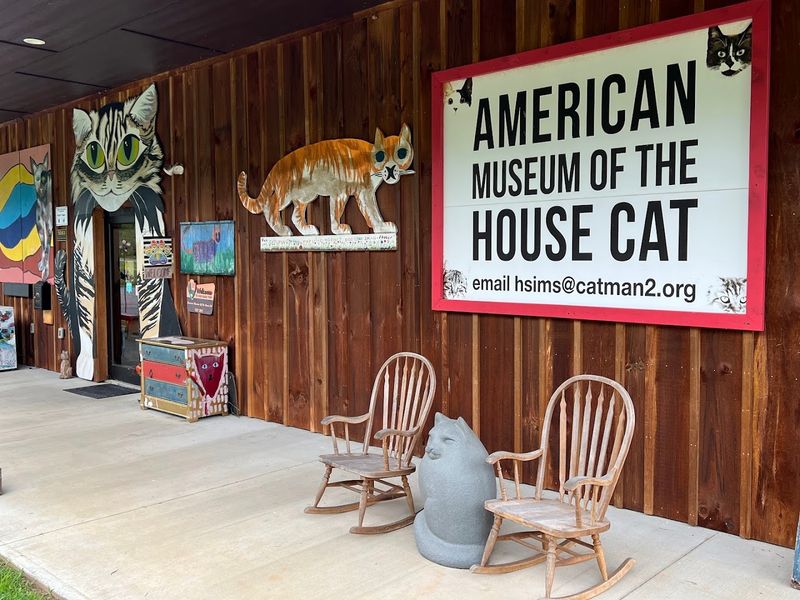
Yes, an entire museum dedicated to house cats exists in North Carolina, and yes, it proves absolutely delightful. This wonderfully unusual attraction in Sylva celebrates domestic felines through thousands of years of history and across numerous cultures.
The collection ranges from ancient Egyptian artifacts to Victorian-era cat-themed household items to modern pop culture references.
Cat enthusiasts obviously gravitate toward this museum, but even dog people often find themselves charmed by the quirky exhibits. Displays cover cats in art, cats in literature, cats in advertising, and cats in just about every other aspect of human culture imaginable.
The variety prevents the single-subject focus from becoming monotonous.
Most North Carolina museums showcase broad historical topics or regional heritage. This one embraces delightful specificity instead, creating something memorable precisely because it refuses to be like every other museum.
Visitors remember the experience long after leaving, often describing it to friends with genuine enthusiasm. For anyone seeking attractions that feel genuinely different from standard tourism offerings, this museum delivers exactly the kind of unexpected experience that makes exploration worthwhile.
Vollis Simpson Whirligig Park — Wilson

More than 30 enormous wind-powered sculptures fill this downtown Wilson park with constant movement and mechanical creativity. Artist Vollis Simpson created these whirligigs from salvaged materials, building spinning, turning, colorful contraptions that blur the line between folk art and engineering.
When wind catches the blades and wheels, the entire park springs to life.
Simpson worked as a machinist and house mover, skills evident in these massive creations. He never attended art school or sought gallery representation, simply built what fascinated him in his backyard for decades.
After his death, the community preserved his work by creating this dedicated park, bringing the sculptures from his property to a public space.
Eastern North Carolina doesn’t always receive attention for contemporary art, making this collection even more special. The whirligigs reach multiple stories tall, their moving parts catching sunlight and creating ever-changing patterns.
Children love watching the sculptures spin, while adults appreciate the ingenuity behind each piece. For anyone who thinks they’ve seen everything North Carolina offers, this park delivers something completely unexpected—outsider art on a monumental scale, celebrating one man’s unique vision in wonderfully kinetic fashion.
Elsewhere — Greensboro

Inside a former thrift store, Elsewhere has evolved into something almost impossible to categorize. Living museum?
Collaborative art project? Ever-changing installation?
All descriptions fit, yet none completely capture this experimental space built around decades of accumulated objects. The building itself holds three floors of collected items, from vintage clothing to outdated electronics to mysterious artifacts defying easy identification.
Unlike traditional museums, Elsewhere actively changes as artists work within the space. Visitors might encounter performers, sculptors, or other creative people transforming the collections into new artworks.
The boundary between observer and participant blurs intentionally, creating experiences that feel more like discovery than standard museum visits.
Most North Carolina residents have never heard of Elsewhere despite its location in Greensboro, a sizable city with active arts communities. The unconventional nature probably contributes to its obscurity—people expect museums to follow certain patterns, and Elsewhere gleefully ignores those expectations.
For anyone tired of predictable cultural attractions, this represents exactly the kind of genuinely different experience that makes exploration worthwhile. Just don’t expect traditional museum behavior, clear explanations, or obvious organization.
Cowan Museum of History and Science — Kenansville
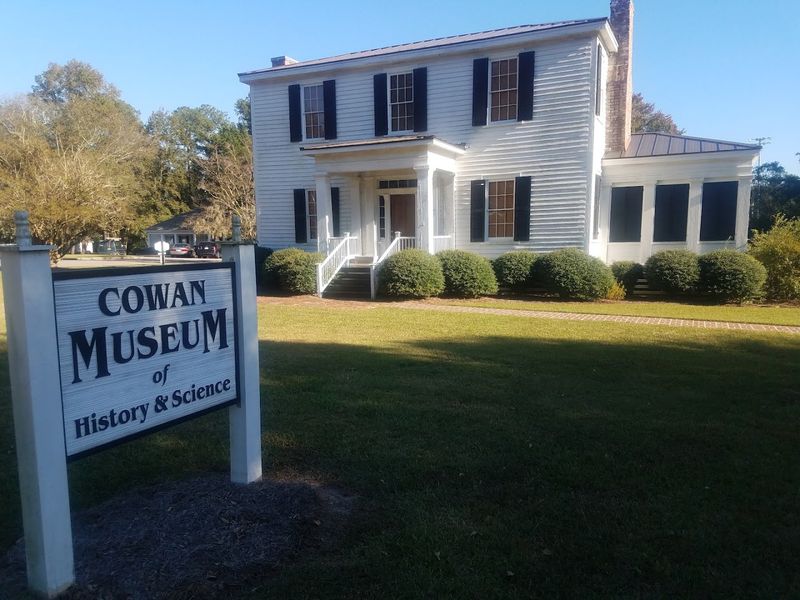
Small-town museums often hold surprises, and this Kenansville institution proves the rule beautifully. The Cowan Museum preserves thousands of artifacts documenting rural North Carolina life across generations.
Historic structures relocated to the property include original buildings showing how earlier residents lived, worked, and built their communities.
Farm equipment, household items, clothing, tools, and countless other objects fill the exhibits. These everyday artifacts often reveal more about actual lived experience than grand historical monuments ever could.
Seeing the specific items people used for cooking, farming, or entertaining brings the past into sharper focus than abstract historical timelines manage.
Easy to overlook when traveling through rural North Carolina, this museum rewards anyone who takes time to stop. The collection demonstrates impressive breadth for a small institution, covering everything from Indigenous artifacts to early twentieth-century technology.
Staff often share stories behind specific items, adding personal context that printed labels cannot provide. For anyone interested in how ordinary North Carolinians actually lived throughout the state’s history, this unassuming museum offers genuinely valuable insights that larger, flashier attractions often miss in their focus on famous figures and major events.
Portsmouth Village — Portsmouth Island
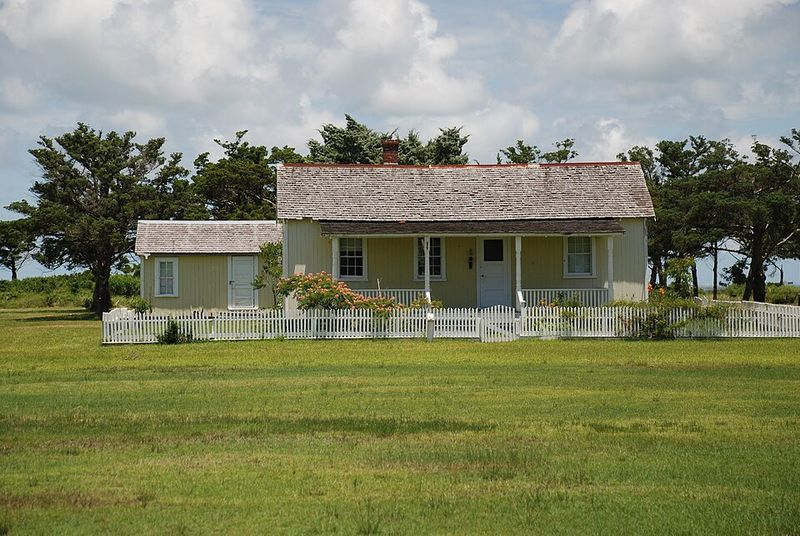
Accessible only by boat, this abandoned village creates an eerie time capsule on the Outer Banks. Weathered buildings stand along sandy roads where salt air and time have created haunting beauty.
Portsmouth once thrived as a maritime community, but changing shipping patterns and harsh island conditions gradually drove residents away, leaving behind this fascinating ghost town.
Walking through Portsmouth feels like stepping into history without crowds or modern intrusions. The National Park Service maintains several structures, including a church, lifesaving station, and homes.
Interpretive signs explain the village’s rise and decline, but the buildings themselves tell the most powerful story through their simple persistence against coastal weather.
Most Outer Banks visitors stick to accessible beach towns, never realizing this abandoned village exists just offshore. The boat requirement naturally limits crowds while adding to the adventure of visiting.
Photographers particularly love Portsmouth’s combination of historic structures and coastal landscape. For anyone fascinated by ghost towns, maritime history, or simply unusual destinations, Portsmouth Village offers something genuinely rare—a preserved abandoned community that reveals how quickly human presence can fade when geography and economics shift against coastal settlements.
Springer’s Point Preserve — Ocracoke
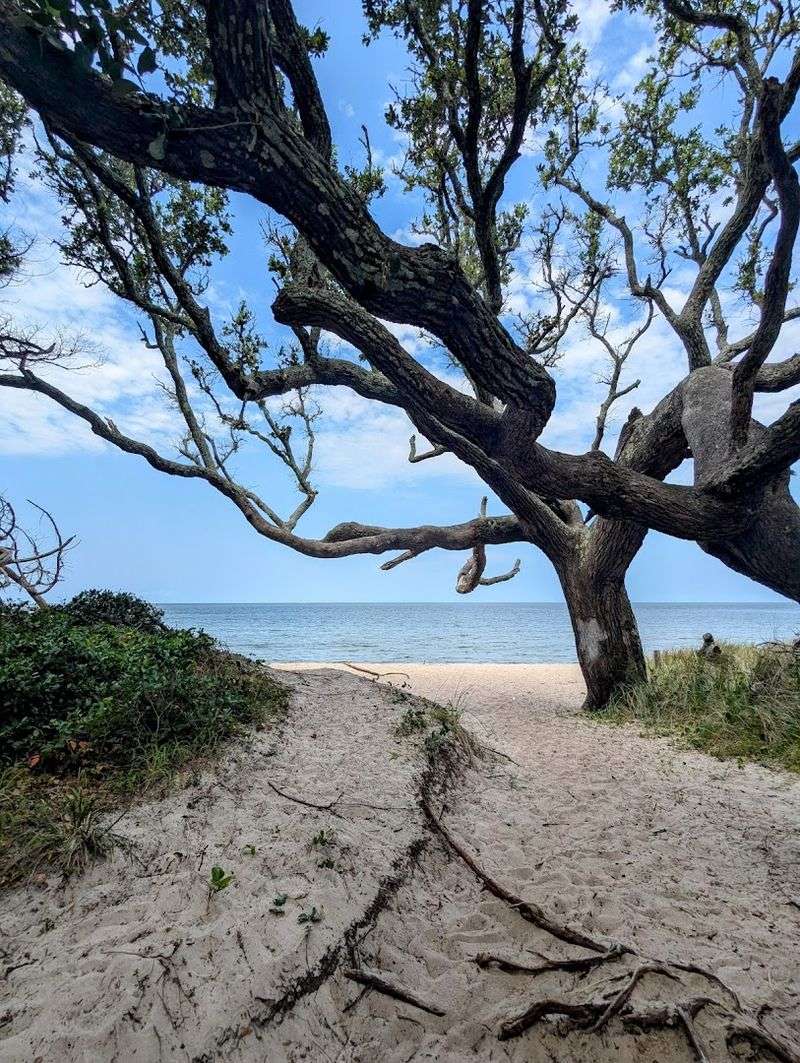
Pirate history and natural beauty converge at this peaceful Ocracoke preserve. The trail winds through maritime forest before emerging at shoreline views that have remained essentially unchanged for centuries.
Blackbeard himself supposedly frequented this area during his coastal raiding days, adding legendary history to already impressive scenery.
The preserve offers quiet contemplation rather than commercial attractions. No gift shops sell pirate merchandise, no actors stage sword fights.
Just trails through coastal forest, birds calling from branches, and the sound of water meeting shore. The simplicity becomes the appeal, especially for visitors overwhelmed by more developed Outer Banks destinations.
Many Ocracoke visitors never venture beyond the village center and beaches, missing this preserve entirely. The maritime forest ecosystem creates environments distinct from open beach, with twisted trees shaped by salt wind and unique plants adapted to coastal conditions.
Walking these trails provides education in coastal ecology alongside the pirate history connections. For anyone seeking quieter alternatives to typical beach vacation activities, Springer’s Point delivers exactly the kind of peaceful, historically significant natural experience that makes North Carolina’s coast more than just sand and surf.
The Country Doctor Museum — Bailey
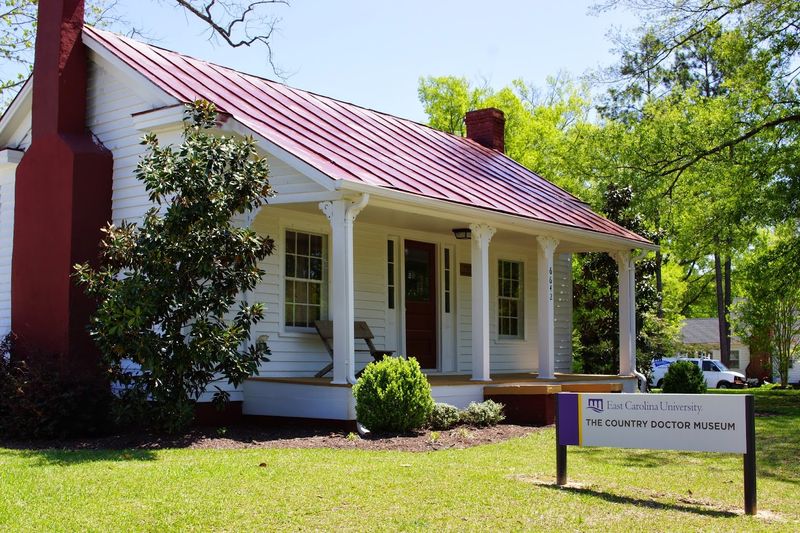
Rural medicine once looked dramatically different from today’s healthcare system, and this Bailey museum preserves that fascinating history. Medical instruments, pharmacy tools, doctors’ diaries, and countless other artifacts document how country doctors served vast rural areas with limited resources and remarkable dedication.
The collection reveals both medical progress and the personal relationships that characterized earlier healthcare.
Two historic buildings house the exhibits, including an actual doctor’s office relocated to the site. Displays cover everything from house calls to home remedies to the challenges of practicing medicine before modern antibiotics and imaging technology.
Handwritten ledgers show treatments prescribed and payments received, often in goods rather than cash.
Most people would never expect to find such a specialized museum in small-town North Carolina, which makes discovering it even more rewarding. The exhibits honor country doctors’ contributions without romanticizing the era’s medical limitations.
For anyone interested in medical history, rural life, or simply unusual museums, this represents a genuine hidden treasure. The attention to preservation and storytelling rivals larger institutions, proving that small museums can deliver powerful educational experiences when passionate people protect important stories from disappearing into forgotten history.