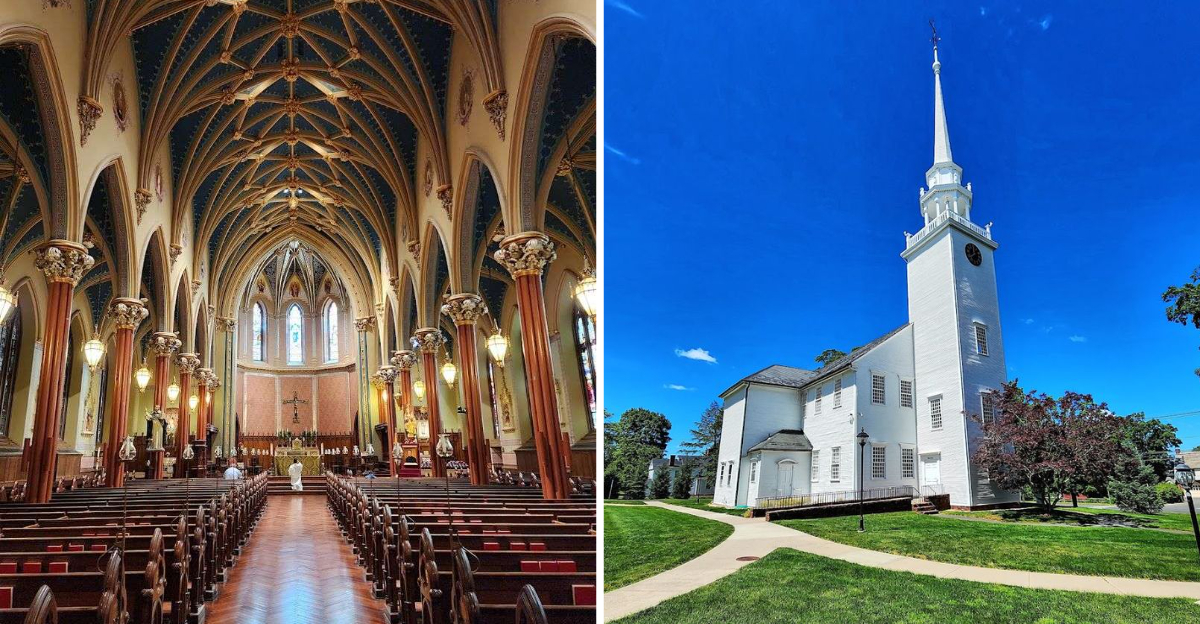
Some Connecticut churches have stood quietly through centuries of change, watching horse-drawn roads become busy streets and small settlements grow into thriving towns. Their weathered stones, old wooden beams, and hand-crafted details hold memories that reach far beyond the walls themselves.
Across Connecticut, historic churches reveal stories from colonial communities, early American history, and generations of families who gathered in these same spaces. From peaceful village greens to historic town centers, these landmarks offer a chance to slow down and appreciate the craftsmanship and traditions that shaped the state.
A visit to these churches is more than an architecture stop; it is a journey into the people and moments that came before us. Explore 10 Connecticut churches that have been standing longer than many visitors ever imagined and discover the stories waiting inside each one.
First Church of Christ, Congregational
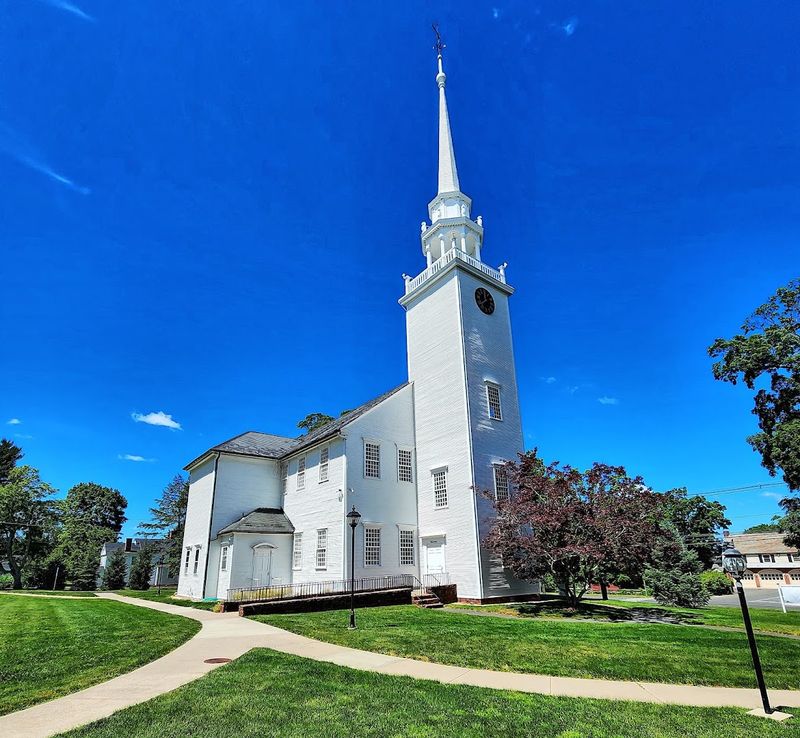
Morning light makes old white clapboards glow in a way that feels almost unreal. On Farmington’s Main Street, the First Church of Christ, Congregational has stood since 1771, yet the congregation reaches back to 1652, giving the whole place a deep, settled calm.
History here is not hidden behind glass. The church is closely tied to the Amistad story, and that connection gives a visit extra weight.
Look for the balanced colonial design, the slender steeple, and the quiet beauty of the surrounding historic district, where brick walks and old homes keep the past close.
A stop here works best when paired with a slow walk through town. Bring comfortable shoes, notice the details around the doorway and windows, and take time to read nearby markers.
Farmington rewards patience, and this church shows exactly why Connecticut’s oldest places still matter today.
Center Church on the Green
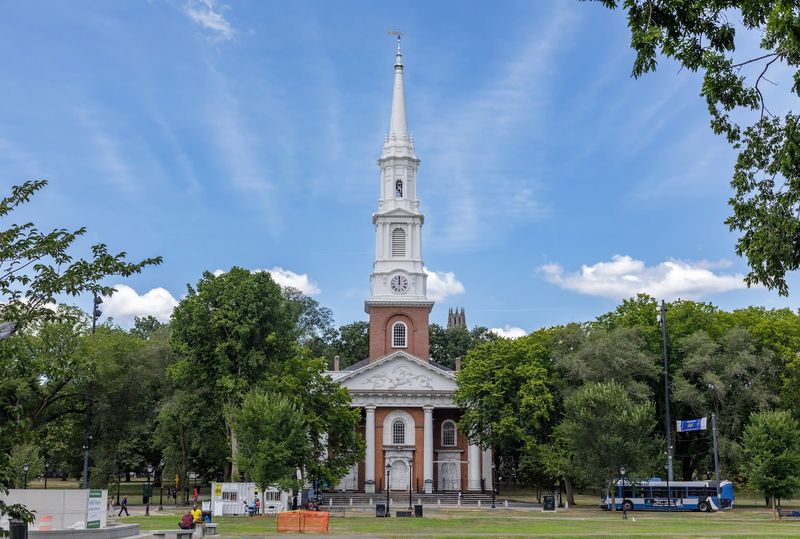
City noise fades a little when you step onto the New Haven Green. Rising above the lawn, Center Church on the Green has anchored this space since 1814, while its congregation reaches back to 1639, almost to the beginning of the colony itself.
There is something striking about a church built over part of the old burial ground. That fact alone gives the place an unusual stillness, even with traffic, students, and office workers nearby.
Inside and out, the Federal style feels balanced and graceful, and the setting makes every photo look layered with history.
Plan a visit when you can also explore downtown on foot. Yale landmarks, coffee shops, and the other churches around the Green are all close, so the stop never feels isolated.
Center Church helps explain New Haven in one glance, old graves below, busy streets beyond, and centuries meeting in the middle.
First Church of Christ
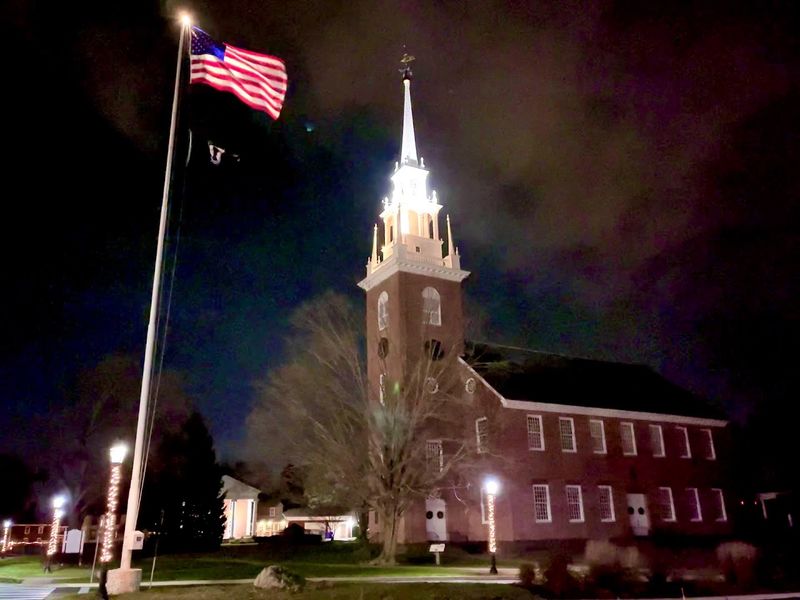
Some streets seem to keep their own rhythm, slower and steadier than the present day. Along Wethersfield’s long historic Main Street, First Church of Christ stands with a calm confidence, and its roots stretch back to 1635, just after the town itself began.
The current building dates to 1838, and its Greek Revival look gives it a strong, formal presence. Wide streets, old trees, and nearby houses from different centuries make the church feel part of a larger story rather than a single landmark.
It is easy to picture wagons, town meetings, and Sunday gatherings unfolding here.
Visitors who like early American places will want extra time in this area. Walk a few blocks, notice the old doorways and gardens, and stop for a simple lunch in town if you can.
Wethersfield rewards quiet attention, and this church offers one of the clearest windows into that long colonial beginning.
First Church of Windsor
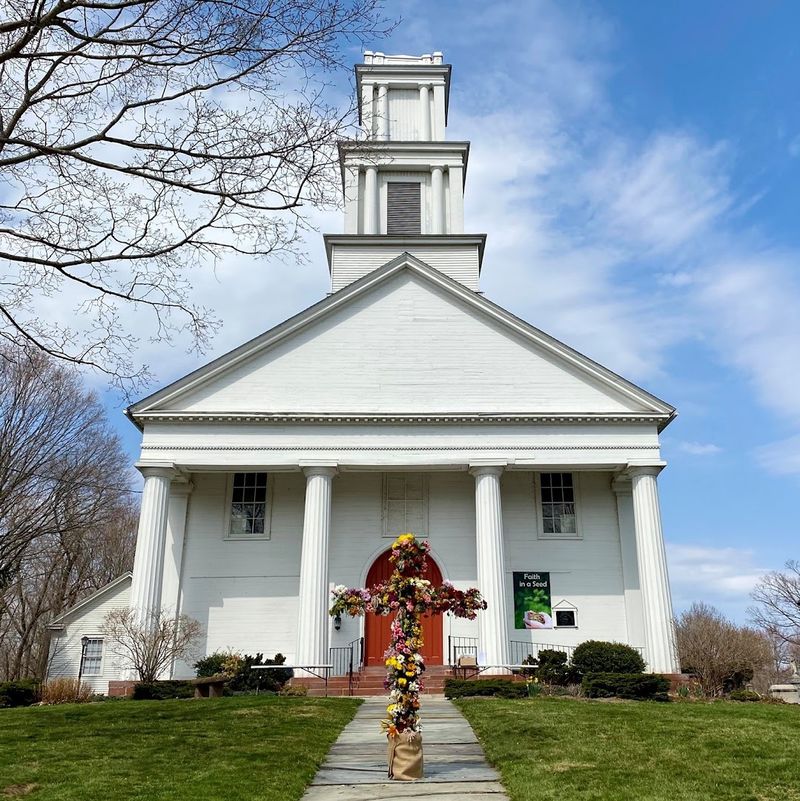
There is a special kind of hush in towns that know they were here first. In Windsor, often called Connecticut’s oldest English settlement, First Church of Windsor has been part of community life for centuries, with a congregation founded in 1633 and a building completed in 1794.
The setting on Palisado Avenue feels classic New England in the best way. White siding, a tall steeple, and neighboring historic homes create a scene that seems almost painted.
Yet the church does more than look old. It carries the memory of baptisms, funerals, debates, and ordinary Sundays that shaped generations.
If you visit, pair the stop with nearby historic sites and a walk through the center of town. Notice how the church fits naturally into the street instead of overpowering it.
That modest, lasting presence may be the most impressive part, proof that deep history can feel lived in, not distant or fragile.
Abington Congregational Church
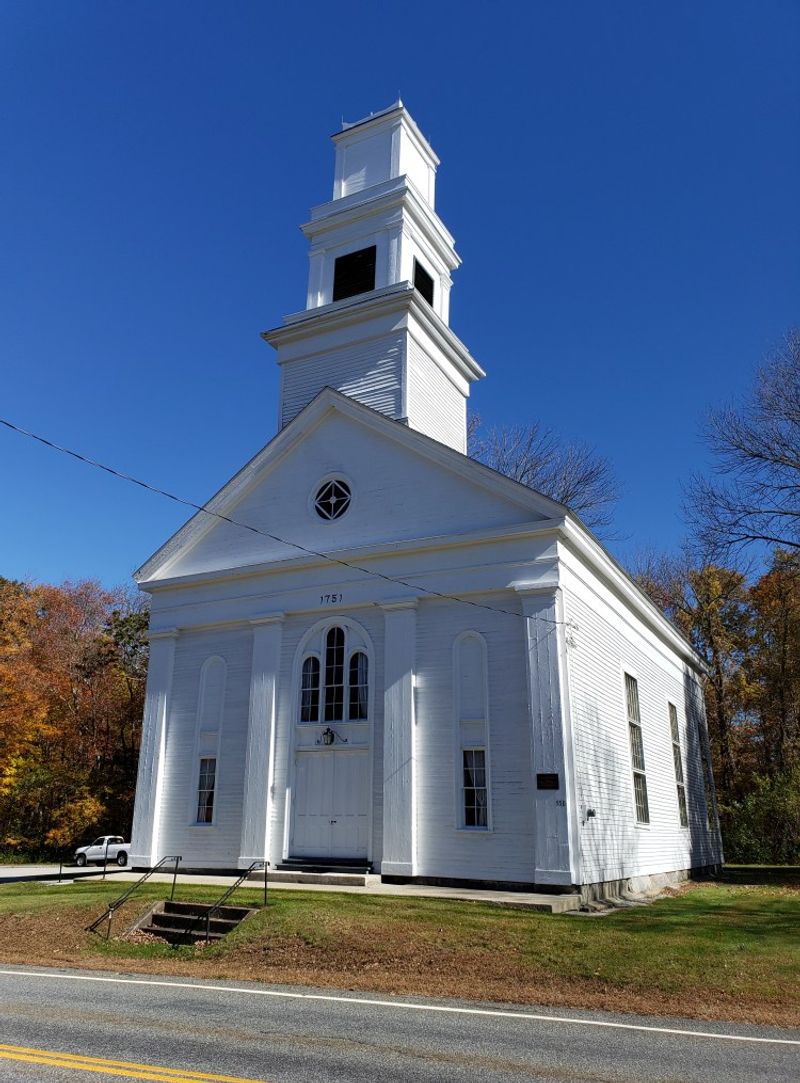
Quiet roads sometimes lead to the biggest surprises. Out in Pomfret’s Abington section, Abington Congregational Church does not shout for attention, but the building has stood since 1751 and is often recognized as Connecticut’s oldest church still used continuously for its original purpose.
That fact changes the way you see its plain beauty. The shape is simple, the setting rural, and the mood wonderfully unhurried.
Instead of grand decoration, the power comes from continuity. Generations have entered the same building for worship, and that steady use gives the space a rare sense of honesty.
Come ready for a slower kind of visit. Drive the back roads, enjoy the fields and stone walls nearby, and let the calm of northeastern Connecticut sink in.
Abington may not be the flashiest stop on this list, but it leaves a lasting impression because age here feels practical, rooted, and still very much alive today.
Old Stone Church
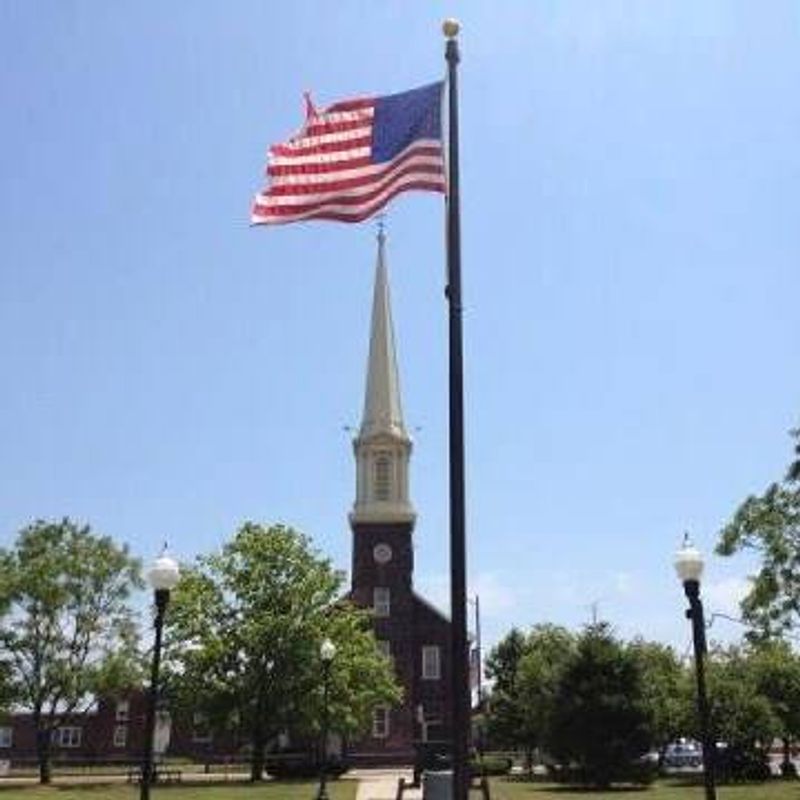
Stone catches light differently than wood, and that alone makes this place memorable. In East Haven, the Old Stone Church has stood since 1774, one of the few surviving pre-Revolutionary stone churches in New England, with walls that seem to hold every season they have seen.
The rough texture gives the building a tougher, more grounded look than many white meetinghouses across Connecticut. Standing near it, you notice how unusual the material feels in this region.
The church rises right from the town’s center, and its age becomes easier to grasp when you remember it was already old when the nation was new.
Try visiting when the light is low in the morning or late afternoon. Shadows bring out the details in the stone, and the nearby green adds a gentle contrast.
East Haven offers a straightforward, local feel, and this church is the kind of landmark that stays with you after the drive home.
First Congregational Church of Litchfield
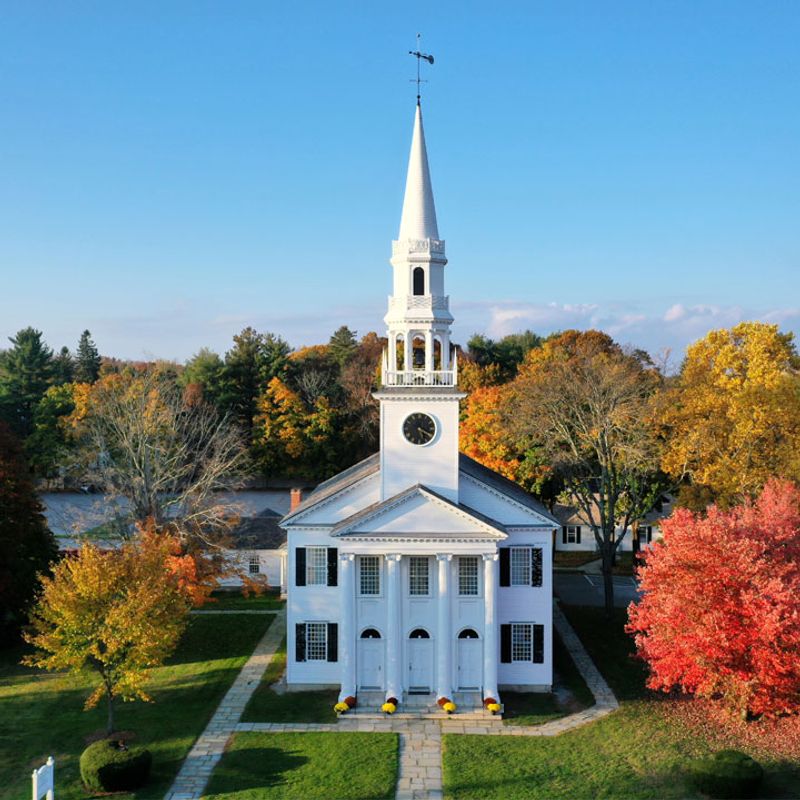
Few towns in Connecticut feel as neatly preserved as Litchfield. At the edge of its handsome streets, the First Congregational Church of Litchfield adds a stately note to the scene, with a current building from 1829 and a congregation that began back in 1721.
The church reflects the confidence of an old county town that once mattered greatly in public life. Nearby, broad lawns, classic houses, and brick sidewalks create a setting that invites a longer wander.
You do not need to know every historical detail to feel the weight of the place. The architecture and town plan tell plenty on their own.
Make time for the surrounding village, not just the church steps. A bookstore stop, a bakery treat, or a slow pass by the old courthouse can round out the visit nicely.
Litchfield rewards people who enjoy atmosphere, and this church helps tie the whole historic picture together with quiet assurance.
Trinity Church on the Green
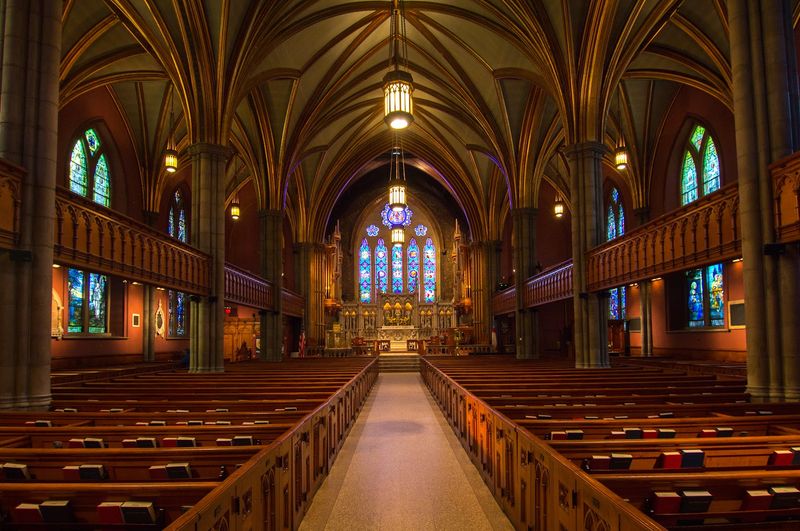
At first glance, it looks almost as if a piece of Europe landed in downtown New Haven. Trinity Church on the Green, completed in 1814, breaks from the simpler meetinghouse style nearby and brings Gothic Revival drama to one of Connecticut’s most historic public spaces.
Pointed arches, stonework, and a richer silhouette make the church feel a little theatrical, especially when clouds move over the Green. Designed by Ithiel Town, it has long been admired as one of America’s finest examples of its kind.
Even people who know little about architecture tend to stop and stare for a moment.
The best way to experience it is by slowing down in the middle of a busy day. Sit on the Green, listen to city sounds, and compare Trinity with the neighboring churches around it.
That mix of styles tells a bigger story about New Haven, where layers of faith, design, and civic life share the same square.
Christ Church Episcopal
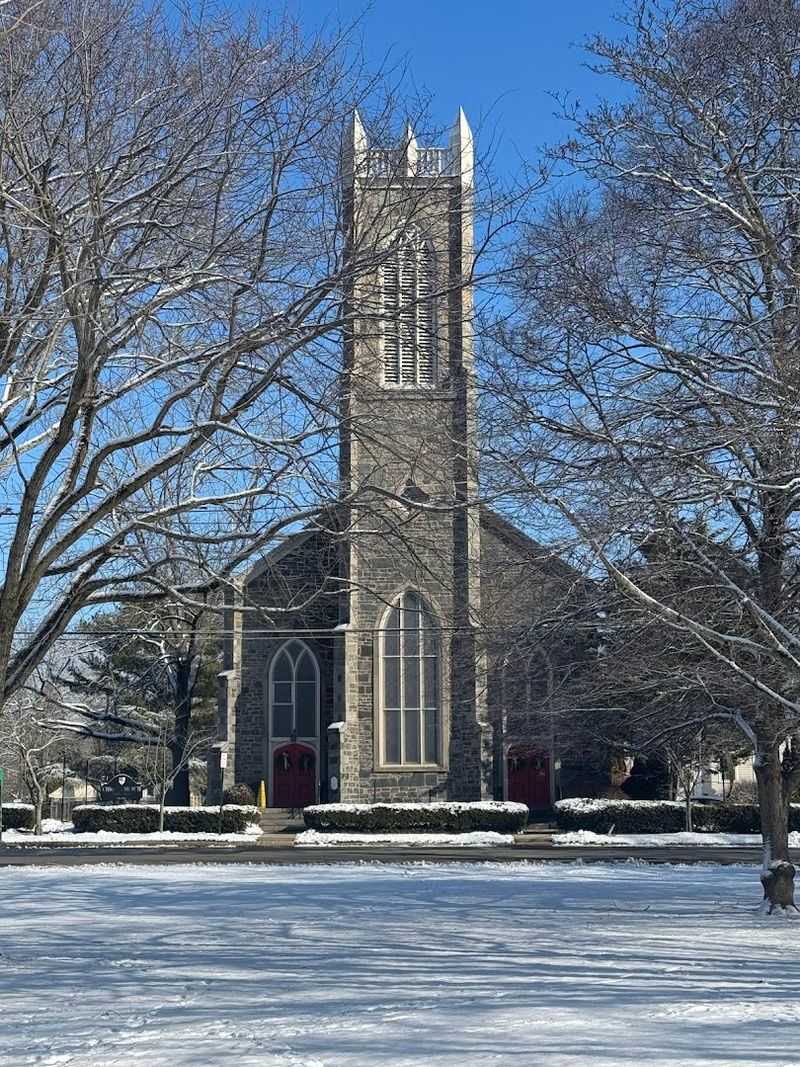
Salt air and old stone give some coastal towns a slightly serious beauty. In Guilford, Christ Church Episcopal brings that feeling into focus, with a parish dating to 1744 and a striking stone building from 1834 that fits the town’s long maritime story.
The material matters here. Stone makes the church feel anchored, as if it has weathered every storm that rolled in from Long Island Sound.
Around the green and nearby streets, Guilford shows off one of the prettiest historic centers in the state, and the church adds depth rather than stealing the scene.
Come hungry for more than architecture. A bakery stop, a walk near the green, or a short drive toward the shore can turn the visit into a fuller day.
Christ Church is worth seeing because it helps explain Guilford’s character, sturdy, graceful, and shaped by both faith and the coastline nearby.
St. Mary’s Church
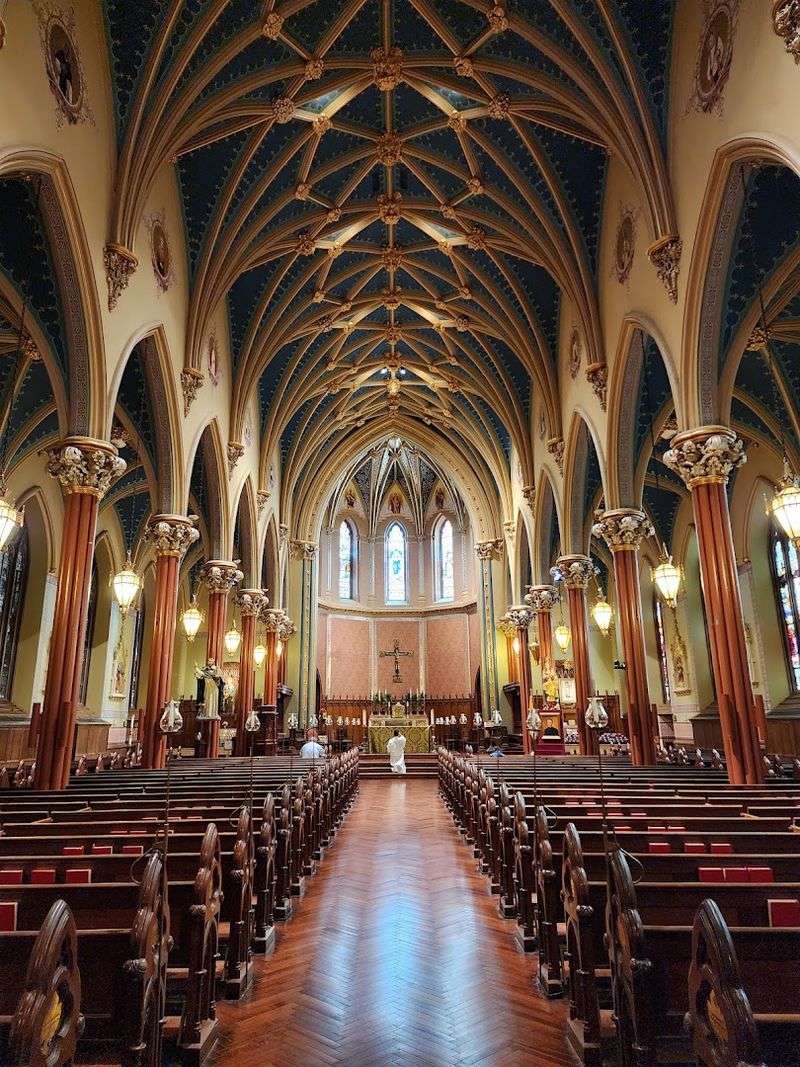
Some buildings hold history that extends far beyond their block. On Hillhouse Avenue in New Haven, St. Mary’s Church has stood since 1874, and it is especially known as the birthplace of the Knights of Columbus, giving it a national story as well as a local one.
The setting feels a little different from older colonial churches. Here, the Catholic tradition, city streets, and nearby Yale presence create a layered atmosphere with more than one timeline moving at once.
The church carries spiritual importance, but it also marks a turning point in the life of immigrant communities seeking belonging and support.
Visitors do not need to be experts in church history to appreciate what happened here. Pause long enough to read about Blessed Michael McGivney, look closely at the building’s details, and take a walk through the surrounding neighborhood.
St. Mary’s shows how religious history can also be social history, and deeply human too.