Some of Ohio’s most memorable landmarks are not the ones that fill postcards or draw the biggest crowds. They are the quiet churches tucked beside historic squares, tree-lined streets, and small communities where every stone, window, and wooden detail carries a story.
Across Ohio, historic churches reveal a different side of the state’s past. Their peaceful interiors, handcrafted architecture, and connections to generations of local families offer visitors a chance to slow down and appreciate the traditions that shaped these places.
From grand sanctuaries to humble village churches, each one reflects the people and moments that came before.
Exploring these churches is about more than admiring beautiful buildings. It is about discovering the history preserved within their walls.
Join us as we visit 11 historic Ohio churches where quiet beauty and fascinating stories come together in unforgettable ways.
A Gothic Calm in the Middle of Public Square
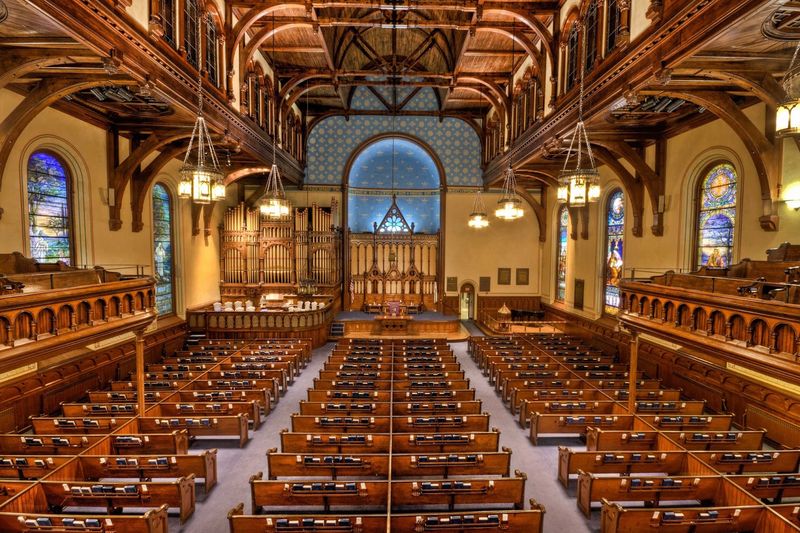
City noise usually bounces off glass towers, but here it seems to soften the moment you look up. Tall stone walls and pointed Gothic details give the building a grounded, steady feeling that almost resets your pace.
You find that mood at Old Stone Church in Cleveland, sitting right on Public Square at 91 Public Square. Built in 1855, it is the oldest public building on the square, and its stained-glass windows glow especially well when late afternoon light slips through downtown.
Step inside if the doors are open, then take a slow walk around the square with a coffee from a nearby cafe. The contrast is part of the experience: buses, offices, and city rush outside, silence and colored light within.
That balance is what makes the church memorable. It does not fight for attention.
Instead, it quietly reminds you that history can still hold its place in the center of modern life.
Marietta’s Basilica With a Painterly Glow
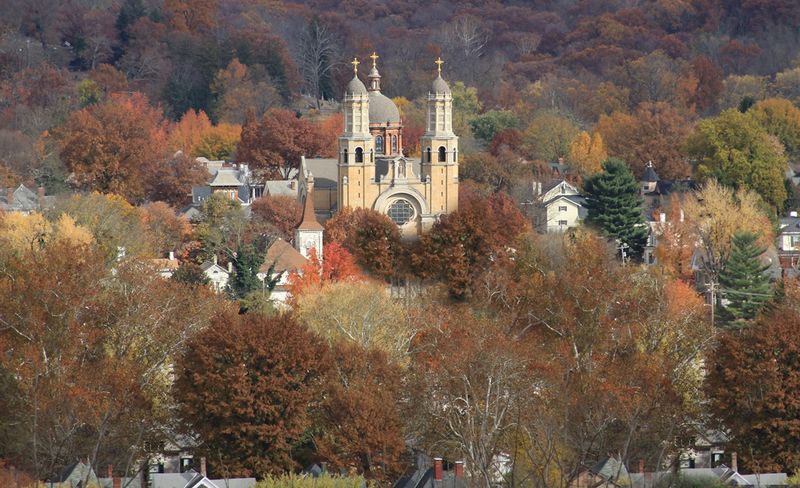
Some churches feel grand right away, while others pull you in with smaller details first. Here, it might be the color on the walls, the quiet order of the pews, or the way the artwork seems to warm the whole room.
That slow reveal happens at the Basilica of St. Mary of the Assumption in Marietta, located at 506 Fourth Street. Founded in 1838 and shaped by German Catholic heritage, the church carries Gothic Revival lines outside and intricate interior art that rewards patient looking.
Marietta itself adds to the charm. After visiting, you can walk the brick streets, pass old homes, and grab lunch near the Ohio River, which gives the day a settled, old-town rhythm.
What stays with many visitors is not only the basilica title or historic importance. It is the feeling of care in every surface, as if generations kept adding beauty because they believed quiet things deserved attention too.
A Bright Classical Surprise in Cincinnati
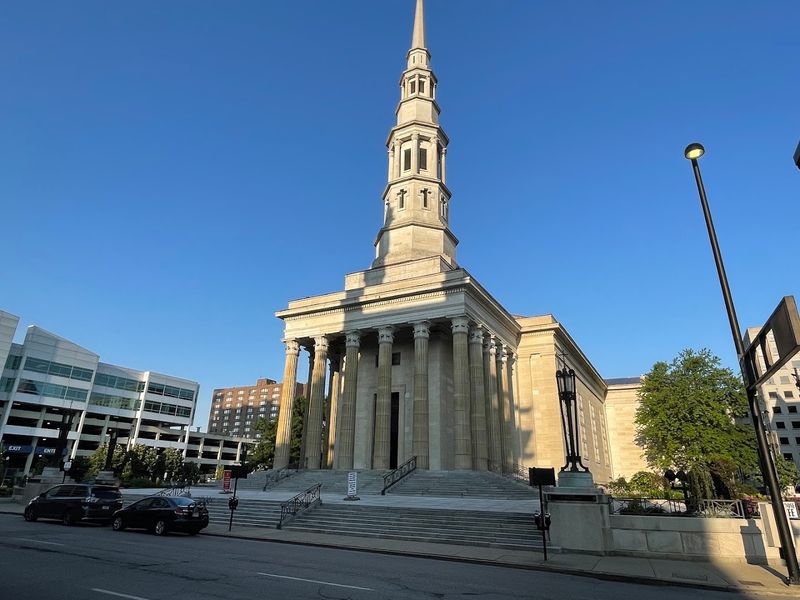
At first glance, the clean lines and pale interior can feel almost surprising for a church of this age. Instead of heavy shadows, you get openness, balance, and a calm brightness that makes the space feel both formal and welcoming.
That is the effect of the Cathedral Basilica of St. Peter in Chains in Cincinnati at 325 West 8th Street. Completed in 1845, it stands out for Greek Revival architecture and for housing one of the world’s largest church organ installations, a detail music lovers especially remember.
If you visit downtown, pair it with a walk through Over-the-Rhine or a stop for chili or bakery treats nearby. The church becomes part of a bigger city story, one filled with old buildings and strong neighborhood identity.
Its beauty is quiet because it comes through proportion, light, and restraint. Nothing feels crowded.
Everything seems placed with purpose, which gives the whole visit a sense of order that can be deeply restful.
Blue Domes Above a Cleveland Hill
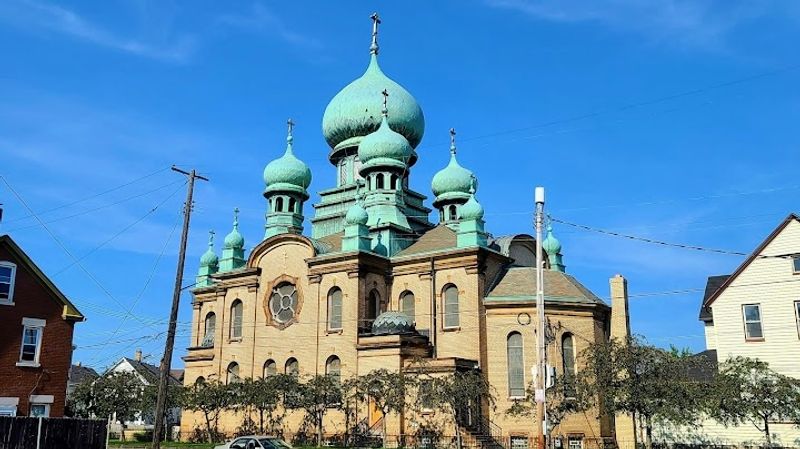
Few sights in Ohio feel as unexpected as onion domes rising above an ordinary neighborhood street. Their shapes are playful from afar, but up close they create a serious, almost storybook sense of place.
That memorable skyline belongs to St. Theodosius Orthodox Cathedral in Cleveland, at 733 Starkweather Avenue. Completed in 1912, the cathedral is known for its Byzantine style, its role as a city landmark, and even its appearance in the film The Deer Hunter.
The surrounding Tremont neighborhood gives the visit extra texture. You can admire the church, then head to a nearby bakery, coffee shop, or overlook where downtown views and the Cuyahoga Valley open up in surprising ways.
Inside and out, the building carries a different rhythm from many American churches. The domes, crosses, and rich visual layers leave a lasting impression, yet the strongest feeling is still quiet.
It feels like a pause held above the city.
Marble and Light on Broad Street
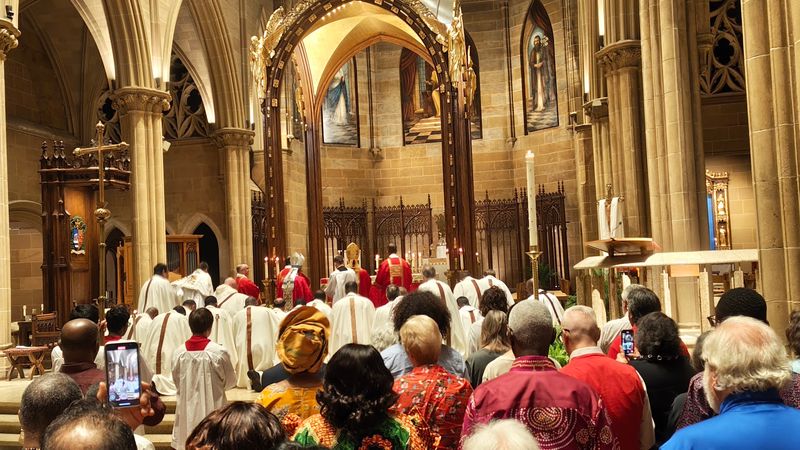
Traffic moves fast along Broad Street, so the calm inside this cathedral feels even more noticeable. One step through the doors changes the sound, the color, and almost the speed of the day.
St. Joseph Cathedral in Columbus, located at 212 East Broad Street, was built in 1878 and serves as the mother church of the Diocese of Columbus. Romanesque Revival design gives it strong lines, while marble details and stained glass bring softness and color to the interior.
Because it sits near downtown museums and government buildings, it fits easily into a day of exploring the city. You might visit the nearby Columbus Museum of Art or stop for a sandwich and coffee before wandering back through the area.
What makes the place stand out is its balance of strength and grace. The walls feel solid and enduring, yet the light keeps everything from feeling heavy.
That contrast turns a short visit into something more thoughtful than expected.
A Pilgrimage Stop With Garden-Like Peace
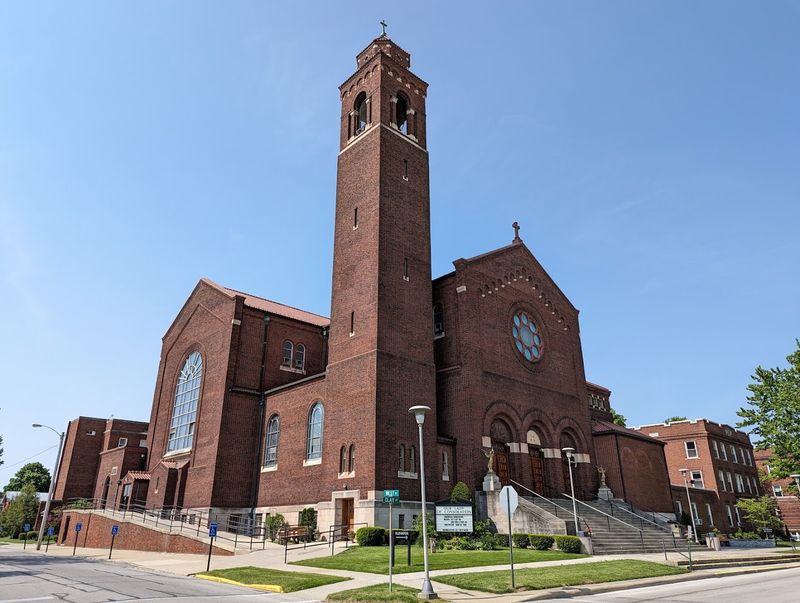
Even people who arrive without a plan often slow down here. The grounds have the feeling of a place made for reflection, where paths, statues, and open sky work together better than any busy itinerary.
In Carey, at 315 Clay Street, the Basilica and National Shrine of Our Lady of Consolation has become one of Ohio’s best known pilgrimage sites. Its Renaissance Revival architecture gives the basilica a formal beauty, while the surrounding shrine grounds create a softer, almost garden-like experience.
There is room to wander, sit, and notice details instead of rushing. Small-town streets nearby keep the visit easy, and local diners offer the kind of simple meal that fits the day, like pie, soup, or a grilled sandwich.
The church matters for more than its title. It offers a kind of quiet that feels shared, not private, as if generations of visitors have brought their worries here and left behind a little calm for the next person.
Worthington’s Stone Landmark and Village Stillness
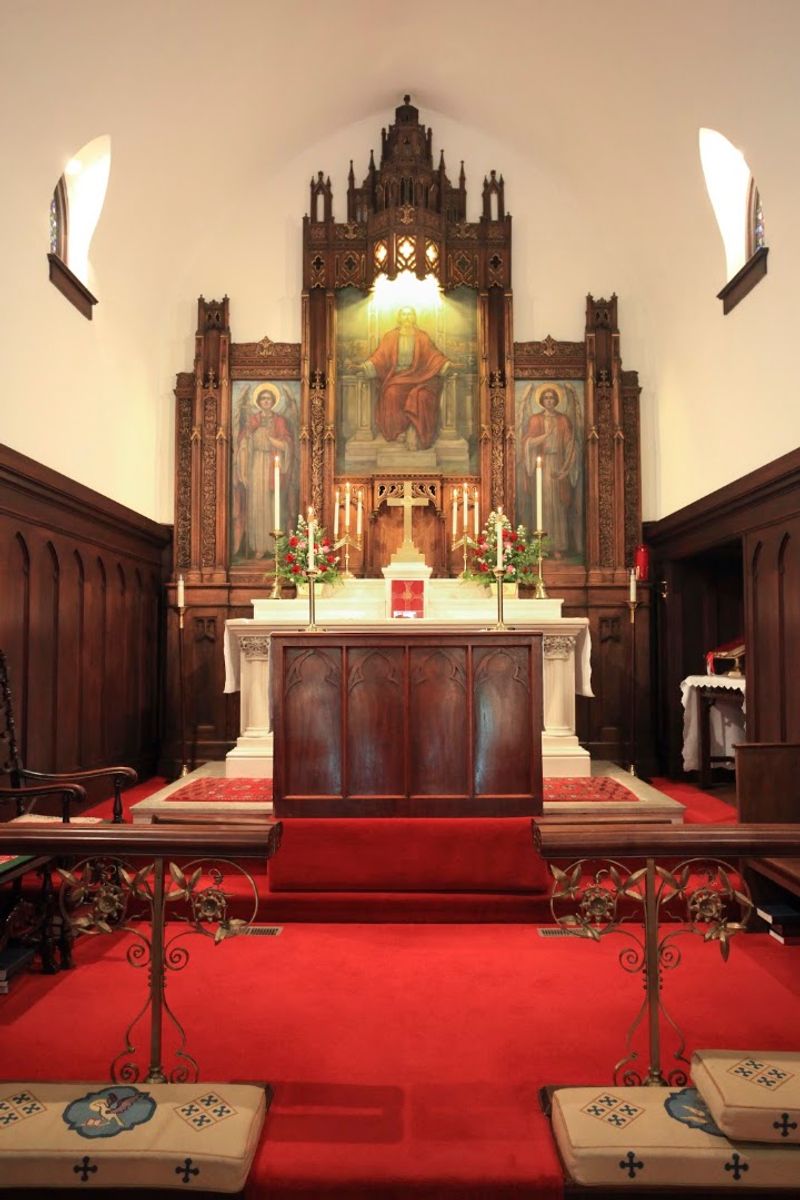
Some places do not need size to make an impression. A stone church, mature trees, and a tidy historic district can create a stronger memory than a much larger landmark.
That is the charm of St. John’s Episcopal Church in Worthington, at 700 High Street. The parish dates to the early 1800s, and the church remains one of the defining sights in the town’s historic district, where brick sidewalks and old houses still shape the mood.
A visit works best at a relaxed pace. Walk the village green, browse a local shop, and if you are there on market day, pick up baked goods or fresh produce before circling back past the church again.
Its beauty feels rooted in community rather than spectacle. Nothing seems designed to overwhelm you.
Instead, the building fits naturally into everyday life, which may be why it feels so moving. It shows how history can stay useful, lived-in, and deeply loved.
Granville’s Meetinghouse Elegance
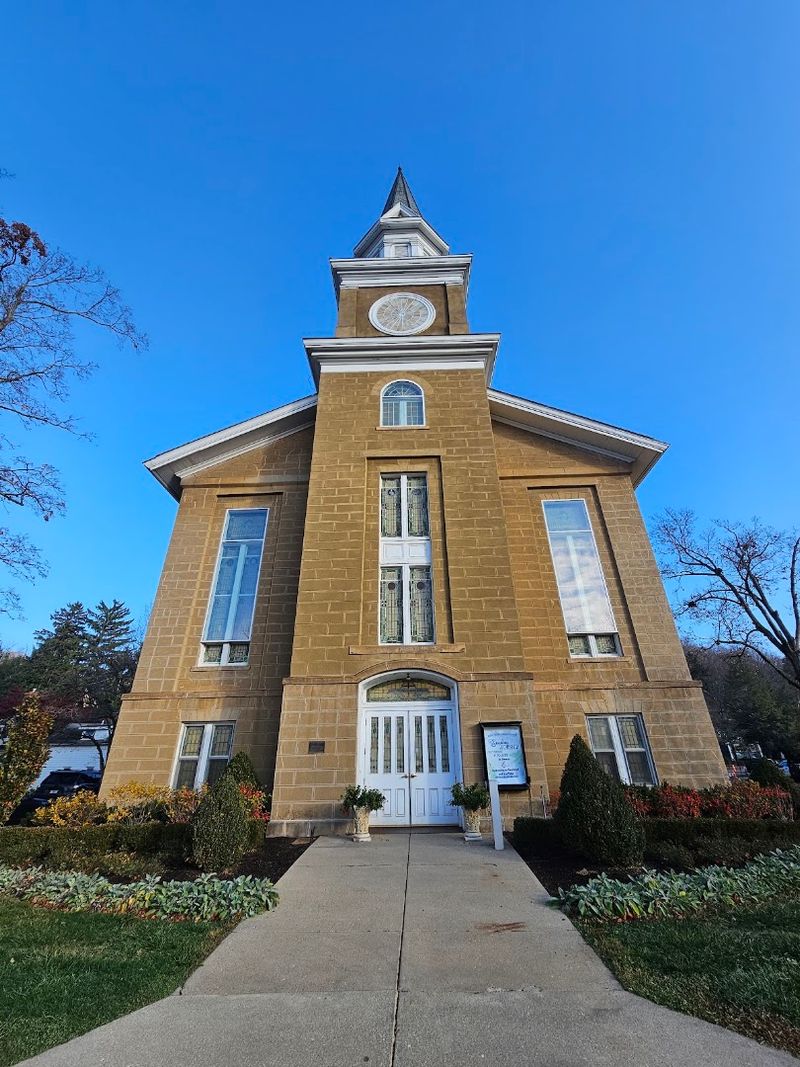
There is something comforting about a church that seems to match its town perfectly. Simple lines, old trees, and a main street full of character can make an entire block feel carefully composed.
First Presbyterian Church in Granville, at 110 West Broadway, has long been part of that picture. Its New England inspired architecture fits the village’s historic identity, and the sanctuary offers an elegant, uncluttered atmosphere that feels thoughtful rather than flashy.
Granville makes it easy to turn a stop into an afternoon. Stroll past inns and boutiques, grab ice cream or coffee, and take in the college-town energy that gives the streets a lively but gentle pace.
The church stands out because it seems woven into local life instead of set apart from it. You notice how naturally it belongs there.
That sense of belonging can be beautiful on its own, especially in a place where history still feels warm and welcoming.
Stone Craft and Stained Glass in Cleveland Heights
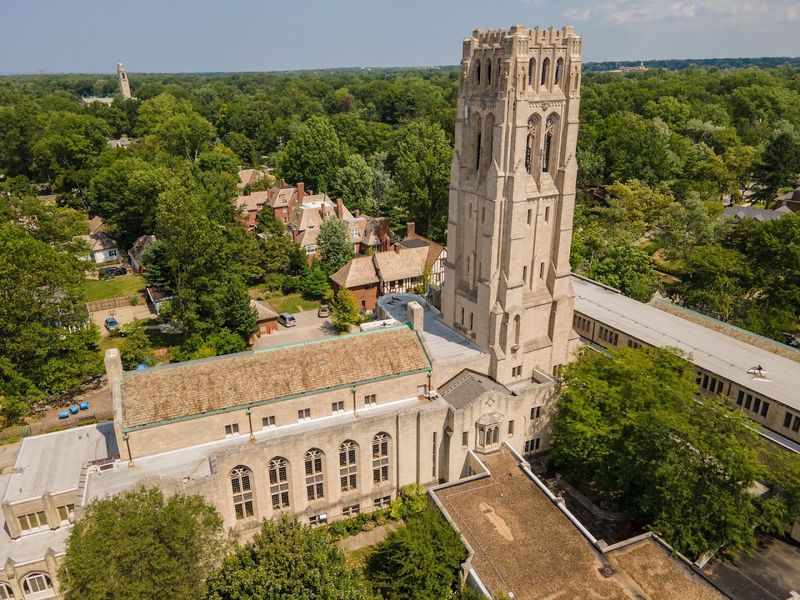
From the street, the stonework catches your eye before anything else. Every carved detail hints at patience, and the building seems to carry its age with an easy kind of confidence.
St. Paul’s Episcopal Church in Cleveland Heights, found at 2747 Fairmount Boulevard, is a strong example of Gothic Revival design. Historic parish life, beautiful masonry, and notable stained-glass windows give it the layered feeling many travelers hope to discover but often miss.
The surrounding neighborhood adds another pleasure. Fairmount Boulevard is lined with handsome homes and mature trees, and nearby districts offer bookstores, coffee shops, and cozy places for lunch after a quiet look around the church.
What lingers here is craftsmanship. You start noticing corners, arches, and small choices that took real skill to create.
That attention slows your own seeing. By the time you leave, the church feels less like a stop on a list and more like a conversation with another era.
Downtown Cincinnati’s Quiet Gothic Corner
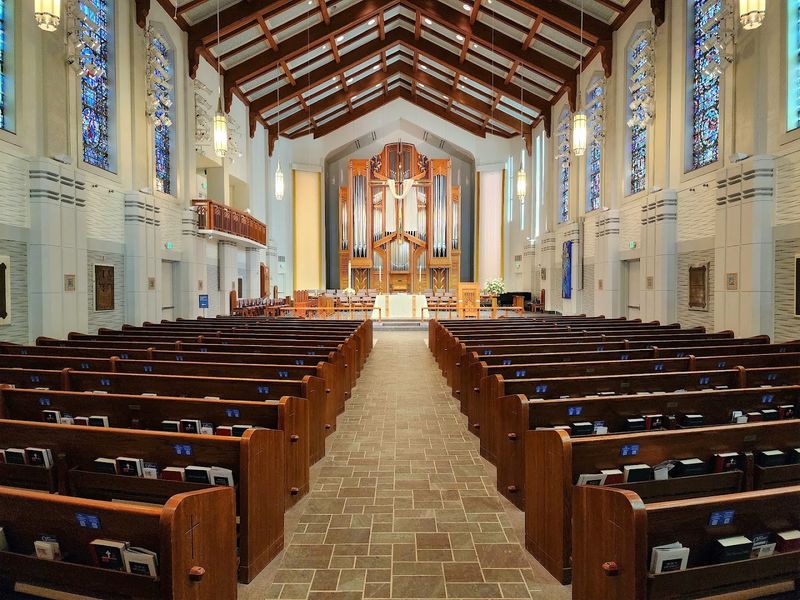
In the middle of downtown, quiet can feel rare enough to be memorable. That is why a church like this lands so strongly, offering a pocket of stillness between offices, sidewalks, and the regular churn of city errands.
Christ Church Episcopal in Cincinnati, located at 318 East Fourth Street, traces its story back to 1817. The current Gothic Revival presence carries both civic and religious history, making it a place where architecture and city memory seem to meet in one address.
Its setting makes a visit especially interesting. You can walk from older business blocks to Fountain Square, stop for lunch, and notice how the church changes the mood of the street simply by being there.
There is nothing loud about its appeal. Instead, it offers steadiness, a sense that some parts of a city are meant for listening rather than talking.
For travelers who like history with atmosphere, that can be more affecting than grander sights.
Toledo’s Cathedral With a Spanish Accent
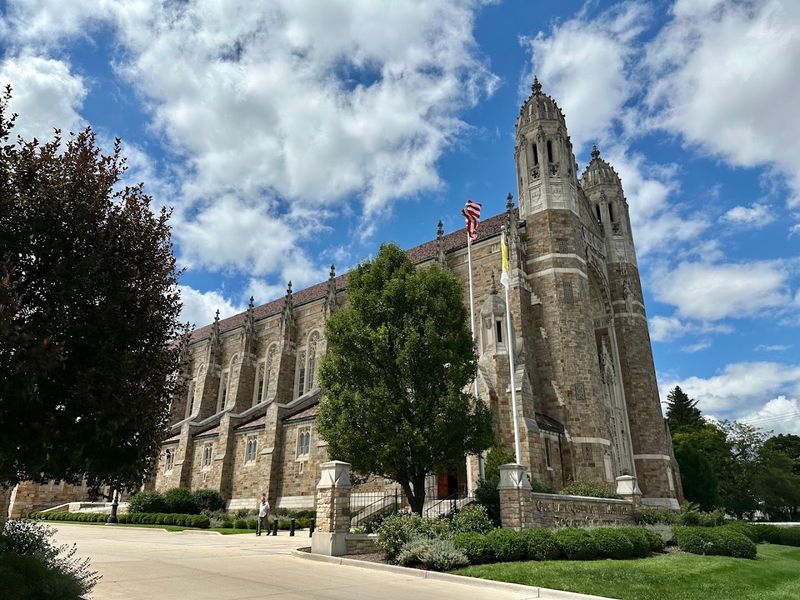
At certain angles, the facade looks almost like lace carved in stone. That unusual richness gives the building a different flavor from many Ohio churches, and the surprise is part of what makes it so memorable.
Rosary Cathedral in Toledo, at 2535 Collingwood Boulevard, was completed in 1940 and serves as the seat of the Diocese of Toledo. Its Spanish Plateresque inspired architecture and magnificent stained-glass windows create a look that feels both intricate and warm.
The neighborhood around it invites a longer outing. You can drive or walk toward nearby cultural stops, spend time in city parks, or plan lunch in one of Toledo’s older districts before returning to admire the details again.
For many visitors, the charm lies in its combination of ceremony and personality. The church is formal, yet it does not feel cold.
Color, ornament, and light work together in a way that leaves the space feeling deeply human as well as impressive.