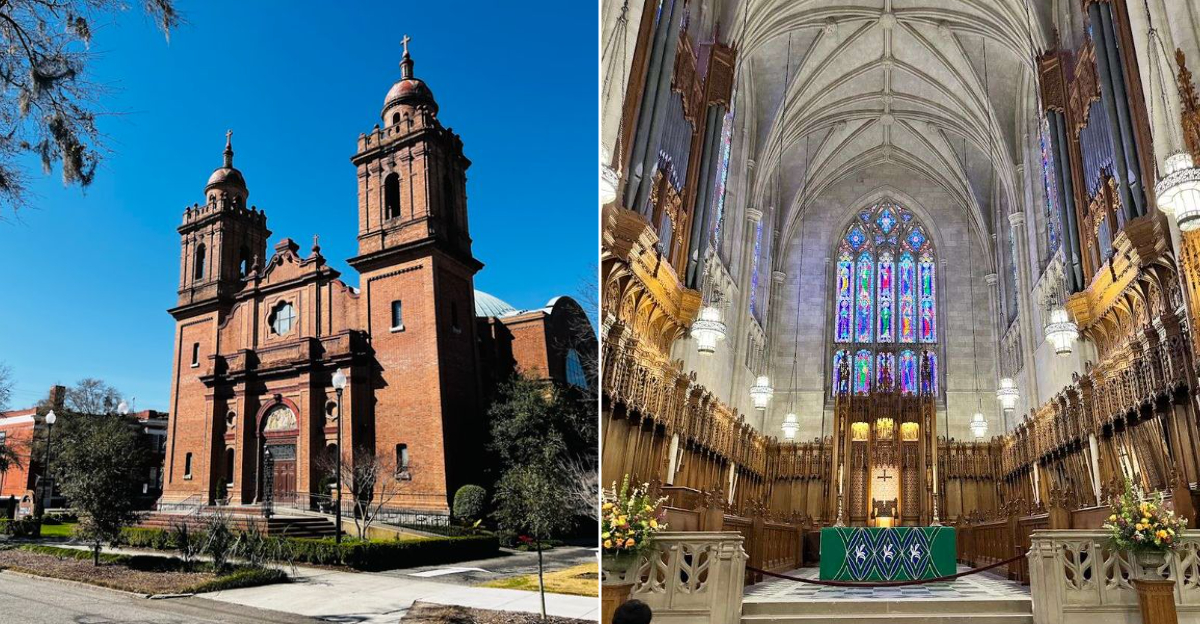
Some North Carolina churches seem to exist outside the rush of modern life, where old wooden doors, quiet sanctuaries, and weathered stone walls preserve the feeling of another era. Walking inside, visitors can still see the craftsmanship and traditions that shaped generations of communities.
Across North Carolina, historic churches offer more than beautiful architecture. They tell stories of early settlements, local families, and the moments that connected people through faith and community.
From rural crossroads to historic towns, these landmarks invite visitors to slow down and notice the details often missed in everyday travel.
A visit to these churches is a chance to experience history in a more personal way, surrounded by stained glass, worn pews, and peaceful grounds. Discover 10 North Carolina churches where stepping through the doorway feels like entering another century.
St. Thomas Episcopal Church
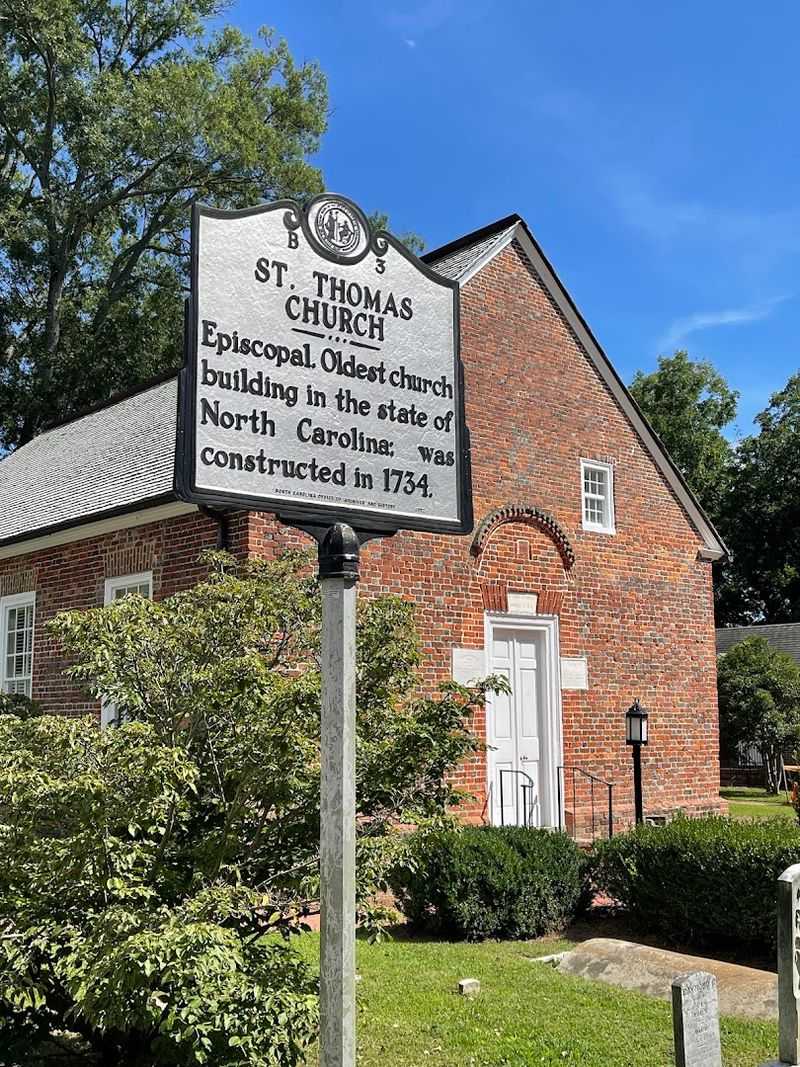
The hush hits first, followed by that rare feeling that a building has been patient for hundreds of years. Sunlight lands softly on old brick and worn wood, and even the air seems quieter here.
Later, you notice you are standing inside St. Thomas Episcopal Church in Bath, the oldest surviving church building in North Carolina. Built in 1734, it still carries original details that make the room feel close to colonial life, not just connected to it.
Outside, Bath’s calm streets and nearby waterfront add to the sense of stepping backward in time. Bring walking shoes and pair your visit with a stroll through the tiny historic town, where homes, trees, and open sky keep distractions low.
If you enjoy places that feel honest rather than polished, this church leaves a strong impression. It does not need grand scale to feel unforgettable.
Its quiet age does the work beautifully.
St. Paul’s Episcopal Church
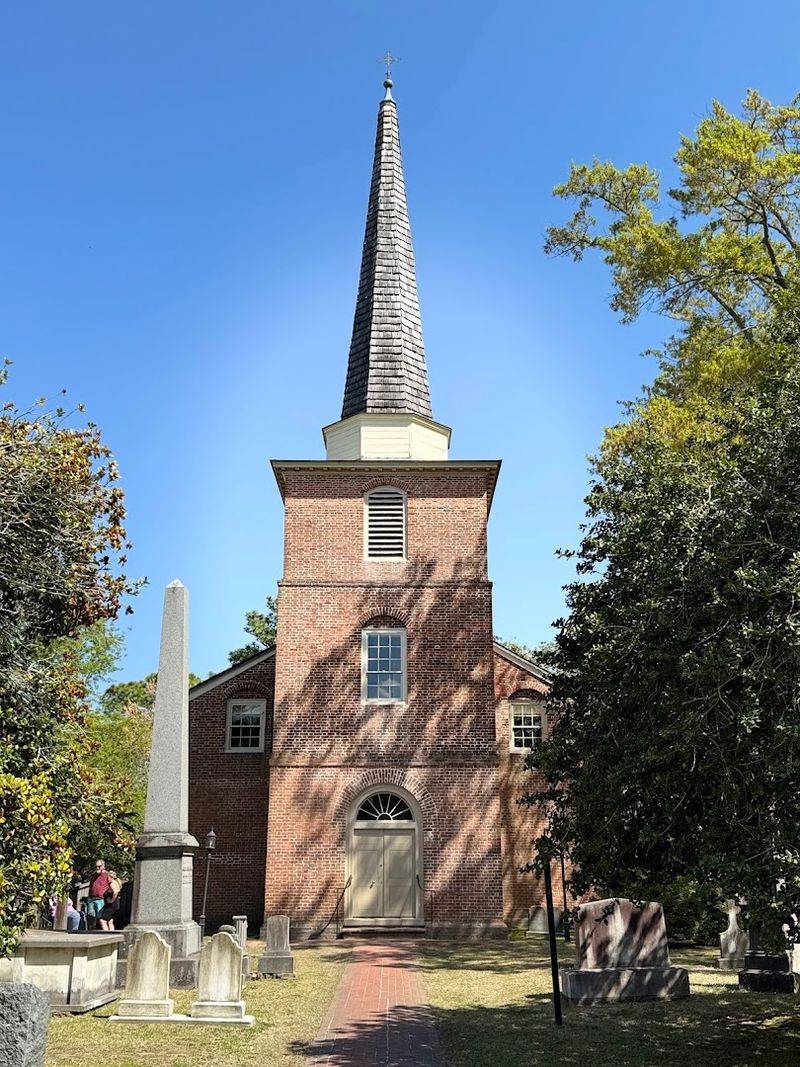
A town can look neat and lovely, then suddenly reveal something much older at its heart. That is the feeling in Edenton, where the streets feel graceful, but one church makes the whole place seem deeper and older.
St. Paul’s Episcopal Church rises with balanced Georgian lines and a calm kind of dignity. Built in 1736, it is one of the oldest churches in the state still used for worship, and its brickwork seems to hold the rhythm of nearly three centuries.
Walk around slowly and notice how the church fits the historic district, with shady streets, handsome homes, and views near Edenton Bay. Nearby cafes make it easy to turn a history stop into a relaxed afternoon with coffee and a sandwich.
What stays with many visitors is not just age, but steadiness. The building feels rooted, like it has watched storms, celebrations, and ordinary Sundays without ever needing attention to prove its importance.
Christ Episcopal Church
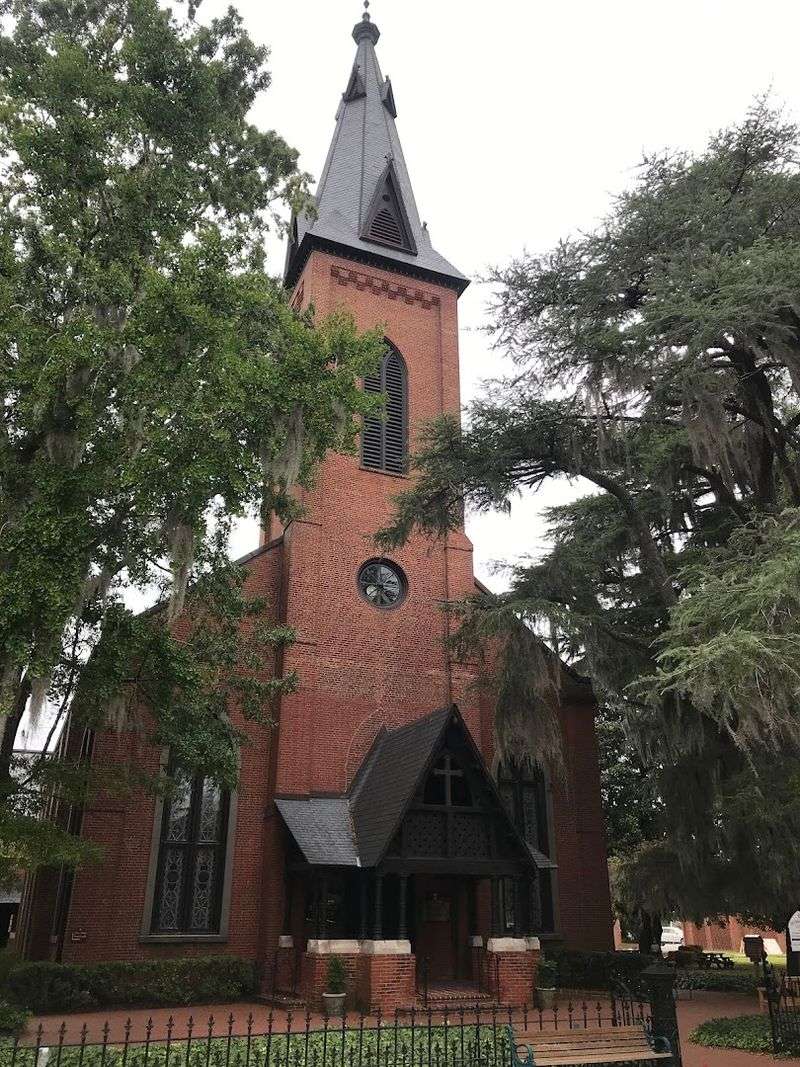
Few sights change the mood of a downtown block as quickly as tall Gothic windows and a doorway that seems built for another age. In New Bern, that shift happens almost at once.
Christ Episcopal Church brings a more formal, storybook feeling to the center of town. Completed in 1824, it blends the elegance of an early American city with Gothic Revival details that draw your eyes upward the moment you step near it.
The church sits close to some of New Bern’s most walkable historic spots, so it pairs well with a day of exploring river views, old homes, and a stop for Pepsi history. If you like architecture, take a few extra minutes to study the lines, windows, and symmetry.
What makes the visit memorable is the contrast. Cars pass, people chat, and modern life moves along, yet this church creates a pocket of quiet that feels older than the street around it.
That tension gives it charm.
Chapel of the Cross
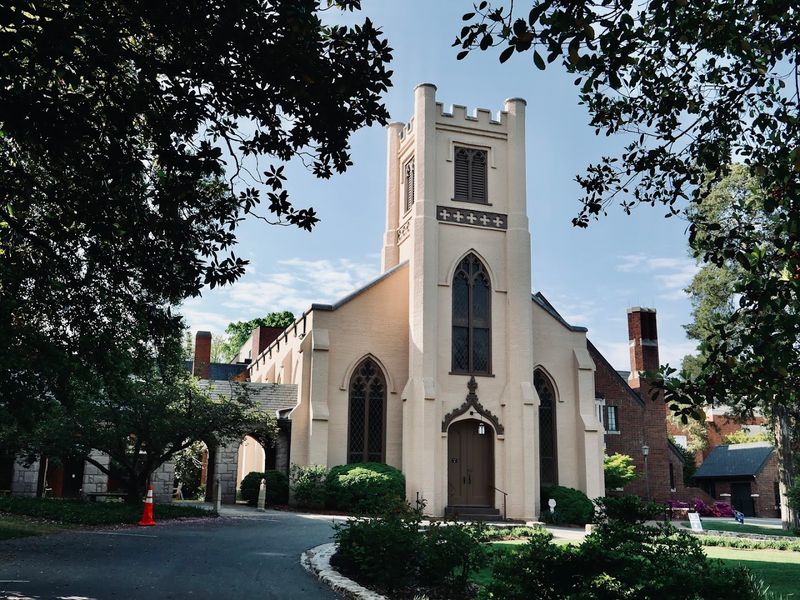
College towns usually buzz with noise, motion, and bright storefronts. Then a church appears among the trees and suddenly the energy softens into something older and more reflective.
Chapel of the Cross in Chapel Hill has that effect. Completed in 1842, it stands as a Gothic Revival landmark with a shape and mood that feel far removed from the rush of Franklin Street, even though the modern town is right nearby.
The churchyard and surrounding cemetery deepen the sense of age, especially under big shade trees when the afternoon light turns gentle. Plan a slow walk here, then grab lunch or coffee nearby to feel the contrast between student life and historic quiet.
Its appeal is not flashy. Instead, the church works on you gradually through texture, setting, and stillness.
By the time you leave, the campus around it may seem younger than before, as if the building quietly reset the clock for a little while.
St. James Episcopal Church
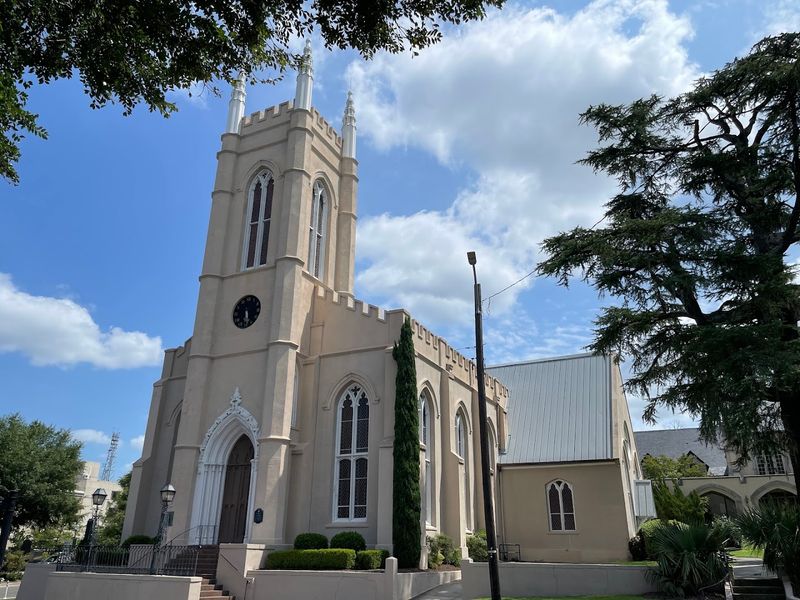
A crowded day in Wilmington can shift in an instant when you enter a churchyard full of shade and old stones. The city noise drops back, and history steps forward.
St. James Episcopal Church, consecrated in 1848, feels deeply woven into the life of downtown. Its stained glass, handsome brickwork, and peaceful grounds create a setting that feels both dignified and welcoming, as if the building has long understood the value of quiet.
Spend a little time in the churchyard before going inside because the surroundings shape the whole experience. Afterward, you can continue exploring Wilmington’s riverfront, historic homes, or seafood spots, which makes the contrast between old sanctuary and lively port city especially enjoyable.
There is a settled beauty here that comes from age, care, and continuity. Nothing feels forced.
Instead, the church offers one of those rare travel moments when a place seems comfortable in its own history, and visitors benefit from that calm confidence.
First Presbyterian Church
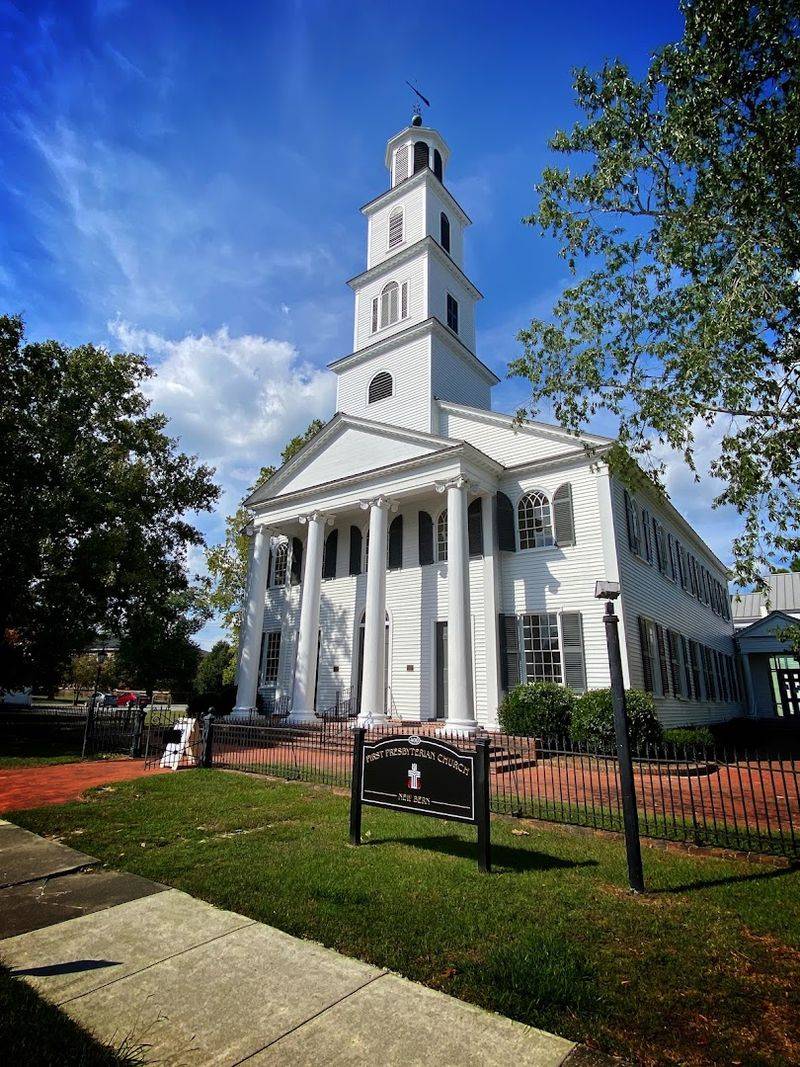
Not every old church needs towering drama to feel unforgettable. Some win you over with proportion, balance, and the sense that generations have passed through the same doors for ordinary Sundays and extraordinary moments alike.
First Presbyterian Church in New Bern, dating to 1817, carries that kind of strength. It reflects the city’s early nineteenth century confidence, yet it still feels approachable, part of the street rather than distant from it.
Because New Bern has so much nearby history, this church works well as one chapter in a full walking day. Pair it with Tryon Palace, a riverfront walk, or lunch at a local cafe, and you begin to see how faith, trade, and town life once fit together.
The real charm comes from continuity. This is not a preserved shell frozen in time, but a living place that has kept its role through changing eras.
That mix of daily use and deep age gives it an especially human kind of beauty.
St. Matthew’s Episcopal Church
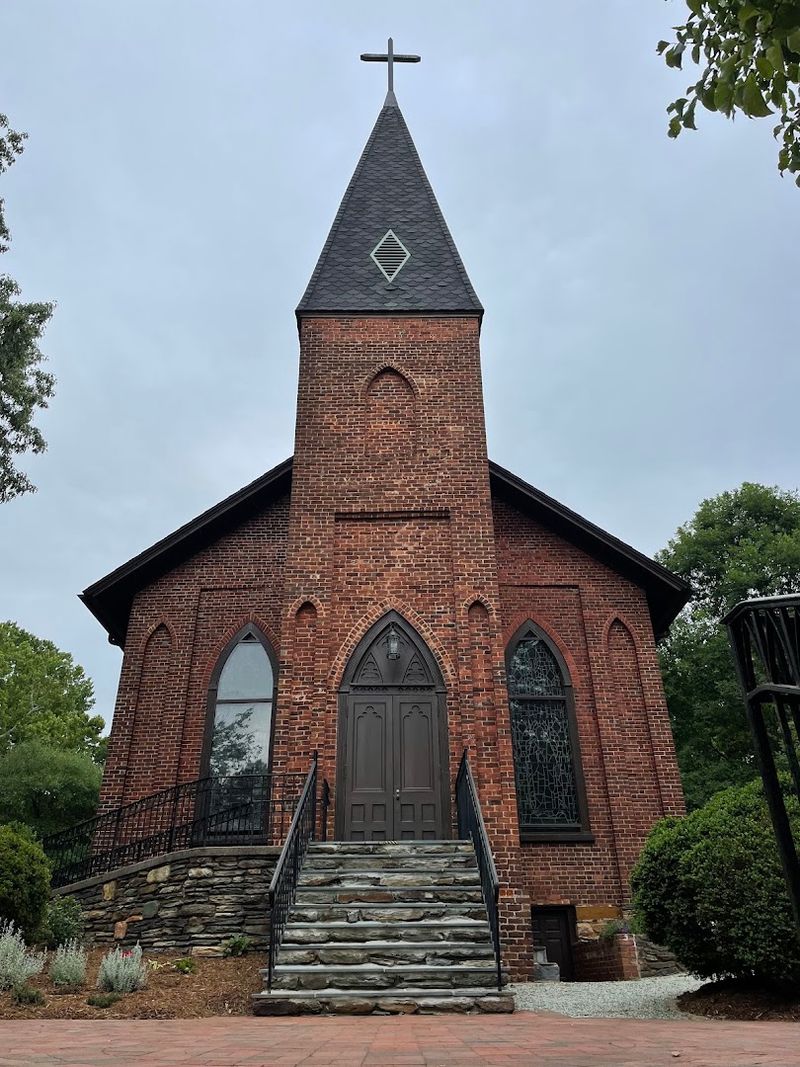
History in Hillsborough does not stay neatly behind museum doors. It spills into sidewalks, trees, and church grounds, making a simple walk feel layered and surprisingly intimate.
St. Matthew’s Episcopal Church adds to that feeling with a presence that is refined without being stiff. Completed in 1824, it mixes Federal and Gothic influences, giving the building a look that feels both graceful and slightly solemn in the best way.
Because the church sits within one of North Carolina’s most rewarding historic districts, it is easy to build a full afternoon around it. Browse downtown shops, stop for coffee, and walk nearby streets where old houses and stone markers keep the past close.
What makes this church memorable is how naturally it belongs to its town. Nothing about the visit feels isolated from local life.
Instead, the building becomes part of a larger conversation between architecture, memory, and everyday community, which makes the whole experience richer.
St. John’s in the Wilderness
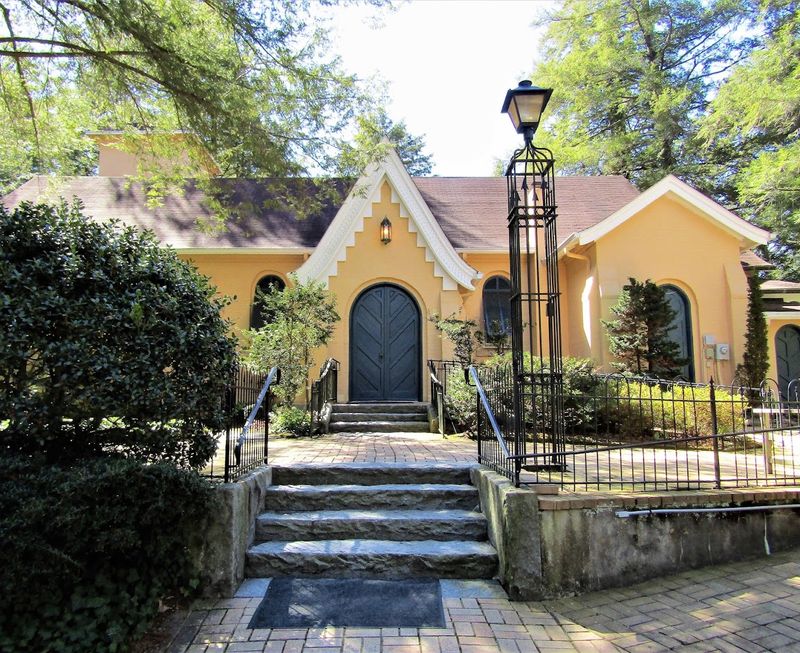
Mountain light has a way of making old places feel even older. Under tall trees in Flat Rock, one church seems to gather that soft light and turn it into memory.
St. John’s in the Wilderness, founded in 1836, is known for its picturesque setting and one of the state’s oldest churchyards. The name fits, because the grounds still feel gently set apart, even with modern roads and homes not far away.
Visitors often remember the landscape as much as the building itself. Plan to linger among the stones and trees, then continue your day with Flat Rock’s literary history, gardens, or a meal at a cozy local restaurant tucked into the mountains.
There is a tender, almost reflective quality here that makes people lower their voices without being asked. Instead of grandeur, the church offers intimacy and setting.
That combination can be more transporting than size, especially when the breeze and birdsong do part of the storytelling.
Basilica Shrine of Saint Mary
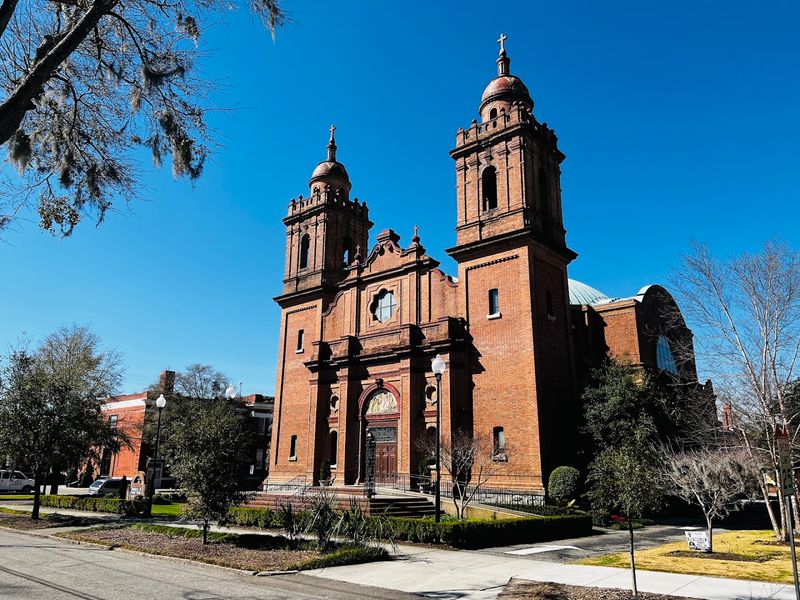
At first glance, the dome changes everything. You expect a pleasant historic church in Wilmington, then you look up and realize the space feels much grander, older, and more European than the street outside suggests.
The Basilica Shrine of Saint Mary dates to 1912, though the parish itself began in 1820 as North Carolina’s oldest Catholic parish. That long history shows in the beautifully restored interior, where color, light, and careful detail create a powerful sense of continuity.
Because it sits near downtown, you can easily pair a visit with waterfront time, local seafood, or a walk through nearby historic blocks. Try to step inside when daylight is strong, since the changing light adds drama without any need for special effects.
What makes the basilica stand out is not only size, but mood. It feels ceremonial yet personal, rich yet grounded.
For travelers interested in sacred architecture, it offers a different chapter of North Carolina history than the earlier colonial churches.
Duke University Chapel
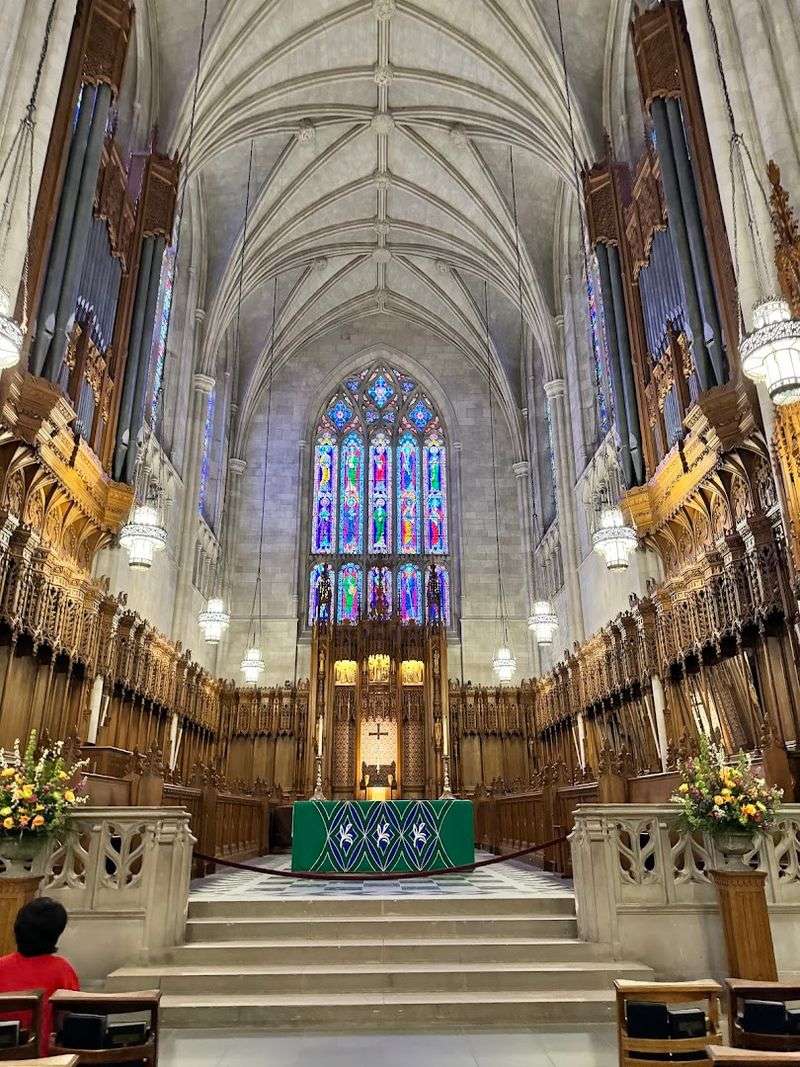
Scale can play tricks on your sense of time. One look at soaring stone walls and carved Gothic details, and it is easy to forget that this chapel belongs to the twentieth century, not the Middle Ages.
Duke University Chapel in Durham was completed in 1935, yet it feels centuries older because every line points to medieval inspiration. The tower, stained glass, and vaulted interior create a kind of grandeur that makes even a quick visit feel ceremonial.
Set on Duke’s leafy campus, the chapel pairs well with a longer walk through the gardens, quads, and nearby museum spaces. Go when bells are sounding or light is pouring through the windows, and the experience becomes even more vivid.
What sets this place apart from the state’s colonial churches is its deliberate theatricality. It does not whisper the past so much as stage it beautifully.
Still, the effect is sincere, and many visitors leave feeling they borrowed a moment from another era.