The best part of an Ohio road trip isn’t always the destination—it’s the unforgettable stops you never saw coming.
One minute you’re cruising down the highway, and the next you’re standing beside a giant cuckoo clock, staring at an ancient serpent-shaped earthwork, or snapping photos of a building that looks like a flying saucer. These unexpected places turn an ordinary drive into a story worth sharing.
Summer is the perfect time to take the scenic route and leave room for surprises.
A quick roadside stop can stretch your legs, spark your curiosity, and become the moment everyone talks about long after the trip ends.
These ten Ohio roadside attractions delivered plenty of laughs, amazing photo opportunities, and just the right amount of quirky charm.
Fill up the tank, grab your favorite snacks, and get ready to discover stops that make every mile far more memorable.
The World’s Largest Cuckoo Clock – Sugarcreek, Ohio
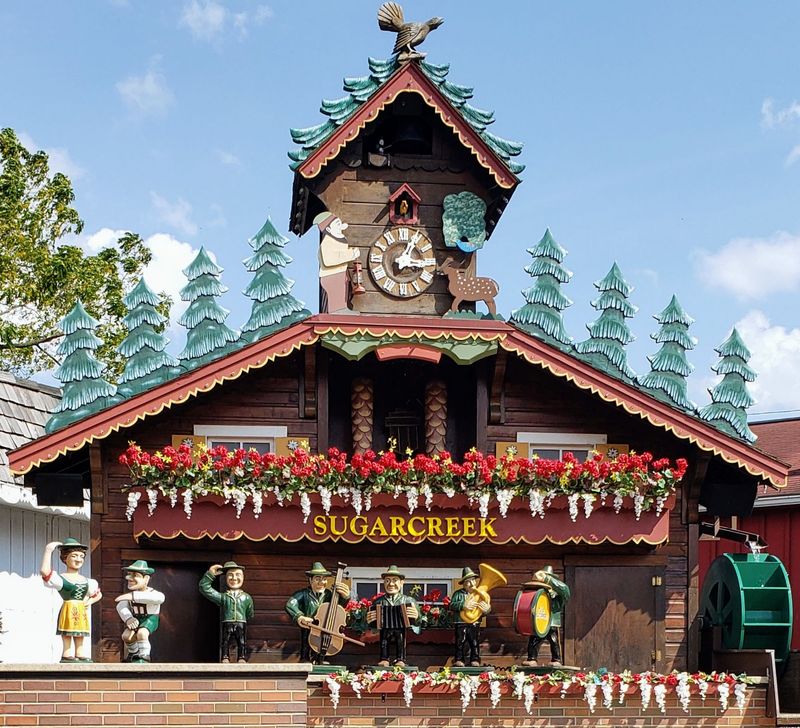
Standing at over 23 feet tall, this oversized timepiece isn’t your grandmother’s wall decoration. Located in the heart of Ohio’s Amish Country, the cuckoo clock sits right along the main road in Sugarcreek, making it impossible to miss.
Every half hour, the clock comes alive with music, dancing figures, and a polka band that pops out to entertain whoever happens to be watching. Kids love the mechanical show, and parents appreciate that it only takes a few minutes to enjoy.
The clock tower also houses a small visitor center where you can grab maps, souvenirs, and information about other nearby Amish attractions. Parking is easy and free, which makes this a perfect quick stop.
During our visit, we watched families gather around with their phones ready to capture the performance. The whole experience feels like stepping back in time to when roadside attractions were simple, charming, and designed purely to make travelers smile.
We spent maybe ten minutes here, but it became one of our favorite memories from the entire trip.
The Big Muskie Bucket – McConnelsville, Ohio
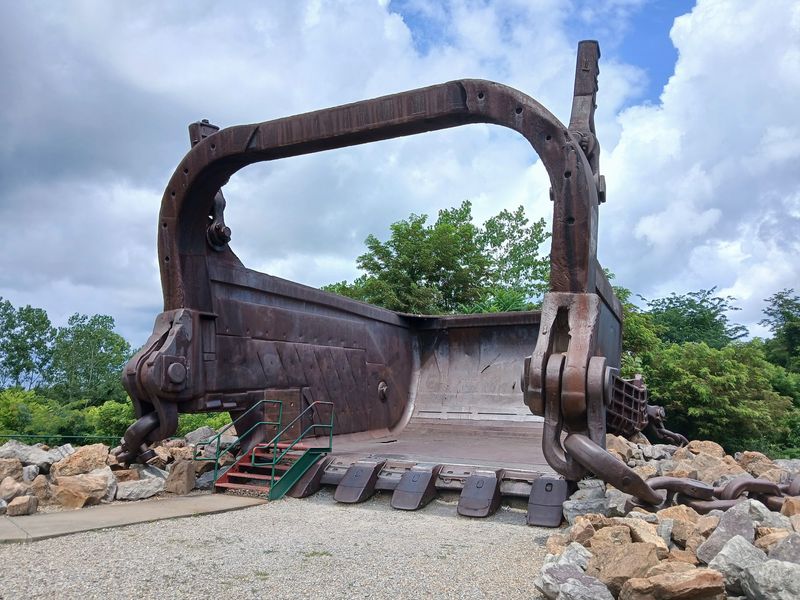
Imagine a bucket so enormous that a school bus could fit inside it. That’s exactly what waits for you in southeastern Ohio, where the legendary Big Muskie’s bucket now rests as a monument to the region’s coal-mining history.
Big Muskie was once the world’s largest dragline, a machine so massive it took 200,000 cubic yards of concrete just to build its walking base. The bucket alone weighs 460,000 pounds and could scoop up 220 cubic yards of earth in a single bite.
Standing next to it feels surreal, like you’ve shrunk down to ant size.
Visitors can walk right up to the bucket and even climb inside for photos. The sheer scale of this equipment helps you understand the incredible engineering that went into coal extraction during Ohio’s industrial boom years.
We pulled off the highway specifically to see this beast, and it exceeded every expectation. Kids ran around underneath it, amazed that humans could build something so gigantic.
The site is free to visit and open year-round, making it an educational pit stop that teaches Ohio history in the most dramatic way possible.
The Serpent Mound – Peebles, Ohio
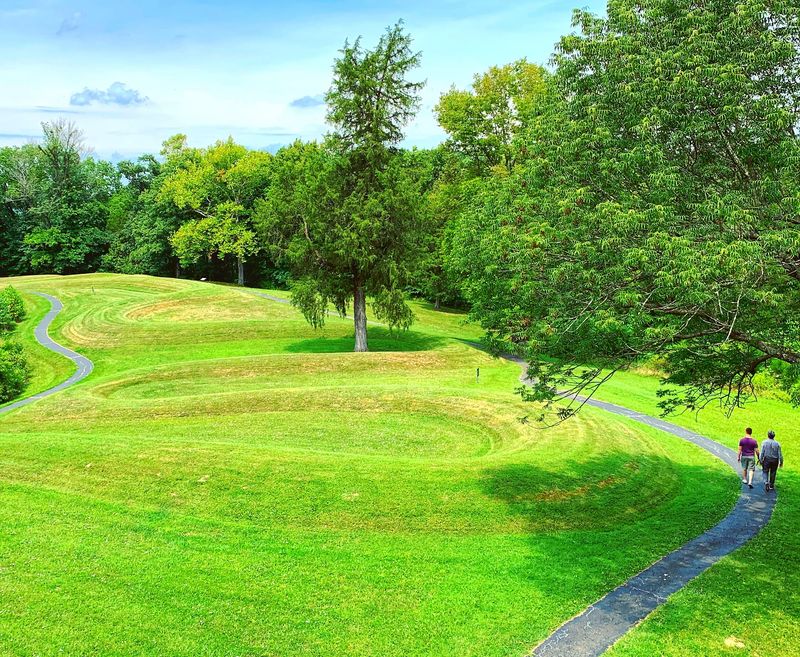
Stretching over 1,300 feet across rolling hills, this ancient snake-shaped mound has puzzled archaeologists and fascinated travelers for generations. Nobody knows exactly why it was built or what it meant to the people who constructed it over a thousand years ago.
From ground level, the mound looks like gentle curves of earth snaking through the grass. But climb the observation tower, and suddenly the full serpent shape reveals itself, complete with coiled tail and open jaws appearing to swallow an egg-shaped oval.
The site offers walking paths that wind around and alongside the serpent, letting you trace its entire length on foot. Interpretive signs explain theories about its purpose, from astronomical calendar to ceremonial site, though the true meaning remains a beautiful mystery.
Our kids were captivated by the idea that people built something this big without modern tools or equipment. The surrounding forest and creek make the whole place feel peaceful and a bit magical.
Unlike most roadside stops, this one invites you to slow down, walk quietly, and wonder about the hands that shaped this earth so long ago.
The Field of Corn – Dublin, Ohio
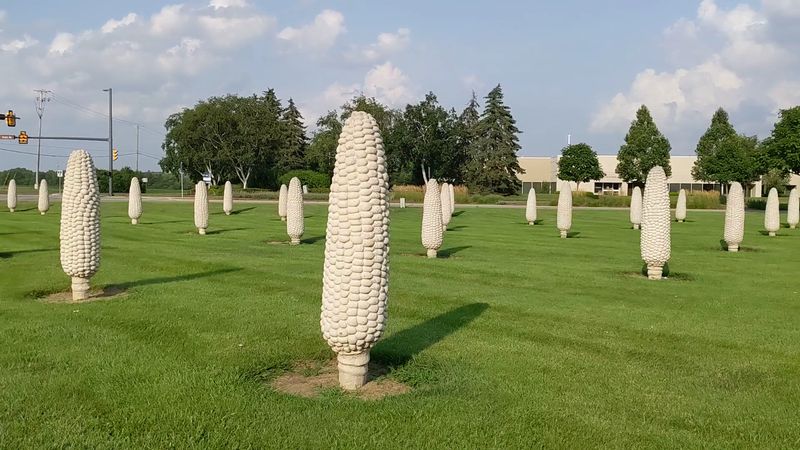
Rows of concrete corn stalks rise from a suburban field like something from a farmer’s fever dream. Created by artist Malcolm Cochran, this outdoor installation features 109 giant concrete ears of corn, each standing six feet tall and arranged in perfectly straight rows.
The artwork honors Sam Frantz, an Ohio State University researcher who developed several important hybrid corn strains. What started as a tribute to agriculture has become one of Ohio’s quirkiest photo opportunities, especially popular during golden hour when the concrete catches the sunset light.
Unlike museum art you can only look at from a distance, this installation invites you to walk between the rows, touching the textured concrete and posing for silly pictures. Kids love weaving through the corn like a maze, and the whole family will laugh at how absurd and wonderful the whole thing feels.
We stumbled upon this field while driving through Dublin and couldn’t resist pulling over. What makes it special is how it transforms ordinary suburban space into something playful and unexpected.
It’s completely free, always open, and proves that great roadside attractions don’t need admission tickets or gift shops to be memorable.
The Pyramid Hill Sculpture Park – Hamilton, Ohio
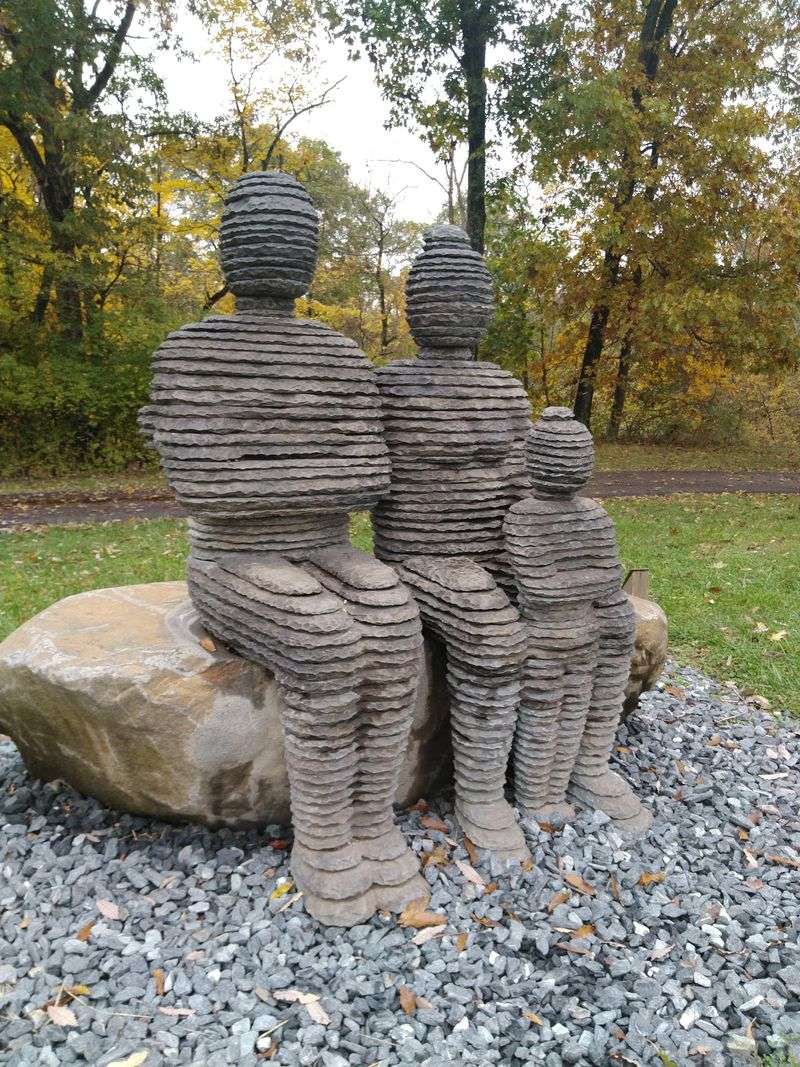
Spread across 300 acres of forests, meadows, and lakes, this sculpture park feels less like a roadside attraction and more like an outdoor art museum where nature and creativity collide. Over 80 monumental sculptures dot the landscape, some hiding in woods, others commanding hilltops.
You can drive a scenic loop through the park, hopping out at sculptures that catch your eye, or park and explore miles of walking trails. Each artwork surprises you differently, from abstract metal pieces to realistic bronze figures to installations that play with light and shadow.
The park includes an Ancient Sculpture Museum featuring replicas of works from Egypt, Greece, and Rome, plus indoor galleries when you need a break from the sun. Peacocks roam freely, adding an unexpected touch of elegance to your wanderings.
Unlike quick roadside stops, this place deserves at least an hour or two. We packed a picnic and made an afternoon of it, letting the kids run between sculptures while we enjoyed the peaceful setting.
The combination of art, nature, and space to explore made it feel like a secret discovery, even though it sits just off the highway between Cincinnati and Dayton.
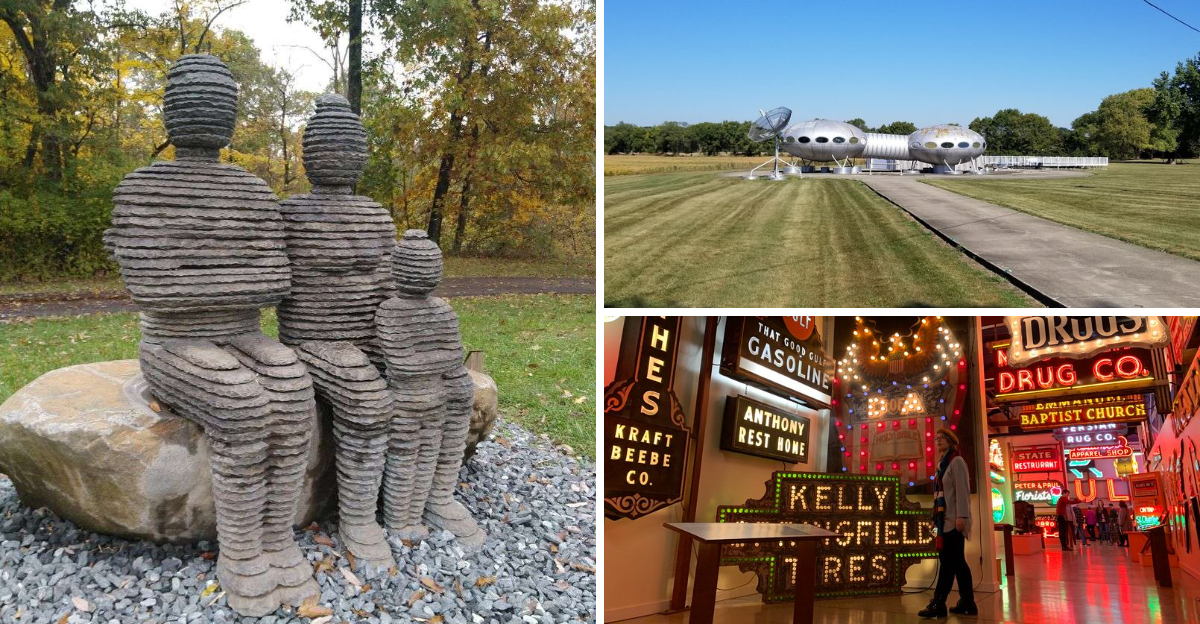
Futuro House (UFO House) – Carlisle, Ohio
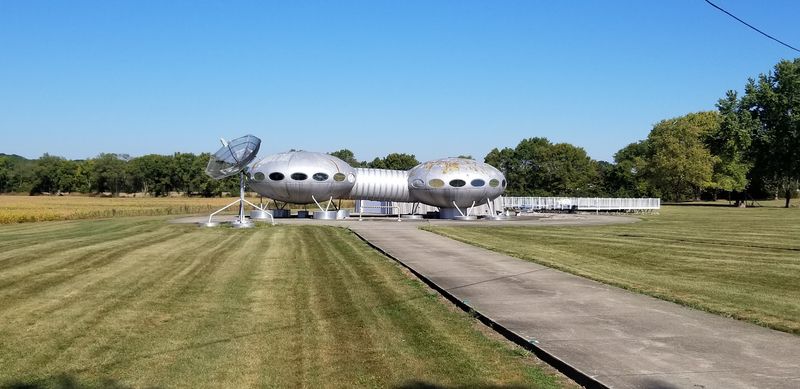
Picture a flying saucer that crash-landed in rural Ohio and decided to stay. That’s basically what greets you when you spot this bright white, pod-shaped house sitting beside the road like it belongs in a 1960s science fiction movie.
Designed by Finnish architect Matti Suuronen in 1968, Futuro Houses were meant to be portable ski chalets that could be assembled anywhere. Only about 100 were ever built worldwide, making each surviving example a rare piece of architectural history.
This particular Futuro serves as a quirky landmark that stops traffic daily.
The spaceship design features round windows, a hatch-style door, and sleek curves that look hilariously out of place against Ohio’s cornfields and barns. While you can’t usually go inside, the exterior alone makes for fantastic photos and endless speculation about what life inside a UFO might feel like.
We nearly missed our highway exit because everyone in the car was craning their necks to stare at this bizarre building. It’s the kind of roadside oddity that makes you question reality for a moment.
Whether you love retro design or just appreciate weird roadside finds, the Futuro House delivers pure joy.
The American Sign Museum – Cincinnati, Ohio
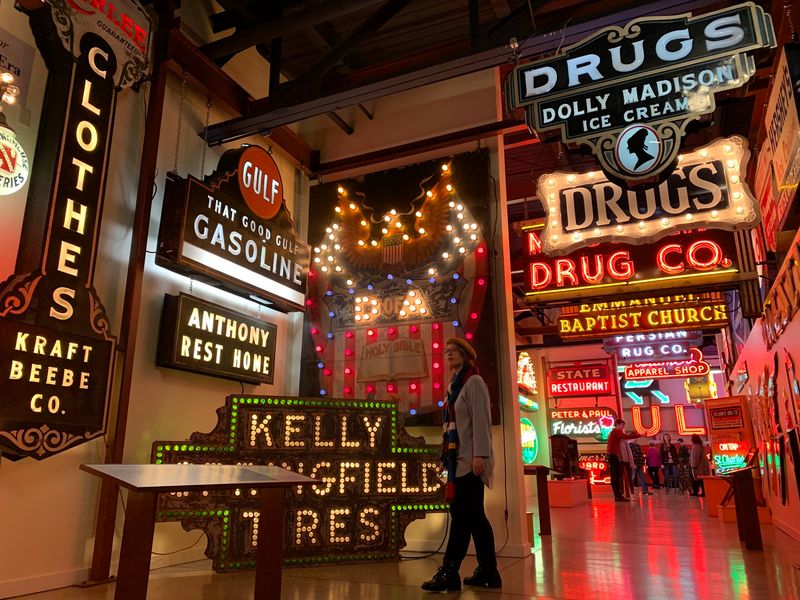
Neon lights flash, vintage letters glow, and suddenly you’re surrounded by the brightest, boldest pieces of American roadside history. This museum rescues and restores old signs from demolished businesses, creating a dazzling indoor journey through decades of advertising art.
Walking through feels like time travel through America’s commercial past. You’ll see everything from classic diner signs to old theater marquees, from quirky motel advertisements to elaborate department store displays.
Each sign tells a story about the business it represented and the era it came from.
The neon gallery is particularly mesmerizing, especially when they dim the lights and let the tubes glow in full glory. Expert guides explain how neon bending works and share stories about sign makers who treated their craft like fine art.
What surprised us most was how much our kids enjoyed this museum. They loved the bright colors, the funny old advertisements, and the idea that signs could be considered treasures worth saving.
The museum also features a working sign shop where restoration happens, so you might see craftspeople bringing old neon back to life. It’s air-conditioned, fascinating, and unlike any other museum we’ve visited in Ohio.
The Hartman Rock Garden – Springfield, Ohio
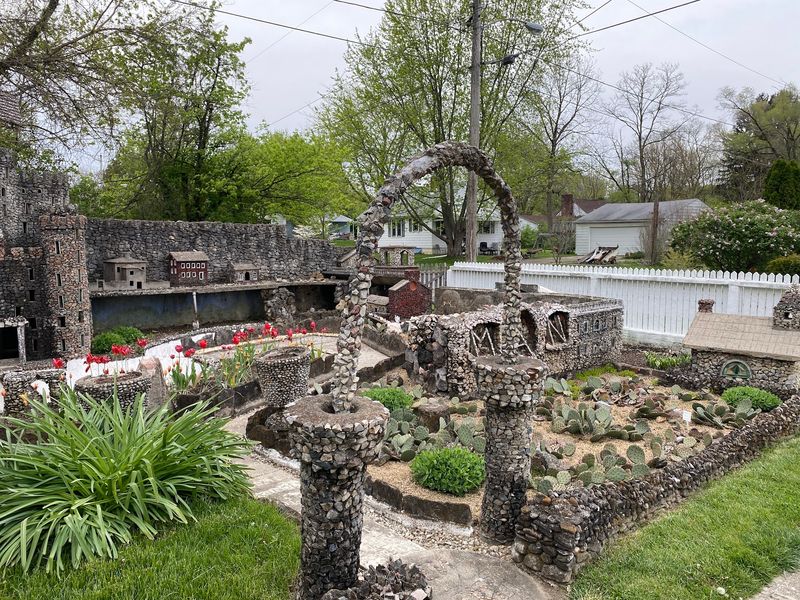
During the Great Depression, a man named Ben Hartman started building a miniature world in his backyard using stones, concrete, and whatever materials he could find. What began as a hobby became a remarkable folk art garden filled with tiny castles, churches, bridges, and landscapes.
Every structure was built by hand, with incredible attention to detail despite Hartman having no formal training in art or architecture. You’ll find miniature versions of famous buildings, fantasy castles with turrets and towers, and charming scenes that look like they belong in a fairy tale.
The garden spreads across several yards, connected by winding paths that let you explore each section up close. Some pieces stand just inches tall, while others reach several feet, creating a dreamlike landscape where scale constantly shifts.
We almost drove past this hidden gem because it sits in a regular neighborhood without big signs pointing the way. But once we found it, we spent far longer than expected crouched down examining the intricate details.
It’s free to visit, though donations help maintain the garden. Seeing what one determined person created with simple materials reminded us that true art doesn’t require fancy tools or expensive supplies, just imagination and dedication.
The National Museum of the U.S. Air Force – Dayton, Ohio
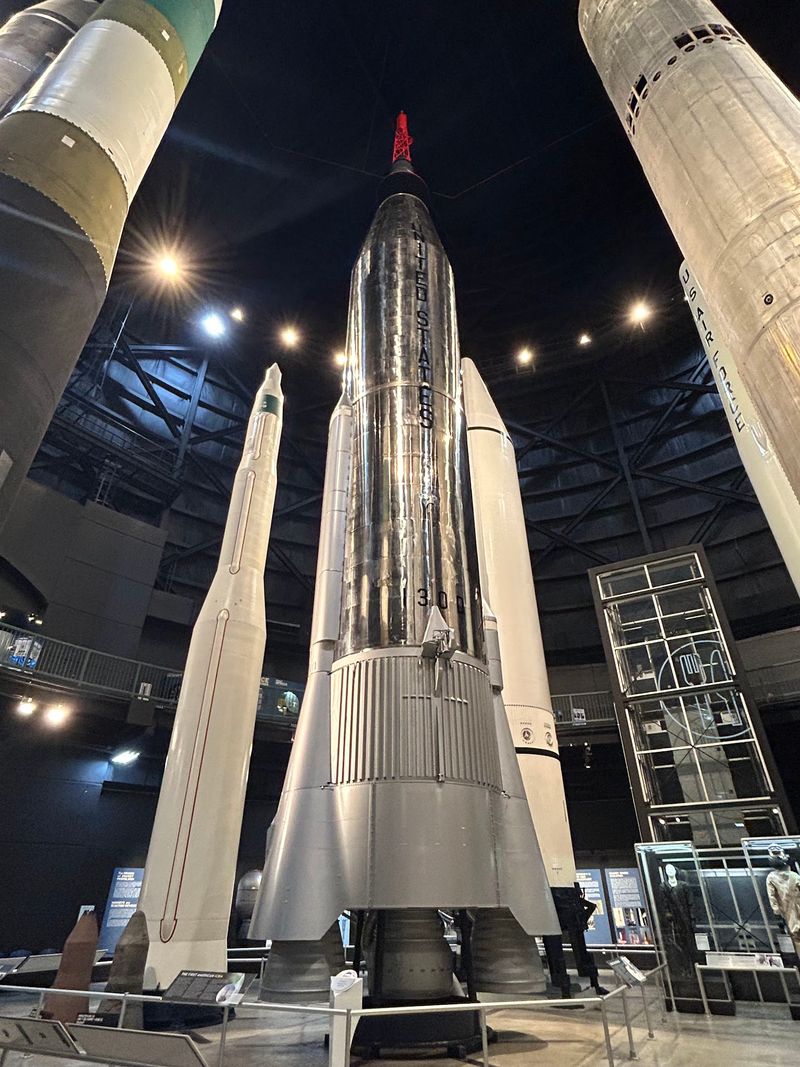
Calling this a roadside attraction almost feels like an insult because this massive museum ranks among the finest aviation collections on Earth. With over 360 aircraft and missiles spread across multiple hangars, it transforms a simple highway detour into an unforgettable exploration of flight history.
You can see everything from Wright Brothers replicas to presidential planes, from World War II bombers to stealth fighters, from early experimental aircraft to actual spacecraft that flew in orbit. Each hangar focuses on different eras, letting you walk through aviation’s entire timeline in one visit.
The museum is completely free, which seems impossible given its size and quality. Interactive exhibits let kids climb into cockpits, flight simulators offer thrilling rides, and IMAX films bring aviation stories to life on giant screens.
We planned to spend an hour here and ended up staying nearly four. Our kids were mesmerized by the Presidential Gallery, where they could peek inside Air Force One planes used by Kennedy, Johnson, and other presidents.
The sheer variety means everyone finds something fascinating, whether you’re a history buff, aviation enthusiast, or just someone who thinks planes are cool. It’s the kind of stop that accidentally becomes the highlight of your entire road trip.
The Temple of Tolerance – Wapakoneta, Ohio
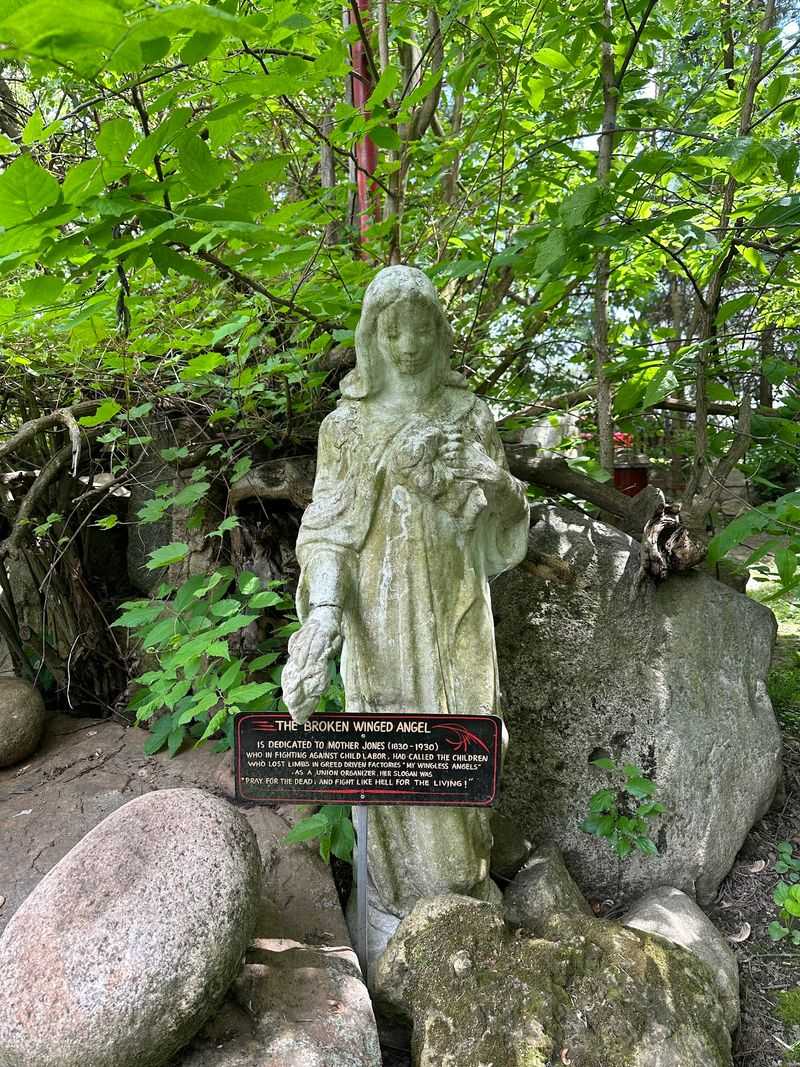
Hidden along a quiet residential street, this free outdoor folk art garden welcomes visitors into a world of hand-built sculptures, colorful signs, and winding pathways that preach messages of peace, tolerance, and acceptance. Created by local artist Jim Bowsher, the garden reflects decades of creative expression.
Stone sculptures dot the landscape, some abstract and others depicting figures or symbols. Handmade signs share quotes, thoughts, and encouragement, turning a simple yard into an outdoor gallery of positivity.
The temple structure itself serves as the centerpiece, surrounded by carefully arranged rocks and artwork.
What makes this place special is its grassroots, genuine feel. There’s no admission booth, no gift shop, no polished marketing.
Just one person’s vision of creating a space where anyone can come to reflect, wander, and maybe feel a little more hopeful about humanity.
We visited on a whim after reading about it online, expecting to stay five minutes. Instead, we found ourselves slowly walking the paths, reading signs, and appreciating the homemade charm of everything.
It reminded us that roadside attractions don’t need to be professionally designed or commercially successful to touch people’s hearts. Sometimes the most meaningful stops are the ones somebody built simply because they believed the world needed more kindness.