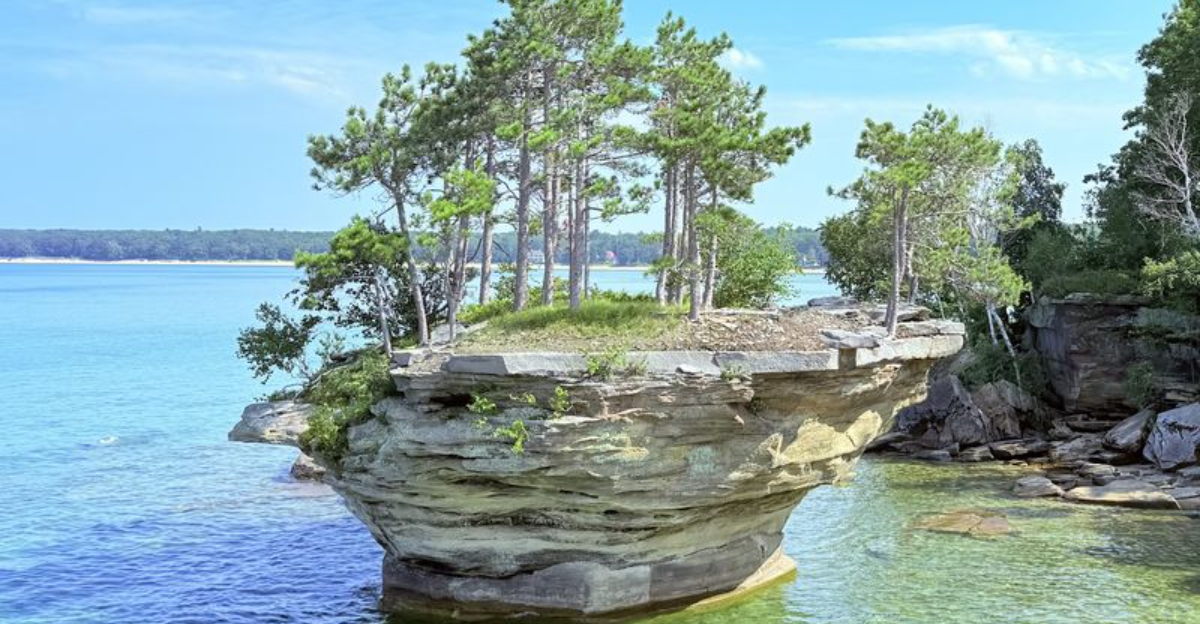
Turnip Rock looks like something a cartoon artist dreamed up, but it is real and sitting in the blue waters near Port Austin, Michigan.
This strange rock is famous for its skinny base, wide top, and the trees growing above it, which makes the whole scene seem almost impossible at first glance.
People travel from all over the state to see it because it shows how wild weather, water, and time can shape a place into something unforgettable.
If you enjoy unusual sights, quiet lake views, and a little adventure with your scenery, Turnip Rock is the kind of spot that can make you stop paddling for a second just to stare.
It is small, but it leaves a big impression.
From its funny vegetable-like shape to the trip required to reach it, every part of the experience feels special, and that is exactly why this landmark has become one of Michigan’s most talked about natural treasures.
A Rock That Looks Ready To Tip
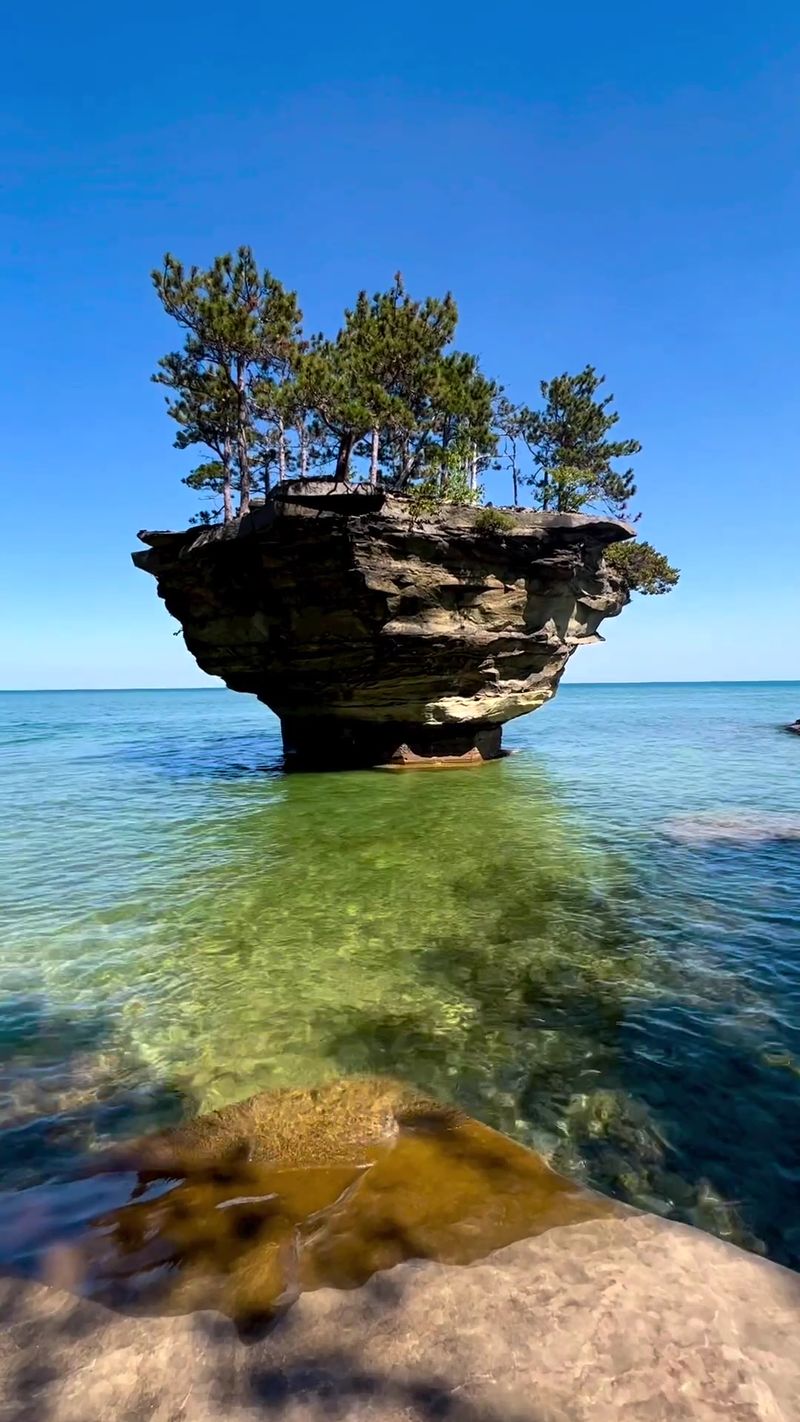
At first glance, your brain may argue with your eyes.
Turnip Rock seems too top-heavy to stand there so calmly, like a giant stone mushroom that forgot gravity exists.
That surprising shape is the first reason people remember it long after the trip ends.
Lake Huron slowly carved the softer layers near the bottom while the harder rock above held on.
Over many years, waves chipped away at the base and left the upper section wider than the middle.
The result is a rare shoreline formation that looks playful, but it also tells a serious story about erosion.
Photos often make the landmark look huge, yet many visitors say it feels smaller in person.
Even so, the size does not matter much once you are floating beside it.
The balance of water, stone, and sky makes the whole scene feel dramatic.
Bring a camera with a strap, because the best angle comes from the water.
Morning light often helps show the rock’s shape more clearly and can bring softer waves too.
A calm day gives you more time to admire the strange outline without fighting wind.
Trees Standing On A Stone Crown
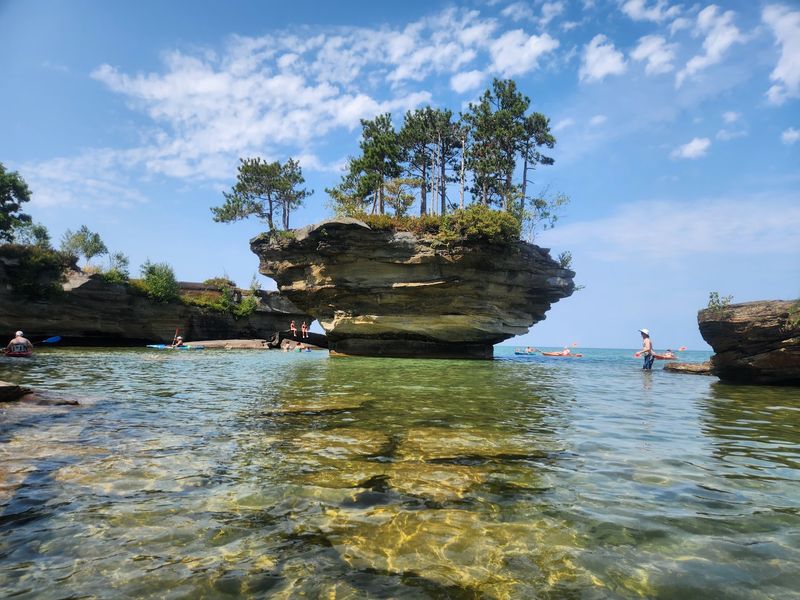
Nothing sells the magic of Turnip Rock faster than the trees growing on top.
They give the formation its famous storybook look, as if a tiny island floated down and landed on a stone pedestal.
That bit of green life makes the rock seem even more unlikely.
Plants can survive in surprisingly tough places when cracks hold soil, moisture, and nutrients.
Over time, seeds likely settled into small pockets on the rock and began to grow.
The roots help grip what little earth is available, turning a bare formation into a living landmark.
Those trees are also why many photos from Port Austin feel so memorable.
Without them, the formation would still be interesting, but the leafy top adds contrast, scale, and personality.
It is the difference between a neat rock and a place people keep talking about.
Try viewing the treetops from several angles instead of taking one quick picture and paddling away.
Sunlight from the side can make the branches stand out better against the sky.
A little patience helps you notice the small details that make Turnip Rock feel so unusual, from bent trunks to patches of hardy greenery clinging high above the water.
Port Austin’s Hard To Reach Treasure
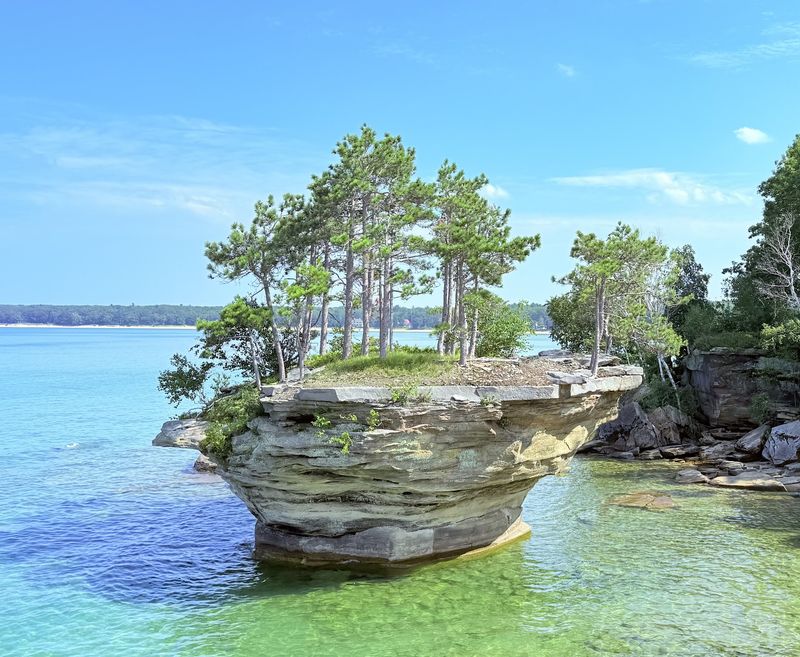
Here is the catch that surprises many first-time visitors.
Turnip Rock is not a place you simply pull up to in a car, hop out, and snap a selfie.
Reaching it usually takes a kayak, paddleboard, boat tour, or another water-based plan.
The landmark sits near Port Austin at 329R+89, Port Austin, MI 48467, along the Lake Huron shoreline.
Map directions can confuse people because nearby land access runs through private property.
That is why many visitors launch from public areas such as Bird Creek Park or use a local boat option.
Reviews often mention travel times of about one to two hours by kayak, depending on wind and waves.
Some people make the round trip in under three hours, while others need longer with stops.
Either way, the journey is part workout, part sightseeing cruise.
Planning matters more here than at many scenic stops.
Check wind, wear a life vest, bring water, and allow extra time for the return.
If paddling is not your style, a boat tour can still give you the full wow moment without turning the outing into arm day on Lake Huron.
Lake Huron Does The Sculpting
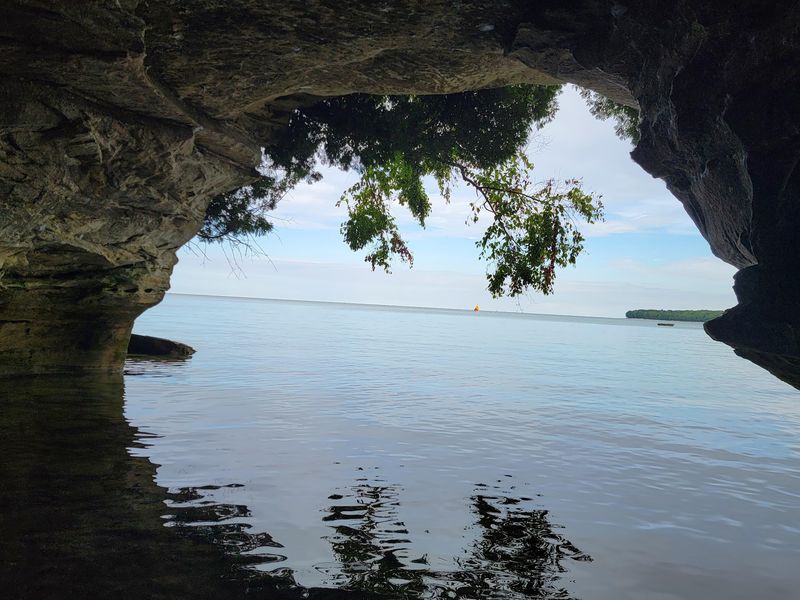
Waves are the quiet artists behind Turnip Rock’s strange silhouette.
They did not rush the job, and that patience is exactly what makes the final result so impressive.
Year after year, water shaped the stone until the base looked pinched and the top stayed broad.
Natural erosion sounds simple, but at Turnip Rock it feels almost theatrical.
The softer material near the lower section wore away more quickly than the stronger upper layers.
That difference helped create the gravity-defying look visitors love to photograph.
Seeing the rock in person can make geology feel less like a textbook and more like a front-row show.
You can spot texture changes, curves, and ledges that reveal the work of water over time.
It is a great reminder that nature builds masterpieces without hurrying.
Try not to treat the landmark like a backdrop only.
Pause and study the stone patterns, the undercut shape, and the way the lake moves around it.
If you are visiting with kids, it is an easy place to talk about how wind and waves change coastlines, because the lesson is sitting right there in plain sight, wearing a crown of trees and stealing the scene.
The Paddle Is Part Of The Story
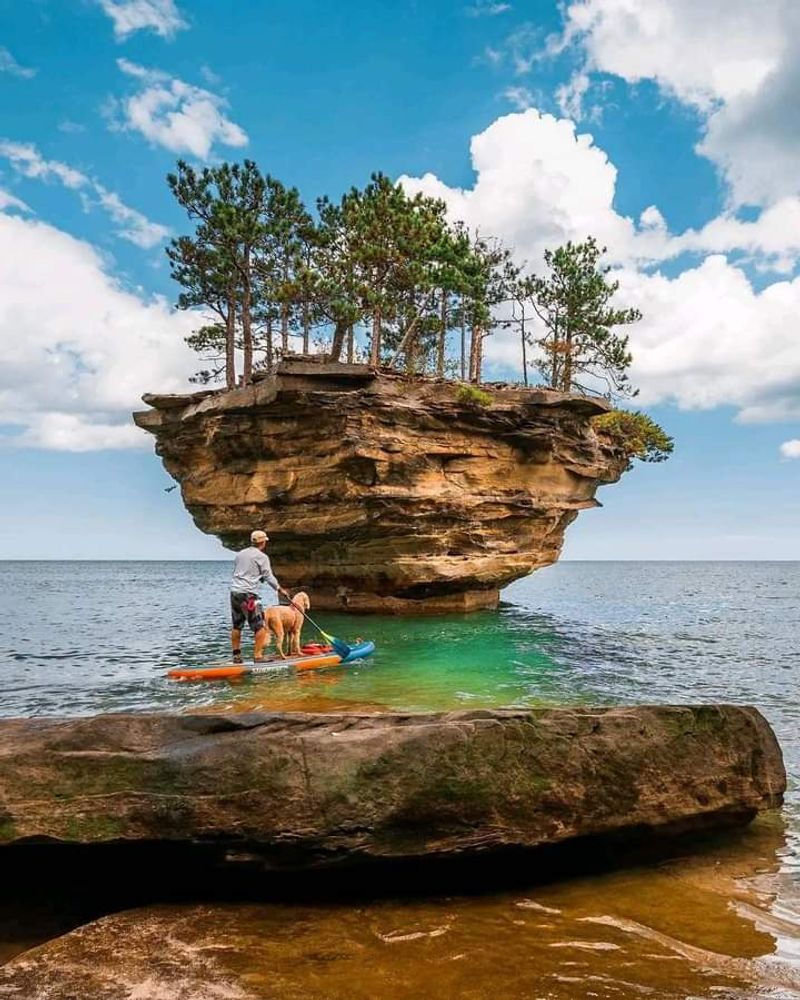
Some landmarks save the excitement for the destination.
Turnip Rock shares the spotlight with the ride there, which is one reason visitors talk as much about the paddle as the rock itself.
The trip feels like a mini adventure instead of a simple sightseeing stop.
Reviews often describe changing water, shifting wind, and a route that can be easy one moment and tiring the next.
On calm mornings, paddlers may enjoy a smooth glide with wide lake views and plenty of photo breaks.
When conditions turn rough, the same route can become a serious workout.
That contrast is part of the charm, but it also calls for good judgment.
Experienced kayakers usually recommend checking the forecast, leaving early, and turning back if waves start building.
There is no prize for battling unsafe water just to reach a famous rock.
If you do go by kayak or paddleboard, pack light but smart.
Water, sun protection, dry storage, and a life jacket make a big difference on open water.
Plenty of visitors say the return trip can be much faster with the wind behind you, but every outing is different, so save energy, stay alert, and let common sense ride in the front seat.
Small Landmark, Big Michigan Fame
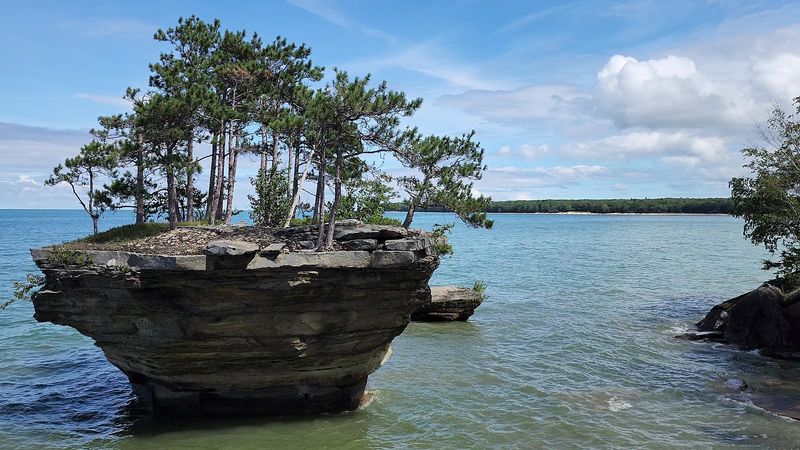
Turnip Rock proves that a place does not need giant size to earn giant attention.
Many visitors arrive expecting something bigger, then leave talking about how unforgettable it felt anyway.
Its fame comes from character, not bulk, and that is a pretty good lesson for any underdog.
The formation has become one of Michigan’s best known natural sights because it is so easy to recognize.
A quick glance at a photo usually does the trick.
Narrow bottom, leafy top, blue water all around, and suddenly you know exactly what you are looking at.
That strong visual identity helps Turnip Rock stand out in a state packed with beaches, forests, and shoreline views.
It feels both local and legendary at the same time.
People who visit often pair the landmark with nearby scenery, but the rock remains the star of the outing.
For the best experience, treat it like more than a checklist stop.
Slow down, take in the shape from different distances, and notice how the colors shift with the weather.
A cloudy sky can make the greens look richer, while sunshine turns the lake bright and glassy, giving this little landmark a stage grand enough for all the attention it gets.
Weather Can Change The Mood Fast

Lake Huron can go from friendly to feisty faster than many visitors expect.
That matters a lot when your plan involves paddling out to a rock that sits off the shoreline.
Several reviews mention calm starts followed by rougher water later in the day.
Wind is the big troublemaker here.
It can slow your trip to Turnip Rock, tire you out, and create waves that feel much larger once you are far from shore.
Even people with kayaking experience have shared stories about turning back when conditions became unsafe.
The smartest move is simple and not very glamorous.
Check the marine forecast, launch early when possible, and build plenty of extra time into your plan.
If the water starts looking angry, listen to it and head back.
Safety gear should never be treated like an optional extra.
Wear a life jacket, keep your phone protected in a dry case, and tell someone where you are going.
Turnip Rock is absolutely worth seeing, but the best souvenir is coming home with good photos, tired arms, and a story about the weirdly wonderful rock, not a tale about ignoring warning signs because the lake looked harmless an hour earlier.
A Natural Wonder Best Seen With Respect
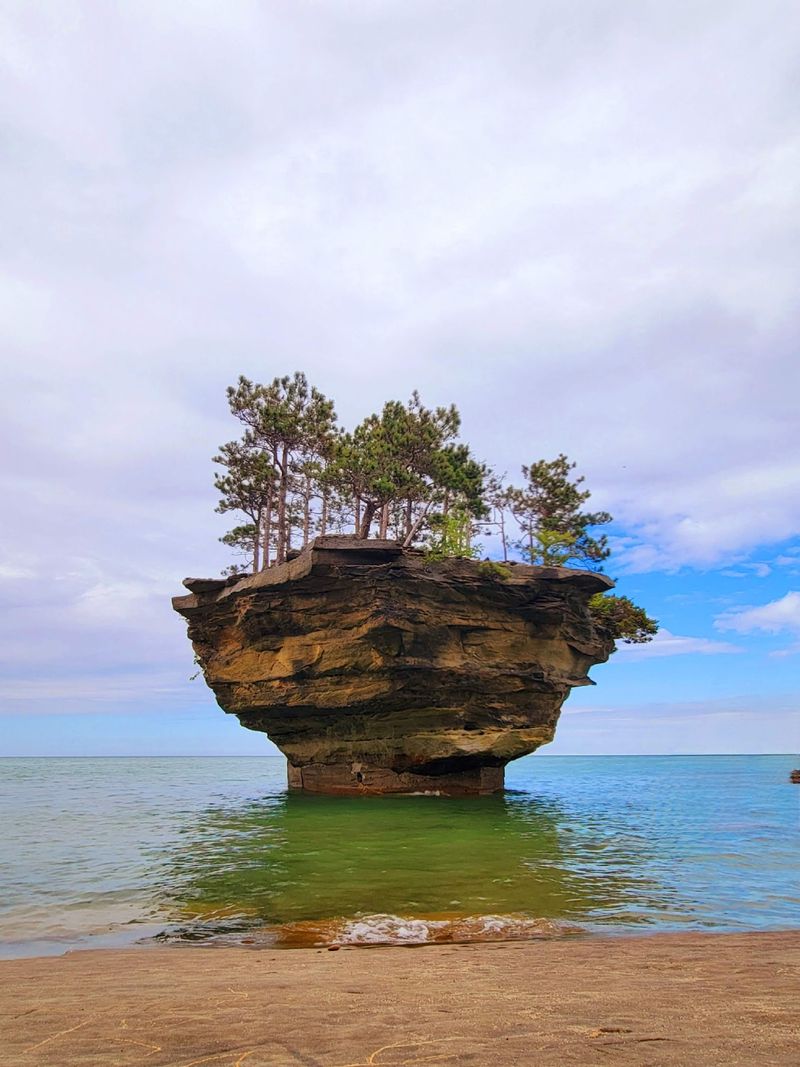
Great views come with a small job for every visitor.
Turnip Rock is beautiful, but it also sits near private shoreline and in a setting that deserves careful, respectful behavior.
A good trip means enjoying the landmark without leaving a mess or causing trouble.
Many visitors admire the rock from the water and avoid trying to climb or crowd it.
That is a wise choice because the formation is delicate, the footing nearby can be slippery, and the main attraction is the view itself.
You do not need to scramble around it to appreciate why people love it.
Respect also means planning your route through public access points and following local rules.
Some reviews warn that map directions may lead toward private areas, which can create confusion.
Using proper launch spots or approved boat services helps keep the visit smoother for everyone.
Leave no trash, keep noise low, and give other paddlers room to enjoy the moment too.
When a place feels this unusual, it is easy to understand why people feel protective of it.
Turnip Rock has lasted through wind, waves, and countless photos, and with thoughtful visitors, it can keep amazing people for years without losing the quiet charm that makes it such a Michigan favorite.