Ohio’s historic mills have a way of making a simple day trip feel like a journey into another era.
Scattered across the state, these preserved landmarks reveal how communities once relied on rushing streams, massive wooden wheels, grinding stones, and hardworking millers to produce the goods they needed.
I love visiting them because the experience rarely stops at the mill itself.
Many are surrounded by scenic rivers, wooded trails, covered bridges, and peaceful countryside that make lingering part of the fun.
Some mills still demonstrate historic machinery or offer tours, while others have museums, shops, or seasonal events that bring their stories to life.
Together, they offer a fascinating look at Ohio’s industrial and agricultural past without feeling like a dusty history lesson.
If you enjoy combining local history with beautiful scenery and a little roadside adventure, these 10 Ohio historic mills are worth adding to your travel list.
You may arrive for the history but you will stay for the atmosphere.
1. Historic Clifton Mill – Clifton
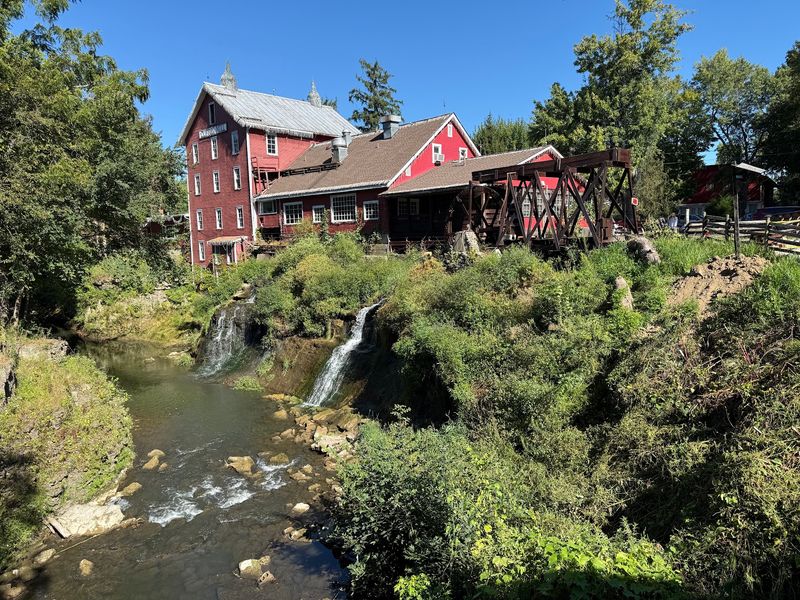
The roar of rushing water is part of the welcome at Historic Clifton Mill.
Sitting along the Little Miami River in the village of Clifton, this landmark combines working-mill history with an unusually scenic setting.
The mill dates to the early 1800s and remains one of the area’s most recognizable attractions.
Visitors can tour the inner workings during scheduled weekday hours in spring and summer, giving them a chance to see how an early American industry operated.
The collection of more than 300 historic flour bags inside adds another quirky layer to the experience.
Many date back more than a century and feature colorful advertising designs.
Outside, a 90-foot covered bridge crosses the Little Miami River and provides views of the mill, waterfalls, river, and nearby Clifton Gorge.
The restaurant and gift shop make it easy to turn a quick history stop into a longer outing.
Located at 75 Water Street, Clifton Mill works especially well for travelers who like their history served with scenery.
2. Bear’s Mill – Greenville
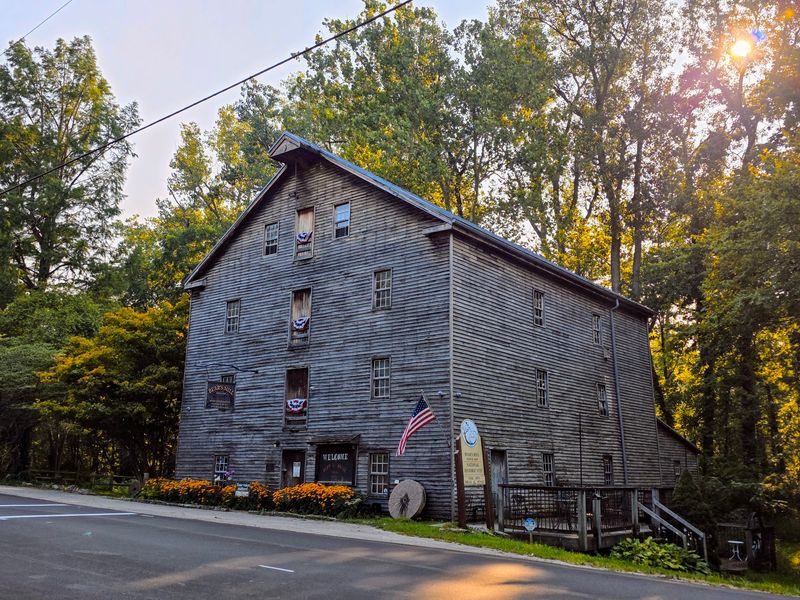
Follow the sound of Greenville Creek and you’ll eventually reach one of Ohio’s rare working water-powered mills.
Bear’s Mill sits on the eastern outskirts of Greenville, surrounded by creekside woods that make the approach feel wonderfully removed from everyday traffic.
Established in 1849, the mill remains a functioning historic landmark and still demonstrates the machinery that made water power so important to earlier communities.
Visitors can learn how turbines, belts, cups, and other equipment move grain through the building.
The site also offers tours for individuals and groups, while its mill store sells freshly ground products, including cornmeal and several varieties of flour.
That makes this stop unusually hands-on: you can see the old technology at work and take a little piece of the experience home.
Bear’s Mill is currently open Tuesday through Sunday from 11 a.m. to 5 p.m.
It sits at 6450 Arcanum-Bears Mill Road, about five miles from Greenville.
The surrounding 35 acres of woods, dams, and levees give visitors plenty of reasons to linger after exploring the mill.
3. Lanterman’s Mill – Youngstown
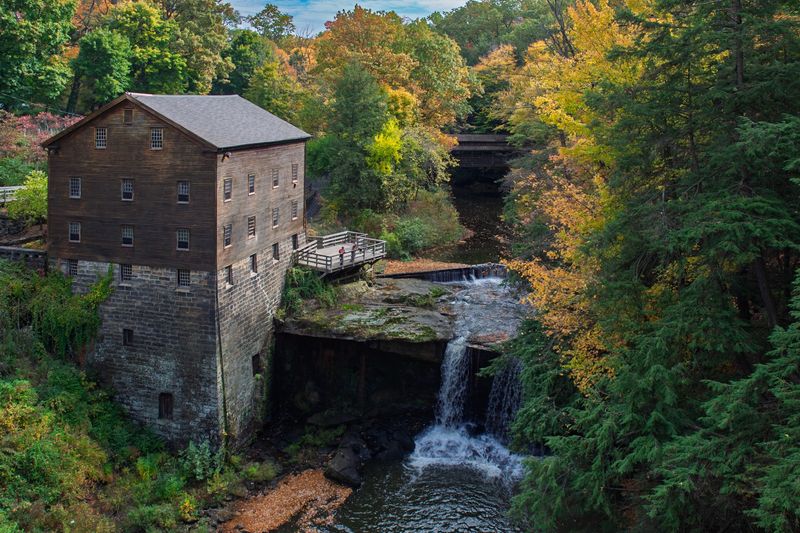
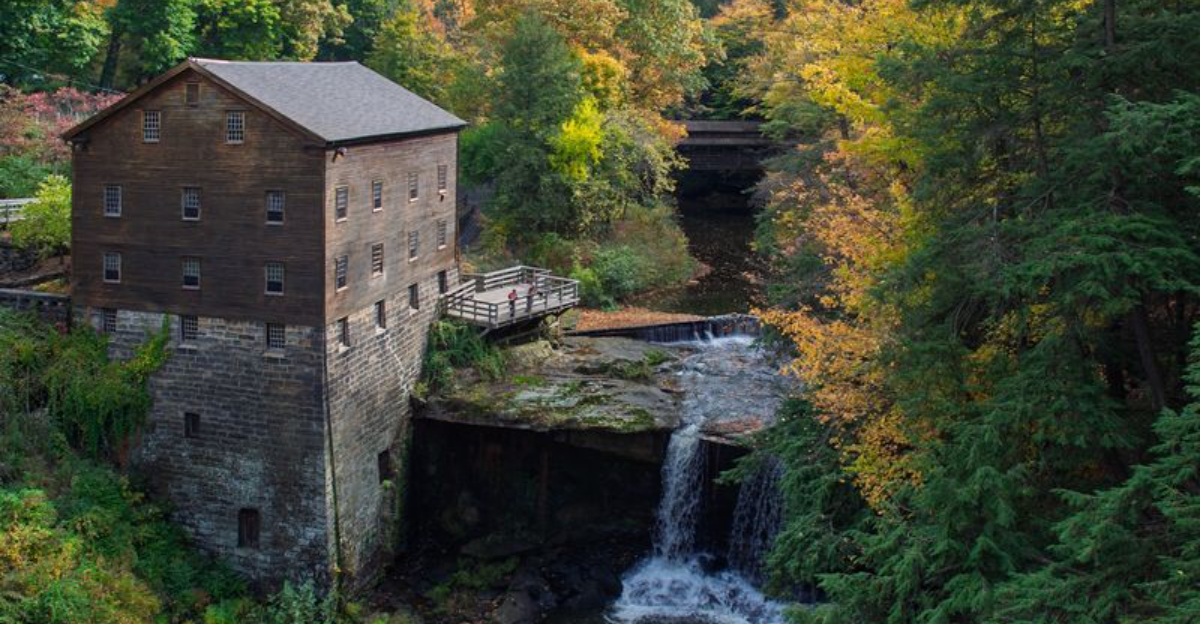
Water, stone, and timber come together beautifully at Lanterman’s Mill in Youngstown’s Mill Creek Park.
Built in 1845, the restored mill stands beside Lanterman’s Falls, creating one of those postcard-worthy settings where the scenery competes with the history for attention.
The building once served local farmers by grinding grain, and today it forms an important part of Mill Creek MetroParks’ historic landscape.
A visit here is more than a quick look at an old structure.
The falls tumble nearby, trails wind through the park, and the surrounding gorge adds plenty of atmosphere.
That combination makes Lanterman’s a particularly good stop for travelers who dislike choosing between a history outing and a nature walk.
Bring a camera, because the mill and waterfall practically collaborate on photographs.
The site is located within Mill Creek Park in Youngstown, near the intersection of East Park Drive and Lanterman Road.
Even when the mill itself is not operating as a regular tour attraction, visitors can experience the historic exterior, waterfall, trails, and surrounding park landscape.
It remains one of Youngstown’s most recognizable historic landmarks.
4. Wolf Creek Grist Mill – Loudonville
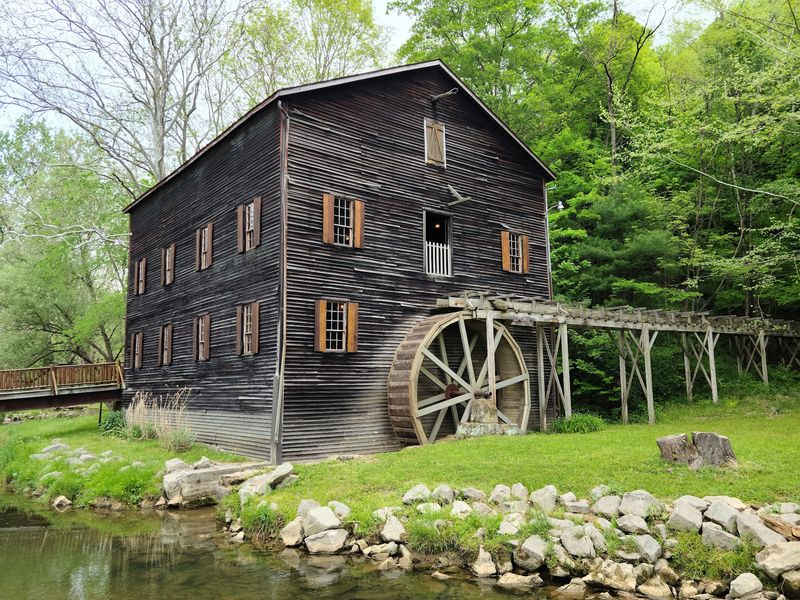
A little cabin, a historic mill, and a forested state park make Wolf Creek Grist Mill feel like a miniature time capsule.
Located just south of Loudonville inside Mohican State Park, the mill anchors a historic park containing restored early-1800s log cabins and farm buildings.
The setting is half the fun.
Instead of standing beside a busy road staring at an isolated structure, visitors encounter the mill within a broader landscape that helps explain how early settlers lived and worked.
The Friends of Wolf Creek Mill preserve the site and host educational and fundraising events throughout the year.
During the summer season, the mill and visitor center are generally open for self-guided tours on Saturdays and Sundays from noon to 5 p.m., from Memorial Day through Labor Day.
That seasonal schedule makes a little planning worthwhile.
The mill sits on Ohio State Route 3, roughly half a mile south of the Mohican State Park campgrounds and about three miles south of downtown Loudonville.
Pair the visit with other Mohican attractions, and you can easily turn a mill stop into a full day of outdoor exploring.
5. Isaac R. Ludwig Historical Mill – Grand Rapids
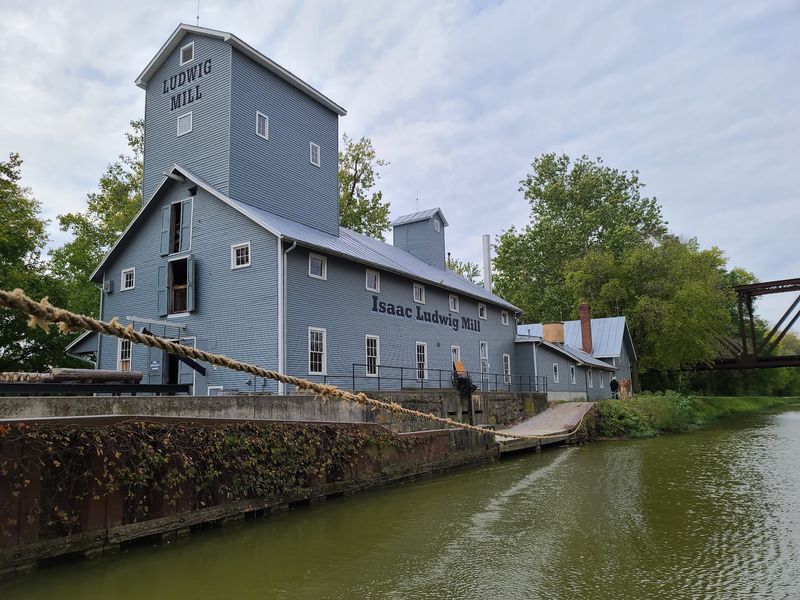
Sometimes the most intriguing stops are the ones that require a little curiosity.
The Isaac R.
Ludwig Historical Mill is associated with Grand Rapids in Lucas County, placing it in northwest Ohio near the Maumee River and the region’s agricultural history.
Unlike some Ohio mill destinations, this is not a bustling attraction with a regular daily tour program, so travelers should treat it as a historic site rather than expect a fully staffed working-mill experience.
That distinction actually makes it useful for a road-trip itinerary built around discovering lesser-known pieces of local history.
Grand Rapids itself offers plenty of reasons to make the trip, including its historic canal-era character and scenic Maumee River setting.
If you are exploring northwest Ohio and enjoy tracking down historic landmarks that do not dominate every tourism brochure, this mill makes an interesting addition, but make sure to check current local access information before planning a dedicated visit.
6. Indian Mill Museum – Upper Sandusky
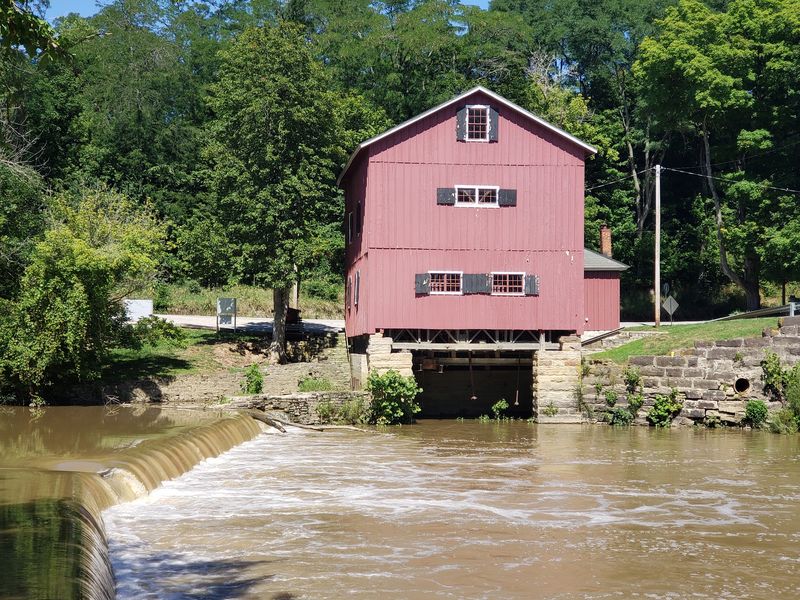
Step inside Indian Mill Museum and the machinery starts telling the story for you.
Located about three miles northeast of Upper Sandusky along County Road 47 beside the Sandusky River, this historic mill offers an unusually focused look at the evolution of milling technology.
The museum presents the milling process through educational displays and demonstrations, covering methods from earlier eras through more modern techniques.
One of the standout pieces is its James Leffel turbine equipment, technology that helped mills produce flour more efficiently.
The surrounding setting adds another reason to visit.
An old iron bridge crosses the river nearby, while shaded grounds provide space for a picnic and a chance to admire the mill from across the water.
That combination makes Indian Mill feel less like a quick museum stop and more like a relaxed countryside outing.
The museum traditionally operates seasonally, from Memorial Day through October, with Friday, Saturday, and Sunday hours listed as 1 to 6 p.m.
Because seasonal schedules can change, checking ahead is smart.
For travelers interested in machinery, local history, and peaceful river scenery, Indian Mill is a satisfying northwest Ohio detour.
7. Historic Johnson’s Mill/Salt Creek Covered Bridge – Zanesville
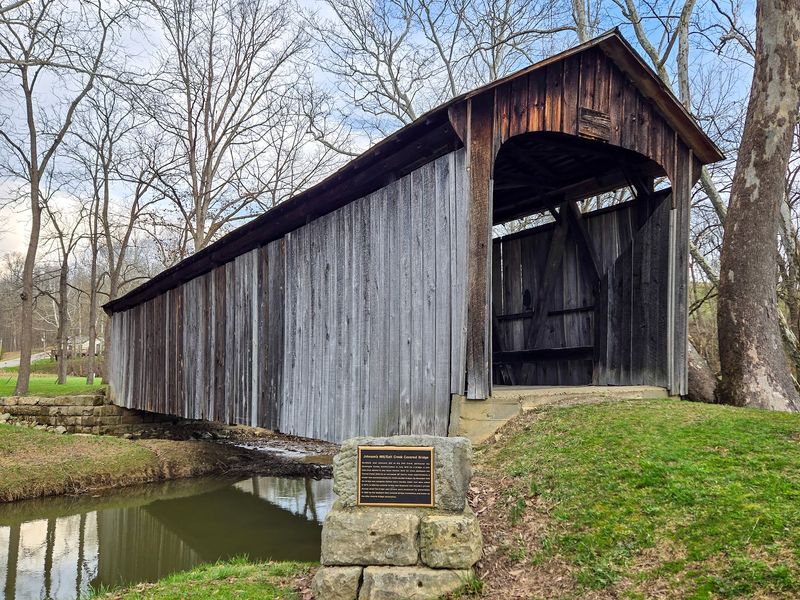
There is a bit of a plot twist here: the star attraction at this historic site is the bridge, not a working mill.
Near Zanesville, the Johnson’s Mill/Salt Creek Covered Bridge preserves an important piece of the area’s transportation history beside Salt Creek.
The covered bridge dates to the 1870s and is recognized for its Warren truss design.
Visit Zanesville describes it as pedestrian-only and lists the site on Arch Hill Road in Zanesville.
The historic marker connects the bridge with Johnson’s Mill, giving the location its distinctive name and placing it within the story of the surrounding community.
That makes this a better fit for readers interested in historic mill landscapes and associated structures than for anyone expecting to tour a preserved mill interior.
The peaceful setting also rewards visitors who enjoy photography.
Wooden beams, creek views, and the surrounding countryside create plenty of atmosphere without requiring a lengthy stop.
If you are already exploring Muskingum County, this is an easy historical detour.
Just frame it honestly as a historic mill-associated site rather than a functioning mill museum, and it becomes a charming piece of the region’s past.
8. Mill Creek Park Historic District – Youngstown
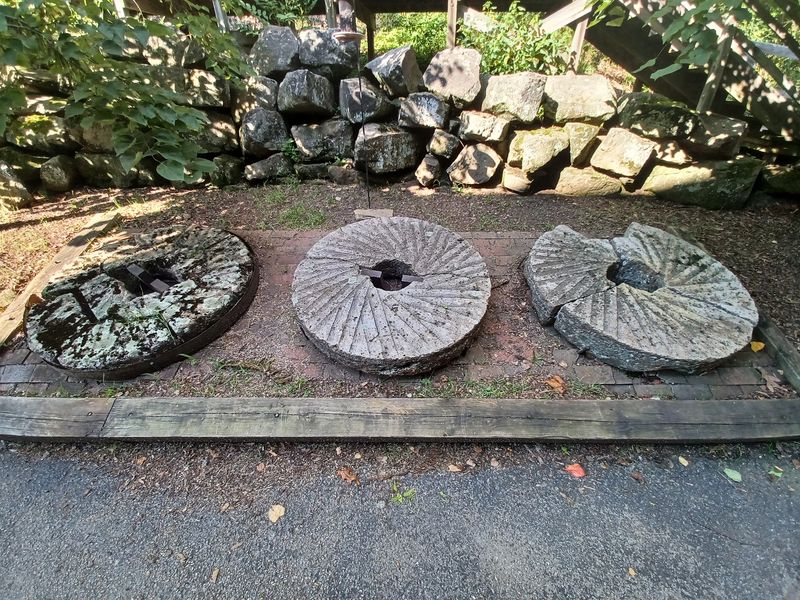
Youngstown’s Mill Creek Park proves that sometimes the mill story is bigger than one building.
The Mill Creek Park Historic District encompasses a significant historic landscape in and around Youngstown, with the National Register recognizing its importance for recreation, community planning, architecture, engineering, and landscape design.
Within this remarkable setting, Lanterman’s Mill and Falls provide one of the clearest connections to the area’s milling past.
The park itself offers much more to explore, including waterways, bridges, trails, gardens, and dramatic natural features.
That makes the district especially appealing for visitors who want history without spending the entire day indoors.
You can admire historic structures, follow a trail, stop for photographs, and enjoy the scenery without constantly checking the clock.
The district stretches across a substantial portion of Mill Creek Park, so it is best approached as a broader destination rather than a single-address attraction.
If your idea of a memorable mill visit includes waterfalls and wooded paths, this Youngstown landmark delivers.
Just remember that the historic district is not itself a standalone working mill museum, but rather a protected cultural landscape that includes historic resources connected to the park’s development.
9. Lawrence Grist Mill – Brook Park
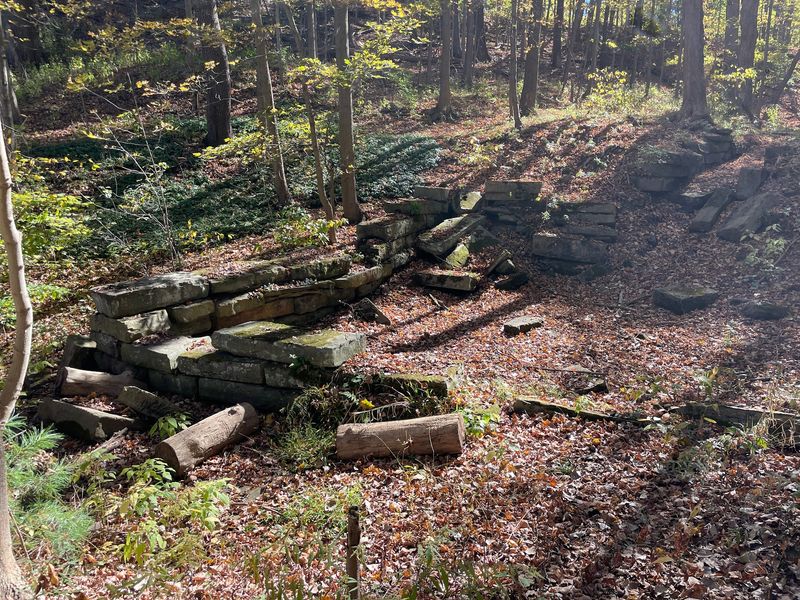
Look closely along the Rocky River and you can still find traces of Brook Park’s milling past.
The Lawrence Grist Mill was built in 1832 and once provided flour and grist milling services to residents of the Rocky River valley.
Today, however, visitors should not expect to walk into a preserved working mill.
Cleveland Metroparks identifies the location as a historic site where evidence of the original structure remains, including sandstone foundation stones from the building.
Instead of touring machinery, you are reading the landscape and imagining how the mill once used the Rocky River for power.
The site sits in Brook Park within the Rocky River Reservation, where hiking and walking provide a natural companion to the historical remains.
A visit therefore works best as part of a larger outdoor outing rather than a standalone museum trip.
For history-minded travelers, those remaining stones are surprisingly evocative.
They offer a tangible reminder that today’s quiet parkland once supported an active milling operation serving the surrounding community.
10. Rock Mill – Lancaster
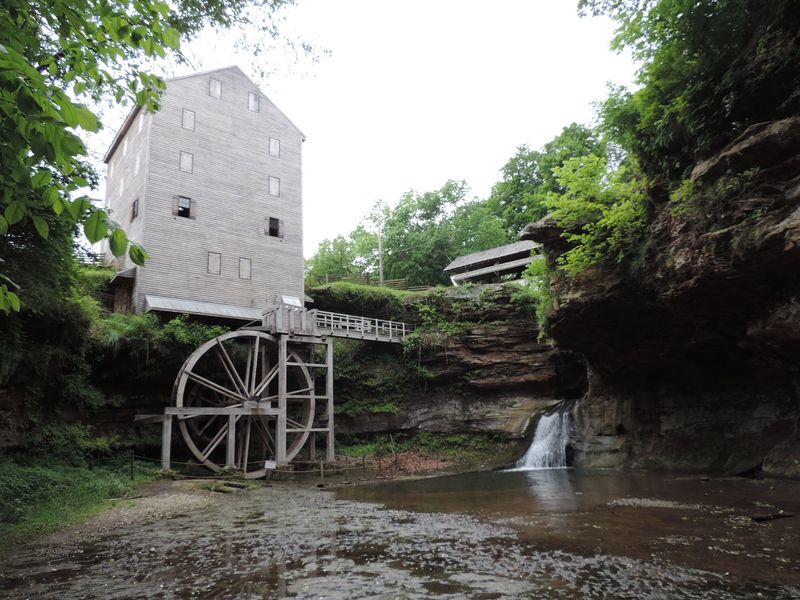
Perched dramatically above Hocking River Falls, Rock Mill knows how to make an entrance.
Located at Stebelton Park at Rock Mill near Lancaster, the restored gristmill occupies a four-acre park where visitors can also see Rock Mill Covered Bridge, walk the grounds, picnic, and enjoy the gorge.
The park remains open year-round from dawn to dusk, while the mill itself opens during scheduled Rock Mill Days from May through October.
Current hours list Wednesdays and Saturdays from 11 a.m. to 2 p.m. and Sundays from 1 to 4 p.m.
The restoration story is almost as impressive as the building.
After decades of deterioration, extensive work restored the mill, including a replica 26-foot wooden waterwheel.
In 2017, the machinery ran again for the first time in more than a century.
On the final Sunday of each month from May through October, visitors can watch historical milling demonstrations and see the mill operating.
The combination of rushing water, historic engineering, a covered bridge, and working machinery makes might just make Rock Mill one of the strongest choices on this list for turning a simple Ohio outing into a memorable experience.