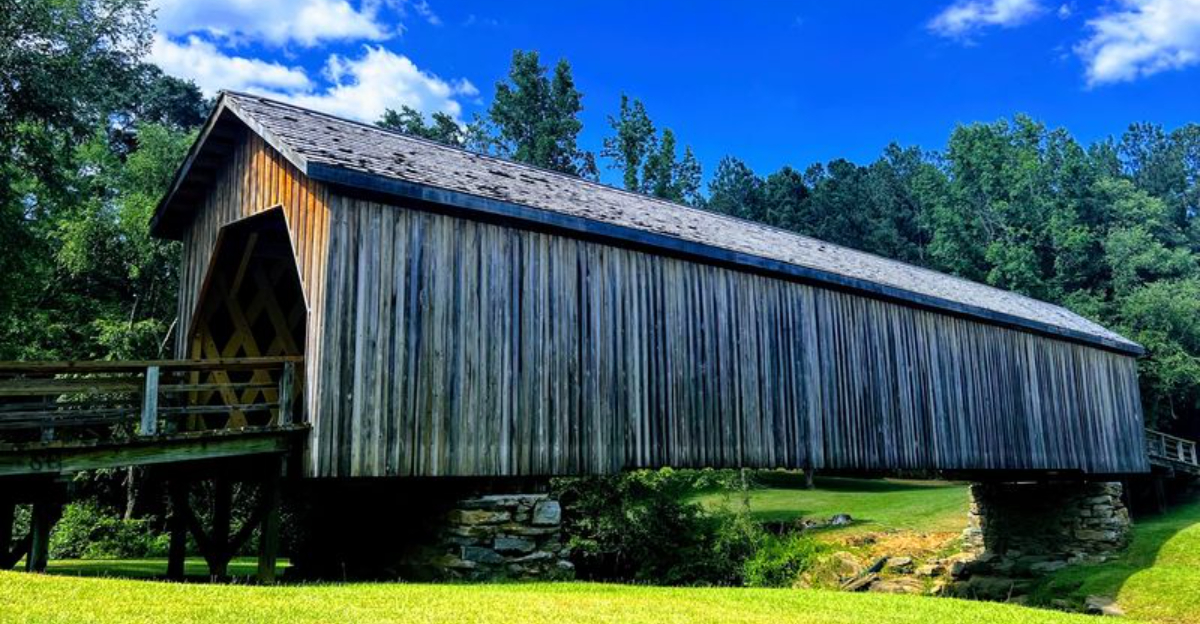
Georgia has a way of hiding big stories in quiet places, and its old covered bridges prove it.
Each wooden span seems to hold more than cars and footsteps, carrying bits of farm life, local pride, floods, repairs, and the steady work of earlier generations who built for the future.
Some sit near busy towns, while others wait beside calm creeks where birds, trees, and weather make the whole scene feel like a page from another century.
If you enjoy road trips, family history, simple photo stops, or learning something surprising close to home, these bridges are worth your time, because they turn a short visit into a richer look at Georgia’s past and remind us that hidden history often stands right in front of us, asking only that we slow down, look closer, and cross with curiosity on your next weekend drive through the state.
1. Watson Mill Bridge – Comer
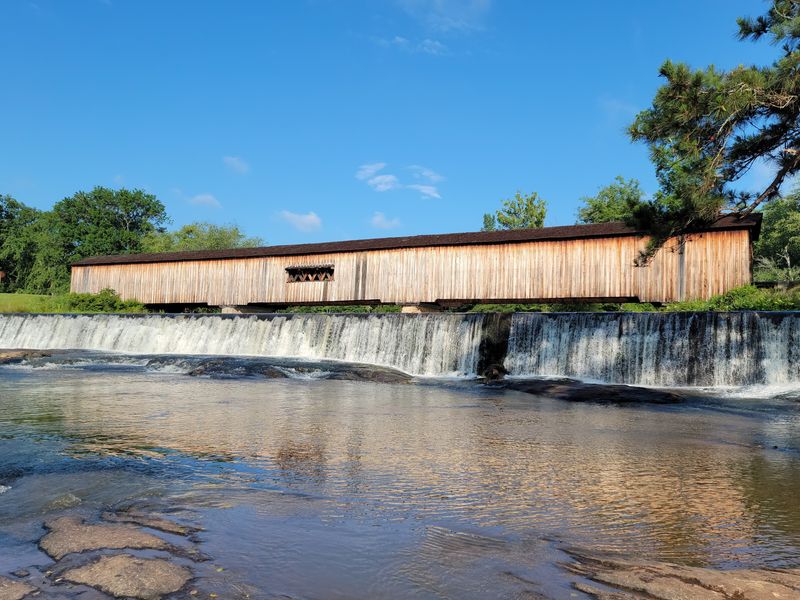
Morning light makes Watson Mill Bridge look almost storybook, but its size is what first surprised me.
Stretching across the South Fork River in Comer, it is Georgia’s longest original site covered bridge, and that fact alone makes the stop feel bigger than one photo.
Built in 1885, the bridge shares the park with a gristmill, walking trails, and picnic spots, so the visit never feels one note.
Kids can watch rushing water below, while adults can study the wooden trusses and imagine wagons creaking through another century there slowly.
What I liked most was how easy the place makes history feel.
Instead of reading dates on a sign and moving on, you can sit by the river, hear the boards underfoot, and connect the bridge to everyday lives, work, travel, weather, and community survival.
Bring good walking shoes and give yourself more than ten minutes here.
The bridge is lovely from inside, from the riverbank, and from the nearby dam area, which means a patient visit rewards you with better photos, quieter moments, and a sense of Georgia history.
2. Stovall Mill Covered Bridge – Helen
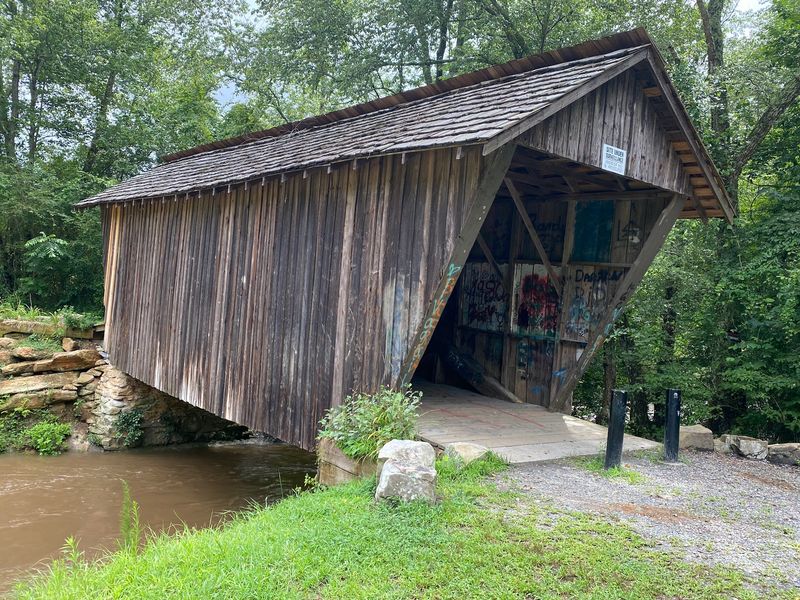
Tucked near Helen, Stovall Mill Covered Bridge feels like a small secret that somehow became one of Georgia’s most photographed spots.
Its white sides and simple frame give it a clean, bright look, and the nearby stream adds a soft soundtrack that slows everything down.
Movie fans may recognize it from old scenes, yet the bridge does not feel flashy in person.
It feels modest, almost neighborly, which makes it easier to picture local families using it when the road needed shelter from rain, sun, and rough mountain weather outside.
A quick stop can work here, but the better plan is to linger and notice the setting.
The creek, the trees, and the mountain town atmosphere all help explain why covered bridges mattered, because they connected communities that rivers and mud once separated for weeks.
Try visiting early or late in the day if you want calmer photos and fewer people.
Small places often leave the biggest impression, and this bridge reminded me that hidden history does not always shout, it sometimes waits quietly beside a gentle stream for visitors.
3. Euharlee Covered Bridge – Euharlee
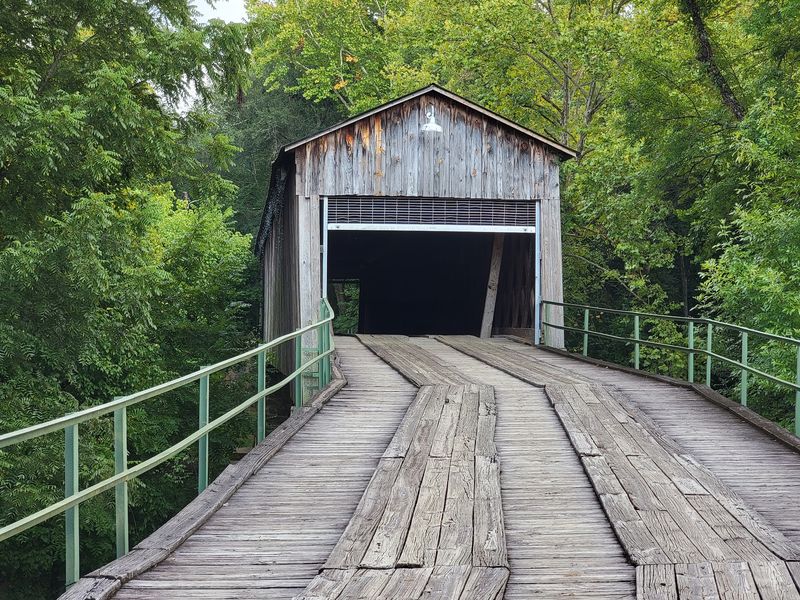
Right away, Euharlee Covered Bridge feels tied to community life rather than standing apart from it.
Set beside a museum and a creek in downtown Euharlee, the red bridge invites you to pair a walk with a deeper look at local tools, stories, and routines.
The current bridge dates to 1886, and its old timbers make the crossing feel solid but personal.
I liked how the nearby history museum adds context, showing that a bridge was not just a structure, it was part of trade, travel, mail, and neighborly exchange.
Families will appreciate how easy the area is to explore without rushing.
You can cross the bridge, watch the water move over the rocks, then step into the museum and come away understanding how one small town kept itself connected through changing times for decades.
If you enjoy history that feels close enough to touch, this stop delivers.
Bring a curious mood, read the signs, and spend time both indoors and outdoors, because the bridge works best when you see it as one chapter in a larger hometown story there.
4. Concord Covered Bridge – Smyrna
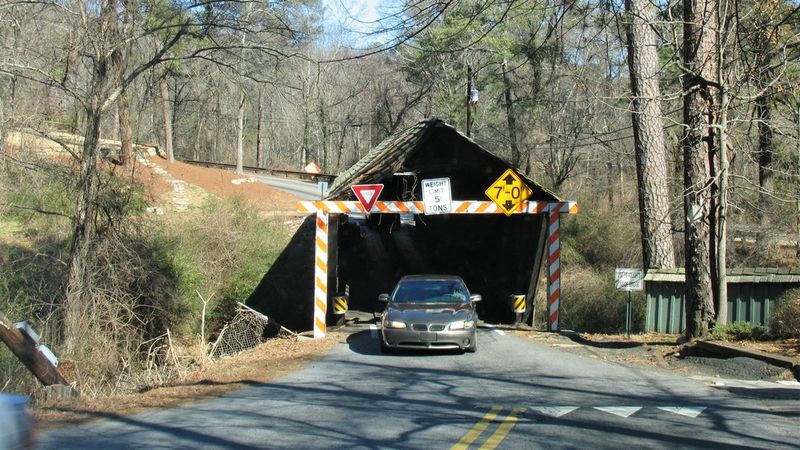
Finding a covered bridge inside metro Atlanta’s orbit feels a little unexpected, and that surprise is part of Concord’s charm.
Hidden in Smyrna near Nickajack Creek, the bridge offers a rare pause from traffic, noise, and fast schedules without leaving the region entirely for long.
The current bridge was rebuilt after flood damage, which gives the site an honest lesson about preservation.
History is not always untouched or frozen, and this place shows how communities decide a beloved landmark is worth saving, rebuilding, and passing along to future neighbors too.
Because the setting feels tucked away, a visit here becomes more than a quick box to check.
Stand back and study the red siding, then imagine earlier crossings when the creek rose high and local roads depended on sturdy carpentry and careful maintenance nearby daily.
Parking nearby makes the stop fairly easy, though patience helps if others are taking photos.
Concord reminded me that hidden history can survive near huge suburbs, and that contrast made the bridge feel even more special, like a quiet memory holding its ground today still.
5. Poole’s Mill Covered Bridge – Cumming
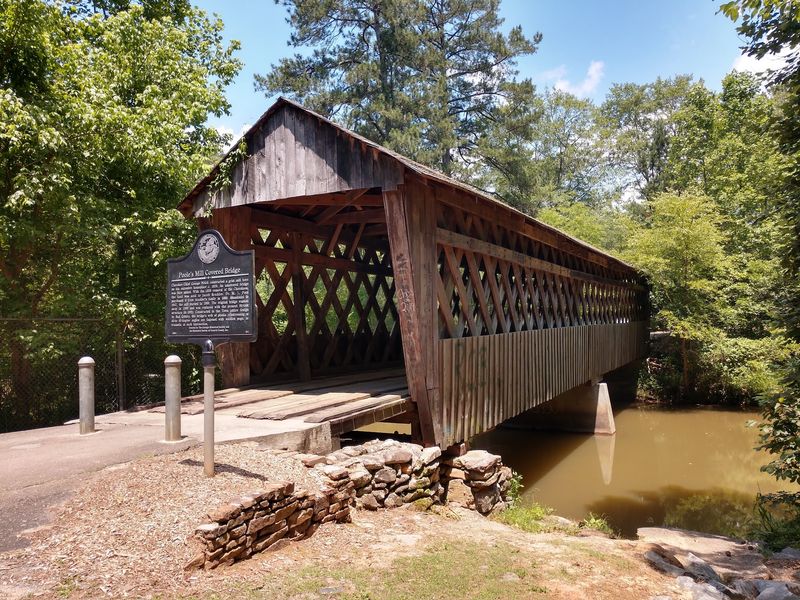
Some places earn their mood the second you arrive, and Poole’s Mill is one of them.
Surrounded by a park in Cumming, the bridge sits above a lively creek and rocky shoals, giving the whole area a playful energy that balances its age beautifully well.
Built in 1901, it is one of the newer historic covered bridges on this list, yet it still carries real character.
I liked the way the white exterior stands out against green trees, especially when sunlight bounces off moving water nearby during warm summer afternoons.
People often come here for photos, fishing, or a quiet walk, and that mix makes the site feel lived in.
A bridge lasts longer in memory when you experience it with sound, motion, and little details, not just as an object from a textbook page.
Wear shoes you do not mind getting dusty, and give yourself time to explore the park around it.
Poole’s Mill taught me that hidden history can feel cheerful, not solemn, and sometimes the best lesson comes with rushing water and laughing families nearby on weekends.
6. Elder Mill Covered Bridge – Watkinsville
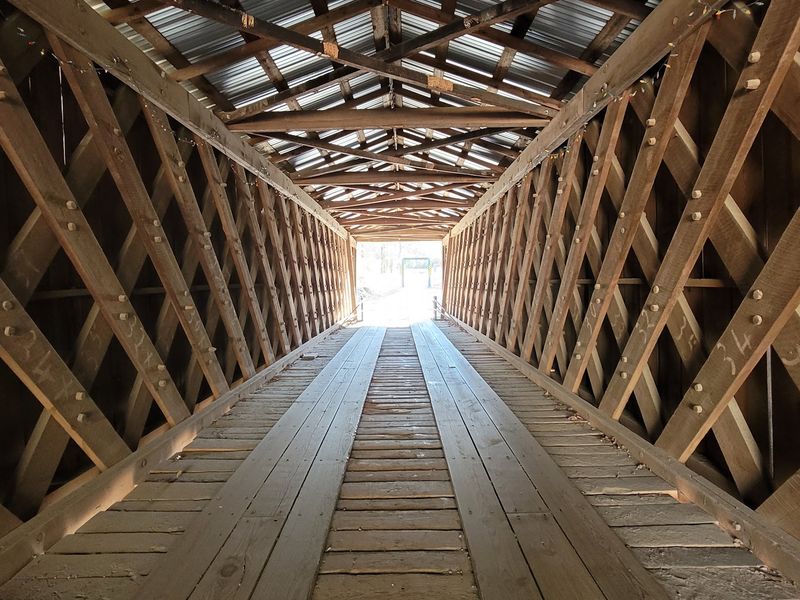
Narrow, weathered, and wonderfully quiet, Elder Mill Covered Bridge feels like a place that asks you to slow your breathing.
Located near Watkinsville, it spans Rose Creek with a simple grace that makes modern roads seem louder and less thoughtful by comparison to older travelers.
As Georgia’s only covered bridge still open to traffic, it carries a little extra thrill.
Watching a car ease across the wooden floorboards makes history feel active instead of distant, and it reminds visitors that preservation can include careful, everyday use when roads allow it.
The setting is rural and modest, which is exactly why it stayed with me.
No big crowds compete for attention here, so you notice creek sounds, shaded banks, and the bridge’s practical design, all clues to how local people moved through the countryside each day.
Check road conditions before you go, and be respectful if another vehicle is crossing.
Elder Mill is not flashy, but that is its strength, because it shows how hidden history survives through usefulness, restraint, and the kind of beauty you almost miss at first glance.
7. Cromer’s Mill Covered Bridge – Carnesville
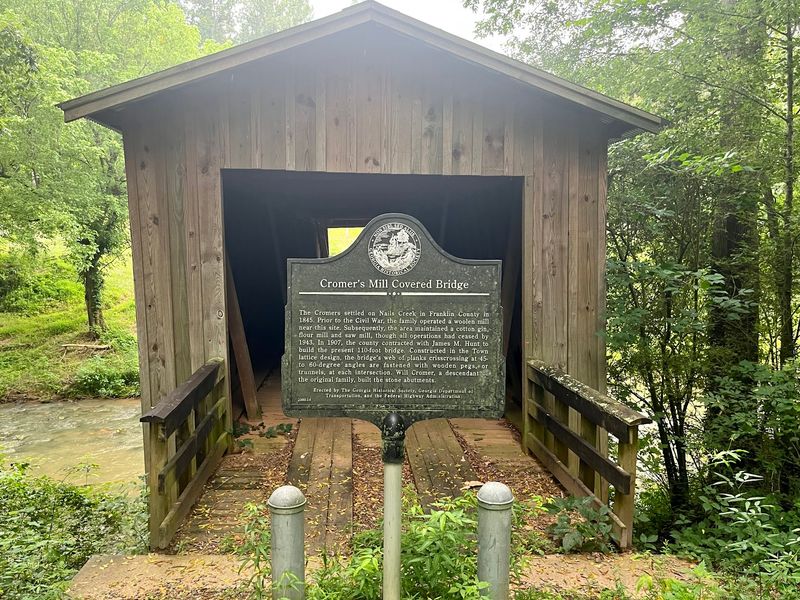
Cromer’s Mill Covered Bridge has the kind of backroad appeal that makes a drive feel like a treasure hunt.
Near Carnesville, the red bridge crosses Nails Creek and rewards visitors who do not mind leaving busy highways for a slower, more curious route through fields.
Its present form reflects repairs and rebuilding, which says something honest about old places.
They survive because people care enough to keep working on them, and that ongoing effort became part of the bridge’s story for me, not a flaw at all over time either.
The area feels peaceful in a plainspoken way, without big attractions competing for your eyes.
Stand nearby for a few minutes and the bridge begins to show its personality through shape, color, creek reflections, and the quiet patience of rural Georgia in late afternoon light.
Bring directions before you set out, since remote spots can be trickier than expected.
Cromer’s Mill reminded me that hidden history often lives where convenience does not, and sometimes the best reward comes after a winding road, a missed turn, and one more mile ahead.
8. Auchumpkee Creek Covered Bridge – Thomaston
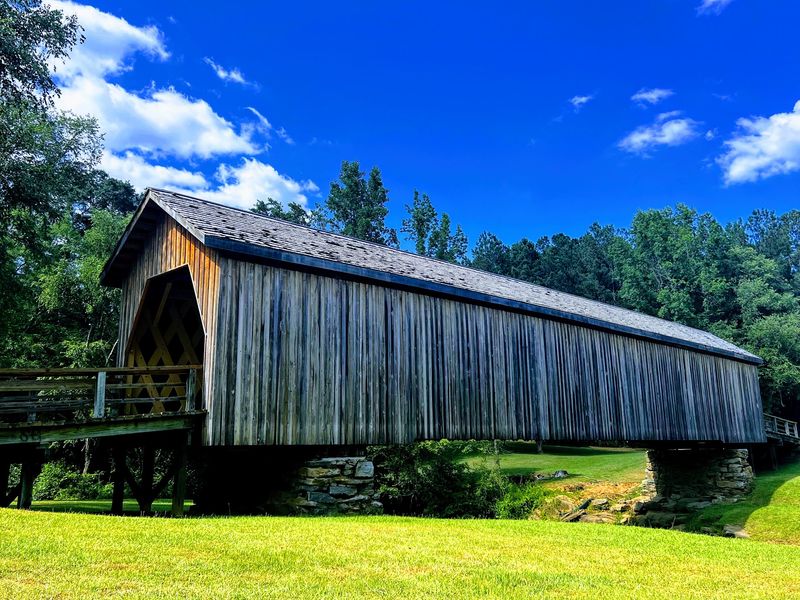
Even the name Auchumpkee Creek makes the stop memorable before the bridge comes into view.
In Thomaston, this red span stands inside a park, where open space and calm water give visitors room to wander, think, and enjoy history without feeling rushed for the day.
Built in 1892, the bridge once served everyday travel, and now it serves curiosity just as well.
I found it easy to picture horses, wagons, and muddy wheels here, because the setting still carries a sense of practical old Georgia for working families nearby then.
The park setting makes this one especially friendly for families or relaxed day trips.
You can enjoy the bridge, stretch your legs, and let younger visitors burn energy, all while slipping a little local history into the outing without making it feel like homework later.
Pack water and check the weather, since parks are best enjoyed when you linger comfortably.
Auchumpkee Creek showed me that hidden history can be welcoming and easygoing, the sort of place where a simple afternoon quietly turns into a memorable lesson for any age group.
9. Coheelee Creek Covered Bridge – Blakely
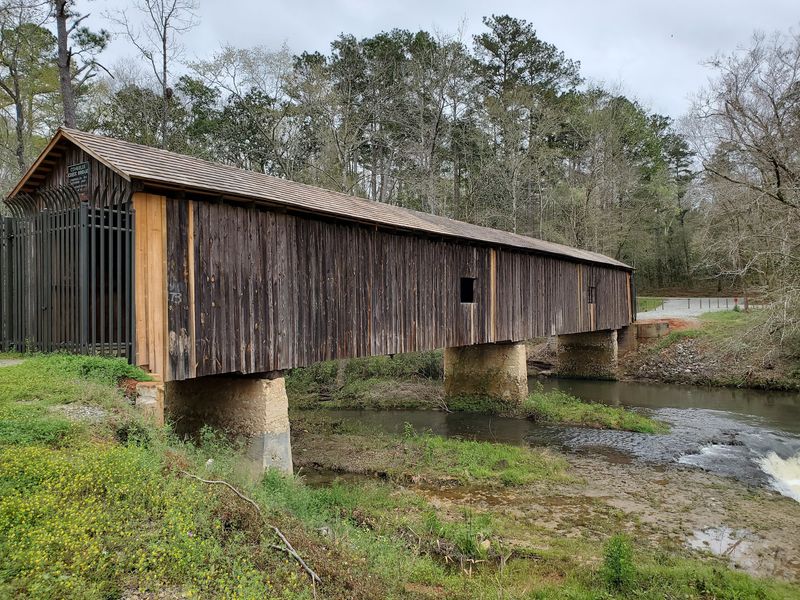
Coheelee Creek Covered Bridge feels wonderfully out of the way, like a reward for readers who love the lesser-known corners of a map.
Near Blakely, it stretches long and low across the water, carrying a mood that is calm, remote, and deeply rooted in place.
Originally built in the nineteenth century and later restored, the bridge reflects both age and effort.
I appreciate landmarks like this because they show history as something people maintain together, not something that survives by luck or good weather alone through the passing years there.
Because the site sits in a quieter region, planning ahead makes the visit smoother.
Bring directions, charge your phone, and allow extra time, since part of the experience is the journey itself and the growing sense that you are approaching somewhere special at last today.
Quiet places can teach the loudest lessons, and that happened here for me.
Coheelee Creek made Georgia’s hidden history feel wider than the usual stops, reminding me that big stories often survive in small places far from crowds and souvenir shops even now for visitors.
10. Big Red Oak Creek Covered Bridge – Woodbury
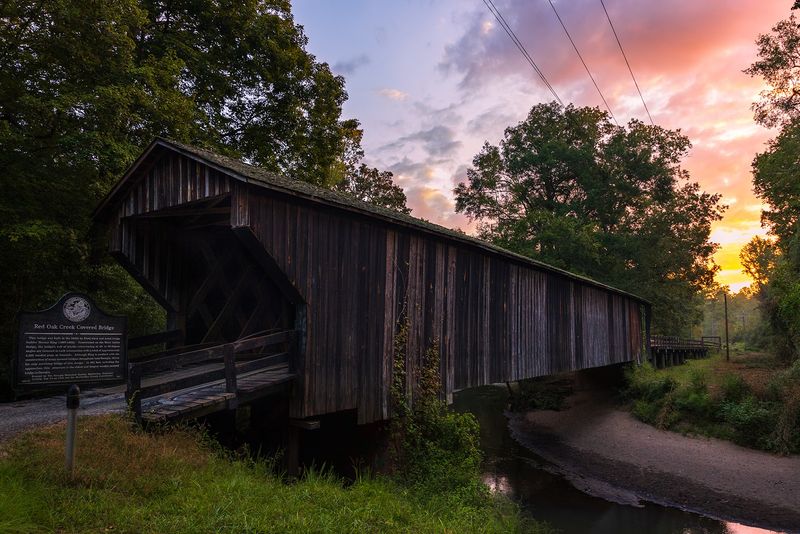
Big Red Oak Creek Covered Bridge sounds oversized before you even arrive, and the real place delivers a strong first impression.
Near Woodbury, the bridge spans a peaceful creek with a sturdy frame and a setting that feels rooted in Pine Mountain foothill country nearby.
The current bridge dates from the 1960s and replaced an older crossing, which adds an interesting twist.
Not every historic feeling place is ancient in every board, and that reminder helped me think about heritage as continuity, not just original material for a community memory.
What stands out here is the balance between pretty scenery and practical design.
You can admire the red exterior and still imagine why people needed dependable creek crossings, especially in rural areas where detours cost time, labor, money, and patience for working families then too.
Make room for a few quiet minutes after your photos are done.
Big Red Oak Creek reminded me that hidden history is not always about age alone, it is also about the way a place keeps an older path alive for new generations to appreciate.
11. Hurricane Shoals Covered Bridge – Maysville
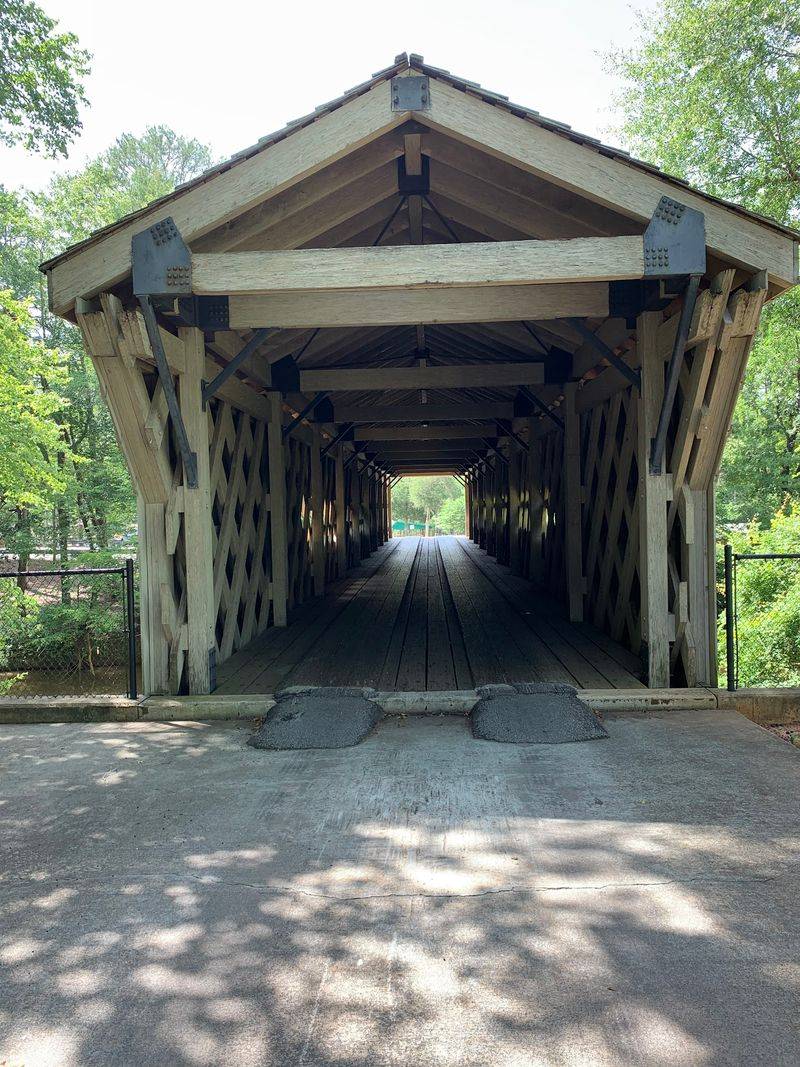
Hurricane Shoals Covered Bridge wins attention with its dramatic name, but the setting adds the real magic.
In Maysville, the bridge stands inside a heritage village area, where old buildings and open grounds help visitors see transportation as one part of a bigger story there.
The bridge fits especially well with the surrounding historic site, because context matters.
Seeing mills, cabins, and other preserved structures nearby makes it easier to understand how roads, waterpower, farming, and trade once worked together in everyday Georgia life for local families and workers alike.
A visit here can stretch beyond the bridge, and that is a good thing.
When one stop offers several pieces of history, you leave with a fuller picture instead of one pretty image, and the bridge becomes part of a lived landscape from earlier times.
Go when you can explore the grounds, not just the crossing itself.
Hurricane Shoals made me appreciate how hidden history works best in layers, with one bridge leading to many stories about labor, travel, ingenuity, and the rhythms of community life across that region too.