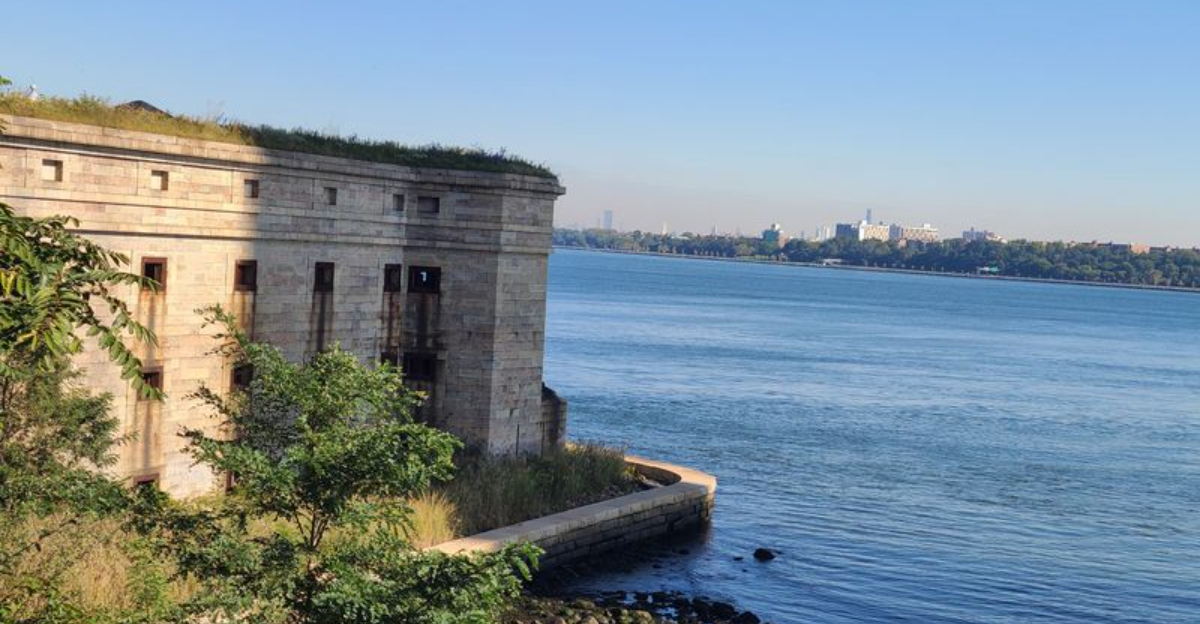
New York hides some of its best stories behind stone walls, grassy earthworks, lake views, and old cannon lines.
I went looking for forts where the scenery feels just as exciting as the history, and I found places that make the past feel close enough to touch.
Some sit beside shining lakes, others guard busy harbors, and a few stand in quiet parks where birds now replace battle noise.
These forts help explain how people protected trade routes, towns, rivers, and coastlines long before modern bridges and highways changed the map.
They also make great day trips because you can walk, learn, take photos, and still have time for a picnic or nearby ice cream.
Bring comfortable shoes, charge your camera, and keep an eye out for small details like musket ports, old barracks, and sweeping lookout points.
The adventure starts with walls, water, and some unforgettable views.
1. Fort Ticonderoga – Ticonderoga
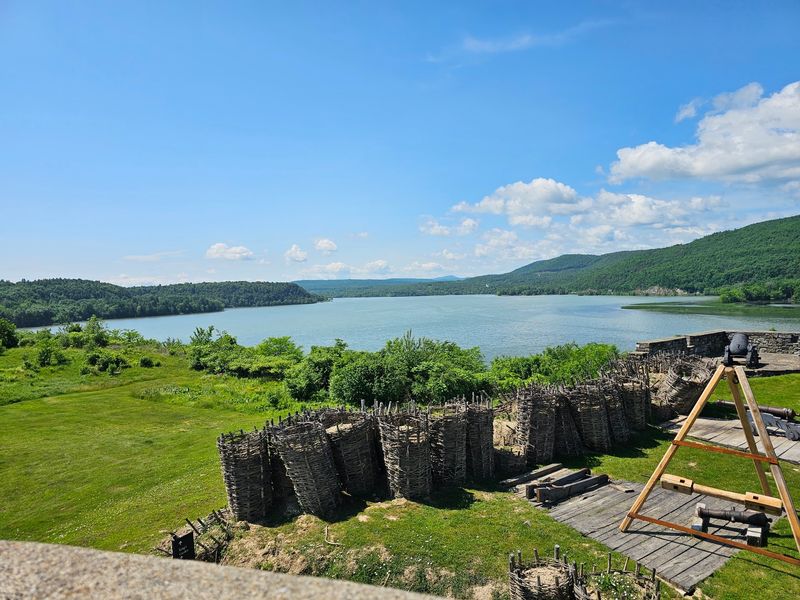
Lake Champlain flashes like a silver coin below Fort Ticonderoga, and the view grabs you before the history does.
Set in Ticonderoga, this star-shaped stronghold controlled a key route between Canada and the Hudson Valley.
French, British, and American forces all wanted it because whoever held the fort could watch the waterway.
Visitors can tour restored rooms, see cannon demonstrations, and walk grounds where Ethan Allen and the Green Mountain Boys made their famous 1775 capture.
The museum displays weapons, uniforms, maps, and everyday objects that make army life easier to picture.
Kids often enjoy the costumed interpreters because they explain big events in clear, lively ways.
Plan extra time for the gardens and the Mount Defiance overlook nearby.
That high viewpoint shows why the fort mattered so much.
Wear sturdy shoes, since the paths, stairs, and grassy areas can keep you moving longer than expected.
2. Old Fort Niagara – Youngstown
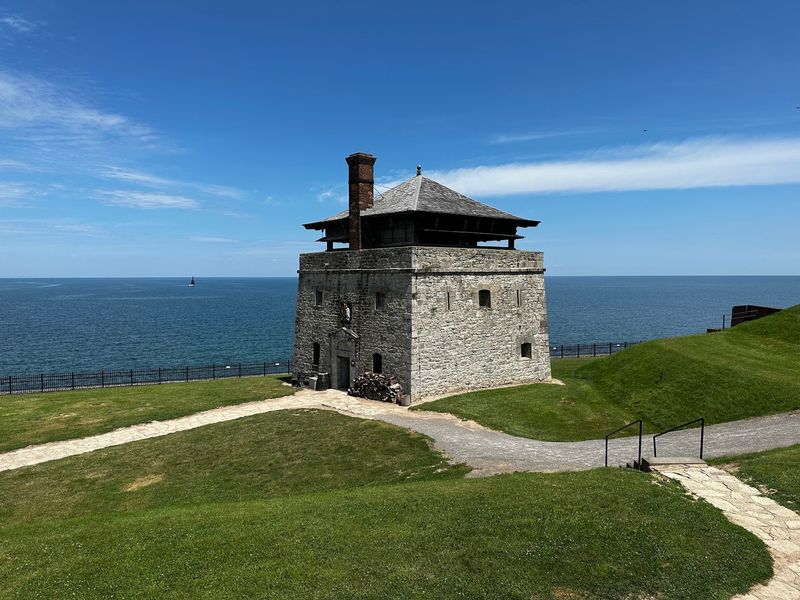
Wind off Lake Ontario gives Old Fort Niagara a salty, storybook mood, even though the ocean sits far away.
Located in Youngstown where the Niagara River meets the lake, this fort watched one of North America’s most important gateways.
Its oldest building, the French Castle, dates to 1726 and still feels surprisingly grand.
France, Britain, and the United States all used this post, so the site tells a layered tale.
You can step inside thick stone rooms, cross the parade ground, and imagine soldiers waiting for news from distant battles.
Reenactments, musket firings, and special events make the grounds feel lively instead of frozen in time.
The scenery is a major bonus, especially near the walls facing the water.
Bring a jacket, because lake breezes can surprise visitors even on sunny days.
After exploring, consider pairing the trip with nearby Niagara Falls for a full day of power, spray, and history.
3. Fort Stanwix National Monument – Rome
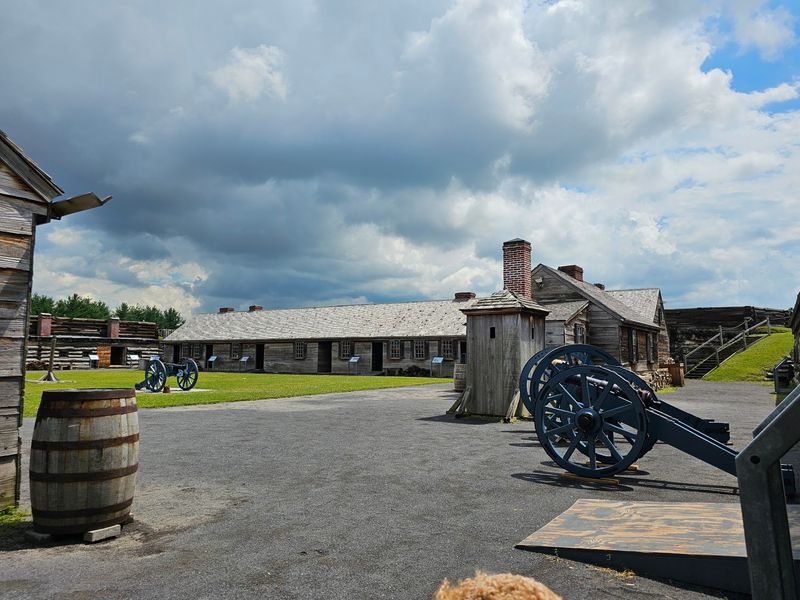
Right in downtown Rome, Fort Stanwix rises like a wooden surprise among modern streets.
The rebuilt fort marks a place once called the fort that never surrendered during the American Revolution.
Its location guarded a vital carry between the Mohawk River and Wood Creek, linking travel routes across New York.
Inside the walls, rooms show barracks, storage areas, officer spaces, and work areas used by soldiers and civilians.
Rangers explain the 1777 siege, Native diplomacy, and the wider fight for control of the Mohawk Valley.
The displays are clear enough for younger visitors, but detailed enough to satisfy serious history fans.
Because the site is compact, it works well for families who want a meaningful stop without a full-day hike.
Start at the visitor center for maps, exhibits, and event schedules.
Nearby streets offer food and parking options, making this one of the easiest historic forts in New York to visit.
4. Fort Ontario State Historic Site – Oswego
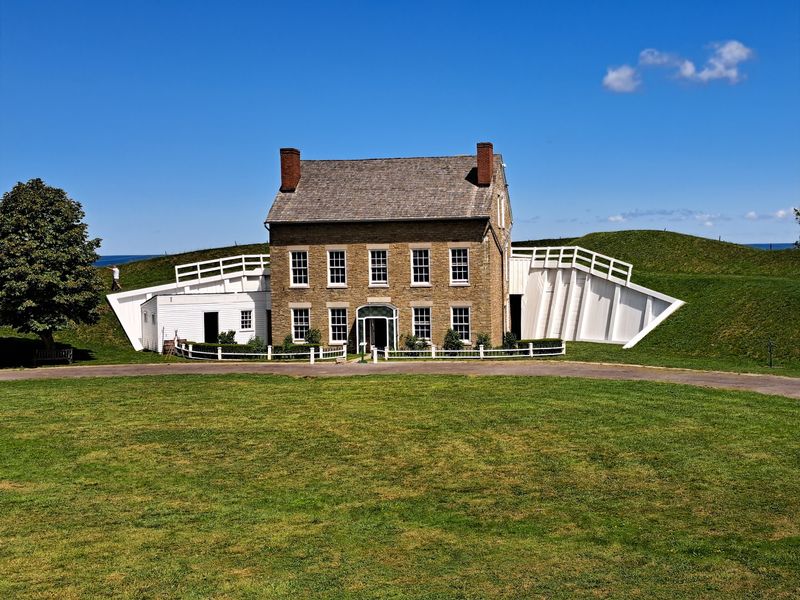
Seagulls wheel above Fort Ontario as if they are still keeping watch over Oswego Harbor.
Perched in Oswego, the fort overlooks Lake Ontario and has been rebuilt or changed many times since the 1700s.
Its long story includes French and Indian War fighting, Revolutionary War activity, and later military service.
The star-shaped grounds invite slow wandering, with stone walls, powder magazines, barracks, and lake views around almost every turn.
Exhibits also share the moving story of the Safe Haven refugee shelter, which housed nearly 1,000 Holocaust refugees during World War II.
That chapter gives the site a deeper human meaning beyond cannons and uniforms.
Families should check opening times before going, since historic buildings may follow seasonal schedules.
The lakeside weather can shift quickly, so layers help.
After your tour, the Oswego waterfront, lighthouse views, and local restaurants make it easy to stretch the visit into a relaxed afternoon.
5. Crown Point State Historic Site – Crown Point
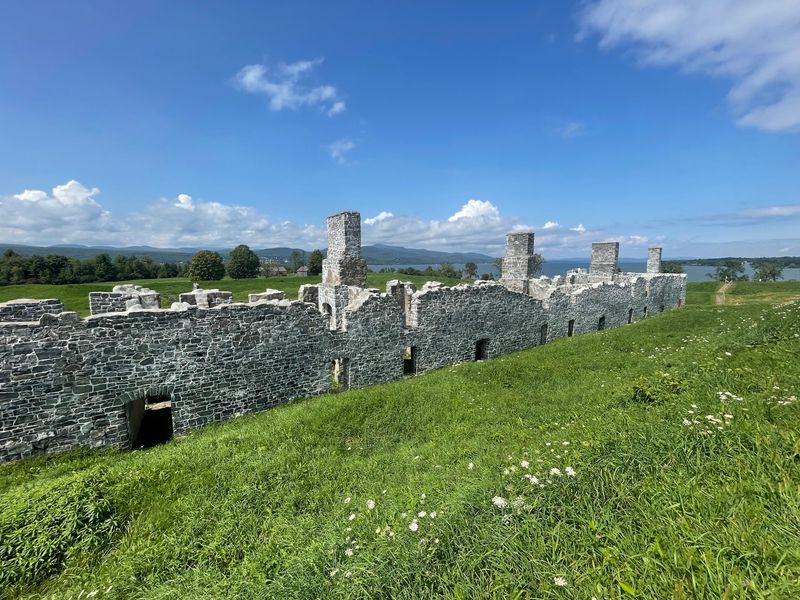
Crumbled stone walls at Crown Point feel less like ruins and more like clues scattered across a wide green field.
This site in Crown Point sits beside Lake Champlain, close to the Vermont border and surrounded by open sky.
Both French and British forces built major works here because the lake served as a military highway.
The French Fort St. Frederic came first, followed by a huge British fort after the French and Indian War.
Today, visitors can walk among remains of barracks, walls, and foundations while reading signs that explain what once stood there.
The open layout makes it easy to see how large the military complex really was.
Pack sunscreen and water, because shade can be limited on bright days.
The nearby Lake Champlain Bridge and visitor center add extra interest for road trippers.
Photographers should arrive early or late, when warm light turns the stonework and mountain views into something special.
6. Fort Montgomery State Historic Site – Fort Montgomery
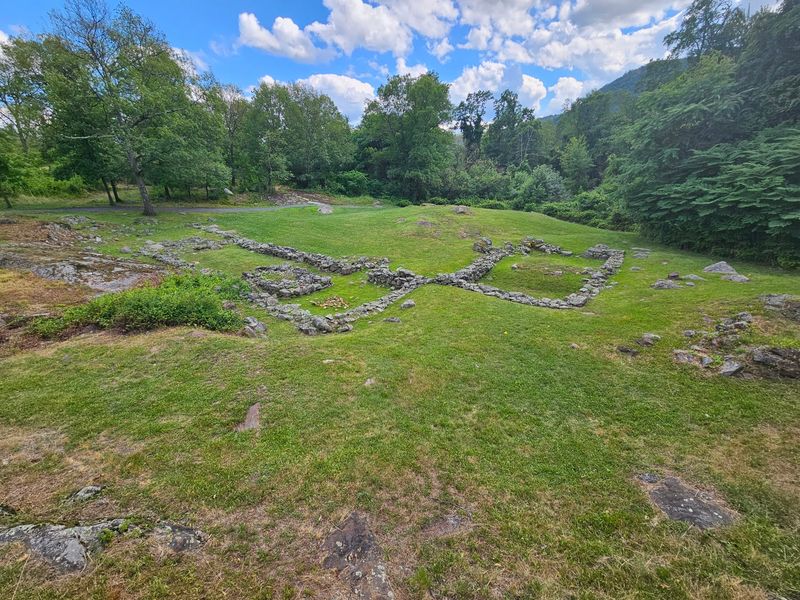
Leaves crunch underfoot at Fort Montgomery, and suddenly the Hudson River appears through the trees like a bright ribbon.
Located in Fort Montgomery, this Revolutionary War site guarded a narrow river passage near today’s Bear Mountain Bridge.
American troops built it to help block British ships moving north through the Hudson Highlands.
The fort saw fierce action in 1777 when British forces attacked and captured it after heavy fighting.
Trails now lead visitors past stone remains, earthworks, and signs that explain the battle in plain language.
The museum adds artifacts, models, and context for anyone who wants the full story before walking outside.
This stop is perfect for people who like history mixed with a short nature walk.
Wear shoes with grip, since wooded paths may be uneven after rain.
For a bigger outing, combine the fort with Bear Mountain State Park, nearby overlooks, or a drive along the scenic Hudson River roads.
7. Fort William Henry – Lake George
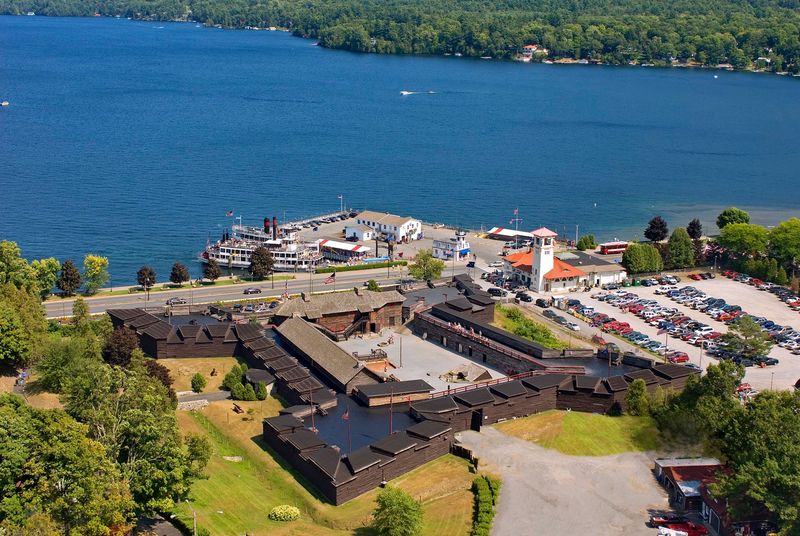
Cannon smoke, lake air, and mountain views give Fort William Henry the feeling of an outdoor history show.
Standing at the southern end of Lake George, the reconstructed fort recalls the brutal fighting of the French and Indian War.
Its 1757 siege became famous partly because it inspired scenes in The Last of the Mohicans.
Guided tours often include military drills, musket talks, and stories about daily life for soldiers far from home.
The setting helps everything click, since you can see why armies cared about controlling this sparkling lake corridor.
Exhibits cover the fort’s construction, the siege, and the people caught in the conflict.
Lake George village sits steps away, so food, boat rides, shops, and lodging are easy to find.
Arrive early during summer because the area gets busy.
If you enjoy photos, walk toward the water after your tour for a classic view of the fort with mountains rising beyond it.
8. Fort Wadsworth – Staten Island
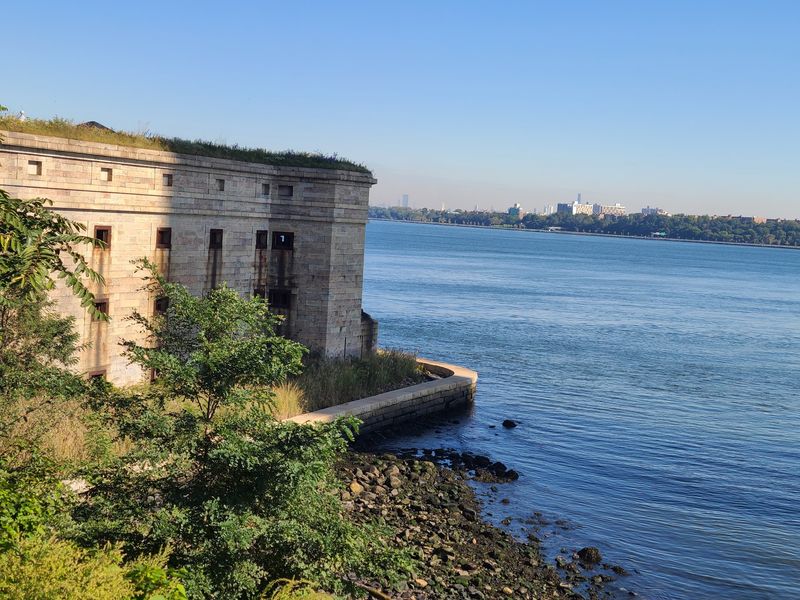
Few forts come with a bridge as dramatic as the Verrazzano-Narrows rising overhead at Fort Wadsworth.
This Staten Island landmark guards the Narrows, the tidal gateway between New York Harbor and the Atlantic Ocean.
For more than two centuries, military defenses here helped protect one of the nation’s busiest ports.
The site includes batteries, tunnels, overlooks, and old structures managed as part of Gateway National Recreation Area.
From the higher points, you can spot Brooklyn, ships, harbor traffic, and sometimes the Manhattan skyline on a clear day.
History feels close, but the city never fully disappears.
Check for ranger-led tour availability if you want access to certain interior areas.
Even without a tour, the walking paths and overlooks make the visit rewarding.
Bring a camera and wind-friendly clothing, because the harbor breeze loves hats almost as much as visitors love the view.
9. Fort Jay – Governors Island
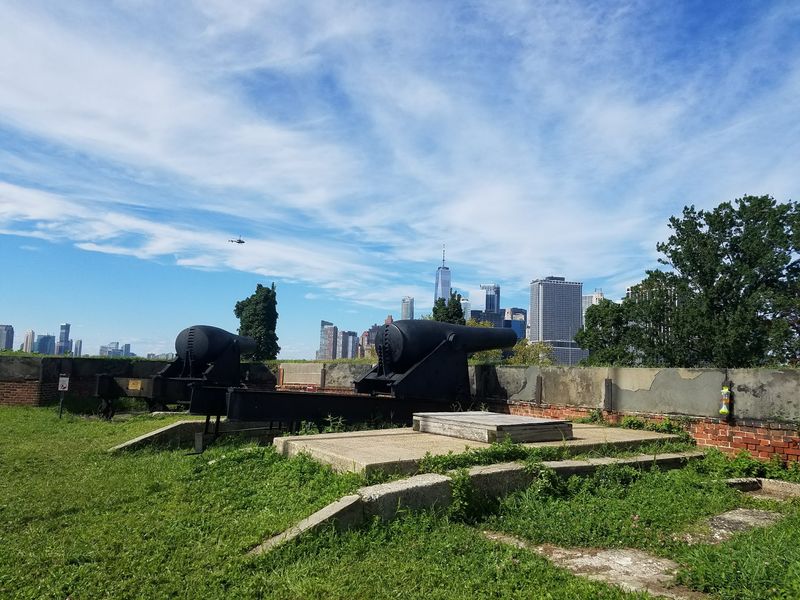
A ferry ride turns Fort Jay into a mini escape, even though Lower Manhattan stays in sight.
Located on Governors Island, this early American fort helped defend New York Harbor after the Revolution.
Its square shape, grassy dry moat, and brick entrance make it one of the island’s most striking landmarks.
Fort Jay replaced earlier defenses and later worked alongside Castle Williams, creating a strong harbor defense system.
The U.S.
Army used Governors Island for many years, so the fort connects colonial fears, national growth, and military routine.
Walking the grounds feels peaceful now, with lawns, trees, and skyline views softening the old walls.
Governors Island is seasonal for many activities, so check ferry schedules before planning your day.
Bikes, picnic spots, public art, and food vendors can turn a fort visit into a full outing.
Climb nearby hills for excellent views of the Statue of Liberty, Brooklyn, and the harbor routes Fort Jay once helped protect.
10. Fort Schuyler – Bronx
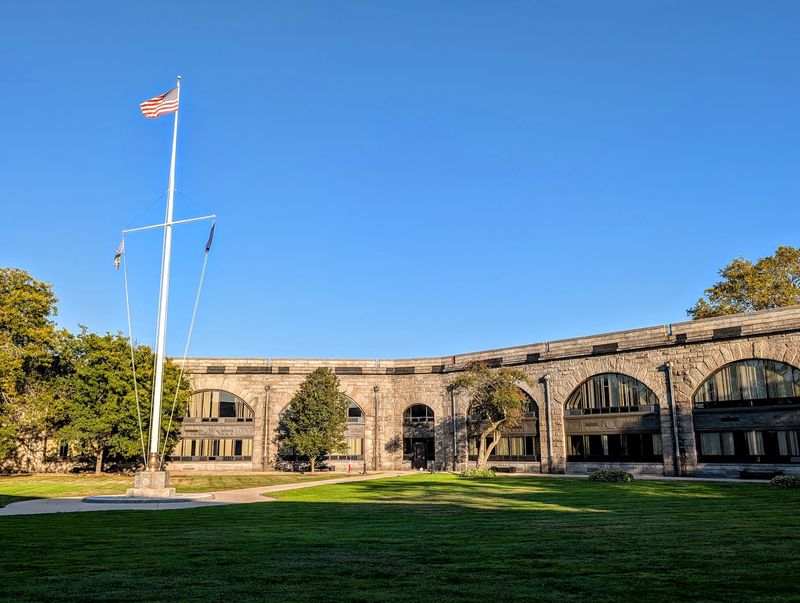
Granite walls meet college energy at Fort Schuyler, a place where cadets, ships, and history share the same waterfront.
Built on Throgs Neck in the Bronx, the fort stands where the East River opens toward Long Island Sound.
Its position helped protect the eastern approach to New York City during the 1800s.
Today, the fort is part of SUNY Maritime College, and it houses the Maritime Industry Museum.
Visitors can learn about shipping, navigation, harbor defense, and the city’s deep connection to the water.
The building itself is impressive, with heavy stonework that shows how seriously engineers treated coastal defense.
Because it sits on an active campus, check museum hours and visitor rules before heading out.
The waterfront views are worth the planning, especially if you enjoy bridges, boats, and working harbor scenes.
This stop feels different from rural forts because New York’s modern maritime life still moves all around it.
11. Fort Wood – New York City
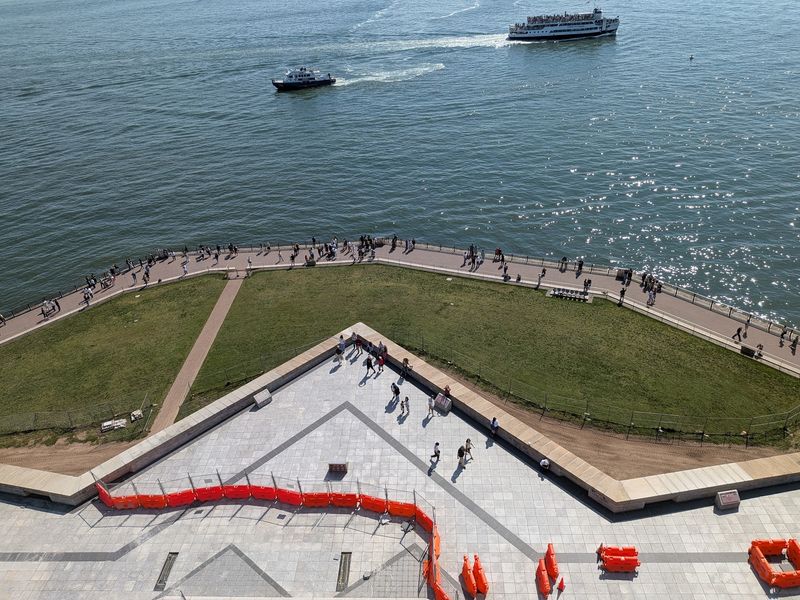
Most visitors stare up at Lady Liberty, but the star-shaped base beneath her tells an older military story.
Fort Wood sits on Liberty Island in New York City, forming the massive stone foundation for the Statue of Liberty.
Before the statue arrived, the fort served as part of the harbor defense system protecting New York.
Built in the early 1800s, Fort Wood used an eleven-point star design that was common in coastal defense planning.
Its walls later became the pedestal base, turning a military structure into part of a world-famous symbol of freedom.
That mix of defense and welcome makes the site especially fascinating.
Reserve Statue of Liberty tickets ahead of time, especially if you want pedestal or crown access.
Security lines and ferry schedules can take longer than expected, so start early.
As you walk the island, look down as well as up, because the fort’s shape is still hiding in plain sight.