My first Georgia road trip started with an empty wallet and a full tank of gas, which turned out to be the perfect combination.
I expected to spend the weekend staring at things through windows.
Instead, I walked through ancient earthen mounds, stood in the church where Martin Luther King Jr. preached, and wandered under Spanish moss without paying a single dollar.
Georgia hides an absurd number of free attractions, from national parks to riverside trails to gardens that smell like magnolia and rain.
Some are quiet and reflective.
Others buzz with kids, dogs, and street musicians.
All of them cost exactly nothing, which means your travel budget goes toward peach cobbler instead of admission tickets.
Grab a map, charge your phone, and pick two or three of these stops for a weekend that feels far richer than it costs.
Start planning now, because the best free spots in Georgia deserve more than a drive-by glance.
1. Martin Luther King Jr. National Historical Park – Atlanta
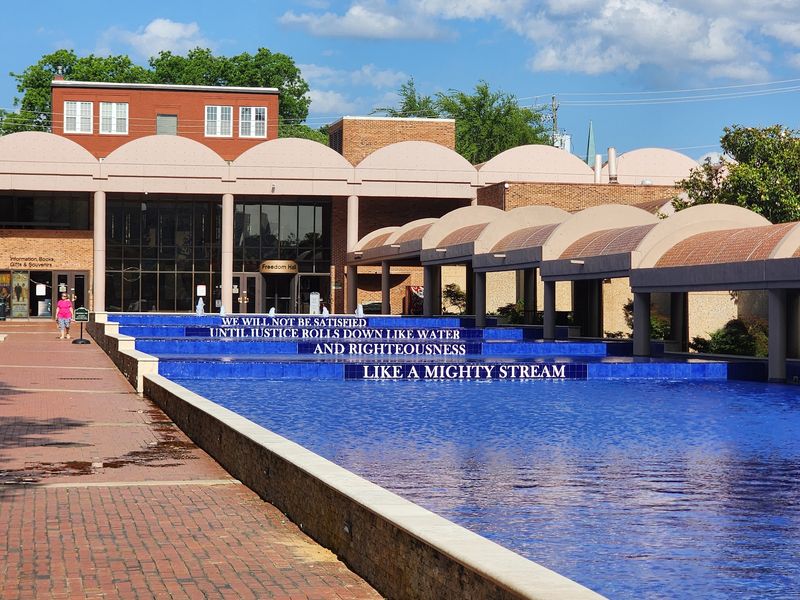
Auburn Avenue still hums with history.
Here, in Atlanta’s Sweet Auburn district, you can stand outside the modest two-story house where Martin Luther King Jr. was born in 1929.
Rangers lead free tours of the birth home, though tickets go fast, so arrive early.
Across the street sits Ebenezer Baptist Church, where King preached alongside his father.
Step inside and recordings of his sermons play through the sanctuary.
Goosebumps guaranteed.
The reflecting pool holds the tombs of Martin and Coretta Scott King, framed by an eternal flame that never quits.
Inside the visitor center, exhibits walk you through the civil rights movement with photographs, protest signs, and film footage that hits harder than any textbook.
Fun detail: the nearby Fire Station No. 6 was one of Atlanta’s first desegregated firehouses, and kids love climbing around the old engine.
Everything is free, including the visitor center and the church.
Parking in the lot is free too, which in downtown Atlanta feels like winning a small lottery.
Budget two hours minimum.
2. Ocmulgee Mounds National Historical Park – Macon
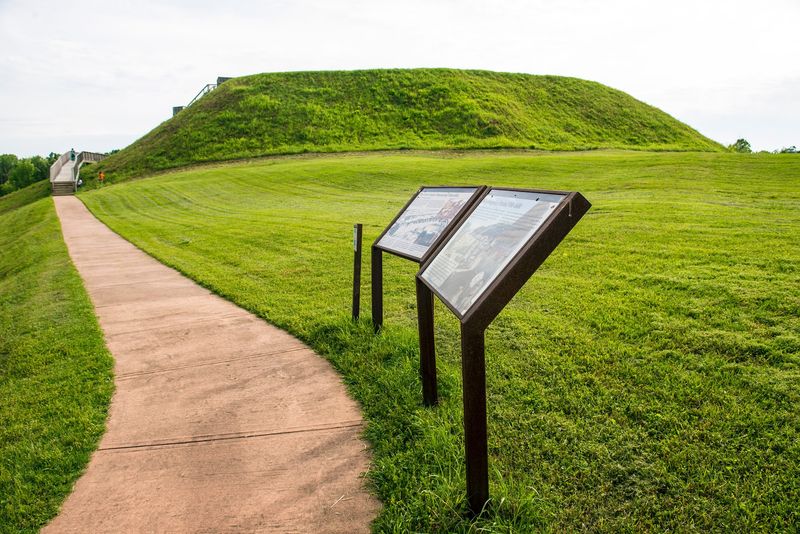
Seventeen thousand years of human history sit quietly outside Macon.
Ocmulgee Mounds protects enormous earthen structures built by Mississippian people around a thousand years ago, hauled basket by basket.
Climb the staircase up the Great Temple Mound and the whole river valley opens up beneath you.
The real showstopper is the reconstructed Earth Lodge, a ceremonial council chamber with an original clay floor dated to roughly 1015 AD.
You duck through a low tunnel and emerge into cool darkness.
It feels like time travel.
Roughly six miles of trails loop through wetlands and hardwood forest, so bring bug spray in summer.
Deer, turtles, and herons are regular cast members.
Admission costs nothing, and the visitor center museum holds thousands of artifacts, including pottery and copper ornaments.
Rangers here are genuinely enthusiastic, so ask questions.
Visitor tip: the annual Ocmulgee Indigenous Celebration in September brings dancers, drummers, and food, and it stays free.
Macon itself sits about 85 miles south of Atlanta, making a tidy day trip.
3. Fort Frederica National Monument – St. Simons Island
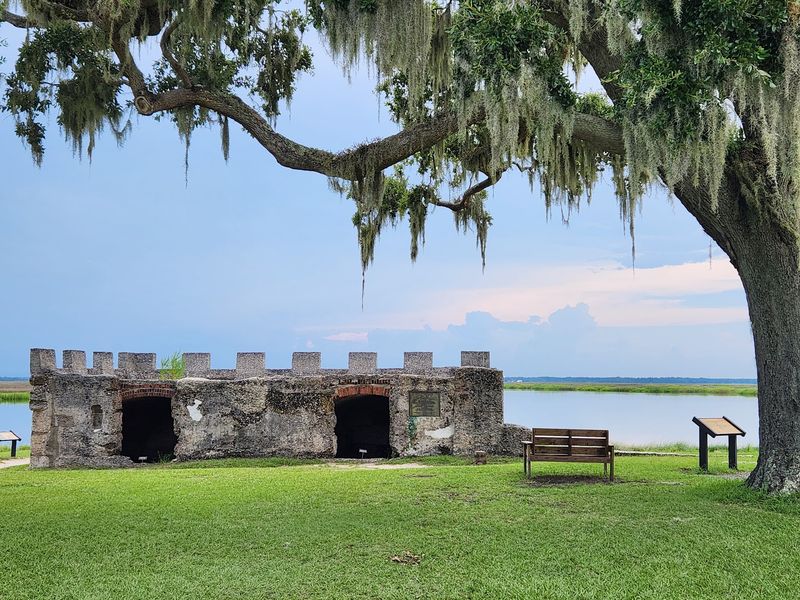
Picture a British fortress town swallowed by live oaks and salt marsh.
Fort Frederica on St. Simons Island was founded in 1736 by James Oglethorpe to guard Georgia’s southern edge against Spanish Florida.
Today the tabby ruins, made from oyster shells, lime, and sand, poke up from mowed lawns like broken teeth.
Numbered markers show where colonists once ran shops, taverns, and homes.
You walk the old streets while marsh grass sways and fiddler crabs scuttle nearby.
The Frederica River view alone justifies the drive.
Entrance is free, and the small visitor center screens a short film that sets the scene nicely.
Ranger talks happen most days.
Bring a picnic.
The oak canopy provides shade so thick you may forget it’s July in coastal Georgia.
Nearby Bloody Marsh, part of the same monument, marks the 1742 battle that ended Spanish ambitions in the region.
Also free.
Come at low tide for the best birdwatching, and wear shoes you don’t mind getting damp.
4. Andersonville National Historic Site – Andersonville
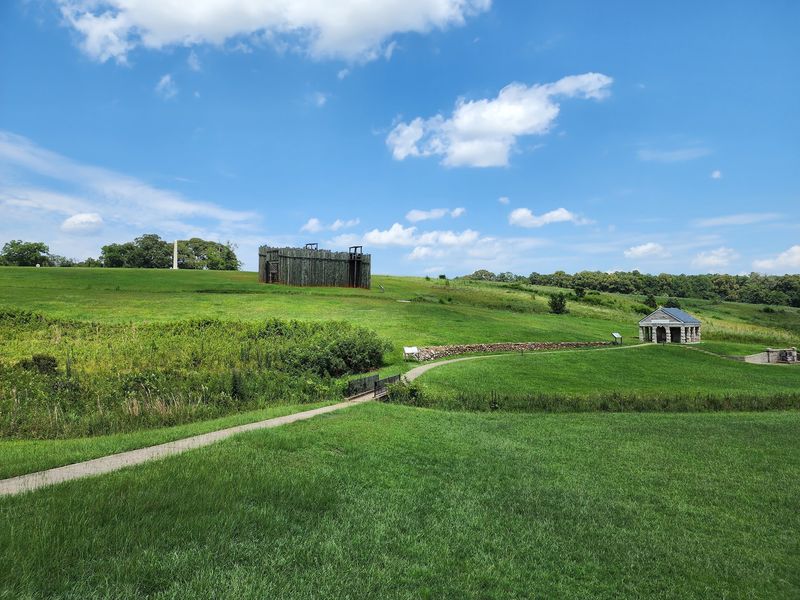
Some places aren’t fun, but they matter enormously.
Andersonville, in southwest Georgia, held roughly 45,000 Union prisoners during the Civil War.
Nearly 13,000 died there.
Walking the open field where the stockade once stood is a sobering, unforgettable experience.
The National Prisoner of War Museum anchors the site and honors American POWs from every conflict.
Exhibits include letters, tiny handmade tools, and video interviews with survivors.
Plan on an hour inside, longer if you read everything.
Outside, a driving tour loops past reconstructed stockade sections and Providence Spring, which prisoners believed appeared miraculously during a drought in 1864.
The adjacent national cemetery still holds active burials, its white headstones lined up in quiet rows.
Everything is free, including parking and the museum.
Practical note: shade is scarce, so bring water and a hat.
The site sits about 10 miles north of Americus, an easy add-on to a Plains and Jimmy Carter history route.
Kids over ten usually handle it well with a little preparation.
5. Georgia State Capitol and Capitol Museum – Atlanta

That gleaming dome?
It’s coated in actual gold leaf, mined from Dahlonega and donated by north Georgia residents.
The Georgia State Capitol opened in 1889 and came in under budget, a fact lawmakers still mention proudly.
Free self-guided tours run on weekdays, and guided tours can be booked ahead.
Marble staircases, portraits of governors, and a rotunda that echoes your footsteps set the mood.
Head to the fourth floor for the Capitol Museum, where you’ll find fossils, Georgia minerals, taxidermied wildlife, and a stuffed alligator that delights every third grader in the state.
Yes, really.
If the legislature is in session, usually January through late March, you can sit in the gallery and watch bills get debated.
Democracy live and unfiltered.
Bring a photo ID for the security checkpoint, and note the building closes on weekends, so plan a Friday visit.
Downtown parking costs money, but MARTA drops you a few blocks away.
Total time needed: about 75 minutes.
6. Bonaventure Cemetery – Savannah
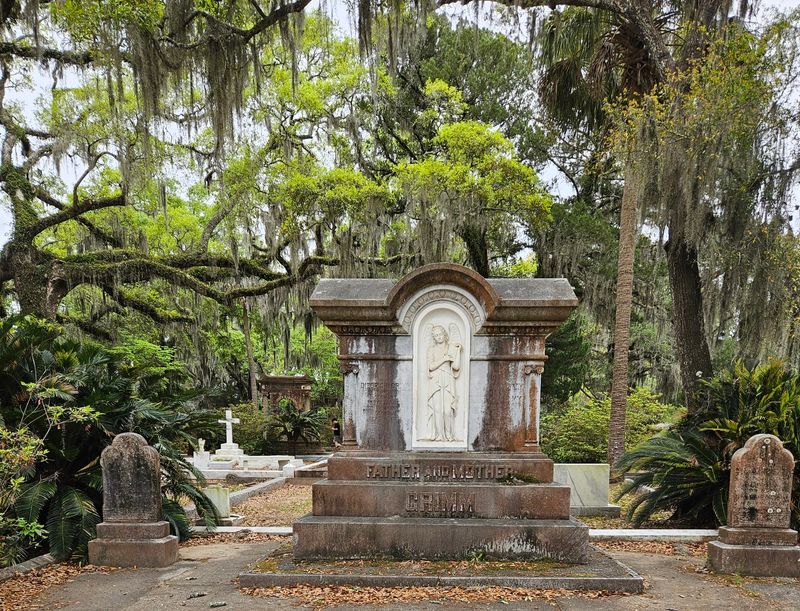
Spanish moss, marble angels, and a hundred acres of hushed beauty.
Bonaventure Cemetery sits on a bluff above the Wilmington River just east of downtown Savannah, and it may be the most photographed graveyard in America.
Established in 1846 on a former plantation, it became famous worldwide after appearing on the cover of Midnight in the Garden of Good and Evil.
Songwriter Johnny Mercer rests here, as does poet Conrad Aiken, whose bench-shaped headstone invites visitors to sit and have a drink.
People actually do.
Victorian sculpture fills the avenues: draped urns, weeping figures, sleeping lambs marking children’s graves.
Admission is free and gates generally open from 8 a.m. to 5 p.m.
Free walking tours are offered by volunteers on certain weekends through the Bonaventure Historical Society.
Go early.
Morning light through the oaks does things a camera can barely capture.
Be respectful, stay on the roads, and remember this remains an active burial ground.
7. Forsyth Park – Savannah
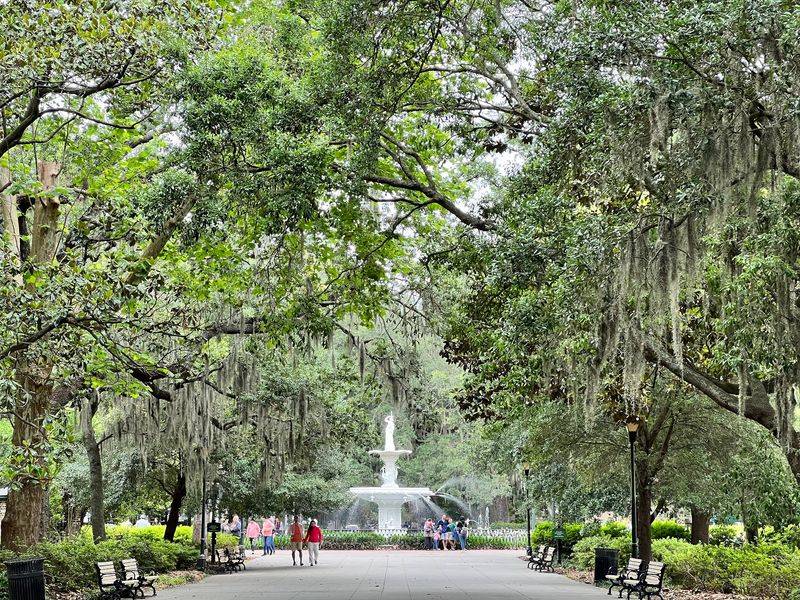
You’ve seen the fountain even if you’ve never been.
Forsyth Park’s white cast-iron fountain, installed in 1858, is Savannah’s most recognizable landmark and the backdrop of roughly nine million engagement photos.
Thirty acres of oaks, walking paths, and open lawn spread out behind it.
Locals treat the park like a living room.
Frisbee games, hammocks strung between trees, dogs greeting dogs, someone playing saxophone near the bandshell.
On Saturday mornings the Forsyth Farmers Market fills the south end with produce, bread, and local honey.
Browsing is free even if the peaches aren’t.
Free concerts and festivals pop up throughout the year, and the fountain turns green for St. Patrick’s Day, a Savannah tradition taken very seriously.
The park anchors the Historic District, so you can wander from here through the famous squares without spending anything.
Practical note: public restrooms and a small cafe sit near the center.
Bring a blanket, grab shade, and let the afternoon go slowly.
8. Savannah Botanical Gardens – Savannah
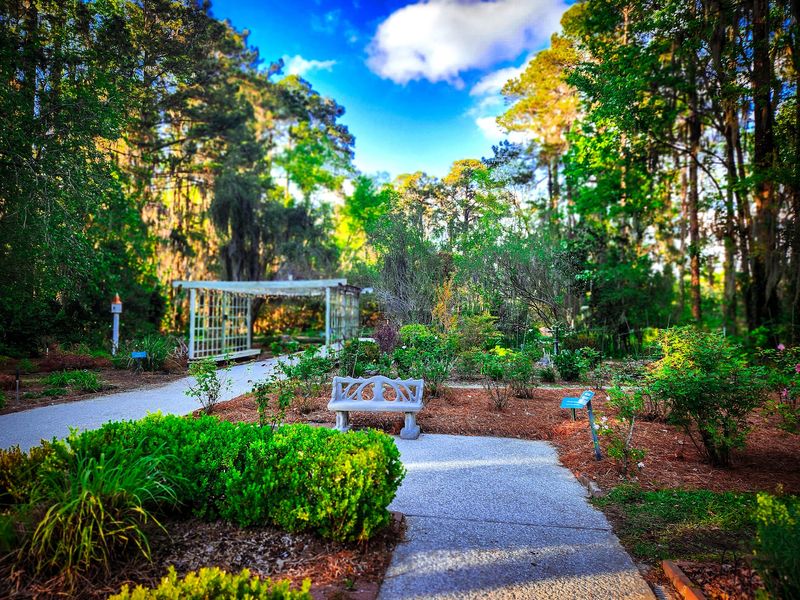
Ten acres of camellias, roses, and blissful quiet.
The Savannah Botanical Gardens sit on Eisenhower Drive, a few minutes from the tourist crush downtown, and hardly anyone visiting the city knows they exist.
Their loss.
Winding paths pass a fern glade, a bamboo grove, a lily pond stocked with turtles, and formal rose beds maintained by volunteers.
The historic Reinhard farmhouse, built around 1840, stands near the entrance and hosts occasional events.
Admission is free, with donations welcomed at the little box.
Gardens open daily from sunrise to sunset.
Camellia season, roughly December through March, is the sleeper highlight, since the Savannah Area Camellia Society keeps an impressive collection blooming when everything else looks tired.
Bird lovers should bring binoculars.
Cardinals, wrens, and woodpeckers work the canopy constantly.
Benches are plentiful and shaded, making this an easy stop with grandparents or restless kids.
Give yourself 45 minutes, or two hours if you’re the type who reads every plant label.
9. Arabia Mountain National Heritage Area – Lithonia
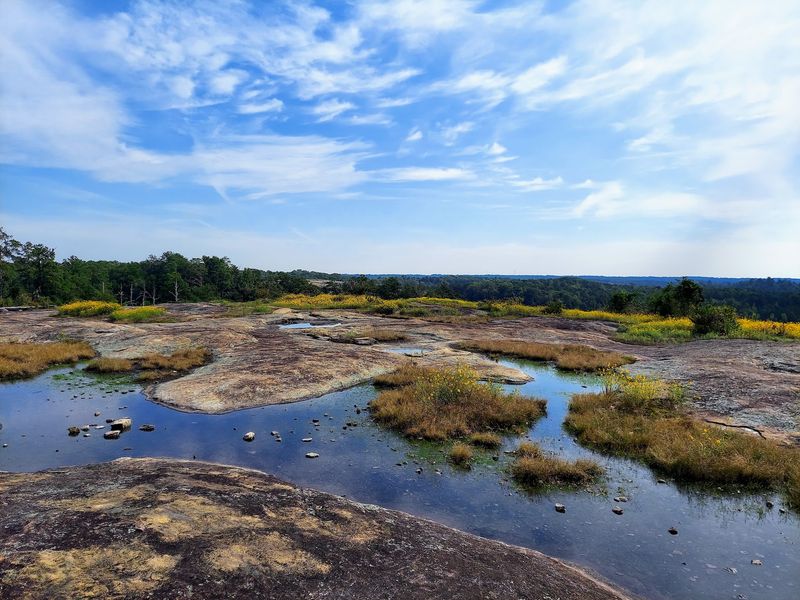
Imagine hiking across bare granite that looks borrowed from another planet.
Arabia Mountain, near Lithonia about 20 miles east of Atlanta, is a monadnock, an ancient rock outcrop worn smooth over millions of years.
Old quarry scars still show where stone was cut for buildings nationwide.
In late winter and spring, shallow rock pools fill with diamorpha, a tiny succulent that turns entire patches blood red.
Photographers lose their minds over it.
The summit hike runs about a mile round trip, short but rocky, so wear real shoes rather than sandals.
Over 30 miles of the paved PATH trail connect Arabia Mountain to Panola Mountain and Davidson-Arabia Nature Preserve, ideal for cycling.
Parking and entry cost nothing, and the nature center offers maps plus friendly advice.
Sunset here is the local secret.
The rock glows orange and Atlanta’s skyline floats on the horizon.
One rule matters: stay off the plant pools.
Those fragile communities take decades to recover from a single footstep.
10. Augusta Canal Trail – Augusta
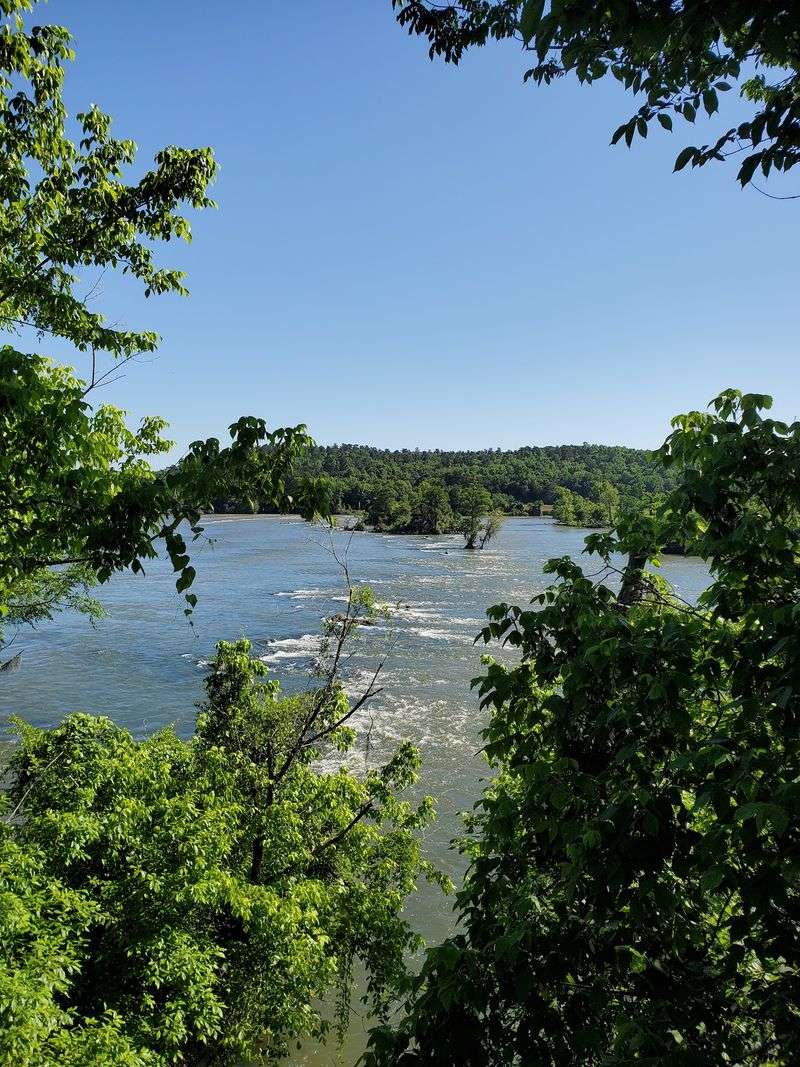
Built in 1845 to power mills, the Augusta Canal now powers weekend walks instead.
Its towpath runs roughly seven miles along calm water, shaded by hardwoods and lined with 19th century industrial architecture.
Mules once dragged barges here.
Now it’s runners, cyclists, and stroller-pushing families.
Wildlife shows up constantly: great blue herons stalking the shallows, turtles stacked on logs, the occasional otter if you’re lucky and quiet.
Anglers cast for bass along the banks.
Walking and biking the towpath costs nothing, though the boat tours and the interior of the Discovery Center charge admission.
Start at the Savannah Rapids Pavilion in Martinez for the prettiest stretch, complete with the original headgates and a scenic overlook.
Free parking there, too.
The canal remains America’s only industrial power canal still used for its original purpose, which is a strangely satisfying piece of trivia.
Go in the morning during summer.
Augusta humidity does not negotiate.
Bring water, bug spray, and a curious attitude.