Florida’s coastlines and forests hold secrets that stretch back centuries, and some of the most compelling stories are locked inside its historic forts.
From windswept barrier islands to sun-drenched shores, these fortifications were built to protect, defend, and endure, and many have done exactly that.
Whether you’re drawn to sweeping Gulf views, dramatic Atlantic shores, or the eerie quiet of a crumbling brick wall, each fort offers something entirely its own.
Some played roles in the Civil War, others sheltered soldiers during the Seminole Wars, and a few date back to the earliest days of Spanish colonization.
Whether you’re a history buff, a photographer, or simply someone who loves a good view with a great story, Florida’s historic forts are waiting to be discovered.
1. Fort Matanzas, St. Augustine, St. Johns County
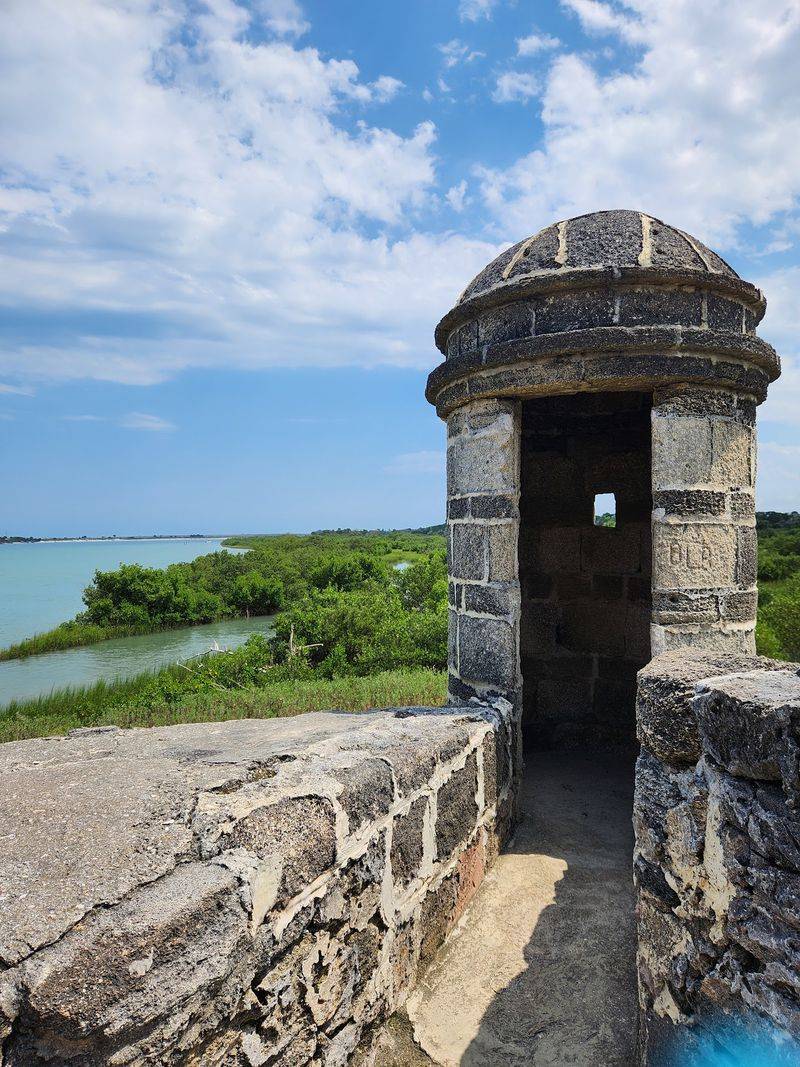
A short boat ride turns a simple visit into a small adventure at Fort Matanzas National Monument.
South of St. Augustine, this compact Spanish watchtower guards the Matanzas River, a waterway that once offered a back door to the city.
Its coquina walls may look modest, but the fort played an important role in protecting Spanish Florida.
Rangers usually take visitors across by ferry when conditions allow, so check schedules before you go.
The tower has tight spaces, a cannon deck, and marsh views that stretch across water and grass.
Because the site is smaller than many forts, it works well for families who want history without a long, tiring walk.
The surrounding nature trail, beach access, and picnic spots make the stop feel peaceful and varied.
Coquina, the same shell-stone used in nearby St. Augustine defenses, helped absorb cannon fire better than many harder stones.
Bring insect repellent during warm months, and arrive early on busy days because ferry space can fill quickly.
The quiet setting makes colonial history feel close, personal, and surprisingly easy to picture.
2. Fort Barrancas, Pensacola, Escambia County
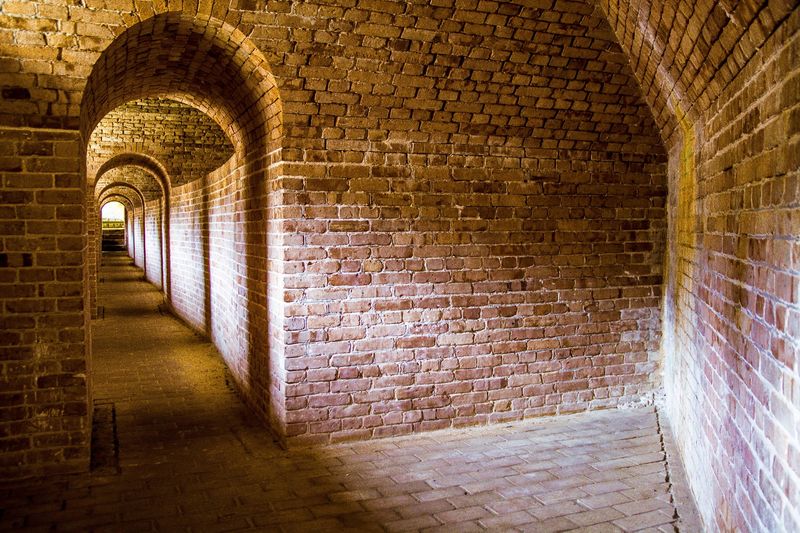
High above Pensacola Bay, a red brick fortress waits with sharp angles, quiet rooms, and views made for slow looking.
Fort Barrancas stands within the Naval Air Station Pensacola area, where layers of Spanish, British, and American history overlap.
The site includes a water battery, a dry moat, and a nearby Spanish-built fortification called Bateria de San Antonio.
Walking here feels different from a beach fort because the setting rises above the shoreline.
You can study cannon positions, peer along defensive walls, and imagine ships entering the bay below.
Check access rules before visiting, since entry may depend on base security and current visitor procedures.
The visitor center helps explain why Pensacola was so valuable to many nations.
Comfortable shoes matter because stairs, slopes, and uneven surfaces appear throughout the grounds.
History lovers should pair Fort Barrancas with the nearby National Naval Aviation Museum when available, creating a full day that connects coastal defense, military change, and Florida’s long role as a gateway to the Gulf region.
3. Fort Jefferson, Dry Tortugas National Park, Monroe County
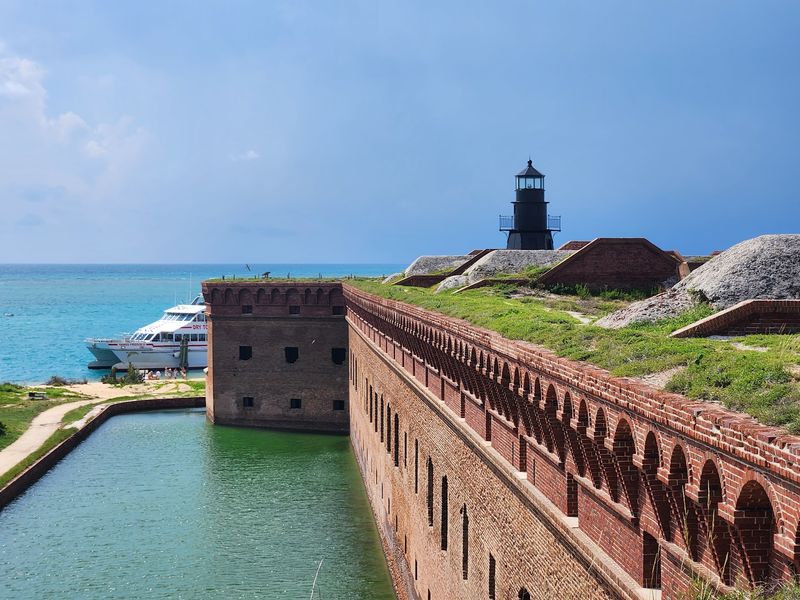
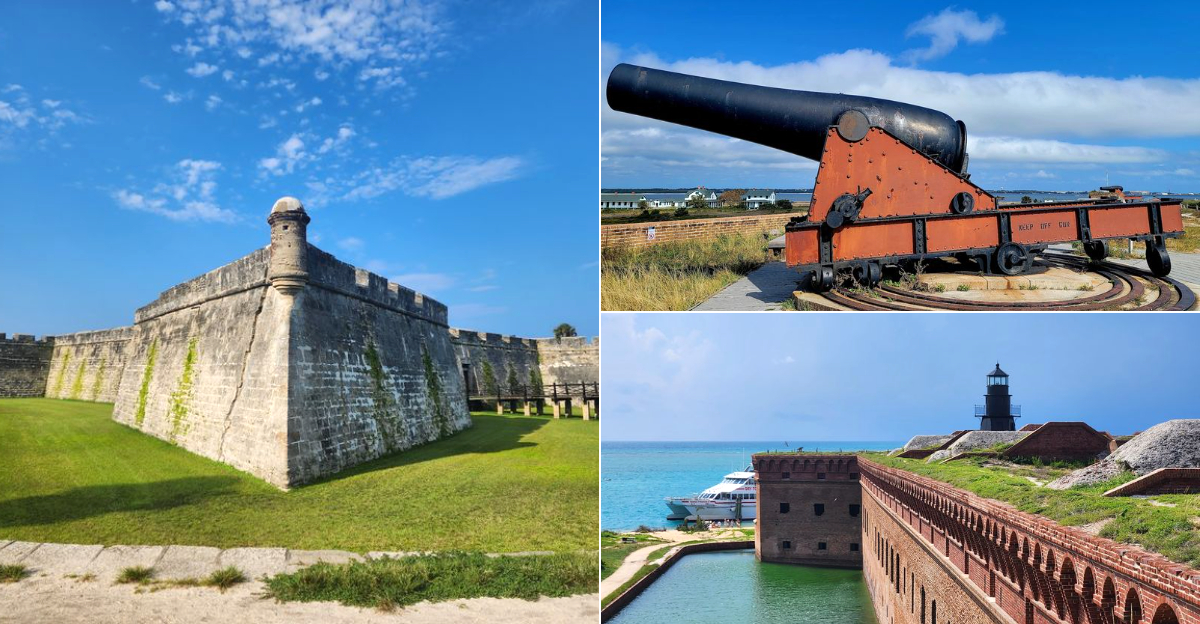
Far from highways and city noise, Fort Jefferson rises from bright turquoise water like a giant brick crown.
Found in Dry Tortugas National Park, about 70 miles west of Key West, it is one of America’s most dramatic coastal forts.
Reaching it by ferry or seaplane already feels like an adventure before the tour even begins.
The fort was started in the 1800s to protect shipping routes through the Gulf of Mexico.
Its huge walls, moat, parade ground, and unfinished corners show both big ambition and hard island conditions.
Visitors can walk along the top for sweeping views of reef, sky, and sea.
Bring sunscreen, snacks, and plenty of water, because services are limited once you arrive.
Snorkeling near the moat wall adds a colorful surprise after exploring cannon rooms and brick corridors.
A famous prisoner here was Dr. Samuel Mudd, linked to the aftermath of Abraham Lincoln’s assassination.
For the best day, book transportation early, watch the weather forecast, and give yourself time to enjoy both history and water.
4. Fort De Soto Park, Tierra Verde, Pinellas County
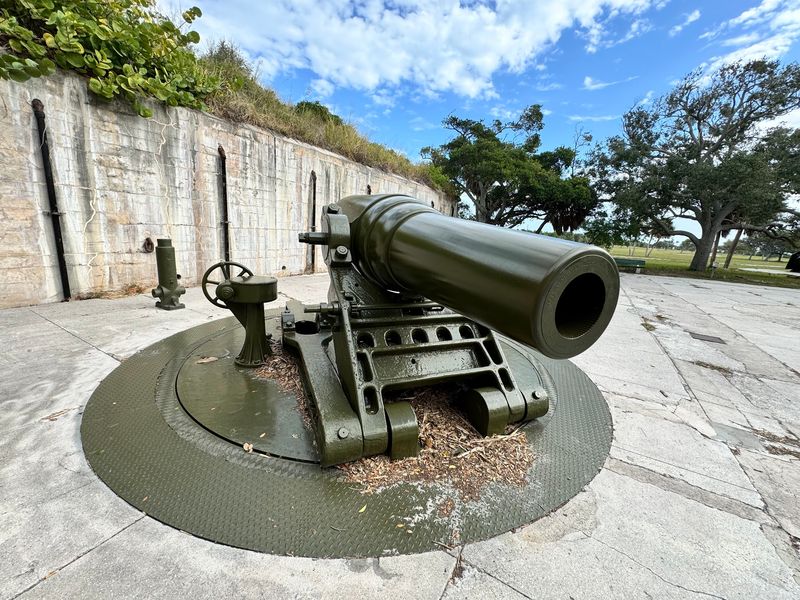
Beach bags and history books meet happily at Fort De Soto Park, where old military batteries sit close to award-winning sand.
Located in Tierra Verde near St. Petersburg, the park spreads across islands at the mouth of Tampa Bay.
The historic fort area mainly dates to the Spanish-American War period, when coastal defense looked very different from stone castles.
Instead of tall brick walls, you will find concrete gun batteries, mortar rooms, and shaded passages.
Kids often enjoy spotting the giant guns on display, while adults appreciate the open Gulf views.
The park also has bike paths, fishing piers, kayak routes, campgrounds, and quiet nature areas.
Plan extra time because the fort is only one part of a large, beautiful park.
Bring binoculars if you like birds, since shorebirds and ospreys are common around the beaches and mangroves.
A small history museum helps explain how soldiers lived here and why Tampa Bay needed protection.
Sunset can be especially lovely, with warm light falling across concrete, palms, and water in every direction.
5. Castillo de San Marcos, St. Augustine, St. Johns County
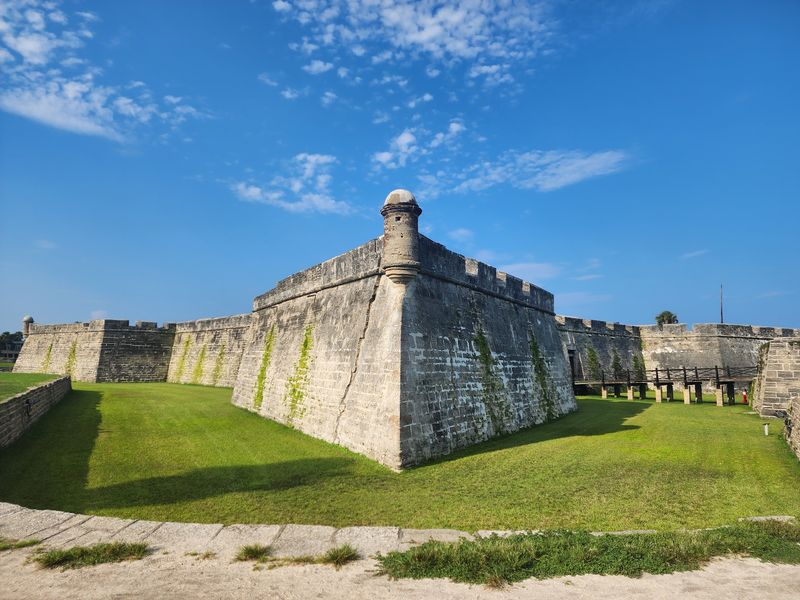
Morning light on coquina stone gives Castillo de San Marcos a golden glow above Matanzas Bay.
In the heart of St. Augustine, the oldest masonry fort in the continental United States tells a story that reaches back to Spanish rule.
Its star-shaped walls, cannon decks, and wide green moat make it one of Florida’s most impressive historic landmarks.
Visitors can explore rooms where soldiers stored supplies, slept, worshiped, and waited through long sieges.
Ranger talks and cannon demonstrations, when offered, help explain why the fort was so hard to capture.
The bayfront views are excellent, especially from the upper gun deck.
Coquina stone is made from tiny shells, and that strange material helped the walls survive cannon blasts by absorbing impact.
Wear a hat because shade can be limited on the top level.
After touring, walk nearby streets for more Spanish colonial buildings, shops, and waterfront scenes.
The Castillo works well for first-time Florida history travelers because it is easy to reach, rich in stories, and beautiful from almost every angle.
6. Fort Caroline National Memorial, Jacksonville, Duval County
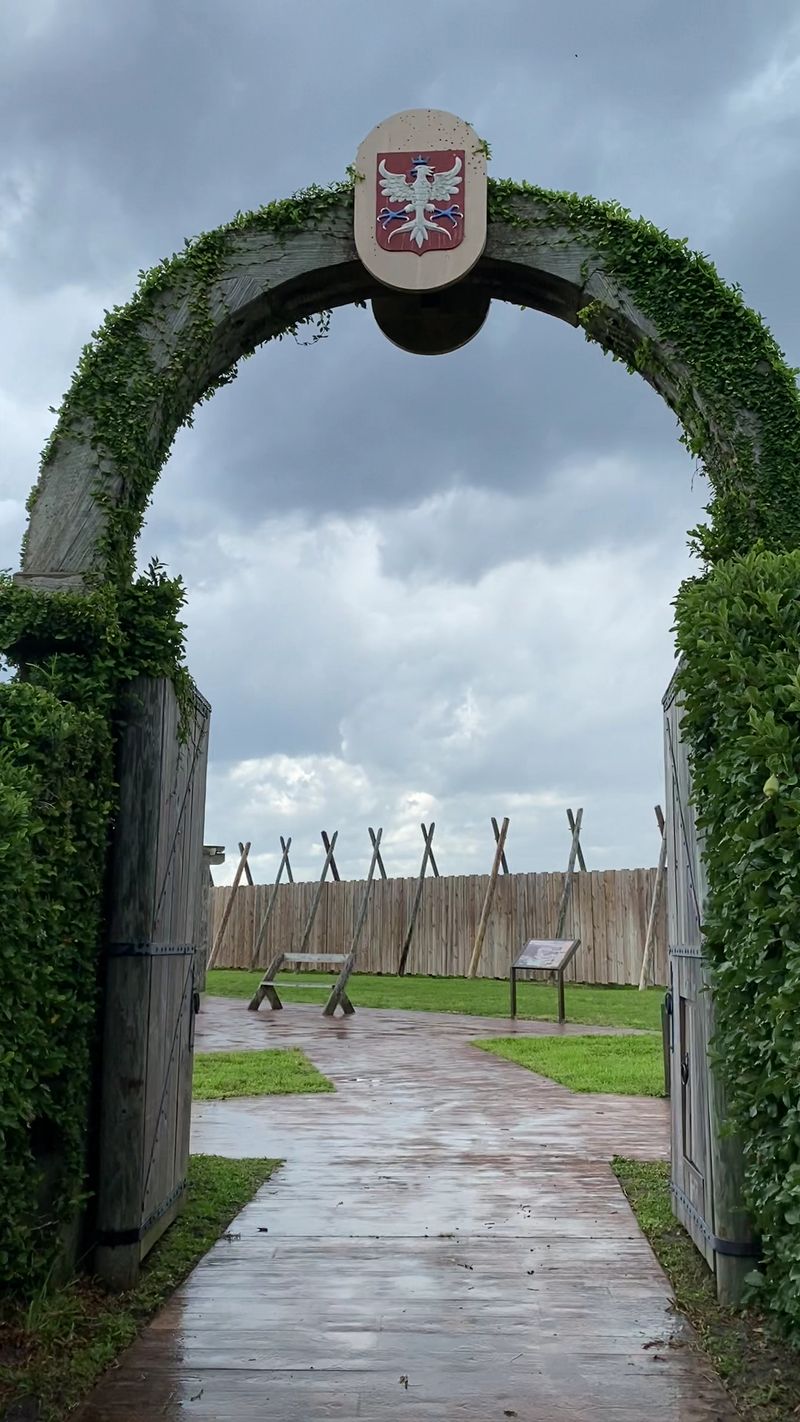
Under tall trees beside the St. Johns River, Fort Caroline National Memorial shares a story of hope, conflict, and survival.
The site remembers a short-lived French settlement from the 1500s, long before Florida became part of the United States.
Although the exact original fort location is debated, the memorial helps visitors understand a dramatic early chapter of European contact.
A reconstructed fort area, river overlooks, and shaded trails make the visit calm but meaningful.
Interpretive signs explain the French Huguenots, the Timucua people, and the struggle between France and Spain for control of Florida.
The nearby visitor center at Timucuan Ecological and Historic Preserve adds helpful context.
This stop is great for travelers who enjoy nature mixed with history rather than huge walls and cannons.
Look for marshes, birds, and wide river views while thinking about how challenging life was for early settlers.
Bug spray and comfortable walking shoes are smart choices, especially in warm weather.
Fort Caroline invites slower reading, quiet reflection, and a broader view of Florida’s past beyond beaches and later military forts.
7. Fort Pickens, Pensacola Beach, Escambia County
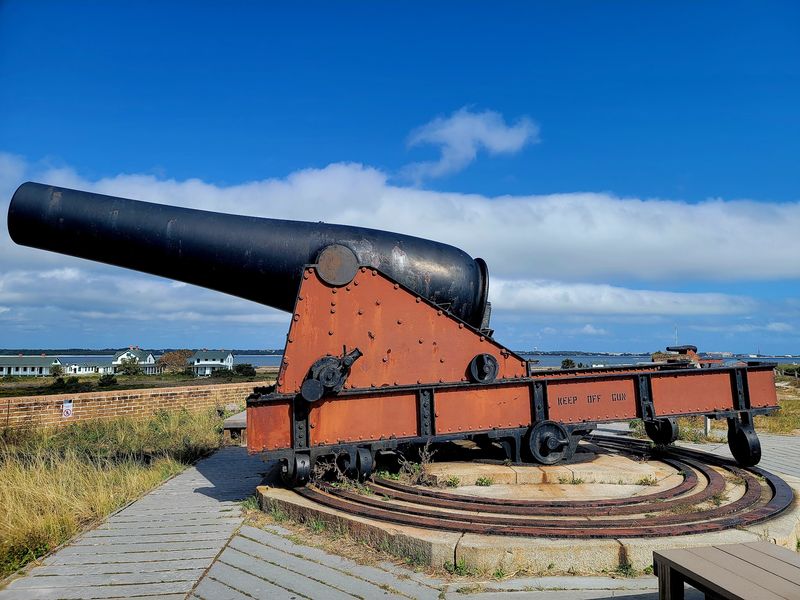
Salt air seems to whisper through every brick tunnel at Fort Pickens, where the Gulf of Mexico shines just beyond the walls.
Located on Santa Rosa Island near Pensacola Beach, this massive fort was built to guard Pensacola Bay after the War of 1812.
Its thick brick arches, dark rooms, and grassy ramparts make history feel close enough to touch.
Visitors can walk self-guided paths, climb to breezy viewpoints, and look across water once watched by soldiers.
Bring a flashlight for dim corners, because some passages feel cooler and quieter than the sunny beach outside.
The fort is also part of Gulf Islands National Seashore, so beach time, birdwatching, and picnics fit easily into the same trip.
A powerful history note is that Fort Pickens stayed in Union hands during the Civil War.
Apache leader Geronimo was also held here with other prisoners in the 1880s.
Go early for softer light, fewer crowds, and better chances to enjoy both the fort and the shoreline slowly today.
8. Fort Christmas Historical Park, Christmas, Orange County
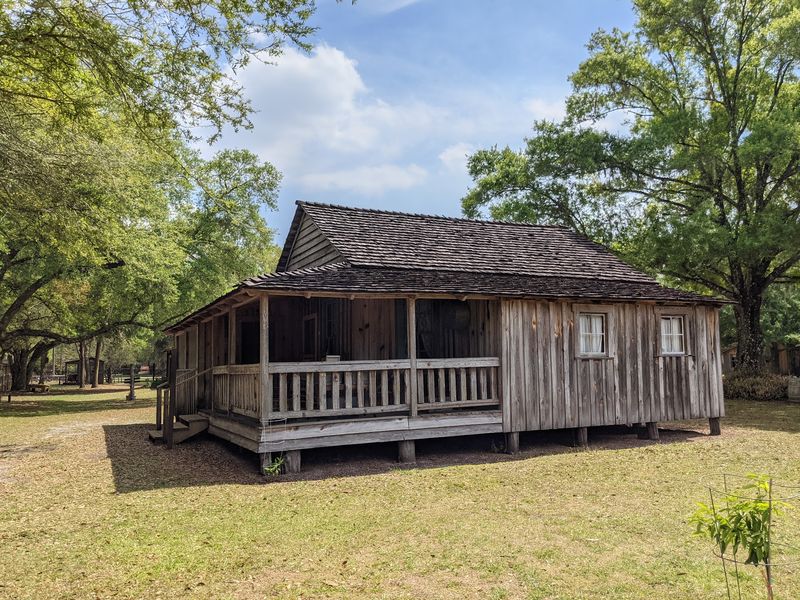
Wooden stockade walls and pioneer cabins make Fort Christmas Historical Park feel like a step into frontier Florida.
Located in the small community of Christmas, east of Orlando, the park centers on a replica of a fort built during the Second Seminole War.
The original fort was established on Christmas Day in 1837, which explains the memorable name.
Unlike coastal forts, this place tells an inland story of settlers, soldiers, Seminole resistance, and rough travel through central Florida.
Visitors can see the reconstructed fort, historic homes, farm tools, and displays about daily life before paved roads and theme parks.
The grounds are open and family friendly, with space for picnics and easy walking.
School groups often visit because the site explains history in a clear, hands-on way.
Bring water and sun protection, since central Florida heat can build quickly on open lawns.
The park is a good add-on for travelers exploring Orlando who want a quieter, more local experience.
Fort Christmas shows that Florida’s past was not only fought along the coast, but also shaped deep among forests, rivers, farms, and trails.
9. Fort Foster, Thonotosassa, Hillsborough County
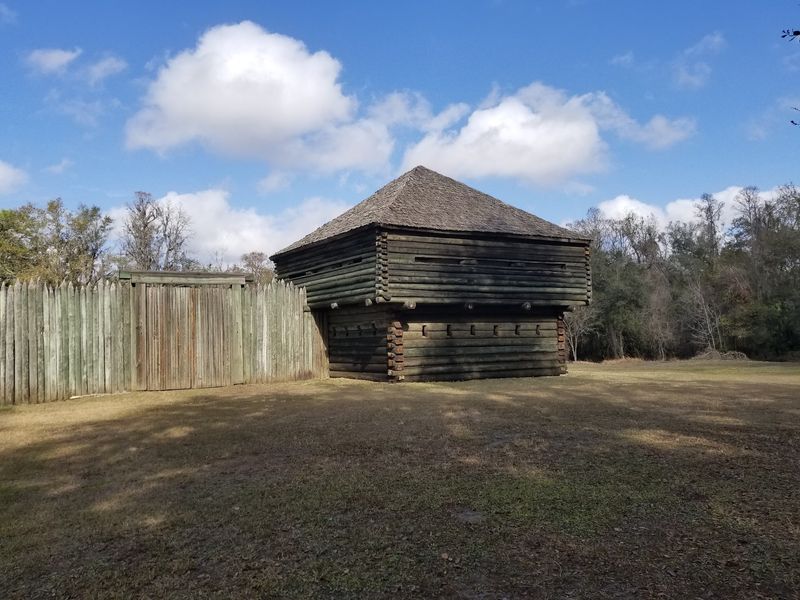
Along the Hillsborough River, Fort Foster brings the Second Seminole War into focus with rough wood walls and forest sounds.
The reconstructed fort sits near Hillsborough River State Park in Thonotosassa, northeast of Tampa.
It represents a military post from the 1830s, built to protect a bridge and road used by soldiers moving through difficult land.
Guided tours are often the best way to visit, because the fort may not be open for casual entry every day.
Costumed programs, when available, explain weapons, uniforms, cooking, and the tense conditions faced by people on all sides.
Nearby trails and river views add outdoor beauty to the history lesson.
This is a smart choice for travelers who like smaller sites with strong storytelling.
Check park schedules before driving out, and plan time for hiking or kayaking afterward.
The wooded setting helps visitors imagine how thick and confusing Florida’s interior could feel in the 1800s.
Fort Foster may not be famous like coastal landmarks, but its quiet location makes the past feel close, human, and grounded in the land.
10. Fort Clinch State Park, Fernandina Beach, Nassau County
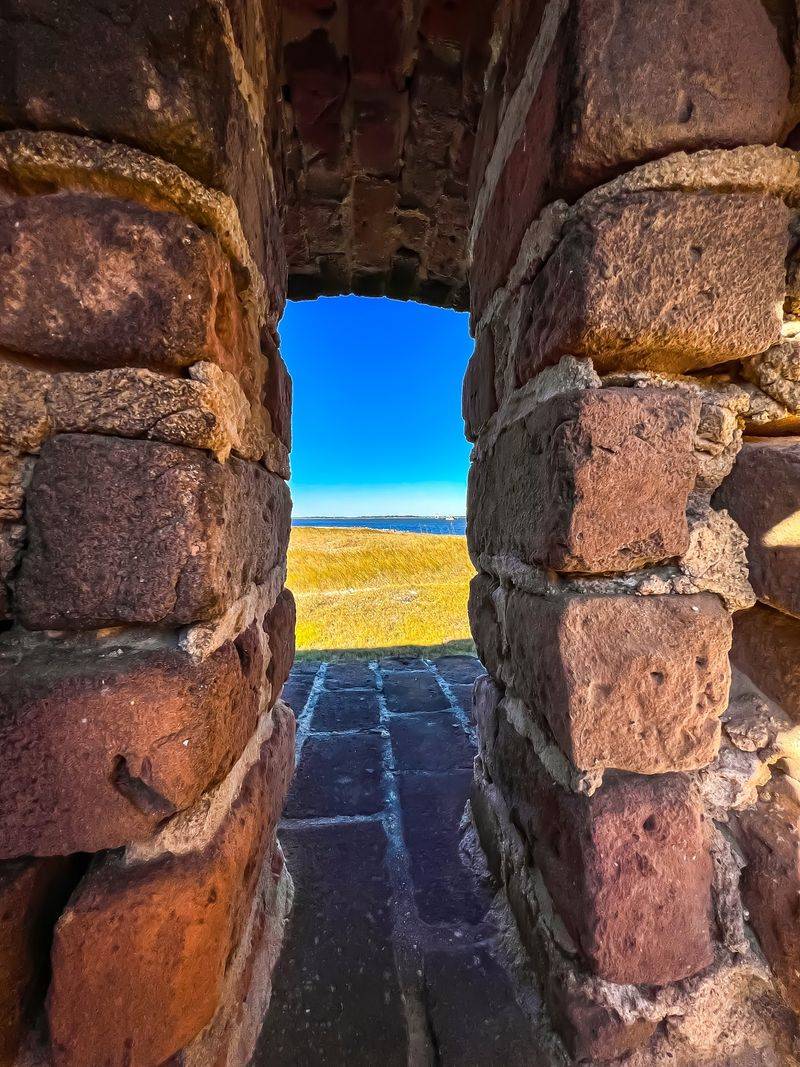
At the northern tip of Amelia Island, Fort Clinch feels both sturdy and strangely graceful beside river and ocean views.
Near Fernandina Beach, the brick fort sits inside a state park known for beaches, live oaks, trails, camping, and wildlife.
Construction began before the Civil War, and the fort later served during several military periods.
Rooms are furnished to show soldier life, making it easier to picture meals, drills, guard duty, and long quiet hours.
Reenactors sometimes bring the site to life with uniforms, demonstrations, and stories that feel close rather than distant.
From the walls, visitors can watch boats, shorebirds, and the meeting of the Amelia River and Atlantic waters.
Arrive with time to enjoy the park beyond the fort itself.
Shark tooth hunting, biking, fishing, and beach walks are popular extras.
The fort’s brickwork, arches, and cannon positions reward slow exploring, especially for photographers.
For a balanced day, tour the fort in the morning, picnic under trees, then follow the shoreline as the afternoon light softens across this beautiful corner of northeast Florida.