
Some structures don’t just stand, they loom, and the moment you lay eyes on the Weeksville Dirigible Hangar near Elizabeth City, North Carolina, you understand exactly what that means.
Built during World War II to house blimps used for anti-submarine patrols along the Atlantic coast, the hangar is one of the largest wooden structures ever built, and its sheer scale is nothing short of staggering.
Despite its size, the hangar remains relatively unknown outside of aviation history and architecture circles.
The site is a designated National Historic Landmark, and its survival is a small miracle given how many similar hangars were demolished after the war.
If you make the drive to Elizabeth City, you will not be disappointed, as this is the kind of thing that stays with you long after you’ve left.
A Giant Shape on the Flat Coastal Plain
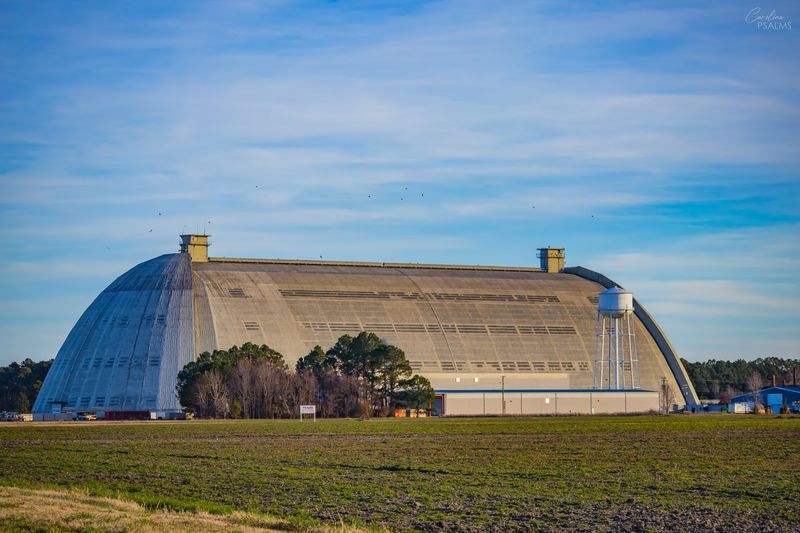
The first thing that grabs people is scale.
Across the flat land near Elizabeth City, the building rises like a man-made cliff, making cars, fences, and nearby roads look tiny.
The Weeksville Dirigible Hangar at 173 T Com Dr, Elizabeth City, NC 27909 is not a normal old warehouse, and that surprise is part of its power.
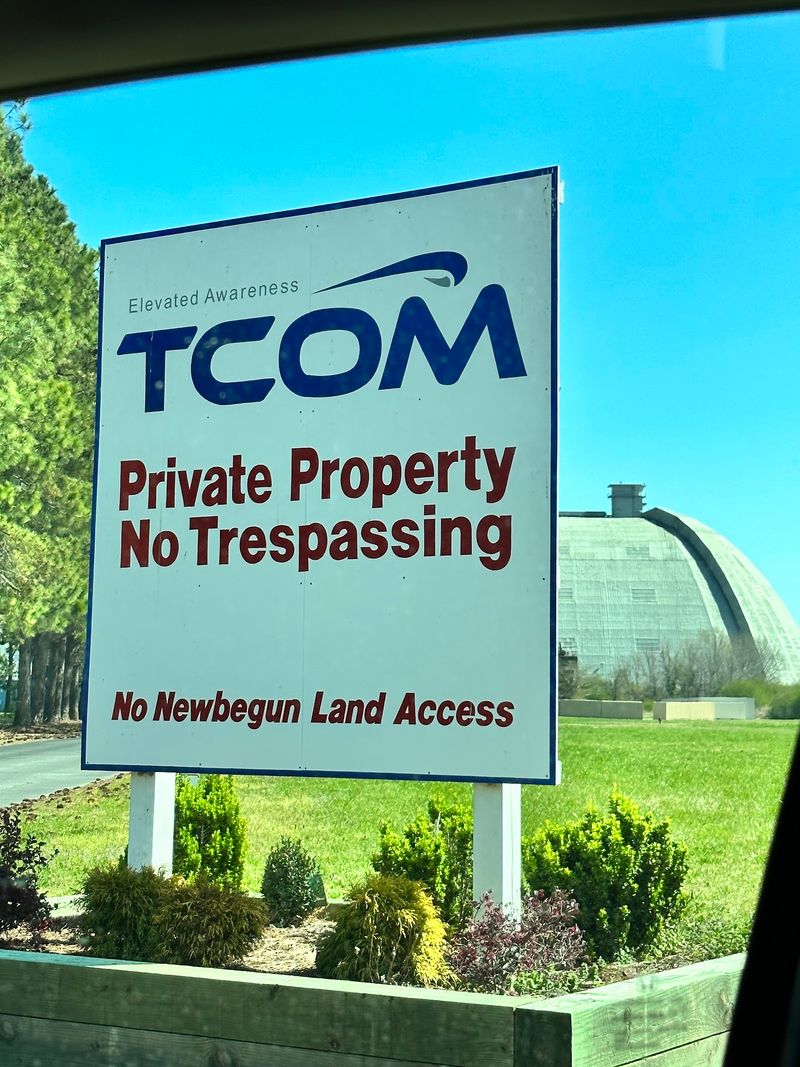
Visitors usually see it from outside because the site is active and not generally open for public tours.
That means planning matters, so check current access rules, respect signs, and do not expect to walk inside with a camera.
A simple drive-by can still be impressive, especially on a clear day when the long roofline stands out against the sky.
For a better visit, pair the stop with nearby Elizabeth City history, waterfront views, or aviation research before you go.
Knowing its World War II purpose makes the sight more meaningful.
Instead of just seeing a huge building, you are looking at a rare survivor from coastal defense history.
Built for Blimps with a Serious Job
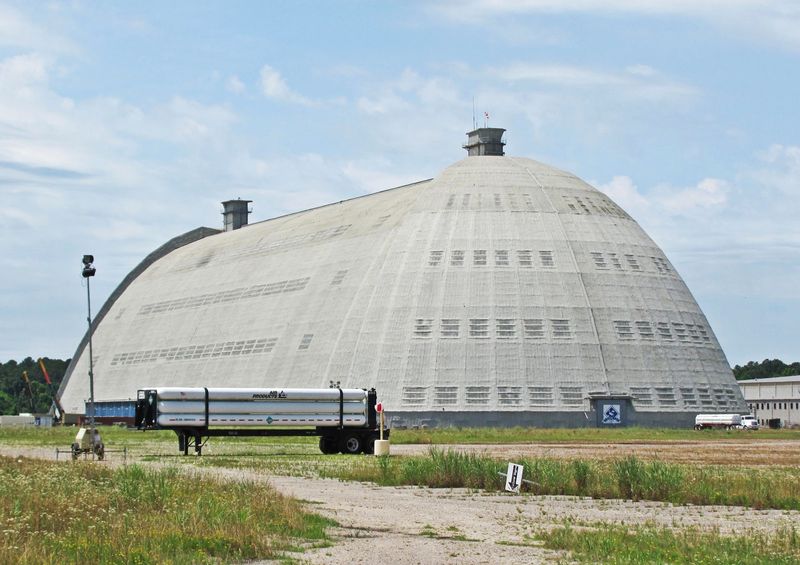
Long before drones and satellites watched the coast, slow-moving airships had an important job.
During World War II, Navy blimps patrolled wide stretches of ocean, searching for German U-boats that threatened ships and crews.
The huge hangar supported that mission by sheltering lighter-than-air craft from rough weather.
Blimps could stay in the air for long hours, which made them useful for spotting trouble at sea.
When crews found something suspicious, they could radio the position to other forces that moved in faster.
That teamwork helped protect supply routes, merchant ships, and people far from home.
Understanding that purpose changes how you view the building.
Its size was not for show, since airships needed enormous open space to be stored, repaired, and prepared.
If you visit the area, read about coastal patrols first, because the background turns steel and concrete into a story of watchfulness, danger, and quiet service.
A Landmark Tied to U-Boat Stories
Family stories give old places a heartbeat.
One reviewer shared that his uncle served there during World War II as a radioman on the dirigibles, helping report U-boat positions.
That kind of personal memory makes the hangar feel less like a giant object and more like a workplace filled with real voices.
Radiomen had to be sharp, calm, and ready.
If an airship crew spotted a possible submarine, the message had to move quickly and clearly.
Planes or other units could then respond, so a few spoken words over the radio might affect lives at sea.
For readers planning a history-themed visit, look beyond the building itself.
Search for accounts of Atlantic convoy protection, local Navy activity, and the role of coastal communities during wartime.
The best part of this landmark is not only its size, but the way it points back to ordinary people doing tense, careful work under extraordinary pressure.
Rare History That Survived in Plain Sight

Some historic places hide behind museum glass, but this one still sits in the open landscape.
That makes it feel strange in the best way, because a piece of wartime engineering remains part of the modern world.
People driving nearby may suddenly notice the huge form and wonder what they are seeing.
Large blimp hangars were once built for a very specific need, and not many remain in recognizable condition.
Their size made them expensive to maintain, and changing military needs left many without a clear future.
When a structure like this survives, it becomes a rare clue to a chapter of aviation that many people barely know.
If you enjoy historic landmarks, bring patience and curiosity rather than a checklist.
You may not get close access, but you can still appreciate the outline, the setting, and the story.
A quick photo from public areas, where allowed, can help you remember the moment without crossing boundaries or disturbing active operations.
Still Connected to Lighter-Than-Air Work

History did not simply stop when the war ended.
The hangar later became connected with modern lighter-than-air technology, showing how an old military building can find a new purpose.
That link between past and present makes the site more than a frozen relic.
Modern airships and tethered aerostats are different from the wartime blimps people imagine from black-and-white photos.
They may support observation, communication, testing, or military-related work, depending on the project.
Because of that, visitors should understand why rules about access and photos can be strict.
The practical advice is simple: admire the building from approved public viewpoints and do not try to enter unless you have official permission.
Security limits can feel disappointing, but they also explain why the place is still cared for.
A landmark that remains useful has a better chance of surviving, so the ongoing work may be one reason this giant piece of aviation history is still standing.
A Drive-By View That Still Feels Special

Not every memorable stop requires a ticket booth.
For many people, the best view comes from passing by, slowing down safely, and letting the size of the hangar sink in.
A reviewer even said their eyes were not deceiving them, because seeing a blimp hangar there feels so unexpected.
Since public access is limited, a respectful drive-by is often the most realistic plan.
Use a map before you go, stay on public roads, and avoid blocking gates or work traffic.
If signs say no photos in certain areas, follow them without arguing.
The surrounding flat land helps make the building look even larger.
Wind, open sky, and nearby fields add to the feeling that you have found something unusual on the Pasquotank peninsula.
For travelers who like odd roadside history, this is the kind of place that turns a normal route into a story you will probably tell later.
What to Know Before You Go
A little planning keeps the visit smooth and respectful.
Because the hangar is tied to active work and military-related history, it is not the kind of landmark where visitors can wander freely.
Expect limited access, possible security rules, and areas where photography may not be allowed.
Before heading out, check maps, recent reviews, and local information so you know what kind of visit is realistic.
Bring binoculars if you like studying buildings from a distance, and choose daylight hours for the safest viewing.
Do not rely on getting a tour, since rare past access stories do not mean the same chance is available now.
For a fuller day, connect the stop with Elizabeth City attractions, Coast Guard history, or nearby waterfront areas.
That way, even a short look at the hangar becomes part of a broader trip.
The reward is simple: you get to stand near a huge reminder of World War II aviation and coastal defense, while treating the site with care.