Some North Carolina kayak trails feel less like rivers and more like secret tunnels through the woods.
Paddle beneath towering cypress, tupelo, and hardwood trees as branches stretch over the water and sunlight slips through in tiny golden patches.
Spanish moss sways overhead, the shoreline disappears behind walls of green, and suddenly the open sky feels miles away.
These 13 kayak trails take you into some of the state’s most beautifully enclosed waterways, from dark, tea-colored blackwater rivers to quiet swamps and forest-lined mountain streams.
Some routes are peaceful and glassy, while others bring gentle current and a little more adventure.
Keep your eyes open as you paddle. Turtles, birds, fish, and other wildlife often appear along the banks, making these shady waterways just as rewarding for nature lovers as they are for kayakers.
White Oak River Paddle Trail – Maysville to Stella
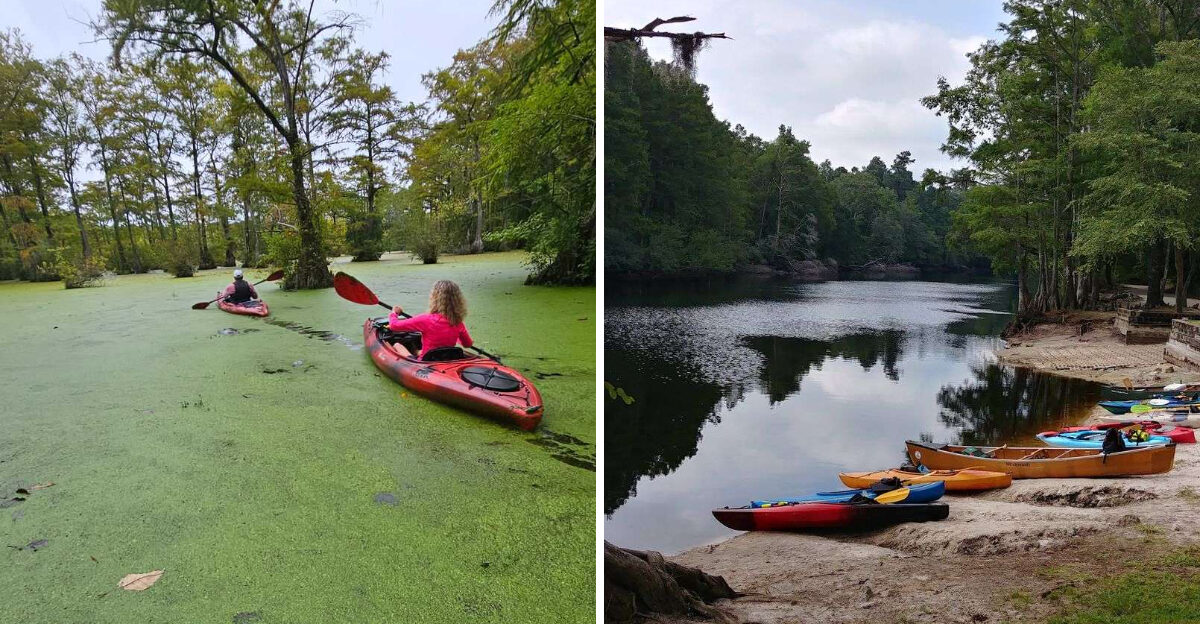
Stretching 17 miles through some of eastern North Carolina’s most stunning scenery, this paddle trail earns its reputation for incredible canopy coverage. Official county information highlights the chance to kayak beneath towering trees that form natural archways over the water.
The route takes you through swamp, salt marsh, and hardwood forest ecosystems that change as you paddle. Some of the region’s oldest cypress trees stand guard along the riverbanks, their roots disappearing into the dark water below.
You’ll find yourself moving through spaces where the trees overhead are so thick that only scattered patches of sunlight break through. The variety of habitats means you’re likely to spot wildlife around every bend, from wading birds to turtles sunning on fallen logs.
Multiple access points make it easy to customize your trip length. Whether you paddle the entire route or just a section, the canopy experience stays consistent and memorable throughout the journey.
Merchants Millpond State Park – Gatesville
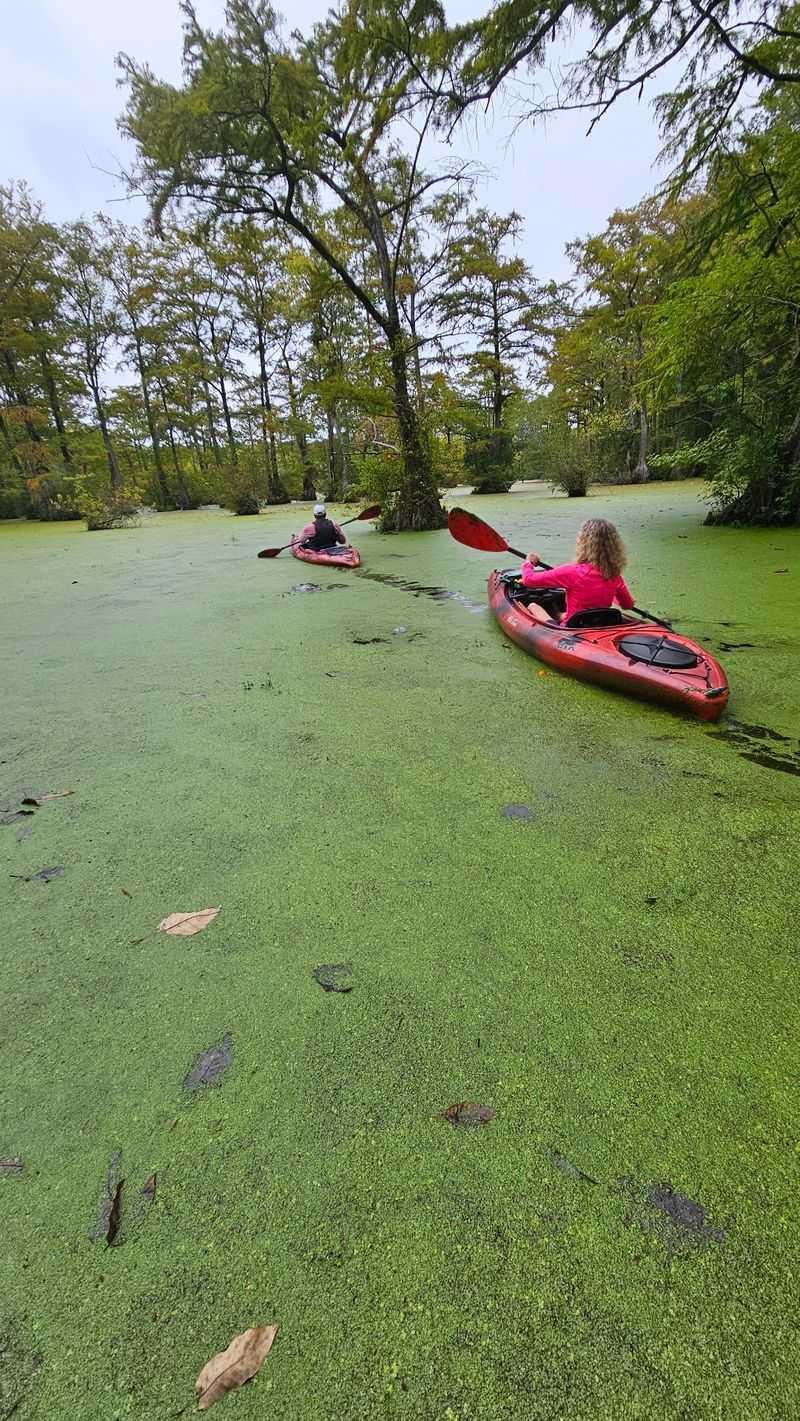
Picture gliding across glass-smooth water while 760 acres of ancient forest wraps around you like a living cathedral. Old-growth cypress, tupelo, and Spanish moss create an atmosphere that feels lifted from a fairy tale rather than a typical North Carolina park.
Lassiter Swamp offers particularly immersive scenery where the trees crowd so close you can touch their trunks from your kayak. The stillness of the millpond means you’ll see perfect reflections of the canopy in the water below, doubling the forest effect.
Canoe and kayak rentals are available right at the park, making this one of the easiest canopy paddles to plan without bringing your own gear. The rentals mean you can show up ready to explore without worrying about logistics.
Wildlife abounds in this protected habitat, with otters, beavers, and countless bird species calling the swamp home. The quiet water lets you hear every splash and rustle in the surrounding forest.
Lumber River State Park – Princess Ann Access
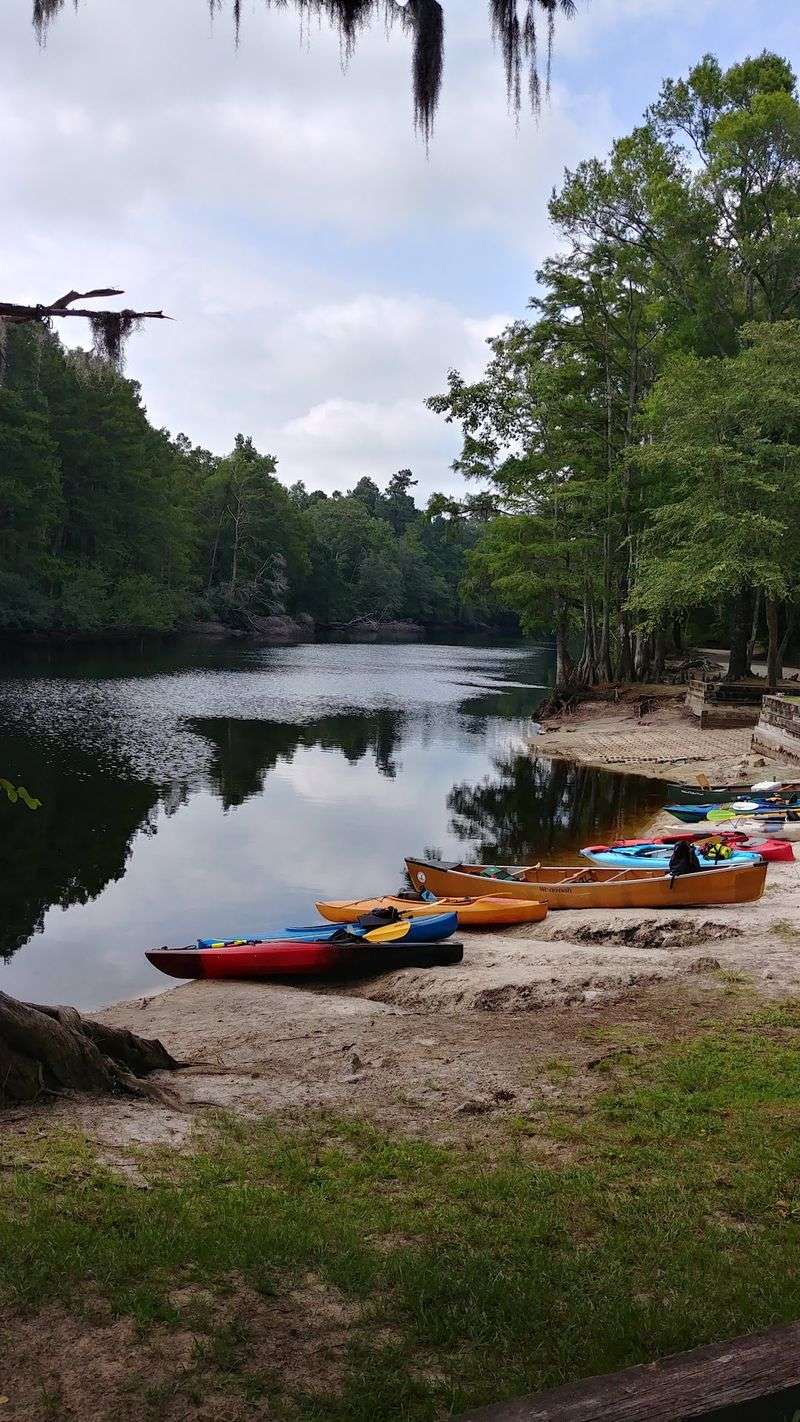
Tea-colored water winds through a blackwater forest so dense it transforms the river into a natural tunnel. Bald cypress and other swamp-loving trees crowd the shoreline, their branches reaching across the water to meet in the middle.
The Princess Ann section provides access to one of North Carolina’s most distinctive wilderness waterways. This isn’t a quick afternoon paddle but rather a genuine wilderness experience where civilization feels miles away.
The surrounding forest creates a shaded corridor that stays cool even on hot summer days. Paddlers find themselves moving through a world of deep greens and browns, with the dark water reflecting the canopy above.
This blackwater river moves slowly, giving you plenty of time to take in the scenery and spot wildlife. The gentle current means beginners can handle this route while still feeling like they’re on a real adventure through untamed forest.
Black River – Three Sisters Swamp
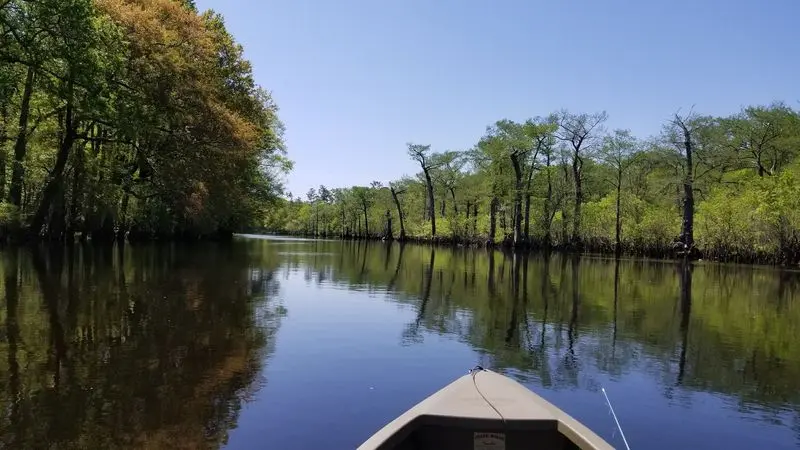
Ancient tree drama reaches its peak along this stretch of the Black River where some of the oldest living trees on Earth tower overhead. The Three Sisters Swamp section features enormous bald cypress that have witnessed centuries of North Carolina history.
Tannin-dark water creates an almost mystical atmosphere as you paddle between these giants. The deeply forested setting can feel more like navigating a flooded woodland than following a conventional river path.
These aren’t just old trees but true ancients, with some exceeding 2,000 years in age. Paddling among them creates a humbling experience that connects you to deep time and wild nature simultaneously.
The canopy here is incredibly thick, with the massive cypress spreading their branches wide to capture every bit of sunlight. You’ll find yourself craning your neck upward constantly, amazed at the scale of these living monuments surrounding your small kayak.
Roanoke River Paddle Trail – Lower Roanoke River
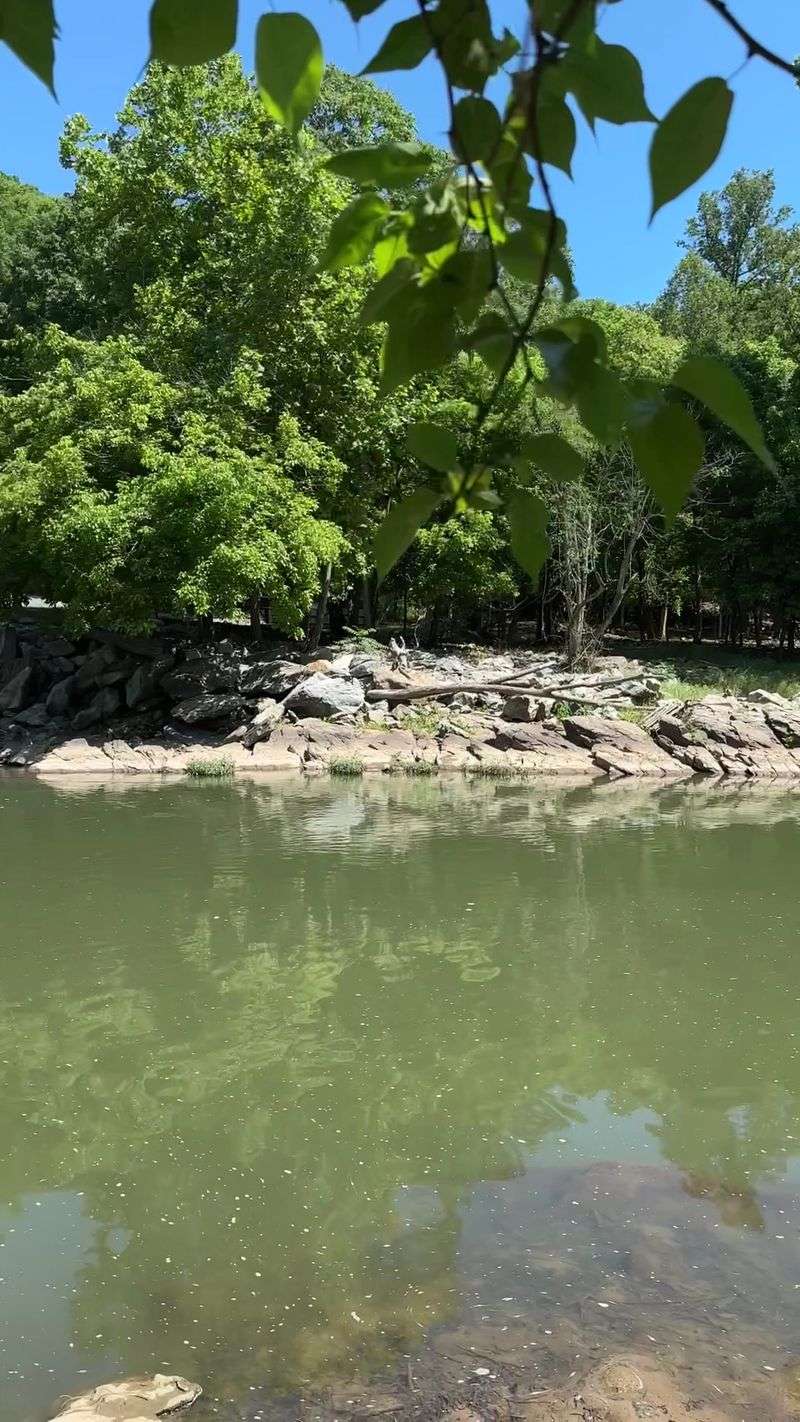
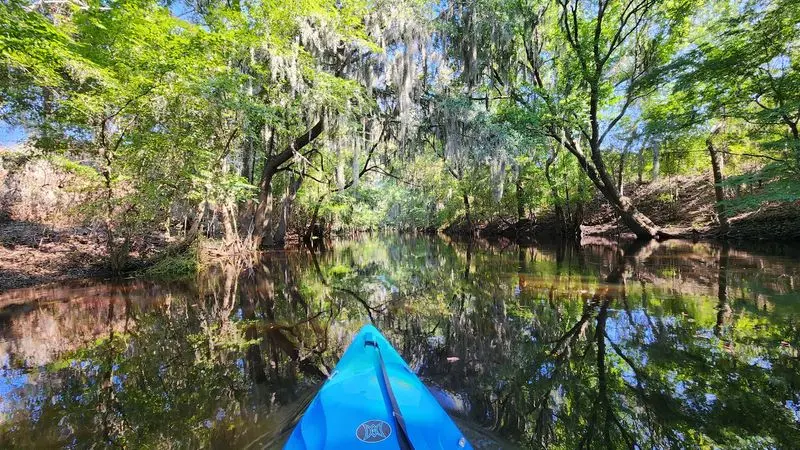
Flowing through the largest intact bottomland hardwood swamp forest east of the Mississippi River, the Roanoke takes canopy paddling seriously. Cypress and tupelo trees draped in curtains of Spanish moss create long, secluded stretches where the forest completely surrounds you.
This massive swamp forest ecosystem supports incredible biodiversity. Paddlers here share the water with beavers, river otters, alligators, and over 200 bird species that nest in the surrounding trees.
The scale of this forest is hard to grasp until you’re in it, paddling mile after mile with nothing but trees in every direction. The canopy overhead feels endless, a living roof that stretches as far as you can see.
Multiple sections of the paddle trail offer different experiences, but all share that enclosed, forested feeling. You can plan anything from a short afternoon exploration to a multi-day camping trip through this watery wilderness.
Pettigrew State Park – Lake Phelps Cypress Shoreline
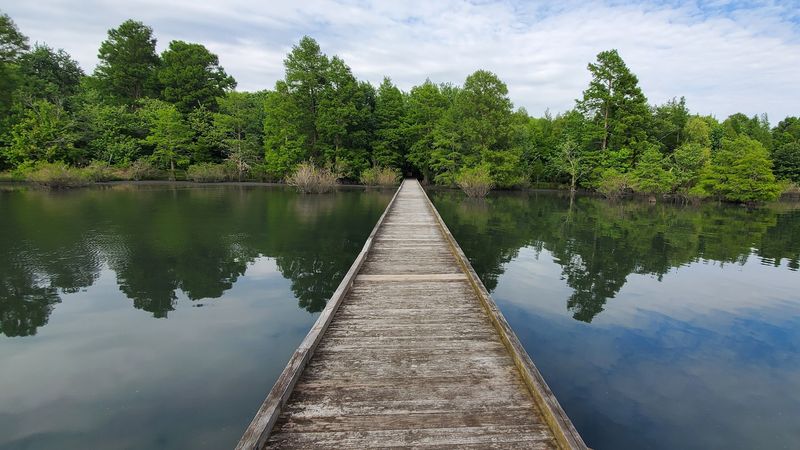
Lake Phelps offers a completely different canopy experience from the narrow swamp routes on this list. Instead of paddling through a tunnel, you follow the wooded edges of this large, shallow lake where the forest meets the water.
Bald cypress, Spanish moss, and rare old-growth Atlantic white cedar frame portions of the shoreline. The Cypress Point area particularly appeals to paddlers looking for that combination of trees, wildlife, and peaceful water.
Being on a larger lake means you can paddle out into open water when you want sun and views, then tuck back into the cypress-lined shore when you crave shade and seclusion. This flexibility makes it perfect for groups with mixed preferences.
The lake’s unusual natural history adds interest to your paddle. Lake Phelps has no visible inlet or outlet, fed entirely by rainwater, and Native American canoes over 4,000 years old have been discovered in its depths.
Dismal Swamp State Park – Canal & Swamp Waters
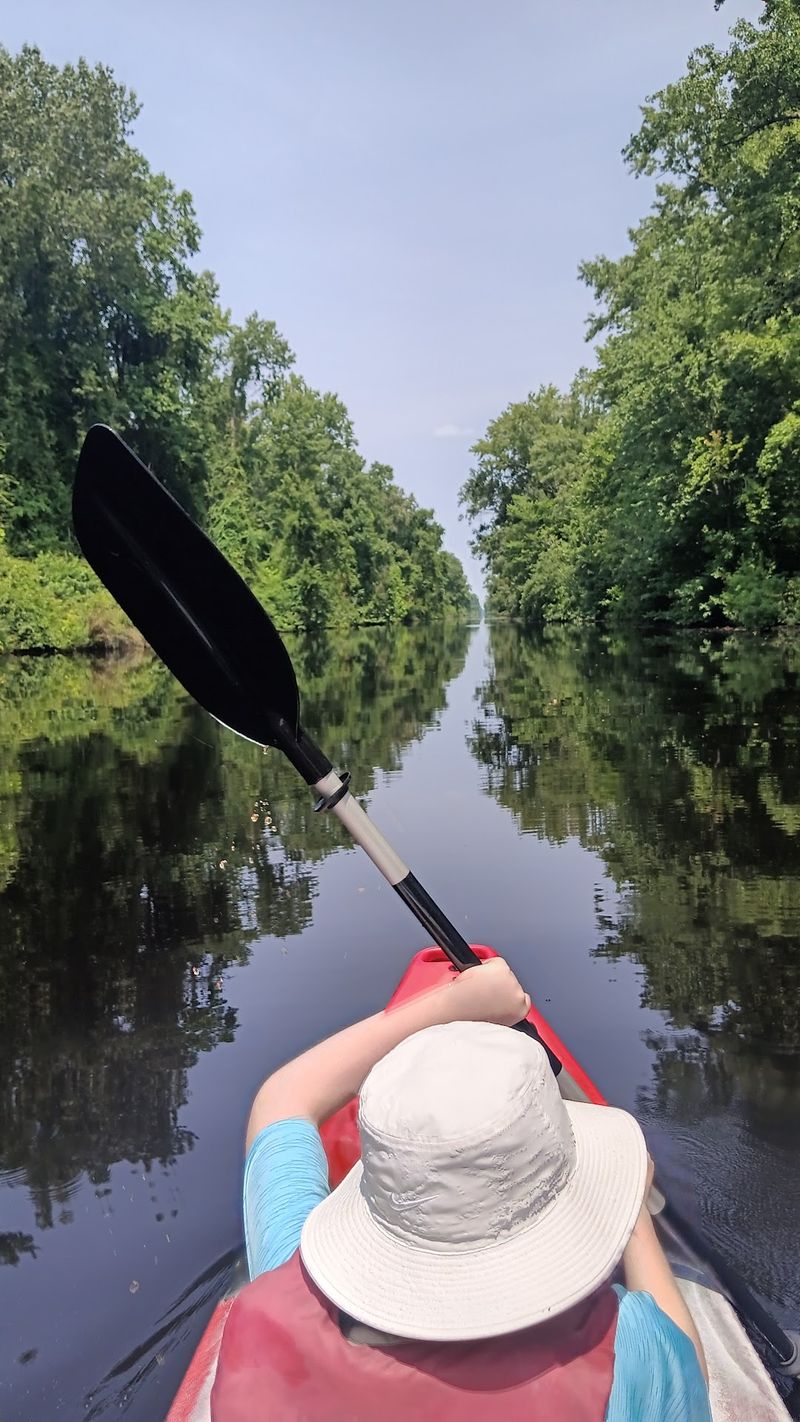
Living up to its wonderfully atmospheric name, Dismal Swamp delivers mysterious paddling through still water and dense forest. Cypress trees tower around the waterways while their perfect reflections fill the calm surface below, creating a mirror effect that makes the canopy feel twice as thick.
The surrounding wilderness gives every trip through here a secluded, almost otherworldly feeling. You might encounter other paddlers, but the swamp is vast enough that you’ll often feel completely alone with the trees.
Historical canals cut through the swamp add human interest to the natural beauty. These hand-dug waterways date back centuries and now serve as perfect paddling routes through otherwise impenetrable forest.
The stillness of the water here is remarkable. Without current or wind, the swamp feels suspended in time, a place where the modern world hasn’t quite reached and the trees keep their own ancient schedule.
Cashie River Paddle Trail – Windsor
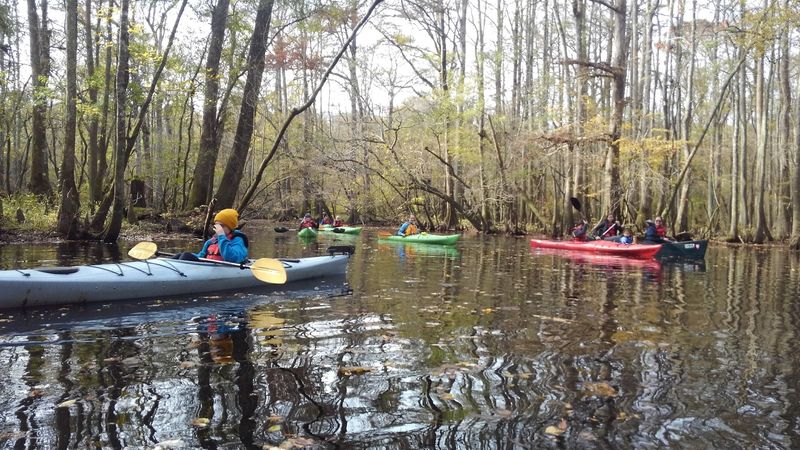
Classic eastern North Carolina blackwater scenery unfolds along every bend of the Cashie River. Slow-moving water, cypress trees, Spanish moss, and thick vegetation combine to create the quintessential coastal plain paddle experience.
This river particularly appeals to paddlers who want quiet water where trees dominate the view rather than development. The Cashie remains remarkably undeveloped along much of its length, preserving that wild, forested character.
The blackwater designation comes from the tea-colored water stained by tannins from decaying vegetation. This dark water creates beautiful contrast with the green canopy overhead and makes the whole scene feel moodier and more mysterious.
Multiple access points along the trail let you customize your paddle length. The gentle current and abundant shade make this an excellent choice for hot summer days when you want to stay cool while exploring.
Bird watching here is exceptional, with herons, egrets, and wood ducks commonly spotted along the forested banks.
Northeast Cape Fear River – Forested Sections Near Wilmington
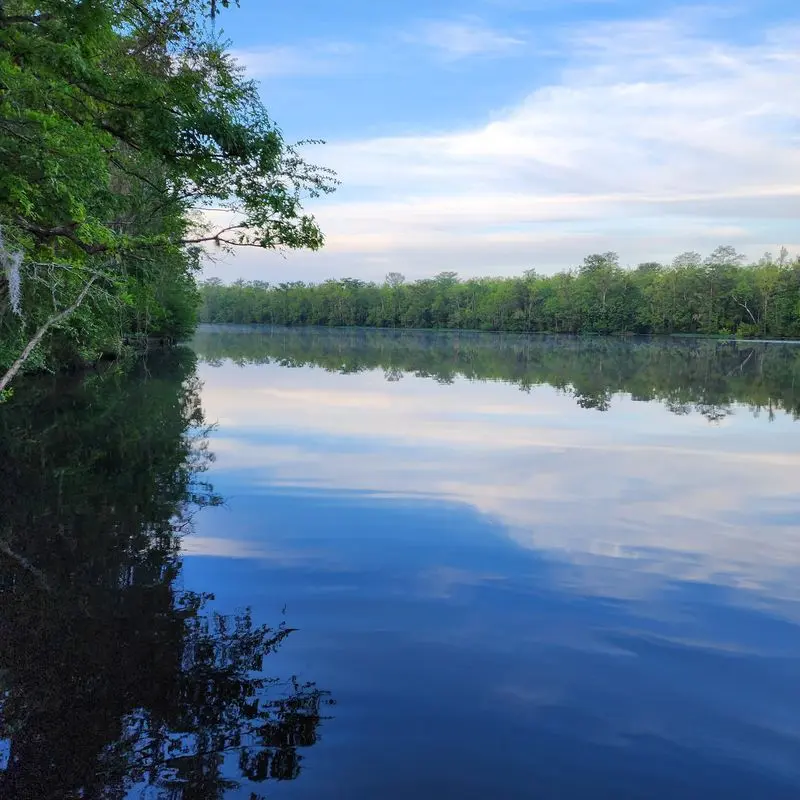
Away from the more developed stretches closer to town, the Northeast Cape Fear slips through heavily wooded coastal environments that feel surprisingly wild. Overhanging branches and swamp vegetation create that secluded, enclosed atmosphere without requiring a drive deep into rural country.
This is a perfect pick for paddlers based in or visiting the Wilmington area who want easy access to that shadowy, blackwater feeling. You can experience genuine swamp paddling without spending hours on the road first.
The forested sections here demonstrate how quickly coastal North Carolina can transition from suburban to wild. One minute you’re near civilization, the next you’re surrounded by trees with no signs of development visible.
The proximity to Wilmington means you’ll find good launch sites and local outfitters who know the best stretches for canopy coverage. They can point you toward the most enclosed sections where the trees really close in around the water.
Cow Horn/New River Paddle Trail – Richlands to Jacksonville
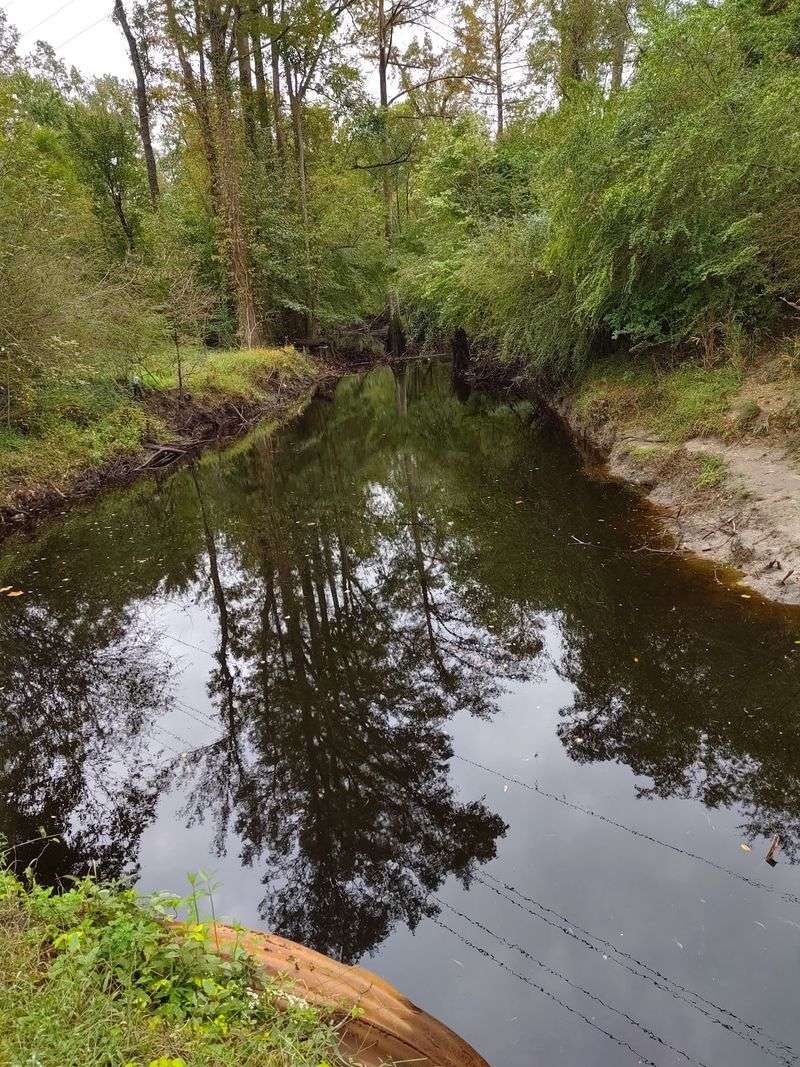
Nearly 17 miles of slow-moving water wind through wooded shoreline teeming with wildlife on this combined trail system. The route connects Cow Horn Creek and the New River, offering paddlers a long journey through coastal forest ecosystems.
Multiple landings along the trail make planning easier if you’re not ready to commit to the entire route. You can tackle it in sections, choosing the stretches with the best canopy coverage for your particular trip.
The slow current means you’ll have plenty of time to watch for wildlife. Alligators, river otters, ospreys, and bald eagles all frequent these waters, and the quiet paddling lets you observe without disturbing them.
The wooded character of this trail creates good shade and that enclosed feeling, though it might not get quite as tunnel-like as some of the deeper swamp routes. Still, the trees crowd close enough to block most of the sky overhead.
Haw River – Forested Sections Around Saxapahaw
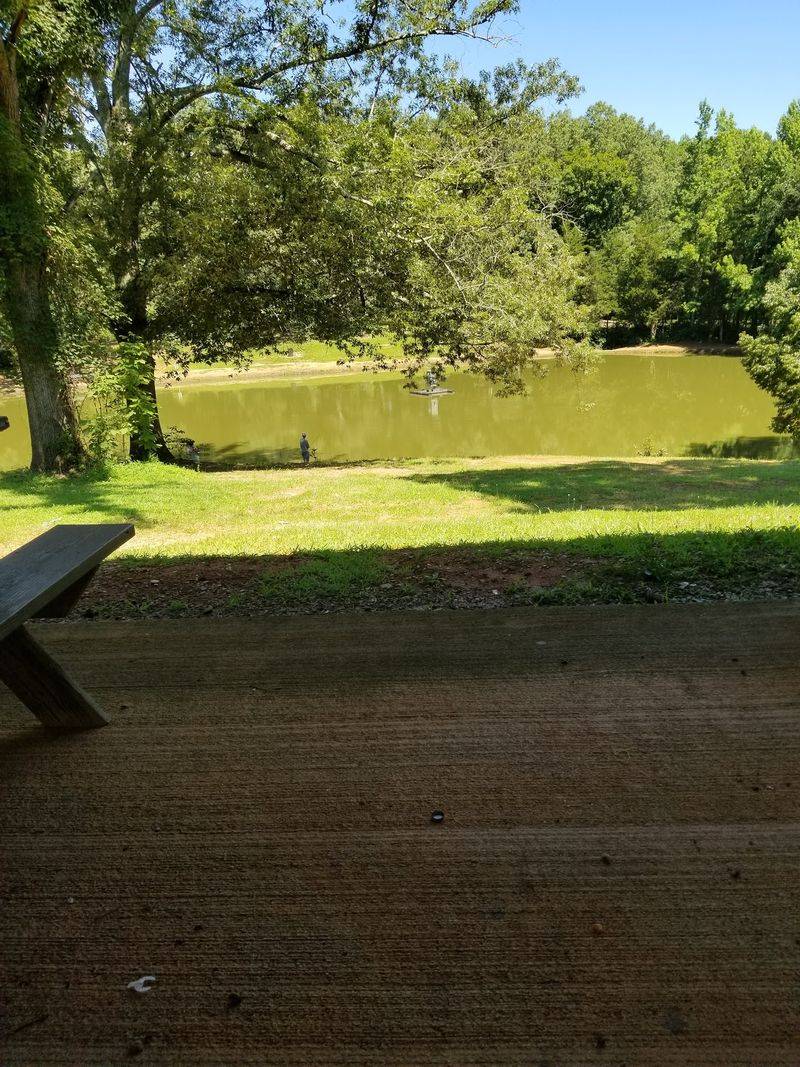
Breaking away from the coastal swamp theme, this Piedmont option offers mature hardwood forests, shaded bends, and a more flowing river experience. The trees here are oaks, maples, and sycamores rather than cypress, creating a completely different canopy feel.
Several sections around Saxapahaw feel enclosed enough to deliver that cool, leafy atmosphere the title promises. While you won’t get the complete tunnel effect of the blackwater swamps, the overhead coverage is still impressive.
The Haw moves faster than the coastal rivers, adding a bit more adventure to your paddle. You’ll need to pay attention to your route and navigation, but the current isn’t so strong that beginners can’t handle it.
This section of river has become popular with paddlers, so you might encounter others on nice weekends. The nearby town of Saxapahaw offers good food and local shops, making this paddle easy to combine with a full day trip.
New River – Forested Sections Near Jefferson
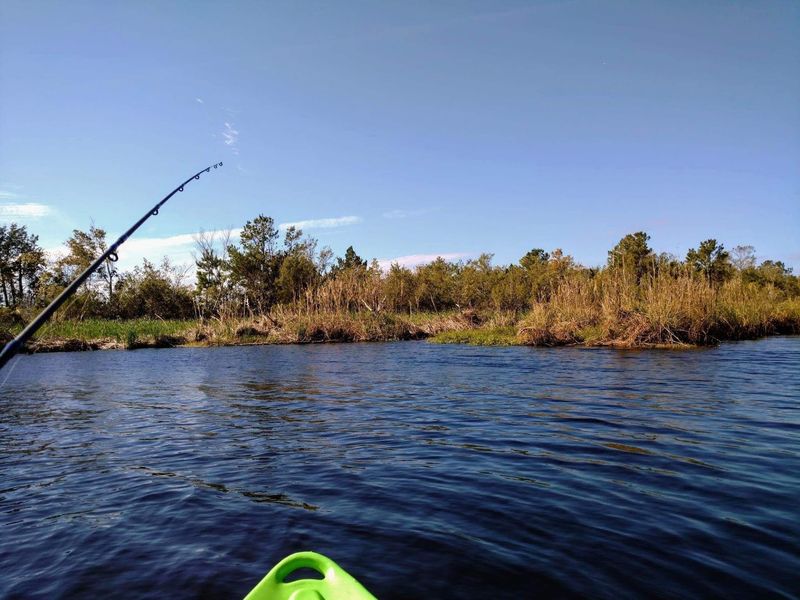
Broader and more open than the blackwater routes, the New River still creates long ribbons of shade along its wooded bends. Tree-lined banks frame the water while gentle current and mountain foothill scenery create a relaxed paddling experience.
This is an excellent choice for paddlers who want canopy without the swamp setting. The river here feels cleaner and cooler than the tannin-stained coastal waters, and the surrounding landscape is noticeably different with mountain views in the distance.
The New River’s gentle nature makes it welcoming for families and less experienced paddlers. You can relax and enjoy the scenery without worrying about difficult rapids or confusing braided channels through swamps.
The forested sections vary in how enclosed they feel, with some bends creating good overhead coverage while others open up to reveal the sky. This variety keeps the paddle interesting as the environment constantly changes around you.
Tuckasegee River – Western North Carolina
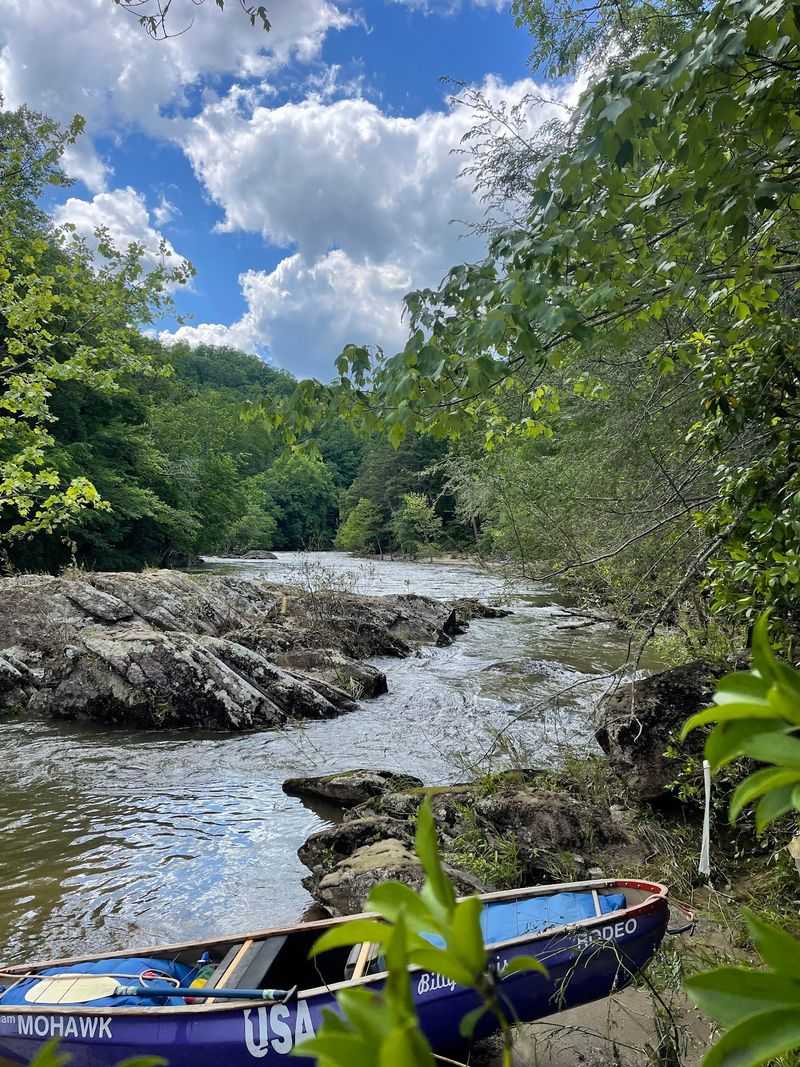
Finishing this list in the mountains, the Tuckasegee offers paddling through forested valleys where hardwoods and rhododendron crowd the riverbanks. The canopy here feels completely different from the cypress swamps of eastern North Carolina.
Cooler temperatures, higher elevation, and mountain scenery create a unique paddling environment. The surrounding forest sometimes closes in around the water, particularly in narrower sections where the rhododendron grows thick along both banks.
This river shows that you don’t need coastal swamps to find good canopy coverage. Mountain rivers have their own version of the enclosed feeling, with different trees and different atmosphere but equally impressive overhead shelter.
The Tuckasegee moves faster than the coastal rivers, reflecting its mountain character with small rapids and rock gardens to navigate. This adds excitement to your paddle while still maintaining enough calm sections to appreciate the forested surroundings and catch your breath between features.