Texas summer does not play around. When the thermometer pushes past 100 degrees, a cold swimming hole can feel like the greatest invention on Earth.
Across the state, clear springs, cool rivers, and limestone pools offer a refreshing escape from the heat.
Some are tucked beneath shady cypress trees, while others deliver wide-open scenery worth the drive.
You can keep things simple with a quick swim near Austin, or turn the escape into a full weekend of camping, floating, hiking, and lazy afternoons by the water.
So grab your swimsuit, towel, sunscreen, and plenty of water.
These 11 Texas swimming holes are ready for those days when the summer heat gets seriously intense.
Barton Springs Pool – Austin
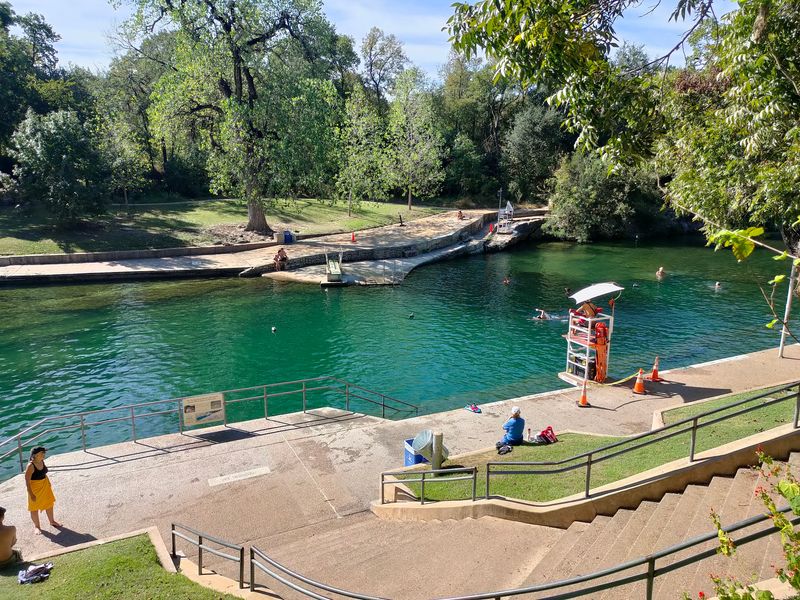
Picture yourself sliding into water that stays a constant 68 degrees while Austin bakes under triple-digit heat. That refreshing jolt happens daily at Barton Springs Pool, where natural springs pump out roughly 27 million gallons every single day.
The pool stretches across three acres inside Zilker Park, giving swimmers plenty of room to float, lap, or simply cool down without fighting crowds.
Getting here requires no major planning or long drives. Park your car, walk through the entrance, and you’re swimming within minutes.
Grassy areas surrounding the pool offer shaded spots for picnics, reading, or watching others brave the initial cold shock.
Lifeguards stay on duty during operating hours, making this spot suitable for families with younger swimmers. The pool’s location puts you close to food trucks, hiking trails, and other Austin attractions.
If you need a swimming hole that combines natural spring water with city convenience, Barton Springs delivers exactly that combination year-round.
Hamilton Pool Preserve – Dripping Springs
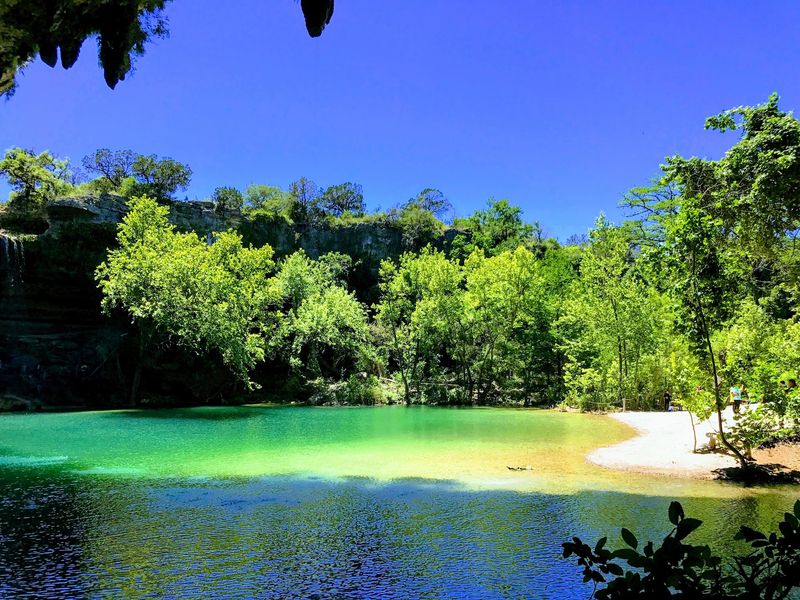
A dome of limestone collapsed centuries ago, creating what might be the most photographed swimming hole in Texas. Hamilton Pool sits inside that ancient grotto, where a 50-foot waterfall spills over the rim and splashes into emerald water below.
Massive limestone walls curve overhead, creating natural shade and the kind of scenery that makes people stop and stare before jumping in.
Swimming access depends on several factors beyond anyone’s control. Heavy rainfall, high bacteria levels, or geological concerns can close the pool without warning.
Smart visitors check the preserve’s website or call ahead rather than assuming they’ll swim on arrival day.
Reservations are required even when swimming is allowed, so spontaneous trips rarely work out. The preserve limits daily visitors to protect the fragile ecosystem surrounding the pool.
Trails wind through the area, giving non-swimmers something worthwhile to explore. For dramatic Hill Country scenery paired with swimming when conditions cooperate, Hamilton Pool remains unmatched across Central Texas.
Jacob’s Well Natural Area – Wimberley
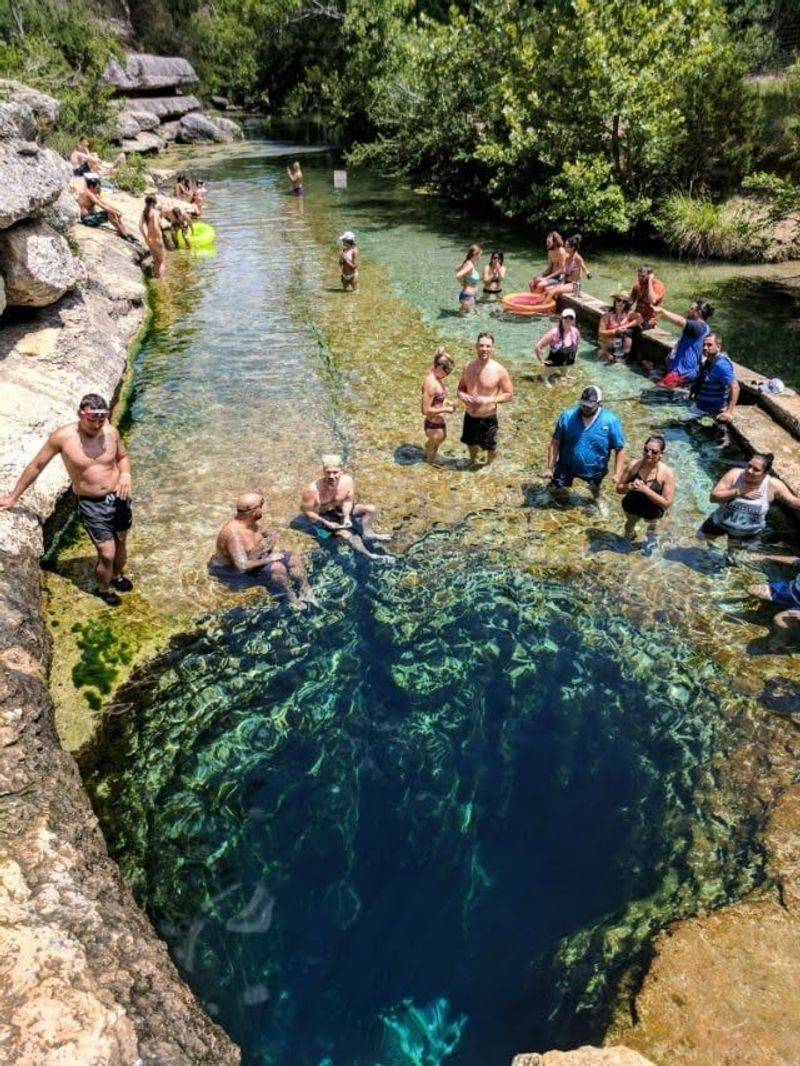
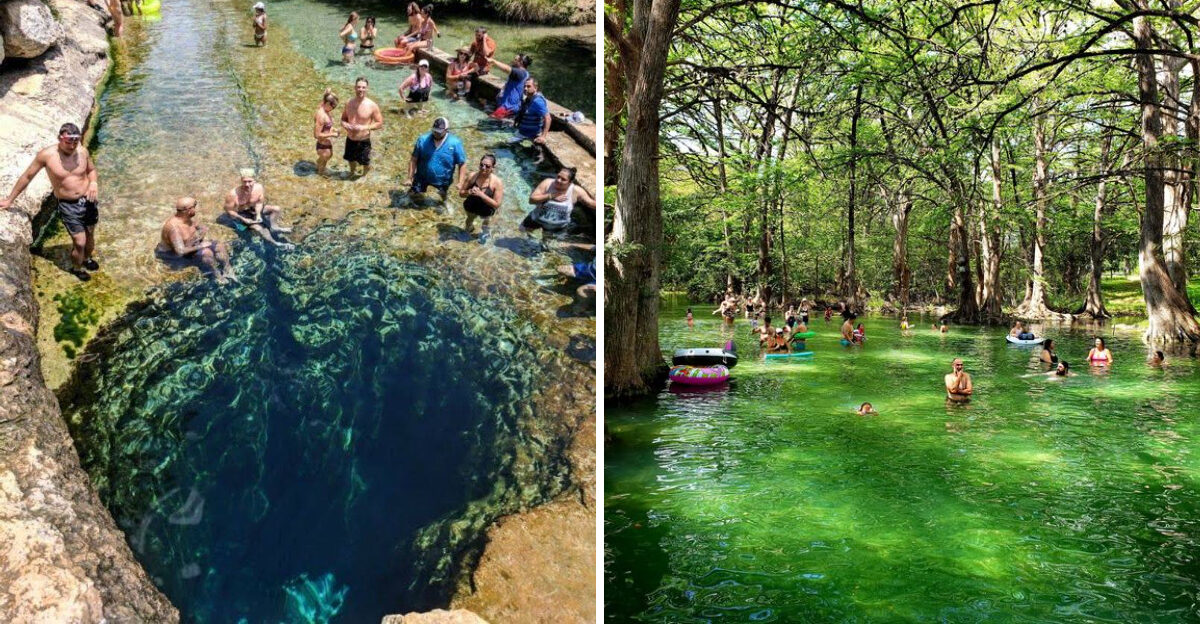
Staring down into Jacob’s Well feels like peering through a window into the earth itself. This artesian spring drops straight down through limestone, creating one of the longest underwater cave systems in Texas.
The water clarity makes you think you could touch bottom, even though the well plunges over 100 feet deep in places.
Cold describes the water temperature accurately but mildly. Spring-fed means genuinely chilly, the kind of cold that takes your breath away on first contact.
Most swimmers adjust after a few minutes, but this isn’t the lukewarm river experience some might expect.
Swimming happens only through advance reservations during specific seasons, making this a swimming hole requiring serious planning. The preserve limits daily visitors to prevent overcrowding and protect the delicate spring system.
If you show up without a reservation, you’ll watch from the viewing area rather than swim. For adventurous types who want something unusual and don’t mind cold water or advance planning, Jacob’s Well offers an experience that sticks in memory long after summer ends.
Blue Hole Regional Park – Wimberley
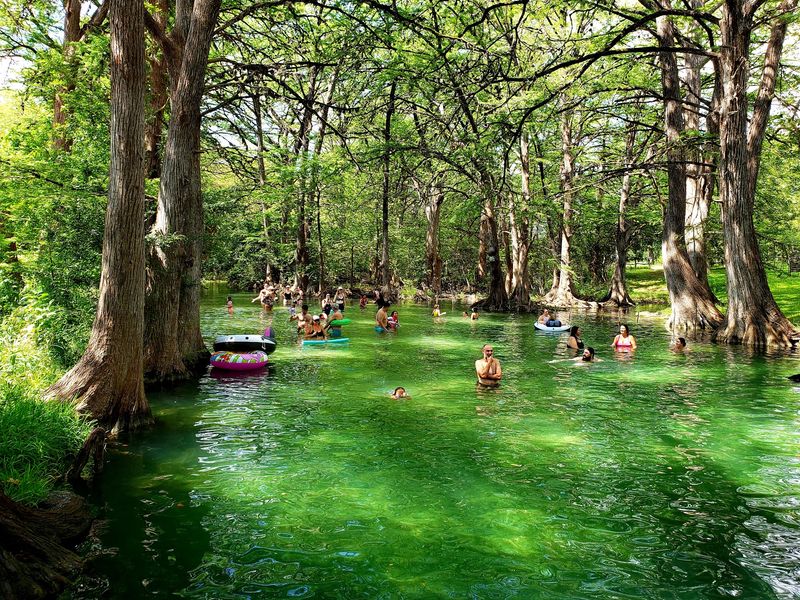
Cypress trees tower overhead, their roots gripping the banks while branches create a canopy that filters Texas sunlight into dappled patterns on the water. Blue Hole embodies what many people imagine when dreaming about classic Texas swimming holes.
The spring-fed water maintains around 75 degrees, which feels considerably warmer than other Hill Country springs but still delivers genuine cooling relief.
Rope swings add entertainment for anyone brave enough to grab hold and launch themselves into deeper sections. Families spread blankets on grassy areas, turning swimming trips into all-afternoon affairs with lunch, games, and multiple dips to combat rising temperatures.
Summer swimming requires reservations, so showing up spontaneously might leave you disappointed. The park limits daily visitors to keep the experience pleasant rather than overcrowded.
Parking, restrooms, and changing areas make logistics easier than more primitive swimming holes. When you want a laid-back day combining swimming, picnicking, and lounging under ancient trees, Blue Hole provides that slower-paced summer experience many swimmers crave during peak heat.
Krause Springs – Spicewood
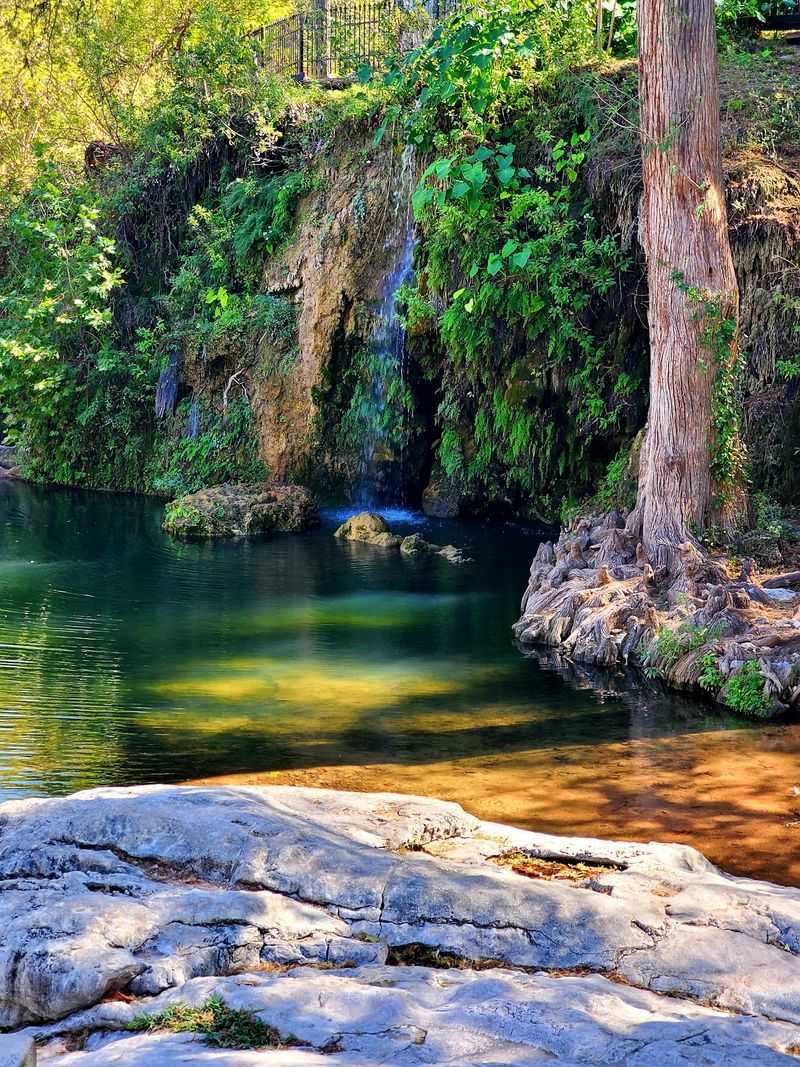
Thirty-two natural springs feed this Hill Country destination, creating multiple swimming opportunities across one property. Krause Springs combines a natural swimming area, a man-made pool, and a waterfall into something more varied than typical single-pool destinations.
That variety means different family members can find their preferred swimming style without compromise.
Gardens surround the swimming areas, adding color and natural beauty beyond the water itself. The rope swing attracts teenagers and adventurous adults, while shallower areas suit younger swimmers or anyone wanting gentle wading rather than deep swimming.
Camping transforms this from a day trip into a weekend getaway. Pitch your tent, swim multiple times daily, and avoid the drive home after spending hours in the sun.
The springs maintain comfortable temperatures year-round, though summer remains the peak season.
Admission fees apply whether you camp or visit for the day. Crowds build during summer weekends, making weekday visits more relaxed.
For swimmers wanting variety, amenities, and the option to extend their stay overnight, Krause Springs packs considerable value into one location.
Balmorhea State Park – Toyahvale
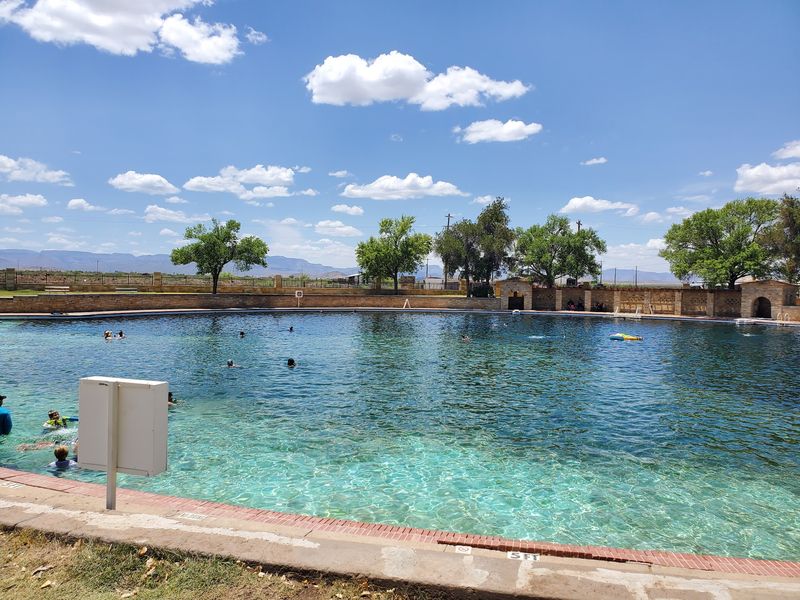
Desert surrounds this swimming destination for miles in every direction, making the huge spring-fed pool feel almost impossible. San Solomon Springs pump approximately 22 million gallons daily into what ranks among the world’s largest spring-fed swimming pools.
Water stays between 72 and 78 degrees regardless of the scorching desert temperatures outside the pool.
Clarity defines the swimming experience here. Underwater visibility reaches impressive distances, attracting snorkelers and scuba divers who explore the pool’s depths alongside casual swimmers.
Fish dart through the water, adding wildlife watching to the swimming activities.
The pool’s size means crowds rarely feel overwhelming even during busy periods. Grass surrounds the concrete edges, giving families space to set up camp for the day.
Changing rooms, showers, and a camp store make logistics straightforward.
Getting to Balmorhea requires commitment. The park sits roughly 200 miles from major cities, making this a destination rather than a spontaneous afternoon trip.
That distance filters out casual visitors, leaving serious swimmers who appreciate what makes this place special. When West Texas heat intensifies, Balmorhea offers desert relief unlike anywhere else in the state.
Devil’s Waterhole – Inks Lake State Park
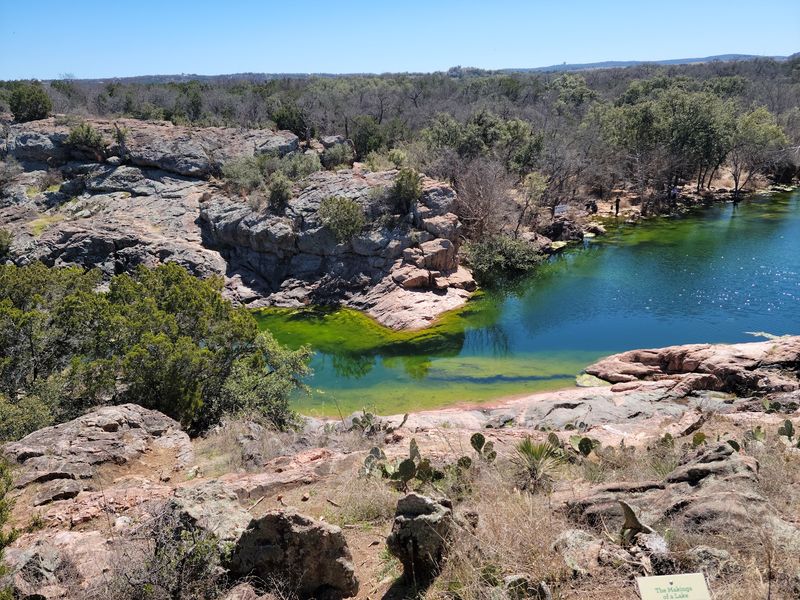
Smooth limestone formations slope toward clear water where Devil’s Waterhole meets Inks Lake. This swimming spot attracts people who want their water day mixed with scrambling over rocks, exploring shoreline, and hiking rather than simply floating in one place.
The rugged setting means less lounging and more active adventure.
Swimming happens directly in the lake, so conditions vary with weather, water levels, and season. Rocky entry points require careful footing, making water shoes a smart addition to your swimming gear.
Once in the water, swimmers enjoy the freedom of a natural lake setting without artificial boundaries.
The surrounding park offers hiking trails that wind through Hill Country terrain, giving non-swimmers or anyone needing a break from the water plenty to explore. Rock climbing draws adventurous visitors to nearby formations.
Camping facilities let visitors extend their stay beyond a single day.
Families with very young children might find the rocky terrain and natural lake swimming challenging. Older kids and adults who appreciate combining swimming with outdoor exploring will likely consider those same features major advantages.
For swimmers wanting more than a simple pool experience, Devil’s Waterhole delivers genuine Hill Country adventure.
Garner State Park – Concan
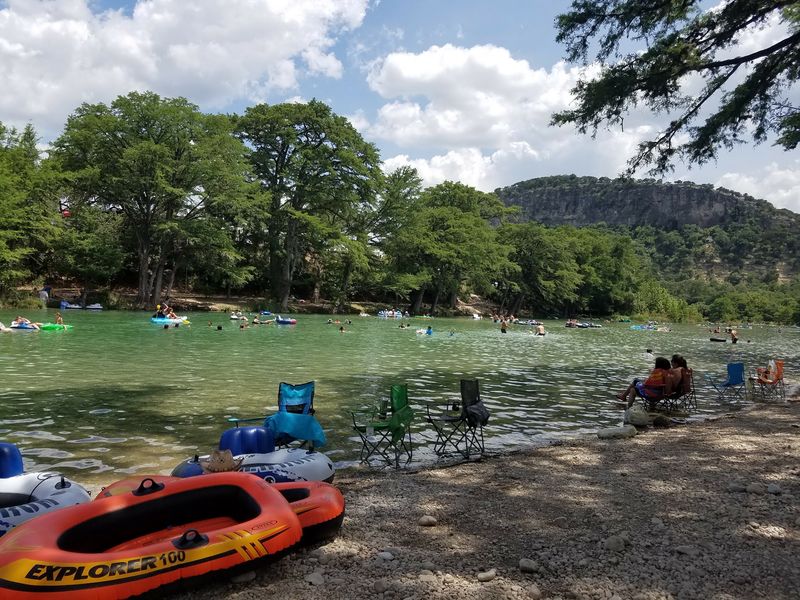
The Frio River winds through Garner State Park, creating the kind of Texas summer scene that appears on postcards. Spring-fed water keeps temperatures cool even when air temperatures soar past comfortable.
Limestone hills rise on both sides while cypress and oak trees shade large sections of the riverbank.
Swimming, floating, and wading all happen along different river sections, letting visitors choose their preferred water activity. Families spread out on riverbanks, setting up day camps with coolers, towels, and shade structures.
The river’s gentle current in most areas makes swimming accessible for various skill levels.
Camping facilities range from primitive sites to cabins, accommodating different comfort preferences. The park’s reputation means summer weekends fill up quickly, requiring advance reservations for camping and sometimes day-use areas.
Weekdays offer more elbow room and easier parking.
Dancing happens nightly during summer at the park’s outdoor pavilion, adding unexpected entertainment to the typical camping experience. Hiking trails, mini golf, and paddle boat rentals give non-swimmers activities beyond watching others in the water.
For classic Texas river weekends combining swimming with full park amenities, Garner State Park remains a longtime favorite.
Blanco State Park – Blanco
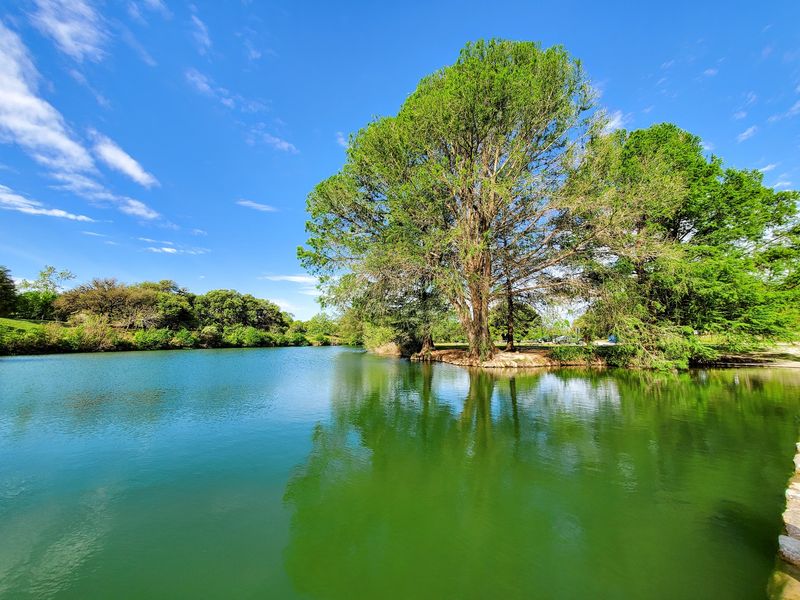
Simplicity defines the appeal at Blanco State Park. A dam creates a small waterfall and swimming lagoon along the Blanco River, giving families an easy swimming destination without complicated logistics.
The park’s compact size means less walking between parking and water compared to sprawling destinations.
River swimming happens downstream from the dam where natural flow continues. Floating becomes an option for anyone wanting to drift rather than swim actively.
Shallow areas near the banks suit younger children or anyone preferring wading to deep swimming.
Picnic areas and grassy spaces spread throughout the park, providing spots for lunch, games, or relaxing between swimming sessions. The park rarely feels overcrowded even during summer, making this a reliably pleasant destination.
Camping sites offer overnight options, though many visitors find day trips sufficient.
Nothing about Blanco State Park screams dramatic or Instagram-worthy. Instead, it delivers straightforward river swimming with park amenities at reasonable prices.
Families wanting an uncomplicated water day without driving deep into the Hill Country or wrestling with reservation systems will appreciate how easy Blanco makes summer swimming. Sometimes the best swimming holes are the ones requiring the least hassle.
Pedernales Falls State Park – Johnson City
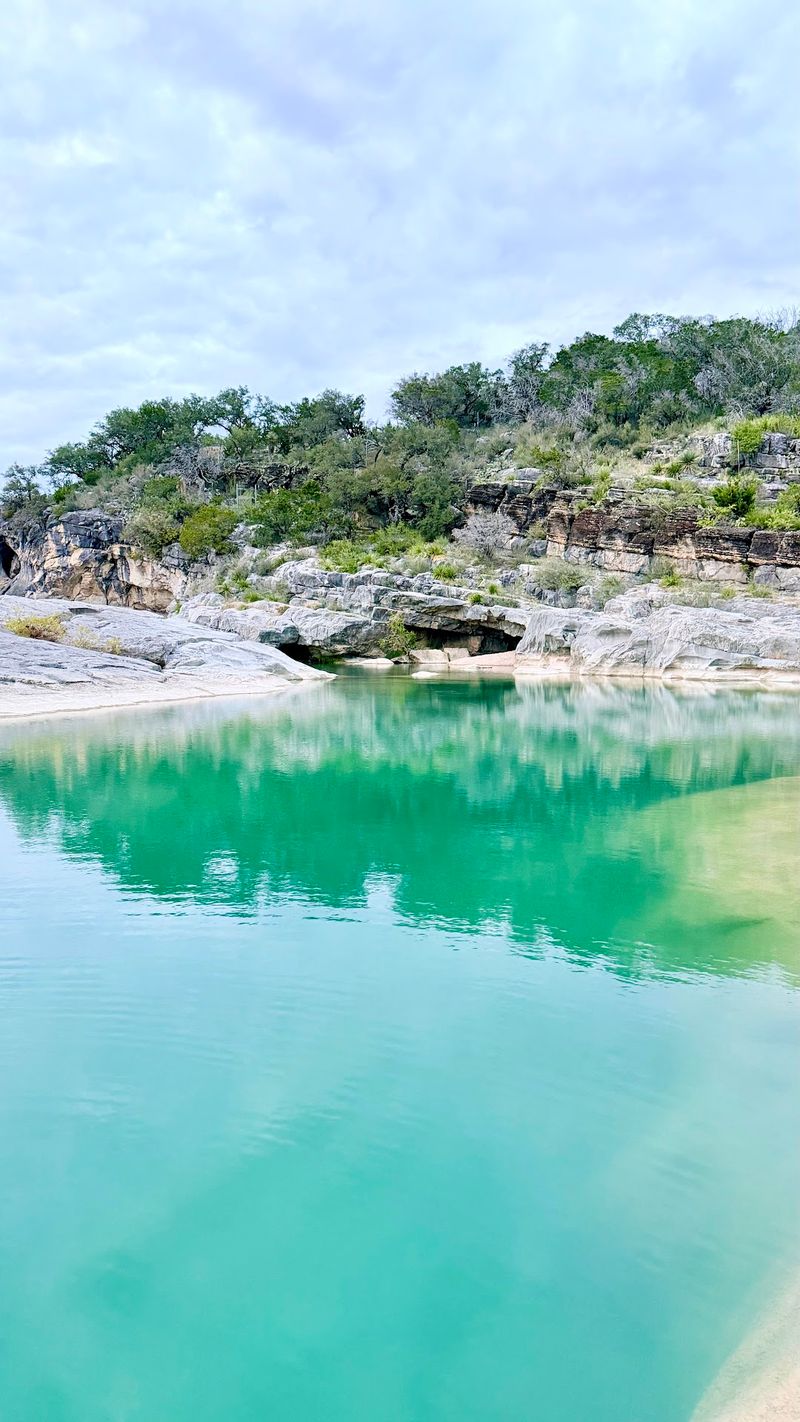
Broad limestone shelves stretch across the Pedernales River, creating formations that look more like geological sculpture than typical riverbed. Water flows over these terraces in sheets and cascades, forming pools where swimming becomes possible when conditions allow.
The landscape draws photographers and hikers as often as swimmers.
Water levels and flow rates change dramatically depending on recent rainfall. What looks safe one week might become dangerous the next after upstream storms send water rushing through the park.
Smart visitors check current conditions before assuming swimming is safe or even possible.
Hiking trails throughout the park showcase Hill Country scenery beyond the river itself. The park’s size means you can spend hours exploring without covering the same ground twice.
Wildlife sightings happen regularly, adding nature watching to swimming activities.
Swimming here requires more judgment and caution than pools or gentle rivers. Strong currents develop quickly after rain, and smooth limestone becomes slippery when wet.
Families with young children should assess conditions carefully. For visitors who want swimming combined with dramatic geology and serious hiking, Pedernales Falls offers that rugged Hill Country experience where the landscape competes with the water for attention.
Guadalupe River State Park – Spring Branch
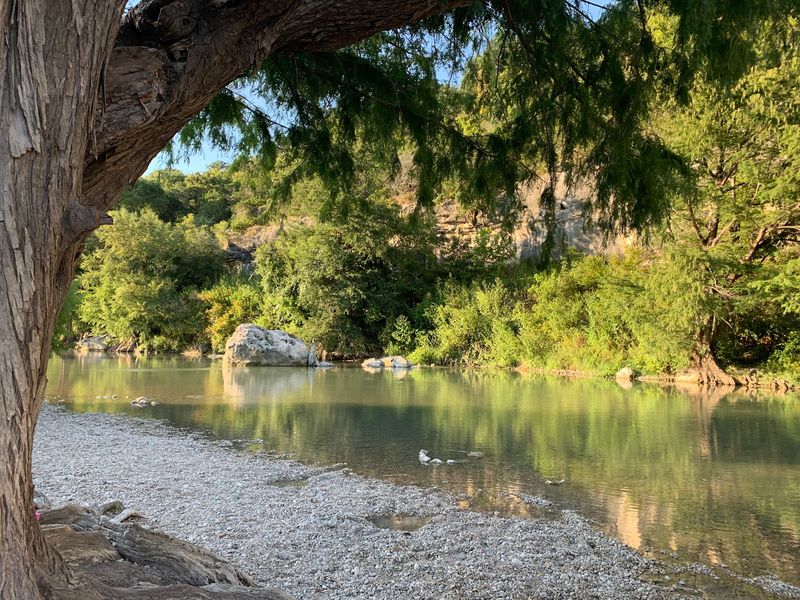
The Guadalupe River flows through this state park with consistent reliability, offering swimming without the backcountry commitment some Hill Country destinations require. Multiple river access points let visitors wade, swim, or tube depending on their mood and the day’s water conditions.
Cypress trees line the banks, providing shade that makes spending entire days by the river comfortable.
River depth and current vary by season and recent rainfall, but the park generally maintains family-friendly conditions. Shallow areas near banks suit children and cautious swimmers, while deeper channels accommodate stronger swimmers wanting more challenge.
Tubing becomes an option when you want to float downstream rather than stay stationary.
Hiking trails wind through the park away from the river, giving restless family members alternatives to constant swimming. Camping facilities range from developed sites to more primitive options.
The park’s location between San Antonio and Austin makes access easier than more remote Hill Country destinations.
Nothing about the Guadalupe River at this park tries too hard or promises extreme adventure. Instead, it delivers classic Texas river swimming with park amenities and reliable conditions.
For anyone wanting that final swimming hole option combining river access with outdoor activities, Guadalupe River State Park wraps up the list with steady reliability.