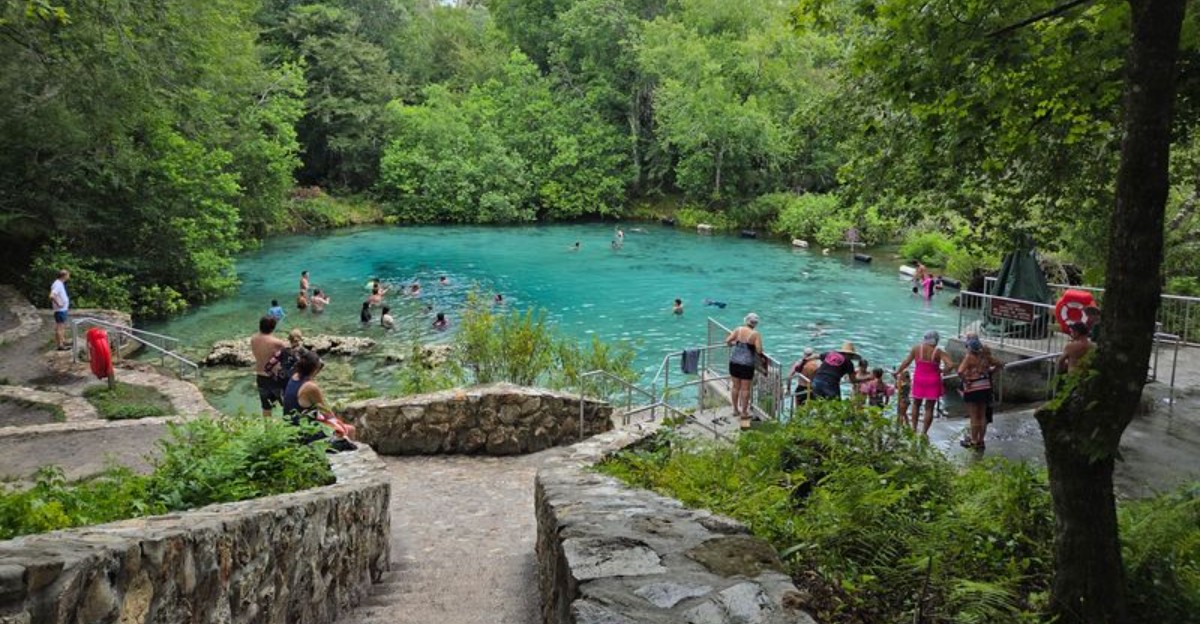
Florida has a swimming hole that looks almost too perfect to be real.
At Ichetucknee Springs State Park’s North Entrance in Fort White, cool spring water pours from beneath the earth into pools so clear that fish seem to float in midair.
Slip into the water, and the Florida heat suddenly feels like a distant memory.
The magic doesn’t stop at the shoreline. Shaded trails wind through pine forests, turtles drift through the water, and birds add flashes of movement to the peaceful setting.
This is the kind of place where a quick swim can turn into an entire afternoon of exploring.
Bring your swimsuit, walking shoes, and a little curiosity, because this crystal-clear corner of Florida is ready to steal the spotlight.
Swim in the Ichetucknee Headspring
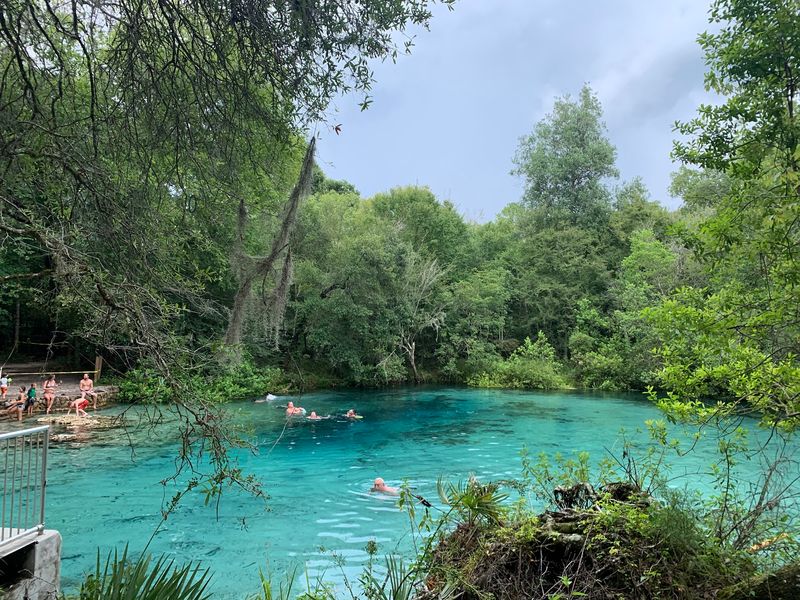
The Headspring sits at the very beginning of the Ichetucknee River, where water pushes up through limestone in remarkable clarity. This natural fountain creates the main attraction at the North Entrance.
People come from across Florida to experience this geological wonder.
Water temperature holds steady at 72°F no matter the season. During scorching summer days, that feels wonderfully cool against your skin.
In winter months, the same temperature actually feels warm compared to the air.
You can see straight to the sandy bottom even in the deepest sections. Fish dart between underwater plants while visitors float peacefully on the surface.
The constant flow from underground aquifers keeps everything pristine and clean.
Families spread out across the swimming area, some lounging near the edges while others explore deeper sections. Snorkelers get incredible views of the spring vent itself.
First-time visitors often gasp when they first see how transparent the water truly appears compared to typical swimming holes.
Take the Short Walk to Blue Hole Spring
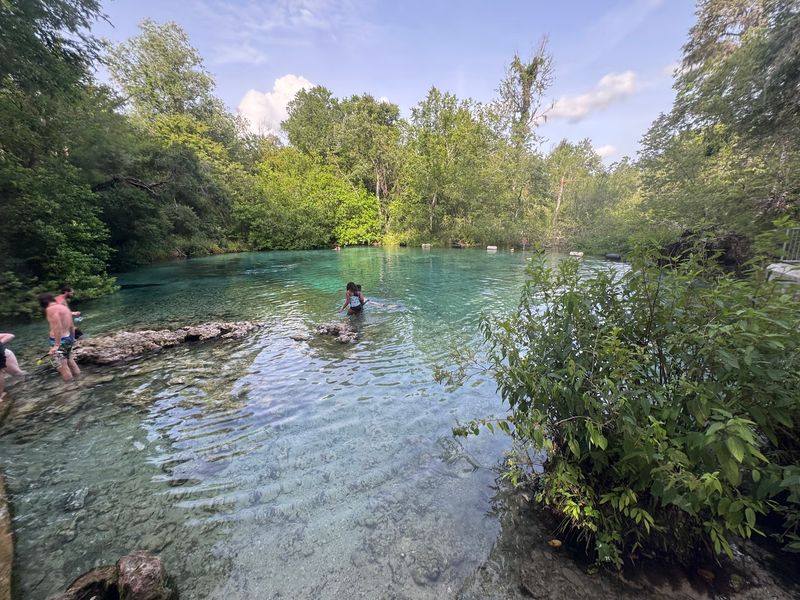
Blue Hole Spring earned its name honestly. The water displays an almost unnatural shade of deep azure that seems too vivid to be real.
Getting there requires about half a mile of walking through shaded forest, which builds anticipation nicely.
This swimming spot differs significantly from the Headspring. Currents run stronger here, and the depth increases quickly from the edges.
Experienced swimmers appreciate the challenge and the chance to explore without younger children around every corner.
Wildlife seems more abundant at Blue Hole too. Turtles sun themselves on logs while fish gather in visible schools.
The isolation makes animal sightings more likely since fewer people make the trek compared to the main spring.
Pack light for the walk but bring water shoes and snorkel gear if you have them. The trail stays relatively flat and well-maintained.
Once you arrive and slip into that impossibly blue water, the short hike feels completely worthwhile for the reward of your own semi-private spring.
Enjoy the Water Without Tubing Crowds
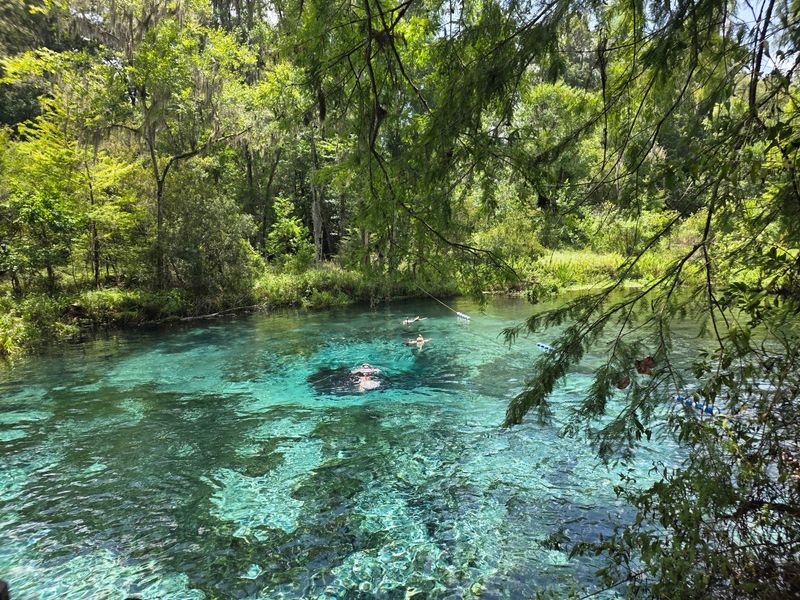
Something special happens when you remove tubes from the equation. The North Entrance maintains a completely different vibe from the park’s famous tubing section downriver.
Rules specifically prohibit tubing in the springs and upper river, creating space dedicated purely to swimming and snorkeling.
Families find this arrangement perfect for younger kids learning to swim. Without the commotion of tube traffic, parents can relax and actually watch their children enjoy the water.
Snorkelers get unobstructed views of underwater scenery instead of dodging plastic rafts.
The pace feels more relaxed overall. People come to swim, float peacefully, or simply cool off rather than race downstream.
Conversations happen at normal volume instead of competing with party atmospheres.
This separation protects the sensitive spring ecosystems too. Heavy tubing traffic can damage underwater vegetation and disturb wildlife.
Swimmers naturally spread out more and tread lighter on the environment. You get the full beauty of the springs without the carnival feeling that tubing areas sometimes develop during peak season.
Explore the Crystal-Clear Ichetucknee River
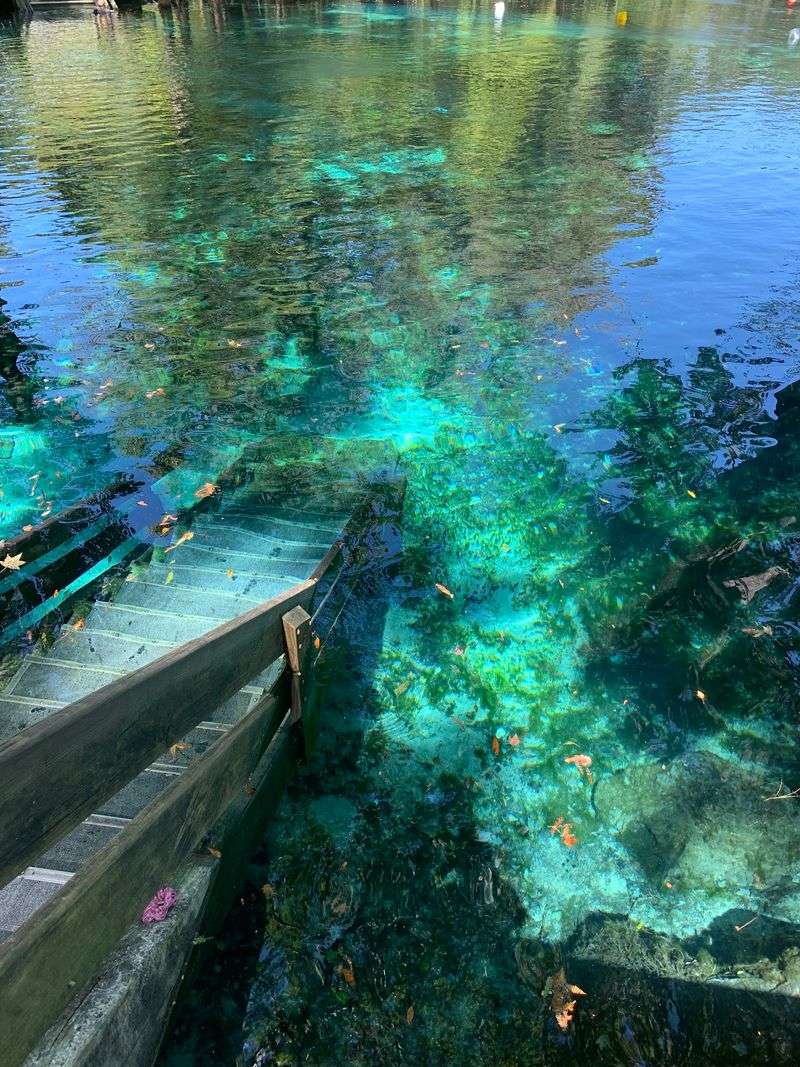
Walking beside the Ichetucknee River provides entertainment even when you’re not swimming. The Trestle Point Trail follows the riverbank through cathedral-like forest canopy.
Spanish moss drapes from overhead branches while the water flows past in liquid glass clarity.
You’ll spot underwater features from the trail that swimmers miss entirely. Limestone outcrops create natural sculptures beneath the surface.
Schools of fish move in coordinated patterns visible from twenty feet away through the transparent water.
The spring-fed nature of the river means consistent flow and temperature year-round. Unlike rivers that rise and fall with rainfall, this one maintains steady levels.
That reliability makes it dependable for planning visits across all seasons.
Photographers love the interplay between forest shade and bright water. Morning light filters through trees creating dramatic contrasts.
Even casual smartphone shots turn out impressive when your subject matter literally sparkles. The river winds gracefully through varied terrain, offering new views around each gentle bend along the accessible trail system.
Hike Trestle Point and Pine Ridge Trails
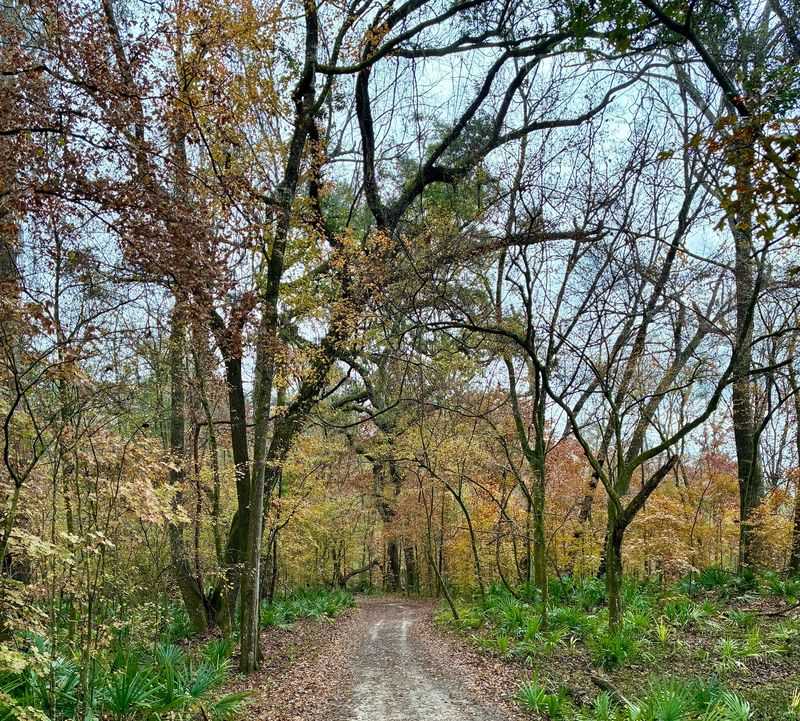
Switching between swimming and hiking creates the perfect balanced day outdoors. Two distinct trails offer different Florida ecosystems within easy reach of the springs.
Your legs get exercise while giving skin a break from constant water exposure.
Trestle Point Trail hugs the river through hardwood hammock. Shade stays thick here, making it comfortable even during midday heat.
The path offers multiple river overlooks where you can pause and admire the view or spot wildlife along the banks.
Pine Ridge Trail heads inland into completely different terrain. Longleaf pine forests once covered much of the Southeast, but development destroyed most of them.
This preserved sandhill habitat shows what natural Florida looked like centuries ago with tall, widely-spaced pines and wiregrass underneath.
Both trails stay relatively flat and family-friendly. Total distance for each remains under two miles, manageable for most fitness levels.
Birdsong fills the air while butterflies cross the path. After a couple hours in cool water, the warm sunshine on the trails feels rejuvenating rather than oppressive.
Pack a Picnic by the Springs
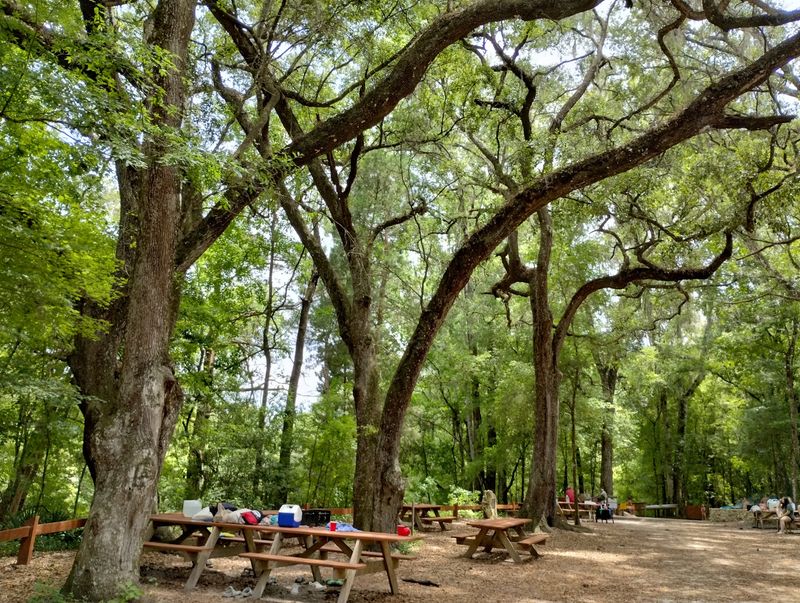
Smart visitors pack coolers with lunch and snacks to maximize their time at the park. Picnic facilities at the North Entrance include covered tables, grills, and nearby restrooms.
A playground keeps kids entertained while parents prepare food or clean up afterward.
Spreading out a meal between swimming sessions makes practical sense. Your body needs fuel after burning energy in the water.
Taking a break also prevents that pruny-finger syndrome from too much continuous swimming.
The shaded picnic areas provide welcome relief from direct sun. Grills let you cook hot dogs or burgers if you plan ahead.
Many families make full-day adventures, arriving at opening and staying until late afternoon with meals built into the schedule.
Remember that food restrictions apply near the actual swimming areas. Coolers and meals stay in designated picnic zones rather than poolside.
This rule protects water quality and prevents wildlife from becoming dependent on human food. The short walk between picnic tables and springs seems minor compared to the convenience of having everything you need right there on-site.
Look for Wildlife Around the Water
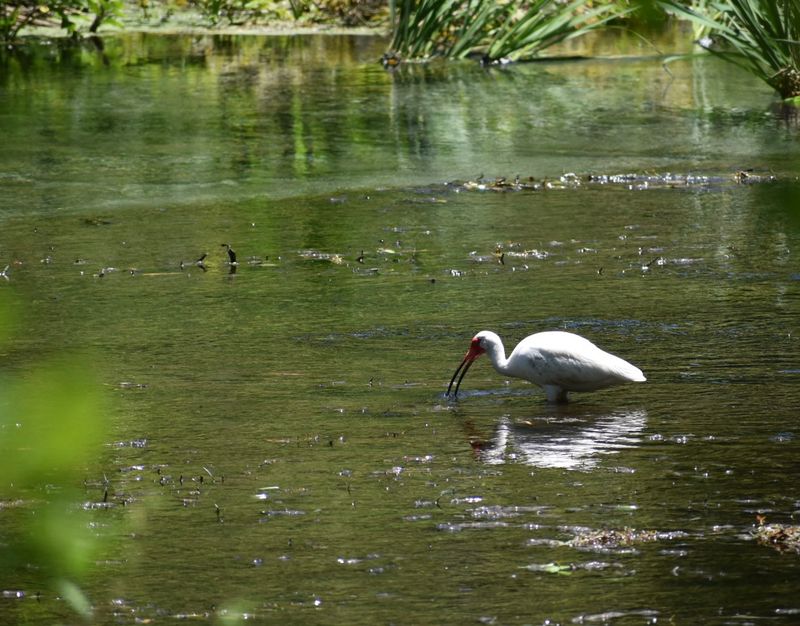
Patient observers get rewarded with wildlife sightings throughout the park. Turtles rank among the most commonly spotted animals, basking on logs or swimming past underwater.
Several species call these springs home, from tiny mud turtles to large softshells.
River otters occasionally make appearances, though they tend toward early morning or evening hours. Their playful antics and sleek swimming style make them crowd favorites.
Wood ducks nest in tree cavities near the water, their colorful plumage standing out against forest backgrounds.
Wading birds work the shallows hunting small fish. Great blue herons stand statue-still waiting for prey to swim within striking distance.
Wild turkeys sometimes cross trails, particularly in the upland areas away from heavy visitor traffic.
The cardinal rule with all wildlife applies here: look but never approach or feed. Feeding wild animals changes their behavior and makes them dependent on humans.
It’s also illegal in state parks. Binoculars enhance the experience by letting you observe animals closely without disturbing their natural activities or putting yourself at risk.
Know the Swimming Rules Before Getting in
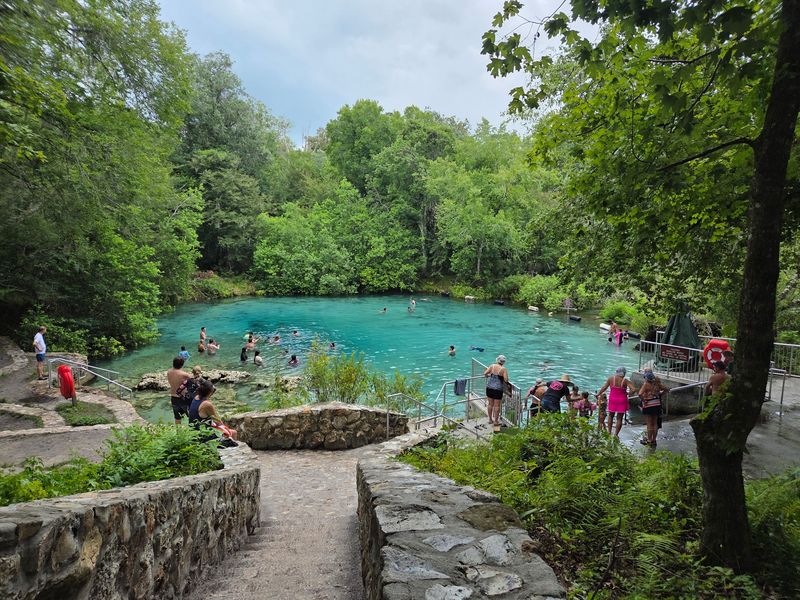
Understanding regulations before arrival prevents disappointment and protects this fragile ecosystem. Swimming and snorkeling stay confined to designated spring areas at the North Entrance.
No lifeguards patrol the water, so everyone swims at their own risk and must supervise their own children.
Tubes cannot enter the springs, though pool noodles and life jackets work fine for flotation. This distinction confuses some first-time visitors expecting the downstream tubing experience.
The rule protects sensitive underwater plants and spring vents from damage.
Food, coolers, and glass containers stay prohibited around swimming areas. Pets cannot enter the water or even the immediate spring zone.
Disposable items like plastic bags, aluminum foil, and similar materials also face restrictions to minimize pollution and protect wildlife.
Speakers and amplified music aren’t allowed either, maintaining the natural soundscape. These rules might seem strict, but they’re why the springs remain so pristine compared to many other Florida swimming holes.
Following guidelines ensures future generations can enjoy the same crystal-clear experience you’re having today.
Plan Your Visit
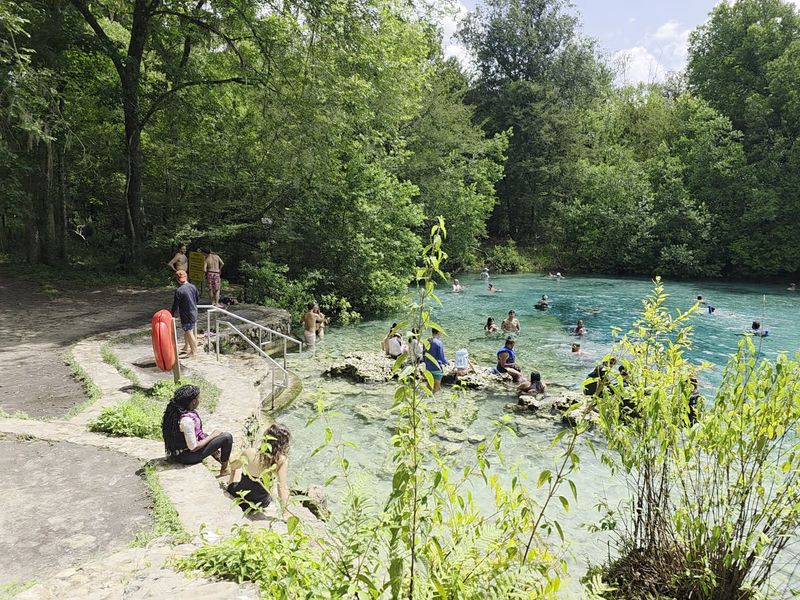
Proper planning transforms a good visit into a great one. The North Entrance sits at 8294 SW Elim Church Road, Fort White, FL 32038.
Park gates open at 8 a.m. and close at sunset, with swimming available until 30 minutes before closing. The standard vehicle admission costs $6 for two to eight people.
Parking operates on first-come, first-served basis with no reservations available. Summer weekends and holidays see the lot fill quickly, sometimes by mid-morning.
Arriving right at opening gives you the best chance at parking plus the springs to yourself before crowds gather.
No lifeguards patrol the swimming areas at any time. Adults must directly supervise children and assess their own swimming abilities honestly before entering deeper sections.
Phone contact for questions: 386-497-1500.
Check the park website before leaving home for any temporary closures or special conditions. Bring cash for the entrance fee since card readers sometimes malfunction in remote areas.
Pack reef-safe sunscreen, water shoes, towels, and drinking water for the most comfortable experience possible.