Wisconsin has a way of hiding its most striking art in the last places you’d expect.
Roadside sculpture gardens, quirky grottos, and boundary-pushing museums dot the state from corner to corner.
Some of these spots were built by self-taught visionaries working alone in their backyards for decades.
Others are polished institutions pushing contemporary art into genuinely immersive territory.
Either way, none of them ask you to just look from a distance.
We tracked down ten places spread from the driftless hills to the northern woods.
Come with an open mind, because these stops will change how you think about art entirely.
1. Dr. Evermor’s Sculpture Park in Sumpter, Sauk County
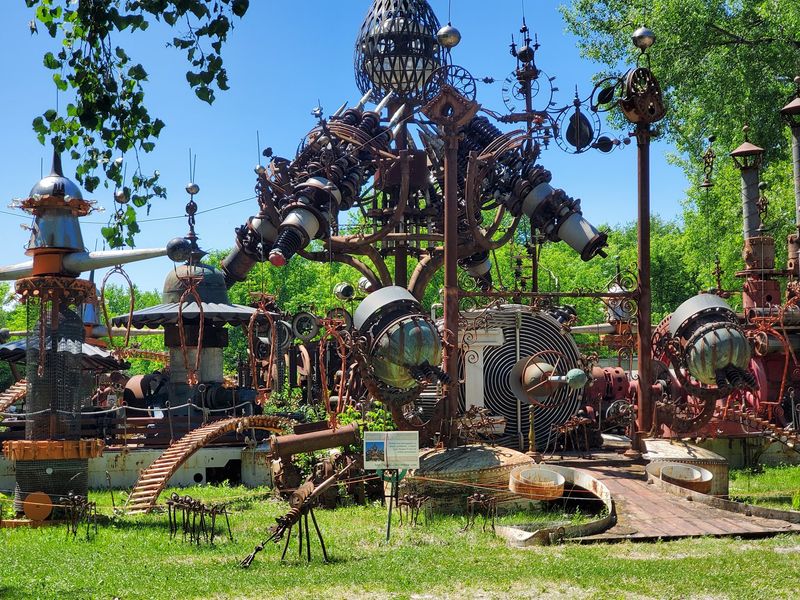
Rusty gears, old tanks, and metal birds turn a quiet roadside stop into a science fiction playground.
At Dr. Evermor’s Sculpture Park in Sumpter, Sauk County, scrap metal becomes a world with its own wild story.
The park was created by Tom Every, an artist and former industrial wrecking expert who worked under the name Dr. Evermor.
The main attraction is the Forevertron, a giant sculpture often described as one of the largest scrap metal artworks in the world.
It looks like a machine built to launch a dreamer into space, which is part of its playful legend.
Around it, visitors find musical birds, strange creatures, and machines that seem ready to clank awake.
This is a great place to slow down and look closely.
Old parts from factories, power plants, and machines have been turned into faces, wings, pipes, and towers.
Kids may enjoy spotting familiar shapes, while adults may admire the patience behind the welding.
Check hours before going, since outdoor folk art sites can have seasonal schedules.
Bring a camera, sturdy shoes, and a sense of humor.
The park proves imagination can recycle history into something bold, funny, and huge.
2. John Michael Kohler Arts Center in Sheboygan, Sheboygan County
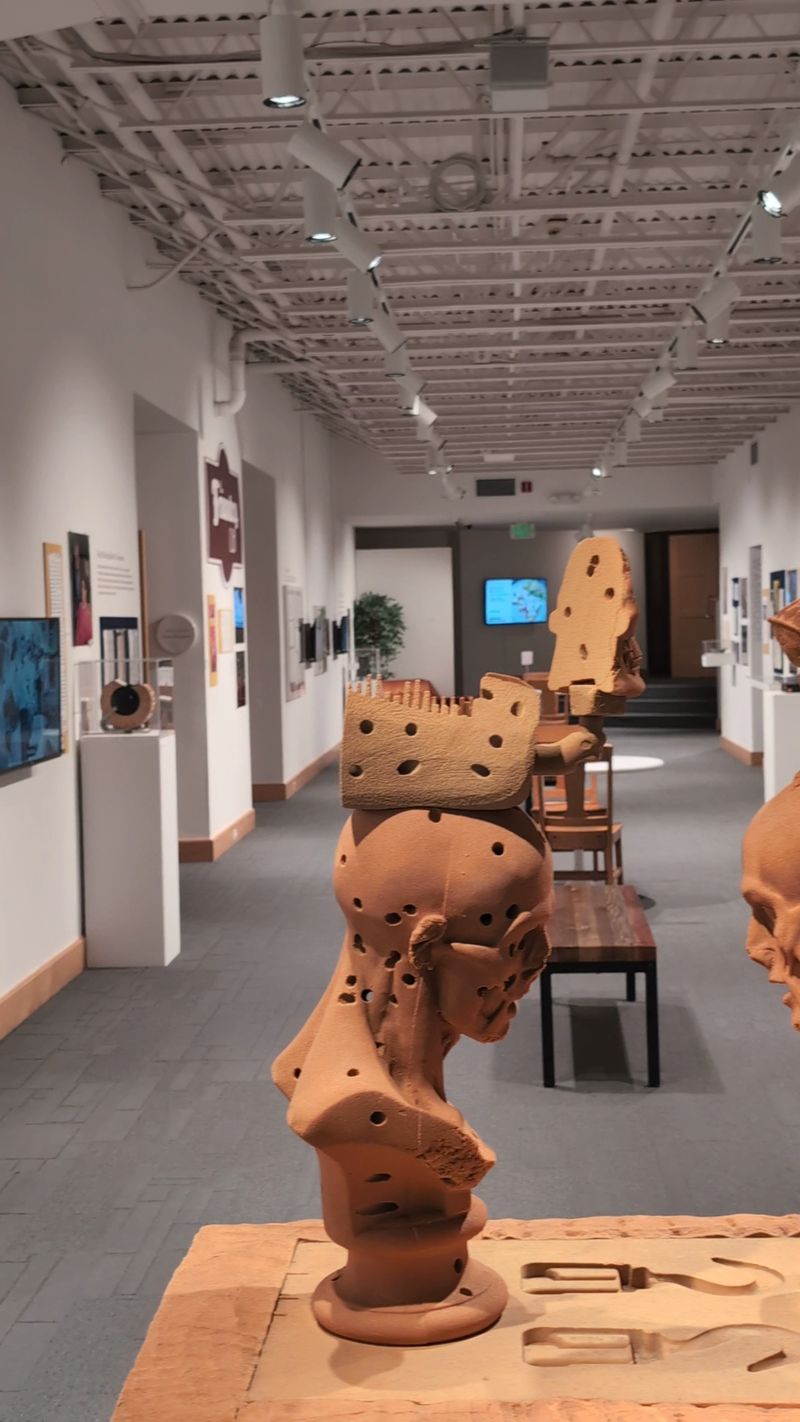
Bright galleries, bold rooms, and even artist-designed bathrooms remind visitors that creativity can show up anywhere.
The John Michael Kohler Arts Center in Sheboygan, Sheboygan County, has a special talent for making contemporary art feel welcoming.
Its strongest focus is artist-built environments, which are spaces shaped by artists into complete worlds.
Visitors may see large installations, detailed drawings, ceramics, videos, or rooms filled with handmade objects.
The center also cares for work by self-taught and visionary artists, so the art often feels personal and surprising.
Instead of only showing neat framed pieces, many exhibits ask you to step closer and notice how materials tell stories.
A helpful tip is to start with the labels, then look again without reading.
You may catch details you missed, such as repeated shapes, odd tools, family memories, or humor tucked into corners.
The building is easy to enjoy at a relaxed pace, and admission has often been free, though visitors should confirm current details.
Families can use the center as a gentle first step into modern art.
Nothing says you must understand everything right away.
Sometimes the best response is simply, I have never seen anything like that before today.
3. Wisconsin Concrete Park in Phillips, Price County
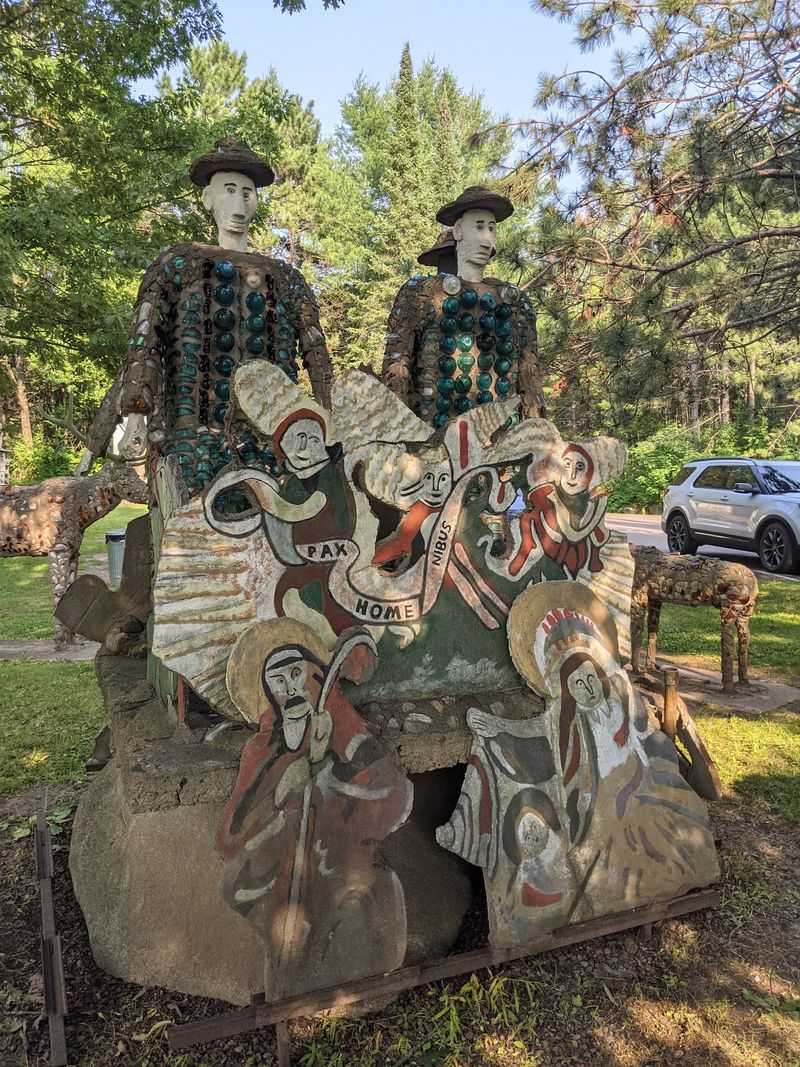
In a clearing near the road, concrete people seem to be telling stories that never quite end.
Wisconsin Concrete Park in Phillips, Price County, preserves the work of Fred Smith, a retired lumberjack who began making sculptures later in life.
Using concrete, glass, bottles, and found materials, he filled the site with figures from history, legend, and everyday life.
The park feels both homemade and powerful.
You might see Paul Bunyan, Native figures, soldiers, animals, farmers, and musicians standing together in a bright outdoor gathering.
Because the sculptures are weathered, they also show the passage of time, which adds feeling to the visit.
Walk slowly and read the signs when available, because many pieces connect to Wisconsin stories.
The site is not polished like a formal gallery, and that is part of its charm.
It shows how one person, working with simple materials, can create a place that belongs to the whole community.
Bring bug spray in warm months and dress for grass or uneven ground.
Visitors interested in folk art, roadside history, or northern Wisconsin culture will find plenty to enjoy.
The park leaves a strong lesson behind: art does not need marble halls to speak clearly.
4. House on the Rock in Spring Green, Sauk County
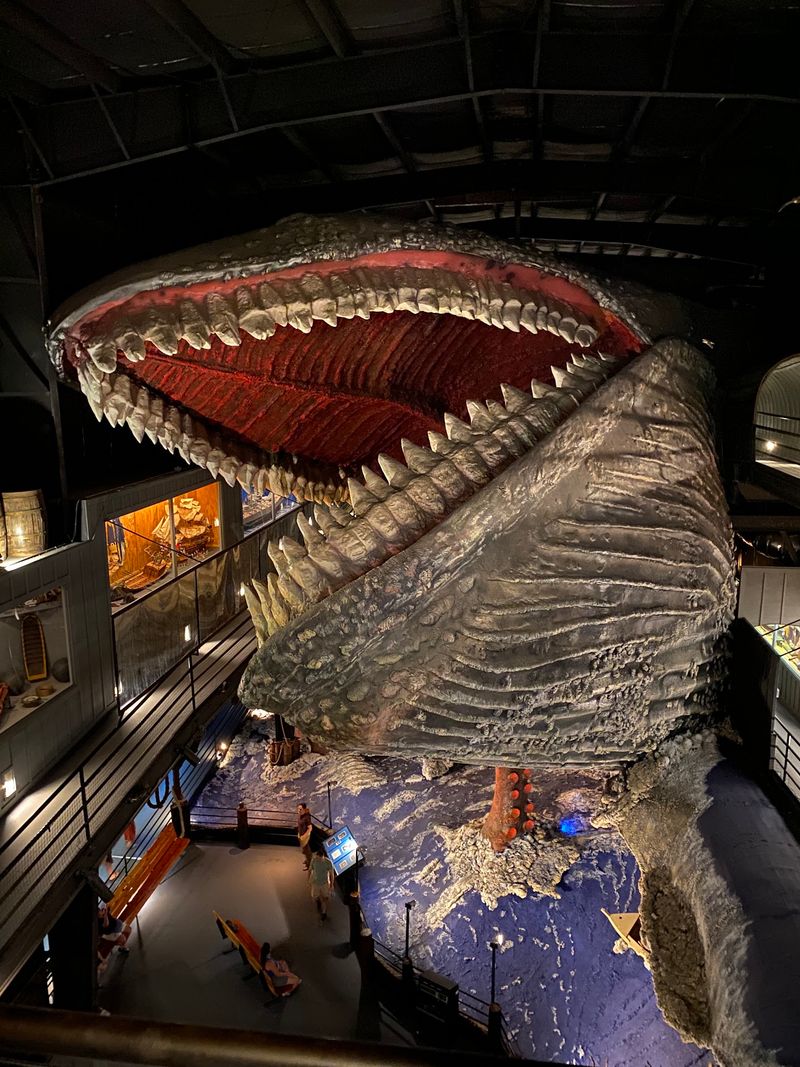
A narrow room seems to float over the trees, and suddenly art feels more like a dare than a painting on a wall.
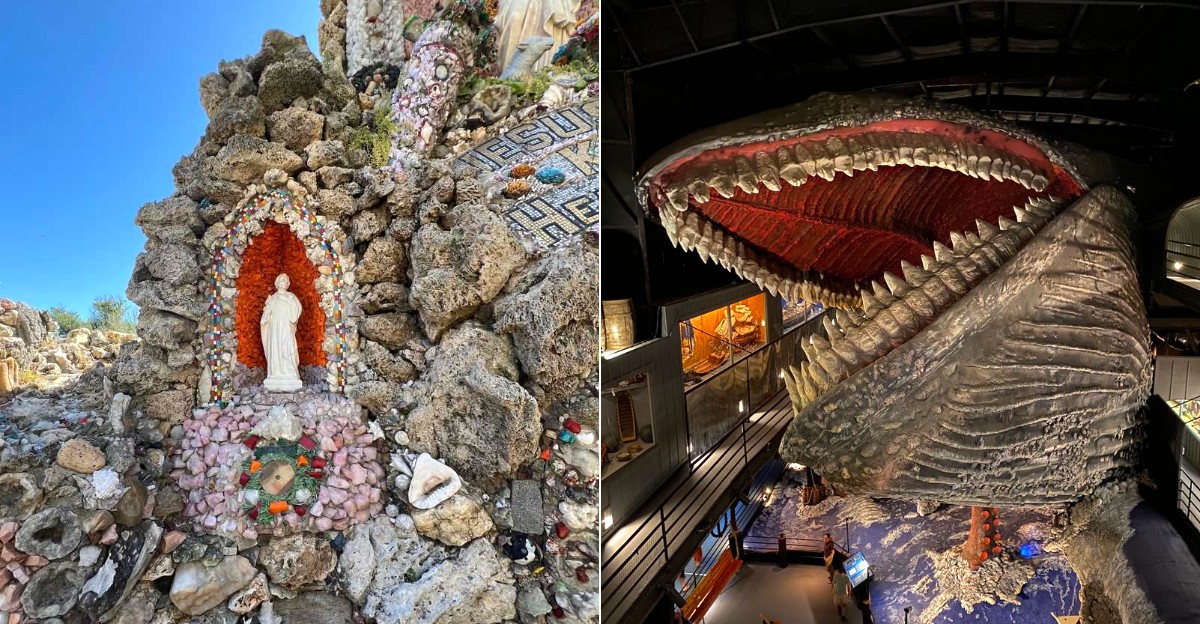
That is the feeling many visitors remember from House on the Rock in Spring Green, Sauk County.
Built from the ideas of Alex Jordan Jr., this huge attraction mixes architecture, collections, music machines, and strange scenes into one unforgettable maze.
Plan more time than you think you need, because the experience is long and full of surprises.
The Infinity Room, which stretches out over the valley without supports beneath its tip, is the famous showstopper.
Still, the carousel, giant sea creature, dollhouses, armor displays, and dim hallways all add to the dreamlike mood.
This stop works best when you let go of normal museum rules.
Instead of asking what each object means, notice how scale, sound, color, and mystery change your mood.
Wear comfortable shoes, bring curiosity, and expect some narrow spaces.
For families, it can spark fun talks about collecting, imagination, and why odd things stay in memory.
Few places make Wisconsin art feel this theatrical, puzzling, and wonderfully strange for first-time visitors.
5. Grandview in Hollandale, Iowa County
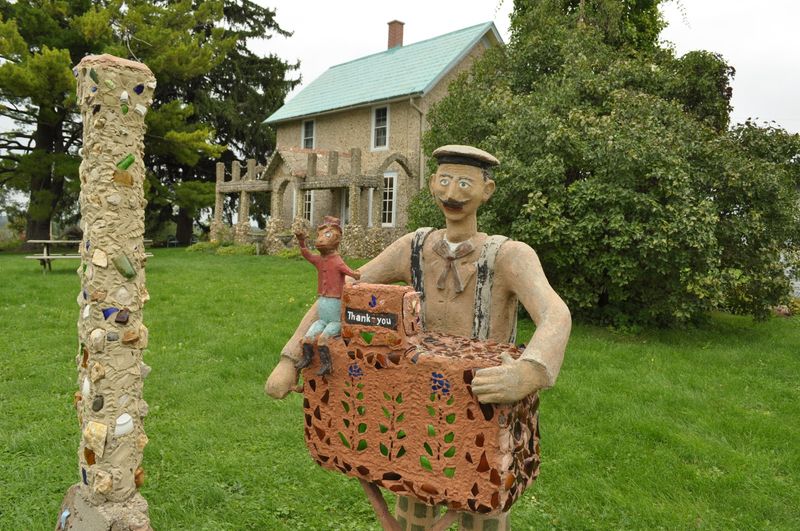
A small farmstead can feel like a storybook when animals, people, and bright shapes rise from the yard.
Grandview in Hollandale, Iowa County, was the home and art environment of Nick Engelbert, an Austrian-born farmer with a playful eye.
After settling in Wisconsin, he transformed his property with concrete sculptures covered in paint, stones, glass, and cheerful detail.
The setting makes the art feel personal right away.
Rather than walking through a large institution, visitors move around the place where Engelbert lived, worked, dreamed, and created.
His sculptures include animals, figures, and fanciful forms that show humor along with deep care.
One reason Grandview stands out is its mix of rural life and imagination.
The art does not feel separate from chores, weather, gardens, or family history.
It feels like creativity grew directly out of the land.
Check ahead for tours, open hours, and preservation updates, since historic art environments need ongoing care.
When visiting, look for small surface details, because the sparkle of glass or a painted curve can change the whole mood of a piece.
Grandview is especially rewarding for travelers who like quiet places with big personality.
It shows how a home can become a lasting gift when one person keeps adding wonder.
6. Dickeyville Grotto in Dickeyville, Grant County
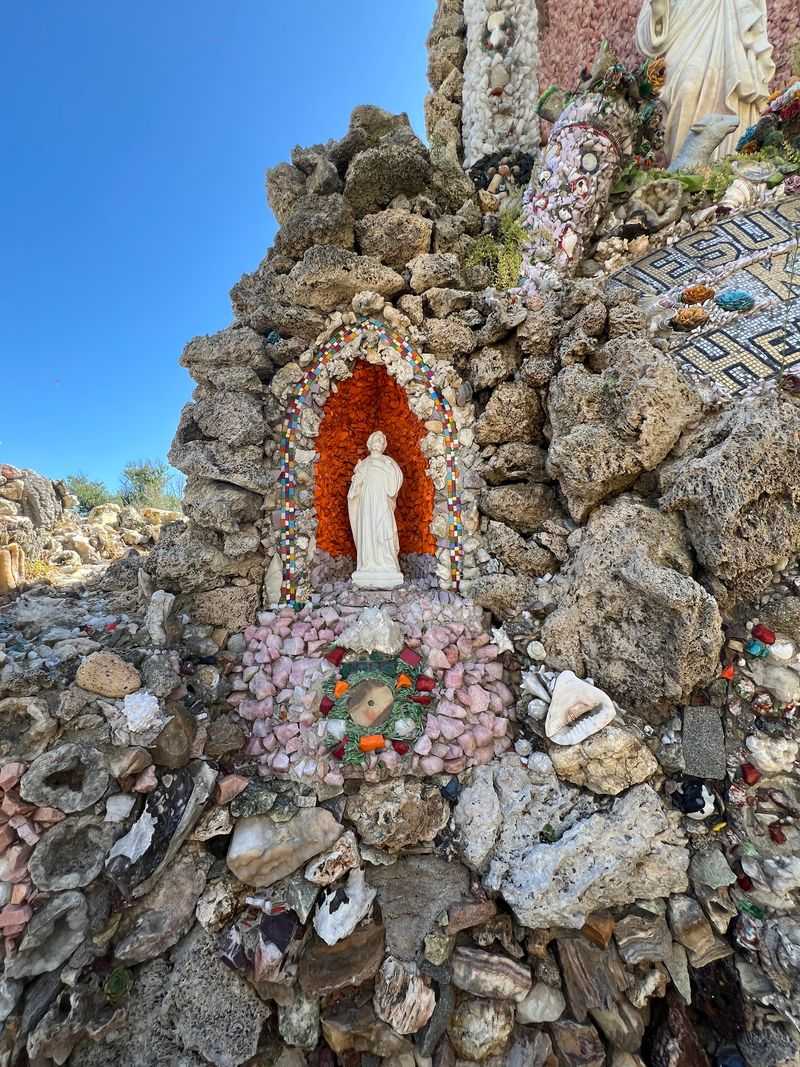
Sunlight catches bits of glass, shells, stones, and broken dishes until the walls seem to glitter with stories.
Dickeyville Grotto in Dickeyville, Grant County, is both a religious site and a remarkable work of mosaic art.
Father Mathias Wernerus led its creation in the 1920s and 1930s, using countless small objects to build shrines, symbols, and patterned surfaces.
The grotto honors faith, patriotism, and community memory in a very hands-on way.
Visitors can see crosses, statues, arches, stars, and eagles made from materials gathered from many places.
Every surface invites close looking, because a tiny shell or stone may sit beside glass that once had another life.
Respect matters here, since the site remains connected to Catholic tradition.
Move quietly, avoid touching fragile areas, and give space to anyone who comes for prayer.
At the same time, you do not need to share the same faith to appreciate the patience and design.
This stop is easy to pair with a drive through southwest Wisconsin.
Bring a phone or camera for detail shots, not just wide views.
The grotto changes how people see decoration, proving small pieces can create a powerful place.
7. Wegner Grotto in Sparta, Monroe County
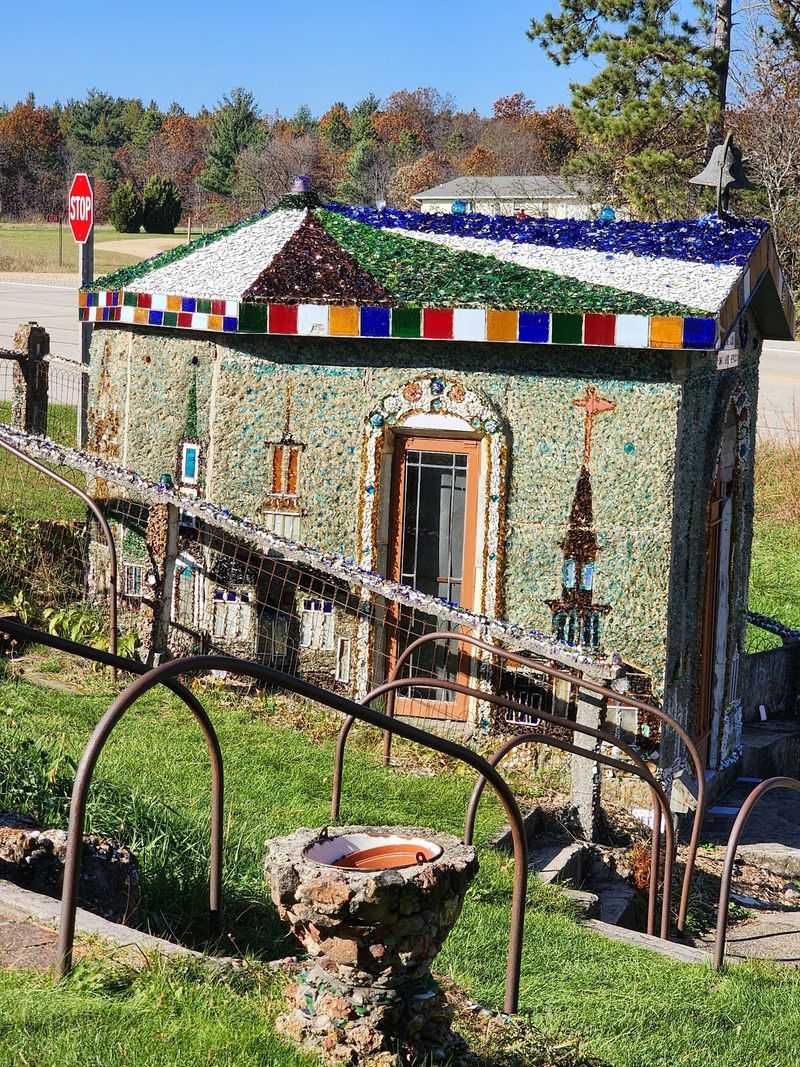
Quiet country roads make the sparkle feel even more surprising when the grotto finally comes into view.
Wegner Grotto in Sparta, Monroe County, was created by Paul and Matilda Wegner after their retirement.
With concrete, glass, shells, and colorful bits, they built a personal wonderland that blends faith, memory, and hand-built beauty.
The site includes a small chapel-like structure, patriotic pieces, religious scenes, and carefully decorated forms.
Unlike huge museums, this place feels intimate, as if you are stepping into someone’s patient hobby that grew far beyond the backyard.
That closeness helps visitors understand how art can come from devotion, spare time, and steady hands.
Look carefully at the surfaces before moving on.
The materials are ordinary by themselves, but together they make patterns that shine in changing light.
Children may enjoy searching for colors and shapes, while adults may notice the strong sense of care in every wall.
Because outdoor grottos can be fragile, stay on paths and follow posted rules.
A short visit can still feel rich if you slow your pace.
Wegner Grotto is a reminder that immersive art does not always need loud sound or giant screens.
Sometimes it begins with two people decorating concrete until a whole world appears.
8. Prairie Moon Sculpture Garden in Fountain City, Buffalo County
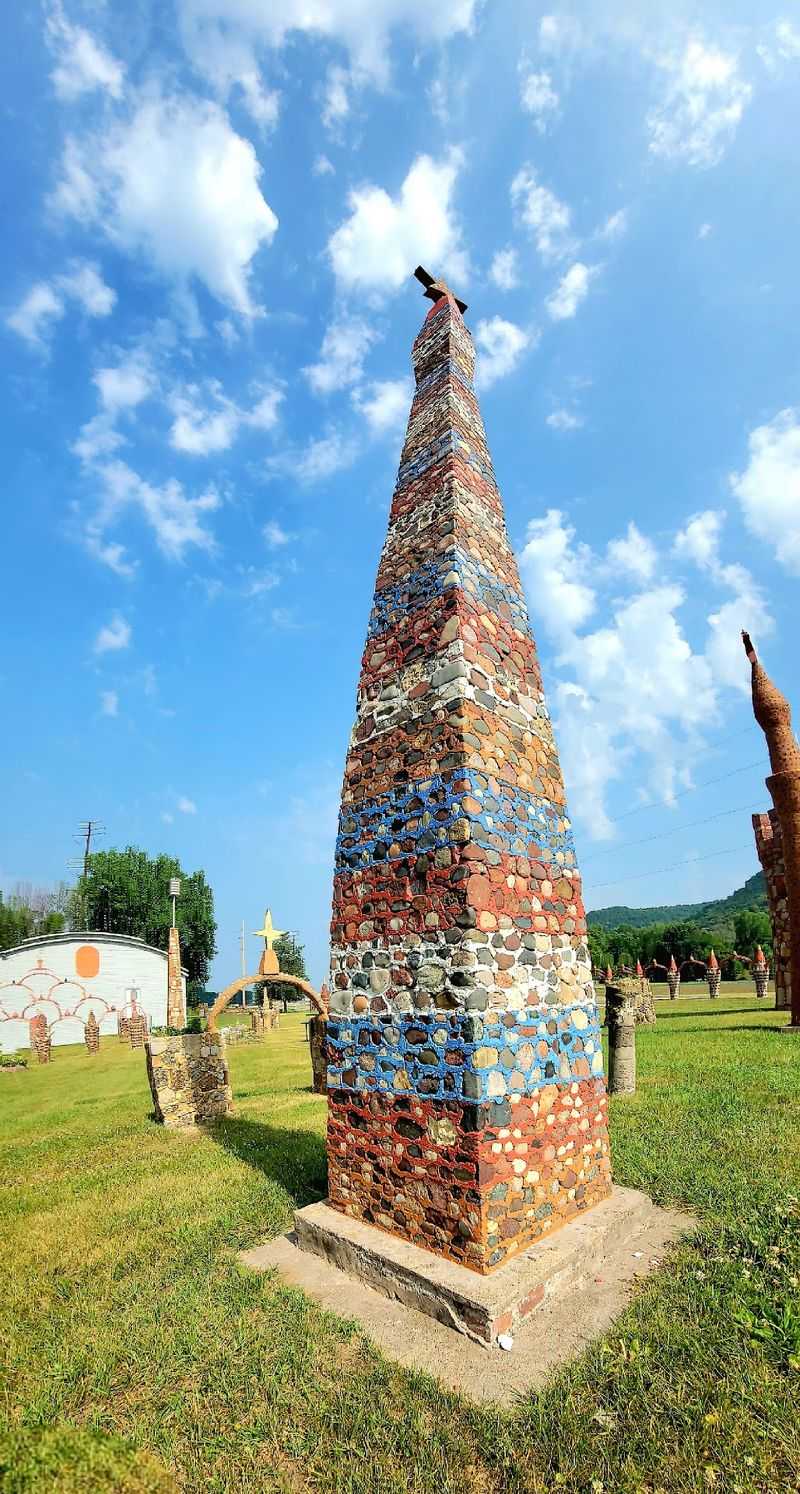
Along the Mississippi River bluffs, a yard of handmade figures seems to smile at passing travelers.
Prairie Moon Sculpture Garden in Fountain City, Buffalo County, grew from the imagination of Herman Rusch, a retired farmer and museum owner.
He began creating concrete and stone sculptures in the late 1950s, filling the grounds with animals, people, towers, and playful forms.
The garden has a breezy, roadside charm that makes it easy to enjoy.
Some pieces feel funny, some feel mysterious, and others seem like friendly guardians of the lawn.
Together, they turn a simple outdoor space into a place where folk art and local history meet.
Visitors should take time to walk around each sculpture, because the shapes often change from different angles.
Notice the textures, too, since stones, shells, and concrete surfaces give the work a handmade rhythm.
The nearby landscape adds another layer, with hills and river country making the art feel rooted in western Wisconsin.
Check current access details before visiting, especially during colder months.
This is a rewarding stop for road trips, photographers, and anyone who likes art with a neighborly spirit.
Prairie Moon shows how a personal pastime can brighten a community for generations.
9. Jurustic Park in Marshfield, Wood County
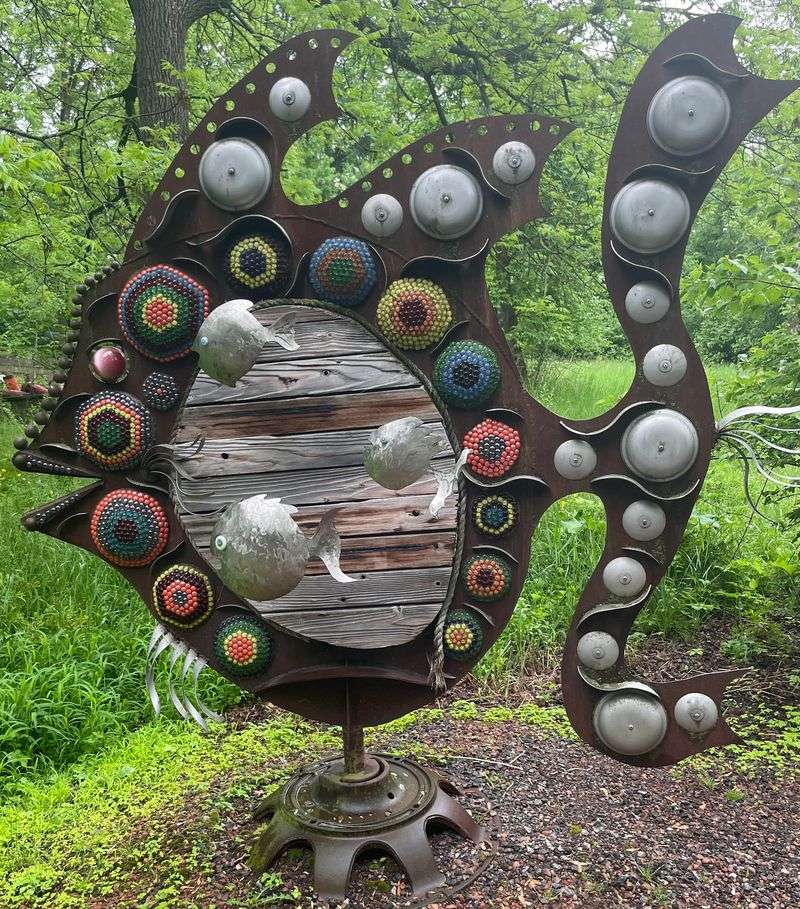
A metal creature with a toothy grin can make even serious visitors laugh before they reach the next sculpture.
Jurustic Park in Marshfield, Wood County, is the playful world of artist Clyde Wynia and his wife, Nancy.
The outdoor setting is filled with fantasy animals, dragons, dinosaurs, and odd beasts made from welded scrap metal.
The name hints at Jurassic Park, but the mood is more backyard tall tale than movie thriller.
Many sculptures come with funny stories about ancient creatures supposedly found in the nearby McMillan Marsh.
That invented history gives the visit a lively sense of theater.
Guided visits, when available, are part of the fun because stories can make the creatures feel almost alive.
Call ahead or check current visiting information, since this is a personal art environment rather than a regular public museum.
Wear shoes that work well outdoors, and be ready for humor mixed with impressive metalwork
Look for how old tools, farm parts, and machine pieces become claws, scales, jaws, and wings.
That transformation is the real magic.
Jurustic Park encourages visitors to see junk differently, not as useless metal, but as the bones of a monster waiting for an artist to wake it up.
10. Museum of Wisconsin Art in West Bend, Washington County
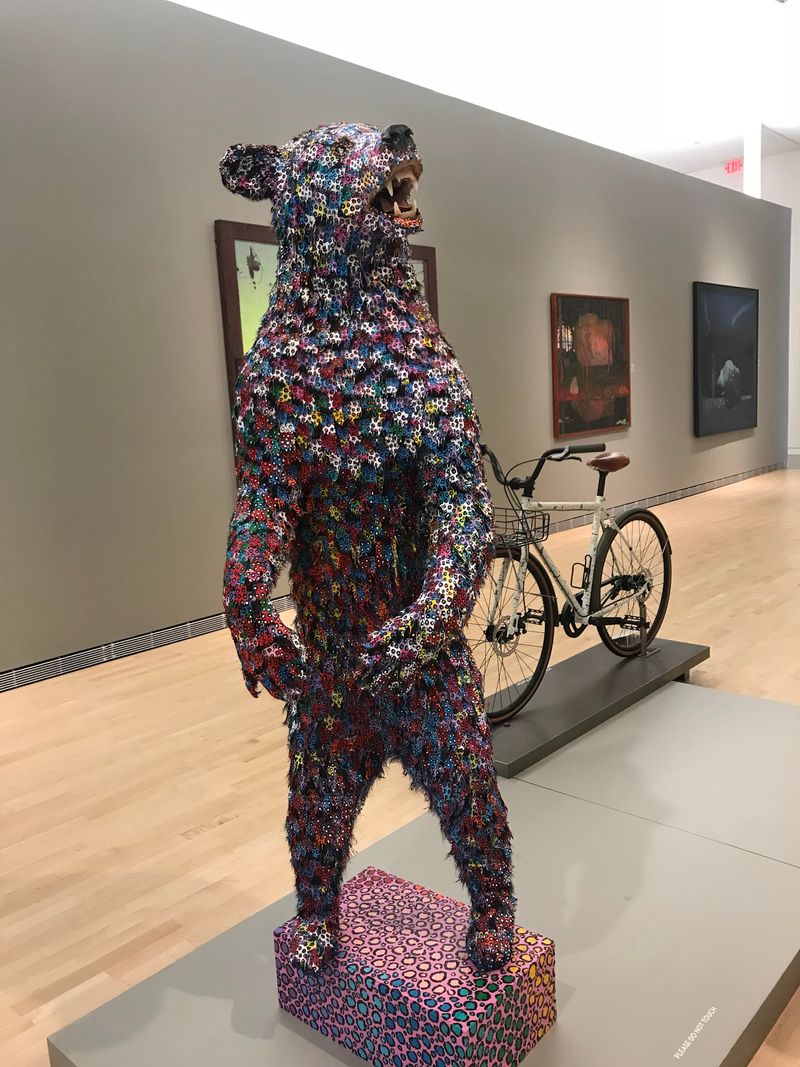
Clean light, curved architecture, and art from across the state give this museum a strong sense of place.
The Museum of Wisconsin Art in West Bend, Washington County, often called MOWA, focuses on artists connected to Wisconsin.
That mission makes the visit feel personal, because the stories, landscapes, materials, and ideas often link back to places visitors know.
The museum presents paintings, sculptures, photography, crafts, and contemporary works in a bright modern building.
Instead of feeling like art belongs somewhere far away, MOWA shows how much creativity has grown right here in the state.
Rotating exhibits keep the experience fresh, so repeat visits can feel different.
A smart way to explore is to pick one artwork in each room and spend a full minute with it.
Notice color, mood, subject, and texture before reading the label.
That simple habit can make museum-going feel less rushed and more rewarding.
Families can ask easy questions, such as what season a painting suggests or what sound a sculpture might make.
The museum is a strong final stop for this list because it connects wild outdoor art, folk traditions, and polished galleries.
MOWA proves immersive looking can happen anywhere when attention becomes part of the experience.