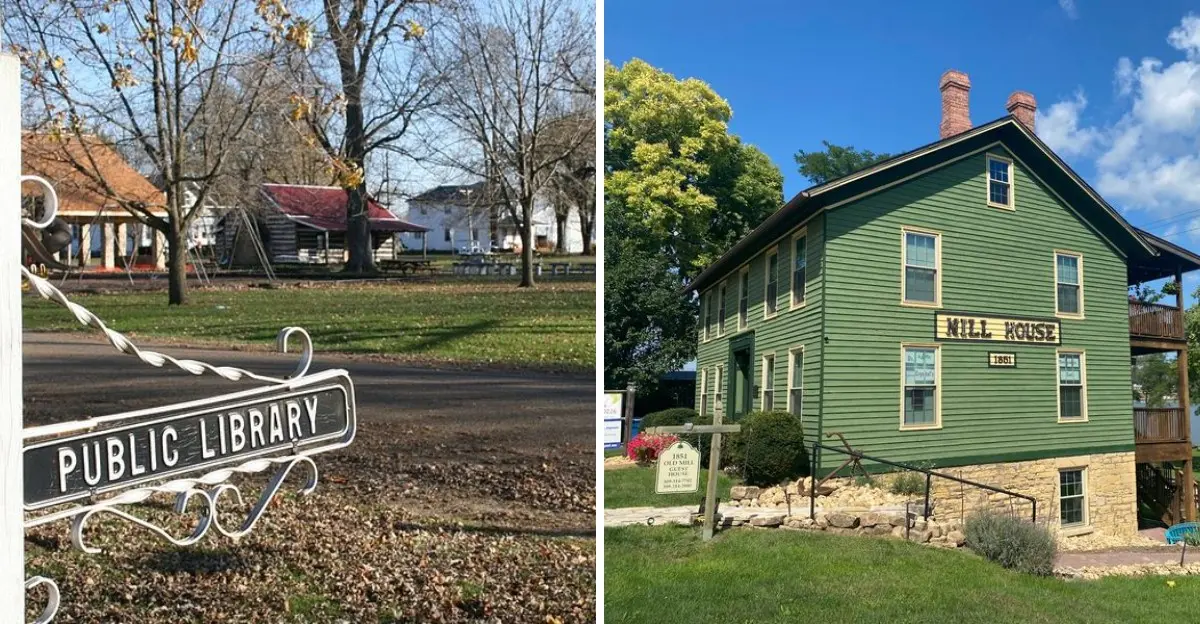
Iowa’s tiniest villages can pack some seriously big surprises.
Away from busy highways and bigger cities, these communities reveal a side of Iowa that feels wonderfully unexpected. Quiet main streets, historic buildings, river views, and local traditions give each place its own personality.
Some villages carry the influence of German, Dutch, Danish, Amish, or Mennonite settlers, while others grew around rivers, railroads, mills, and farms.
Their stories are often far more fascinating than their size suggests.
And that is where the fun begins. You might find a centuries-old tradition, a charming historic district, a one-of-a-kind shop, or a peaceful corner where time seems to slow down.
These 12 Iowa villages prove you don’t need a famous destination to have an unforgettable adventure.
Sometimes, the best discoveries are hiding in plain sight.
Amana
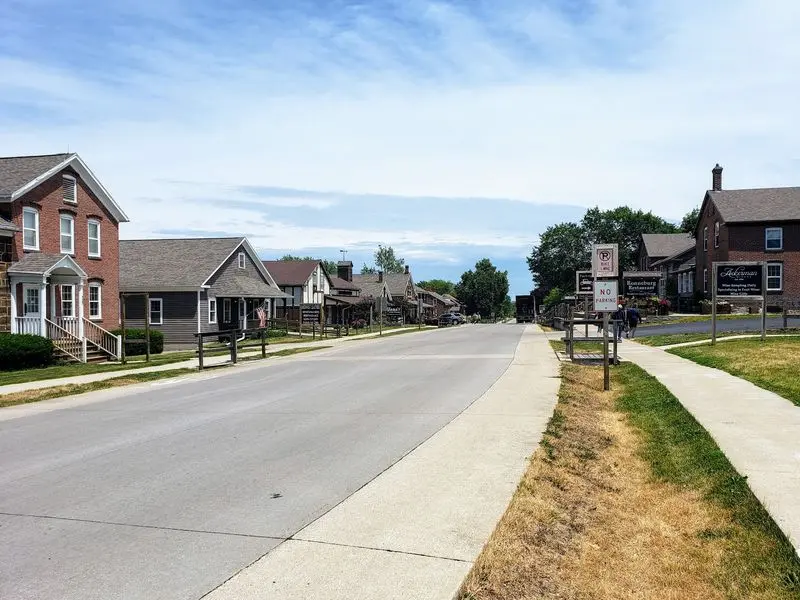
The Amana Colonies feel unlike almost anywhere else in Iowa. Seven interconnected villages preserve German heritage through historic buildings, craft shops, beautiful gardens, and living traditions that date back to the 1850s.
Walking through these communities means stepping into a place where history isn’t just displayed but actively practiced every day.
Visitors discover furniture makers, weavers, breweries, and bakeries operating much as they did generations ago. The architecture tells its own story through communal kitchens, sandstone buildings, and structures built by settlers who came seeking religious freedom.
Food traditions run especially deep here. Authentic German restaurants serve family-style meals featuring schnitzel, sauerkraut, and homemade breads prepared using the same recipes for over a century.
The general stores stock locally made wines, woolens, and crafts you won’t find anywhere else.
Spring through fall, the gardens burst with color while winter brings a quieter charm. History lovers and travelers seeking something genuinely different will find the Amana experience memorable and surprisingly distinct from typical Iowa tourism.
Birmingham
Laid out in 1839, Birmingham looks like a quiet rural community today, but its history tells a much bigger story. Industries once thrived here, and the town served as an important local trading and manufacturing center.
What makes Birmingham special is how it shares that past without feeling like a formal museum.
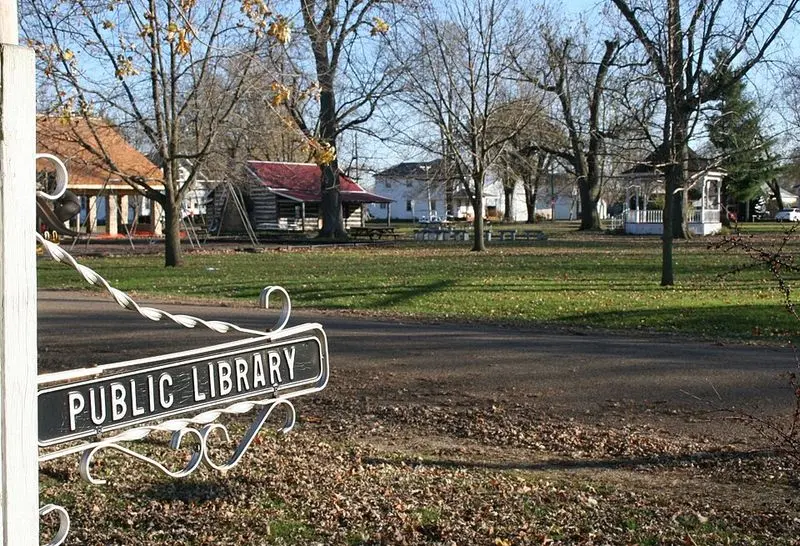
The city park anchors the community with a historic log cabin that speaks to frontier days. A beautifully restored gazebo stands nearby, offering a peaceful spot to appreciate the town’s unhurried atmosphere.
Longtime churches add architectural interest and remind visitors of the generations who built their lives here.
Walking through Birmingham feels refreshingly authentic. The old-town atmosphere invites exploration without overwhelming you with tourist attractions or commercialization.
Instead, you get a genuine glimpse into Iowa’s settlement era and the practical communities that grew along its earliest routes.
For travelers who appreciate history presented naturally rather than packaged, Birmingham delivers exactly that. The village rewards those willing to slow down and imagine the bustling trading center it once was.
McGregor
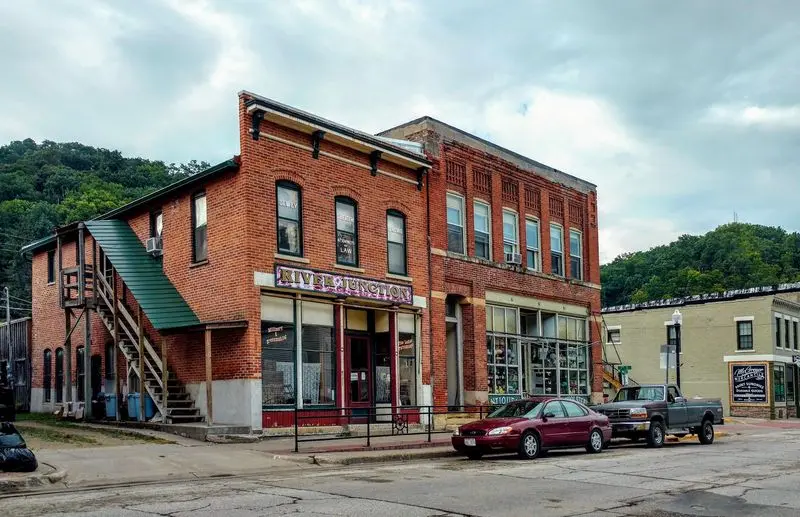
Tucked between the Mississippi River and the dramatic bluffs of northeast Iowa, McGregor combines scenery with substance. The geography alone makes this village memorable, but the compact downtown packed with old storefronts, local shops, and restaurants gives travelers plenty of reasons to linger.
The Mississippi River setting provides constant visual drama. Bluffs rise sharply behind the town while the river flows past the front, creating a natural corridor that early settlers recognized as ideal for trade and transportation.
That history shaped McGregor’s character in ways still visible today.
Local shops occupy buildings that once served riverboat commerce and frontier trade. The authenticity isn’t manufactured for tourists but remains from an era when McGregor thrived as a vital river port.
Restaurants offer river views alongside their meals, making dining part of the scenic experience.
Pikes Peak State Park sits nearby, offering hiking trails with spectacular overlooks of the Mississippi River valley. Between the outdoor adventures and the downtown exploration, McGregor delivers a surprising amount of experience for such a small community.
Elkader
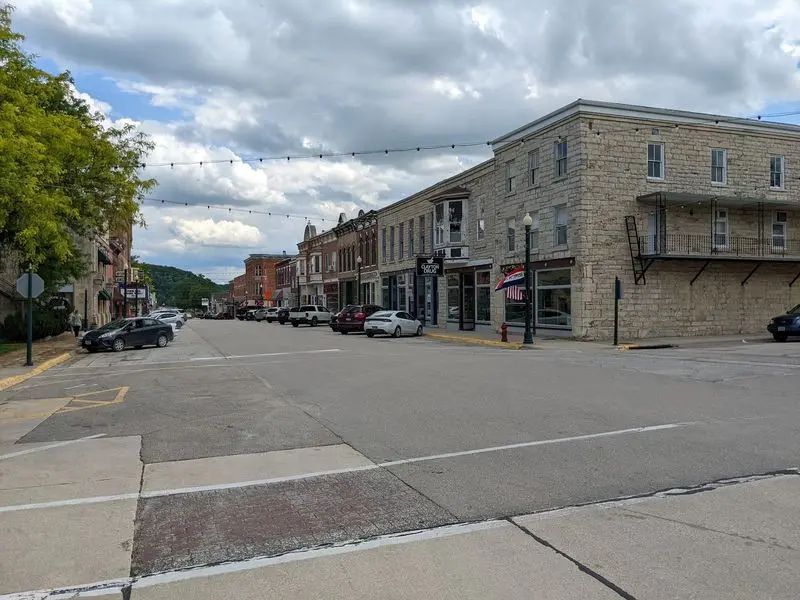
Elkader stands out as one of Iowa’s most unexpected small-town discoveries. The picturesque Turkey River setting combines with limestone buildings, historic bridges, and an unusual connection to Algerian history that makes this village genuinely unique.
Not many Iowa towns share their name with an Algerian resistance leader, but Elkader does.
The historic district showcases architecture that reflects both prosperity and civic pride from earlier generations. Limestone structures built to last still serve the community today, creating streetscapes that feel substantial and permanent.
The 1903 opera house adds cultural weight to a town this size.
The Turkey River winds through Elkader, creating natural beauty that enhances the historic setting. Walking paths and parks take advantage of this waterway, giving visitors easy access to both nature and downtown attractions.
The combination works remarkably well for a quiet northeast Iowa getaway.
What surprises many first-time visitors is how much personality Elkader packs into its small footprint. The Algerian connection, river scenery, and well-preserved buildings create layers of interest that reward exploration beyond a quick drive-through.
Le Claire
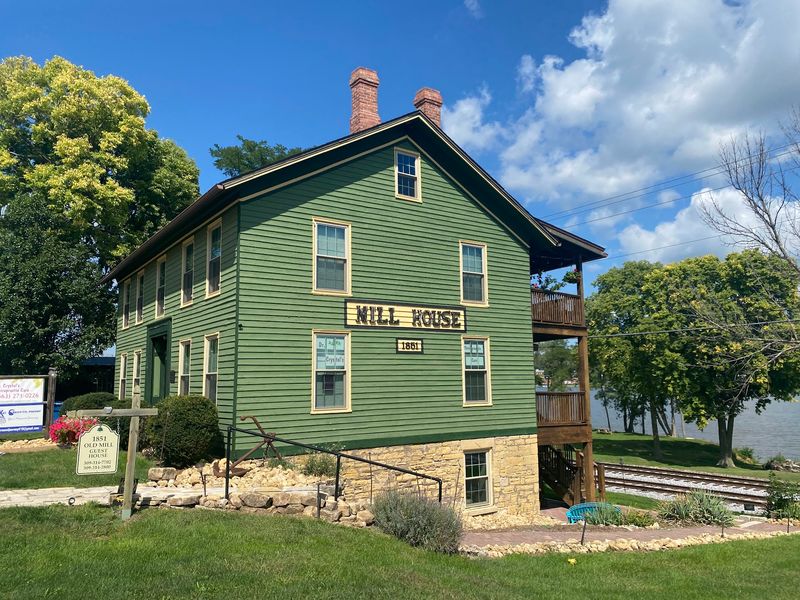
Set directly along the Mississippi River, Le Claire mixes river-town history with an appealing collection of antique shops, boutiques, restaurants, and historic buildings. The connection to riverboat history runs deep here, and the association with Buffalo Bill Cody gives this community an especially memorable backstory that distinguishes it from other river towns.
Antique enthusiasts find Le Claire particularly rewarding. Multiple shops offer everything from furniture to collectibles, drawing dealers and collectors from well beyond Iowa.
The downtown’s walkable layout makes browsing easy, and the river views add atmosphere to the shopping experience.
Buffalo Bill Cody was born in Le Claire, and the town embraces this connection without overdoing it. Museums and historic markers tell his story alongside the broader history of Mississippi River commerce and the steamboat era.
You get context without feeling like you’re in a theme park.
Restaurants take advantage of the riverfront setting, offering outdoor seating when weather permits. The combination of history, shopping, dining, and river scenery creates a village experience that feels both substantive and enjoyable for visitors seeking something beyond typical tourism.
Cantril
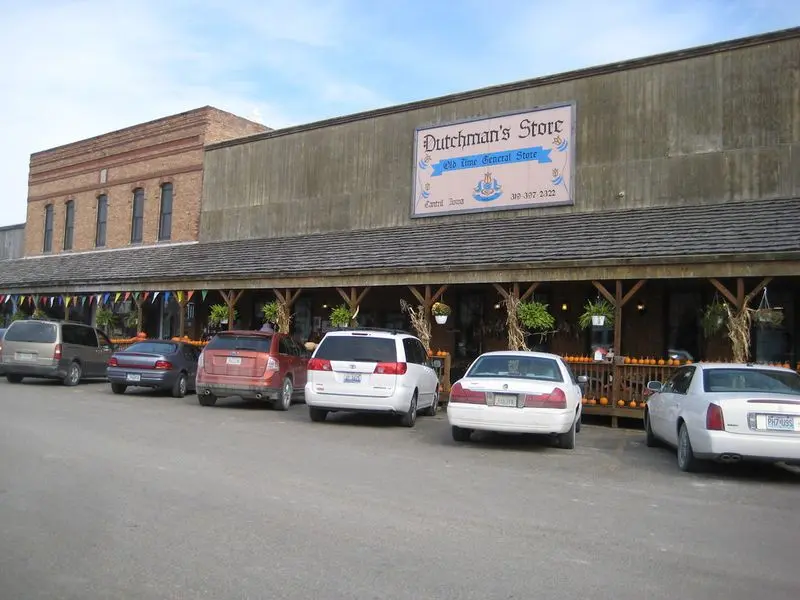
Cantril may be tiny, but it offers curious travelers genuine reasons to stop. The village sits at the heart of an Amish and Mennonite community, creating an atmosphere distinctly different from most Iowa towns.
This cultural foundation shapes everything from the businesses to the peaceful pace you’ll experience here.
The Dutchman’s Store stands as Cantril’s biggest draw. This Mennonite-owned general store packs an astonishing variety into its space, including bulk foods, baked goods, groceries, fabrics, crafts, footwear, and candy.
Walking through feels like stepping back to when general stores truly offered everything a community needed.
The baked goods deserve special mention. Fresh breads, pies, cookies, and pastries prepared using traditional methods bring people from surrounding counties.
The quality reflects generations of recipes and techniques passed down through Mennonite families who take pride in their food traditions.
Beyond the store, the surrounding countryside reveals the Amish and Mennonite presence through well-kept farms, horse-drawn buggies, and a quieter approach to modern life. Cantril provides an authentic glimpse into these communities without feeling intrusive or commercial.
Farmington
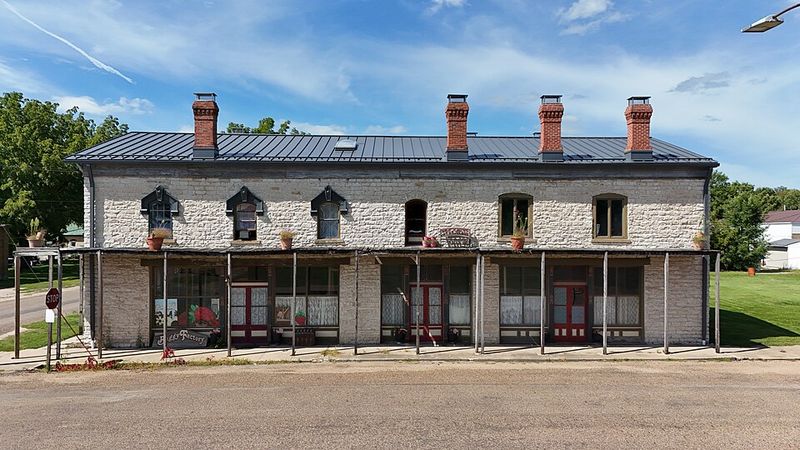
Established in 1839, Farmington claims the title of Iowa’s oldest village and carries more history than most travelers expect. Once the county seat, the community grew around its strategic location on the Des Moines River.
That early prominence left architectural and cultural marks still visible throughout the village today.
The setting makes Farmington especially appealing beyond its historical significance. The Des Moines River borders one side of town while the wooded hills and ridges of Shimek State Forest surround the others.
This combination creates a natural buffer that makes the village feel secluded and peaceful despite its accessibility.
Historic buildings downtown tell stories of frontier commerce and county government. The structures reveal the ambitions of settlers who believed Farmington would become something much larger.
Though the county seat eventually moved, the village retained its charm and quiet appeal.
Shimek State Forest provides opportunities for hiking, wildlife viewing, and experiencing the oak-hickory forests characteristic of southeast Iowa. The proximity means visitors can combine village history with outdoor exploration in a single trip, making Farmington reward those who allocate enough time to appreciate both aspects.
Bentonsport
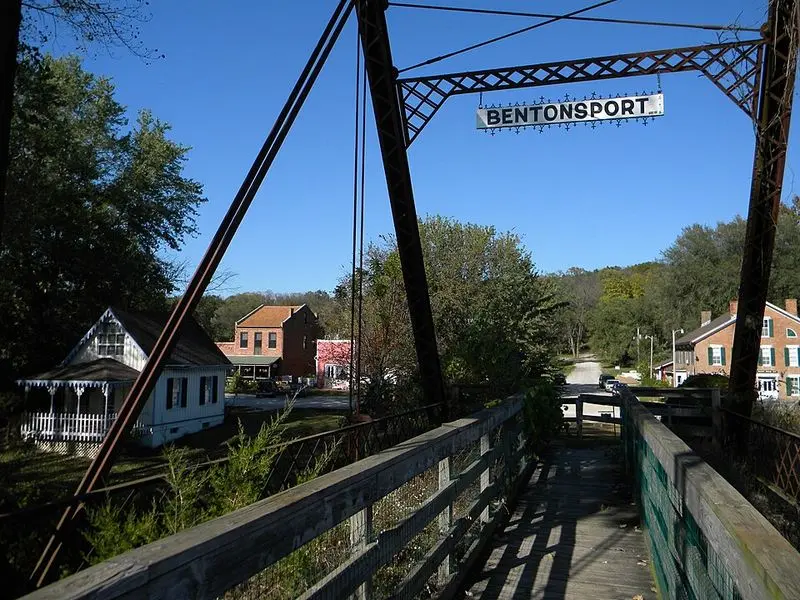
Tiny Bentonsport makes Iowa’s village history especially fascinating for those who discover it. Once a busy steamboat port on the Des Moines River, the community thrived during the mid-1800s when river transportation drove commerce and growth.
Now it charms visitors with historic homes, old shops, river scenery, and a wonderfully quiet pace.
The steamboat era left behind substantial buildings that speak to Bentonsport’s former importance. Walking these streets reveals architecture far more impressive than you’d expect in a village this small.
General stores, hotels, and homes built to serve river traffic and local residents still stand, creating an intact historic district.
The Des Moines River continues to define Bentonsport’s character and appeal. The waterway that once brought prosperity now provides scenic beauty and recreational opportunities.
The river scenery enhances the historic atmosphere, making the village feel like a place deliberately tucked away from modern rush.
Shops operating in restored buildings sell antiques, crafts, and local goods. The pace encourages browsing without pressure, and the proprietors often share village history and stories that add depth to your visit beyond what any sign could convey.
Elk Horn
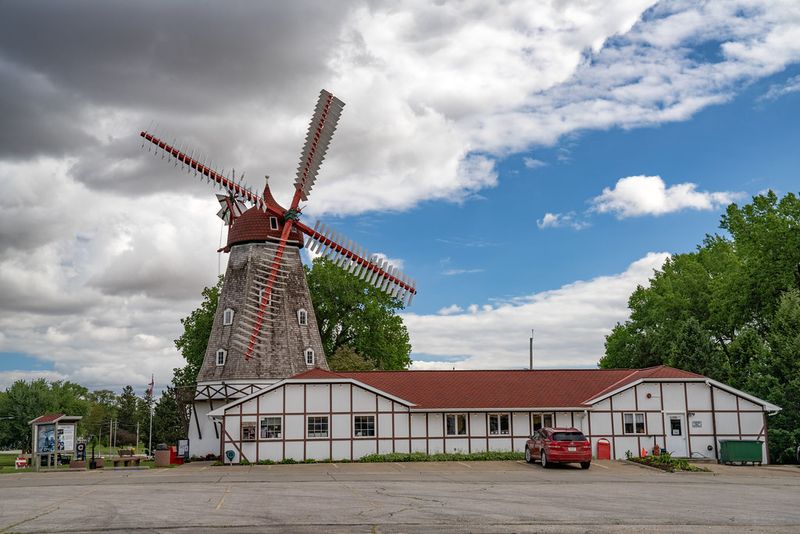
Elk Horn stands out for its Danish heritage and the striking Danish Windmill that has become the town’s signature landmark. This working windmill, visible from a distance, immediately signals that you’re approaching something different.
The structure was actually brought from Denmark and reassembled in Elk Horn, creating an authentic centerpiece for the community.
The village offers visitors an unusual cultural experience in the middle of rural Iowa. Scandinavian traditions influence the attractions, downtown businesses, and community celebrations.
You’ll find Danish bakeries, gift shops featuring Nordic crafts, and restaurants serving traditional foods you won’t encounter in most Iowa towns.
The Danish Immigrant Museum adds depth to understanding why and how Danish settlers came to this part of Iowa. The exhibits connect personal stories to broader immigration patterns, making history feel personal rather than abstract.
The museum complements the windmill experience by providing context.
Community events often celebrate Danish culture through music, food, and traditions brought from the old country and adapted to Iowa life. Visiting during festivals amplifies the experience, but even quiet days reveal the Danish influence that makes Elk Horn genuinely distinctive among Iowa’s small villages.
Bonaparte
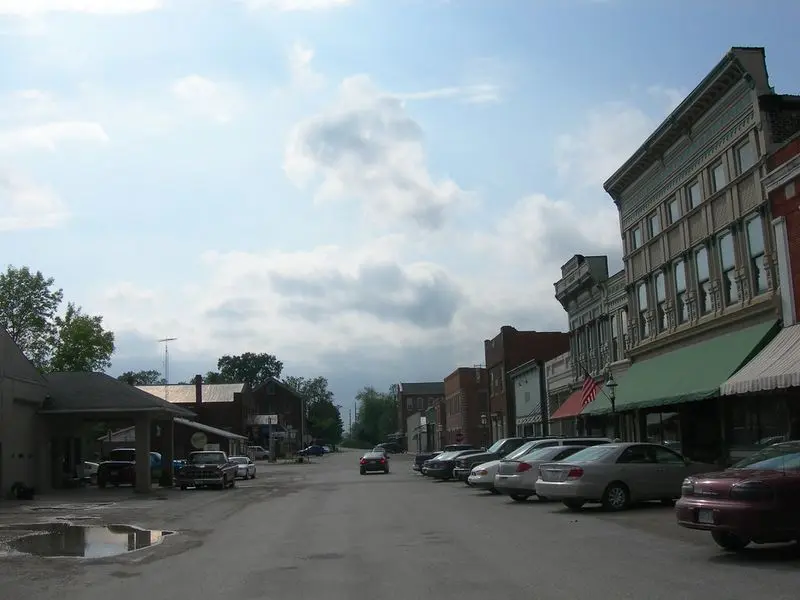
Bonaparte may be small, but its setting along the Des Moines River and its beautifully preserved historic district give it an outsized personality. Once a bustling center of mills, manufacturing, river commerce, and trade, the village still displays remnants of that remarkable past along its riverfront.
The industrial heritage makes Bonaparte different from typical rural Iowa villages.
Historic buildings line the streets, many connected to the milling operations that drove Bonaparte’s economy. Old lock walls, restored mills, and structures built to serve river traffic create an architectural timeline of 19th-century industry.
Victorian homes add residential elegance to the commercial and industrial remnants.
Wandering through Bonaparte feels like discovering a forgotten chapter of Iowa history. The quiet streets don’t see heavy tourist traffic, which means you can explore at your own pace without crowds or commercialization.
The authenticity comes from preservation rather than recreation.
The Des Moines River continues to flow past Bonaparte, just as it did when steamboats and mills defined the village’s purpose. The waterway adds natural beauty to the historic setting, making Bonaparte appealing for both history enthusiasts and travelers seeking scenic river valley landscapes.
Spillville
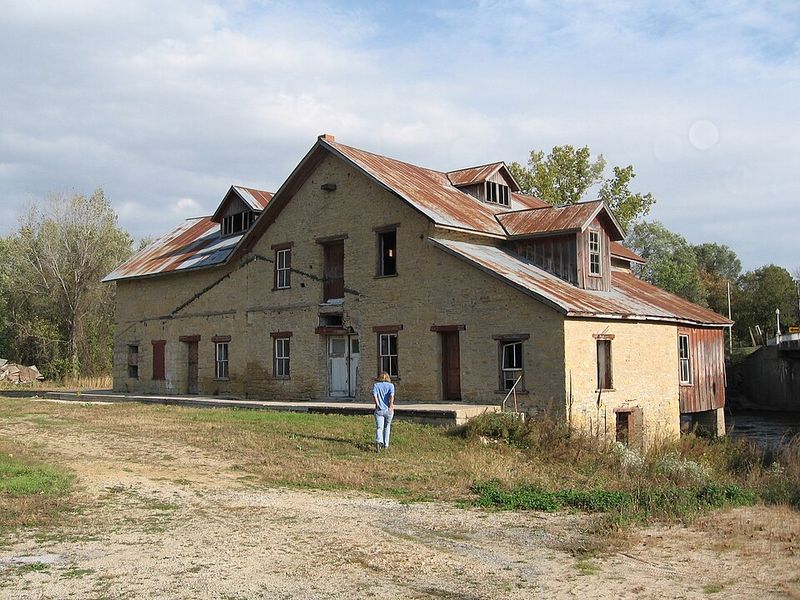
Spillville is a small northeast Iowa community with an outsized cultural story that makes it particularly intriguing for travelers. Its Czech heritage, historic buildings, and quiet streets would be appealing on their own, but the connection to composer Antonín Dvořák elevates Spillville into something more unusual and memorable.
Dvořák spent the summer of 1893 in Spillville, composing and finding inspiration in this Czech immigrant community. The house where he stayed now serves as a museum, preserving both Dvořák artifacts and remarkable clock collections.
Understanding that world-famous classical music was created in this tiny Iowa village adds fascinating layers to your visit.
The Czech heritage remains visible throughout Spillville beyond the Dvořák connection. St. Wenceslaus Church stands as an architectural landmark, and the community maintains cultural traditions brought from the old country.
Czech surnames on businesses and historical markers remind you of the immigrant foundations.
The village’s compact size makes exploration easy and unhurried. You can visit the museum, walk past historic buildings, appreciate the church architecture, and absorb the cultural atmosphere in a single afternoon.
Spillville rewards travelers looking for villages with something more unusual behind their charming appearance.
Mount Sterling
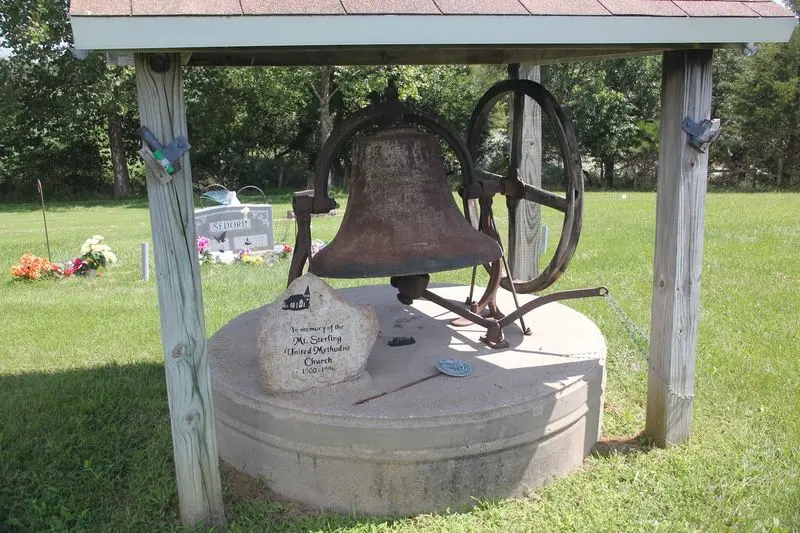
Mount Sterling may be tiny, but its history gives this Iowa village a character that is easy to overlook. Tucked into the rolling countryside of Van Buren County, the community offers the kind of peaceful setting where historic roots and rural Iowa life still feel closely connected.
Founded in the 1840s, Mount Sterling developed as a small agricultural and trading community, and remnants of that past can still be found in its quiet streets and longtime buildings. Its location near the Des Moines River adds another layer of appeal, with wooded hills and open countryside creating a scenic backdrop around the village.
What makes Mount Sterling especially interesting for this list is its unhurried, genuine small-town feel. There are no major tourist attractions competing for attention here.
Instead, the charm comes from its history, rural surroundings, and the sense of discovering a place that many travelers would simply pass by.
For anyone seeking Iowa villages with character beyond the obvious tourist stops, Mount Sterling offers a pleasantly unexpected detour.