Forget staring at art from behind a velvet rope— Iowa wants you to step right into it.
Across the state, artists are turning parks, streets, farms, and public spaces into places where the artwork reacts to your movement, surrounds you with light, or even changes what you hear.
You might follow a sound installation through an Iowa prairie, topple giant illuminated dominoes in downtown Des Moines, or use your phone to reveal hidden layers of an augmented-reality mural.
Some experiences invite you to wander among towering sculptures, while others turn an ordinary walk into something completely unexpected.
These aren’t quiet gallery visits where you shuffle from one painting to the next. They’re hands-on, surprising, and sometimes downright strange.
Get ready to discover Iowa art from a whole new angle—and maybe become part of the artwork along the way.
Seeds of Memory Sound Walk – Wallace Farm, Orient
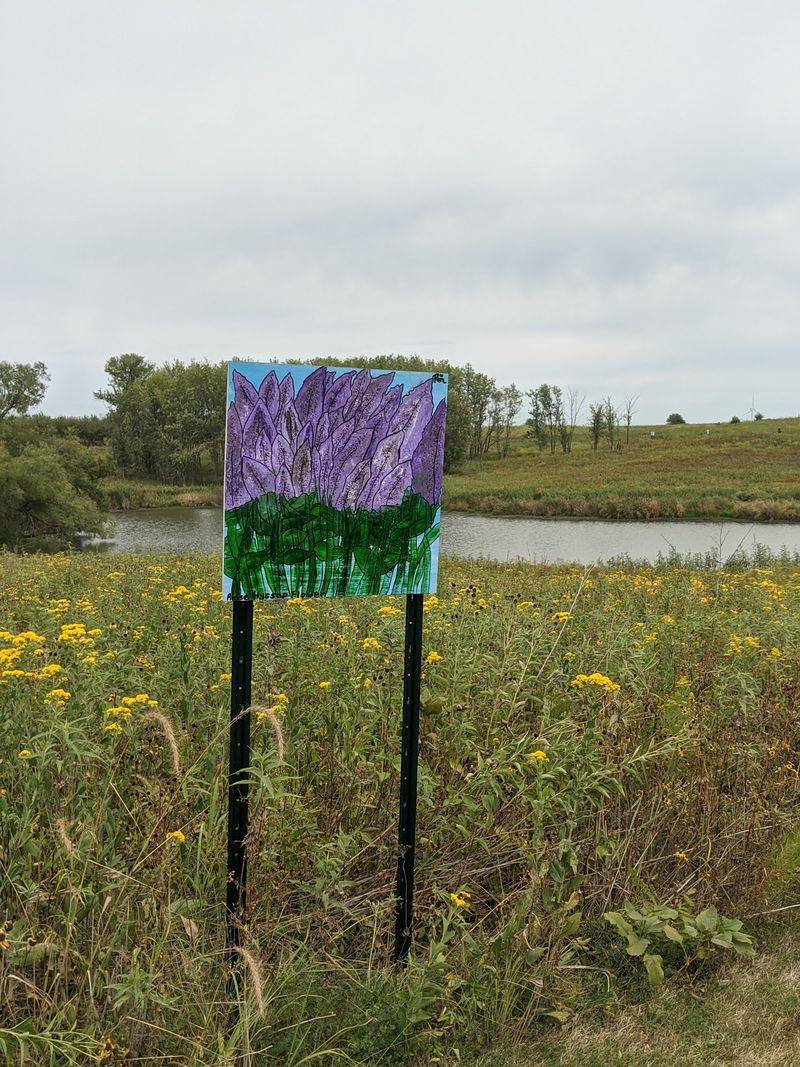
Picture walking across a working Iowa prairie where music literally grows from the ground beneath your feet. Seeds of Memory Sound Walk transforms Wallace Farm into a living sound installation that responds as you move through the landscape.
Your smartphone and headphones become instruments triggering piano melodies, saxophone notes, human voices, and electronic compositions connected to specific spots across the property.
Henry A. Wallace’s agricultural legacy provides the historical backbone for this site-responsive experience.
Instead of reading about Iowa farming history on museum plaques, you hear it echo through carefully composed soundscapes. The prairie itself becomes your gallery, with each location holding musical secrets waiting for discovery.
Available through September 30, 2026, this installation proves that art doesn’t need walls or frames. You set the pace, choose your path, and create a unique listening journey every time.
Some visitors spend hours exploring every corner, while others return multiple times to catch sounds they missed. The experience changes with weather, seasons, and even time of day, making each visit genuinely different from the last.
Listening Field – Greenbelt Park, Clive
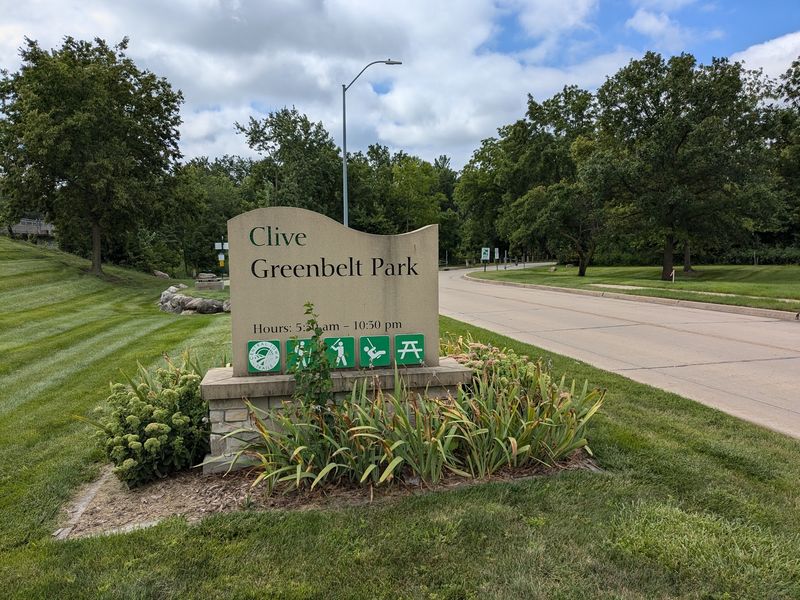
What if your afternoon walk generated its own soundtrack? Listening Field uses geo-mapping technology to create compositions that activate as you travel along Clive’s Greenbelt Park and Trail system.
Download the Echoes soundwalk app, pop in your earbuds, and suddenly your stroll becomes a moving concert where different musical layers emerge based on exactly where you’re standing.
No two walks sound identical because you control the route. Take the north path and you’ll hear one set of sounds, while heading south triggers completely different musical elements.
The artwork exists in the movement itself rather than on any canvas or pedestal, making your body the brush that paints the audio landscape.
Running through September 2026, this project turns casual park-goers into active participants. Families can explore together, each person discovering their own favorite sonic spots.
Joggers find rhythm in unexpected places. Dog walkers accidentally compose symphonies.
The beauty lies in how ordinary exercise transforms into creative exploration, proving that art can enhance spaces you already love visiting.
Art Farm Iowa – Northwood
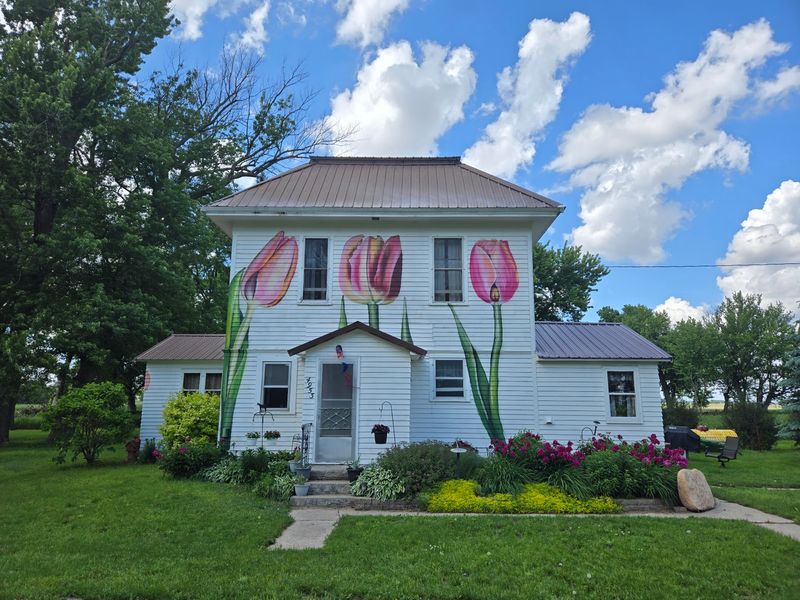
Trade sterile gallery lighting for actual sunshine at this 10-acre creative playground in rural Iowa. Art Farm Iowa proves that contemporary art belongs in barns just as much as buildings with marble floors.
Sculpture-filled walking paths wind past a mural garden bursting with color, while working ceramics and glass facilities show artists creating pieces in real time.
The countryside setting changes everything about how you experience art. Gallery fatigue disappears when you’re breathing fresh air and watching sculptures cast shadows across actual grass.
You might spot a metal installation one moment, then turn a corner to find a mosaic wall next to heritage farm equipment. This deliberate collision between agriculture and artistry creates connections you’d never make staring at white walls downtown.
Visitors often describe feeling like they’ve stumbled onto a creative secret. The informality encourages exploration without pressure or pretension.
Kids can actually move around freely instead of hearing constant warnings not to touch anything. Adults rediscover playful curiosity.
Everyone leaves understanding that art doesn’t require hushed voices or carpeted floors to be meaningful, valuable, or absolutely stunning.
Evanescent Field at the Figge Art Museum – Davenport
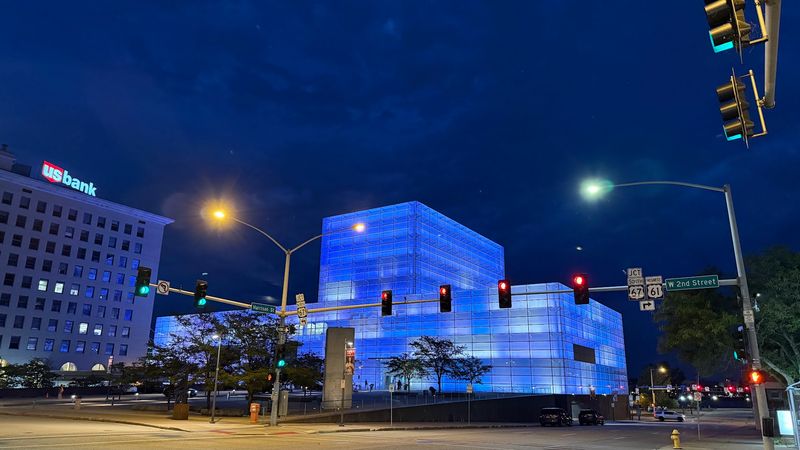
Leo Villareal turned an entire museum into a glowing nighttime spectacle. Evanescent Field uses more than 1,000 full-color LED lights covering all four sides of the Figge’s glass exterior, creating constantly shifting patterns that transform the building into a massive light sculpture.
You don’t enter this artwork. You stand outside and watch the architecture itself perform.
Patterns never repeat in predictable ways, making each viewing session genuinely unique. Sometimes colors cascade like waterfalls down the glass.
Other moments bring rhythmic pulses or gentle fades. The computer-controlled system generates combinations that won’t appear again for years, if ever.
Photographers return repeatedly, chasing that perfect shot of an unrepeatable moment.
This installation flips the traditional museum experience completely backward. Instead of the building protecting art inside, the building becomes the art.
Families spread blankets on nearby grass for impromptu light shows. Date nights get upgraded with free entertainment.
Commuters driving past at dusk witness something spectacular without planning. The accessibility matters just as much as the artistry, proving that world-class installations can belong to everyone rather than ticket-holders alone.
Domino Effect – Cowles Commons, Downtown Des Moines
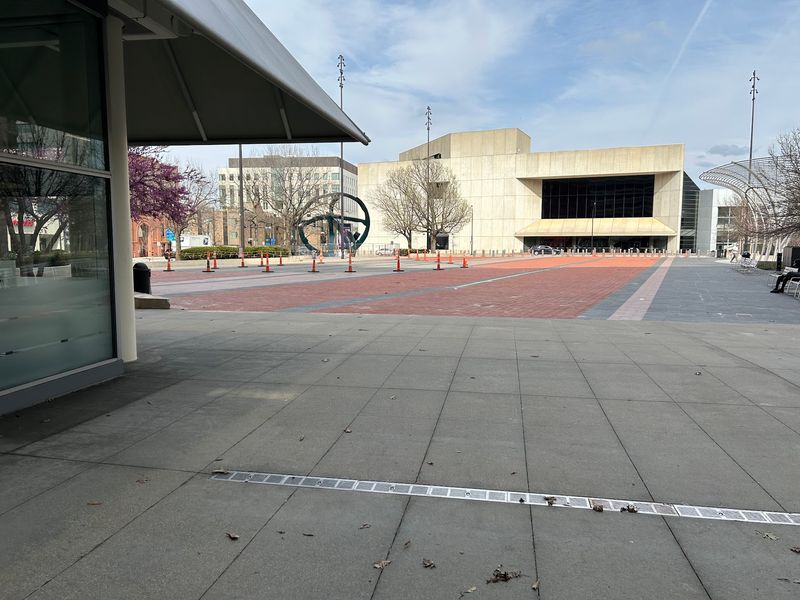
Remember the satisfying click-clack of dominoes falling in perfect sequence? Now imagine that childhood game scaled up to human-sized pieces glowing with lights and producing musical tones.
Domino Effect invites visitors to actually topple oversized illuminated dominoes throughout Cowles Commons, turning passive art viewing into active play.
Each falling domino triggers different sounds and light patterns, creating unique combinations with every chain reaction. Groups strategize the best toppling sequences while solo visitors enjoy experimenting with different approaches.
The installation removes the invisible museum barriers that usually separate viewers from artwork. No ropes, no alarms, no stern guards.
Just pure interactive fun.
Running through September 2026 after opening August 29, this temporary installation proves that public art can be genuinely playful. Downtown workers grab quick recharging moments toppling a few pieces during lunch breaks.
Families make special trips for the tactile experience. Teenagers discover that art can be legitimately entertaining rather than boring.
The piece succeeds precisely because it abandons gallery seriousness for joyful participation, showing that sometimes the best art makes you smile, move, and maybe act a little silly in the best possible way.
Iowa City Sculptors Showcase – Iowa City
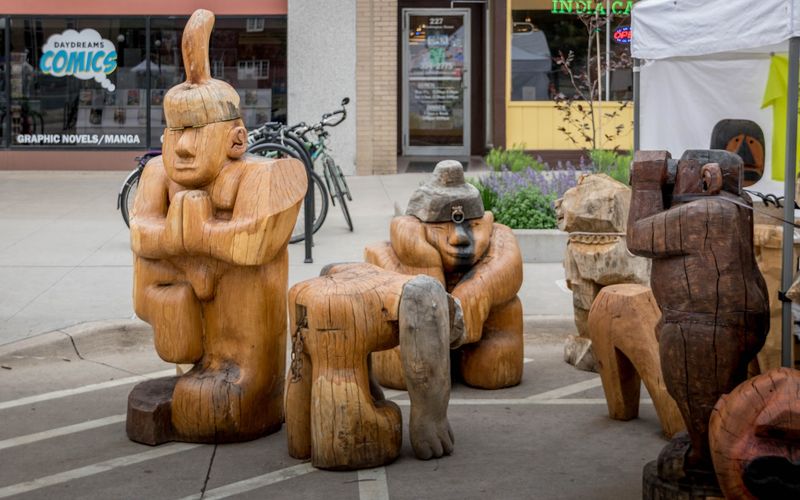
Iowa City scattered artworks across the landscape like an enormous outdoor treasure hunt. The Sculptors Showcase places pieces by Iowa artists throughout multiple public spaces including Terry Trueblood Recreation Area, Iowa River Trail, Riverfront Crossings Park, Mercer Park, and Scott Park.
Running through July 2028, this extended timeline gives visitors plenty of opportunities to explore at their own pace.
Finding sculptures becomes part of the adventure itself. You might jog past one piece at Terry Trueblood, then bike to another along the river trail.
Each discovery feels earned rather than handed to you on a predictable gallery route. The city’s public art map lists nearly 200 accessible artworks citywide, meaning the showcase serves as gateway to much broader creative exploration.
This dispersed approach changes how communities interact with art. Sculptures become neighborhood landmarks that joggers recognize, dog walkers greet, and kids use as meeting spots.
Instead of requiring special trips to designated cultural buildings, art integrates into daily routines. Morning coffee walks gain new dimension.
Evening strolls reveal previously unnoticed details. The showcase proves that making art accessible means literally placing it where people already spend time, not expecting them to always come to it.
John and Mary Pappajohn Sculpture Park – Des Moines
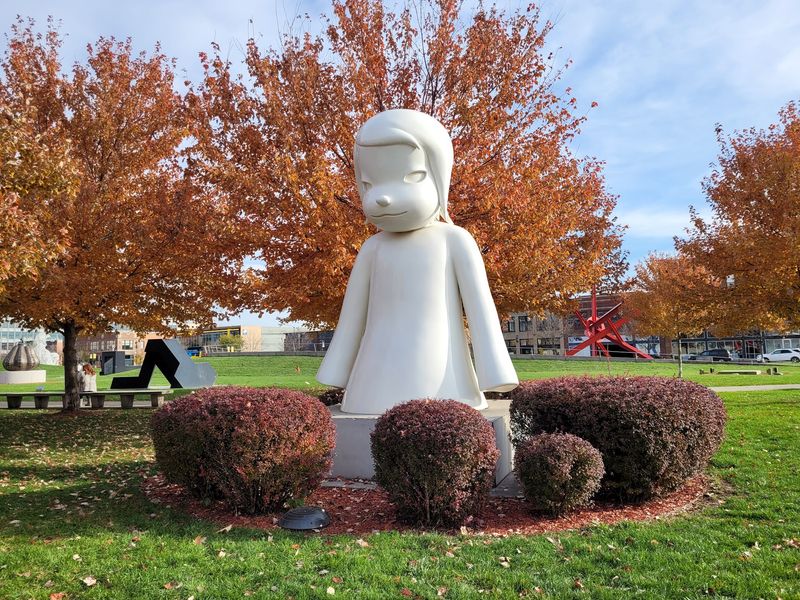
Forget tiptoeing quietly around delicate gallery pieces. This 4.4-acre downtown park encourages visitors to wander freely among large-scale sculptures, treating art as part of outdoor exploration rather than hushed observation.
The Des Moines Art Center provides an interactive guide with prompts designed to get people moving, discussing, photographing, and personally responding to works instead of just reading plaques.
The physical space completely changes the viewing experience. You can circle sculptures to see them from every angle.
Lie on grass staring up at towering installations. Watch how different weather conditions transform the same piece from visit to visit.
Rain adds reflections. Snow creates contrast.
Summer sun casts dramatic shadows. The art breathes with seasonal changes in ways climate-controlled galleries can’t replicate.
Accessibility removes typical museum barriers. No admission fees.
No closing times. No dress codes.
Office workers grab lunch surrounded by world-class contemporary art. Families plan picnics among sculptures.
Photographers chase golden-hour lighting. The park proves that democratizing access doesn’t diminish artistic value.
If anything, letting more people engage with major works on their own terms creates deeper appreciation than limiting experiences to those comfortable entering traditional institutional spaces.
Mainframe Studios – Des Moines
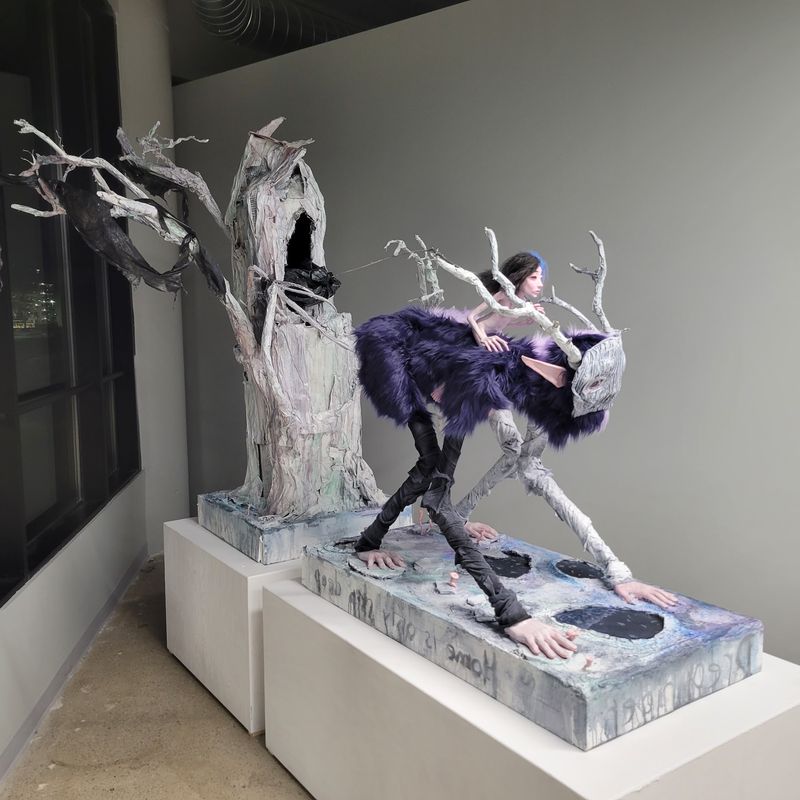
Most galleries show finished products behind glass. Mainframe Studios flips that model by housing more than 180 working studios where hundreds of artists create across disciplines like glassblowing, ceramics, sculpture, fashion, game development, printmaking, and photography.
Visitors encounter creativity in process rather than completion, watching ideas develop in real time.
First Fridays transform the space into a buzzing creative festival. Open studios let you peek into actual workspaces where art happens.
Exhibitions showcase recent pieces. Live music provides soundtrack.
Food keeps energy high. Most importantly, artists themselves become part of the experience, sharing processes, answering questions, and demonstrating techniques that remain mysterious in traditional gallery settings.
This model breaks down walls between makers and viewers. You might watch a glassblower shape molten material one moment, then chat with a game developer about digital storytelling the next.
The variety across disciplines reveals how creativity connects unexpected fields. Fashion designers share space with ceramicists.
Photographers neighbor printmakers. Everyone benefits from cross-pollination that happens when diverse artists work together.
Visitors leave understanding that art isn’t just about final products hanging on walls but about communities, processes, experiments, and the daily work of making things that matter.
South Des Moines Sculpture Park – Des Moines
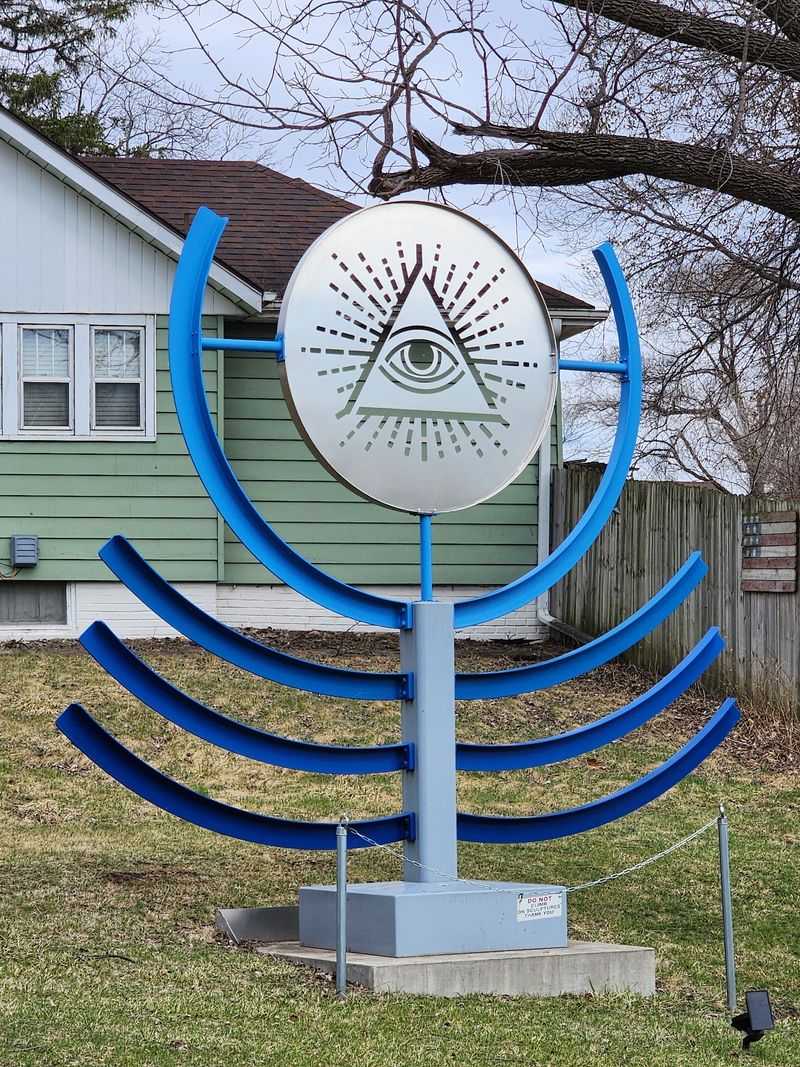
Hunt for giant sculptures in a neighborhood setting that feels nothing like formal museum grounds. South Des Moines Sculpture Park drops large-scale public art into community space where visitors aren’t following prescribed routes or docent lectures.
The quirky faux UFO installation has become one of the area’s most recognizable pieces, proving that public art can be playful, accessible, and Instagram-worthy without sacrificing artistic integrity.
The park’s informal atmosphere encourages exploration without intimidation. No admission booths.
No velvet ropes. No worries about proper art-viewing etiquette.
Families wander freely. Neighbors cut through on daily walks.
Kids treat sculptures as landmarks for games. This integration into everyday neighborhood life means art becomes part of the community fabric rather than something requiring special occasions or cultural field trips.
Featured among Des Moines’ 2026 interactive mural project, the park connects to broader citywide art initiatives. Visitors often discover it while exploring other public art destinations, creating natural art trails across the city.
The unpolished, unpretentious vibe welcomes people who might feel uncomfortable in traditional galleries, expanding who gets to participate in contemporary art. Sometimes the most powerful artistic experiences happen when you stop treating art like something precious and start treating it like something alive, accessible, and absolutely everywhere.
River Constellation — Water Works Park, Des Moines
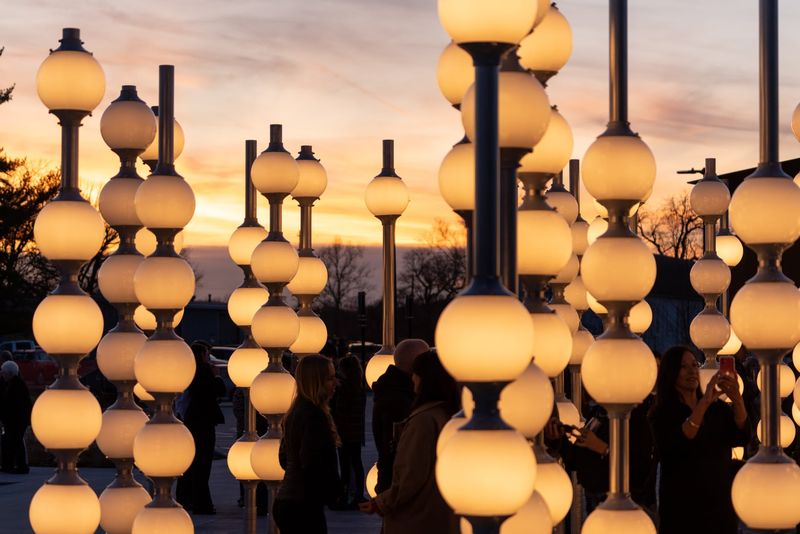
Forget quiet gallery rooms and framed paintings—River Constellation invites you to walk directly into the artwork.
Set within Des Moines’ sprawling Water Works Park, this striking installation features 45 illuminated poles topped with glowing globes, arranged to reflect the paths of the Des Moines and Raccoon Rivers.
Once darkness falls, the experience becomes even more captivating as light and original music shift around visitors moving through the installation.
Instead of standing outside a sculpture and simply admiring it, you become part of the scene as you wander among the glowing points of light.
The surrounding park adds another layer to the experience, giving the installation plenty of space to breathe while making the city feel surprisingly distant. It is especially memorable after sunset, when the illuminated globes stand out against the dark landscape.
Bring a camera, take your time exploring, and let the changing sounds and lights turn an ordinary evening in Des Moines into something genuinely unexpected.