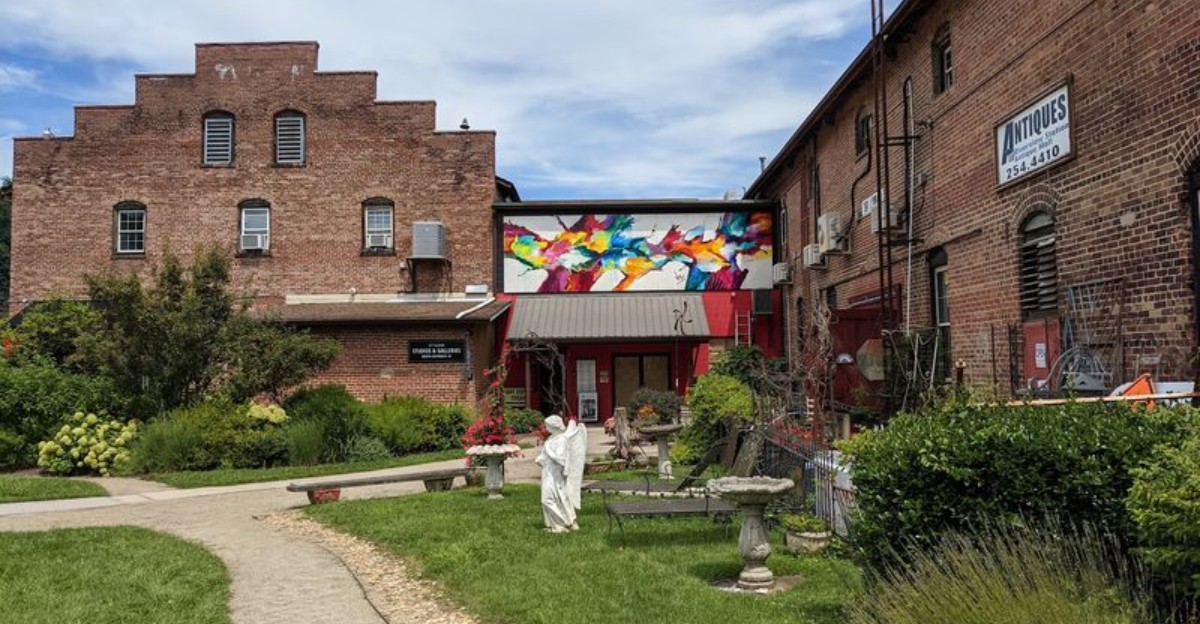
Forget the quiet museum—Asheville’s old factories are making noise again.
Along the French Broad River, former warehouses, tanneries, and packing plants have found a wild new purpose.
Their industrial walls now hold paintbrushes, pottery wheels, glowing glass, sculpture, and the unmistakable buzz of artists at work.
The River Arts District turns a stroll into a behind-the-scenes adventure.
Instead of simply admiring finished pieces behind glass, visitors can wander into working studios, meet makers, watch creative processes unfold, and discover art tucked into buildings with serious history.
Every street brings another surprise, from massive former industrial spaces to intimate studios packed with handmade treasures.
Bring your curiosity, give yourself plenty of time to wander, and step inside a North Carolina neighborhood where the factories stopped producing goods—but never stopped producing energy.
Warehouse Studios – Where the River Arts District’s Artist Community Took Root
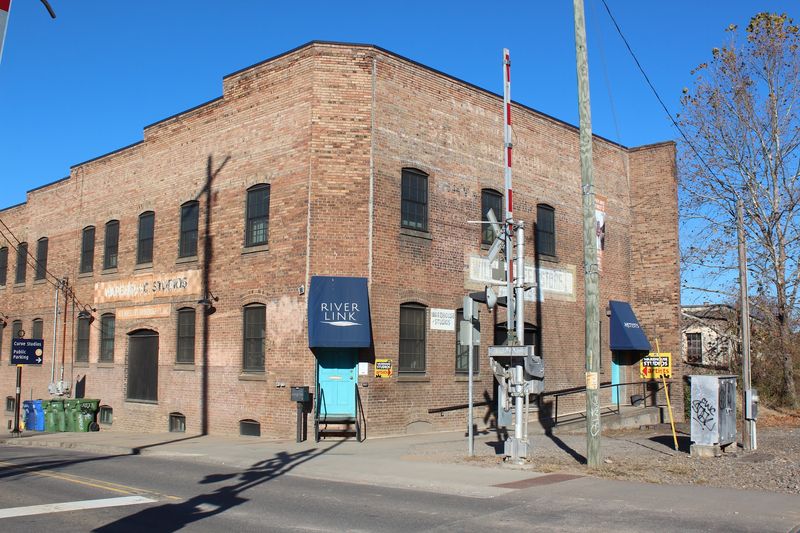
Back in the late 1980s, artists started claiming empty industrial buildings along the French Broad River. Warehouse Studios represents one of those early conversions when creative folks saw potential in old commercial spaces.
Nobody built fancy art galleries here on purpose.
Artists simply moved into available warehouse buildings and set up shop. This grassroots approach shaped the entire district’s character over time.
Raw industrial spaces became studios, and gradually a neighborhood took form around this creative activity.
The building tells the real story behind RAD better than any newer construction could. Original features like exposed beams, high ceilings, and industrial windows remain.
Walking inside feels authentic because the space genuinely started as something completely different.
Painters, sculptors, and other makers work in studios that still look like warehouses. The mix of art and industrial architecture creates an atmosphere you won’t find in purpose-built galleries.
This spot helped prove that forgotten riverside buildings could become something valuable again.
Riverview Station – From Historic Tannery to Creative Landmark
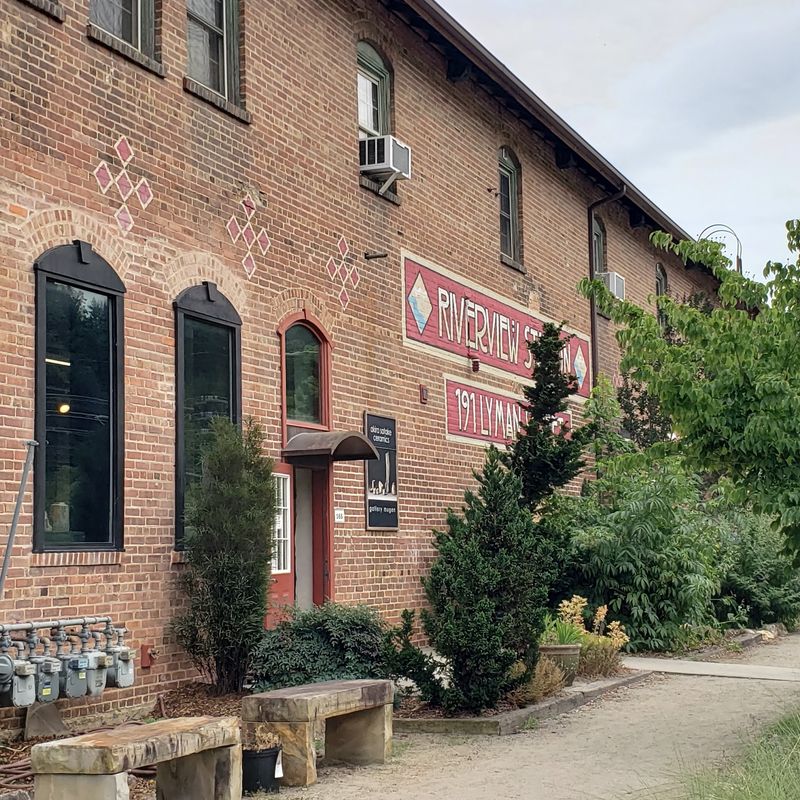
Construction crews finished this building in 1902 for the Hans-Rees Tannery, processing leather along the French Broad River. Heavy machinery once filled rooms now occupied by painters and craftspeople.
The transformation shows what happens when a city chooses preservation over demolition.
Tanneries required specific architectural features that happen to work perfectly for artists. Large open floors with good natural light were essential for inspecting leather quality.
Those same spaces now accommodate studios where makers need room to work on ambitious projects.
Original architectural details survived the conversion from industrial to creative use. Brick walls, timber supports, and tall ceilings remain intact.
Visitors can easily imagine the building’s previous life while watching contemporary artists at work.
The location demonstrates RAD’s broader preservation success. Rather than replacing old riverfront structures with modern buildings, the district kept historical architecture standing.
Artists breathed new purpose into spaces that might otherwise have crumbled. Riverview Station proves industrial buildings deserve second chapters.
Pink Dog Creative – A Former Textile Warehouse Filled With Art
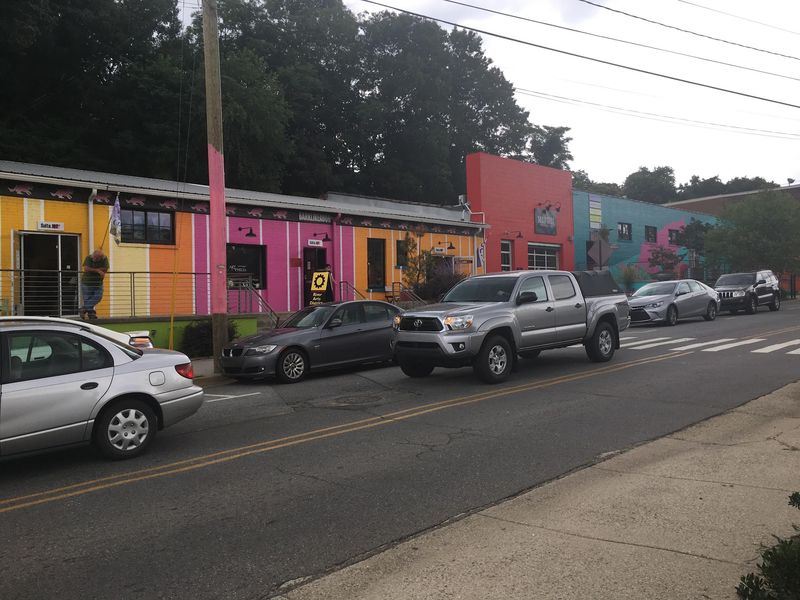
Textile production dominated Asheville’s economy during the 1920s when this Depot Street warehouse opened. Cotton, wool, and other fabrics moved through rooms now hosting painters, jewelers, and mixed-media artists.
The building’s bones tell stories about Southern manufacturing history.
Walk inside and industrial heritage becomes immediately obvious. The structure wasn’t designed with art galleries in mind.
Exposed brick, metal fixtures, and open layouts served practical warehouse purposes decades ago.
That rawness makes experiencing art here feel different from visiting traditional museums. You see working artists in authentic industrial settings rather than carefully curated white-wall spaces.
Creative businesses operate alongside individual makers, building a collaborative atmosphere.
The building itself acts as a teaching tool. Visitors learn about RAD’s transformation simply by observing how old warehouses adapt to new uses.
Seeing art created inside former textile storage connects Asheville’s industrial past with its creative present. Pink Dog Creative exemplifies why repurposing beats rebuilding for districts seeking authentic character.
Trackside Studios – Art Inside a Former Meat-Packing Plant
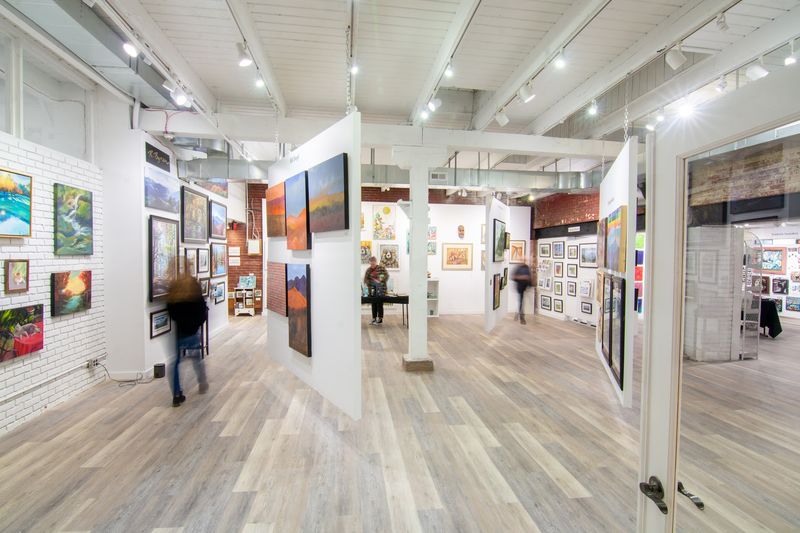
Not many art galleries started as meat-packing facilities, but Trackside Studios occupies exactly that kind of building. The Armor Meat Packing Plant began operations here in 1910, processing livestock near railroad tracks that made shipping convenient.
Industrial efficiency mattered more than aesthetics back then.
The building’s original purpose feels worlds away from its current creative function. Where workers once prepared meat for distribution, artists now paint canvases, throw pottery, and craft sculptures.
Spaces designed for cold storage and processing equipment now house easels and kilns.
This dramatic transformation captures RAD’s essential appeal. The district didn’t erase industrial history to make room for art.
Instead, artists moved into existing structures and adapted them creatively. Original features like heavy-duty floors and large loading areas actually benefit studio work.
Visiting Trackside means stepping into layered history. The building tells two stories simultaneously: Asheville’s industrial economy and its contemporary creative renaissance.
Artists working inside former meat-packing facilities create memorable contrasts that help visitors appreciate how neighborhoods evolve.
NorthLight Studios – A Former Tannery Curing Facility Reimagined
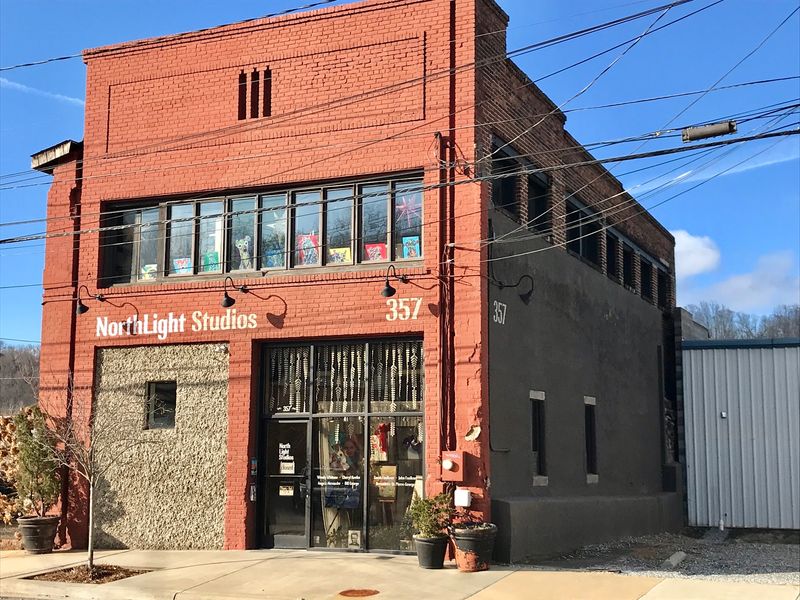
Built in 1904, this structure served tannery operations that required massive amounts of space and specific environmental conditions. Leather curing demanded carefully controlled buildings with proper ventilation and drainage.
Workers spent long hours treating hides in rooms that artists now use for completely different purposes.
The building’s industrial specifications accidentally created ideal artist conditions. High ceilings originally needed for air circulation now provide excellent studio space.
Large windows that helped workers inspect leather quality currently flood creative spaces with natural light.
NorthLight Studios adds another chapter to RAD’s collection of reclaimed industrial buildings. Each converted structure tells slightly different stories about Asheville’s manufacturing heritage.
Tanneries, textile mills, meat plants, and other facilities once clustered along the river for water access and shipping convenience.
Understanding this industrial concentration helps explain why RAD exists today. Artists didn’t randomly choose riverside locations.
They moved into available buildings after industries departed. The district emerged organically rather than through deliberate planning, giving it authentic character that purpose-built arts districts often lack.
The Lift Studios – Art Where Biscuits Were Once Made
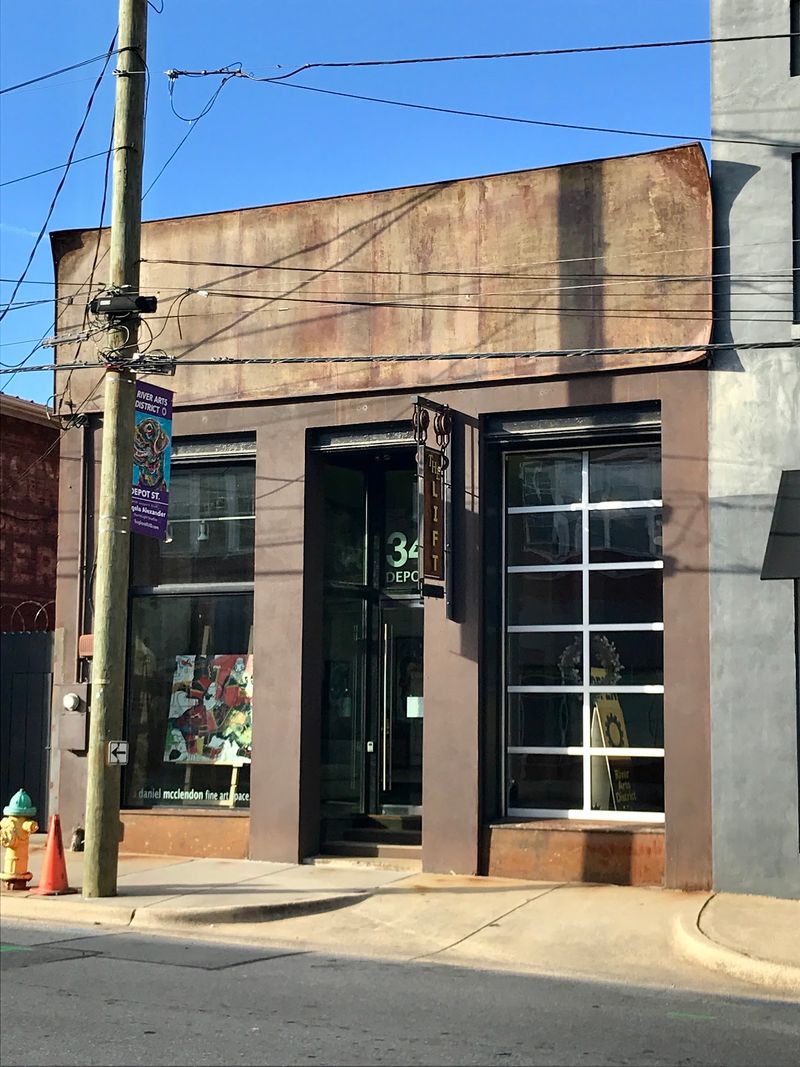
Imagine biscuit ovens where painting studios now stand. The Lift Studios occupies a 1907 building associated with the National Biscuit Company, adding an unexpected food manufacturing chapter to RAD’s industrial narrative.
Commercial baking operations required different building features than tanneries or textile mills.
The space contributes quirky history to the district’s transformation story. Most visitors don’t expect to find art created where cookies and crackers once came off production lines.
This surprise element makes exploring RAD feel like discovering hidden neighborhood secrets rather than following a predictable museum route.
Walking through feels more authentic than touring carefully planned cultural districts. Real working studios fill spaces that genuinely served other purposes for decades.
Artists maintain irregular hours and pursue individual projects rather than performing for audiences.
The Lift Studios exemplifies RAD’s defining characteristic: creative activity happens inside genuinely repurposed buildings. Nothing feels staged or artificial.
The district evolved naturally as artists claimed available industrial spaces, creating a neighborhood where old biscuit factories become painting studios without anyone thinking twice about the unusual transition.
Asheville Cotton Mill Studios – An Industrial Setting With a Creative New Life
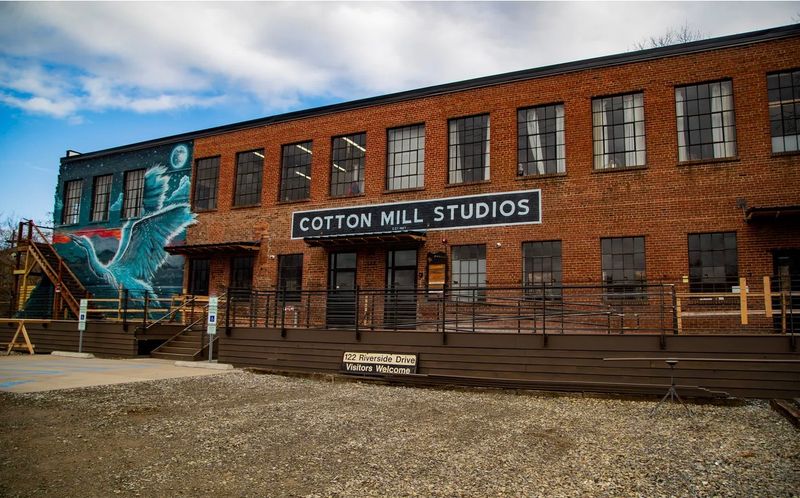
Cotton production shaped the American South for generations, and this mill building carries that textile heritage forward into contemporary creative use. Mills required substantial architecture: strong floors for heavy machinery, ample space for processing equipment, and efficient layouts for moving materials.
Those industrial features now serve artists working in diverse mediums.
The building reinforces RAD’s signature aesthetic. Exposed industrial elements create atmosphere that polished galleries can’t match.
Original construction details remain visible rather than hidden behind renovation.
Artists working here pursue varied practices beyond just painting. Ceramicists shape clay, glassblowers manipulate molten material, textile artists create fabric works, and jewelry makers craft wearable pieces.
Mixed-media creators experiment with multiple techniques simultaneously. This diversity reflects RAD’s broader creative ecosystem.
Cotton mill conversion represents another successful example of adaptive reuse. Rather than demolishing outdated industrial buildings, Asheville preserved structures and allowed new uses to emerge organically.
The approach created neighborhood character while maintaining historical connections. Artists benefit from affordable large spaces, and visitors experience authentic settings that feel genuinely different from conventional art venues.
See Artists Actually Working, Not Just Finished Pieces
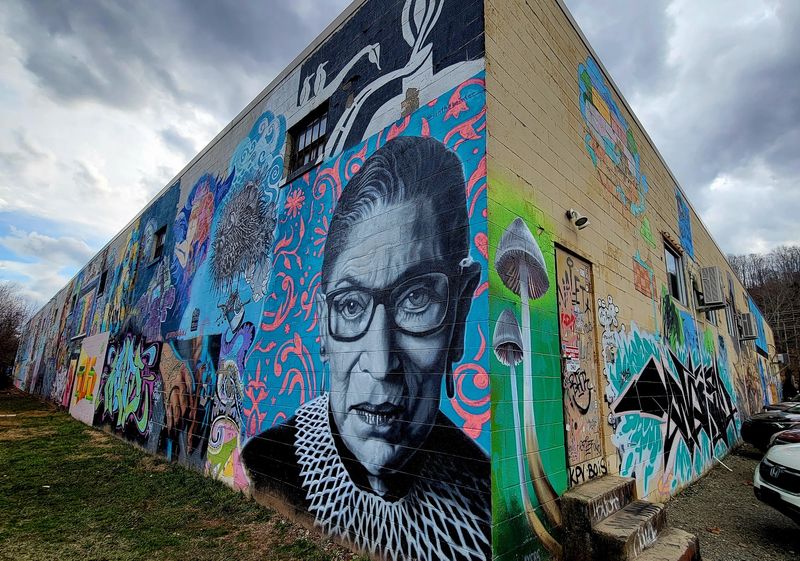
Finished paintings hanging on white walls don’t reveal artistic processes. RAD offers something far more valuable: watching creativity happen in real time.
Artists work inside former industrial buildings while visitors observe, ask questions, and learn about techniques. This access distinguishes the district from traditional museums where creative work happens behind closed doors.
Conversations between artists and visitors create memorable experiences. Making choices, solving technical problems, and developing ideas become visible rather than mysterious.
Some artists welcome detailed discussions about their methods while others prefer working quietly with occasional interruptions.
Certain studios offer workshops and demonstrations that let visitors try techniques themselves. Glass blowing, pottery throwing, jewelry making, and other crafts become accessible through hands-on learning opportunities.
Taking workshops inside authentic industrial settings adds meaningful context.
Browsing original pieces directly from creators builds different relationships than buying from retail galleries. Artists explain inspirations, discuss materials, and share stories about individual works.
Purchasing art becomes personal rather than transactional. The warehouse-to-studio transformation succeeds because spaces facilitate genuine creative community rather than just displaying finished products.
Plan Your Visit
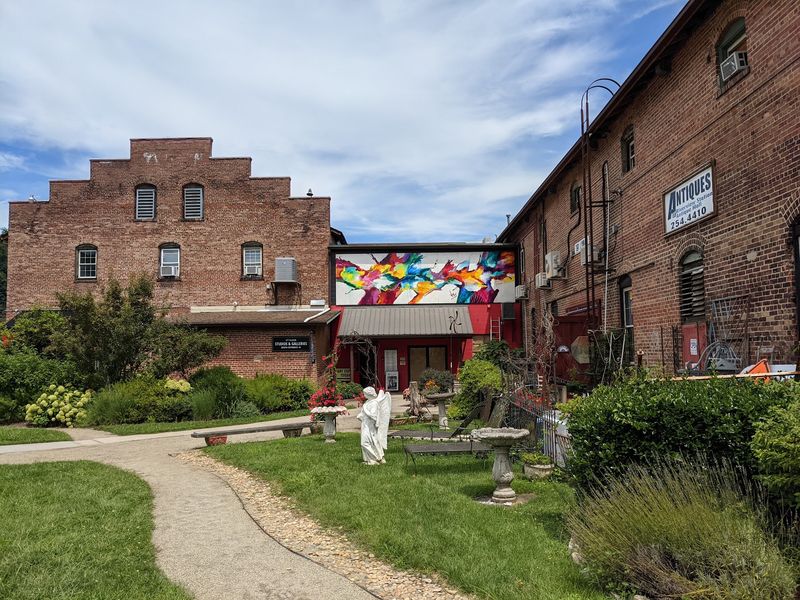
Roberts Street, Depot Street, Clingman Avenue, Artful Way, River Arts Place, and Lyman Street form RAD’s main creative corridors. Studios typically welcome visitors between 11 a.m. and 5 p.m., though individual artists set personal schedules.
Checking specific studio listings before visiting prevents disappointment.
Free parking exists through street spaces and designated lots scattered throughout the district. Walking between studios works well given the concentrated layout.
Comfortable shoes help since exploring thoroughly means covering significant ground.
Restaurants, cafés, and breweries provide breaks between studio visits. The French Broad River Greenway offers riverside walking when you need outdoor time.
Public art installations add visual interest throughout the neighborhood.
Important current information: RAD continues rebuilding after Hurricane Helene damaged portions of the district. More than 500 artists have returned to studios, galleries, and collectives, but visitors should verify current openings before arriving.
The official district website describes RAD as open and evolving. Checking access information prevents wasted trips.
Despite challenges, the creative community persists in bringing former warehouses back to bustling artistic life.