Some Michigan nights still feel like they’re borrowed from another decade.
Just outside a small southern Michigan town, a giant screen lights up under the stars for families piled into their cars.
Popcorn, pajamas, and a double feature make for one of the most affordable outings around.
Kids stretch out in truck beds while parents relax with snacks from the concession stand.
It’s the kind of old-fashioned fun that costs less than a single movie ticket most places charge today.
Generations of local families have made this spot part of their summer and fall traditions.
Buckle up and get ready to spend an evening under the big screen sky.
A Giant First Impression
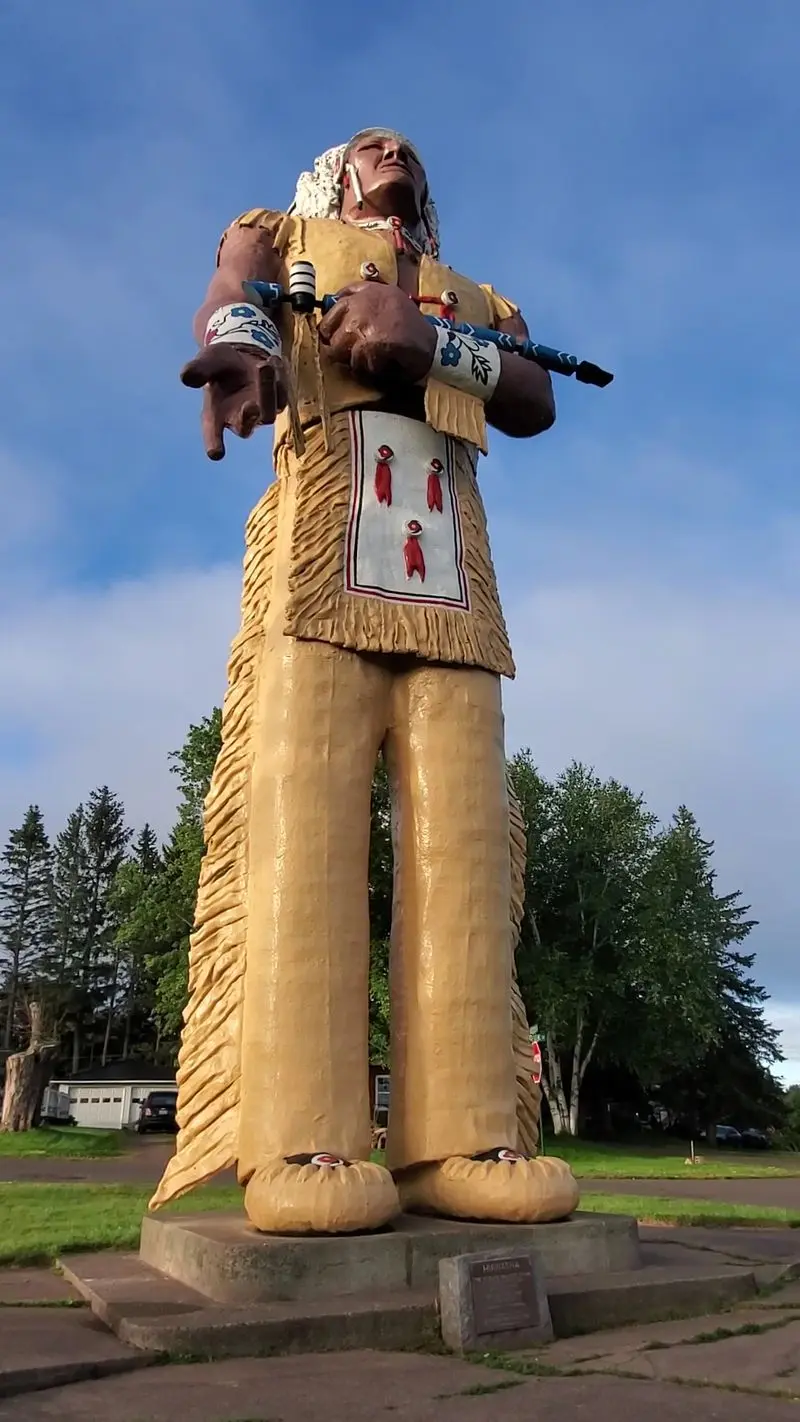
The first look can feel almost unreal.
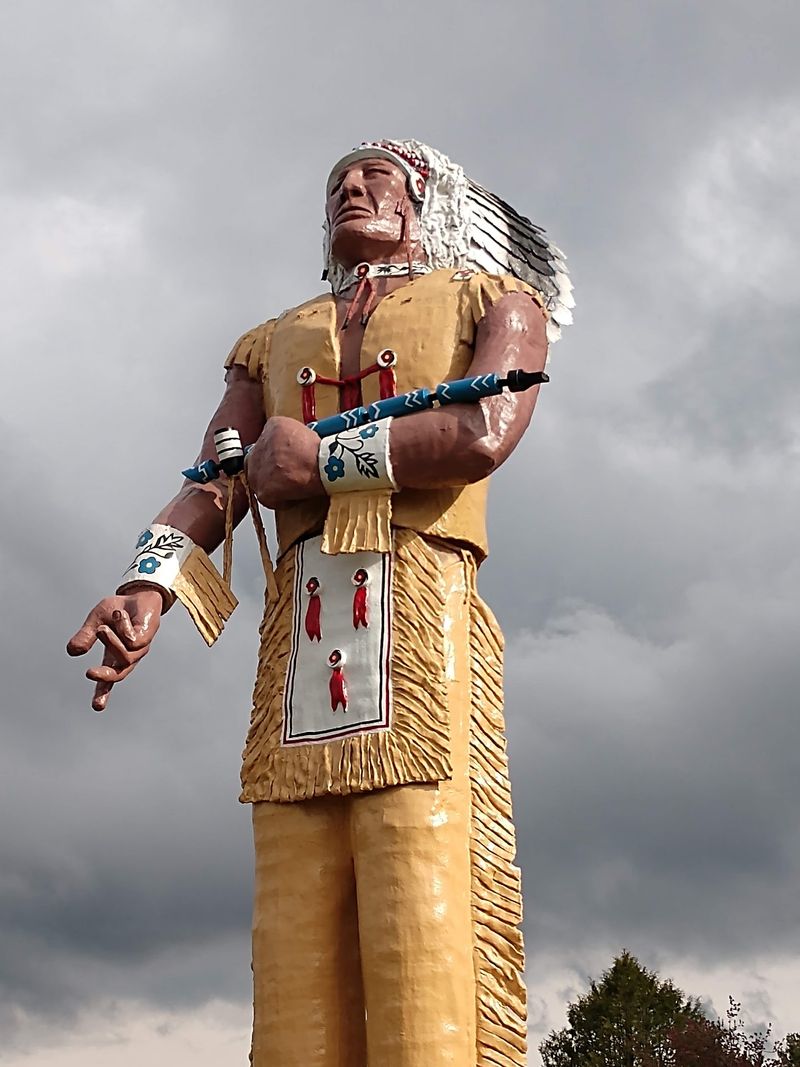
A tall figure stands above the park, far bigger than the cars, houses, and people around it.
Visitors often understand its nickname the moment they step out and look up.
Hiawatha World’s Largest Indian is often described as more than 52 feet tall, which makes it one of the most striking roadside statues in the United States.
Its fiberglass body gives it the classic look of mid-century American travel attractions, when towns used large figures to catch the eyes of drivers.
That bold style still works today because people love finding something unexpected beside an ordinary road.
For the best visit, give yourself a few minutes before taking pictures.
Walk around, notice the base, and compare the statue with nearby objects for scale.
Kids may enjoy guessing how many people stacked shoulder to shoulder would reach the top.
A simple stop becomes more fun when you slow down.
The statue is not just large, it changes how the space feels around you.
Where To Find The Landmark
A little planning helps because some travelers have missed the statue by following the wrong stop on a map.
The landmark sits in a neighborhood-style park rather than at a busy welcome center.
That surprise adds to its charm, but it can also confuse first-time visitors.
You can find Hiawatha, World’s Largest Native American Statue at Burma Rd, Ironwood, MI 49938.
The official listing also places it at about 46.4497321 latitude and -90.1621241 longitude, which is useful if your navigation app needs exact coordinates.
Before leaving, check that your route points to the statue itself and not another visitor facility nearby.
Parking is usually simple, and many people treat the stop as quick and easy.
Because it is open 24 hours, road trippers can fit it into a flexible schedule.
Daylight is still best for photographs, reading signs, and seeing the full details.
If you are traveling with family, tell everyone it is a short stop with room to stretch.
That keeps expectations clear and makes the visit relaxed.
A Classic Roadside Attraction Feel
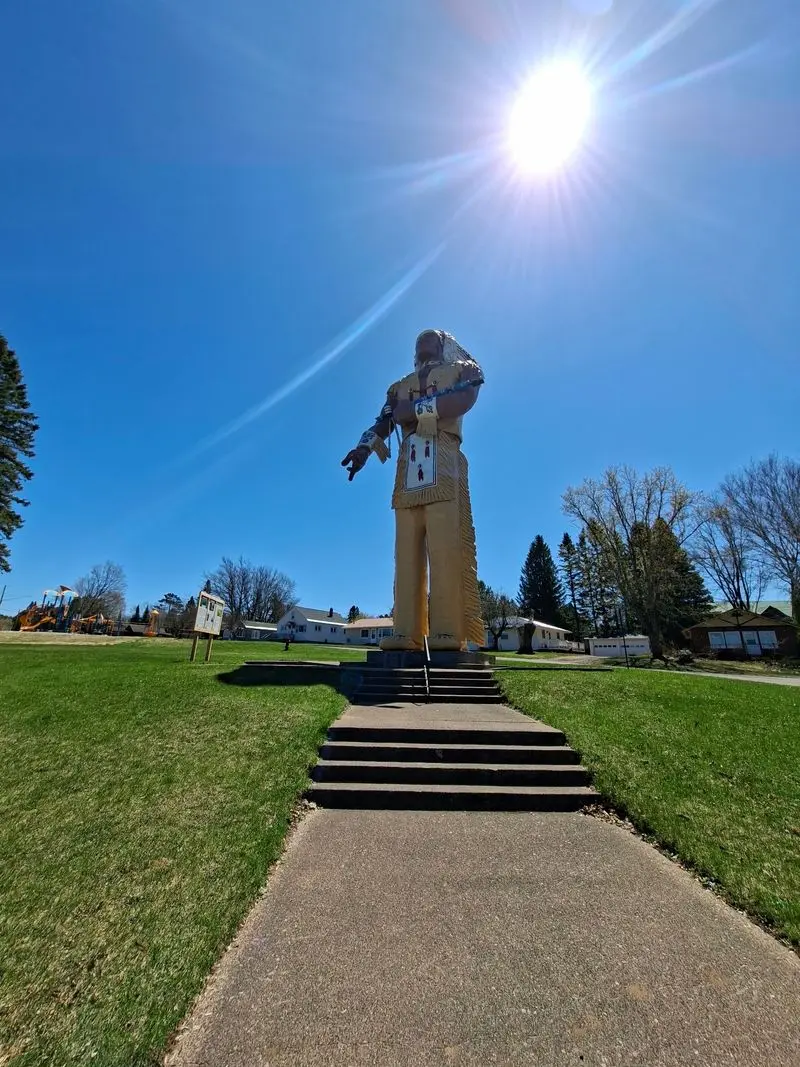
Big roadside figures have a special kind of magic.
They do not need flashing lights or long tours to make people smile.
Their job is simple: make drivers stop, stare, and remember the town.
This statue carries that old travel spirit in a very clear way.
Built in the era when large fiberglass landmarks became popular, it feels connected to family road trips, paper maps, and vacation snapshots.
The design is bold, colorful, and easy to see from a distance.
Visitors who enjoy Roadside America-style stops will likely appreciate its playful scale.
It is the kind of place where someone says, wait, pull over, and the whole group ends up taking pictures.
That quick moment can become one of the stories people tell after the trip.
To enjoy it fully, treat it as public art and local heritage rather than only a funny stop.
Notice the effort it takes to build and maintain something that tall.
Even a short visit can remind travelers that small towns often keep some of the most memorable landmarks.
Photo Tips For The Huge Scale
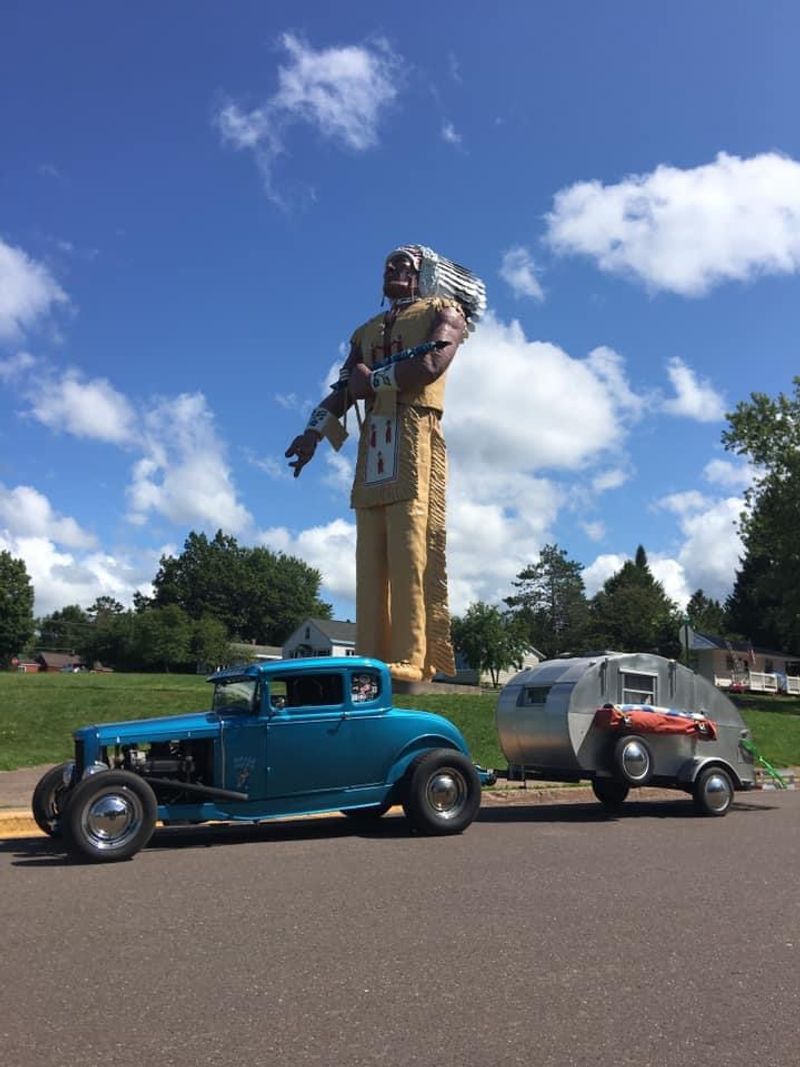
Getting the whole figure into one picture can be harder than expected.
Many visitors step back, then step back again, and still find the statue filling the frame.
That challenge is part of the fun.
A wide angle photo works best if you want the full body, the base, and some sky above the head.
Stand farther away and include a person near the statue to show just how tall it is.
For closer details, zoom in on the face, shoulders, and painted features.
Morning or late afternoon light can help your pictures look warmer and clearer.
Midday sun may create sharp shadows, especially if you are shooting upward.
If clouds are out, use them to your advantage because soft light can make the colors easier to capture.
Try taking one serious photo and one playful one.
A child, friend, or travel buddy standing nearby can make the statue look even more impressive.
Just stay in safe public areas, respect any signs, and avoid climbing on the base or touching painted surfaces.
Free And Easy For Travelers
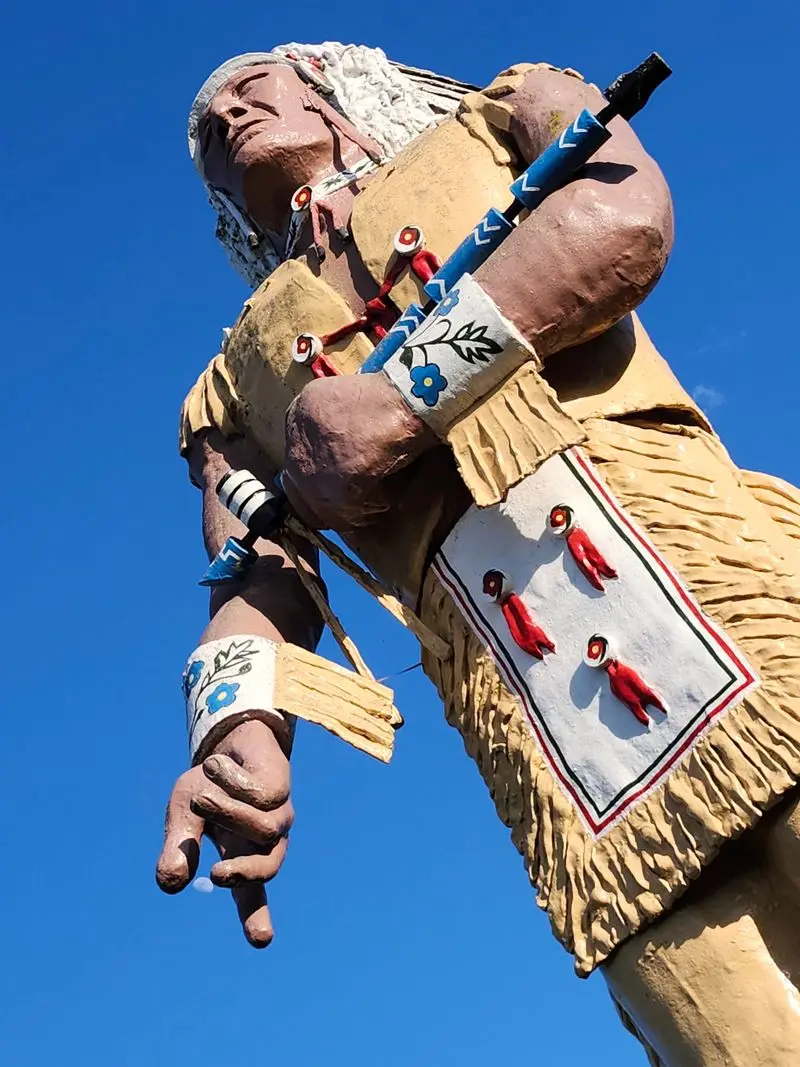
Not every memorable stop needs tickets, lines, or a long schedule.
A free landmark can be the perfect break between longer drives.
That is why this statue works so well for families, solo travelers, and curious passersby.
The site is listed as open 24 hours, and visitors often mention free admission.
That makes it easy to add to a trip without changing the whole day.
You can stop for five minutes, or stay longer if the weather is nice and everyone wants to rest.
Bring a snack, stretch your legs, and let kids move around in the park area if conditions allow.
A short pause can make the next part of a road trip feel easier.
For adults, the stop offers a quiet chance to take photos and read nearby information.
Because this is an outdoor landmark, pack for the season.
In warm months, sunscreen and water are helpful.
In snowy weather, wear shoes with good grip and expect paths or grass to feel different underfoot.
Mining History Nearby
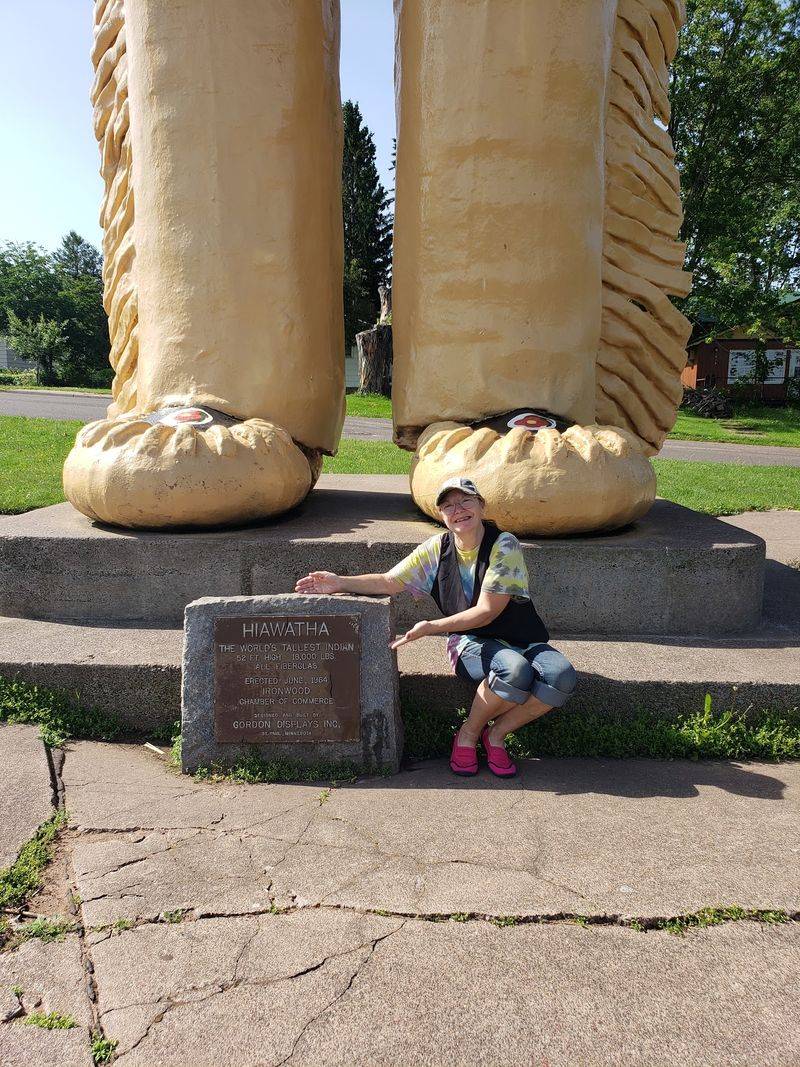
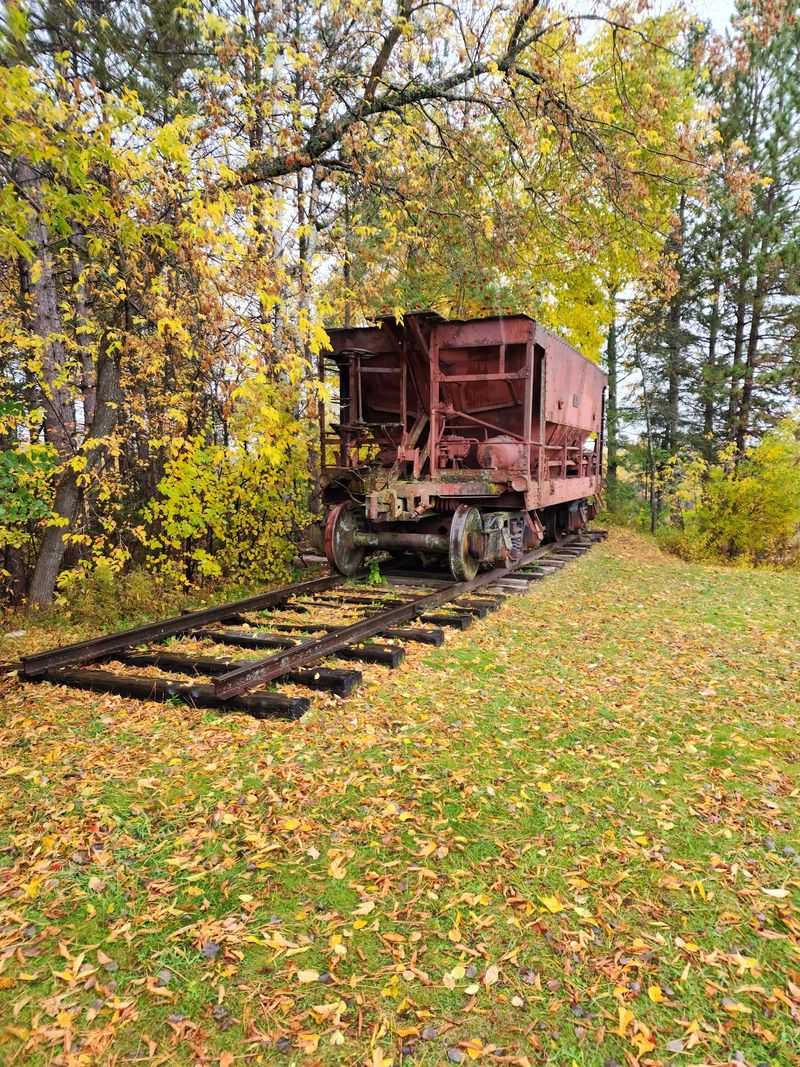
One surprise for many visitors is that the stop is not only about the statue.
The surrounding park shares pieces of local history too.
That mix gives the visit more meaning than a quick photograph alone.
Reviewers often mention mining information, a miners monument, and displays that point to the area’s early industrial past.
Those features help explain the community that grew around work, families, and changing times.
Reading the boards can turn a roadside pause into a small history lesson.
Children may not remember every date, but they can understand that towns are shaped by the jobs people once did.
Point out tools, signs, or memorial features and ask what daily life might have been like.
Simple questions make history feel less like a school chapter and more like a real place.
Adults can use the same approach.
Take a few minutes to connect the statue with the park around it.
Large landmarks often attract attention first, but the smaller details nearby help visitors understand why the site matters to local people.
A Quiet Park Stop With Room To Breathe
Some roadside stops are noisy and crowded, but this one often feels calmer.
The park setting gives visitors space to look around without feeling rushed.
That peaceful mood is one reason people remember it kindly.
Reviews mention picnic space, benches, a playground, and room for children to move.
Those simple features matter on a long drive because everyone needs a break from sitting still.
Even ten quiet minutes outdoors can reset the mood of a travel day.
If you bring food, keep the area clean and pack out anything that belongs in the trash.
Public landmarks stay welcoming when visitors treat them with care.
Parents should also keep an eye on children near roads, displays, and any uneven ground.
The setting works well for people who prefer low-key attractions.
There are no big gates or loud announcements, just a giant figure, local signs, and open air.
That makes the stop feel personal, almost like finding a hidden page in a town’s story.
Why The Statue Still Matters
A statue this large naturally raises questions about history, memory, and respect.
Visitors can enjoy its size while also thinking carefully about what it represents.
That balanced view makes the stop more meaningful.
The figure is named Hiawatha, a name many people connect with stories, poems, and Native history in North America.
Because public art can simplify complex cultures, it is wise to visit with curiosity rather than treating the statue as only a novelty.
Look for posted information, read what is available, and remember that Native communities have living histories beyond any single landmark.
The statue also matters because local people have kept it visible across generations.
Reviews mention fresh paint, family memories, and return visits years later.
Those comments show how a landmark can become part of childhood vacations, hometown pride, and shared travel traditions.
Before leaving, take one last look from a distance.
Its size may be what brings people in, but the lasting value comes from the questions, memories, and conversations it starts.