Step inside this Florida general store, and you might swear the clock stopped more than a century ago.
Tucked into the tiny community of Evinston, the Wood and Swink Store and Post Office has been part of local life since the late 1800s.
Its weathered walls and old-fashioned character offer a rare glimpse into a Florida that feels worlds away from today’s busy highways and bustling cities.
Look around, and you’ll find vintage merchandise, historic fixtures, and details that tell stories without saying a word. Then comes the best part: this isn’t simply a preserved relic waiting behind museum glass.
Mail still gets sorted here. Neighbors still stop by.
Visitors still walk through the door, curious to see a place where the past remains part of everyday life. It’s a tiny time capsule with a surprisingly lively pulse.
A Tiny Florida Landmark With a Remarkably Long History
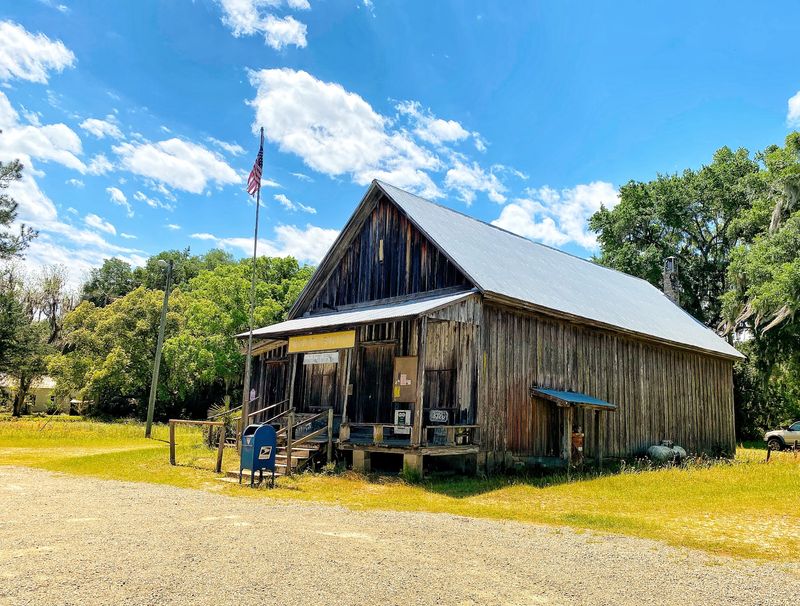
Evinston’s most unusual treasure sits quietly along a rural highway in Alachua County. Wood and Swink represents one of the finest surviving examples of Old Florida commerce, where neighbors still gather and history breathes through every weathered board.
Few visitors expect to find such an authentic piece of the past still functioning in modern times.
The post office dates back to 1882, establishing a postal presence that predates the actual building itself. Shortly after that founding year, a sturdy heart-pine structure rose nearby to serve railroad operations.
Eventually, these two separate functions merged into the single location visitors see today.
What makes this spot truly special is its refusal to modernize beyond necessity. While Florida has transformed dramatically over 14 decades, this humble building has maintained its character and purpose.
The combination of authentic architecture, continuous postal service, and preserved merchandise creates an experience that simply cannot be replicated anywhere else in the state.
It Started Out as a Railroad Warehouse
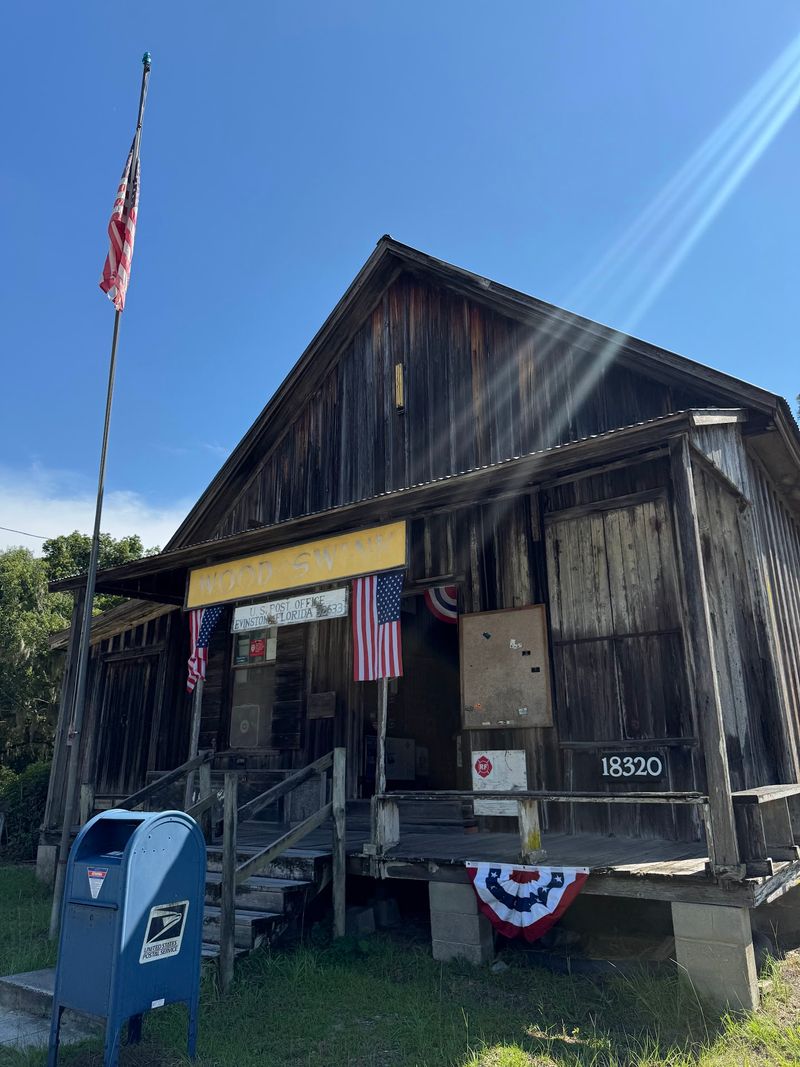
Long before becoming a beloved general store, this heart-pine building served practical railroad needs. W.P.
Shettleworth constructed the warehouse during a period when trains dominated transportation across rural Florida. Goods arriving by rail needed temporary storage before reaching their final destinations, and this sturdy structure filled that essential role perfectly.
Railroad warehouses represented the lifeblood of small communities throughout the late 1800s. Everything from farm equipment to household supplies passed through these buildings.
Shettleworth chose heart pine for its durability and resistance to the humid Florida climate, ensuring his warehouse would withstand decades of heavy use.
The building’s railroad origins explain many of its distinctive features today. High ceilings accommodated stacked crates and barrels, while wide doorways allowed easy movement of bulky merchandise.
Those same spaces now house vintage store goods and postal operations, proving that good design transcends its original purpose and adapts beautifully across generations of service.
The Post Office Came First
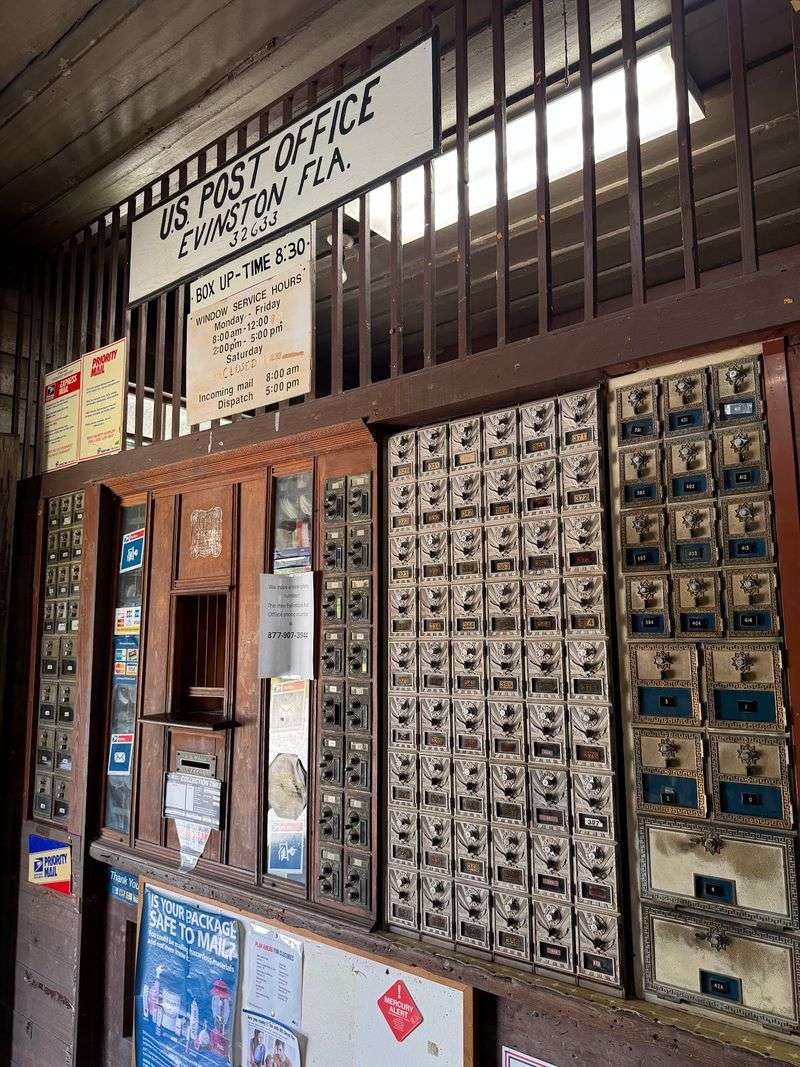
Understanding the 1882 date requires knowing about Evinston’s postal history first. The post office establishment preceded the store building by a short period, creating the foundation for what would become a lasting community institution.
Federal postal records confirm that Evinston received its official post office designation in 1882, giving the tiny settlement an important connection to the outside world.
That original post office operated from a different location before finding its permanent home. When the railroad warehouse became available for additional community purposes, local leaders saw an opportunity.
Moving postal operations into the sturdy heart-pine building made perfect sense for everyone involved.
This postal connection gives Wood and Swink unusual historical significance beyond typical general stores. Many old stores have closed their doors forever, but functioning post offices enjoy federal protection and community necessity.
The merger of retail and postal services created a partnership that has helped preserve this remarkable building through every challenge the past 140 years have presented to rural Florida communities.
The Wood Family Changed the Store Forever
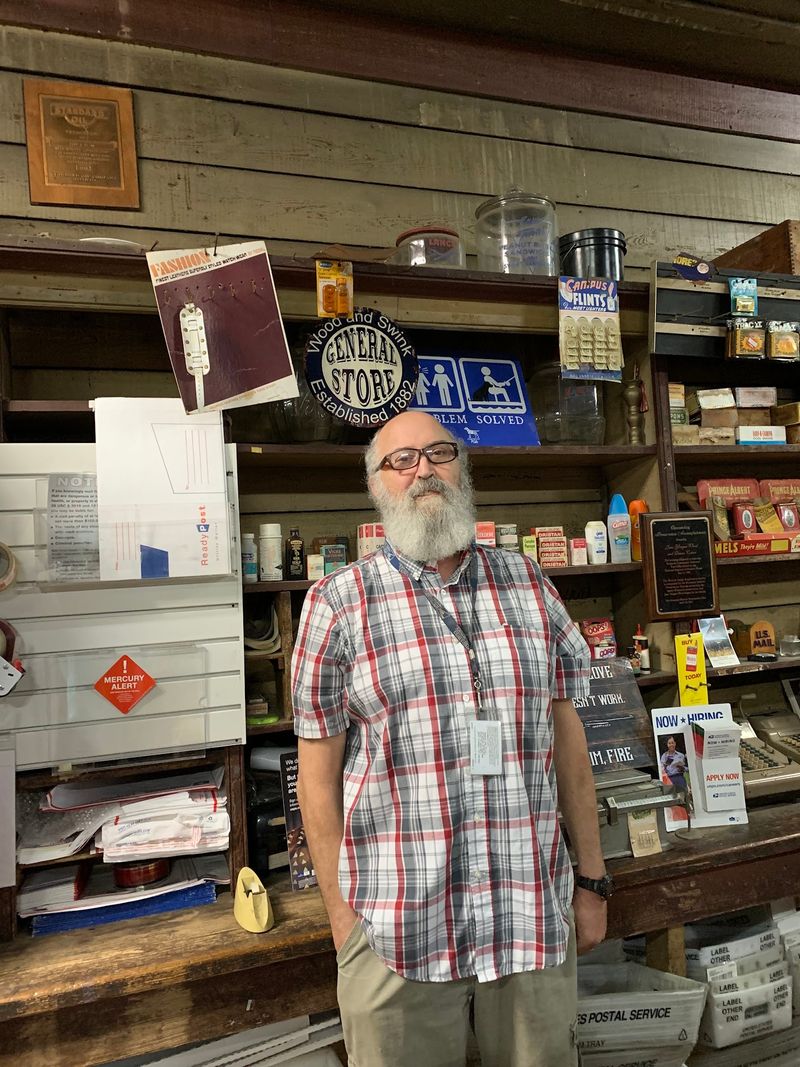
Every historic building needs dedicated caretakers, and Wood and Swink found theirs in 1909. Henry Deaver Wood and Robert C.
Evins acquired the property that year according to National Register documentation. Their purchase marked the beginning of a family legacy that would span multiple generations and permanently attach the Wood name to Evinston’s identity.
The Wood family did not simply own a business. They became woven into the fabric of this tiny community, operating the store and post office through changing times.
Generation after generation of Woods maintained the building’s character while adapting to new postal regulations and customer needs.
Family stewardship makes all the difference in historic preservation. Corporate owners might have modernized everything or closed the doors entirely during difficult economic periods.
Instead, the Wood family’s personal investment kept this landmark alive. Their commitment to maintaining both postal service and the building’s authentic atmosphere created the frozen-in-time experience that draws visitors today from across Florida and beyond.
The Wood & Swink Name Has Been Around Since the 1930s
Partnerships shaped many successful American businesses during the early 20th century. Frederick W.
Wood joined forces with his brother-in-law Paul C. Swink during the 1930s, combining their talents to manage both store operations and postal duties.
Together they created the official Wood & Swink partnership that gave this landmark its enduring name.
Swink eventually sold his ownership interest back to the Wood family, yet something interesting happened. Rather than changing the sign or the official business name, everyone simply kept calling it Wood & Swink.
The name had already become part of Evinston’s identity, familiar to every resident and visitor who passed through those doors.
Today’s visitors still see that historic name displayed above the entrance. It serves as a reminder of the 1930s partnership while honoring both families who helped sustain this community institution.
Sometimes the best business names stick around not because of legal requirements, but because they capture something essential about a place that people naturally want to preserve for future generations to discover and appreciate.
Step Inside and the Past Is Still on the Shelves
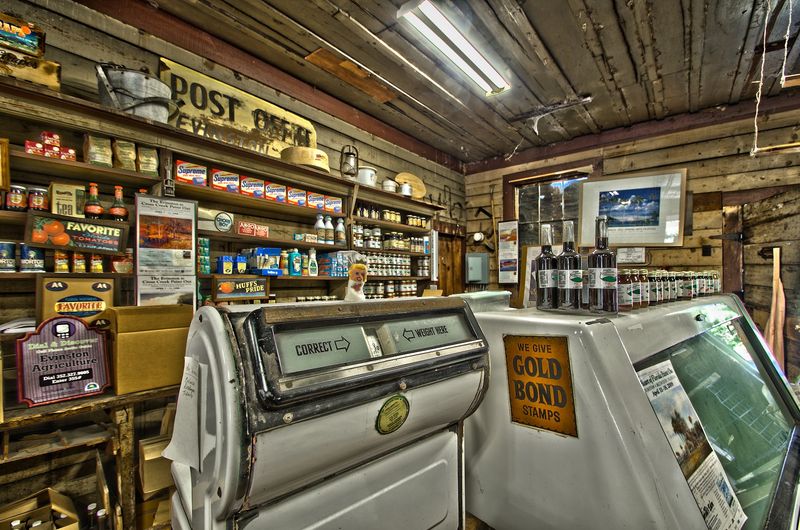
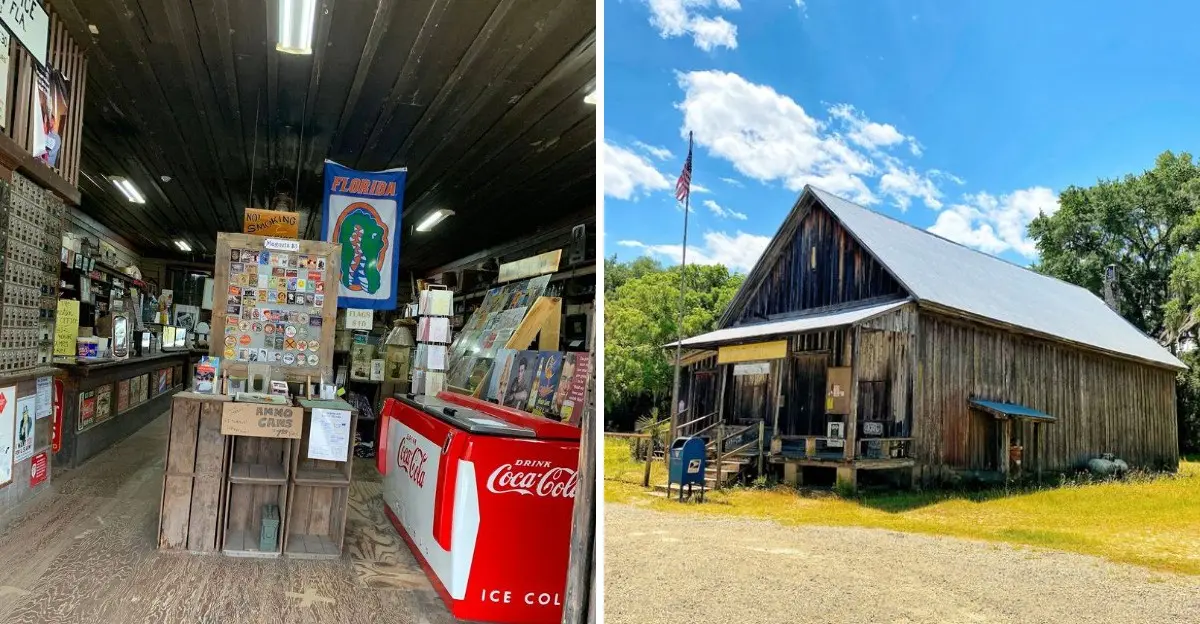
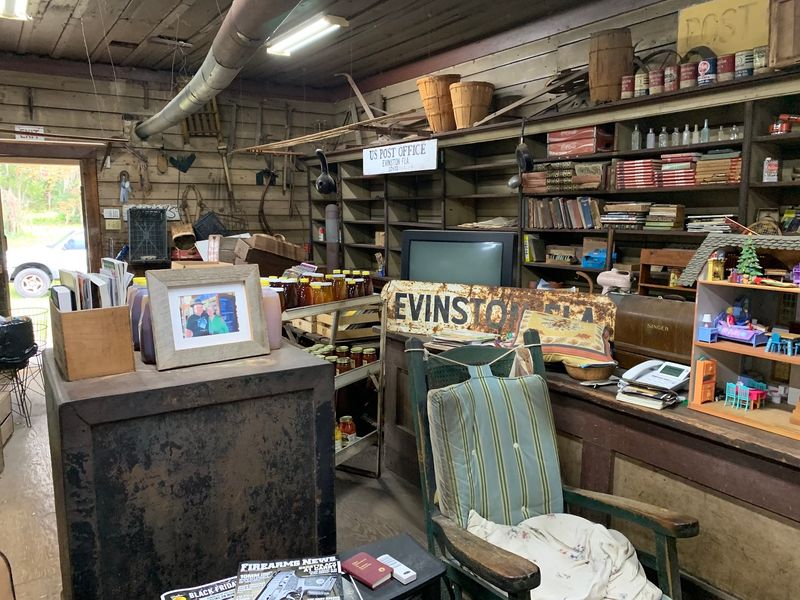
Crossing the threshold feels like entering a time capsule carefully preserved for modern eyes. Vintage packaging sits exactly where it might have decades ago, creating an authentic atmosphere that no theme park could duplicate.
Family photographs watch from the walls while antique merchandise mingles with newer postal supplies, telling stories of continuous operation through vastly different eras.
The wooden fixtures themselves deserve close attention from anyone who appreciates craftsmanship. Original shelving, counters, and display cases show the wear of countless transactions.
These pieces were built to last lifetimes, constructed when quality mattered more than quick profits or trendy designs.
Memorabilia fills corners and surfaces throughout the space, each item representing someone’s memory or a particular moment in Evinston’s past. Visitors often spend considerable time simply looking around, discovering details they missed on first glance.
This authentic preservation demonstrates what frozen in time truly means – not a sterile museum recreation, but a living space where past and present exist comfortably side by side every single day.
A Community Gathering Place for Generations
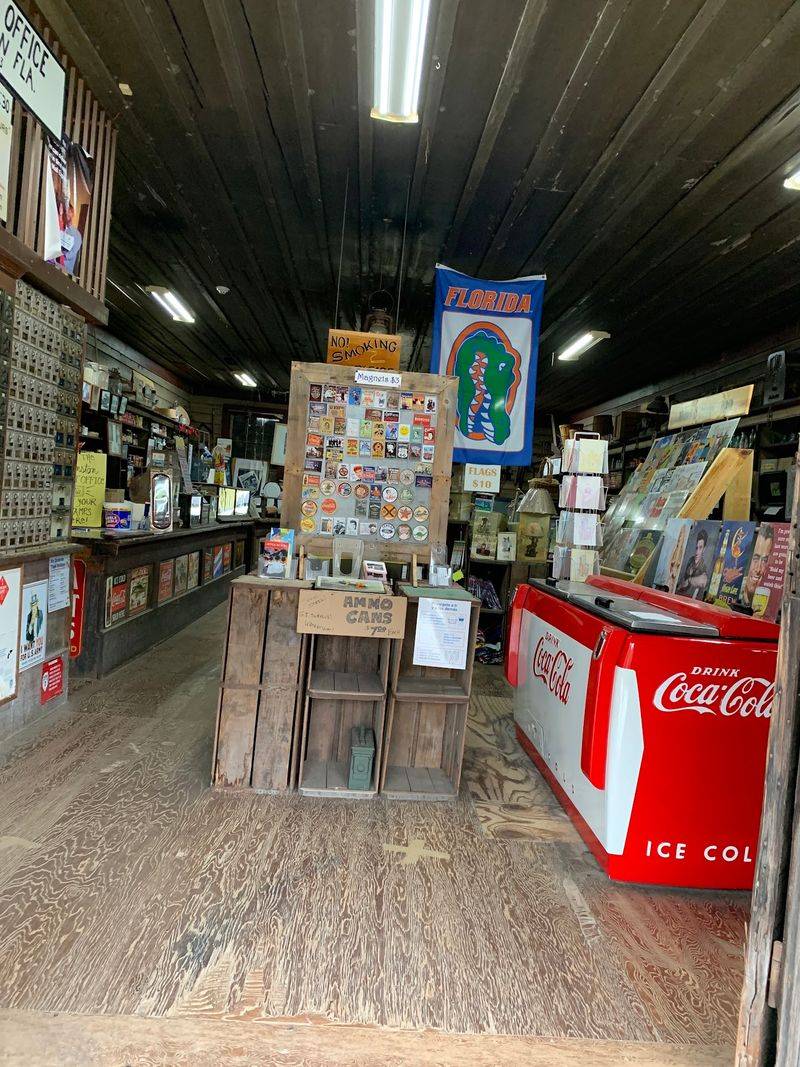
Small rural communities needed central meeting points where neighbors could connect regularly. Wood and Swink filled this crucial social role throughout the railroad era and beyond.
Residents traveled to the store not just for supplies or mail, but to exchange news, discuss weather conditions affecting their farms, and maintain the bonds that held their community together.
Before telephones became common, before internet connected everyone instantly, physical gathering spaces mattered tremendously. The store’s front porch witnessed countless conversations about crops, families, local events, and wider world developments.
Information flowed through Wood and Swink just as surely as merchandise and mail did.
Modern Evinston residents still value this community connection, though perhaps in different ways than their ancestors did. The store represents continuity and shared heritage that shopping at big chain stores simply cannot provide.
Every visit reinforces belonging to something larger than oneself – a community with deep roots and persistent identity despite everything changing around it. That sense of place keeps people coming back year after year.
A Historic Building That Has Survived More Than a Century of Change
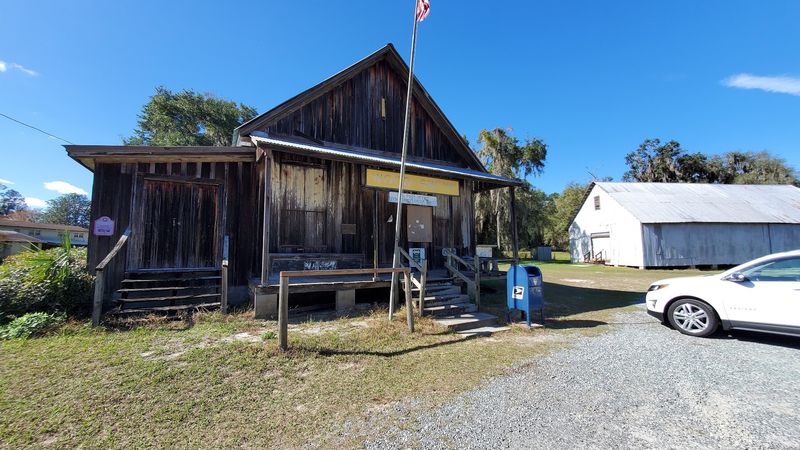
Survival across 140 years required more than luck or good intentions. This building faced serious challenges that destroyed countless similar structures throughout Florida.
When County Road 225 needed paving in 1956, the entire building moved approximately 100 feet to accommodate modern road requirements. Imagine the effort required to relocate a 70-year-old wooden structure without destroying it.
The surrounding area transformed dramatically during the store’s lifetime. Railroad service eventually disappeared as automobiles and trucks replaced trains for transportation needs.
Passenger trains stopped running altogether, fundamentally changing how rural communities connected to the wider world.
Despite these massive shifts, Wood and Swink adapted and persisted. Recognition came in 1989 when the building earned placement on the National Register of Historic Places, acknowledging its exceptional significance to Florida history.
This designation provides some protection while validating what locals always knew – their little store represents something rare and precious. Modern preservation efforts ensure future generations can experience this authentic connection to Florida’s pioneer past long after we are all gone.
Plan Your Visit
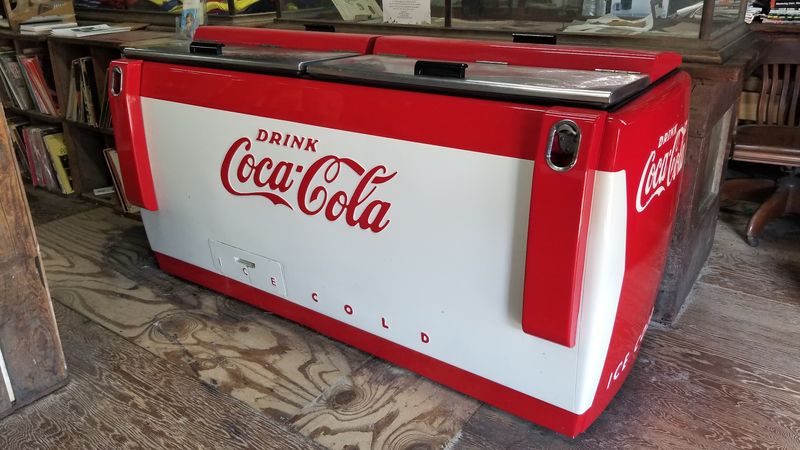
Finding this treasure requires planning since Evinston remains decidedly off the beaten path. The address is 18320 SE County Road 225, Evinston, FL 32633, located in rural Alachua County.
GPS coordinates work better than simply following road signs in this area, so program your device before leaving home.
Current USPS hours are Monday through Friday 1 to 5 p.m. and Saturday 8 to 10 a.m., with Sunday closed. These limited hours reflect the reality of operating a small rural post office.
The phone number listed is 352-591-4100, though calling ahead is strongly recommended since hours occasionally change.
Managing expectations helps visitors enjoy their experience fully. This is a functioning post office, not a conventional museum with guides or exhibits.
Respectful behavior toward postal workers and other customers ensures everyone benefits from this remarkable place. Photography is usually acceptable, but ask permission first.
The interior is relatively small, so groups should visit in shifts. Most importantly, appreciate that you are witnessing authentic history still serving its original purpose in our modern world.