Want Charleston charm without the shoulder-to-shoulder crowds? Head to Edenton.
Perched along North Carolina’s Albemarle Sound, this lovely waterfront town serves up centuries-old homes, peaceful bay views, and a downtown made for wandering.
Historic streets reveal grand porches, elegant churches, and buildings that have watched generations come and go.
Edenton’s story reaches deep into the 1700s, and its historic sites make every turn feel like a discovery.
You can admire colonial architecture, stroll beside the water, and still have room to breathe.
Best of all, Edenton moves at its own pace. There are no packed tour groups pushing you down the sidewalk or endless lines at every stop.
Just beautiful scenery, fascinating history, local shops, and that irresistible feeling that you’ve stumbled onto a Southern secret.
Historic Downtown Edenton
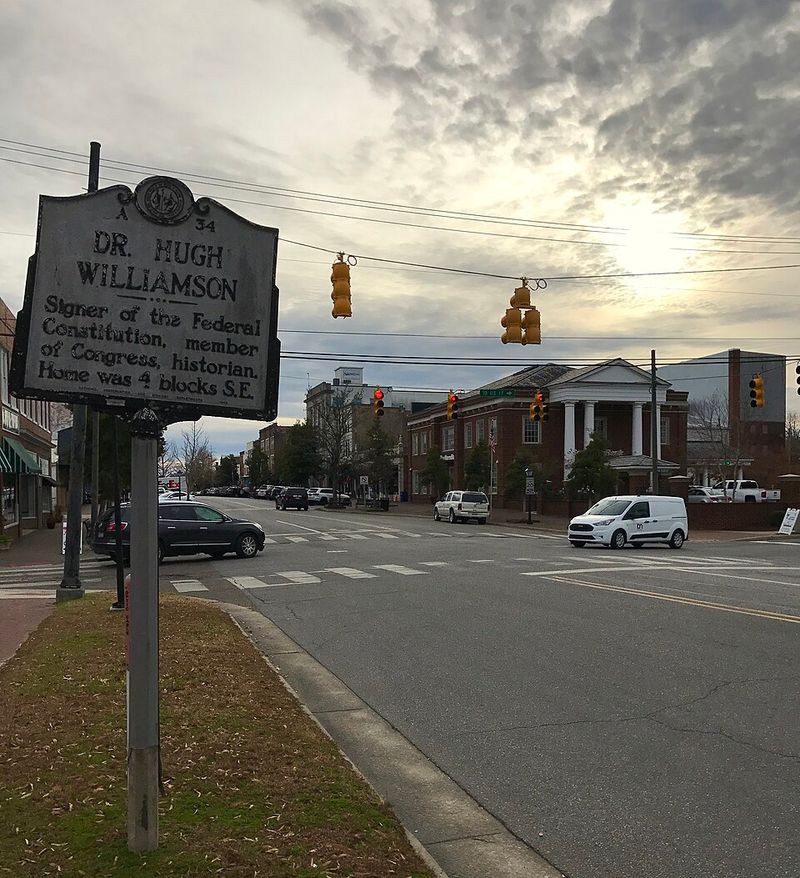
Walking these streets feels like traveling backward through time, except you can still grab a coffee and check your phone. Buildings here span nearly three centuries, creating a living museum where people actually live and work.
The compact district makes exploring easy on foot without getting exhausted.
Colonial homes with detailed woodwork sit beside 19th-century storefronts, each telling stories of different eras. Churches with tall steeples and public buildings with classical columns dot the landscape.
Everything stays remarkably well-preserved because locals take serious pride in their town’s appearance.
Unlike bigger tourist destinations, you won’t find cheesy gift shops on every corner or crowds blocking your photos. The authentic nature of this place comes from its continued use as a real community.
Families still worship in centuries-old churches, and businesses operate in historic buildings that were never converted into tourist traps.
The architectural variety alone makes wandering worthwhile, from Georgian mansions to Victorian cottages. Each block reveals something new to admire or photograph.
Edenton Bay Waterfront
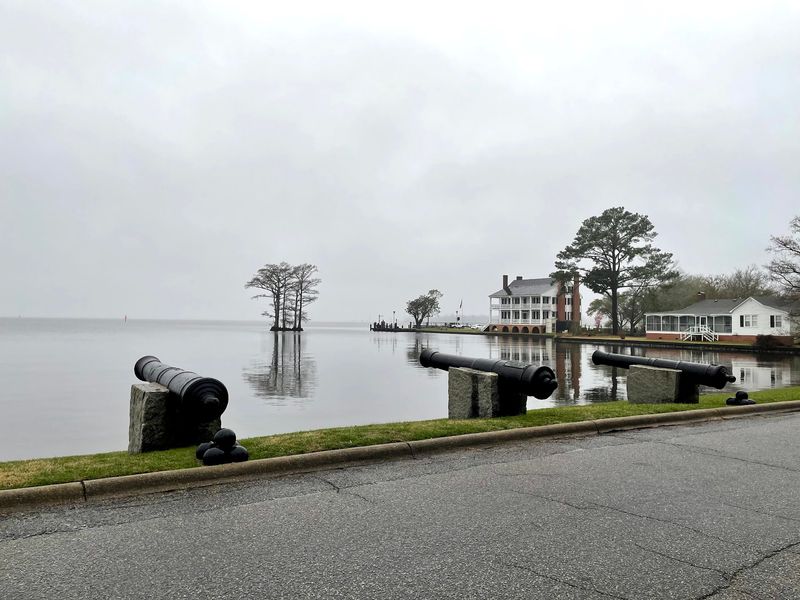
Forget crowded boardwalks packed with screaming families and overpriced seafood shacks. Edenton Bay delivers pure coastal relaxation without the chaos that ruins so many waterfront towns.
The open views stretch across calm waters where sailboats drift lazily by.
This waterfront actually invites you to slow down and breathe instead of rushing from one attraction to another. Benches and green spaces provide perfect spots for watching the water change colors as clouds pass overhead.
The distinctly Southern atmosphere feels genuine because it hasn’t been manufactured for tourist dollars.
Local fishermen still use the docks here, and residents walk their dogs along the shore in the early morning. You might see blue herons hunting for fish or pelicans gliding low over the waves.
The scale stays human-sized rather than overwhelming you with massive developments.
Sunrise and sunset both paint spectacular scenes across the bay, and you’ll rarely fight for a good viewing spot. The peaceful quality of this waterfront makes it one of those places where simply sitting and doing nothing feels perfectly acceptable.
1767 Chowan County Courthouse
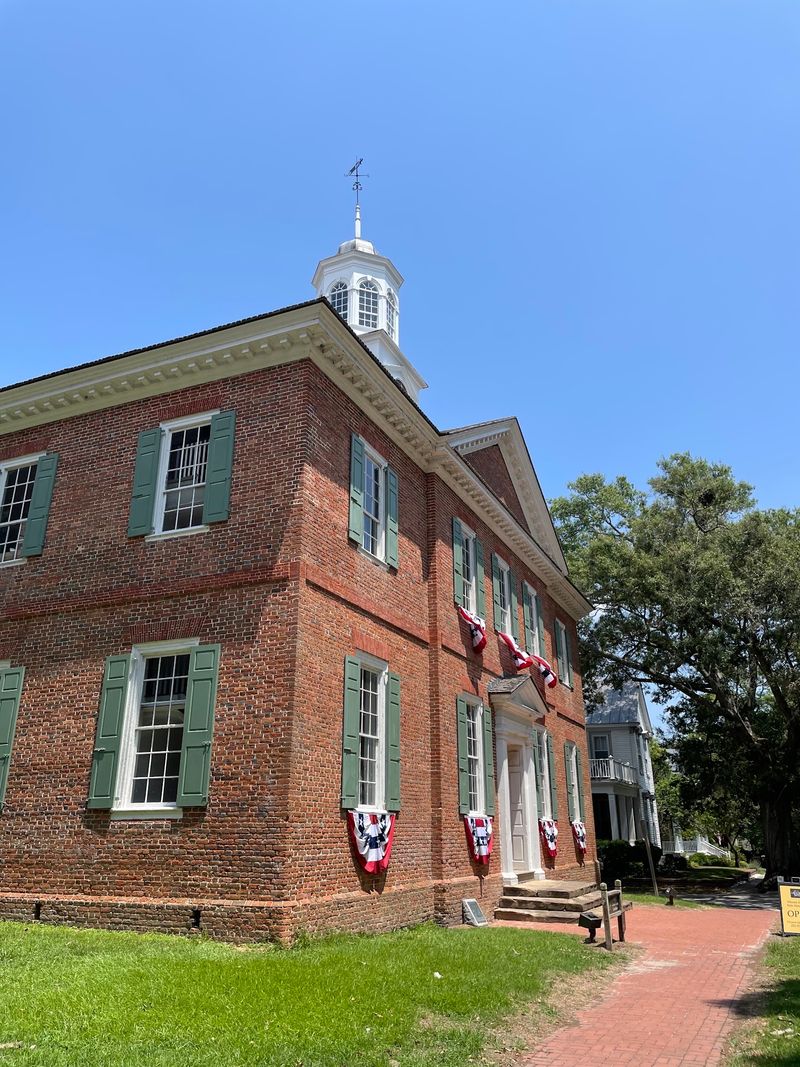
Built when George III still ruled the colonies, this courthouse continues hearing cases today, making it one of the oldest working courthouses in America. That’s not just impressive on paper; standing before this Georgian building drives home how deeply history runs through Edenton.
The brick and woodwork have survived revolutions, wars, and centuries of weather.
The National Historic Landmark designation confirms what your eyes already tell you: this building represents something genuinely special. Its balanced proportions and classical details showcase the craftsmanship colonists brought from England.
Every architectural element serves both beauty and function.
Many historic sites feel like empty museums, but active government business still happens inside these walls. That ongoing purpose keeps the building alive rather than frozen as a mere monument.
Tours let visitors appreciate the interior details, from original woodwork to period furnishings.
Understanding why Edenton’s historic district feels so authentic becomes easy when you see structures like this still serving their original purposes. The courthouse anchors the entire downtown area, reminding everyone of the town’s remarkable continuity.
1886 Roanoke River Lighthouse
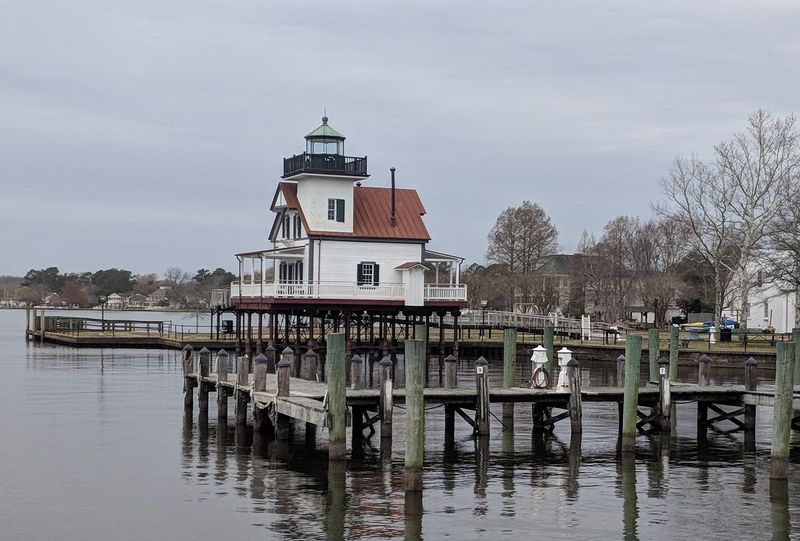
Perched on unusual stilts right at the water’s edge, this restored screwpile lighthouse looks nothing like traditional tower lighthouses most people picture. Its house-like structure sits atop iron legs screwed deep into the riverbed, creating a design that seems both clever and slightly odd.
Built to guide ships through treacherous waters, it now guides visitors through maritime history.
The 1886 construction date places this lighthouse in an era when steam-powered ships still shared waterways with sailing vessels. Families actually lived aboard these structures, isolated from land but surrounded by water in every direction.
Imagine raising kids or cooking dinner while waves rocked your entire house.
Restoration work brought back period details that help visitors understand lighthouse keeper life, from cramped sleeping quarters to the mechanical workings of the beacon itself. Everything stayed compact by necessity since space was limited.
The unusual architecture makes for memorable photographs against the bay backdrop.
Walking through this lighthouse offers insights you won’t find in history books alone, showing how real people adapted to challenging working conditions while keeping ships safe from coastal hazards.
Cupola House & Gardens
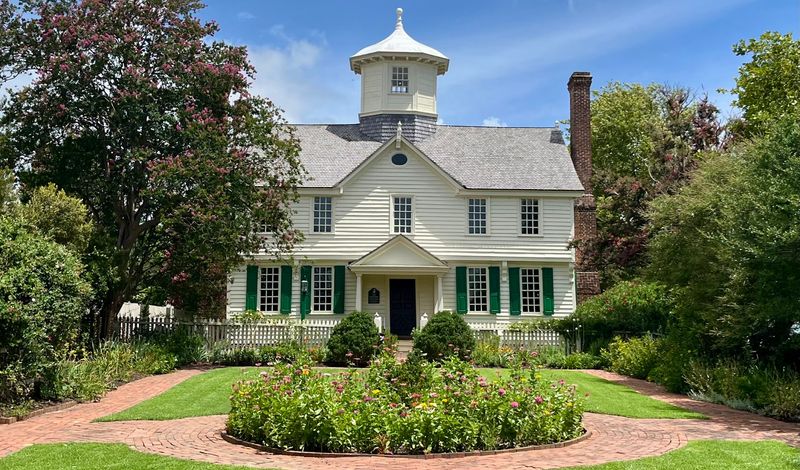
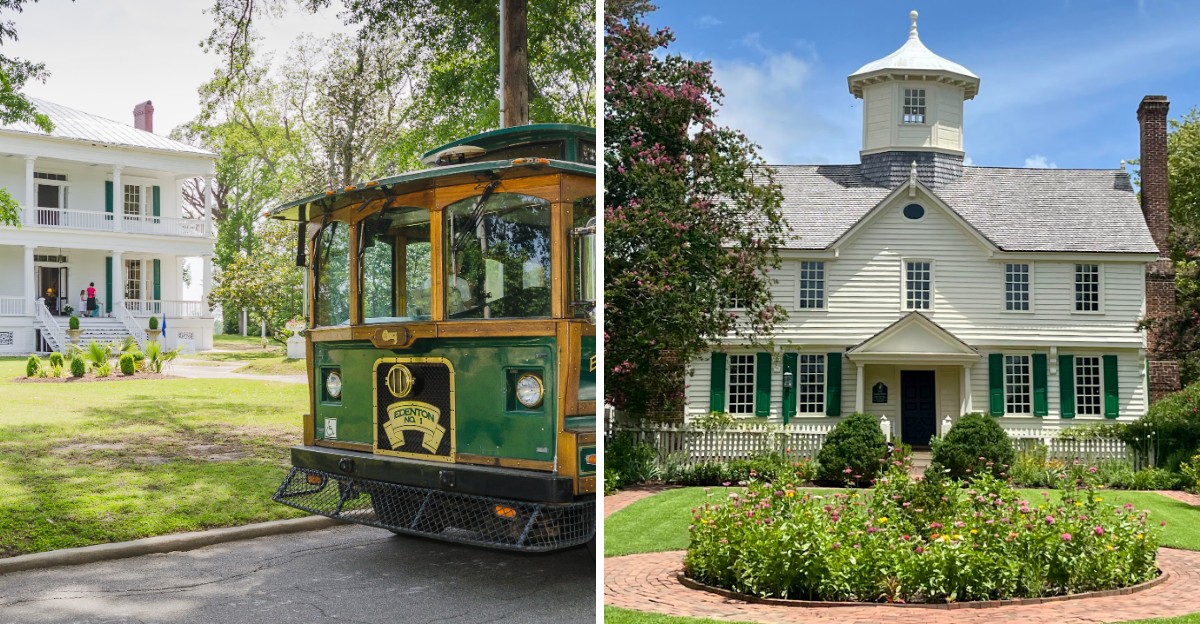
Recognizable by the cupola perched atop its roof, this 1758 home represents colonial wealth and taste at their finest. The distinctive rooftop feature that gives the house its name wasn’t just decorative; it provided ventilation during humid Southern summers before air conditioning existed.
Wealthy colonists showed off their status through architectural details like this.
Step into the landscaped grounds, and you’ll understand why Southern gardens earned their legendary reputation. Carefully planned plantings create outdoor rooms that invite lingering and conversation.
The combination of formal garden design with the historic house transports visitors completely into North Carolina’s colonial past.
Each room inside showcases period furnishings and decorative arts that demonstrate how the colonial elite actually lived. The craftsmanship evident in woodwork, plasterwork, and furniture construction impresses even people who normally find historic houses boring.
Guides share stories about the families who called this place home.
The connection between this house and broader colonial history makes it more than just a pretty building. Visiting here helps you grasp Edenton’s importance during North Carolina’s early development as a political and cultural center.
Penelope Barker House
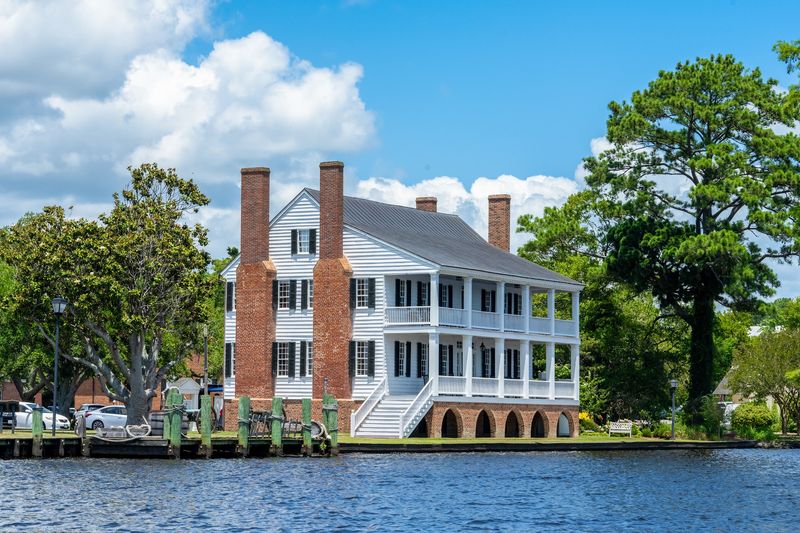
Overlooking the bay with commanding views, this Georgian mansion now welcomes visitors as both a museum and starting point for exploring Edenton’s history. The house itself impresses with its 18th-century proportions and details, but the woman it’s named for deserves equal attention.
Penelope Barker organized one of the first political actions by women in colonial America.
In 1774, Barker gathered 51 women to sign a resolution boycotting British tea and cloth, supporting colonial resistance before the Revolutionary War officially began. This wasn’t just symbolic; these women risked social standing and potentially their families’ safety.
Their political activism predated women’s suffrage by nearly 150 years.
The museum inside explores both the house’s architectural significance and the remarkable story of colonial women who refused to stay silent during political upheaval. Exhibits connect individual courage with broader historical movements.
The location overlooking the bay where ships once arrived with British goods adds powerful context.
Starting your Edenton visit here provides excellent orientation to the town’s layout and history. Staff members answer questions and suggest routes for self-guided exploration throughout the historic district.
Edenton Trolley Tour
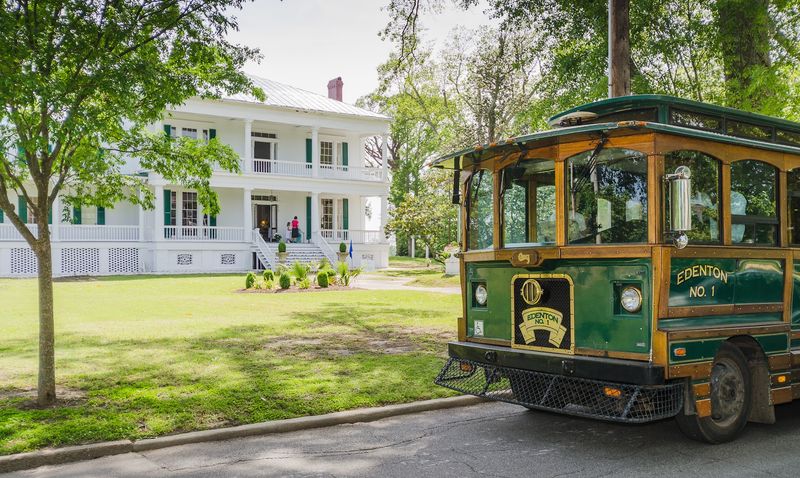
Climbing aboard the narrated trolley might seem touristy, but it actually solves a real problem: seeing everything important without wearing yourself out or missing key sites. The route covers major landmarks throughout downtown while guides share stories that bring buildings to life.
You’ll learn details you’d completely miss wandering alone.
Guides point out architectural features, explain historical events, and highlight connections between different sites. Their local knowledge includes anecdotes and facts that don’t appear on plaques or in brochures.
The relaxed pace allows time for questions and photo opportunities at key stops.
For first-time visitors, the tour provides excellent orientation to Edenton’s layout and history before you explore independently. You’ll understand which sites deserve deeper investigation and how everything fits together chronologically.
The waterfront section proves especially scenic as the trolley rolls past bay views.
Unlike walking tours that rush to keep schedules, the trolley keeps everyone comfortable regardless of weather or fitness level. Families with young children and older visitors particularly appreciate not having to choose between seeing everything and exhausting themselves.
The tour typically lasts about an hour, making it easy to fit into any schedule.
Harriet Jacobs History
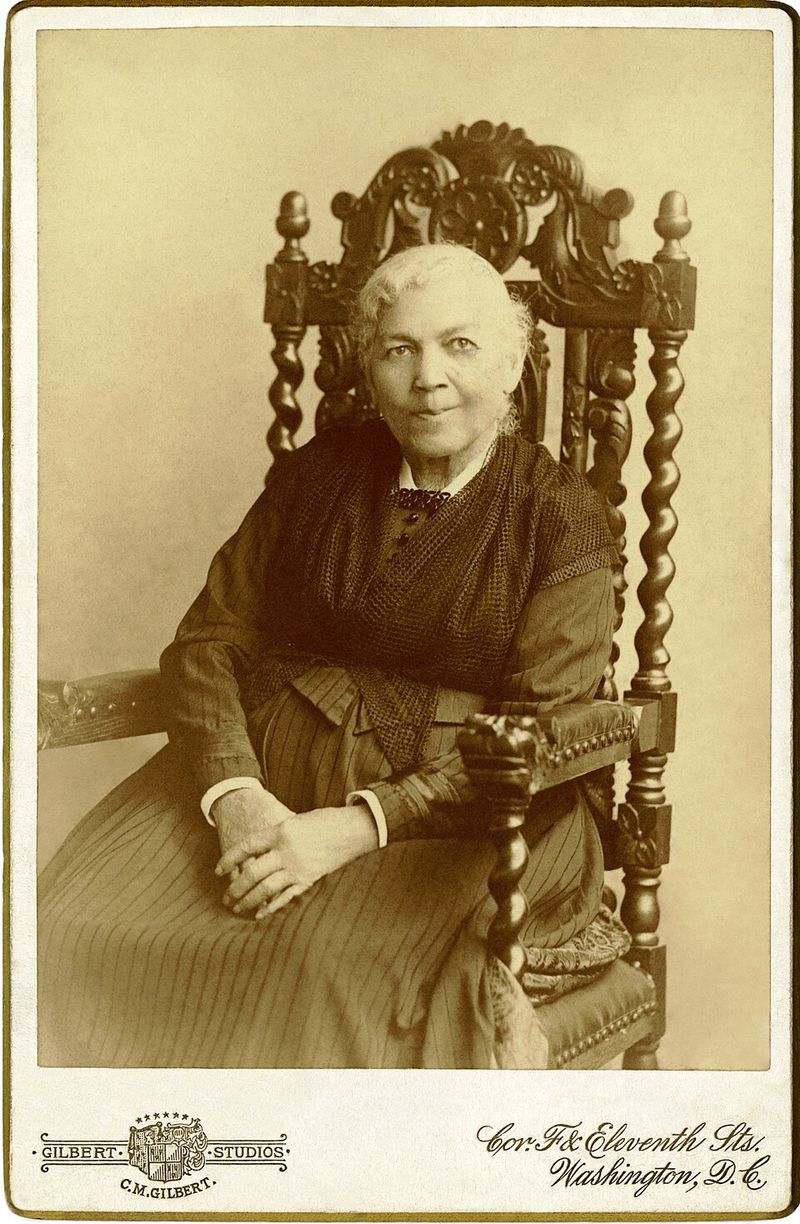
Harriet Jacobs’s story cuts through romanticized views of the antebellum South with unflinching truth about slavery’s reality. Born enslaved in Edenton, she later wrote one of the most powerful firsthand accounts of slavery’s horrors, especially for women.
Her book “Incidents in the Life of a Slave Girl” shocked 19th-century readers with its honesty.
Walking tour routes connect places central to her life here, from where she was born to the home where she hid in a tiny attic crawlspace for seven years. Seven years in a space too small to stand up straight, all to stay near her children and eventually escape to freedom.
That level of determination and sacrifice demands recognition.
Her story intersects with Edenton’s broader history in ways that complicate the pretty picture painted by beautiful historic homes. The same architectural treasures that draw tourists today were built and maintained through enslaved labor.
Confronting that reality makes historical understanding more complete and honest.
Following Jacobs’s path through town honors her courage while acknowledging painful truths about America’s past. Her eventual escape and transformation into an abolitionist and author proves that remarkable individuals can emerge from even the most oppressive circumstances.
Colonial Waterfront Park & Town Harbor
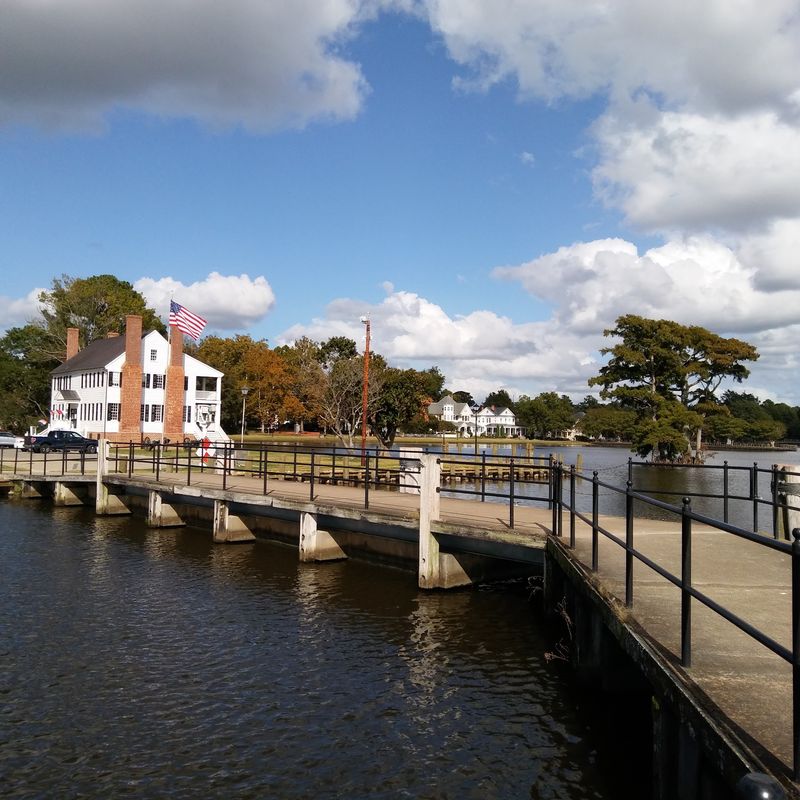
Sometimes the best travel experiences come from simply being in a beautiful place rather than checking off attractions. This waterfront park and harbor area rewards visitors who resist the urge to rush from one site to another.
Green spaces invite picnicking, reading, or just watching clouds drift across the water.
The harbor maintains Edenton’s working relationship with the water that sustained the town for centuries. Small boats bob at their moorings, and sailboats occasionally glide past.
You might spot someone launching a kayak or canoe to explore the wider waterways beyond the immediate bay.
Benches strategically placed along the shore offer perfect spots for conversation, sketching, or photography. The view changes throughout the day as light shifts and boats come and go.
Families let kids run on the grass while parents relax, something increasingly rare in developed waterfront areas.
The park’s character reflects Edenton’s overall personality: relaxed, accessible, and genuinely pleasant rather than packaged for maximum tourist revenue. Nobody pressures you to buy anything or move along.
You can launch your own kayak here and paddle through marshes and coves that reveal the region’s natural beauty beyond the town itself.
Local Shops, Restaurants & Slow-Paced Downtown Life
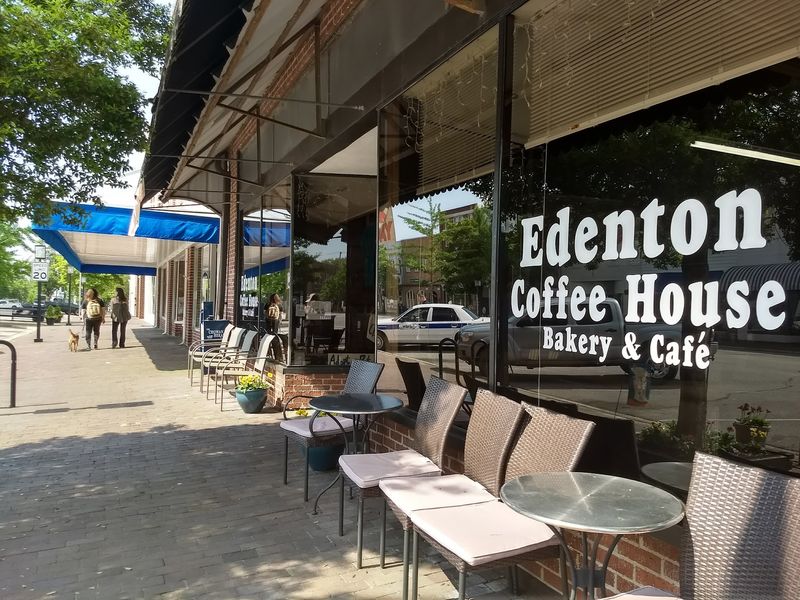
Historic sites tell part of Edenton’s story, but the living downtown tells the rest. Independent shops and locally-owned restaurants around Broad Street and the waterfront create the kind of walkable, human-scaled downtown that disappeared from most American towns decades ago.
These aren’t chain stores or tourist traps; they’re real businesses serving real community needs.
After touring historic houses, you’ll want coffee, lunch, or maybe something you didn’t know you needed until you spotted it in a shop window. The cafes and restaurants offer menus focused on quality rather than quick tourist turnover.
Owners often work behind counters, chatting with regulars while welcoming visitors.
Browse shops selling everything from antiques to local art to books, each reflecting the owner’s particular interests and knowledge. The shopping experience feels personal, with staff who can explain products and share recommendations.
Nobody rushes you toward the register.
This aspect of Edenton can’t be captured in any historic-site checklist, but it’s what transforms the town from a collection of old buildings into a genuinely enjoyable place to spend time. The slow pace encourages lingering, people-watching, and soaking up small-town atmosphere that’s increasingly rare.